The Ultimate Hurricane Prep List – For Before, During, And After The Storm
Over the past few days, as I’m writing this article, I’ve been keeping close tabs on the weather reports in the Gulf of Mexico.
A large tropical storm was brewing just offshore and is likely reaching landfall about now…
Maybe it will reach hurricane status, maybe not.
But I guarantee, there WILL be LOTS of hurricanes this year and every year after.
And it’s very likely some WILL reach landfall along the US coastline. It’s not a matter of IF but WHEN.
Back in 2005, a couple of my friends lost nearly everything to Hurricanes Katrina and Rita.
Before this fateful day, these friends were quietly living their lives, building their families in a hurricane zone.
Several of them were fellow coastal researchers. Meaning, their careers were dedicated to how large storms affect the very places they call home.
But in 2005, several of them lost their homes and businesses to these massive hurricanes. And they nearly wiped their beautiful little towns completely off the map.
Now, years later, only half of them have returned to the Gulf. And those who did stick around have since moved to “safer” inland locations.
But one common theme I noted was that despite their background, few took the information seriously. They “knew” the dangers and risks but that was data and numbers – not reality…
This goes to show the strength of human errors such as complacency and recency biases.
They hadn’t taken just how devastating it could be. They didn’t realize an average hurricane releases as much energy in a day as the explosion of half a million small atomic bombs.
And every single one of them regretted not creating a comprehensive hurricane prep list. They all failed to make time for hurricane preparations.
They were forced to react and became frantic as the chaotic situation unfolded.
They didn’t plan ahead – which left them with few options and limited resources when all hell broke loose.
NOW is the time to think about your hurricane prep list and plan ready for the worst!
With that said, today we’ll be covering the following hurricane-related topics in great detail:
As A Way To Introduce You To Skilled Survival, We’re Giving Away Our #78 Item Complete Prepper Checklist. Click Here To Get Your FREE Copy Of It.

HURRICANE BASICS
“Hurricane” is the English adaptation of a word used by native languages along the US Gulf Coast. It’s a word used to describe extremely dangerous tropical storms.
These types of storms develop throughout the world’s oceans. And they are known by different names (“typhoon”, “cyclone”) around the globe.
For simplicity, I’ll refer to them all as hurricanes today. And I’ll focus primarily on hurricanes in the US Gulf of Mexico and Atlantic coast.
If you live in a different part of the world, the storm seasons and classification schemes will vary. But the core idea and recommendations for emergency planning are exactly the same.
Hurricane Season
Nearly all hurricanes that hit the mainland US are born in the tropical Atlantic. Specifically in an area between the Caribbean Islands and the Western Shores of Africa.
This is where warm ocean waters deliver tremendous amounts of moisture to rising warm air masses. This moisture feeding mechanism generates enormous rotating storms and draws in energy.
As these storms progress across the Atlantic, they encounter the Gulf Stream. This helps to boost their energy further and tends to turn them north into the Gulf and Atlantic coasts.
This system of moisture generation depends on hot summer temperatures. So for the South Eastern US, the storm season begins sometime in May and peaks in September. Then it tapers off into the fall (until November) as waters cool.
Of course, hurricanes can develop any month of the year, but they are far more likely in late summer.
Hurricane Features
“Tropical depression”, “tropical storm” and “hurricane” are all terms describing the exact same thing. A rotating storm system fed by warm, moist air. The only difference in the naming is due to their size, severity, and wind speeds.
Here’s what sets a hurricane apart from tropical depressions and storms:
Hurricane Eye And Eyewall
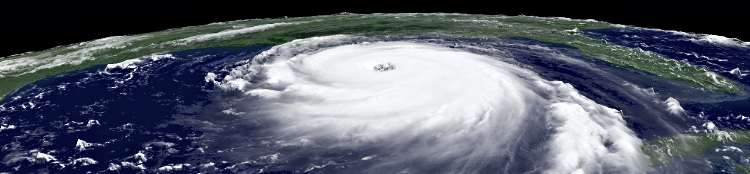
The most distinguishing feature of a hurricane is the “eye”. The circular area of strong updraft at the center of the storm. It’s the center of the storm around which everything else rotates.
Odd as it may seem, there are almost no winds at the surface within the eye. And commonly blue sky and visibility can appear in the eye as well, giving the eye a relatively calm feel.
But, don’t be a fool.
The eye is surrounded by the very worst weather in the entire system. So this is not the type of “calm” you want to experience firsthand…
Surrounding the eye are towering walls of cloud banks and extreme winds.
You can think of the eyewall like a sports stadium; one that rises tens of thousands of feet above sea level.
This area has the most devastating winds and turbulence. It’s where measurement occurs to record wind velocity for storm classification.
Here’s a video showing some footage within the eye of a hurricane:
Hurricane Force Winds
The entire storm rating system is contingent on the maximum observed winds (near the eyewall). But hurricanes show a dramatic decrease in wind speeds as you get further from the eye.
A Category 4 storm will have a rough “bullseye” of category 3/2/1 winds surrounding the eye.
The entire area will experience “hurricane-force winds”. Though only a small part near the eye will see sustained Category 4 level winds.
Outer Bands
Hurricanes often display long trailing “fingers” of clouds and rain. These fingers spiral away from the center for hundreds (sometimes thousands) of miles.
These bands generally contain severe thunderstorms and often turn out localized tornadoes. They are home to the heavy, drenching rains that often cause flooding and damage.
During Hurricane Harvey, Houston, TX saw several FEET of rain from these outer bands. The storm stalled out over the city, giving rise to the worst flooding the city had ever seen.
Storm Surge
Sometimes it’s the extreme winds that cause the most damage but often it’s the flooding. Hurricanes not only dump copious amounts of rainfall, but they also bring a surge of water to shore.
The sustained winds from the hurricane create a water stacking effect. Ocean water becomes pushed together into a massive heap out at sea. But when this bulge of seawater reaches land it easily spills over sea walls, damns, and barriers.
This often causes extreme flooding damage to buildings and residencies along the coast. Especially in low lying areas (such as vast areas of New Orleans…)
And the storm surge often occurs BEFORE the hurricane makes landfall! So the coastal flooding can make evacuation difficult if not impossible.
I highly recommend everyone take a few minutes to watch this excellent video on storm surges:
Hurricane Categories
Authorities categorize hurricanes by the Safir Simpson scale. This scale is based on the “maximum sustained winds”.
These are CONSTANT wind speeds – gusts can be considerably higher in each category!
- Winds below 74mph = Tropical Storm
- 74 to 95mph Winds = Category 1 Hurricane
- 96 to 110mph Winds = Category 2 Hurricane
- 111 to 129mph Winds = Category 3 Hurricane
- 130 to 156mph Winds = Category 4 Hurricane
- Winds above 157mph = Category 5 Hurricane
Want to see a detailed visual of the damage caused by different windspeeds? Watch this video:
Hurricane Predictions
Hurricane predictions on the weather report generally depend on understanding three terms:
1 – Hurricane Watch
A “Hurricane Watch” means you should expect hurricane conditions in the next 48 hours.
At this stage, you should be:
- Reviewing your hurricane prep list and plan
- Staying up to date on the weather forecast
If authorities upgrade a hurricane from a watch to a warning – be ready to act immediately.
2 – Hurricane Warning
A “Hurricane Warning” means you can expect hurricane conditions in the next 36 hours.
During a hurricane warning you should:
- Complete all remaining preparations and
- Be ready to evacuate if ordered to do so
3 – Cone Of Uncertainty
The cone of uncertainty is a new tool in hurricane forecasting. It gives meteorologists a way to show a hurricanes most likely future path of travel.
Meteorologists run thousands of storm trials. These trials help them to understand the variability in how a storm may develop and move.
They then use statistics to give them a best-guess at where a storm will travel and hit.
But as we all know, predictions are more accurate for shorter time scales than they are for the long term. So the predicted path starts narrow at the current location.
The closer the predicted path is to its current location, the smaller the cone of uncertainty is. So the predicted path over the next few hours is pretty much a guarantee.
Then as the path gets further out in time the cone gets wider. This provides a wider range of possible paths given by the model variations.
Now let’s get into preparing for a hurricane – we’ll cover action items before, during and after…
Here’s a comprehensive overview video if you’d rather get your information that way:
HOW TO PREP BEFORE HURRICANE SEASON
First of all, take a lesson from my friend’s misfortune and plan ahead! Don’t wait until the storm has nearly arrived to take precautions.
By then, you’ve limited your options; which is a fragile position to be in. If you want to live a resilient life – the more options you have, the better!
The main options being critical supplies and possible courses of action. Preparing early improves your survival chances with less stress, damage, and injury!
Plan Your Evacuation Route Early
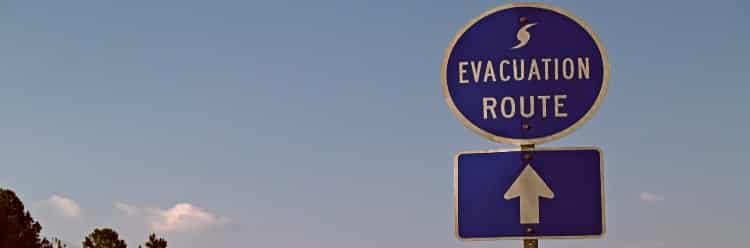
As your location enters the cone of uncertainty, authorities will issue an evacuation.
Never wait for someone to tell you how to get to safety or follow a blind herd of humanity.
Instead, research the best evacuation routes from your area beforehand. Then you’ll be able to navigate to safety with less confusion, worry, and traffic when the time comes.
This means establishing an emergency meetup location with family and friends to wait out the storm. Where you can get gas and supplies, what shelters will be available and where you can go with pets.
It’s wise to practice the route as well, to see all the details in person.
Stock Up On Non-Perishable Supplies Early
Once authorities issue a hurricane watch or warning critical supplies go fast. The news always shows footage of empty store shelves and long lines at the gas station.
For items with a long shelf life, it pays to stock up early and avoid wasting time in long lines. Plus, when supplies run short – supply and demand kicks in and you end up paying premium prices…
Instead, it’s better to accumulate supplies and resources between hurricane seasons, if possible.

 I’ve seen these WaterBOB Bathtub Water Storage Bladders selling at 3X to 4X it’s “normal price” before hurricanes. Normally, they sell for about $35, but I saw them priced at over $100 leading up to Hurricane Irma in 2017.
Also, be sure to keep these items organized and accessible. You’ll want to take some of them with you during an evacuation.
Here’s a simple hurricane prep list of items you should include:
*Note: click on any of the links in the list for a detailed article about these items
As A Way To Introduce You To Skilled Survival, We’re Giving Away Our #78 Item Complete Prepper Checklist. Click Here To Get Your FREE Copy Of It.
Inventory Your Property
Once the storm is over, you’ll need to have documentation for any insurance claims. And meticulous inventory is a lifesaver when dealing with evil insurance adjusters.
A paper version is better than nothing, but I recommend you walk through the house as you take video.
Nearly everyone has a smartphone nowadays – so it’s simple to do this and may only take 20 minutes. So no excuses – do it now.
Open drawers and cupboards for the camera. Call out the valuable items specifically and mention brand names and model numbers.
And don’t forget to inventory the garage as well. Most of us have a lot of valuable vehicles, tools, and equipment out there!
Store your inventory list (digital or paper) with the rest of your emergency supplies. Make sure to update it periodically to include new purchases.
Make Sure You FULLY Understand Your Insurance Policy
Many believe their homeowner’s insurance policies will cover ALL hurricane damage. But most general policies don’t cover flood damage, which can create even more damage than the wind.
If you find you need a separate flood policy, it’s better to do that way ahead of time. It’s a nightmare to try to deal with it during or after the storm.
It’s in insurance companies best interest to pay you as little as they possibly can. If that means calling the damage “flooding” and not “hurricane” they will do it. Leaving you with a damaged home and no insurance funds to repair it…
Also, check your automobile, boat, RV, etc policies. Make sure you have proper insurance coverage on EVERYTHING you leave behind in the path of the storm.
Take Care To Protect Your Home
Much of the damage during a hurricane is due to wind-driven debris and falling trees.
A call to a local arborist or landscaping company can help with ideas for how to reduce tree damage. And make sure your hanging baskets don’t become flying cannonballs.
I recommend adding heavy-duty metal storm shutters. Or cutting custom plywood covers for windows ahead of time. These actions will speed up your preparations when a storm is fast approaching.
WHAT TO DO WHEN A HURRICANE WATCH IS IN EFFECT
A hurricane watch is the first level of forecasting for a hurricane event.
This does NOT mean you will definitely see the full effects of the storm. But it means a very real possibility exists in the next few days.
This is the time to consult your hurricane prep list and plans to make any last-minute additions or adjustments.
Listen To The Weather Predictions

 A quality hand-crank NOAA weather radio provides critical information from the national weather service.
Minute by minute up to date forecasts will keep you advised if conditions change.
Double Check Your Critical Supplies
Go through your non-perishable items and replace or restock if needed.
Refill any prescriptions you might need.
If you have kids or pets, some treats and a new toy or board game might go a long way towards keeping them calm during an evacuation.
Secure Your Property
Bring in any outdoor furniture and equipment, including grills (turn off the propane).
Store them safely in a garage or basement if possible. If not, lash them down securely.
Close all storm shutters and board up any remaining windows and doors with thick plywood.
Keep Things Cold
In the event that you lose power, it’s best to have your fridge and freezer as cold as you can get them.
Keep their doors closed and they’ll remain cool longer even if the power goes out.
Fill Your Gas Tank And Fill Up Gas Cans
Who knows when you’ll find an open gas station while evacuating? So fill up early and consider some extra gas cans for the drive. We recommend stocking up on fuel for any future emergencies.
If you’ve got a generator, this is a good time to give it a final test.
You might also consider investing in a solar generator. The prices on them are starting to come down and they don’t require any fossil fuels to operate (plus they are completely silent to operate).
WHAT TO DO WHEN A HURRICANE WARNING IS IN EFFECT
When authorities issue a hurricane warning for your area, you should be well ahead of the game.
At this point, hopefully, you only have to deal with the last-minute steps.
Keep Listening To Weather Predictions
Keep that NOAA weather radio handy.
Evacuation orders will be broadcast alongside the weather predictions. So make sure you pay attention to the areas affected.
Load Up Your Vehicle
Get your emergency food, supplies, and important documents in the vehicle and ready to go.
Consider bringing your laptop and digital copies of all your files.
I recommend having a bug out bag for each family member ready to go for ANY and ALL future emergencies. So for a hurricane evacuation, just grab your go bags and go!
Review Your Evacuation Routes
Know the whole route, and make sure you know some alternatives as well. Traffic jams and weather damage can cause delays or blockages on your primary evacuation route.
Stay Inside And Away From Windows
Even before the worst of the storm, damage from flying debris can be dangerous.
Resist the temptation to “storm gaze” and stay well away from all windows and doors.
Shut Off All Utilities
If you’re evacuating, take a moment to shut down the water and gas lines in case of a leak.
However, leave your electricity on to power the fridge and freezer as long as the grid stays up.
Evacuate When Ordered To Do So
If the authorities issue an evacuation order, it’s best to heed that order and head for a safer location.
Some people try to shelter in place, but that should be a last resort, NEVER your primary plan.
If you can’t leave due to financial limitations and no access to a personal vehicle – search out any large emergency shelters. Ideally, you want to hunker down in a shelter with a sturdy building and emergency personnel available.
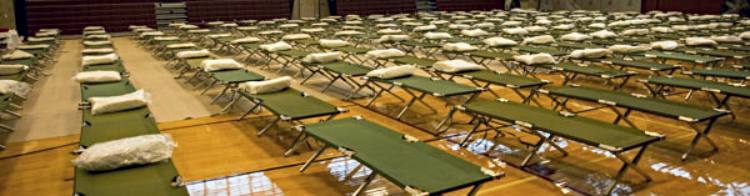
Some stuborn people try to ride out a hurricane in their own home. I get it they’re likely worried about looting during the aftermath. But what are material”things” really worth compared to your life? Zilch…
If the hurricane ends up not being as bad as predicted, great, you’ll be able to return home quickly.
But it’s possible the hurricane could end up being much worse than predicted. Don’t be a fool – evacuate or seek authorized emergency shelters.
 WHAT TO DO AFTER THE HURRICANE
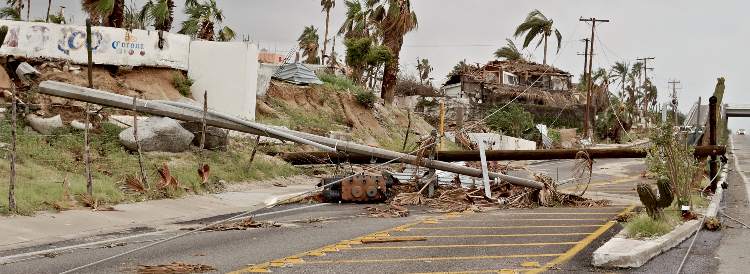
After the storm has passed, it’s time to head back and assess the damage.
You may find that your home escaped unscathed – or you may find a bare slab where you house once stood as my friends did.
Either way, it’s important to keep your safety in mind as you head back.
Don’t Turn Off The Weather Predictions
Keep that NOAA weather radio at hand.
Even after the storm has passed, there may be significant rain events and flooding. It could take days or even weeks for everything to clear up.
Wait For An “All Clear” Signal
Officials only lift the evacuation orders when it’s safe to allow residents back. Again, take that advice.
Drive As Little As Necessary
Random debris will choke roads making travel difficult. Plus, emergency crews will block roads for access to quickly restore services.
Bridge damage is also possible and high water may hide washed-out roads.
Thoroughly Inspect Your Home
When it’s safe to enter, inspect your home for damage.
Use a camera to document everything for insurance purposes.
Leave The Utilities Off
Avoid turning your gas or water until authorities provide an all-clear.
If you’ve got electricity, make sure there are no downed lines or tree limbs hanging from lines.
If you see any, report them to the utility company immediately and stay away.
As A Way To Introduce You To Skilled Survival, We’re Giving Away Our #78 Item Complete Prepper Checklist. Click Here To Get Your FREE Copy Of It.
COMMON MISCONCEPTIONS ABOUT HURRICANES
As with many disasters and emergencies, there are many misconceptions. These “myths” can have serious consequences for your hurricane prep list and plan.
Sure, some of them are harmless. But others can significantly increase your chance of injury or property damage.
Here are some of the most common hurricane prep myths:
“Tape Your Windows To Prevent Shattering”
It turns out that a majority of people surveyed get this wrong. They believe taping windows helps prevent shattering from flying debris.
This myth is so widespread you even see it in movies!
People likely see how the engineered safety glass in automobiles. How it helps hold together the windshield in car crashes using a layer of thin plastic within the glass. They think they can hold the pieces of normal window glass together in much the same way with tape.
Unfortunately, window glass breaks into large, jagged shards with sharp edges. Edges can easily shred all but the most ambitious tape coverage.
If you want to keep your windows safe, skip the tape. Instead, invest in heavy-duty metal storm shutters or be ready to board up the windows with thick plywood!
“You Only Need A Few Days Of Medications”
If you have prescription medications, don’t count on being able to get a refill after a hurricane.
Critical medications are often in short supply immediately after a storm. And many pharmacies are unable to reopen for extended time periods due to damage. Especially if the damage was to the medication supplies. Or there’s a major delay in resupply shipments.
An important part of preparing is expecting a reduction in critical supplies. AND how long you may need to live without these supplies.
So make sure you have a few weeks of medications in your emergency kit.
“Cracking Open Windows And Doors Will Equalize Pressure”
I grew up in tornado country and this same myth is prevalent there.
Many people falsely believe the low pressure in a hurricane or tornado will cause damage. They worry the windows will blow out or the roof to pop up if the pressure is not quickly equalized.
But no home is airtight.
The pressure differences can easily equalize without leaving doors or windows open. Openings that allow wind, rain, and debris to enter your home!
“It’s OK To Delay Evacuate Until The Weather Looks Bad”
As a hurricane approaches landfall, forecasters work overtime. They analyze heaps of data in an attempt to pinpoint exactly when and where the conditions will be worst.
They use this information to create evacuation orders for the most at-risk areas. Often, authorities will issue evacuation orders days ahead of actual landfall. Leaving people wondering if they “really” have to leave yet.
The problem comes when large numbers of people try to evacuate an area at once. Taking with them crowded vehicles, trailers, and all their possessions.
The crowds are inevitably slow and backups form almost immediately.
So instead of quickly leaving the path of destruction, you’re stuck like a sitting duck on the highway. A highway with the hurricane approaching!
So don’t wait. As soon as you hear of evacuation orders, load up your vehicles, button up your home, and head out ASAP.
You’ll be ahead of the game and much more likely to get out of the path of danger without any issues.
“Tropical Storms Are Not Dangerous Enough To Worry About”
Sure the wind speeds might not be as high as a hurricane but inland flooding due to torrential downpours kills more people.
So even if it’s not “technically” called a hurricane – you should take any massive storm very seriously.
WRAP UP
Hurricanes are a fact of life and it’s only a matter of time before another major one strikes. Even if it’s been decades since the last one, the future risks are not less. But it creates complacency!
Don’t be a part of the fragile masses who don’t plan ahead. Instead, create a comprehensive hurricane prep list and join the resilient few who are ready for the next massive hurricane…
There’s a lot of careful consideration that goes into a hurricane prep list. But you can break it down into manageable chunks and tackle them one at a time.
Even if you only get through a few chunks, you’ll still be further ahead than many of your neighbors. Stay safe this hurricane season and every season to come…
Jason K.
P.s. Do you know where the closest nuclear bunker is from your home?
There are a lot of natural nuclear shelters in the US that are absolutely free. And one of them is near your home.
Click here to see the Closest Natural Nuclear Bunker to Your Home?
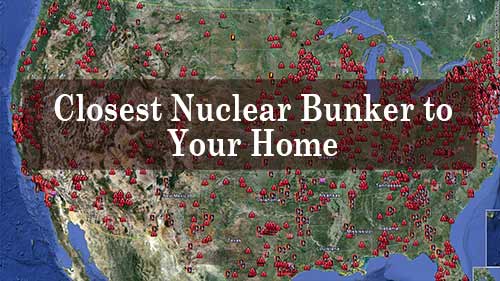
Click on the image above to find out where you need to take shelter.
The post The Ultimate Hurricane Prep List For Survival appeared first on Skilled Survival.





 be dinner, and so much more. As most survivalists do I went with the military spec paracord as my cordage of choice. Its strong, inexpensive, and versatile. I also wanted a good deal of it, at least a hundred feet if not more. Cordage can always be cut shorter but splicing or knotting two pieces of cordage will always create a weak point at that spot. Now I have over a hundred feet of paracord, but how do I store it?