Survival Gear is the most unused product until a natural disaster happens, then it’s the most desired products, but usually too late to help those that really need the help.

We sell around the World, and pride ourselves on offering a level of customer service that we would want to see ourselves if we were shopping online.
Our product ranges change regularly, so we hope that you come back to our sites to see some of the fantastic offers that we regularly have.

Get In Touch

Why Are So Many Asteroids Having Close Calls With Earth In 2020?

Have you noticed that it seems like stories about asteroids that are approaching the Earth are constantly in the news this year?  It wasn’t always this way.  In the old days, maybe there would be a story about an asteroid every once in a while, and those stories were never a big deal.  But now asteroids are zipping by our planet with frightening regularity, and several more very notable passes will happen over the next few weeks.  For example, an asteroid that was just discovered on September 18th will come very, very close to the Earth on Thursday.  According to NASA, it will actually come closer to our planet than many of our weather satellites

An asteroid about the size of an RV or small school bus will zoom past the Earth on Thursday, NASA announced, passing within 13,000 miles of the Earth’s surface.

That’s much closer than the moon and is actually closer than some of our weather satellites.

This asteroid will speed by at more than 17,000 mph, but the good news is that it is so small that it would not be a serious threat even if it hit us.

But two other very large asteroids are also going to pass the Earth by the end of this month, and both of them are large enough to do an enormous amount of damage…

Two large asteroids will pass Earth in the next two weeks, with one measuring up to 426 feet in diameter and the other 656 feet—comparable in size to ancient Egypt’s Great Pyramid of Giza, which is 455 feet tall.

The first, smaller asteroid will pass by Earth on September 25 at a distance of 3.6 million miles, according to NASA’s Center for Near Earth Object Studies, which tracks and predicts asteroids and comets that will come close to Earth. The second larger asteroid will fly by on September 29 at a closer distance of 1.78 million miles.

The good news is that neither of them have a chance of hitting us this time around, but the fact that the Earth’s neighborhood has so much “traffic” these days is a major concern.

Any soldier will tell you that if enough bullets get fired at you there is a very good chance that eventually you will get hit.

Let me give you a couple more examples of “near Earth objects” that are headed our way in the near future…

In October, an “unknown object” is expected to enter our gravitational field and become a temporary “mini-moon”

An object known as 2020 SO is heading towards Earth, and from October, it will be a ‘mini-moon’, which could stay in orbit of our planet until May next year. While we have The Moon, Earth regularly gets many small asteroids and meteors which caught in its orbit, which astronomers call ‘mini-moons’.

And in November, we are being told that a small asteroid will come very close to our planet on the day before the election

An asteroid is projected to come close to the Earth on November 2, a day before the 2020 U.S. presidential election, the Center for Near Earth Objects Studies (CNEOS) at NASA’s Jet Propulsion Laboratory confirmed.

The asteroid known as 2018VP1, first identified at Palomar Observatory in San Diego County, California, has a diameter of 0.002 kilometers (over 6.5 feet), according to the data.

Scientists say that it is not likely that this asteroid will hit us, but they admit that they cannot claim this with 100 percent certainty

And that’s why the future of 2018 VP₁ is uncertain. It was observed 21 times over 13 days, which allows its orbit to be calculated fairly precisely. We know it takes 2 years (plus or minus 0.001314 years) to go around the Sun. In other words, our uncertainty in the asteroid’s orbital period is about 12 hours either way.

That’s actually pretty good, given how few observations were made – but it means we can’t be certain exactly where the asteroid will be on November 2 this year.

Fortunately, this particular asteroid is also too small to seriously hurt us, and we should be thankful for that.

But the fact that so many space rocks have been headed our way is definitely alarming.

Back in August, an asteroid the size of an SUV came extremely close to hitting our planet.  The following comes from NASA

Near Earth Asteroids, or NEAs, pass by our home planet all the time. But an SUV-size asteroid set the record this past weekend for coming closer to Earth than any other known NEA: It passed 1,830 miles (2,950 kilometers) above the southern Indian Ocean on Sunday, Aug. 16 at 12:08 a.m. EDT (Saturday, Aug. 15 at 9:08 p.m. PDT).

What made that incident so unsettling was the fact that NASA didn’t even see it until it had passed us

The flyby wasn’t expected and took many by surprise. In fact, the Palomar Observatory didn’t detect the zooming asteroid until about six hours after the object’s closest approach. “The asteroid approached undetected from the direction of the sun,” Paul Chodas, the director of NASA’s Center for Near Earth Object Studies, told Business Insider. “We didn’t see it coming.”

Unfortunately, the truth is that our scientists simply cannot see everything that is up there.

They are doing their best, but everyone agrees that our technology is limited.

But over the last 20 years our technology has definitely improved, and at this point the number of asteroids that our scientists have identified is far greater than it was a couple of decades ago

The animation maps out all known near-Earth asteroids (NEAs) — space rocks that get within about 30 million miles (50 million kilometers) of our planet’s orbit — from 1999 through January 2018, in roughly 10-year time steps.

The differences are stark. In 1999, identified NEAs speckled the inner solar system thinly, in a light dusting. Many more were discovered by 2009, and Earth’s neighborhood looks absolutely swamped in the present-day portion of the video.

Of course more giant space rocks are being discovered all the time, and unfortunately many of them are not identified until after they have had a close encounter with our planet.

If NASA couldn’t see the asteroid that almost hit us in August in advance, what else can’t they see?

And is it just our imagination that the number of close calls seems to be increasing, or are scientists just getting a whole lot better at detecting them?

At this moment we don’t have all the answers, but we should be thankful that our experts are trying to keep a close watch on the skies because scientists tell us that it is just a matter of time before we are hit by a giant asteroid.

In the movie Deep Impact, such a scenario was called an “extinction level event”.

As I write this article, there are thousands of giant space rocks floating around up there that could cause such a disaster, and NASA is working to catalog them all as rapidly as they can.

***Michael’s new book entitled “Lost Prophecies Of The Future Of America” is now available in paperback and for the Kindle on Amazon.com.***

About the Author: My name is Michael Snyder and my brand new book entitled “Lost Prophecies Of The Future Of America” is now available on Amazon.com.  By purchasing the book you help to support the work that my wife and I are doing, and by giving it to others you help to multiply the impact that we are having on people all over the globe.  I have published thousands of articles on The Economic Collapse BlogEnd Of The American Dream and The Most Important News, and the articles that I publish on those sites are republished on dozens of other prominent websites all over the globe.  I always freely and happily allow others to republish my articles on their own websites, but I also ask that they include this “About the Author” section with each article.  In addition to my new book, I have written four others that are available on Amazon.com including The Beginning Of The EndGet Prepared Now, and Living A Life That Really Matters. (#CommissionsEarned)  The material contained in this article is for general information purposes only, and readers should consult licensed professionals before making any legal, business, financial or health decisions.  I encourage you to follow me on social media on Facebook and Twitter, and any way that you can share these articles with others is a great help.  During these very challenging times, people will need hope more than ever before, and it is our goal to share the gospel of Jesus Christ with as many people as we possibly can.
Federal Authorities Have Already Documented Two Cases In Which Votes Have Been “Discarded” In Key Swing States

The integrity of our elections is of paramount importance, because if our ability to choose our own leaders is compromised that undermines everything that our system of government is based upon.  So every American should be hyper-sensitive to any allegation that our votes are being tampered with, because any attack on the voting process is an attack on all of us.  This is one issue that should be able to unite Republicans and Democrats, and hopefully people across the political spectrum will report anything suspicious that they notice over the coming weeks.  And as I become aware of troubling incidents, I will share them with my readers, because the integrity of our elections is definitely one of my hot button issues.

When I heard that some military ballots in Pennsylvania had been tampered with, that immediately set off alarm bells.  Federal officials are telling us that they recently discovered that nine military ballots in Luzerne County, Pennsylvania had been “improperly opened” and “discarded”

According to a letter from U.S. Attorney Freed to the county elections director, the inquiry into Luzerne County’s ballot handling began Monday, and found that nine military ballots had been “improperly opened” by elections staff and “discarded.”

He wrote that “the majority” of the recovered ballots and envelopes were found in an outside dumpster — seven of the nine ballots outside their official envelopes, and two that elections staff had apparently recovered and sealed back in their envelopes. He said investigators also found four “apparently official” absentee ballot envelopes that were empty.

It appears that someone wanted to get rid of those votes permanently.  After all, you certainly don’t put votes in a dumpster for safekeeping.

Members of the U.S. military sacrifice so much to defend our nation, and so any tampering with their votes is especially grievous.

According to law enforcement authorities working on the case, seven of the votes “were cast for presidential candidate Donald Trump”, and the other two votes are unknown because they had been resealed.

Since Monday, FBI personnel working together with the Pennsylvania State Police have conducted numerous interviews and recovered and reviewed certain physical evidence.  Election officials in Luzerne County have been cooperative. At this point we can confirm that a small number of military ballots were discarded.   Investigators have recovered nine ballots at this time.  Some of those ballots can be attributed to specific voters and some cannot.  Of the nine ballots that were discarded and then recovered, 7 were cast for presidential candidate Donald Trump. Two of the discarded ballots had been resealed inside their appropriate envelopes by Luzerne elections staff prior to recovery by the FBI and the contents of those 2 ballots are unknown.

It is extremely suspicious that all of the votes that had been “discarded” were for only one candidate.

Hopefully federal authorities will nail whoever was responsible for this, because throwing actual votes in the trash is a major offense.

And considering the fact that Pennsylvania is such an important swing state, those votes could actually help to determine who becomes the next president of the United States.

Speaking of swing states, discarded ballots have also been found in Wisconsin.

In fact, officials say that three trays of mail that included absentee ballots were recently discovered sitting in a ditch

The U.S. Postal Service is investigating how three trays of mail, including absentee ballots, ended up in a ditch line in Wisconsin, a swing state whose voters could prove crucial in the upcoming elections.

The Outagamie County Sheriff’s Office said the mail was found around 8 a.m. Monday morning near the intersection of highways 96 and CB, near the Appleton International Airport.

How in the world do ballots just happen to end up in a ditch?

This is just one of the reasons why I very much prefer the way that we used to do things.  When we require the vast majority of the population to vote in person, there is much less of a chance that votes will end up in a ditch or in a dumpster.

Unfortunately, times have changed, and in some states an extremely high percentage of voters will cast their votes by mail in this election.

In Wisconsin, the percentage of absentee votes used to be in the single digits, but thanks to the pandemic that we are currently experiencing things have dramatically changed

Prior to the pandemic, just 6% of Wisconsin voters cast absentee ballots by mail – however during the state’s April primaries, that number jumped to 60%, when 1.1 million out of 1.55 million votes were conducted through the postal service. During the August partisan primary, Wolfe said that 82% of the 867,000 votes cast were via absentee ballot.

During said primaries, thousands of voters across the state complained that they never received the absentee ballots they requested. In one case, a Milwaukee postal worker said that three bins of absentee ballots had never been delivered.

Overall, tens of millions of Americans will vote by mail in 2020, and that makes me very nervous.

There are just so many opportunities for things to go wrong, and that would be true even if everyone was trying to do the right thing.

Sadly, there are always people that try to cheat, and four of them were just arrested by authorities in Texas

Texas Attorney General Ken Paxton announced four arrests Thursday on dozens of felony charges in connection with an alleged vote harvesting scheme during the 2018 Democratic primary elections in Gregg County.

Those four individuals could be going away for a very long time, because collectively they are facing a total of 134 felony charges

Gregg County Commissioner Shannon Brown, Marlena Jackson, Charlie Burns and DeWayne Ward face 134 felony charges in total, according to Paxton’s office. The allegations include election fraud, tampering with a governmental record, mail-in ballot fraud and more.

“To increase the pool of ballots needed to swing the race in Brown’s favor, the group targeted young, able-bodied voters to cast ballots by mail by fraudulently claiming the voters were ‘disabled,’ in most cases without the voters’ knowledge or consent,” Paxton’s office alleged.

Incidents of vote tampering and election fraud really do happen, and we should be very thankful when authorities are able to catch those that are responsible.

Those that follow my work regularly already know how deeply concerned I am about the future of our nation.  Decades of exceedingly foolish decisions are catching up with us in a major way, and yet we just continue to steamroll toward oblivion.

But even though I am absolutely disgusted by so many of our “politicians”, I very much want the American people to be completely free to pick whoever they want each and every election.

Without free and fair elections, there is no way that our Republic would be able to work.  So let us be extremely diligent in guarding the integrity of our votes, because if we lose that we lose any hope of ever turning things around politically.

***Michael’s new book entitled “Lost Prophecies Of The Future Of America” is now available in paperback and for the Kindle on Amazon.com.***

About the Author: My name is Michael Snyder and my brand new book entitled “Lost Prophecies Of The Future Of America” is now available on Amazon.com.  By purchasing the book you help to support the work that my wife and I are doing, and by giving it to others you help to multiply the impact that we are having on people all over the globe.  I have published thousands of articles on The Economic Collapse BlogEnd Of The American Dream and The Most Important News, and the articles that I publish on those sites are republished on dozens of other prominent websites all over the globe.  I always freely and happily allow others to republish my articles on their own websites, but I also ask that they include this “About the Author” section with each article.  In addition to my new book, I have written four others that are available on Amazon.com including The Beginning Of The EndGet Prepared Now, and Living A Life That Really Matters. (#CommissionsEarned)  The material contained in this article is for general information purposes only, and readers should consult licensed professionals before making any legal, business, financial or health decisions.  I encourage you to follow me on social media on Facebook and Twitter, and any way that you can share these articles with others is a great help.  During these very challenging times, people will need hope more than ever before, and it is our goal to share the gospel of Jesus Christ with as many people as we possibly can.

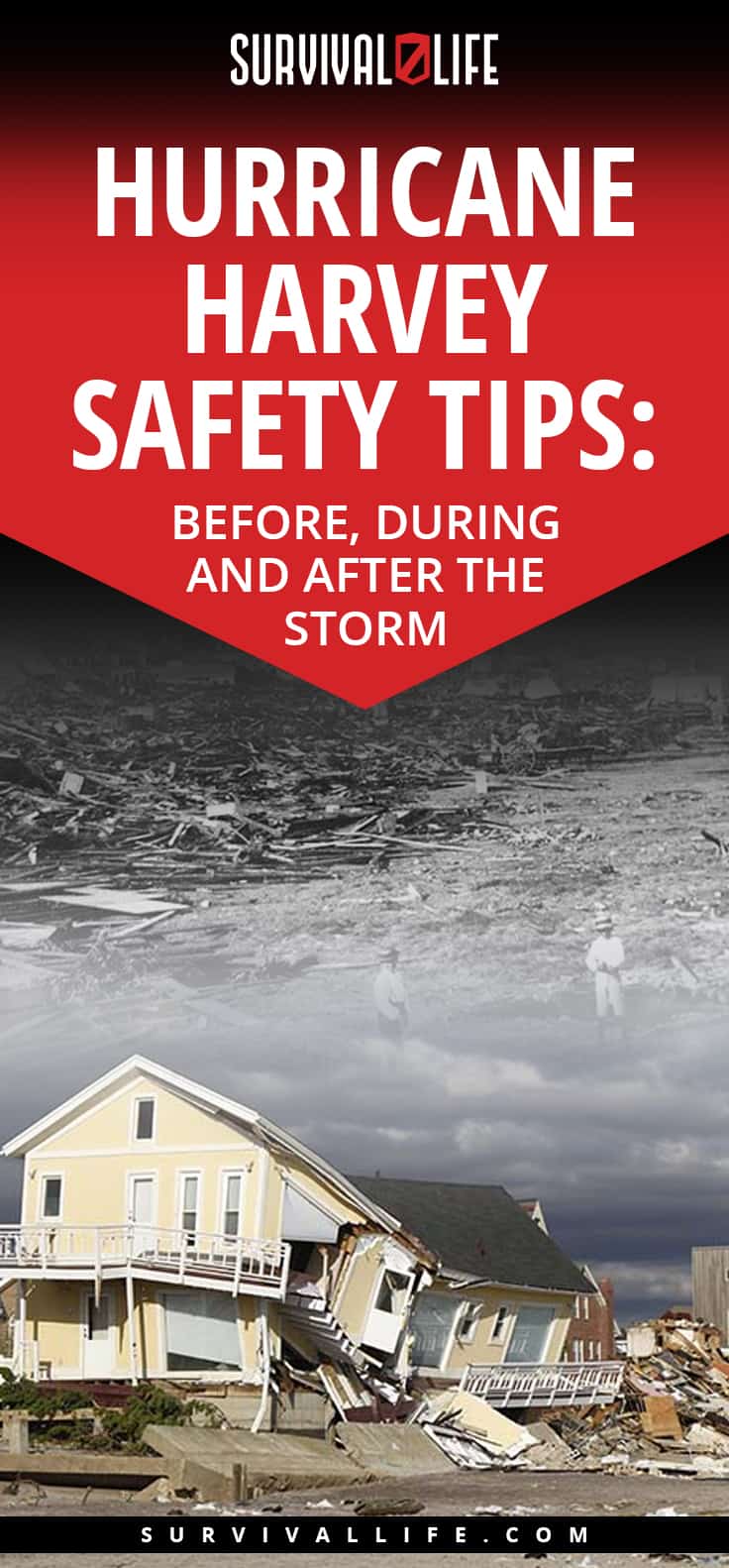
Hurricane Safety Tips: Before, During and After the Storm

With Hurricane Season hitting the southeastern coast of the U.S., we thought it would be a good time to go back over hurricane survival and preparedness.

In the following article, you’ll learn what to do before, during and after a hurricane to make sure you, your family and your property stay as safe as possible.


Hurricane Safety Tips: Before, During and After the Storm

Hurricane season is upon us. Being prepared and knowing what to do in the event of a hurricane, as with any type of storm, is the key to staying alive.

The damage left behind after a hurricane can be devastating and very costly. The most important thing to remember with any type of storm: you and your family’s safety is the number one priority! Material possessions can be replaced — a human life cannot.

To understand just how important hurricane safety is, let’s go over just a few of the most memorable hurricanes in recent history.

Charley (August 2004)

At a category 4 classification, Charley was the strongest storm to hit the U.S. since 1992’s Andrew, which clocked in at category 5. In Punta Gorda, Florida, where the hurricane made landfall, winds clocked in at 112 miles per hour – before they destroyed the measuring equipment, that is. Damages amounted to $14 billion in Florida, South Carolina, and North Carolina.

Katrina (August 2005)

This category 3 hurricane is the costliest in U.S. history, with damages estimated at $81 billion. It’s also one of the deadliest, with deaths exceeding 1,800 in Florida, Louisiana, Mississippi, and Alabama. Winds reached a maximum of 175 miles per hour, but most of the storm’s devastation resulted from levy failure in the low-lying city of New Orleans.

Ike (September 2008)

Although it was classified as a category 2 storm, Ike remains the third costliest hurricane in U.S. history after Katrina and 1992’s Andrew. Total damage was $25 billion – mostly in Florida, Texas, Louisiana, and Arkansas.

Sandy (October 2012)

Hurricane Sandy was the deadliest and most destructive hurricane of the 2012 Atlantic hurricane season, and the second-costliest hurricane in United States history. Estimated damage of about $75 billion – a total surpassed only by Hurricane Katrina and Harvey. At least 233 people were killed along the path of the storm in eight countries.

Harvey

Hurricane Harvey did massive damage to places like Houston, most of the rest of Texas, and the South in general.  Hurricane Harvey was responsible for over 100 deaths in total and over $125 Billion dollars in structural damages.  It is the highest costing hurricane on record.  It sustained winds of over 130 mph for at least a minute straight.  More than 17,000 homes were destroyed and up to 5 feet of rain was dumped, more than any other Hurricane on Record.

The deadliest hurricane to ever hit the United States? The Great Galveston Hurricane of 1900

This storm caused between 8,000 and 12,000 deaths. The storm reached the Texas coast south of Galveston on September 8, 1900 as a category 4 hurricane with a storm surge of 8 to 15 feet. The lack of proper warning in 1900 made this storm the deadliest in U.S. history.

Safety measures we’ll cover:

Before the storm

  • Stay up-to-date with weather alerts and warnings
  • 72 hour emergency kits
  • Family meetings on emergency safety

During the storm

  • Evacuation – what to do if you evacuate (or if you don’t)
  • Flood safety measures
  • What to do in the event of a power outage

After the storm

  • Returning home and what to do next
  • First aid
  • Things to watch for
  • Assessing damage
How to survive a hurricane infographic.
Check out more hurricane survival tips here.

Before the Storm

Unlike a tornado, a hurricane can be tracked for days or even weeks before it hits, giving you time to prepare your home, your family and yourself for the storm. Here. are a few things you can do to get ready before a hurricane

1. Know where to tune in for weather updates when a hurricane watch or hurricane warning has been posted. Watch the weather reports on your television or check the weather reports online at Weather.com. Having a weather radio is a great backup resource in the event of a power outage. Make sure to have plenty of batteries.

2. Always have your cell phone charged completely. If you know bad weather is headed your way, charge your phone and try to keep it charged at 100%. In the event of an evacuation, make sure to have a waterproof way to carry your cell phone.  We recommend that you keep multiple portable power packs to maintain a charge or use a solar phone charger.

3. Have a 72-hour emergency kit packed and ready to grab on your way out to safety. Every member of the family should have one. Check out this great article on how you can assemble the perfect 72 hour kit.  You can also purchase one if you don’t have time to assemble it here.

4. Have a family meeting to discuss what you and your family will do in the case of an evacuation. It is important to include EVERY family member, even the little ones.

During the Storm

You may think that once a storm hits there’s nothing you can do, but that’s just not true. Here are a few actions you can take to keep yourself and your loved ones safe in the midst of a hurricane.

1.If you are advised to evacuate, don’t wait! The longer you wait the more hectic traffic becomes. Being stuck in traffic can propose a whole new emergency situation.

2. Avoid flooded roads. Six inches of water is all it takes to float a car. Keep an eye out for flood compromised or washed out bridges.

3. Make sure someone outside the storm area knows where you will be and how to reach you.

4. If you do not evacuate, stay indoors and off the roads. Stay away from windows and doors.

5. If power is lost, unplug all electrical appliances to prevent damage from power surge when service resumes.

6. Keep emergency supplies (your 72-hour kit) ready to go.


7. Listen to local radio for changes in the weather situation and instructions.

8. If flooding occurs, move your valuable property to higher locations in your home, if time permits. Move yourself and your pets to higher ground or shelter.

9. Be sure to lock your home and take emergency supplies, clothing, and bedding with you.

After the Storm

After the hurricane comes time to assess the damage, provide aid to the injured and figure out how to proceed in the aftermath of the storm. With any luck, your preps before and during the hurricane will help to mitigate the damage. Here’s what you should do after a hurricane.

1. Continue to monitor local radio for information.

2. Return home only after authorities have announced it is safe to do so. When you reenter your home, do so cautiously. Check for displaced wildlife such as snakes. If necessary, open doors and windows to ventilate and help dry your home.

3. Give first aid where necessary. Do not move a seriously injured person unless they are in imminent danger. Call for emergency help.

4. Watch for and avoid downed power lines.

5. Avoid using the phone except in emergency. This will keep the phones free for authorities and those in more dire straits.

6. Check for damaged electrical wiring. Look for sparks or frayed wires. Hot or melting wiring insulation cause an acrid smell. If you notice any damage, cut off the power at the fuse or circuit breaker box, but do not touch the box if you have to stand in water. In the latter case you should check with an electrician.

7. Avoid using candles, kerosene lamps, or other open flame sources for heat or light. Candles cause more fires after a disaster than any other source. If you must use a candle or open flame lamp, take extreme care to keep pets, children, and combustibles away from the flame.

8. If you smell or hear the hiss of leaking gas, leave the house. If you can, turn off the gas line at the cut off valve outside your home. Call the utility company from your cell or from another location.

9. Inspect your water lines and other plumbing. If you think there has been any damage, avoid using toilets and do not drink the tap water.

10. Check your freezer and refrigerator for spoiled food.

11. Don’t burn charcoal in an enclosed area. Doing so can cause buildup of deadly carbon monoxide.

12. Take photos of any damaged items. Place damaged items outside if they cannot be salvaged but try to avoid discarding them until they have been looked at by an insurance adjuster.

Do you live in a hurricane-prone area? What do you do to prepare? Let us know in the comments!

FURTHER READING:

*this post was originally published August, 2016. We have updated it for accuracy and relevancy in time for Hurricane Harvey. August, 25, 2017*

Hurricane Harvey Safety Tips: Before, During and After the Storm

Hurricane Survival Tips: How to Survive Natural Disasters

If hurricane survival is your goal, then preparedness is the solution. Being prepared is the most effective way to increase your chances of surviving natural disasters. We all know the destructive power of hurricanes, with the storm surges and flooding, as well as the turbulent winds.

How to Survive a Hurricane

Getting ready for natural disasters like these always involves having a hurricane survival kit and we have written a brief post on this before, which includes some tips.  These kits are almost always the most underrated and ignored survival tricks, which is a sad thing because these kits are in fact very useful. Have one ready at all times and remember to check the contents regularly and replace those that have expired.

Once you have taught yourself on packing and maintaining a kit, you have taken the first step towards emergency preparedness. Others may find this simple thing difficult to do, much less have the time to do it. We can never stress enough the importance of getting ready for anything.

Here are some tips to guide you in surviving hurricanes. If you have anything more to add, feel free to put them in the comments section.

Before a Hurricane

Hurricane Survival Tips

1. Prepare a supply kit

The most basic things you will need are food, water, clothing, bedding, first aid supplies, battery operated lighting, and tools. Also, consider wrapping all of your supplies in plastic sheets, to prevent them from getting wet should flooding occur. It would also be wise to invest in an inflatable raft large enough to carry your family and some supplies, just in case.

Supply kit contents:

  • Water – at least 1 gallon daily per person for 7 to 10 days. Katrina and Wilma should have emphasized the importance of having sufficient water on hand. Don’t forget some for your pets.
  • Food – at least enough for 3 to 7 days
    — non-perishable packaged or canned food / juices
    — foods for infants or the elderly
    — snack foods (Peanut butter; mixed PB&J; breakfast bars; crackers; canned fruit; raisins; chips;
    — non-electric can opener
    — cooking tools / fuel
    — paper plates / plastic utensils / paper cups
    — trash bags and duct tape – useful for clean-up, or patching leaks in an emergency
  • An ax to use if you stay and need to escape from your house – or other uses
  • Blankets / Pillows, etc.
  • Clothing – seasonal / rain gear/ sturdy shoes
  • First Aid Kit / Medicines / Prescription Drugs
  • Special Items – for babies and the elderly
  • Toiletries / Hygiene items / Moisture wipes
  • Bug spray, Cortisone for bug bites
  • Sunscreen & Lotion
  • Tarp to cover holes if needed.
  • Bleach
  • Water purification tablets
  • Waterless soap, this saves water for drinking
  • Flashlight / Batteries
  • Radio – Battery operated and NOAA weather radio
  • Battery operated television, with extra batteries.
  • Cash – Banks and ATMs may not be open or available for extended periods. Make sure you have small bills because it will often be difficult to get change. If you only have a $100 and water is $10 for a case and you are limited to one case, you do not want to have the choice of paying $100 or having no water.
  • Keys to house, cars, boats etc
  • Toys, Books and Games
  • Important documents – in a waterproof container or watertight resealable plastic bag
    — insurance, medical records, bank account numbers, Social Security card, etc. Don’t forget your re-entry documents (e.g. stickers or passes). Many barrier islands require some documentation in order to return. Keep important phone numbers here. You may know them, but a loved one may not.
  • Tools – keep a set with you during the storm. A pocket knife, nails, a hammer and rope are important elements. Towels and buckets are useful too if you develop a leak.
  • Vehicle fuel tanks filled
  • Pet care items
    — proper identification / immunization records / medications
    — ample supply of food and water
    — a carrier or cage
    — muzzle and leash

2. Know your surroundings

Hurricane Survival Tips

Learn the elevation level of your property and whether the land is flood-prone. This will help you know how your property will be affected when storm surge or tidal flooding are forecasted. See more

3. Cover all of your home’s windows

Hurricane Survival Tips

Permanent storm shutters offer the best protection for windows. A second option is to board up windows with 5/8” exterior grade or marine plywood, cut to fit and ready to install. Another year-round option would be installation of laminated glass with impact-resistant glazing. Tape does not prevent windows from breaking. More tips from ready.gov

4. Keep a water supply

Hurricane Survival Tips

Store water in plastic containers such as soft drink bottles. Avoid using containers that will decompose or break, such as milk cartons or glass bottles. A normally active person needs to drink at least two quarts of water each day. Hot environments and intense physical activity can double that amount. Children, nursing mothers, and ill people will need more. Store one gallon of water per person per day. Keep at least a three-day supply of water per person (two quarts for drinking, two quarts for each person in your household for food preparation/sanitation). Click here for the full post.

5. Keep a food supply

Hurricane Survival Tips

Store at least a three-day supply of non-perishable food. Select foods that require no refrigeration, preparation or cooking, and little or no water. If you must heat food, pack a can of sterno. Select food items that are compact and lightweight. Include a selection of the following foods in your Disaster Supplies Kit:

  • Ready-to-eat canned meats, fruits, and vegetables
  • Canned juices
  • Staples (salt, sugar, pepper, spices, etc.)
  • High-energy foods
  • Vitamins
  • Food for infants
  • Comfort/stress foods

See more here.

6. Make a plan

Hurricane Survival Tips

Have a family communication plan so family members know how to let others know they are safe and have a plan for reuniting if separated.

7. Crank up the cold

Hurricane Survival Tips

Turn your refrigerator and freezer to the coldest setting so that food will last longer should the power go out. Keep the doors closed as much as possible to hold in the cold air.

Read more here.

8. Trim trees and hedges

Hurricane Survival Tips

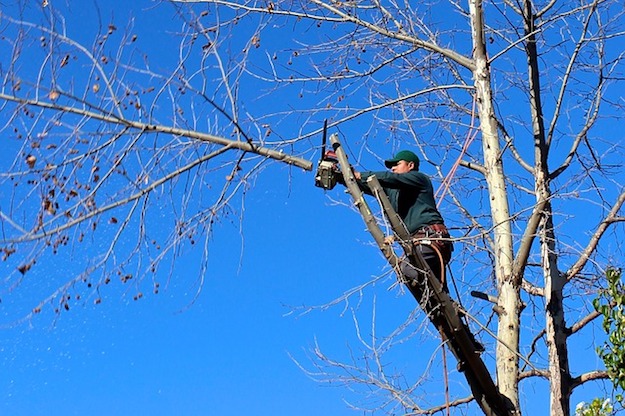
Trim trees, hedges and bushes before hurricane season so that the wind can blow through easily. Limbs can become projectiles, breaking windows and damaging roofs.

Continue reading.

9. Make a list

Keep a list of loose items that need to be brought in or tied down such as patio furniture, garbage cans, plants, pool filter, etc. Don’t forget the mailbox and TV antenna.

To read the whole article click here.

10. Invest in a small generator

A small gas-powered motor can produce small amounts of electricity, providing you with essentials for a few hours at a time if power lines are down after the storm.

Get one before the hurricane hits: if you wait till the storm has come and gone, you’ll be looking for a generator with everyone else. In that case, expect very long lines and seeing empty shelves where generators used to sit in your local hardware store. Read more.

11. Buy a radio

Hurricane Survival Tips

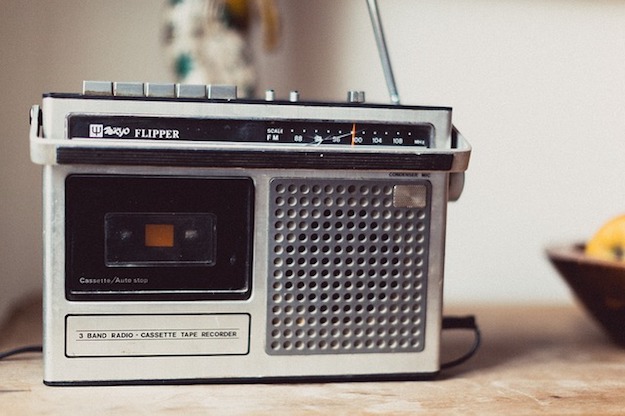
Invest in a National Oceanic and Atmospheric Administration (NOAA) weather radio to keep track of what is going on. These broadcasts are sent out via VHF radio waves, so any receiver that can pick up such broadcasts will do.

See more.

12. Make an evacuation plan

Coastal residents should form evacuation plans before a warning is issued to identify a safe shelter and a route to get there.

Read more.

13. Keep a life preserver

Stash an axe and life preservers in the upper story, or attic, of your home. Remember, most of the drowning victims of Hurricane Katrina were people who stayed in their homes and found themselves trapped by rising waters with no place to go. Many drowned in their attics, unable to break through the roof to the outside. A few bucks spent on these items ahead of time could save your life!  It also wouldn’t hurt to have a raft for your family if you need to escape rising waters.

See more.

14. Invest in a waterproof LED headlamp

I highly recommend that you purchase a waterproof back-country type headlamp with LED bulbs. Headlamps leave your hands free to carry things, or work on things. LED bulbs use a fraction of the power, are far more shock resistant, and last far longer than traditional light bulbs, so your batteries (don’t forget to stock spares) last many times longer.

For the full post, click here.

15. Turn off circuit breakers

Hurricane Survival Tips

If power blinks off and on, turn off all of the circuit breakers except the one that powers a lamp in an internal part of your house.

16. Bring outdoor objects inside

Bring in outdoor objects such as lawn furniture, hanging plants, bicycles, toys and garden tools, and secure objects that cannot be brought inside, the Red Cross says.

Read the full post here.

17. Gas up your vehicles

Hurricane Survival Tips

Make sure you have jumper cables and flares, along with your evacuation kit in your car.

Read more

18. Download the Emergency App from the American Red Cross

Sometimes all you need is an app for enhanced hurricane survival. Available on the App Store as well as on Google Play.

During a Hurricane

If a hurricane is likely in your area, you should:

  • Listen to the radio or TV for information.
  • Secure your home, close storm shutters, and secure outdoor objects or bring them indoors.
  • Turn off utilities if instructed to do so. Otherwise, turn the refrigerator thermostat to its coldest setting and keep its doors closed.
  • Turn off propane tanks.· Avoid using the phone, except for serious emergencies.
  • Moor your boat if time permits.
  • Ensure a supply of water for sanitary purposes such as cleaning and flushing toilets. Fill the bathtub and other large containers with water.

When to Evacuate

You should evacuate under the following conditions:

  • If you are directed by local authorities to do so. Be sure to follow their instructions.
  • If you live in a mobile home or temporary structure—such shelters are particularly hazardous during hurricanes no matter how well fastened to the ground.
  • If you live in a high-rise building—hurricane winds are stronger at higher elevations.
  • If you live on the coast, on a floodplain, near a river, or on an inland waterway.
  • If you feel you are in danger.
  • If you are unable to evacuate, go to your safe room. If you do not have one, follow these guidelines:

Stay Indoors

  • Close all interior doors—secure and brace external doors.
  • Keep curtains and blinds closed. Do not be fooled if there is a lull; it could be the eye of the storm – winds will pick up again.
  • Take refuge in a small interior room, closet, or hallway on the lowest level.
  • Lie on the floor under a table or another sturdy object.

After a Hurricane

1. Beware of heights

Hurricane Survival Tips

Almost half of the people who died during cleanup fell from a roof, ladder or tree. If there is any chance that you will be off the ground after a storm, invest in safety equipment and learn how to use it now. Harnesses, lifelines, lanyards, anchors, slip-resistant shoes and ladder safety devices will help. Remember, the chaotic days after a storm are a bad time to learn how to use unfamiliar equipment. See more

2. Watch your step

Hurricane Survival Tips

Avoid standing water, which may hide broken glass, sharp metal or a downed power line, and don’t allow children to play in puddles. Be careful using metal tree trimmers or metal ladders around power lines, and make sure appliances are dry before plugging them back in. Electrocution is a very real risk after storms. Click here to learn more.

3. Use a portable generator with caution

Never use a generator inside a home, basement, shed or garage even if doors and windows are open. Keep generators outside and far away from windows, doors and vents. Read both the label on your generator and the owner’s manual and follow the instructions. Any electrical cables you use with the generator should be free of damage and suitable for outdoor use. Continue reading.

4. Beware of fallen wires

Hurricane Survival Tips

Stay away from any downed wires, including cable TV feeds. They may be live with deadly voltage. If you are standing in water, do not handle or operate electrical appliances. Electrical components, including circuit breakers, wiring in the walls and outlets that have been under water should not be turned on. They should be replaced unless properly inspected and tested by a qualified electrician.

Natural gas or propane valves that have been under water should be replaced. Smell and listen for leaky gas connections. If you believe there is a gas leak, immediately leave the house and leave the door(s) open. Never strike a match. Any size flame can spark an explosion. Before turning the gas back on, have the gas system checked by a professional. Click here for more info.

Additional Hurricane Safety Information:

Saffir Simpson Scale:

Being aware is another hurricane survival trick.

Infographic:

Hurricane survival tips simplified. Click here to see the whole image

For awesome survival gear you can’t make at home, check out the Survival Life Store!

Want to know more? Check out these related articles:

Hurricane Safety Tips: Before, During and After the Storm

Emergency Hurricane Survival Kit List & Preparedness Tips

Hurricane Evacuation for When It’s Needed Most Provided in Gone Before Gridlock