No products in the cart.
Bluetti AC200P Review: REAL WORLD Tests For Emergencies & Camping

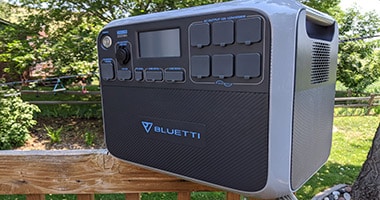 In the video below, “Just In Case” Jack puts the Bluetti AC200P Power Station through its paces as:
Watch his detailed review and his final thoughts in the video below:
My Overall Thoughts On The Bluetti AC200P
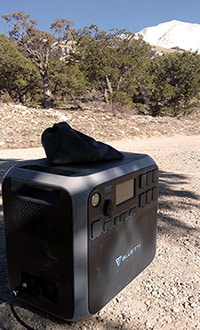 If you watch the video (or read the transcript at the end of this post) you’ll discover just how impressed I am with the capabilities of this power station.
It was able to provide me a surprising amount of clean, quiet, power as well as capture solar power anytime the sun was shining. For survival and camping, its combinations of features (clean, quiet, solar, and power storage amounts) are real game-changers!
Yes, it is a serious investment – but so is ANY fuel generator you could buy.
So if you’re looking to purchase either a fuel generator OR this Bluetti Power Station, you have to look at the INCREMENTAL costs between the two and try to compare as close to apples to apples on the power capabilities.
But then you have to factor in the clean, quiet, solar aspects. So while you do give up some overall pure power production – I feel like it more than offsets the costs with all the positives aspects. But ultimately it comes down to your own personal choice and priorities.

So, let me expound upon those pros and cons in more detail…

Bluetti AC200P Advantages and Disadvantages
Major Advantages
Safe, Clean Power
I believe the biggest advantage of the Bluetti AC200P is how clean it is.
When you compare it to a fuel generator; it’s not even close.
You can run this unit safely, INSIDE your home. You can’t say that for any fuel generators.
Every year people who don’t know any better run their fuel generators inside and die. Seriously, it’s a major risk if you make this mistake.
For example, according to consumerreports.org:
Generator misuse leads to deaths from carbon monoxide (CO) poisoning, injuries from close calls, and burns—all of which happen too often during power outages and storms. The biggest problem, according to reports from the Consumer Product Safety Commission, is CO poisoning. Portable generators can produce deadly levels of carbon monoxide, a colorless, odorless, and tasteless gas.
Carbon monoxide can kill you in as little as 5 minutes if the levels are high enough, according to safety guidelines from the National Institutes of Health. And data from the CPSC shows that from 2005 to 2017 more than 900 people died of carbon monoxide poisoning while using portable generators.
However, with the Bluetti, there are absolutely NO toxic, deadly fumes to worry about.
It’s Whisper Quiet
This is the second biggest advantage the Bluetti Power Station provides.
Walk around any neighborhood after a power outage and you’ll hear the loud and constant hum of fuel generators EVERYWHERE.
They are quite loud and annoying and it’s always been a necessary evil. But with the Bluetti, you can capture and use power at a whisper.
If you’re a prepper you’ll want a stealthy solution to your backup power system – the Bluetti Power Station IS your answer.
And this no-noise feature is even more useful during camping. I was able to run all my electronics and recharge my deep cycle battery without generating any campground NOISE!
Fuel generators are loud – that’s why most campgrounds and restrictions on when you can run them. If you want to avoid these restrictions, get the Bluetti.
“Free” Fuel Via Solar
You can’t beat solar when it comes to survival and preparedness. And the Bluetti AC200P is the ideal portable power station to capture that free energy.
In a grid-down scenario, the Bluetti (paired with solar panels) will never leave you without some power.
This is a HUGE advantage in a dire power outage emergency.
For example, if you depend on a C-PAP machine for health reasons – you need a reliable backup power system. This Bluetti Power Station does just that with its solar capabilities.
Lots of Output Options
The Bluetti AC200P has a ton of power outlets. I mean, this beast has 6 typical AC outlets, plus, DC outlets, and USB outlets, etc.
The bottom line is, there’s essentially no typical electronic device you can’t power using the Bluetti.
Major Disadvantages
For A “Portable” Unit, It’s Fairly Heavy
The Bluetti AC200P is quite heavy and doesn’t come with a built-in cart system (like many fuel-based house generators do). This can lead to a real struggle when loading it into a vehicle trunk or moving it around your home.
At 60 lbs. it IS PORTABLE but you also want to station it in a central location and leave it there when in use. So you want to avoid moving it more than necessary.
Won’t Completely Replace A Large Fuel-Based Generator
While this is one of the biggest power stations available on the market today, it’s still not ready to replace your home generator. There’s just not enough power to keep all your systems up and running at the same time for the long term.
However, if your willing to significantly reduce your energy needs in a crisis – you CAN get by pretty well with the Bluetti. So for some families, it may be just enough for most families, it’ll come up just short.
And for the price, a fuel-based home generator provides more power per dollar (at the time this review was written).
Price
The Bluetti AC200P is a bit of an upfront investment. And the total price goes up when you add solar panels (which you SHOULD do!). However, you can offset this initial cost over time by using it regularly.
If you use it to charge your cellphones and run a C-PAP machine nightly, well, little by little, month by month, you’re saving some on your electric bill. This is assuming you’re using solar power to recharge the unit.
And you have to factor in the INCREMENTAL cost vs. a traditional fuel-based generator that can provide a similar amount of power.
Once you look at it as a whole, for the right person, the price is worth it.
Bluetti AC200P Charge Time Estimates
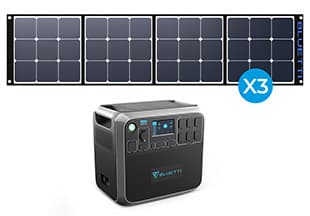 Below are approximate estimates of how long you can power a common device. This may help you decide whether the Bluetti AC200P is the right power station for you.
Note: the following estimates are assuming you’re only powering THAT single electrical device at a time. If your plugin and run several devices at the same time, the charge time estimates drop.
CHARGE TIME ESTIMATES
- Refrigerator(800w) 2.1Hrs+CPAP(60w) 28+ Hrs
- Laptop(60w) 28+ Hrs
- Fan(12w) 140+ Hrs
- Smartphone 180+ Hrs
- Led Lantern Light(10w) 170+ Hrs
- LCD TV(100w) 17+ Hrs
Final Thoughts
For the right person, the Bluetti AC200P Power Station is the ideal solution to both your emergency backup and camping power needs.
It’s best for those who understand its limitations and are fine strictly managing their power needs during a power outage. It’s also best for those who live where the sun is reliably abundant.
Or anyone who prioritizes producing power with no noise or dangerous toxic fumes.
If these features are important to you, then I bet you’ll be completely satisfied with the Bluetti AC200P.
If not, then you should continue searching for other options…
Click For Bluetti AC200P Video Transcript
Today, I’m going to show you this impressive piece of gear from Bluetti.
It’s their 2000 watt power station. And I’m going to show you their solar panel kit that goes with it as well.
Now, before we jump into the power station specifics, and whether it’s good for preparing, you might be asking, what the heck is a power station anyway? Because these units are still relatively new, many people are confused about what they do and how they work.
In simple terms, a power station is a large portable battery with an intuitive user interface.
Basically, it’s a large battery with a lot of inputs and outputs. All these power inputs and outputs make it sort of a smart battery, which can be used to power lots of different household items or camping appliances.
For example, it can power a refrigerator, a small freezer, entertainment systems, microwaves, small ovens, computers, heated blankets, C-PAP machines, et cetera. You get the idea.
Yes, this unit can run a full-size refrigerator for several hours, or even longer if you’ve got hooked up to solar panels. I did it. I tested It. It does work.
So now that you have a better idea of what a power station is, and its potential, let’s go over the main functions and features of this Bluetti AC200P Power Station.
This unit has five different charging methods. The first and most straightforward method is to use a three-pronged electrical cord, and the power supply, to go from your wall straight to this unit.
The second way to charge this unit is to use a series of solar panels out in the sun. You hook the solar panels up in a series and you feed that into this smart battery and you’ve turned it into a solar generator.
So yes, you’ll definitely want to pair solar panels with this, if possible.
Another way to power your Bluetti Power Station is through a running vehicle.
This is done via the 12-volt outlet, or what some people call your cigarette lighter in your car.
The next method to charge this power station is using a fuel-based generator. Basically, it’s similar to the wall plug hookup. Only, instead of plugging into the wall, you’re plugging into your generator while it’s running.
And finally, you can hook up the power station off a lead-acid battery. You just connect the positive and negative poles of the battery to then feed that energy into your power station.
So as you can see, there are many ways to keep your Bluetti AC200P Power Station ready to go for an emergency or for a quick escape outdoors for camping.
Okay, let’s move on to the power out options.
First of all, this power station has one 12 volt, 10 amp DC out. It’s got a 12 volt, 25 amp DC out and it’s got two 12 volt, 3 amp outputs. It’s got two type C 60-watt outs and it’s got four, 5 volt, 10 amp USB ports.
And it’s got six typical AC out, either 100 or 120 volt. Six of those. That’s your typical plugins for most appliances right there. So I primarily use the typical AC output plugs. And there’s six of those.
They provide six because that’s the output you’ll use most often for small electronic devices or your appliances. We’re talking refrigerators, smartphones, computers, C-PAP machines, Et cetera.
The power station’s also able to provide 12-volt output power. This is a great option when you want to charge your pop-up or RVs deep cycle marine battery.
I had to buy a special adapter that went from this DC port, and then it comes out into two alligator clips that you then plug onto the ends of the deep cycle marine batteries posts. And you just plug in, turn the power station on, and it’s that easy. It starts charging the deep cycle marine battery back up.
You can also use that same method to charge a dead car battery as well.
Now that you have a good overview of this power station, here’s the real question. Should you get one?
So there are two main reasons to get the Bluetti Power Station. First of all, it could be used as an emergency backup when the grid power is down. Or it can be a very nice camping accessory.
Let’s go over the Bluetti as a home emergency backup system first. And then we’ll go over the use as an off-grid camping system.
As an emergency back to power supply, the Bluetti will help you get through shorter-term emergencies with some extra luxuries. However, for most people, it won’t be enough to fully replace your full-blown home generator.
To give you an idea of what this power station you can do, here’s a chart I found. It provides some estimates of typical run times for different devices.
My own test results for some of these devices were right in line with the numbers on this chart. So I feel like they’re fairly good approximations for all the devices listed.
Now, before you get too excited, remember these approximate run times are if you’re running that single device only.
If you start powering multiple devices at once, let’s say your refrigerator, your television, your laptop, and a microwave, all at the same time, well, first of all, that’s really poor power management in a crisis. So shame on you. But you’re also going to run through all the available battery power fast.
And with that said, this unit is perfect to provide power for smaller electronic devices with ease, such as smartphones, tablets, computers, video-game consoles, TVs for quite some time. And since you can recharge the power station with solar panels, you’re never fully out of options for long.
If you use all of your power up, sure, you’re now at the mercy of the sun, but that’s better than nothing.
And if you’re smart with your energy use, there could be enough power to support several smaller electronic devices perpetually.
So while the Bluetti AC200P Power Station is a very nice addition for the whole house power backup system, it’s not quite ready to replace the traditional whole house generator, unless of course, you have very low power needs.
But in a real crisis, if you forget everything except a refrigerator and one smartphone during critical emergencies, and to keep your solar panels out and pointed to the sun, whenever available, you can probably keep your food from spoiling and your phone operational for an extended period of time.
So again, with wise power management, this unit can really help provide some much-needed power during a multi-day power outage.
Now, before we move on, there’s one aspect of this power station that’s worth noting for preparedness. A power station provides clean, quiet power.
I want to let that sink in for just one moment.
With a fuel-based generator, there’s no way to run it without everyone in the neighborhood hearing it. Sure. There’s always a way to muffle a camping generator, or there’s a way to try to run it quieter. But in my opinion, this power station’s superpower is that it almost produces zero noise.
Now, to be honest, it’s not completely silent. It does have a cooling fan that kicks on from time to time. But it’s not really louder than a laptop cooling fan. So compared to a fuel-based generator, it’s pretty much silent.
It also doesn’t produce any toxic fumes. So you can keep this unit inside your home when you’re using it. This ability allows you to power your critical appliance without nosy neighbors even knowing about it.
So if you’re at all concerned about your neighbors, trying to mooch or steal off you during a crisis, because hey, you have the luxury of power and they don’t. Then this unit provides that sort of stealth.
Let’s now take a look At where the Bluetti really shines; Off-grid camping.
I recently took this unit with me on a camping trip to the Sand Dunes National Parks, near Alamosa, Colorado.
Side note, if you ever get a chance to go there, do it. It’s incredible. Stunning.
And we went the first week of April. So I was banking on the power station to keep my family and I warm and comfortable in the chili overnight temps.
For example, the first night, the temperatures briefly dropped down into the twenties. Fortunately, the pop-up camper we rented has a small propane heater and heated mattresses. But the location we camped at, Zapata Falls Campground, has no power whatsoever. So in order to run the furnace and the heated mattress, we had to rely on the deep cycle marine battery and this Bluetti Power Station.
One thing to note, it’s not possible to run the heated mattress off the marine battery. It’s just the way the pop-up campers’ electrical system is set up. So in order to take advantage of the heated mattresses, the power station was our only option.
The great news is, the Bluetti Power Station was perfect for such a task.
All three nights I was able to run both heated mattresses, the one my wife and I slept on and the one the kids slept on. And it helped keep everyone nice and toasty, even though the outside temperatures were frigid.
And after this experience with cold-weather camping, I’m confident we could have enjoyed camping in temperatures that dip down into the teens. This is a big deal to me because I hate crowded campgrounds.
So to me, the Bluetti Power Station significantly opens up shoulder season camping, which is much less crowded. So with this power station, I can now go camping nearly any time of the year, as long as we avoid blizzards or deep freeze winter temps.
Now, not only was the Bluetti AC200P Power Station up to the challenge of running heated mattresses. But as long as I took advantage of running charging every day, I could keep our small electronic devices powered up as well.
And we were able to cook some delicious cinnamon rolls on our small toaster. And even, one morning, we made pizza pockets one evening.
So I want to go over some specific setups and uses and what I figured out while I was on my camping trip.
I showed up at the campsite with the power station at 100%, which equates to 2000 watt-hours. The first time I set solar panels up for camping, I set them out in an open area and tipped the angle to capture as much sun as possible.
While this did an all right job of recharging the power station. I was also slightly disappointed at how much progress it made over two hours. For example, when I hooked up the power station to the solar panels for the first time, it was down to about 33% capacity or 660 watts.
Obviously heading in towards the evening, I was concerned I might not have enough power to get through the chili night with the heated mattresses. By the end of the two hours, it only charged up to about 57% or 1400 watts.
At this rate, about 240 watts per hour, I’d need to have the solar panels set up for nearly five and a half hours in order to get packed to a hundred percent. And like I said, the sun was going down. So my rate was getting less and less every moment.
The other downside with this setup is it took several minutes of work to actually set up the solar panels. While it’s not hard work, per se. It is a bit of a hassle after a long day of hiking. Plus, we had to get the fire started and get dinner ready and keep the dog and the kids happy, and on and on.
So the setup and tear down onto the solar panels quickly became a bit of a pain point. Not to mention having to lug the 60-pound power station between the camper and the solar panels each time I wanted to charge.
Again, it’s not that big of a deal. But it could be for someone who’s older or not as strong. I’d much prefer to leave the power station in the camper itself. But my cords were not quite long enough to do that and get full sun.
Another issue with this solar panel setup is it did attract quite a bit of attention. Everyone who drove by saw them. And two people decided to stop by and ask a bunch of questions.
Now, if you’re looking to meet people at your campground, this is a great way to do that. However, most folks also understand that a solar setup like this isn’t cheap. So now you’ve got to worry about an opportunistic thief snagging your gear when you’re away from your campground.
So after two days of these minor problems, I got smart and I made some strategic adjustments to my recharging setup. I decided to try putting my solar panels flat on top of the pop-up trailer and to run the charging cable from the roof through the Velcro side of the camper and down into the power station.
This setup helped me avoid moving the cumbersome 60-pound power station unit any more than necessary. And it also kept the power station out of the sun, which is recommended to keep the unit cool. As with all electronics, overheating can result in premature failure and longevity issues.
I was obviously interested in the security of such a setup because if I put the solar panels on the roof, it’d become an even more of a hassle to put them up and take them down each time I wanted to recharge the power station.
The great news is, once I laid the panels on the flat roof, I couldn’t even tell they were up there.
I looked from all angles of the campground, anywhere our camper was visible, to see how obvious it was to anybody passing by that I had expensive solar panels up on top.
So once everything was set up, the only thing that was visible was the tiny cord coming off the roof and into the side of the pop-up. This cord was facing away from the road.
So with this new setup, I was confident enough in the security to leave the solar panels and power station in a charging setup while my family and I went on a short hike up to the Zapata Falls. It was about a half-mile each way. I was gone for about an hour and a half total.
So I was able to charge pretty much all day with this setup. And with the solar panels pointed straight up, which helped to maximize charging during the bright lunch hour.
So how did this setup do?
When I left for our hike, the Bluetti Power Station was down to about 34% or 480 watts. And when I got back an hour and a half later, it was roughly 55% or 1100 watts. But that was when things got really interesting. We were just entering the best part of the day as far as solar panel production goes. And from 11:30 to about 02:30 PM, the power station went from 55% up to a hundred percent, or 900 watts in about three hours.
Now that’s an impressive 300 watt per hour. I was pleasantly surprised by this rate and I was glad to have the power station back up to a hundred percent well before the evening time. This felt way better than limping into the evening with only a half-full power station.
Now I was charging all my devices and appliances plus recharging the power station without having to move the unit or the solar panels around at all. It was in a permanent location that was hidden away from prying eyes and creating no noise or toxic fumes.
If these features are important to you, clean, quiet, hidden power, and you love camping, then this Bluetti Power Station is a big winner.
Now I also tested charging the power station using our Jeep Cherokees battery while driving to and from the sand dunes. I was excited to test this out as I felt like this could be a significant win, and the main way to keep the power station at full battery on an extended trip.
Plus, I liked the idea of taking the expensive power station with me on our adventures away from the campground for security purposes. However, I was slightly disappointed at the amount of power I was able to generate this way.
During my test, I was only driving for a total of an hour or so. But it also gave me about a 10% bump in power. That’s about 200 watts per hour, meaning it would take about 10 hours of driving to go from zero back up to a hundred. Now, I like that it’s another way to keep the power station charged up during longer travel days.
So after all my uses and testing, where are my overall thoughts on the Bluetti AC200P Power Station and the solar panel kit? I was pretty impressed.
I didn’t expect to be able to power my large refrigerator, yet it did. And it did so for eight or 10 hours. Now, I live in Colorado. So we get a lot of sunny days here. So I’d rarely be 100% out of power at any given time during a power outage. And when the sun is shining, I could probably power the refrigerator and several smaller devices here and there as well.
Plus this device significantly extends my camping season and keeps me warm and toasty even in bitter, overnight temps.
And I feel like that’s where a power station like this separates itself from a camping generator.
- You get most of the pros of a fuel-based generator without all the cons.
- You get ample amounts of quiet, clean, hidden, flexible power distribution for emergencies and camping.
- And as a prepared survivalist who loves outdoor adventures, the Bluetti Power Station not only provides some peace of mind for a power outage. It also provides a better camping experience.
And I love prepping gear that functions as a wise backup and as a helpful tool I use regularly. So instead of an investment just sitting around in my basement, just in case, I’m actually putting it to good use often, and I own it just in case as well.
So if you want to make your camping life even better, and you want a bit of peace of mind should the power grid go down, then this Bluetti Power Station is a great investment for you.
Remember: Prepare, Adapt, and Overcome,
“Just In Case” Jack
The post Bluetti AC200P Review: REAL WORLD Tests For Emergencies & Camping appeared first on Skilled Survival.