Survival Gear is the most unused product until a natural disaster happens, then it’s the most desired products, but usually too late to help those that really need the help.

We sell around the World, and pride ourselves on offering a level of customer service that we would want to see ourselves if we were shopping online.
Our product ranges change regularly, so we hope that you come back to our sites to see some of the fantastic offers that we regularly have.

Get In Touch

How To Make A Monkey’s Fist Knot For Survival

The Monkey Fist – A Badass Knot For Survival

Monkey Fist

There’s no telling when or where you’ll fall into a bit of trouble.

It could be while you’re walking home from a friend’s house late at night.

Or maybe it’s while you’re wandering around a town on vacation.

It could happen when you return to your car in a deserted parking lot.

Wherever you are or whatever you’re doing, you need a means of self-defense.

Something to protect yourself from an attacker. One who emerges from the shadows and demands your wallet or threatens your life.

There are many self-defense tools for such a situation.

But one self-defense weapon that’s overlooked but highly useful is a monkey fist.

So in today’s article, we will be covering the following monkey fist topics:

**Note: If you want our top recommendations, feel free to SKIP AHEAD HERE.
Are You Ready For The Tough Times Ahead? Take My 60 Sec Quiz To See If You’re Part Of ‘The Fragile Masses’ Or Not… Start Quiz Now!
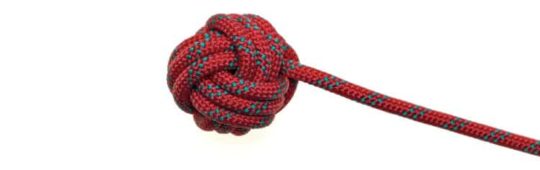
paracord monkey fist

What Is A Monkey Fist?

Most people don’t even know what a monkey fist is, let alone how to use or make one.

They’re a time-tested self-defense tool that’s both dangerous and effective.

Like a miniature flail, a monkey fist can come in many different sizes, shapes, and weights. Some fit on a self-defense keychain or in a purse; others are larger and harder to conceal. But they are a versatile means of self-defense survival.

Now, you can purchase various monkey fists from different vendors. If you know where to look, they are all over the place. They’re also a fairly simple device you can make yourself.

Learning how to make one will save you a couple of dollars, and it’s also a very handy skill to know.

If the grid goes down and anarchy ensues, you will want access to as many weapons as possible. And the more weapons you are capable of making yourself, the better.

What’s The Legality of a Monkey’s Fist?

Well, it’s technically illegal in many states in the US and Canada (plus other areas around the world) if you wrap this knot around a hard object.

Why?

I mean, how is a monkey fist any different from a hammer?

Watch this video to understand how the monkey’s fist became illegal:

THIS KNOT IS ILLEGAL!

And just for fun, here’s the “world’s largest monkey fist build.”

World Largest Monkey Fist

As A Way To Introduce You To Skilled Survival, We’re Giving Away Our #78 Item Complete Prepper Checklist. Click Here To Get Your FREE Copy Of It.

Brief History Of Monkey Fists

As with most knotted instruments, the origins of monkey fists are out at sea in the 1800s. Sailors used them as a way to throw lines between ships or to shore, and in a pinch, they would use them in a fight, too.

Initially, the monkey fist knot was tied around cannonballs to add a lot of extra heft. And imagine what that would do to an attacker!

Getting slammed with a cannonball flail could cause some severe damage.

Since then, they’ve spread widely as a survival tool and form of self-defense. Most of the monkey fists you will find today are not cannon-ball-sized.

Instead, they’re now shrunk down to marble size. This makes a monkey fist easy to carry. They can be attached to extra zipper tabs, keychain attachments, or bug-out bag loops.

As A Way To Introduce You To Skilled Survival, We’re Giving Away Our Ultimate Survival Gear Checklist. Click Here To Get Your FREE Copy Of It.

Best Monkey Fist Uses

This is one of the most diverse tools in a survivalist arsenal. Unlike other pocket weapons (like pepper spray), this knot can serve various purposes, from decorative to dangerous.

Here is a shortlist of the most popular uses:

Self Defense

Obviously, these devices make great self-defense weapons. Ones you can keep with you with relative ease and covertly.

You can stash them into pockets, purses, or bags with no problem. And many can be attached to a wallet, zipper, or keychain, enabling fast access in tight situations.

Here’s how to use a monkey fist for self-defense. Hold the long end by the tip and swing the heavy knot hard – using it as a flail.

You want to strike your attacker with the blunt knot at the end. Swing hard and follow through to generate the most power per stroke.

Aim for sensitive areas like the temple, trachea, or groin.

The more massive your knot, the harder your swing. The more force is generated, the more effective the weapon becomes.

Monkey Fist testing. Can it really protect?

Rock Climbing

Back in the day, before rock climbing was as widely recognized as a sport, they were used as cams. Cams, for those who don’t know, are the devices climbers jam into cracks to create points of contact.

Today’s cams are very technical, but monkey fists generally do the same thing when used for rock climbing.

You wedge the “fist” into a crack in the rock as tightly as possible. Then you clip your rope into the other end with a carabiner.

Now, I don’t recommend using monkey fists in this way unless you have no other option. Using makeshift climbing equipment is extremely dangerous.

Monkey fists don’t work or get stuck if they do

Skydiving Parachute Ripcord

This is popular among people who deal with parachutes. Skydivers attach these to their parachute ripcords. This makes it easier to grasp the ripcord while in free fall.

You might buy very colorful ones (or use colorful paracord to make your own). That way, when the wind is whipping past your face, you can easily see your ripcord, grab, and yank it.

Then, hopefully, your chute comes out.

Zipper Attachments

Have a zipper that lost its grip tab? No problem! You can make small monkey fists and tie them to your zipper, even if the slider grip has fallen off.

Due to their shape, they make great little zipper knobs. Plus, you can attach them to anything – tactical backpacks, duffel bags, and even pants!

8 Awesome Paracord Zipper Pulls

Dog Toys

Tired of buying expensive rope toys for your dog at the store? Make your own!

Monkey fists make for excellent pet toys because the material is cheap (rope or cord), and they are very durable. Perfect for chewing or tug of war, a well-tied monkey fist will make your canine companion happy as a clam.

And you can keep making them new ones when they tear apart the ones they’ve got.

Making a ‘Monkey Fist’ Dog Toy (How-To)

Keychain

Monkey fists work well as keychains for several reasons.

First, they are usually bright and easy to spot (thus making your keys easy to find and harder to lose).

Second, this puts an extra self-defense weapon at your fingertips. Keys are one thing that’s almost always on a person. Keeping one on your self-defense keychain ensures you’re always armed.

3 Great Ways To Finish A Monkey’s Fist Key Chain

Throwing

This was the original purpose of a monkey fist. If you have ever tried throwing a rope a long distance, you understand that the task is nearly impossible.

But when you have got a monkey fist on the end of the rope you are throwing, it adds a lot of extra weight—enabling the thrower with much higher accuracy and much greater power.

But rope is not the only thing you can throw with a monkey fist. You can also attach written messages to the handle to pass messages over a decent distance.

Or you can tie smoke bombs to them to smoke out an area within throwing range.

You could even use them to throw fire. Douse it with gasoline, light it up, and throw it as hard as possible.

How to use a monkey fist for rope throwing

As Paracord

Finally, most monkey fists are made out of paracord and have many survival uses. So if you’re ever in a tight spot and need some paracord, you can disassemble and use it instead.

As A Way To Introduce You To Skilled Survival, We’re Giving Away Our #78 Item Complete Prepper Checklist. Click Here To Get Your FREE Copy Of It.

How To Make A Monkey Fist Knot

Maybe you want a specific size of monkey fist, or maybe you want to get one made from particular cordage material. But finding the perfect one can be difficult or impossible.

That’s why learning how to make your monkey fist is important. You can customize it to meet your personal needs and desires.

Not only that but in a dire survival situation, it’s helpful to know how to make a monkey fist.

You could potentially make a backup weapon for yourself and anyone else in your party. And when it comes to defending yourself in a “shit hits the fan scenario,” there can never be too many weapons on hand.

Note: Feel free to skip ahead to the video tutorials if watching someone build one is easier to understand than reading about it.

The Materials

Note: A monkey fist jig makes this process A WHOLE HECK OF A LOT easier. We cover a few good jigs to consider after we show you how to tie one without first.

The Process – Monkey Fist Knot Step By Step

1. Hold the cord

Wrap the paracord vertically three times around the fingers of your non-dominant hand.

This should create a loop that is three wraps wide.

Make sure the longer end is closer to your fingertips, as that will be the end you are working with.

2. Slide the triple-loop off your hand

First, make sure not to let the three loops fall out.

Next, pull the loops off your left hand and hold them between your right thumb and index fingers.

3. Warp horizontally

Continue holding the three original vertical loops with your right hand.

Now use your left to wrap the long end through and around the vertically looped cord. Do this three times.

You should now have three horizontal loops wrapped around three vertical loops.

4. Wrap vertically again

This step is somewhat optional, but it strengthens your knot. (Although, it depends on how much spare cord you have left.)

Once you’ve finished your horizontal wraps, make three more vertical wraps over the top of the vertical wraps you originally looped.

Now pass these second horizontal loops between the original vertical ones and the secondary horizontal ones.

5. Insert a round object

At this point, there should be an opening within the loops you have made to insert a round object.

Whatever you’re using, whether it’s a steel ball bearing, marble, rock, golf ball, pool ball, or another round, heavy object, place it inside the loops.

6. Tighten the knot

You need to work through and tighten each loop individually. Start with the loop closest to the short end of the cord and work your way through the horizontal loops. And then through the secondary vertical loops.

Tighten each one, ensuring you don’t pull too hard on the first few loops. This may take a little practice, and it will take some patience. So try not to get too frustrated.

You may have to work your way through the knot several times to achieve maximum tightness.

Once you’re finished, you’ll have a functional monkey fist.

This is not a project that will work the first time perfectly. You’ll likely need several times before you’re successful. But once you get the hang of it, it will come naturally.

As A Way To Introduce You To Skilled Survival, We’re Giving Away Our Ultimate Survival Gear Checklist. Click Here To Get Your FREE Copy Of It.

Monkey Fist Knot Video Tutorials

As they say, an image is worth a thousand words. So there are several “how to make a monkey fist” tutorial videos.

How To Make A Monkey Fist Knot Without A Marble

This video shows you how to make a monkey fist without an object (like a marble) on the inside. This makes for a very small, keychain-sized monkey fist.

However, be aware that these don’t provide much self-defense value.

How to Make a Monkey’s Fist with No Marbel | Ball Bearing Tutorial

How To Make A Monkey Fist Knot With A Marble

This video shows you how to make a monkey fist with a marble on the inside.

Paracord monkey fist how to

Making A Monkey Fist Knot Using A Jig

This video shows you the process of using the help of a simple jig to build your paracord monkey fist.

How to make a Monkey Fist using the Speedy Jig Monkey Fist Jig

As A Way To Introduce You To Skilled Survival, We’re Giving Away Our #78 Item Complete Prepper Checklist. Click Here To Get Your FREE Copy Of It.

Best Monkey Fist Jigs On The Market Today

Again, there are monkey fist jigs and toolkits that make it easier to create a monkey fist.

They serve as an extra set of fingers to hold the loops as you make them. This also enables you to tie four-, five-, and even six-loop monkey fists!

Depending on how often you plan to make it, you may want to invest in one.

1.


Paracord Planet Paracord Bracelet Pro Jigs

With this jig, choose from 10”, 14”, 18”, 24”, 30”, & 60” sizes.

The Paracord Bracelet Pro Jig includes vertical dowel posts to support various paracord projects.

This jig will hold your projects in place for easier and faster finishes. It also includes etched measurements to provide accurate dimensions.


Check Today’s Price

We earn a commission if you make a purchase, at no additional cost to you.

Understanding and Using Paracord Bracelet Jigs

2.


Maxi-Monkey Jig (Silver) Paracord Tool Jig

This simple monkey fist jig can make monkey fists from 5/8″ up to 2 1/4″ (pool ball size).

It features a rugged full metal construction platform with (4) zinc-plated steel rods for exceptional strength.


Check Today’s Price

We earn a commission if you make a purchase, at no additional cost to you.

3 Monkey’s Fist Jigs REVIEWED | Which Is BEST?

3.


SpeedyJig Plus Paracord Bracelet & Monkey Fist Jig

This jig can make monkey fists up to 2.5″ in diameter and paracord bracelets that are 4-13” long.

It’s built with a sturdy powder-coated steel base that will stay in place while you work, thanks to rubber feet.

The built-in ruler makes it easy to correctly size your paracord survival bracelets when you’re not making a monkey fist.


Check Today’s Price

We earn a commission if you make a purchase, at no additional cost to you.

Speedy Jig Monkey’s Fist Jig Review | Worth A Buy?

Final Thoughts

Monkey fists are insanely versatile survival tools.

They’re cheap, they’re relatively easy to make, and they’re highly useful for survival. Owning one is beneficial for survival, but knowing how to make your own is a skill worth learning.

They make great survival gifts and are useful for survival and everyday life.

Few survival knots are as useful as the monkey fist knot, and even fewer can achieve such a wide range of survival needs.

Will Brendza

P.s. Are you ready for the tough times ahead?

Find out now by taking my short Readiness Score Quiz – it’s absolutely free.
Once complete, you’ll know exactly where you stand on the “fragile” vs.” resilient” spectrum.

The post How To Make A Monkey’s Fist Knot For Survival appeared first on Skilled Survival.
How To Build A Faraday Cage & What To Put In It

Faraday CageWhen folks first hear about Faraday Cages, they have an initial wave of basic questions…

  1. What is a Faraday Cage?
  2. Why should I care?
  3. How do I get my hands on one?
  4. What should I put in it?
  5. Do they work?

You ask the first question because maybe you overheard someone else talking about one.

Perhaps you’re unsure what all the hype is about and want to know, “what is it”?

You ask the second question because once you know “what it is,” you’re still confused about why it matters to you.

But once you fully understand why it matters, the next question is, “how do I get one?” followed by, “what should I keep inside of it?”

So that’s how I wrote this article. To answer all your faraday cage questions and more.

So we cover the following topics in great detail:

**Note: You can skip ahead to any section of this article using the navigation links above.

Are You Ready For The Tough Times Ahead? Take My 60 Sec Quiz To See If You’re Part Of ‘The Fragile Masses’ Or Not… Start Quiz Now!

What Is A Faraday Cage?

In simple terms, a Faraday Cage is just an electronic isolation chamber. Or even more simply, it’s a special container that prevents electrical signals or waves from passing through it.

A basic way to think of a Faraday Cage is it allows any electrical pulses to go around the container.

They work by enclosing a specific area in a layer of conductive material (usually a metal). This outer conductive layer creates a “protective skin.”

This then blocks electrical signals from passing through the box.

Inside the enclosure, electronics are separated from the outer conductive skin. This is accomplished using a non-conductive insulator such as cardboard, plastic, glass, or wood.

These enclosures can be any size, large or small. So long as there’s a complete layer of skin and any gaps are small once openings (doors, etc.) on the surface are closed.

Faraday Cage Uses

One of the best ways to understand how something works is to share a few examples of them out in the real world. Here are just a few of the uses for Faraday Cages.

Engineering Design and Testing

In the world of engineering, large versions of these faraday isolation chambers are used. They help block any outside interference when designing and testing sophisticated electronic devices.

Scientists can see how certain electrical devices react without other signals in a Faraday cage. It’s used as a controlled vacuum for electrical testing purposes.

These engineering Faraday Cages also help determine if a device emits any unintentional or harmful radiation.

For example, the antenna in your cell phone was likely tested in such a way. This was to ensure energy transmitted during use was safe for humans. To prove no energy was “leaking” at frequencies outside the cell phone spectrum.

But the Faraday cage isn’t just for lab settings and engineering facilities. In fact, you’ve likely used or passed through several of them today.

Microwave Ovens

The mesh screen in the window of your microwave is part of a Faraday cage. It contains the high-energy microwave radiation responsible for reheating your leftovers. And without a Faraday cage, this radiation would leak out, cooking the rest of your kitchen.

Elevators

In some elevators, cell phone “dead zones” are also unintentional Faraday Cages. The metal elevator doors act as conductive skin, thus blocking cell signals.

And it’s why you should remain in your car if a power line falls because the vehicle’s metal body acts as a Faraday cage.

It directs dangerous electricity around the vehicle, allowing the energy to pass harmlessly into the ground. Isolating and protecting the passengers inside.

How about one more interesting example?

Spy Prevention

In 2013, the Vatican used a Faraday cage to shield the Sistine Chapel. They wanted to prevent electronic eavesdropping during the selection of the new pope.

So even if someone planted an electronic “bug” into the room, it couldn’t send a signal out to the world.

So as you see, Faraday Cages have some real-world applications.

As A Way To Introduce You To Skilled Survival, We’re Giving Away Our #78 Item Complete Prepper Checklist. Click Here To Get Your FREE Copy Of It.

4 Reasons Why You Need A Faraday Cage

“I do not know with what weapons World War III will be fought, but World War IV will be fought with sticks and stones” – Albert Einstien

A survivalist (like yourself) should build a Farraday cage for many reasons.

A well-constructed Faraday cage will give your sensitive electronics a layer of safety. To protect them from damage or even to prevent signals from reaching others.

Here are four great reasons to build and use a Faraday Cage for survival and preparedness:

Reason 1. Prepare For A Massive Solar Flare

A solar flare is an explosion on the surface of the Sun. The occasional massive blasts produce a burst of electromagnetic radiation, including X-rays.

Scientists classify solar flares into three groups according to their X-ray strength.

The strongest are X-class flares. These are significant events and can trigger radio blackouts around the world.

M-class flares are medium-sized. They can cause brief radio blackouts that affect Earth’s polar regions. C-class flares are small with few noticeable consequences here on Earth.

It’s not a matter of IF the earth will experience another strong X-class flare; it’s a matter of WHEN.

A Faraday Cage helps you prepare for the next massive X-class solar flare event. Keeping some of your backup electronic devices safe.

NASA | X-Class: A Guide To Solar Flares

Reason 2. Prepare For An Electromagnetic Pulse Attack (EMP)

The rise of nuclear powers around the world is growing. As well as the instability in global politics. This leads to rising concerns over the real possibility of a future nuclear attack.

All nuclear explosions create an EMP blast. But, some designs can cause a more significant EMP effect than immediate destruction.

These designs are called “high-altitude electromagnetic pulse” (EMP) weapons. They explode high in the stratosphere. And they use the Earth’s magnetic field to reflect and enhance the EMP effects.

Watch the following two videos for a more detailed explanation of the threat of a large, widespread EMP attack.

The facts about EMP and Faraday Cages

Electromagnetic Pulse (EMP) How a Faraday Cage Saves Electronics

Reason 3. Prevent Cell Phone Tracking

I know it sounds like the plot of a spy movie, but nearly all modern cell phones are equipped with a GPS chip.

From the newest smartphone all the way to the most basic flip phone.

This feature gives you the ability to use your phone for navigation. But it also allows mobile providers information about your location (past and current).

Authorities often share these location records during criminal investigations. And also during search and rescue operations.

This information is supposed to be stored for a limited time only. But it’s unclear how long companies keep these location records. And it’s also unclear who can request access to these records.

But, if you block the cell signals to your phone, you also prevent the ability of the GPS to track your phone.

A Faraday bag like this Stealth Anti Signal Forensic Faraday Bag can keep your location and movement private from prying eyes.

Review of a Cell Phone Faraday Bag

Reason 4. Prevent RFID Skimming

These days, “electronics” are no longer limited to “things with a battery, a wall plug, or an on/off switch.”
More of the cards in your wallet contains RFID security chips. These chips are designed to make mobile payment and verification easier.

Unfortunately, the ease with which that information is shared is a double-edged sword. They also make it easier for criminals to scan the information from your credit card.

And they can do this remotely while it’s still in your wallet. But you block this criminal activity with an RFID Faraday Cage wallet (like this one from Access Denied).

If you’d rather not replace your entire wallet, you can use these RFID-blocking Safe Wallets on your credit cards with the chip.

Review of RFID Blocking Leather Wallet by Access Denied

As A Way To Introduce You To Skilled Survival, We’re Giving Away Our Ultimate Survival Gear Checklist. Click Here To Get Your FREE Copy Of It.

How To Build A Faraday Cage

Now it’s time to build your own Faraday Cage at home using some very basic materials.

I highly recommend watching each of these Faraday Cage builds before you decide. Each has some great ideas depending on how simple you want.

This first video is the cheapest DIY Faraday Cage I’ve ever seen – a cardboard box, towel, and aluminum foil; now, where’d I put my “that was easy” button?

DIY Faraday Cage

This video shows you a more elegant DIY Faraday Cage solution. However, it’s still extremely easy and simple to build.

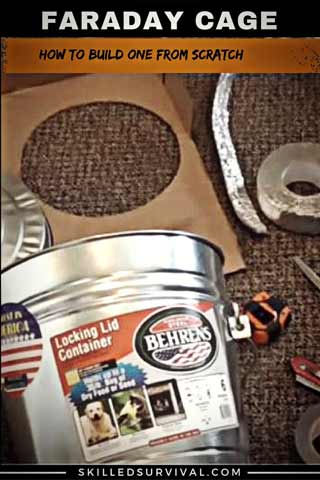
They use a Behrens10-Gallon Locking Lid Can as their conductive metal container, cardboard as their insulator, and some aluminum tape for the seams.

Survival Tactics: How to Build a Good Faraday Cage for Cheap

Ok, take the previous video and make it even simpler. Done.

How To Make A Faraday Cage In 5 Minutes Using 3 Items

As you can see, building a homemade Faraday Cage is easy.

You don’t need a degree in Electrical Engineering to protect your electronic devices. You must follow these examples and stash a few spare electronic devices in your Faraday Cage to protect your electronics from an EMP.

But which electronic devices?

Glad you asked.

As A Way To Introduce You To Skilled Survival, We’re Giving Away Our #78 Item Complete Prepper Checklist. Click Here To Get Your FREE Copy Of It.

What Should You Store In Your Faraday Cage?

I like to think about Faraday Cages in three distinct categories: Home, Vehicle, and Carry.

Home

An at-home faraday cage can be either large or small, depending on how much you want to add.

In a home-sized Faraday Cage, I highly recommend stashing the following devices:

Communication Devices

Communication devices are the most critical electronics you should put in a Faraday Cage. I recommend adding at least one set of local communication devices (aka walkie-talkies) and one over-the-air type of radio.

Will radio communications still occur after an EMP attack? Won’t the EMP blast take down those communication lines and towers?

Maybe yes; maybe no. It’s hard to predict, and as you’ll learn below, no single blast can take down all electronics since each one is geared for different frequencies.

So I think the following devices are a good start for your home Faraday Cage.

Handcrank – Solar Radio

Adding a Hand Crank Emergency Radio to your Faraday Cage will ensure you have a radio to gather intel no matter how long the grid goes down.

This is the hand crank radio that I recommend.

Plus, it always makes sense to stash a backup AM/FM/Weather Band radio, just in case.

You can also use this hand crank radio to power up a cell phone to make a 1-2 minute call in a dire emergency.

Ham Radio

This radio setup is more for advanced prepared survivalists.
If you’re into Ham radio communications (and should be), you must add a portable ham radio to your Faraday Cage. Consider this radio a spare since you want to keep it in for a surprise EMP event.

And really, we’ll likely get little to no warning of an actual EMP attack.

A portable one is what you need if an EMP takes out your larger Ham radio setup.

Walkie Talkies

I firmly believe in preparing with a coalition. Whether that’s a survival group or just your local family doesn’t matter. In emergencies having other people you can trust is essential.

But you’ll want a way to communicate with each other on a local scale. So each member of your emergency team should stash a spare set of walkie-talkies in their Faraday Cage.

That way, if the blast does take out most exposed communication devices, you’ll still have your 2-way radios; most won’t have anything.

Illumination Devices

If the grid is down, your main source of nighttime illumination will be candles or flashlights. Candles work for a few days, but unless you stock up like crazy, you’ll eventually run out. Plus, good luck moving around at night with candles.

So you should add some illumination gear to your Faraday Cage.

Tactical Flashlight

Add a tactical flashlight to your Faraday Cage. This doesn’t need to be an expensive one.

A small single double A battery LED flashlight is ideal for this. The last thing you want to do is stash a $100 flashlight in there and then never get to use it.

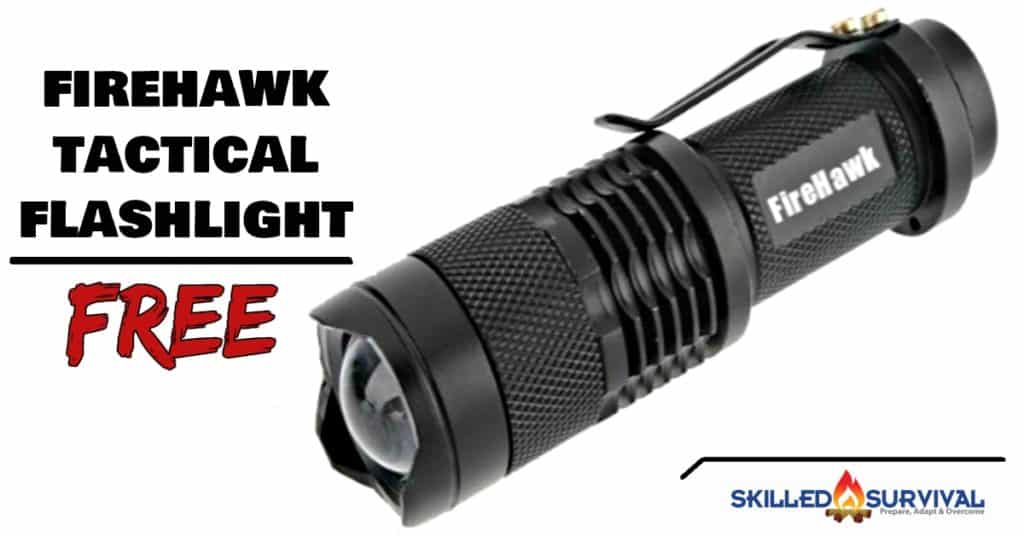
Click Here To Get 2 For 1 FireHawk Flashlights

For A Limited Time Only: Get a FREE FireHawk Tactical Flashlight For Visiting Skilled Survival! Just pay s&h. Click Here To Learn More.

Headlamp

There are some tasks where a headlamp works 1000X better than a flashlight.

It’s ideal for tasks that require two hands. Without a good headlamp, you only have someone hold the flashlight or try to prop the flashlight up.

For me, stashing a headlamp is the way to go.

Hunting-Related Electronics

Night goggles are a powerful tool in a survival situation. However, they require power.

So if you want the advantage of using night vision goggles after an EMP event, then you best stash a pair in your Faraday Cage.

The same idea goes for high-powered rifle scopes.

I’m not certain these electronics will be taken out in an EMP, but if your survival plan includes hunting, don’t risk it.

Spare Rechargeable Batteries / Battery Chargers / Solar Charger

You add batteries to support your battery-powered devices. You also need the means to recharge batteries without using grid power.

So get some rechargeable batteries, a battery charger, and a portable solar panel.

Ideally, all your devices use the same size battery. The most common is the AA battery. So if you can match all your electronic devices to AA, you make your life a little bit easier. If not, you’ll need spare batteries for each battery type.

Now, you also need a portable solar charger to recharge your batteries.

Then use your batteries to power your devices like your [pocket-radio source=”FaradayCagePost” name=”Katio Pocket Radio”], Tactical Flashlight, Headlamp, etc.

USB Battery

If you pair an Anytime Charge Power Bank with a few AA USB Batteries, you can bypass the need for a battery charger.

Just recharge these new rechargeable batteries into your Anytime Charge Power Bank.

Simple and effective.

Note: Your batteries will likely be fine after an EMP, even outside a Faraday Cage. So if space is limited in your Faraday Cage, you can remove them. However, I always try to keep spare batteries for my gear with my gear.

That way, I know that I have what I need in my gear stash.

A Spare Survival Watch or Tactical Watch

Most people I know have more than one survival watch.

Why? Primarily because they are awesome.

So don’t be afraid to toss one of your spare tactical watches into your faraday cage.

That way, you won’t lose the compass and sensor features you get from your watch even after an EMP.

Vehicle

Now, if your “at home” faraday cage is large (i.e., a shipping container), you can stash it in your vehicle.

This works best if you always have your vehicle with you at work and home.  However, if you live in extremely cold climates, you may have to consider electronics in those conditions.

But generally, a glove box or under-seat Faraday Cage enclosure will provide enough space for a shielded spare radio and cell phone.

This would be a must if your vehicle were disabled by a massive EMP or solar flare (due to so many electronic parts). At a minimum, you’ll want to stash a spare communication system if you get stranded.

Carry

On the go, you can use a smaller pouch faraday cage like this Migeec Faraday Bag, RFID Blocking Bag.

This allows you to can keep smaller items (like your cell phone or personal radio) protected.

These can be small enough to be ideal as a piece of your bug-out bag gear, a get-home bag essential, or even your jacket pocket. Plus, it’s light enough to become part of your everyday carry.

Police departments are now using them to protect electronic devices collected as evidence.

The RFID-shielding Faraday cage wallets or even a simple RFID-blocking credit card sleeve are at the smallest end of the spectrum.

These can help protect your credit card and banking information from mobile scanners.

As A Way To Introduce You To Skilled Survival, We’re Giving Away Our #78 Item Complete Prepper Checklist. Click Here To Get Your FREE Copy Of It.

Faraday Cage Myths & Misinformation

Myth 1. They Are Too Complicated To Build Yourself

People who look into Faraday cages get discouraged when they see professional installations. Ones that seem impossible to reproduce at home.

These cages often use expensive materials and highly intricate doors and openings. They help to reduce the chance of any signal transmission.

At the very simplest, you can use any metal enclosure that can work as a Faraday Cage with some modifications. Ammo cans, metal cabinets, steel lockers, and trash cans all work.

Heck, even just several layers of heavy-duty aluminum foil can do the trick. Just by wrapping it carefully around a cardboard box, it can protect small devices.

Myth 2. Chicken Wire Works As Well As Foil Or Metal Boxes

There are some discussions online that using chicken wire as your Faraday Cage conductive metal works just as well as other options. This is not a good idea.

Chicken wire provides much less EMP protection than even aluminum foil by a wide margin.

See for yourself:

Faraday Cage – Check Wire vs. Aluminum Foil

Myth 3. You Can Use An Ammo Can (without modifications)

Ammo cans don’t make great Faraday Cages without some work. First off, ammo cans typically have a gasket around the lid to help create a good airtight seal.

But this gasket is not a conductive material, creating a breach. This allows an EMP blast to penetrate the ammo can.

You also have to deal with the hinges on the backside, which are also not an ideal conductive seal.

If you want to use an ammo can, you’ll either need to modify it, wrap it with several layers of foil, or put the ammo can into another Faraday Cage.

Ammo Can Faraday Cage

Myth 4. How Faraday Cages Actually Work

There are several misconceptions about how a Faraday Cage actually works. These misconceptions create several myths about Faraday Cages, such as:

  1. Believing They Can Use A Cell Phone To “Test” A Faraday Cage – doesn’t work that way
  2. That Faraday Cages Must Be Grounded – they do not
  3. That A Single EMP Will Take Out All Electrical Devices – it won’t because different nuclear/solar EMP blasts have different frequencies (however, if an attacker used several blasts designed for different frequencies, it could do a large range of damage, or if an attacker focused solely on the grid – that would be devastating as well)
  4. That All Modern Vehicles Will Become Paperweights After An Attack – they won’t

Watch the following video for more details on these misconceptions, and pick up this fantastic educational book on EMPs.

Faraday Cage & EMP Misconceptions

Final Thoughts

Now that you’re up to speed on Faraday Cages, what will you do about it?

Are you going to take action? When?

I think you should take action right now because “I should have” and “I could have” are just poor excuses when it’s too late.

Building a Faraday Cage is simple, easy, and affordable. So no excuses; get it done.

Jason K. 

P.s. Are you ready for the tough times ahead?

Find out now by taking my short Readiness Score Quiz – it’s absolutely free.
Once complete, you’ll know exactly where you stand on the “fragile” vs.” resilient” spectrum.

The post How To Build A Faraday Cage & What To Put In It appeared first on Skilled Survival.

You Will Be Shocked By How Much Money Is Being Pulled Out Of U.S. Banks, And Now The Biggest Bank In Germany Is In Trouble

A trillion dollars is a lot of money.  If you stacked a billion dollar bills on top of one another, the pile would be 67.9 miles high, but if you stacked a trillion dollar bills on top of one another the pile would be 67,866 miles high.  And if you lined up a trillion dollar bills end to end, the line of dollar bills would be a staggering 96,906,656 miles long.  That is longer than the distance from the Earth to the Sun.  A trillion dollars is such a vast amount of money that it is truly difficult to comprehend, but as you will see below, that much money has already been pulled out of “vulnerable” U.S. banks over the past year.  Hordes of small and mid-size banks are now in trouble, and that is really bad news because those institutions issue most of the mortgages, auto loans and credit cards that our economy runs on.  The other day, I asked my readers to “imagine what our country will look like if the banking system implodes and the economy plunges into a depression”, because if our banks continue to collapse that is precisely where we are headed.

Unfortunately, the recent banking panic has greatly accelerated matters.  In fact, a whopping 98.4 billion dollars was pulled out of U.S. banks during the week ending March 15th…

The readout, released shortly after the market closed Friday, came around the same time as new Fed data showed that bank customers collectively pulled $98.4 billion from accounts for the week ended March 15.

That would have covered the period when the sudden failures of Silicon Valley Bank and Signature Bank rocked the industry.

Just think about that.

Nearly 100 billion dollars in deposits evaporated in just one week.

And it turns out that small banks were being hit the hardest.  Unsurprisingly, big banks actually saw enormous inflows

Data show that the bulk of the money came from small banks. Large institutions saw deposits increase by $67 billion, while smaller banks saw outflows of $120 billion.

That article didn’t give numbers for mid-size banks, but it appears likely that they experienced large outflows as well.

Overall, JPMorgan Chase is telling us that the “most vulnerable” banks in this country have “lost a total of about $1 trillion in deposits since last year”

JPMorgan Chase & Co analysts estimate that the “most vulnerable” U.S. banks are likely to have lost a total of about $1 trillion in deposits since last year, with half of the outflows occurring in March following the collapse of Silicon Valley Bank.

This really is a “banking meltdown”, and it has been going on for quite some time.

And as Bill Ackman has aptly noted, if something is not done our small and mid-size banks are headed for disaster.

There are more than 4,000 banks in the United States right now, and the vast majority of them are rapidly losing deposits.

As a result, U.S. banks are being forced to turn to the Fed for help at a very frightening rate

Banks have been flocking to emergency lending facilities set up after the failures of SVB and Signature. Data released Thursday showed that institutions took a daily average of $116.1 billion of loans from the central bank’s discount window, the highest since the financial crisis, and have taken out $53.7 billion from the Bank Term Funding Program.

Meanwhile, the banking crisis in Europe has taken another very alarming turn.

On Friday, shares of Deutsche Bank plunged due to renewed concern about the stability of Germany’s biggest bank…

Deutsche Bank shares fell on Friday following a spike in credit default swaps Thursday night, as concerns about the stability of European banks persisted.

The Frankfurt-listed stock was down 14% at one point during the session but trimmed losses to close 8.6% lower on Friday afternoon.

The German lender’s Frankfurt-listed shares retreated for a third consecutive day and have now lost more than a fifth of their value so far this month.

It will be interesting to see if Credit Suisse or Deutsche Bank ends up going under first.

Of course the politicians continue to tell us that everything is just fine.

In fact, German Chancellor Olaf Scholz is insisting that there is “no reason to be concerned”

German Chancellor Olaf Scholz said Friday that there was “no reason to be concerned” about Deutsche Bank.

“It’s a very profitable bank,” he told reporters in Brussels, where EU leaders issued a joint statement describing the European banking system as “resilient, with strong capital and liquidity positions.”

Deutsche Bank declined to comment.

Once upon a time we were told that Lehman Brothers would be just fine.

And earlier this month we were told that Silicon Valley Bank would be just fine.

As Robin Williams once observed, these banks love to make excuses.

But it isn’t just a few isolated banks that are in trouble these days.

Right now the entire system is coming apart at the seams, and Steve Quayle is warning that things “will really kick into high gear in April”

The word collapse is a great word, and the other word that comes with collapse is calamity. With the collapse and calamity under way, people think, well, as long as it doesn’t touch me, I’ll be okay or I’ll be dead, and my kids will have to deal with it. What a selfish way to deal with the Biblical times we live in. I think we are in big trouble with this banking situation that will really kick into high gear in April.

You may not have much sympathy for the banks, and I understand that.

But what is going to happen to our economy when the flow of mortgages, auto loans and credit cards is greatly restricted?

Our country is already being torn to shreds like a 20 dollar suit, and economic conditions are still relatively stable.

So what is going to happen when we do fall into a very deep economic depression?

These are such perilous times, and they are only going to get more difficult in the months ahead.

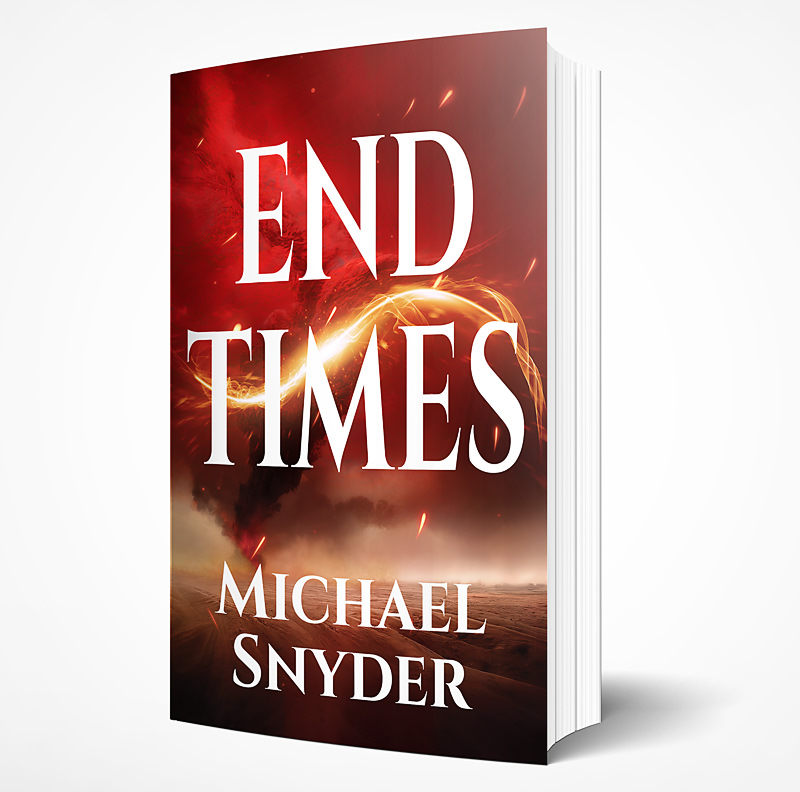
Michael’s new book entitled “End Times” is now available in paperback and for the Kindle on Amazon.com, and you can check out his new Substack newsletter right here.

About the Author: My name is Michael and my brand new book entitled “End Times” is now available on Amazon.com.  In addition to my new book I have written six other books that are available on Amazon.com including “7 Year Apocalypse”“Lost Prophecies Of The Future Of America”“The Beginning Of The End”, and “Living A Life That Really Matters”. (#CommissionsEarned)  When you purchase any of these books you help to support the work that I am doing, and one way that you can really help is by sending copies as gifts to family and friends.  Time is short, and I need help getting these warnings into the hands of as many people as possible.  I have also started a brand new Substack newsletter, and I encourage you to subscribe so that you won’t miss any of the latest updates.  I have published thousands of articles on The Economic Collapse BlogEnd Of The American Dream and The Most Important News, and the articles that I publish on those sites are republished on dozens of other prominent websites all over the globe.  I always freely and happily allow others to republish my articles on their own websites, but I also ask that they include this “About the Author” section with each article.  The material contained in this article is for general information purposes only, and readers should consult licensed professionals before making any legal, business, financial or health decisions.  I encourage you to follow me on social media on Facebook and Twitter, and any way that you can share these articles with others is definitely a great help.  These are such troubled times, and people need hope.  John 3:16 tells us about the hope that God has given us through Jesus Christ: “For God so loved the world, that he gave his only begotten Son, that whosoever believeth in him should not perish, but have everlasting life.”  If you have not already done so, I strongly urge you to invite Jesus Christ to be your Lord and Savior today.

The post You Will Be Shocked By How Much Money Is Being Pulled Out Of U.S. Banks, And Now The Biggest Bank In Germany Is In Trouble appeared first on The Economic Collapse.

Does the Christensen Arms Ridgeline Scout Fit Jeff Cooper’s Criteria?

@media (max-width:576px) { .read-more-content { height: 750em; } }

The underlying component in the Scout rifle concept is versatility. This is as defined by Jeff Cooper, father of modern-day Scout rifle, in the 1980s. There are more specific criteria set forth by Col. Cooper related to the Scout rifle. These traits are passionately maintained by the Scout rifle mafia anytime the term Scout is used when referring to a rifle.

Christensen Arms Ridgeline Scout

A quick review Cooper’s scout rifle tenants is in order. “A general-purpose rifle…conveniently portable, individually operated firearm, capable of striking a single decisive blow, on a live target ….” Cooper specified overall length of 39 inches and weight of 6.6 pounds as ideal. The signature “scout” intermediate eye relief, low-powered scope mounted in front of the action sets the aesthetic tone in Cooper’s concept. The rifle also must have provision for ammunition capacity with efficient reloading offering a modicum of firepower—think stripper clip or, more recently, detachable magazine. Finally, the rifle’s chambering must be powerful enough to anchor a quarry weighing up to 1,000 pounds while still lending itself to other criteria such as capacity and size of rifle—the .308 Win has come to be accepted as the most natural cartridge.

New Standard?

Stagnant is not a word that applies to Christensen Arms. Much of this stems from the non-typical background associated with founder Dr. Roland Christensen and his endeavors in the aerospace industry. Roland’s doctorate in mechanical engineering led the way to his understanding of how best to apply carbon fiber to the benefit of firearms. This article will feature Christensen Arms take on the general-purpose bolt action as embodied by the Ridgeline Scout chambered in .308 Win.

One overarching theme with Christensen Arms stemming from their carbon wrapped barrels is minimizing weapon weight. The short action Ridgeline Scout tips the scale at 5.9 pounds with its threaded 1-in-10-inch twist, 16-inch barrel generating an overall length of 37.5 inches. The desirable characteristics for a general-purpose, bolt-action rifle are cold bore zero retention, repeatable accuracy, reliability and handling. There can be no compromise in terms of consistent accuracy. The Ridgeline Scout checks all the boxes.

The Ridgeline Scout features a black-nitride coated action, optic rail, barricade stop piece on the forend, 10-round AICS drop-box magazine and a flat-shoe TriggerTech trigger, all pulled together by tan and black carbon-fiber composite Sporter-style stock.

Chambered in .308, the Ridgeline Scout meets much of the Jeff Cooper criteria.

Gun Details

Christensen Arms machines its actions from a solid billet of heat-treated 416T stainless steel, utilizing precision surface-ground recoil lugs. The company backs each Ridgline with a sub-MOA guarantee. Christensen machines the precision bolts in-house, before spiral fluting and Black Nitride coated for smooth operation and superior wear performance. The system employs an M16-style extractor. The ejector sits on the Scout’s bolt face. The Christensen bolt is conducive to long-range accuracy due to extremely stiff design/rigid design and high-quality control during manufacturing. The bolt is Nitride coated at 70 HRC for extreme wear protection. The Ridgeline Scout’s receiver has integrated 0 MOA Picatinny rail for stable scope mounting.

Christensen barrels are created from 416R stainless steel. Each barrel is stress relieved and hand lapped to guarantee sub-moa accuracy. Christensen’s in-house, button-rifling production utilizes aero grade processes and specifications in each barrel. Reamed and inspected to a tolerance of +/- .0001, the barrels’ muzzle is threaded and arrives with a removable three-prong flash hider. Christensen Arms’ chamber is CNC machined using minimum-diameter, match-grade reamers and optimized for accuracy and performance. The factory-installed Triggertech trigger, adjusted to 2.5-3 pounds, provides a great feature.

The carbon-fiber composite stock features dual bedding pillars constructed from Invar, a nickel/iron alloy known for its uniquely low coefficient of thermal expansion. Unlike aluminum, Invar pillars do not expand or contract with temperature changes so you will not experience variances in bedding or accuracy. In addition, Christensen spot beds the recoil lug area to ensure stability and optimal performance.

Full-length view of the Christensen Arms Ridgeline Scout.

Nice New Glass

Scope selection was agonized over. I did not want to put an anchor on the top rail; yet still wanted magnification range to take advantage of the svelte accurate Ridgeline Scout. Remember multipurpose roles, stalking game while maintaining long-range punch across a clearing or field. An important part of the accuracy equation is a quality optic to go along with cartridge and rifle.

ZeroTech Optics’ Thrive HD 2.5-15x50mm with SFP PHR II illuminated reticle was mounted on the Ridgeline Scout. The Thrive HD offers a 30mm tube, 92 percent light transmission, glass etched reticle, generous eye relief and Weathershield lens coating. Lifetime warranty for any owner or any problem seals the deal. All for well under $1,000. The choice of optic may surprise in terms of company and details.

The spiral flute on the Ridgeline Scout provides a welcome upgrade.

Aussie, Aussie, Aussie

ZeroTech remains relatively unknown in the U.S. market. Headquartered in Australia, U.S. operations is based outside of Nashville, Tennessee. I was turned onto them by an industry friend based out west where longer-range shots are the norm. ZeroTech is focused—pun intended—on providing hunting optics. Fifty years of experience in the rugged Australian Outback is the company’s guiding force. The optic details present a potential surprise. Why not a 1-8X or 1-10X optic? Does it have to be the 2.5-15x magnification range? Why second focal plane (SFP)?

The SFP ZeroTech illuminated PHR II reticle was a large factor in optic selection. PHR II features a floating center dot for an ultra-refined point-of-aim as well as a finer 6 o’clock reticle post, enabling even more precise elevation hold overs. Ability to illuminate center of the reticle is crucial for dawn/dusk and thick timber conditions. The aiming point presents clearly on prey. Illumination also facilitates quick reactions if game is jumped—think red dot. I am probably risking excommunication here but I prefer second focal plane reticles, especially for hunting. The ZeroTech Thrive HD’s extra magnification came with only a few ounces more weight than a 1-8x or 1-10x optic.

Firing Line

I chose various .308 Win. hunting and match loads from Hornady, Black Hills Ammunition, SIG Sauer, and Winchester for testing. The specific loads were Sig Sauer’s 150-grain HT Copper, 165-grain Controlled Expansion Tip (CET) and 168-grain Match. Hornady 168-grain BTHP, Black Hills 180-grain Accubond and Winchester’s excellent 168-grain Match rounded out the fodder. This is just a small splattering of the .308 Win loads available.

The Ridgeline Scout employs a receiver rail instead of the traditional scout mount.

Good marksmanship in the field starts with confidence. Proven inherent accuracy as demonstrated from the bench is a good start. A rifle that shoots well off the bench offers the shooter no excuses or alibis when serious practice starts using field shooting positions or in the woods. I fired multiple groups with each load. Overall, accuracy was impressive with no five round group larger than 1.25 inches at 100 yards with most at or under the magical one-inch mark. The Sig Sauer Elite 165 grain CET took the accuracy title with a 0.38-inch group. The kind of accuracy exhibited by the Ridgeline Scout warrants a higher power scope in my opinion versus an intermediate eye relief scope. Today’s optic choices blow away 1980 scopes.

Proficiency begins with realistic practice/training scenarios. Range evaluation at Echo Valley Training Center (EVTC) consisted of setting up 6-inch steel target circles from 110-330 yards and then assuming prone, sitting, kneeling or standing shooting positions. Another twist is to have a companion pick the target and shooting position for the shooter to engage as quickly as possible. While not empirically quantifiable, the Ridgeline Scout proved to “hang” well from less well-supported positions and was very manageable in getting into and out of shooting positions. I sniped clay pigeons with regularity at 475 yards from the supported prone position.

Adding A Silencer

The Ridgeline Scout’s threaded barrel readily accepted a CZ Ti Reflex suppressor. The benefits of suppressor use are hard to argue against. Cooper’s initial Scout features failed to include a threaded barrel, but he would likely appreciate today. The CZ-USA intent of maintaining short install length with their suppressors is evident by the three-inch reflex chamber that expands volume by fitting over barrels. When barrel profile demands, a standard flush mount replaces the reflex chamber. The swirled shape of the internal baffle structure exhibits in the exterior; construction welds each baffle to the next until the stack creates a unique silhouette. Not only does this eliminate extra material that would simply add weight, but it also increases surface area for heat dissipation.

I was fortunate some time ago to discover Engel Ballistic Research (EBR) as a primary source of quality sub-sonic ammunition due to the variety of calibers and loadings offered. The Ridgeline Scout combined with CZ Ti Reflex suppressor and Engel Ballistic Research sub-sonic .308 Win loads are eerily efficient out to 75-100 yards.

The Ridgeline Scout employs a well-built detachable box magazine.

Final Thoughts

Few comments about the Ridgeline Scout—more opinion that criticism. I did not care for the barricade stop rail under the forend. This is something more for a PRS rifle than a hunting rifle. A normal section of rail that allows a sling mount and/or bipod would have been fine.

Col. Cooper’s shadow will always be present for any rifle going utilizing Scout nomenclature. As soon as I saw the model’s name, I was looking for the forward mounted rail section where intermediate optic would fit. I wonder how many phone calls and emails Christensen Arms receives over this? My article already highlights my satisfaction with normal optic position over the receiver.

Lt. Col. Jeff Cooper’s shadow will always be present for any rifle utilizing Scout nomenclature. We must resist being dogmatic. Anyone using the Ridgeline Scout will consider themselves well-armed and ready to handle most situations. Jeff Cooper’s Scout rifle has a legion of devotees keeping the Scout torch burning bright and rightfully so. What is not to like about a rifle whose concept is centered on versatility and real-world application.

The Christensen Arms Ridgeline Scout .308 Win proves that hyper-velocity magnum boomers weighing 10 pounds are not the only viable option. I find it hard to believe that anyone using a Ridgeline Scout would consider themselves under-gunned or at a disadvantage. For more information, visit christiansenarms.com and zerotechoptics.com.

Christensen Arms Ridgeline Scout Features & Specs

Specifications: CHRISTENSEN ARMS RIDGELINE SCOUT

  • CALIBER: .308 Win (also available .300 BLK, .223 Rem, 6.5 Creedmoor)
  • BARREL: 16 inches
  • OA LENGTH: 37.5 inches
  • WEIGHT: 5.9 pounds (empty)
  • STOCKS: Carbon fiber composite
  • SIGHTS: None
  • ACTION: Bolt
  • FINISH: Black nitride 
  • CAPACITY: 10+1
  • MSRP: $2,200

Christensen Arms Ridgeline Scout Performance

Load Velocity Accuracy
Black Hills 180-grain Accubond 2,412 0.75
Hornady 168-grain BTHP 2,595 0.88
SIG Sauer 150-grain HT 2,659 0.75
SIG Sauer 165-grain CET 2,566 0.38
Winchester 168-grain Match 2,571 0.50
Bullet weight measured in grains, velocity in feet per second (fps) and accuracy in inches for best five-shot group from 100 yards.

This article originally appeared in the February-March 2022 issue of Ballistic Magazine. Get your copy or digital subscription today at OutdoorGroupStore.com.

The Feb-March 2022 issue of Ballistic Magazine.

Didn’t find what you were looking for?

The post Does the Christensen Arms Ridgeline Scout Fit Jeff Cooper’s Criteria? appeared first on Ballistic Magazine.

Are They Actually Trying To Crash The Economy On Purpose?

They actually did it.  The Federal Reserve just raised interest rates by another 25 basis points right in the middle of a major banking crisis.  I honestly do not understand what Fed officials are thinking.  They had already blown a 620 billion dollar black hole in the balance sheets of U.S. banks by raising rates so aggressively, and that resulted in the second and third largest bank failures in U.S. history earlier this month.  Apparently they are not yet satisfied with the carnage that they have caused, and so they have decided to make things even worse.  What we are witnessing is either extreme incompetence of epic proportions, or they are trying to crash the economy on purpose.  I am sitting here trying to think of a third alternative, but so far I am coming up blank.

Fed officials can see exactly what their reckless rate hikes are doing to the system, but they are pressing forward anyway.  Wednesday’s rate hike was “the ninth consecutive rate increase”

The Federal Reserve on Wednesday raised its benchmark interest rate by a quarter of a point, forging ahead with its fight against stubborn inflation despite a spate of bank failures and a growing crisis within the financial sector.

The unanimous decision puts the key benchmark federal funds rate at a range of 4.75% to 5%, the highest since 2007, from near zero just one year ago. It marks the ninth consecutive rate increase aimed at combating high inflation.

The fact that it was a “unanimous decision” should greatly alarm all of us.

Isn’t there a single voice of reason left at the Fed?

The last time the Fed raised rates like this was just before the financial crisis of 2008.

And we all remember what that did to our banking system.

But the Fed insists that this time is different.  In fact, we were just told that our banking system “is sound and resilient”

“The U.S. banking system is sound and resilient,” the Fed said. “Recent developments are likely to result in tighter credit conditions for households and businesses and to weigh on economic activity, hiring, and inflation. The extent of these effects is uncertain. The Committee remains highly attentive to inflation risks.”

Of course banks don’t tighten the flow of credit when things are good.

They tighten the flow of credit when they get into trouble.

And it appears that another major U.S. bank is now exhibiting signs of distress

Shares of regional bank PacWest Bancorp dropped Wednesday after the company disclosed it had shed more than $6 billion in deposits during the recent squeeze on midsized banks, though PacWest said it did not plan to raise more capital.

The bank said in a press release Wednesday that it had $27.1 billion in deposits as of March 20, which is down from $33.9 billion at the end of December and from $33.2 billion on March 9. The change appears to have largely come from venture banking deposits, which accounted for a third of PacWest’s deposits at the end of December and now stand at just 24%.

There are more than 4,000 banks in the United States today, and hundreds of them could end up failing before this crisis is over.

That would mean fewer mortgages for potential homeowners.

That would also mean fewer auto loans, credit cards and debit cards.

Unfortunately, the flow of credit is the lifeblood of our economy, and so we need our banks to be healthy.

But if the Federal Reserve continues to go down this road, bank after bank will be absolutely crushed.

Needless to say, the Fed’s insane policies are also bursting the housing bubble.  At this point, U.S. home prices are down 12.3 percent just since last June…

The national median existing-home price fell 0.2% in February from a year earlier to $363,000, the first year-over-year decline since February 2012, the National Association of Realtors said Tuesday. Median prices are down 12.3% from their record $413,800 in June.

U.S. homeowners have already lost trillions of dollars of home equity, and now the Fed has just poured more fuel on the fire.

It is madness.

It is literally insane for the Federal Reserve to aggressively hike rates as we are plunging into a major economic downturn, but that is precisely what they are doing.

Look, if the long-term economic outlook was positive do you think that Walmart would be closing even more stores?

Walmart has announced plans to close stores in Hawaii and Minnesota, which join a handful of other stores closing in several states this year.

The retail giant said the decision was made after a review process that determined the impacted stores failed to meet financial expectations, the company told USA TODAY.

Ten stores in Florida, Hawaii, Illinois, Minnesota, New Mexico, Oregon, Washington D.C., and Wisconsin will close by the end of the year, along with two experimental “pickup” locations in Illinois and Arkansas.

Walmart exists to make money.

If there was a chance that those stores could be turned around, Walmart would not be permanently shutting them down.

Sadly, other major retailers are also closing locations all over the nation.

They can see what is coming.

Higher interest rates are already crushing economic activity from coast to coast, and they are battening down the hatches.

The “experts” at the Fed are assuring all of us that they know exactly what they are doing, but the truth is that they have lost control.

As you read this article, wealthy individuals and large companies are pulling uninsured money out of small and mid-size banks all over America.

Many of those small and mid-size banks will soon be in very serious jeopardy, and that will significantly reduce the flow of credit into our economy.

Is this what they want?

Do they really want to see the U.S. economy implode?

Our leaders continue to make mind-numbingly bad decisions, and we are on a course that leads to national suicide.

When will the American people finally wake up?

Sadly, most Americans are still blindly trusting the “experts”, and the “experts” have us on a highway to extreme misery.

***It is finally here! Michael’s new book entitled “End Times” is now available in paperback and for the Kindle on Amazon.***

About the Author: My name is Michael and my brand new book entitled “End Times” is now available on Amazon.com.  In addition to my new book I have written six other books that are available on Amazon.com including “7 Year Apocalypse”“Lost Prophecies Of The Future Of America”“The Beginning Of The End”, and “Living A Life That Really Matters”. (#CommissionsEarned)  When you purchase any of these books you help to support the work that I am doing, and one way that you can really help is by sending copies as gifts to family and friends.  Time is short, and I need help getting these warnings into the hands of as many people as possible.  I have published thousands of articles on The Economic Collapse BlogEnd Of The American Dream and The Most Important News, and the articles that I publish on those sites are republished on dozens of other prominent websites all over the globe.  I always freely and happily allow others to republish my articles on their own websites, but I also ask that they include this “About the Author” section with each article.  The material contained in this article is for general information purposes only, and readers should consult licensed professionals before making any legal, business, financial or health decisions.  I encourage you to follow me on social media on Facebook and Twitter, and any way that you can share these articles with others is definitely a great help.  These are such troubled times, and people need hope.  John 3:16 tells us about the hope that God has given us through Jesus Christ: “For God so loved the world, that he gave his only begotten Son, that whosoever believeth in him should not perish, but have everlasting life.”  If you have not already done so, I strongly urge you to invite Jesus Christ to be your Lord and Savior today.

The post Are They Actually Trying To Crash The Economy On Purpose? appeared first on The Economic Collapse.

Best Survival Multitools For Everyday Carry

Best Survival MultiToolLooking for the best survival multi-tool money can buy?
You’re in the right place. Today, we’ll go over the features you want in your survival multitool and a few that are worth owning.

Because tools have always been essential to survival.

From early discoveries like the wheel, the knife, and bows and arrows to today’s tools like vehicles, computers, and servers.

We continue to develop our tools to sustain and improve our lives.

But the problem with traditional hand tools has always been the same: they are burdensome.

Most are heavy, and keeping a fully stocked toolbox on you all the time would get really old fast.

Even a handful of tools on a tool belt weighs you down.

Luckily, we humans are a clever bunch.

With our modern technology, we’ve engineered some amazing survival multi-tools.

These multi-tool devices are an entire toolbox attached to your hip or can slip easily into a bug out bag.

Our ancestors would undoubtedly be insanely jealous of this solution to that age-old problem.

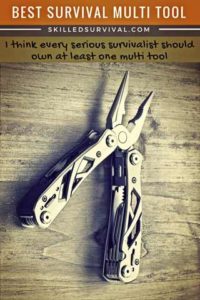
That’s why I think every serious survivalist should own at least one multitool in their survival gear.

They’re lightweight, packable, and useful for everyday situations, as well as survival situations.

How Do Multi-Tools Transform?

However, there are about forty thousand different types to choose from, and each one boasts a different set of “essential” tools. Each claiming – of course – to be the undisputed best.

So how do we choose from such an overwhelming selection? That’s exactly what this article is for.

If you’re interested in buying a survival multi-tool for yourself, you’ve come to the right place!

Are You Ready For The Tough Times Ahead? Take My 60 Sec Quiz To See If You’re Part Of ‘The Fragile Masses’ Or Not… Start Quiz Now!

Unique Multitool Styles

Now, let’s clear something up – multi-tools are highly useful but supplemental. They are a jack of all trades device. They’re not as effective as a dedicated tool for any of the jobs they perform.

For example, most electric saws are better and faster than a multi-tool saw blade. But you can’t wear a table saw on your hip. So a multi-tool is a bit of a jack-of-all-trades, master-of-none tool.

They’re ideal for “quick fixes” and small casual problems. They’re not a replacement for a conventional set of tools. Dedicated tools that are extremely useful and extremely valuable.

That being said, every survivalist should have a multi-tool because it’s like a ‘mini-me’ of your full tool kit. So the first thing you need to decide when you’re looking for a survival multi-tool is which kind you want to buy.

There are three main types of multi-tool options:

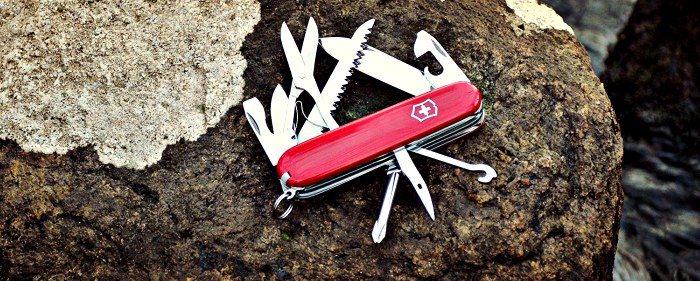
Swiss Army Knife On A Rock

1. Swiss Army Knives

These are classic folding knives. They’ve been a popular survival tool for well over a century.

The first Swiss army knives included a knife blade, a bottle opener, a reamer, and a screwdriver.

Today though, you can find just about any combination of tools.

Genuine Swiss Army Knives are made by Victorinox.

How Swiss Army Knives Are Made

Multitool Folding Pliers

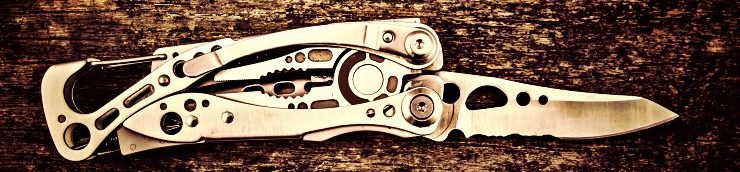
2. Folding Multi Tools

Tim Leatherman developed the world’s first ‘modern’ folding multi-tools. They’re more robust than conventional Swiss Army knives and include a pair of pliers.

There’s more space for tools than Swiss Army knives because there are two handles for tool storage.

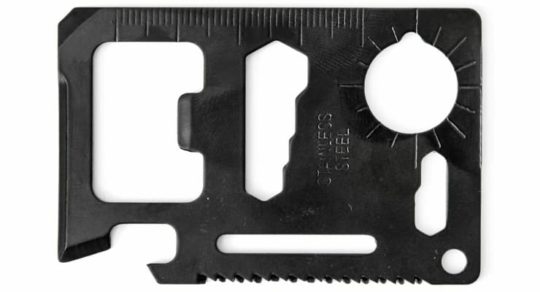
Survival Multi Tool Card

3. Survival Business Card Multi Tools

These incredibly simple multi-tools offer as many cool survival gadgets as possible into a single piece of metal.

They are usually the size of a card. So these fit into wallets, backpacks, bug out bags, and even on key chains.

They are cheap, durable, lightweight, and minimalistic.

I own several and keep one in each of my emergency bags, one in my car, and another on my keys – that way, I’m always prepared with a set of basic tools.

Survival cards often include bottle openers, wrench sockets, screwdriver bits, saw blades, measuring sides, and can openers.

My Survival Credit Card Tool Review

What To Look For In A Great Survival Multi Tool

The best part about multi-tools is the fact that they include multiple devices in one small package. So, two of the most important factors to look for when investing in a multi-tool are compatibility and weight.

I have seen some novelty Swiss Army Knives that are the size and weight of an actual brick; they are TOO big.

While those might carry a ton of tools and gadgets, they’re also unwieldy – to the point of being counterproductive.

The next thing to look for in a multi-tool is specialty tools.

Most multi-tools on the market are for general use and include general tools. But you can also buy specialized multi-tools that are designed specifically to aid in a certain task.

There are:

So it comes down to you and what you will use this multi-tool for most. Analyze your own needs, and decide accordingly.

Best Survival Multi Tools On The Market Today

Here’s the thing, if you want a real survival multi-tool it should have the tools you need when you need them—a durable, reliable, applicable device. For survival, you’re not looking for a golf-specialized multi-tool.

The novelty of a specialized multi-tool is nice, but you won’t need to fix green divots when the sh*t hits the fan.

You’ll need pliers, can openers, knives, saws, and files. Take that into consideration when making your purchase.

Naturally, some multi-tools are better than others – not all are created equal in the eyes of a survivor.

So you have to be careful when you buy online.

It can be difficult to know what you are buying without having seen it before – which is why we’ve compiled a shortlist of our favorite survival multi-tools with video reviews:

1. Top Choice – The One I Bought, Own and Carry Daily


LEATHERMAN, Wave Plus Multitool

The Leatherman Wave Plus is a popular multitool that offers a variety of functions and features. Here is a detailed review of this tool:

Design:

The Wave Plus has a compact and sleek design, which makes it easy to carry in your pocket or backpack. It measures 4 inches when closed and weighs 8.5 ounces. The stainless steel body provides durability and longevity to the tool.

Functions:

This multitool offers 18 functions, including needlenose and regular pliers, wire cutters, a serrated and plain knife blade, a saw, scissors, a can and bottle opener, a file, a ruler, and several screwdrivers. The Wave Plus also features replaceable wire cutters, which adds to the longevity of the tool.

Ease of Use:

The Wave Plus is easy to use, with all of the functions accessible from the outside of the tool. The locking mechanism ensures that the blades and tools stay securely in place when in use.

Durability:

The stainless steel construction of the Wave Plus makes it durable and long-lasting. The replaceable wire cutters and blades also add to the longevity of the tool.

Price:

The Wave Plus is priced on the higher end of the multitool market, but its durability and wide range of functions make it a worthwhile investment for those who frequently use a multitool.


Check Today’s Price

We earn a commission if you make a purchase, at no additional cost to you.

Why Is It So Popular? The Leatherman Wave Plus

The History of The Wave Multi-tool

2.


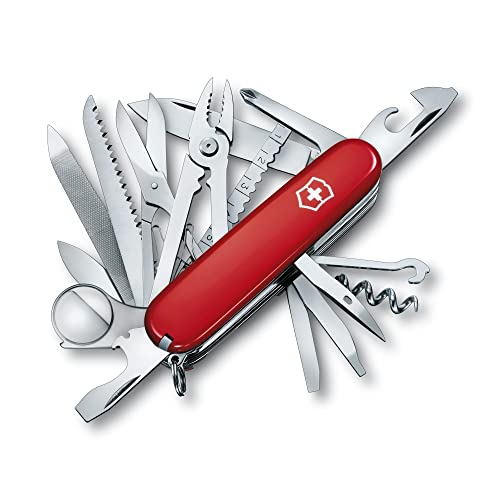
Victorinox Swiss Army Multi-Tool

The Victorinox Swiss Army Multi-Tool is for those who need a versatile and portable set of tools. The SwissChamp Pocket Knife is a product of the Swiss company Victorinox, which is known for manufacturing high-quality knives and tools.

It’s known for its extensive range of functions including:

A large blade, a small blade, a wood saw, a metal saw, a file, scissors, a can opener, a bottle opener, a Phillips screwdriver, a flathead screwdriver, a magnifying glass, a fish scaler, a hook disgorger, a ruler, a corkscrew, and a variety of other useful tools.

Plus the blades and tools are made of high-quality stainless steel, which is both durable and corrosion-resistant. The handle is made of a durable plastic material that provides a comfortable and secure grip.

The size of the SwissChamp Pocket Knife is compact enough to be carried around in your pocket or on your keychain, making it a convenient tool to have on hand at all times.

However, it may be a bit bulky for some people who prefer a smaller and more streamlined design.


Check Today’s Price

We earn a commission if you make a purchase, at no additional cost to you.

The Craziest Swiss Army Knife


LEATHERMAN, Charge Plus TTi Titanium Multitool

Unlike the Swiss Army Knife, this multi-tool is bi-fold and comes with a sweet leather case. It comes with

  • Needle nose pliers
  • Regular pliers
  • Hard-wire cutters
  • Wire cutters
  • Crimper
  • Wire stripper
  • 154CM knife
  • 420HC serrated knife
  • Saw
  • Cutting hook
  • Ruler
  • Can opener
  • Bottle opener
  • File
  • Diamond-coated file
  • Large bit driver
  • Small bit driver

It also has an “all-locking” feature that fixes every tool in place when folded away. This prevents any of these tools from opening up on you when you’re using another of the tools.


Check Today’s Price

We earn a commission if you make a purchase, at no additional cost to you.

Leatherman Charge AL, Got One, Was It Worth It?

4.


Victorinox Swiss Army SwissTool X

The Victorinox Swisstool X is a high-quality multi-tool that offers a wide range of functions and durability.

Design and Build Quality:

The Swisstool X features a sleek, compact design that makes it easy to carry around and use. The tool is made from high-quality stainless steel that is both durable and corrosion-resistant. The tool also features a locking mechanism that ensures that the various components remain securely in place during use.

Features:

The Swisstool X features a wide range of functions that make it useful in a variety of situations. Some of the features include:

  • Pliers with wire cutter
  • Large and small knife blades
  • Serrated blade
  • Saw blade
  • Metal file
  • Metal saw
  • Wood saw
  • Reamer/punch
  • Phillips screwdriver
  • Flathead screwdriver
  • Chisel/scraper
  • Bottle opener
  • Can opener
  • Wire stripper
  • Ruler

All of the components are accessible from the outside of the tool, making it easy to access the tool you need without having to open and close the entire tool.

Ease of Use:

The Swisstool X is easy to use and all of the components can be accessed with one hand. The locking mechanism ensures that each component remains securely in place during use, and the handles provide a comfortable and secure grip.

While it may be a bit more expensive than some other multi-tools on the market, its high-quality construction and wide range of functions make it a worthwhile investment for anyone in need of a reliable multi-tool.


Check Today’s Price

We earn a commission if you make a purchase, at no additional cost to you.

Victorinox Swiss Tool X Review


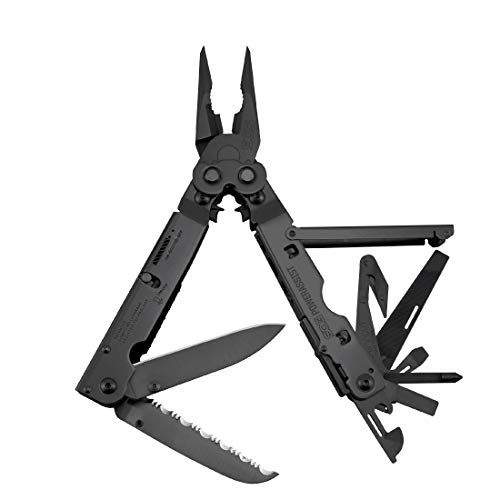
SOG Multi-Tool Pliers- PowerAssist Multi-Tool

The SOG PowerAssist Multi-Tool S66N-CP is a versatile tool designed for everyday use. It features 18 tools, including pliers, wire cutters, scissors, a saw, a can opener, and a screwdriver.

The tool also includes SOG’s patented PowerAssist technology, which provides two blades that open simultaneously and lock in place for added safety.

It’s made from high-quality stainless steel and has a lightweight design for easy portability. It also comes with a nylon sheath for storage and transport.


Check Today’s Price

We earn a commission if you make a purchase, at no additional cost to you.

SOG Power Assist Multi-Tool

5.


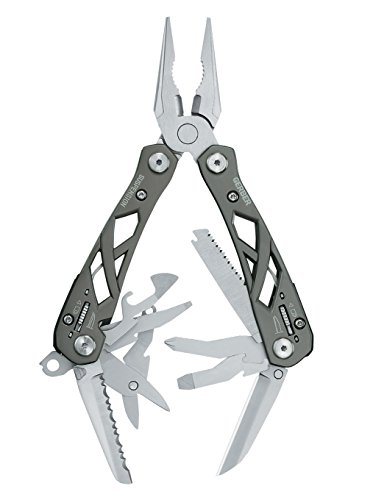
Gerber Gear Suspension Needle Nose Pliers Multitool

Twelve different tools are integrated into this lightweight, open-frame stainless steel grip.
Gerber is known for making reliable, durable blades and tools, and this is no exception. It also comes with fitted nylon carrying case.

This one also has “lockers” to keep the tools locked open while in use and prevent you from the tools closing on you during use.


Check Today’s Price

We earn a commission if you make a purchase, at no additional cost to you.

MASK Tactical Gear Review – Gerber Suspension Multi-Tool


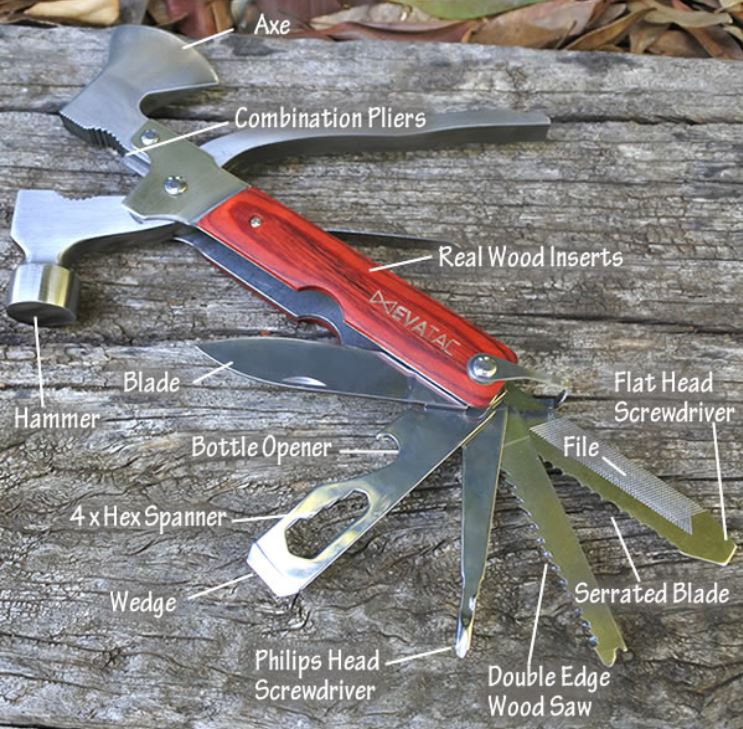
12-1 Trademate

7.


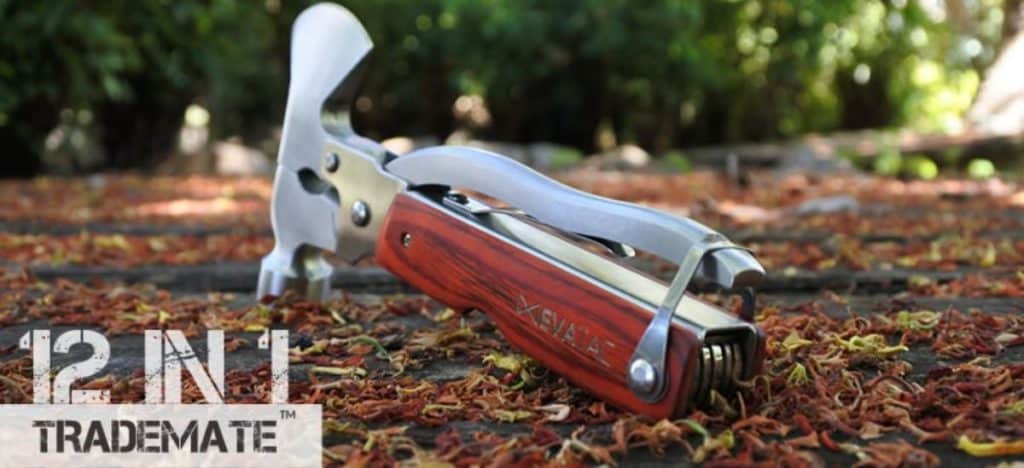
TradeMate The 12 in 1 Tool by Evatac

This survival multi-tool is unique; you won’t find any like it.

This solid stainless steel multi-tool has everything you need in one compact, well-crafted design.

With 12 features in one compact, heavy-duty design, this is a tool that every serious survivalist should own.

This is the perfect tool for everyday carry, to stash in your survival bug out bag and survival kits.


Check Today’s Price

We earn a commission if you make a purchase, at no additional cost to you.

Portable Camping Multifunctional Knife, Axe, Hammer, Pliers

As A Way To Introduce You To Skilled Survival, We’re Giving Away Our Ultimate Survival Gear Checklist. Click Here To Get Your FREE Copy Of It.

Where To Stash A Survival Multi Tool

Most people keep their multi-tools on their belts or in their pockets. Having a mini-toolbox on hand and at the ready is highly useful.

There are many different holster options for your multi-tool – some tools come with a fitted one you can attach to your belt, and others require you to get your own.

That’s alright, though; online, there are a ton of really cool multi-tool holsters.

I also keep a spare multi-tool in my Bug Out Bag and my backpacking bag.

Exclusive Bonus Content – Skilled Survival’s 104 Item Bug Out Bag Checklist – the only bug out checklist worth using. Click Here To Get Your FREE Copy Of It.

It also isn’t a bad idea to tuck one into the glovebox of your vehicle. There are even some multi-tools that will fit on your keychain – like the Gerber Shard.

21 Things You Can Do with a Mini Multitool Prybar| Gerber Shard

And if you have a survival medical kit, you NEED to keep a small multi-tool in there.

Obviously, these smaller tools are not the most versatile, but they’re better than nothing in a pinch.

Brief History Survival Multi Tools

Multi-tools have been around longer than you would probably imagine. The very first known folding, multi-use tool was from around 200 AD!

And (surprisingly) it wasn’t designed so soldiers could carry different types of knives with them. Nor was it intended for construction purposes, medical purposes, or self-defense. No, the very first multi-tool was designed for eating.

Some bright Roman did not want to give up his eating utensils when he traveled and built the world’s first folding multi-tool.

It was primarily just a fork and spoon on a hinge, but it made a handy type of invention in motion.

Fast forward 1600 years and humanity got its second incarnation of the multi-tool. The Swiss company Victorinox began in 1884 as a cutler’s knife workshop – but by 1886 was transformed into the world’s most infamous folding tool company.

The first real Swiss Army Knife was made in 1893; the rest is history, as they say.

It wouldn’t be until the 1980s when another company, started by Tim Leatherman, rose to compete.

Tim had a degree in mechanical engineering. He realized there was a significant gap between what he needed from a multi-tool and what was available. So he started his own multi-tool company, Leatherman.

Today, just about every knife manufacturer makes a multi-tool – be it a multi-function pocket knife or a techy bi-fold.

The multi-tool patent has spread, and you can find just about any combination of tools, style, color, shape, weight, dimensions, or unique attributes you might want.

Final Thoughts

I can’t imagine a more effective everyday carry survival tool than the multi-tool.

It’s the physical embodiment of the survival mentality: versatile, multi-function, durable, and effective.

Even if you own a survival knife already, I would recommend investing in a high-quality survival multi-tool

And don’t be shy when it comes to quantity: buy one for your car, one for your bug out bag, one for your camping gear, another to keep at home, another at the office, and another at your side!

The more, the merrier.

Obviously, they don’t all have to be 33-function multi-tools. I would recommend buying one excellent, high-quality multi-tool to keep on your person.

Then a handful of more generic, smaller, less-expensive ones in your gear bags and wherever else.

Any real survivalist wouldn’t dare go without owning at least one multi-tool.

Not because they replace your grandfather’s toolset, not because they mitigate the need for an actual tool bench or tool shed, but because they offer you some basic (and sometimes advanced) tools in an easily accessible, easily packable, lightweight companion.

Simply put, multi-tools are the ultimate survival tools.

Prepare, Adapt, and Overcome,

“Just In Case” Jack

P.s. Are you ready for the tough times ahead?

Find out now by taking my short Readiness Score Quiz – it’s absolutely free.
Once complete, you’ll know exactly where you stand on the “fragile” vs.” resilient” spectrum.

The post Best Survival Multitools For Everyday Carry appeared first on Skilled Survival.