Survival Gear is the most unused product until a natural disaster happens, then it’s the most desired products, but usually too late to help those that really need the help.

We sell around the World, and pride ourselves on offering a level of customer service that we would want to see ourselves if we were shopping online.
Our product ranges change regularly, so we hope that you come back to our sites to see some of the fantastic offers that we regularly have.

Get In Touch

Three People In China Infected With H9N2 Bird Flu

Three human beings in China, two children and one adult, have been infected with the H9N2 bird flu, also known as the avian influenza. These new cases bring China’s H9N2 total for the year to five. In 2024, the country reported 11 cases.

The University of Minnesota’s CIDRAP stated that one of the patients is a 7-year-old girl from Henan province whose symptoms began on February 11th. Another infection also involved a child, a 5-year-old boy from Guangxi province who became ill on March 3rd.

This version of the bird flu virus is known to circulate in poultry in China and other parts of Asia. Sporadic human infections continue to be reported, mainly from China. Infections are typically reported in children who usually experience mild infections. However, some people can become severely ill.

The bird flu fear-mongering has recently leveled off, and we can only hope that this means the panic never took hold and we can put this outbreak behind us. Or it could mean that the war mongering is going to tick up, too.

While human cases in the U.S. appear to have ended, several outbreaks in domestic cats persist, according to most mainstream media outlets.

Meghan F. Davis, a veterinarian and epidemiologist with Johns Hopkins University, said that cats are very susceptible to the bird flu. “Cats are not part of, for example, the surveillance structures that we have in place for people,” she said, according to a report at STAT News.  “We don’t invest nearly as much in veterinary research, whether it’s for clinical or public health benefit, as we do in human, which kind of makes some sense.”

Davis said she’s so concerned that she has closed her “catio” (a cat outside patio) to prevent the animals from having contact with outside sources of prey, such as rodents and wild birds.

The U.S. Dollar Is Crashing, And Our Reserve Currency Status Is In Serious Jeopardy – Is This Being Done By Design?

For many years, pundits have been warning us that the U.S. dollar would collapse.  In 2025, it is actually starting to happen.  The U.S. dollar hit a three year low against other global currencies last week, and on Wednesday the crash of the dollar resumed.  Overall, the U.S. dollar is now down about 9 percent over the past 3 months.  The currency that has benefitted the most is the Swiss franc.  The USD/CHF recently hit the lowest level that we have seen in 14 years.  What we are witnessing is literally a bloodbath, and many experts are suggesting that our reserve currency status is now in serious jeopardy.

Many were hoping that the dollar would bounce back this week, but there was more carnage on Wednesday

The dollar resumed its fall on Wednesday with both safe havens and risk sensitive currencies outperforming the greenback as traders waited to see if U.S. President Donald Trump’s administration reaches new trading agreements with partners.

The dollar tumbled last week on concerns over the economic impact new tariffs will have, and as investors shifted allocations overseas due to uncertainty over the erratic implementation of the trade levies.

To me, one of the best ways to evaluate the strength of the U.S. dollar is to look at the price of gold.

Needless to say, the price of gold in U.S. dollars has been absolutely soaring lately, and on Wednesday it went up another 3.1 percent

Gold prices extended their record run on Wednesday, to breach $3,300 per ounce, as a weaker dollar and escalating U.S.-China trade tensions pushed investors towards the safe-haven asset.

Spot gold climbed 3.1% to $3,327.78 an ounce.

During times of financial chaos, investors tend to flock to gold.

And times are definitely very chaotic right now.

If the dollar continues to become more unstable, other global currencies will inevitably become a lot more attractive.

At this point, we are being warned that the dollar’s role as the primary reserve currency of the planet is “looking increasingly uncertain”

Specifically, the dollar’s status as a reliable “safe haven” has been tarnished, and its role as the de facto global reserve currency has been looking increasingly uncertain.

Signs of growing dissatisfaction with the dollar can be seen in the breakdown of its longstanding correlation with other markets.

Having the primary reserve currency of the world has been a major advantage for us, but there are other currencies that are widely used in global trade.

In recent weeks, the euro, the Swiss franc and the Japanese yen have all done extremely well

For decades, the dollar, the Swiss franc and Japanese yen were among the most popular options for investors seeking calmer ports in volatile markets.

But while the yen, franc and euro have shot higher over the past few weeks, the ICE U.S. Dollar Index, a popular gauge of the dollar’s value against its main currency rivals, sank to its lowest level in three years. By comparison, the Swiss franc recently climbed to its strongest level in 14 years.

Could the euro or one of the major currencies in Asia eventually take the place of the U.S. dollar?

It is entirely possible.

The truth is that the status of the U.S. dollar has already been slipping.

According to MarketWatch, “the dollar’s share of global central-bank reserves has been shrinking since the late 1990s”…

By some measures, the world has been shifting away from its dependence on the dollar for decades. Data from the International Monetary Fund show the dollar’s share of global central-bank reserves has been shrinking since the late 1990s.

When the dollar is strong, U.S. government bonds are attractive to foreign investors.

This keeps our borrowing costs down.

But in recent weeks we have witnessed a “major sell-off” in bonds at the same time that stocks have been going down…

During the financial crisis of 2008, investors around the world bought more Treasury bonds, confident that despite the crash, this was the safest place in the world for their money. That is how things usually go: The bond market moves in the opposite direction as stocks.

This time, as the stock market took a nosedive, an alarming trend emerged. Investors were dumping their U.S. government bonds. The yield on the 10-year Treasury jumped from 4% to 4.5% in a week, a huge jump for the bond market that indicates a major sell-off. Investors were putting their money into euros, yen, pounds, and gold instead of into dollars.

We haven’t seen a financial crisis like this in a long time.

And we only have a limited amount of time to turn this around before things start getting really messy.

If this new crisis begins to spiral out of control, there will be an immense amount of pain, and we could witness a collapse of confidence in the U.S. dollar.

One expert is warning that the U.S. dollar has now been put on a “watch list”

“It is too early to call if we are seeing the demise of the dollar, but the dollar has certainly been put on a ‘watch list,’” says Kevin Gallagher, director of the Global Development Policy Center at Boston University. For the rest of the world, “The U.S. is no longer innocent until proven guilty, but the opposite.”

Sadly, most Americans simply do not understand how important the strength of the dollar is.

Our primary export is currency.

For decades, we have been exchanging the world’s dominant currency for goods manufactured in poorer nations all over the planet.

If the U.S. dollar becomes much weaker, our standard of living will go way down.

Unfortunately, it appears that there are those in positions of power that want to see the value of the U.S. dollar drop.

The chairman of the White House Council of Economic Advisers, Stephen Miran, believes that devaluing the dollar is the best way to reduce our trade deficit

For Miran, tariffs and moving away from a strong dollar could have “the broadest ramifications of any policies in decades, fundamentally reshaping the global trade and financial systems”.

Miran’s essay argues that a strong dollar makes US exports less competitive and imports cheaper, while handicapping American manufacturers as it discourages investing in building factories in the United States.

“The deep unhappiness with the prevailing economic order is rooted in persistent overvaluation of the dollar and asymmetric trade conditions,” Miran wrote.

It is true that if the dollar is substantially devalued our trade deficit will be reduced.

But in the process our standard of living will be greatly diminished.

This would particularly be true for those on the bottom levels of the economic food chain.

And if another global reserve currency ultimately takes the place of the U.S. dollar, that would be absolutely catastrophic for our standard of living.

At this stage in our history, the strength of the United States is dependent upon the strength of our currency to a very large degree.

If the dollar crashes and burns, so will our society as a whole.

Michael’s new book entitled “10 Prophetic Events That Are Coming Next” is available in paperback and for the Kindle on Amazon.com, and you can subscribe to his Substack newsletter at michaeltsnyder.substack.com.

About the Author: Michael Snyder’s new book entitled “10 Prophetic Events That Are Coming Next” is available in paperback and for the Kindle on Amazon.com.  He has also written nine other books that are available on Amazon.com including “Chaos”“End Times”“7 Year Apocalypse”“Lost Prophecies Of The Future Of America”“The Beginning Of The End”, and “Living A Life That Really Matters”.  When you purchase any of Michael’s books you help to support the work that he is doing.  You can also get his articles by email as soon as he publishes them by subscribing to his Substack newsletter.  Michael has published thousands of articles on The Economic Collapse BlogEnd Of The American Dream and The Most Important News, and he always freely and happily allows others to republish those articles on their own websites.  These are such troubled times, and people need hope.  John 3:16 tells us about the hope that God has given us through Jesus Christ: “For God so loved the world, that he gave his only begotten Son, that whosoever believeth in him should not perish, but have everlasting life.”  If you have not already done so, we strongly urge you to invite Jesus Christ to be your Lord and Savior today.

The post The U.S. Dollar Is Crashing, And Our Reserve Currency Status Is In Serious Jeopardy – Is This Being Done By Design? appeared first on The Economic Collapse.

Wildlife Encounters During Spring Hikes: Warning Signs You Must Know

Spring is the season for enjoying nature with activities such as hiking and camping. Coincidentally, spring is also when wildlife resumes being more active. Bears wake up from their hibernation looking for food, snakes come out to sunbathe, and coyotes roam to find prey. While these animals usually avoid humans, sometimes their paths cross. The best way to stay safe is to understand their behavior and know how to react correctly. This guide will teach you how to prevent wildlife encounters and handle animals safely if they happen. This also shows you the right gear for protection during these chance encounters.

Wildlife Encounters Alert: Stay Safe From Springtime Predator Attacks

As animals emerge from hibernation, wildlife encounters can get dangerously real. One wrong move can turn a scenic trail into a survival test. Here’s how to stay safe when nature gets too close.

Bears: Big, Bold, and Hungry After Hibernation

Bears don’t wake up in spring feeling refreshed—they wake up starving. After months of living off body fat, they need food fast, and they’ll head toward wherever the scent of a meal takes them. Especially when cubs are around, this is when they’re most unpredictable.

Where You’ll Find Them

Bears are most common in forests, mountainous areas, and nearby rivers or lakes. As spring arrives, bears emerge from hibernation hungry. In North America, you’ll typically encounter black bears. Meanwhile, grizzly bears are more common in the western U.S. and parts of Canada.

What to Do If You See a Bear

The key is to stay calm and avoid triggering the bear’s natural instincts. Here’s what you should do:

  1. Stay Calm: Do not run. Bears can sprint up to 30 mph, and running may trigger a chase response.
  2. Make Yourself Look Bigger: Stand tall, raise your arms, and speak firmly to show dominance, not fear.
  3. Back Away Slowly: Move sideways, avoid direct eye contact, and watch the bear’s movements without turning your back.

How to Prevent Bear Encounters

  • Store Food Properly: Use bear-proof containers or hang food at least 10 feet off the ground and 4 feet from the tree trunk.
  • Maintain a Clean Campsite: Properly dispose of food scraps and avoid leaving items with strong scents, like toothpaste, out in the open.
  • Carry Bear Spray: Keep it easily accessible and not buried in your backpack.

Snakes: Silent but Serious Threats

Snakes aren’t aggressive—but they will defend themselves once they get sense danger. Most bites happen because people accidentally step too close. With warmer weather, they’re out of hiding, and knowing where they like to stay can help you avoid a painful encounter.

Where You’ll Find Them

Snakes prefer sunny and warm spots like rocks, logs, and open trails. During spring, they come out of hiding to bask in the sun and regulate their body temperature. In North America, you might encounter venomous snakes such as rattlesnakes, copperheads, and cottonmouths.

How to Identify Venomous Snakes

  • Rattlesnakes: Recognizable by the distinctive rattle sound they make when threatened.
  • Copperheads: Identified by an hourglass-shaped pattern along their bodies and copper-colored heads.
  • Cottonmouths: Known for the white interior of their mouths. Cottonmouths are often visible when they display a warning gape.

What to Do If You See a Snake

  1. Freeze: Stop moving immediately. Quick movements can provoke a defensive strike.
  2. Identify from a Distance: Look carefully from afar to determine if the snake is venomous, which means you’ll have to avoid getting too close.
  3. Slowly Back Away: Move away slowly and carefully and keep your eyes on the snake’s position.
  4. Never Try to Handle or Kill It: Most bites occur when people try to catch or kill snakes.

If You’re Bitten by a Snake

  • Stay Calm: Stress increases heart rate and can spread venom faster.
  • Keep the Affected Limb Immobilized: Keep it at or below heart level to slow the venom circulation in the blood.
  • Seek Medical Help Immediately: Call emergency services or get to a hospital as quickly as possible.

What You Should Not Do:

  • Don’t suck out the venom. This doesn’t work and can worsen the wound.
  • Don’t apply ice or a tourniquet. This can cause more tissue damage.
  • Don’t drink alcohol or caffeine as they increase heart rate.
Snake Bite Prevention Tips
  • Wear boots and long pants when hiking in areas where snakes are common.
  • Watch where you step, especially near rocks, logs, or tall grass.
  • Use a walking stick to probe the ground ahead in dense underbrush.

Coyotes: Wily, Bold, and Curious

Coyotes are opportunistic animals. They’ll eat whatever they can find, whether small animals, fruit, or trash. If you’re in their territory, they won’t hesitate to test boundaries with you.

Where You’ll Find Them

Coyotes are incredibly adaptable. They live in deserts, forests, grasslands, and even urban areas. They’re more active in spring because they have pups to feed. This makes encounters more likely in areas near food sources like trash or parks with small animals.

What to Do If You See a Coyote

  1. Stand Tall and Make Yourself Loud: Clap your hands, shout, and stomp your feet to scare the coyote away.
  2. Maintain Eye Contact: Coyotes are cautious but curious. Facing them shows you’re not easy prey.
  3. Back Away Slowly: Do not turn your back. Keep moving backward until the coyote loses interest.

How to Prevent Coyote Encounters

  • Never feed coyotes, intentionally or unintentionally.
  • Secure trash cans, pet food, and any other potential food sources.
  • Keep small pets on a leash, and don’t leave them unattended outdoors, especially at dawn or dusk.

Essential Gear for Wildlife Encounters

  • Bear Spray: Works on bears, coyotes, and other aggressive animals.
  • Whistle or Air Horn: Loud noises can deter curious predators.
  • First Aid Kit: Include supplies for snake bites, such as elastic bandages.
  • Walking Stick: Helps with balance and can be used to create distance from snakes.

The Outdoors Rewards the Prepared

Wild animals aren’t out to get you, but they will defend themselves if you are in their way. Give them space, know how to respond, and keep your gear ready. A calm reaction is your best tool in any encounter. The outdoors is safest when you respect its rules.

❓ FAQs About Wildlife Encounters

  1. What’s the best way to avoid wildlife encounters?
    Stay alert, make noise, and keep food secured.
  2. Should I carry a weapon for protection?
    Bear spray is often more effective than firearms for deterring wildlife.
  3. What should I do if a bear enters my camp?
    Make noise to scare it off. If it’s aggressive, use bear spray.
  4. How do I know if a snake is venomous?
    Learn to identify local species. Look for triangular heads, slit pupils, and rattles.
  5. Can coyotes be dangerous to humans?
    Rarely, but they can be aggressive if sick, used to humans, or protecting pups.

A Wave Of Panic Buying Has Suddenly Erupted At Retailers All Over America

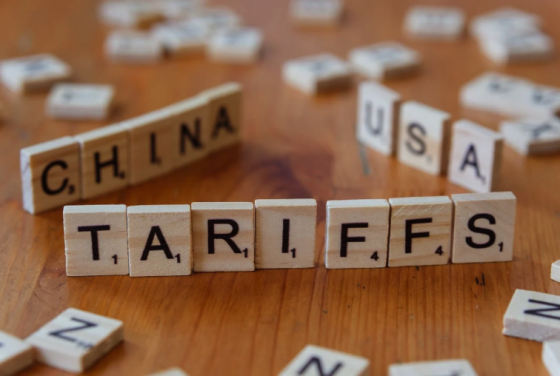
Do you remember the panic buying that we witnessed during the early days of the pandemic?  It’s back, and I have a feeling that it is only going to intensify in the days ahead.  As more Americans begin to realize that products made in China will soon more than double in price and that some may no longer be available at all, there will be a feverish rush to purchase Chinese-made goods.  Ironically, this may actually give a short-term boost to the U.S. economy, and the economic numbers for the first half of this year may end up looking better than they otherwise would have.

Before I get too deep into this article, there are a couple of things that I want to clarify.

First of all, I do not think that the U.S. should have ever begun trading with communist China at all, because communist China has always been an incredibly evil regime.

Secondly, it was a catastrophic error for the U.S. to become so deeply dependent on imports from China.  This is something that I have been writing about for years.  Our stores are now teeming with products that were made in China, and thousands of our supply chains simply cannot function without equipment, parts or products that come from China.

But our leaders refused to listen to those of us that were sounding the alarm, and now we have a real mess on our hands.

Because we have become so deeply dependent on China, the trade war that has now begun is really going to hurt, and everyone should be able to see that.

On Thursday, the White House confirmed that the total tariff rate on Chinese imports has now risen to 145 percent

The U.S. tariff rate on Chinese imports now effectively totals 145%, a White House official confirmed to CNBC.

Trump’s latest executive order hikes tariffs on Beijing to 125% from 84%.

But that comes on top of a 20% fentanyl-related tariff that Trump previously imposed on China.

One economist is warning that high tariff rates on both sides will lead to “a hard decoupling”, and he says that it would be “really hard to overstate the expected shocks this is going to have”…

“This is probably the strongest indication we’ve seen pushing towards a hard decoupling,” said Nick Marro, principal economist for Asia at the Economist Intelligence Unit, referring to an outcome where the two economies have virtually no trade or mutual investment.

“It’s really hard to overstate the expected shocks this is going to have, not just to the Chinese economy itself, but also to the entire global trading landscape,” as well as on the US, he said.

I fully agree with his assessment.

What we are witnessing is going to cause a tremendous amount of disruption.

Apparently lots of other people see things the same way, because a wave of panic buying has now started

Across the country, people have been rushing to stores or going online to buy everything from iPhones to coffee to designer bags and jewelry in anticipation of the toll the tariffs will take on their wallets.

If there is something that is made in China that you really need, I would get it now while you still can.

One woman that just visited her local Costco said that she has “never seen it so busy”

Costco was a total nightmare yesterday. I’ve never seen it so busy. I walked out after seeing the lines going down each aisle with no end in sight.

Another woman that lives in New York City admitted to a reporter that her mother is literally “panicking”

“Actually, I already have. I’ve already started stocking up. My mother has a whole stockpile, and she’s panicking. But I told her we’re going to be okay, as we live in New York City,” said Amelia Guilford, a retail worker who was visiting her mother in the city.

The price hikes that we will soon see will be quite a shock to the system, and this will particularly be true for big ticket items.

For example, it is being projected that the cost to manufacture an iPhone could go up by hundreds of dollars

Trump’s new tariffs on Chinese goods mean the cost for Apple to manufacture an iPhone could jump from $580 to $850, according to a report from TechInsights.

In anticipation of the coming price hikes, there was a “full-blown buying spree” at Apple stores over the weekend…

Apple just faced a weekend retail frenzy more typical of iPhone launch day than early April. With the Trump administration floating a 54% tariff on Chinese-made goods including Apple’s flagship devices U.S. consumers rushed into stores, fearing sharp price hikes were imminent. According to reports from multiple locations, sales surged as worried buyers sought to lock in current prices, turning what’s usually a quiet season into a full-blown buying spree.

Many of the parts that go into our new vehicles also come from China, and it is being reported that U.S. auto sales were quite a bit higher than expected last month as people rushed to purchase new vehicles before the tariffs were implemented…

US auto sales for March came in higher than Deutsche Bank analysts expected, the bank said in a Friday report, rising from February levels. That might indicate “panic buying” as Americans sought to get ahead of the tariffs on foreign-made vehicles that took effect last week.

The analysts said they had expected higher numbers due to a pre-tariff pull-forward. But “this impact appears far greater than we anticipated,” the report read. Deutsche Bank expected auto sales to be strong through June, then weaken in the back half of the year.

Unless the U.S. and China can reach some sort of an agreement, and that appears very unlikely at this stage, our standard of living is about to change dramatically.

According to CNBC, approximately 70 percent of the goods sold on Amazon come from China…

Many sellers on Amazon count on China for manufacturing and assembly due to lower costs and established infrastructure – up to 70% of goods on Amazon come from China, according to Wedbush Securities. With nearly all imports from China being taxed a staggering 145% under the latest tariffs, Amazon sellers are having to decide whether to raise prices or absorb the vastly increased cost of importing their goods.

Amazon CEO Andy Jassy on Thursday told CNBC that its vast network of third-party sellers will likely “pass the cost on” to consumers. He added that Amazon has done some “strategic forward inventory buys” and looked to renegotiate terms on some purchase orders to keep prices low.

Reuters spoke to five Amazon sellers in China.  Three of them said that they would be raising prices, and two of them said that they would be leaving the U.S. market completely

Of the five sellers who spoke to Reuters, three said they would look to raise prices for their exports to the U.S., while two planned to leave the market entirely.

Dave Fong, whose products range from schoolbags to Bluetooth speakers, said on Thursday he has raised prices in the U.S. by up to 30% and would let inventory levels fall and lower spending on Amazon advertising fees, which once took up 40% of his U.S. revenue.

“For us and anyone else, you can’t rely on the U.S. market, that’s quite clear,” Fong said. “We have to reduce investment, and put more resources into regions like Europe, Canada, Mexico and the rest of the world.”

If this trade war persists, it will be an even bigger economic shock than the pandemic was.

But to me, there is potentially an even bigger concern.

The threat of economic sanctions has always been one of the barriers that has made China think twice about invading Taiwan.

But now that our two economies are rapidly decoupling anyway, the Chinese may come to the conclusion that this is actually a perfect time to make a move on Taiwan.

This crisis with China is a far bigger deal than most people realize, and it could have some very serious unintended consequences.

Michael’s new book entitled “Why” is available in paperback and for the Kindle on Amazon.com, and you can subscribe to his Substack newsletter at michaeltsnyder.substack.com.

About the Author: Michael Snyder’s new book entitled “Why” is available in paperback and for the Kindle on Amazon.com. He has also written eight other books that are available on Amazon.com including “Chaos”“End Times”“7 Year Apocalypse”“Lost Prophecies Of The Future Of America”“The Beginning Of The End”, and “Living A Life That Really Matters”.  When you purchase any of Michael’s books you help to support the work that he is doing.  You can also get his articles by email as soon as he publishes them by subscribing to his Substack newsletter.  Michael has published thousands of articles on The Economic Collapse BlogEnd Of The American Dream and The Most Important News, and he always freely and happily allows others to republish those articles on their own websites.  These are such troubled times, and people need hope.  John 3:16 tells us about the hope that God has given us through Jesus Christ: “For God so loved the world, that he gave his only begotten Son, that whosoever believeth in him should not perish, but have everlasting life.”  If you have not already done so, we strongly urge you to invite Jesus Christ to be your Lord and Savior today.

The post A Wave Of Panic Buying Has Suddenly Erupted At Retailers All Over America appeared first on The Economic Collapse.

Staring Down Danger: How to Handle Intimidating Eye Contact with Confidence

Understanding the Power of a Stare

Eye contact is one of the most basic yet potent forms of human communication. It can convey interest, confidence, or curiosity—but it can also be used as a weapon.

When someone stares at you with bad intentions, it’s often a way to assert dominance or provoke a reaction. In such scenarios, ignoring it may seem like the best route, but doing so can send unintended signals of fear or weakness.

A deliberate, controlled response can make a significant difference in ensuring your safety and projecting strength.

Acknowledging Presence Without Escalating

Contrary to instinct, the first step in handling an aggressive stare is not to look away but to acknowledge the person’s presence. This doesn’t mean initiating a confrontation. A brief look that signals awareness is often enough.

The key is to avoid a prolonged stare, which could be interpreted as a challenge. A simple nod, preferably downward, can be a subtle cue that says, “I see you,” without fanning the flames of hostility. The way you manage this moment is essential; it communicates that you’re not an easy target while avoiding escalation.

Mastering the Subtle Art of Situational Awareness

Once you’ve acknowledged the individual, the next step is to maintain awareness of their position and actions. This doesn’t mean you should keep staring at them. Instead, use your surroundings strategically.

Reflective surfaces like shop windows or car mirrors can provide glimpses of what’s happening behind you without drawing attention to yourself. Stay observant but discreet. Knowing where the person is, who they’re with, and how they’re behaving offers critical insights and can help you anticipate any sudden movements or threats.

This situational awareness should extend to their companions as well. Often, individuals who try to intimidate do so with support nearby. Look for people dressed similarly or standing in close proximity.

These visual cues may indicate group dynamics and help you prepare for any group-based escalation. However, it’s crucial not to become overly focused. Hypervigilance can not only draw attention but also compromise your composure, making you appear anxious or uncertain.

Tactical Withdrawal: Leaving Without Turning Your Back

Knowing if the individual is alone or accompanied, and recognizing if someone attempts to follow or cut you off, can be the difference between avoiding danger and walking into a trap.

If you sense that the situation may escalate or if you’ve picked up on warning signs, it’s time to remove yourself. But leaving doesn’t mean retreating blindly. Tactical withdrawal involves walking away while keeping tabs on your environment.

Use your peripheral vision or reflective surfaces to monitor the person’s position. This allows you to move to safety without exposing your back or losing awareness of a potential threat.

This method, often referred to as situational awareness in reverse, is about staying one step ahead. Knowing if the individual is alone or accompanied, and recognizing if someone attempts to follow or cut you off, can be the difference between avoiding danger and walking into a trap. The goal isn’t to run but to relocate with awareness and purpose.

Confidence as the Ultimate Defense

Aggressive stares often come from a place of insecurity. Individuals who feel the need to assert dominance through intimidation are typically grappling with their own fears and self-worth. By understanding this, you can better manage your response. The goal isn’t to challenge them but to project inner confidence that renders their tactics ineffective.

One powerful way to build this confidence is through self-defense training. Learning how to fight doesn’t mean you’re looking for a fight.

It means you’re preparing yourself mentally and physically so that you never have to engage in one. This preparedness gives you the psychological edge to remain calm under pressure and to make smart, controlled decisions in tense situations.

Final Thoughts

Dealing with someone who stares at you with bad intentions is a psychological and situational challenge. It demands presence of mind, self-awareness, and a calm but firm approach.

Acknowledge them without antagonizing. Stay aware of your environment and any supporting individuals. Withdraw with intelligence, not fear. And above all, cultivate confidence that doesn’t rely on confrontation but on knowing your own strength.

These small but vital strategies can help you navigate hostile encounters with grace and safety. By preparing your mind and body, you ensure that the power of a stare remains just that—a look, not a threat.

8 Signs That The Bombing Of Iran Could Be Coming Very Soon

If bombs start falling on Iran’s nuclear facilities, it would instantly be the biggest news story of 2025 so far.  Iranian air defenses would need to be neutralized first, and that would be quite an extensive operation all by itself.  Subsequently, destroying Iran’s nuclear facilities would be extraordinarily difficult, because many of them are very deep underground.  We have heard a lot about our “bunker buster” bombs, but there is a lot of debate about whether those bombs can actually destroy facilities that are buried that deep.  Of course the moment the Iranians start getting bombed, they will strike back by hitting Israeli cities and U.S. bases all over the Middle East.  At that point we would be at war with the Iranians, and there would be no turning back.  The following are 8 signs that the bombing of Iran could be coming very soon…

#1 A second U.S. aircraft carrier is being moved within striking distance of Iran

New satellite imagery shows the USS Carl Vinson entering the Indian Ocean via the Malacca Straits, marking a significant step in the U.S. military’s increased presence in the region.

This move comes as tensions with Iran and the Houthis in Yemen escalate, signaling the potential for a more aggressive U.S. stance in the coming days and weeks.

#2 It is being reported that 6 B-2 bombers have been deployed to the base on Diego Garcia.  This represents 30 percent of our entire fleet of B-2 bombers…

In the largest single deployment of stealth bombers in U.S. history, the Pentagon has sent six B-2 “Spirit” aircraft to Diego Garcia in the Indian Ocean.

The long-range bombers, which are uniquely suited to evade Iranian air defenses and can carry America’s most potent bunker busting weapons, flew in from Missouri last week in a little noticed operation.

#3 The B-2 bombers that have been deployed to Diego Garcia are being left out in the open so that the Iranians can see them

“All the bombers, they’re not in hangers, they’re underneath satellites where they can be photographed and seen; and the idea is, do you see our sword?” retired Air Force Brig. Gen. Blaine Holt, who served as Deputy U.S. Military Representative to NATO, said in an interview with Newsmax last week. Holt also said that the B-2 deployment “gives the president a military option that he can actually use these weapons against Iran if needed.”

#4 Negotiations with Iran are scheduled to begin this weekend.  The New York Times is reporting that the Iranians are expected to reject President Trump’s demands…

But Mr. Trump’s public demands — that Iran stop nuclear enrichment, hand over its large supply of enriched uranium and destroy its existing nuclear facilities — will almost surely be rejected by Ayatollah Ali Khamenei, Iran’s supreme leader, as an unacceptable humiliation and surrender. How far both sides are willing to compromise is unclear, but Mr. Trump is well known for making ultimate demands at the start and then searching for a deal.

#5 President Trump is warning that if negotiations with the Iranians do not succeed “it will be a very bad day for Iran”…

Speaking from the White House’ Oval Office last night Trump warned Iran “would be in great danger” if the projected talks were stymied. He said: “We’re having direct talks with Iran, and they’ve started. It’ll go on Saturday.

“We have a very big meeting, and we’ll see what can happen. And I think everybody agrees that doing a deal would be preferable.

“Iran cannot have a nuclear weapon, and if the talks aren’t successful, I actually think it will be a very bad day for Iran”.

#6 Israeli Prime Minister Benjamin Netanyahu is openly telling us that a military strike on Iran has almost become “inevitable”…

Israeli Prime Minister Benjamin Netanyahu said Tuesday that if US ‘indirect’ talks with Iran over its nuclear program fail, then a military attack becomes ‘inevitable’. He issued the warning fresh off his Monday Oval Office visit with President Trump, wherein the US leader announced for the first time that Saturday talks with the Iranians will be hosted in Oman.

Netanyahu said in the new video statement, ““We agree that Iran will not have nuclear weapons. This can be done in an agreement, but only if… they go in, blow up (Iran’s) facilities, dismantle all the equipment, under American supervision.” And he added: “If talks drag on, then the military option becomes inevitable.”

#7 Now that Trump is in the White House, the Israelis believe that now is “the optimum moment to deal with Iran”

An Israeli diplomatic source warned it is crucial a deal be thrashed out with Iran to temper its nuclear programme.

They said: “From Israel’s perspective, with Trump in the White House, this represents the optimum moment to deal with Iran. There won’t be a better chance.

“Obtaining precise intelligence on just how far Iran’s nuclear programme has advanced has always been hard to obtain.

“But the reality is they’re much much closer than anyone can be comfortable with. And they have been for some time.”

#8 It is just an unverified rumor at this stage, but an Iraqi journalist named Bassim Alhazradji is alleging that the United States, the United Kingdom, and Israel have decided to begin a bombing campaign within the next seven days

Iraqi journalist Bassim Alhazradji has made a startling claim that the United States, the United Kingdom, and Israel have reached a final agreement to launch a coordinated military strike against Iran. According to Alhazradji, the attack is expected to begin within the next seven days. While the journalist did not reveal the sources of his information, the statement has caused a ripple of speculation across regional media and political circles.

Alhazradji’s report has not been independently verified, and no official government has issued a statement confirming such a plan. However, rising tensions between Iran and the West, particularly following Tehran’s increasingly confrontational rhetoric and alleged nuclear advancements, lend a measure of plausibility to the claims. Analysts have also pointed to recent military drills conducted by the US Navy in the Persian Gulf, as well as reports of Israeli air force activity near Iranian airspace, as possible signs of an impending escalation.

Personally, I do not think that the bombing of Iran will start within the next seven days.

But if negotiations fail, it is coming soon.

Dr. Oz Hassan has told a British news source that any significant effort to destroy Iran’s nuclear facilities would essentially be “the start of a major war”…

“A serious attempt to destroy Iran’s capabilities would require a large, complex military operation, involving stealth bombers, powerful bunker-busting bombs, and attacks on Iran’s air defences and military systems. This would look less like a quick raid and more like the start of a major war.”

And such an operation would also likely kill any chance of peace with the Russians.

In fact, a Russian spokesperson has said that any attempt to destroy Iran’s nuclear facilities would “inevitably lead to an irreversible global catastrophe”

Maria Zakharova, from Russia’s foreign ministry, said: “The use of military force by Iran’s opponents in the context of the settlement is illegal and unacceptable.

“Threats from outside to bomb Iran’s nuclear infrastructure facilities will inevitably lead to an irreversible global catastrophe. These threats are simply unacceptable.”

We are so close to the unthinkable.

So let us hope that the Iranians are in a mood to compromise and that the negotiations that are scheduled for this weekend go well.

Because if negotiations with Iran fail, it appears that there will be all-out war in the Middle East.

Michael’s new book entitled “Why” is available in paperback and for the Kindle on Amazon.com, and you can subscribe to his Substack newsletter at michaeltsnyder.substack.com.

About the Author: Michael Snyder’s new book entitled “Why” is available in paperback and for the Kindle on Amazon.com. He has also written eight other books that are available on Amazon.com including “Chaos”“End Times”“7 Year Apocalypse”“Lost Prophecies Of The Future Of America”“The Beginning Of The End”, and “Living A Life That Really Matters”.  When you purchase any of Michael’s books you help to support the work that he is doing.  You can also get his articles by email as soon as he publishes them by subscribing to his Substack newsletter.  Michael has published thousands of articles on The Economic Collapse BlogEnd Of The American Dream and The Most Important News, and he always freely and happily allows others to republish those articles on their own websites.  These are such troubled times, and people need hope.  John 3:16 tells us about the hope that God has given us through Jesus Christ: “For God so loved the world, that he gave his only begotten Son, that whosoever believeth in him should not perish, but have everlasting life.”  If you have not already done so, we strongly urge you to invite Jesus Christ to be your Lord and Savior today.

The post 8 Signs That The Bombing Of Iran Could Be Coming Very Soon appeared first on End Of The American Dream.

Are You Ready To Pay A 104% Tariff On All Products From China?

How many products do you have in your home right now that were made in China?  If you are like most Americans, that number is very high.  We should have never allowed ourselves to become so dependent on cheap Chinese goods, but we did.  Walmart, Target and our dollar stores are absolutely teeming with products that were manufactured in China, and now those products are about to get much more expensive.  The 34 percent “retaliatory tariff” that the Trump administration recently imposed on the Chinese was on top of a 20 percent tariff that the Trump administration had already imposed on them.  The White House has confirmed this.  Unfortunately, the 54 percent tariff that we were potentially facing will now rise to 104 percent thanks to an additional 50 percent tariff that will go into effect on April 9th.  Earlier today, President Trump posted the following on his Truth Social account

Yesterday, China issued Retaliatory Tariffs of 34%, on top of their already record setting Tariffs, Non-Monetary Tariffs, Illegal Subsidization of companies, and massive long term Currency Manipulation, despite my warning that any country that Retaliates against the U.S. by issuing additional Tariffs, above and beyond their already existing long term Tariff abuse of our Nation, will be immediately met with new and substantially higher Tariffs, over and above those initially set. Therefore, if China does not withdraw its 34% increase above their already long term trading abuses by tomorrow, April 8th, 2025, the United States will impose ADDITIONAL Tariffs on China of 50%, effective April 9th. Additionally, all talks with China concerning their requested meetings with us will be terminated! Negotiations with other countries, which have also requested meetings, will begin taking place immediately. Thank you for your attention to this matter!

The math is very clear: 20 percent plus 34 percent plus 50 percent equals 104 percent.

No matter how the pundits try to spin this, the truth is that we will be paying this tariff if we continue to purchase Chinese products.

It is easy to say that we should just switch to products made in the U.S., but in thousands of cases there simply are not any similar products manufactured here.

And in thousands of other cases, products that are ultimately assembled in the U.S. depend on components that come from China.

Once again, we should have never allowed ourselves to get into this situation.

Trying to reverse course now is going to be a major league headache.  I asked Google AI to tell me some of the products that we get from China, and it produced quite an extensive list…

Consumer Electronics: China is a major source for smartphones, computers, video game consoles, and other electronic devices.

Toys and Games: A significant portion of the toys, games, and sporting goods imported into the U.S. come from China.

Furniture and Bedding: China is a major source for furniture, bedding, and other home goods.

Textiles and Clothing: China is a major source for textile products and clothing.

Machinery and Electrical Equipment: China is a major source for machinery, nuclear reactors, boilers, and electrical equipment

Other Products: China also supplies the U.S. with items like lithium-ion batteries, plastics, and miscellaneous manufactured goods.

Food: While a small percentage of the U.S. food supply comes from China, it is a major supplier for specific items like apple juice, garlic, canned mandarin oranges, fish, and shrimp.

At this point, a list of things that we don’t get from China might be shorter.

I am particularly concerned about what these tariffs will do to the pharmaceutical industry, because Google AI says that the vast majority of the active ingredients in our pharmaceutical drugs are imported from China…

While it’s difficult to pinpoint an exact percentage, a significant portion of raw materials for pharmaceutical drugs in the U.S. come from China, with estimates suggesting that around 80% of active pharmaceutical ingredients (APIs) are sourced from China and other countries like India.

We are in so much trouble.

Bill Ackman is warning that unless these tariffs are rolled back we are headed into a “self-induced economic nuclear winter”

Billionaire fund manager Bill Ackman, a staunch President Trump ally, has warned that the world is on the brink of “self-induced economic nuclear winter” as he begged the commander-in-chief to pause his sweeping tariffs.

“The President has an opportunity on Monday to call a time out and have the time to execute on fixing an unfair tariff system. Alternatively, we are heading for a self-induced, economic nuclear winter, and we should start hunkering down,” Ackman wrote in a lengthy X post Sunday night.

“May cooler heads prevail.”

Bill Ackman wouldn’t have become a billionaire if he wasn’t extremely sharp, and I agree with his assessment.

The outlook for the months ahead is extremely dismal.

In fact, BlackRock CEO Larry Fink is admitting that most CEOs that he talks to “would say we are probably in a recession right now”

BlackRock CEO Larry Fink said that the stock market could see declines deepen by another 20% amid uncertainty over President Donald Trump’s tariffs and that CEOs are telling him they think the U.S. economy is likely already in a recession.

“Most CEOs I talk to would say we are probably in a recession right now,” Fink told the Economic Club of New York on Monday. Tariffs are expected to make a wide variety of products more expensive, exacerbating inflationary pressures that have been persistent in recent months.

As I discussed on Friday, our economic momentum has been taking us in the wrong direction for a long time.

And now these tariffs are going to introduce a tremendous amount of chaos into the equation.

As a result of the tariffs that were just imposed, Volkswagen is actually “holding 37,000 cars at US ports”

Volkswagen is holding 37,000 cars at US ports amid tariff turmoil.

Audi, the luxury arm of the world’s second largest global automaker, has confirmed it’s in a high-stakes holding pattern triggered by President Donald Trump’s 25 percent tariff on imported vehicles.

The affected cars arrived in the U.S. the same day Trump announced the sweeping levies. Now, they sit idle as VW considers its next move. Executives are thought to be hoping for either a presidential U-turn or a chance to negotiate a lower rate.

How long can they possibly hold these vehicles at our ports?

Of course the U.S. auto industry is going to be hit really hard as well

If President Trump’s trade war has a physical battleground, it is Michigan, where companies and workers are already feeling the beginning of an onslaught that could blow a hole in the state’s economy.

Nearly 20% of the economy is tied to the auto industry, which has become increasingly dependent on parts and vehicles from Canada, Mexico and China—imports Trump hit with steep tariffs in recent weeks. This trade has grown so large that Michigan ranks fifth in the nation by the size of its imports and exports, even though its total economy ranks 14th.

Even before the tariffs were announced, it was clear that a major slowdown was now upon us.

For example, the number of commercial bankruptcies in March 2025 was much higher than the number of commercial bankruptcies in March 2024…

More companies filed for Chapter 11 bankruptcy protection in March than a year ago, indicating economic stress among U.S. businesses, according to the American Bankruptcy Institute (ABI).

“Commercial Chapter 11 bankruptcy filings increased 20 percent in March 2025, with filings climbing to 733 from the 611 filings registered in March 2024,” ABI said in an April 3 statement.

And during the first three months of this year, U.S. banks filed to close hundreds of local branches

Banks filed nearly 400 notices for the planned closures of some of their locations across the U.S. in the first three months of the year, according to the Office of the Comptroller of the Currency’s (OCC) records.

Only some of these branches have already shut their doors. The closure of others has received approval from the OCC but has not yet been carried through by the bank, which may ultimately decide against it. Many are pending approval from the OCC, an independent federal agency which safeguards the U.S. banking system, making sure it remains accessible to underserved consumers and communities.

I have been warning that it was not going to take much to push the U.S. economy over the edge.

Unfortunately, we just got a really big shove.

We have been through so much economic pain over the past four years, and I know that a lot of people out there were quite eager for better times to arrive.

Sadly, what we are about to experience is not going to be pleasant at all.

Michael’s new book entitled “Why” is available in paperback and for the Kindle on Amazon.com, and you can subscribe to his Substack newsletter at michaeltsnyder.substack.com.

About the Author: Michael Snyder’s new book entitled “Why” is available in paperback and for the Kindle on Amazon.com. He has also written eight other books that are available on Amazon.com including “Chaos”“End Times”“7 Year Apocalypse”“Lost Prophecies Of The Future Of America”“The Beginning Of The End”, and “Living A Life That Really Matters”.  When you purchase any of Michael’s books you help to support the work that he is doing.  You can also get his articles by email as soon as he publishes them by subscribing to his Substack newsletter.  Michael has published thousands of articles on The Economic Collapse BlogEnd Of The American Dream and The Most Important News, and he always freely and happily allows others to republish those articles on their own websites.  These are such troubled times, and people need hope.  John 3:16 tells us about the hope that God has given us through Jesus Christ: “For God so loved the world, that he gave his only begotten Son, that whosoever believeth in him should not perish, but have everlasting life.”  If you have not already done so, we strongly urge you to invite Jesus Christ to be your Lord and Savior today.

The post Are You Ready To Pay A 104% Tariff On All Products From China? appeared first on The Economic Collapse.

Security Experts Urge Brits To Prepare Survival Kits Amid “Russian Threat”

Anonymous security experts have urged Britons to prepare 72-hour emergency survival kits amid a “Russia energy infrastructure threat” that Moscow has denied. The “experts” claim that Russia is looking to sabotage Britain’s energy pipelines, potentially leading to significant disruptions.

The prepared kit should include water, non-perishable food, medicines, a battery-powered radio, a flashlight, identity documents, and a Swiss Army knife.

“We know that the Russians are active in the North Sea and have the power to cripple our energy links. We need to become much more self-sufficient, and quickly. And households should be ready for all eventualities,” the source said.

The Daily Mail claimed that the fears about potential Russian sabotage also hinge on the fact it “was linked to a string of apparent sabotage incidents in the Baltic Sea” in recent months, but Western investigators have failed to find any proof of this being the case. Moscow has vehemently denied the speculation about its involvement, calling it “absurd.”

Putin Blames The U.S. For Nord Stream Sabotage

If Russia did decide to “sabotage” the United Kingdom’s energy infrastructure, wouldn’t they do so for longer than a three-day period? Why only 72 hours’ worth of provisions?

As the U.K. continues to pursue net-zero environmental targets, which have already led to the closure of coal-fired power stations, the country has become increasingly reliant on supplies of gas and electricity from abroad in order to “keep the lights on.”

Nearly 40 percent of the U.K.’s gas supply is imported from Norway, much of which comes through the single, 700-mile Langeled pipeline.

The protection of critical undersea infrastructure will form part of the Government’s Strategic Defence Review (SDR) by former Nato secretary-general Lord Robertson this year.

It comes after Moscow was linked to a string of apparent sabotage incidents in the Baltic Sea in the past two years, affecting cable and pipeline links. Germany‘s Nord Stream gas pipelines were also sabotaged in 2022.

Separately, the Russians are also believed to have placed listening devices on offshore UK wind turbines in an attempt to track the movement of British submarines. –Daily Mail

According to a report by RT, Moscow has dismissed speculation it could sabotage Western energy infrastructure