Survival Gear is the most unused product until a natural disaster happens, then it’s the most desired products, but usually too late to help those that really need the help.

We sell around the World, and pride ourselves on offering a level of customer service that we would want to see ourselves if we were shopping online.
Our product ranges change regularly, so we hope that you come back to our sites to see some of the fantastic offers that we regularly have.

Get In Touch

What Happens Next? Now That The Ceasefire Is Dead, It Appears That Everybody Is Ready To Make A Big Move

So much can change in a single day. In just the last 24 hours, the ceasefire with Iran has ended, fighting has erupted once again in the Strait of Hormuz, six Iranian fast attack boats have been sunk, and one of the most important oil facilities in the United Arab Emirates has been seriously damaged. President Trump appears to be extremely determined to start getting the commercial vessels that have been trapped in the Persian Gulf for weeks through the Strait of Hormuz. But the Iranians are extremely determined to prevent that from happening. In fact, the Iranians are telling us that any U.S. ships that attempt to approach the Strait of Hormuz will be targeted

US forces will be targeted if they advance in the Strait of Hormuz, Hezbollah-affiliated Al-Mayadeen reported, citing a high-ranking Iranian source.

“The Strait of Hormuz is entirely under Iranian control, and this is a very clear message from the armed forces to the Americans,” the source said.

“The message to the American aggressors is: Advance, and you will be targeted,” the source added.

In addition, the Iranians are using the term “asymmetric operations” to warn us about what will happen if the conflict escalates…

Ali-Akbar Ahmadian, a member of Iran’s Defense Council, warned that any US action targeting shipping or energy would be met with the Islamic Republic’s “asymmetric operations.”

What do they mean by that?

Do the Iranians have weapons that they have not used yet and that we do not know about?

What we do know is that the Iranians just attacked a very important oil facility.

The Fujairah oil terminal is the endpoint of the Habshan–Fujairah oil pipeline. It is the only Hormuz bypass in the entire UAE…

The Iranians knew exactly what they were doing when they struck that facility.

They want all UAE oil to have to travel through the Strait of Hormuz.

UAE officials are furious, and we are being told that they intend to strike back

A senior UAE official told Israel the country did not intend to remain silent about the attacks, Israel’s Channel 12 reported.

“The Iranian regime has begun attacking us – we will strike back,” the official said, according to Channel 12.

We have sold dozens of highly advanced fighter jets to the UAE over the years.

I wouldn’t be surprised if they launch an attack without even waiting for the U.S. to join them.

As for President Trump, it appears that he may be getting ready to make a big move too.

On Monday, he told reporters that if Iran insists on trying to interfere with Project Freedom, they will get “blown off the face of the Earth”

President Trump told Fox News reporter Trey Yingst on Monday that if Iran targets U.S. ships in the Strait of Hormuz during Project Freedom, they will be “blown off the face of the Earth,” according to Yingst.

A clip of Yingst delivering a report on his phone conversation with the president on Fox News was shared by an official White House social media account.

Of course once the U.S. resumes bombing Iran, the Israelis will too.

In fact, one Israeli official just admitted that the IDF is prepared to start conducting strikes in Iran again “immediately”

Israel is ready to resume attacks on Iran “immediately”, an Israeli official has warned.

Speaking on News 14, an anonymous official said: “We’re ready to resume fighting in Iran immediately; we’re waiting for the green light from the Americans.”

Israel’s military is closely monitoring the developments in the Gulf and remains on high alert, according to a military official who spoke on the condition of anonymity in line with military guidelines.

Meanwhile, the ceasefire in Lebanon has completely broken down and the IDF is hitting Hezbollah quite hard

Israel Defense Forces (IDF) said Monday that troops uncovered explosive devices and anti-tank missiles at a Hezbollah weapons facility, as operations continued against the group’s infrastructure.

“IDF troops inside a Hezbollah weapons storage facility prior to its dismantling, where dozens of explosive devices and anti-tank missiles were located,” the IDF said in a post shared on X.

“In addition, several weapons storage facilities were dismantled, and about 15 Hezbollah infrastructure sites were struck,” the force said.

There isn’t going to be peace in the Middle East.

I am not sure why it is so difficult for so many people out there to understand this.

We are also witnessing a stunning deterioration in our relations with China.

According to Newsweek, companies in China have been ordered “to defy U.S. sanctions over refineries linked to Iranian oil”

Beijing has ordered Chinese companies to defy U.S. sanctions over refineries linked to Iranian oil, in a challenge to U.S. efforts to extract further concessions from Iran in negotiations for a lasting ceasefire.

The unprecedented move sets the stage for a potential showdown just days before President Donald Trump’s highly anticipated state visit to Beijing.

China has regularly condemned unilateral sanctions by the U.S. and others, criticizing them as a form of “long-arm jurisdiction” used to enforce domestic laws extraterritorially. However, the Ministry of Commerce’s Saturday announcement marked the first time Beijing has explicitly directed its firms to defy such measures.

This is a really big move by China, and it puts the communist Chinese government on a direct collision course with the Trump administration.

I don’t think that Trump will back down, and I don’t think that the Chinese will either.

In a previous article, I wrote about a Reuters report that claims that China has agreed to sell highly advanced anti-ship missiles to Iran.

If Iran uses anti-ship missiles provided by China to sink U.S. warships, that could lead to war between the United States and China.

But is the U.S. military actually ready for a conflict of that magnitude?

Earlier today, I was stunned to learn that the U.S. military has been spending hundreds of millions of dollars on “Ozempic and other GLP-1 weight loss medications”

Since 2021, the military has allocated nearly $726 million for Ozempic and other GLP-1 weight loss medications, with $274.6 million spent in fiscal year 2025, as revealed by spending records acquired by Open the Books.

This expenditure encompasses 102,597 individual purchases, all made through the Defense Logistics Agency for “troop support.” The majority of the funds were directed to the wholesale pharmaceutical company Cencora. Over a dozen varieties of GLP-1 medications were acquired, including Wegovy, Mounjaro, and Trulicity.

Many individuals—and taxpayers alike—who have served in the military are infuriated.

Are you kidding me?

Instead of purchasing desperately needed munitions, we are wasting giant mountains of taxpayer money on Wegovy and Mounjaro.

If we end up fighting Russia or China (or both), I am extremely concerned about how that would go.

For the moment, we have our hands full with the Iranians, and I think that the world is going to be completely shocked by what is going to happen next.

Michael’s new book entitled “10 Prophetic Events That Are Coming Next” is available in paperback and for the Kindle on Amazon.com, and you can subscribe to his Substack newsletter at michaeltsnyder.substack.com.

About the Author: Michael Snyder’s new book entitled “10 Prophetic Events That Are Coming Next” is available in paperback and for the Kindle on Amazon.com.  He has also written nine other books that are available on Amazon.com including “Chaos”“End Times”“7 Year Apocalypse”“Lost Prophecies Of The Future Of America”“The Beginning Of The End”, and “Living A Life That Really Matters”.  When you purchase any of Michael’s books you help to support the work that he is doing.  You can also get his articles by email as soon as he publishes them by subscribing to his Substack newsletter.  Michael has published thousands of articles on The Economic Collapse BlogEnd Of The American Dream and The Most Important News, and he always freely and happily allows others to republish those articles on their own websites.  These are such troubled times, and people need hope.  John 3:16 tells us about the hope that God has given us through Jesus Christ: “For God so loved the world, that he gave his only begotten Son, that whosoever believeth in him should not perish, but have everlasting life.”  If you have not already done so, we strongly urge you to invite Jesus Christ to be your Lord and Savior today.

The post What Happens Next? Now That The Ceasefire Is Dead, It Appears That Everybody Is Ready To Make A Big Move appeared first on End Of The American Dream.

The 5 Best Water Filters for Survival: Bug Out, Bug In, and Grid Down Scenarios

At a Glance: Top Survival Water Filters for 2026

  • Best water filter for Bugging In (Home Use): Waterdrop Gravity Water Filter System
  • Best water filter for Bugging Out (Fast & Light): Sawyer Squeeze
  • Best water filter for Urban Disasters (Chemicals/Viruses): Survivor Filter Pro
  • Best water filter for Hiking & Camping: Katadyn Hiker Pro
  • Best water filter Budget Alternative: LifeStraw Personal Water Filter

Water kills faster than starvation, yet most people build their survival hydration around a $15 plastic straw they bought on a whim. That’s not a strategy. You’re gambling your family’s health and safety.

In this guide, we strip away the marketing gimmicks to show the top water filtration systems for specific survival scenarios, including what actually works when the tap runs dry and the grid goes dark.

Water Filters: How Do They Work? (And Why Most Will Kill)

When the power goes out, people instinctively look at the water pitcher sitting in the fridge. That’s actually a fatal error.

Standard commercial water filter jugs work using simple activated carbon. Water drips slowly through charcoal granules, which bind to chlorine and make municipally treated tap water taste better. What they do NOT do is filter out biological threats. They can’t prevent giardia, E. coli, or cholera contamination. During a grid-down scenario, treating a puddle with a kitchen pitcher will cause serious illness.

If you find yourself in survival situations where you’ll need a clean drinking source, actual micro-filtration (using microscopic hollow tubes to physically block bacteria) or full purification (which adds carbon and sub-micron layers to strip out viruses and industrial chemicals) is required.

The Best Water Filters of 2026 

Here are the top-rated water filters with their benefits and limits.

1. Best Water Filter for Bug In (Tap Water & Power Outage)

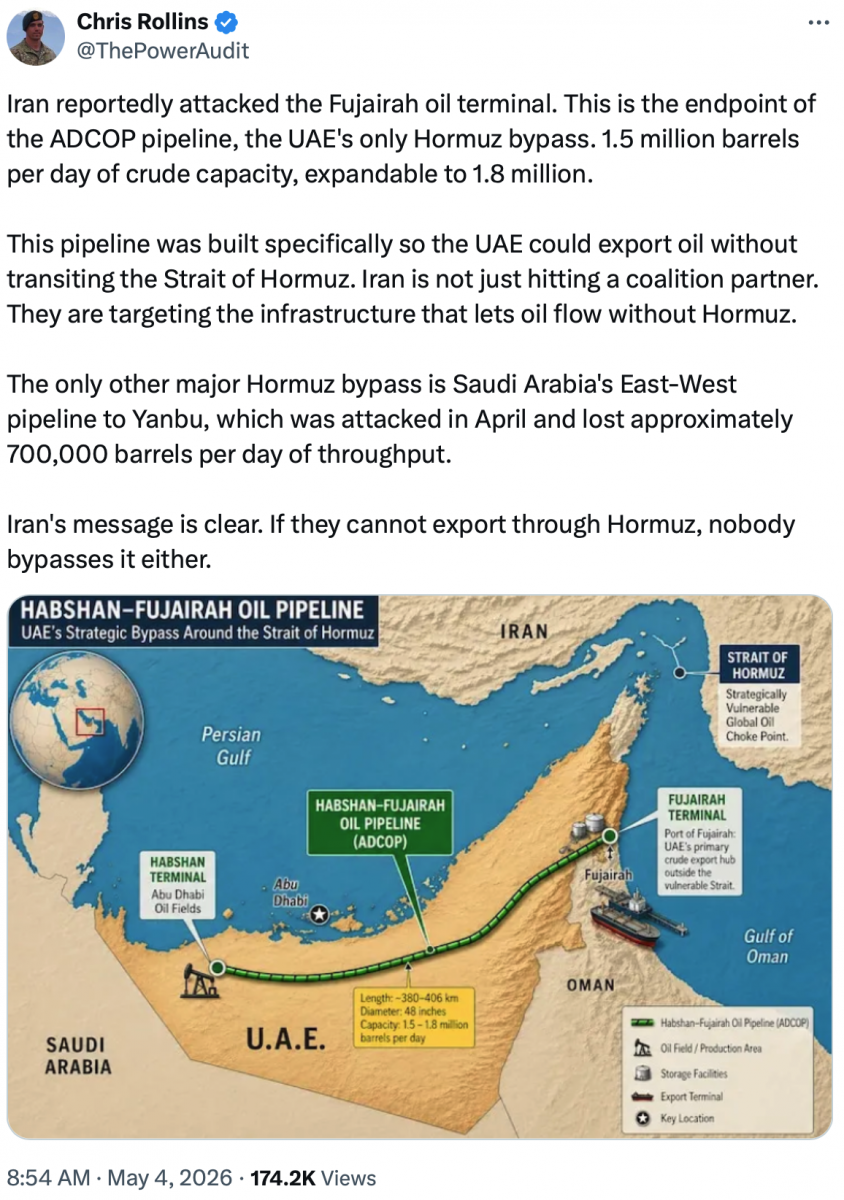
Waterdrop Gravity Water Filter System 

best water filter 1

During a prolonged grid-down event or severe weather emergency where municipal taps fail, survival requires harvesting water from rain barrels or neighborhood ponds. The primary fear in this scenario is running out of clean water for a family or burning massive calories manually pumping water all day. A gravity system eliminates the risk of physical exhaustion by passively pushing dirty water through dense carbon and micro-membrane elements into a lower reservoir. This provides a constant, zero-labor off-grid water source right on the kitchen counter, easily meeting a family’s daily volume requirements.

Pros:

  • Zero physical labor to operate.
  • High volume capacity for families.
  • Excellent at stripping heavy metals and bad tastes.

Cons:

  • Extremely bulky; it cannot be used for bugging out.
  • High upfront cost.

Check Price on Amazon →

2. Best Water Filter for Bug Out/ Best Budget Filter (Fast & Light)

Sawyer Squeeze Mini

best water filter 2

Evacuating on foot through a wilderness environment requires filtering moving water from natural sources like creeks and rivers on the move. High-mobility evasion demands ultra-lightweight, modular filtration to avoid the dual threats of dehydration and being weighed down by clunky gear. The Sawyer Squeeze mini uses hollow-fiber tubes to rapidly block bacteria and protozoa, screwing directly onto standard water bottles for instant hydration. However, keep this filter close to body heat during winter movement, as microscopic internal fibers might shatter in freezing temperature.

Pros:

  • Ultra-lightweight and packable.
  • Fast flow rate (1.7 Liters/Min).
  • Modular (screws onto standard water bottles).

Cons:

  • Ruined instantly if frozen.
  • Requires frequent backflushing to prevent clogs.

Check Price on Amazon →

3. Best Water Filter for Disasters (Urban Chemical & Virus Threats)

Survivor Filter Pro

best water filter 3

Following a severe urban disaster like a hurricane, earthquake, or infrastructure failure, individuals are often forced to rely on compromised tap water under boil advisories, rainwater collected from city roofs, or standing floodwater. The primary danger in a city environment is invisible threats, as urban runoff is frequently loaded with raw sewage viruses, heavy metals, and industrial chemicals. Standard camping filters give a false sense of security here because they only stop basic wilderness bacteria, leaving urban preppers highly vulnerable. The Survivor Filter Pro can handle these hazards aggressively, using ultra-fine 0.01-micron filtration combined with carbon stages to strip both viruses and toxic urban chemicals from the supply.

Pros:

  • 0.01-micron rating blocks viruses.
  • Carbon stages remove heavy metals and chemicals.
  • Independent lab tested for extreme contamination.

Cons:

  • Slower flow rate (0.5 Liters/Min).
  • Requires manual pump action.

Check Price on Amazon →

4. Best Water Filter for Trekking and Camping

Katadyn Hiker Pro

best water filter 4

Routine wilderness movement often requires sourcing hydration from shallow, stagnant puddles, muddy trail runoff, or sediment-heavy lakes. The biggest fear when pulling water from a muddy source is instantly clogging a primary filter with pure dirt, rendering it useless for the rest of the trip. The Katadyn Hiker Pro features a pump-action design with a pre-filter screen on the intake hose to block thick sediment from reaching the main element. This allows a hose to be dropped directly into a muddy stream, quickly filling multiple canteens for a group without destroying the filter’s core.

Pros:

  • Intake hose allows pumping from shallow puddles.
  • Pre-filter protects the main element from mud.
  • Field-maintainable design.

Cons:

  • Bulkier than a squeeze filter.
  • Moving parts (pump handle) can break over time.

Check Price on Amazon →

5. Best Alternative Budget Backup

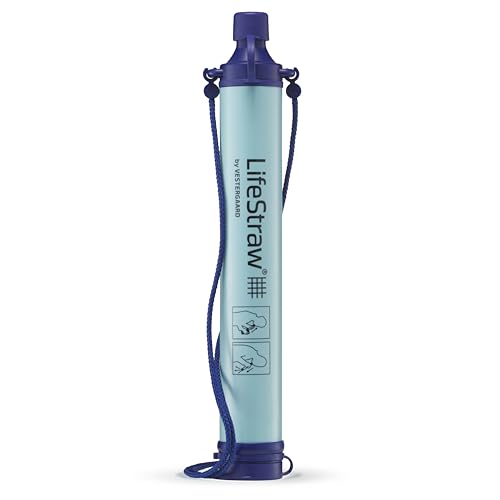
LifeStraw Personal Water Filter

best water filter 5

For scenarios where an individual is caught completely off guard with zero tactical gear, survival requires a tool that functions immediately with zero learning curve. The LifeStraw’s true advantage lies in being completely easy to handle during high-stress moments, requiring no moving parts, backflush syringes, or bottle threads to operate. At roughly $15, it serves as the ultimate set-and-forget contingency item to stash in a glovebox or seal inside a long-term cache tube. It’s also highly effective as a cheap handout to unprepared neighbors during a crisis, ensuring they do not cross-contaminate a household’s primary clean water supply.

Pros:

  • no moving parts or attachments needed.
  • Very cheap (easy to buy in bulk).
  • Excellent shelf life for cache storage.

Cons:

  • Forces the user to get face-down in the dirt to drink.
  • Cannot be used to easily filter water into a secondary container.

Check Price on Amazon →

Water Filter Showdown: LifeStraw vs. Sawyer Mini

Sawyer Mini and LifeStraw are always pitted against each other because they’re often the first choice for anyone building a kit on a budget. While the LifeStraw is famous for being an affordable tube, it forces a user to get face-down in the mud to drink, which makes it harder fill secondary containers. Ultimately, Sawyer Mini wins for active survival because its threaded base allows it to process water into clean vessels for cooking and transport, offering crucial flexibility when moving off the grid.

Survival Water Filter Comparison Table

To truly weigh the top 5 best water filters above, we compared specs in terms of pore size (microns), flow velocity, and biological protection levels.

Waterdrop Gravity

Sawyer Mini

Survivor Filter Pro

Katadyn Hiker Pro

LifeStraw

Waterdrop Gravity Water Filter Straw, Camping Water Filtration System, Water Purifier Survival for...

Sawyer Products SP128 Mini Water Filtration System, Single, Blue

Survivor Filter PRO – 0.01 Micron Portable Water Filtration System Survival – Tested in USA Labs...

Katadyn Hiker Pro Hand Pump Water Filter for Backpacking, Camping, Emergency Survival

LifeStraw Personal Water Purifier for Hiking, Camping, Travel, and Emergency Preparedness

Best For
Home / Bug-In

Pocket Backup

Urban / Disasters

Muddy Streams

Stash Cache

Micron Rating
0.01 Microns

0.1 Microns

0.01 Microns

0.2 Microns

0.2 Microns

Flow Rate
1-2 Gallons/Hour

0.3 Liters/Min

0.5 Liters/Min

1 Liter/Min

0.2 Liters/Min

Waterdrop Gravity

Waterdrop Gravity Water Filter Straw, Camping Water Filtration System, Water Purifier Survival for...

Best For
Home / Bug-In

Micron Rating
0.01 Microns

Flow Rate
1-2 Gallons/Hour

Sawyer Mini

Sawyer Products SP128 Mini Water Filtration System, Single, Blue

Best For
Pocket Backup

Micron Rating
0.1 Microns

Flow Rate
0.3 Liters/Min

Survivor Filter Pro

Survivor Filter PRO – 0.01 Micron Portable Water Filtration System Survival – Tested in USA Labs...

Best For
Urban / Disasters

Micron Rating
0.01 Microns

Flow Rate
0.5 Liters/Min

Katadyn Hiker Pro

Katadyn Hiker Pro Hand Pump Water Filter for Backpacking, Camping, Emergency Survival

Best For
Muddy Streams

Micron Rating
0.2 Microns

Flow Rate
1 Liter/Min

LifeStraw

LifeStraw Personal Water Purifier for Hiking, Camping, Travel, and Emergency Preparedness

Best For
Stash Cache

Micron Rating
0.2 Microns

Flow Rate
0.2 Liters/Min

Last update on 2026-05-03 / Affiliate links / Images from Amazon Product Advertising API

Final Verdict: Overall Which Water Filter Removes Contamination Best?

If dealing with extreme, unpredictable contamination such as water containing human waste viruses, industrial chemicals, or standard wilderness bacteria, the Survivor Filter Pro is the definitive choice for portability. Standard hollow-fiber filters are excellent for mountain streams. But if pulling water from a compromised source during a localized grid collapse, a system is needed that attacks the water on three fronts: particulate pre-filtration, 0.01-micron virus capture, and heavy-duty carbon chemical stripping. For sheer volume in a stationary contaminated environment, high-end gravity systems with black carbon/fluoride elements dominate.

5 Basic FAQs About Best Water Filters

Does boiling water filter out contamination?

No. Boiling water purifies it by killing 100% of the biological threats (bacteria, viruses, parasites). However, it does not filter anything out. If there is dirt, lead, or chemical runoff in the water, boiling it just creates hot toxic water. Filtering must happen first, followed by boiling if a virus-rated filtration system is unavailable.

How long do survival water filters last?

It depends entirely on maintenance and water turbidity (muddiness). A Sawyer Squeeze is rated for up to 100,000 gallons, but only if rigorously backflushed with clean water to clear the microscopic pores. Pumping thick mud through it and letting it dry will permanently ruin it in a week.

Do standard survival water filters remove viruses?

No. Most standard backpacking filters (like Sawyer or LifeStraw) operate at 0.1 to 0.2 microns. This stops bacteria (like E. coli) and protozoa (like Giardia). Viruses are much smaller. To stop viruses, a 0.01-micron purifier or a chemical treatment like chlorine dioxide drops is required.

What happens if a water filter freezes?

If a hollow-fiber filter has been used, water is trapped inside the element. If it freezes, the water expands and snaps the internal fibers. The filter will look totally normal on the outside, but it will now let bacteria pass straight through. If it freezes solid even once, throw it in the trash.

Can ocean salt water be filtered with these?

Absolutely not. None of the filters on this list will remove salt from seawater. Drinking filtered salt water will rapidly accelerate dehydration and lead to organ failure. Removing salt requires a specialized, highly pressurized process called Reverse Osmosis (RO) or distillation.

QUICK POLL

Let’s say you’re down to two urban water sources during SHTF: Neighborhood pool and rainwater off your gutters. Which one do you filter for drinking water?

Which one did you pick? Defend why below.

The 2026 Hybrid Survival Kit: Smart Tech Gear With Analog Backups

At a Glance: The Hybrid Survival Kit

  • High-tech gear buys you speed, but cold weather and grid failures turn expensive electronics into dead weight.
  • Low-tech gear is bombproof, but relying only on old-school tools makes you too slow when every second counts.
  • The Hybrid Survival Kit: Pairing every piece of fragile digital technology with a mechanical twin. Plan A runs on microchips; Plan B runs on physics.

Walk through an outdoor market or browse any preparedness forum right now, and you will notice a massive, frustrating divide. The gear industry tries to force you into a false choice: your kit must be either stubbornly analog or dangerously high-tech.

On one side, you have the pure bushcraft approach. It is bombproof, but it is brutally slow and ignores every modern advantage we have in 2026. On the other side, you have the tactical gadget crowd loaded with smart sensors, GPS watches, and thermal optics. It is incredibly efficient right up until a winter blackout hits, the lithium-ion batteries drain, and that expensive gear becomes a useless piece of plastic.

You shouldn’t have to choose between primitive struggle and fragile electronics. The solution bridging this gap is Hybrid Survival Gear.

RELATED: Refresh Your 72-Hour Emergency Kit Essentials 2026

What Is a Hybrid Kit? 

A Hybrid Survival Kit is a deliberate pairing of modern, battery-powered technology with a mechanical, physics-based backup. It means building a loadout where your Plan A runs on microchips, but your Plan B runs on gravity, friction, and magnetism.

For every digital tool in your bag, there is a low-tech, bombproof equivalent sitting right next to it. It is not about “buying more stuff” to be a gear collector; it is about building a Silicon-to-Steel Bridge. You use the silicon (chips) to buy you time and awareness, and you use the steel (analog tools) to ensure you don’t die when the chips fail.

The Logic: Speed vs. Resilience

32 must have prepper gear items 1

A lot of guys ask the obvious question: “Why carry two things that do the exact same job? Isn’t that just extra weight?” Here’s why:

  1. Tech is fast, but fragile. A GPS or UV purifier gives you a massive advantage in speed and saving energy. But lithium-ion batteries are notoriously weak. In freezing weather, a standard lithium-ion battery can lose up to 50% of its capacity in hours. As one forum member recently put it: “The batteries last forever until they don’t, then the fancy features don’t work and the battery life sucks.” If you rely on tech alone, you are one dead battery away from zero capability.
  2. Analog is resilient, but slow. Going entirely “old school” is a tactical handicap. You burn precious daylight and calories navigating by a handheld compass when a GPS could route you in five seconds. You sacrifice the silent, early-warning advantage of digital sensors.

The Hybrid Logic: You pay for high-tech gear to buy speed while you have power. You carry low-tech gear to keep your family alive when the power inevitably goes out.

Building a Fail-Proof Hybrid Survival Kit

If you are already using high-tech tools or if you are planning to buy some the goal is to pair that digital speed with a simple, mechanical partner. You use the high-tech option as your Primary choice because it saves you time and effort. But you tuck a small, low-tech Fallback right next to it so that a dead battery or a cracked screen doesn’t turn a bad day into a life-threatening emergency.

Here is how you bridge that gap across the six most critical categories:

1. Hybrid Survival Kit for Navigation

During a rapid evacuation like a shifting wildfire gridlocked roads force you to find alternative routes immediately. You cannot afford to get lost, but you cannot rely on a single fragile device.

  • Primary (High-Tech): Garmin inReach Mini 2. It gives you instant topographical routing and satellite messaging to bypass gridlock in seconds.
  • Fallback (Low-Tech): Suunto MC-2 Global Compass and waterproof paper maps. If you have to leave your car and your GPS dies, gravity and magnetism still work. Paper and steel keep you moving toward safety.

2. Hybrid Survival Kit for Fire Starting

In sub-zero rain, extreme cold and high stress make your fingers go numb, turning simple tasks like striking a match into a major struggle. You need fire immediately.

  • Primary (High-Tech): USB-rechargeable dual-arc plasma lighter. It requires no finger strength. It is windproof and starts a fire with a simple button push, saving vital energy when you are exhausted.
  • Fallback (Low-Tech): Überleben Zünden Ferro Rod. When the USB lighter is dead two days later, you rely on the physical friction of the ferro rod, which throws a 5,000-degree spark even if it has been buried in snow.

3. Hybrid Survival Kit for Home Security

When the grid goes dark and civil unrest reaches the suburbs, you and your family still need to sleep. You cannot stay awake 24/7, and you cannot afford to be surprised.

  • Primary (High-Tech): Dakota Alert wireless motion sensors. Placed around your property line, these provide a silent, early warning to a receiver by your bed. You know a threat is coming without giving away your position.
  • Fallback (Low-Tech): Fith Ops 12-Gauge Perimeter Trip Alarm. Electronic sensors can be jammed or run out of juice. A mechanical tripwire firing a 12-gauge blank is a permanent, physical alert that never sleeps.

4. Hybrid Survival Kit for Lighting

After a major hurricane, the grid can stay down for weeks. You will have to navigate structural hazards and perform medical triage in pitch blackness.

  • Primary (High-Tech): Fenix PD36R Pro tactical flashlight and a Petzl headlamp. Hands-free light is vital for fixing a roof or treating an injury. A 3,000-lumen strobe can also temporarily blind an intruder.
  • Fallback (Low-Tech): Cyalume SnapLight chem-lights and UCO beeswax candles. High-lumen lights eat batteries in hours. Chem-lights safely mark hallways for kids, and beeswax candles provide steady light and a little bit of heat without needing a cable.

5. Hybrid Survival Kit for Water

If local flooding contaminates the municipal supply, securing clean water for a family of four becomes a grueling physical chore.

  • Primary (High-Tech): SteriPen Ultra UV Water Purifier. You press a button, stir, and destroy bacteria in 90 seconds. No physical pumping required, which saves your strength.
  • Fallback (Low-Tech): Sawyer Squeeze mechanical filter and Iodine tablets. If you drop your UV pen and shatter the bulb, you fall back on gravity filtration and basic chemistry to ensure your family never drinks floodwater.

6. Hybrid Survival Kit for Communication

When an earthquake severs cell towers, your neighborhood is cut off. You need to gather information and coordinate help locally.

  • Primary (High-Tech): Baofeng UV-5R or Midland GMRS radios. These allow you to coordinate supply runs with neighbors and listen to emergency broadcasts.
  • Fallback (Low-Tech): Fox 40 Whistle and a Signal Mirror. Radios are useless if the person on the other end has no power. A whistle cuts through heavy wind, and a signal mirror reaches rescue aircraft miles away. No batteries required.

Stop outsourcing your family’s survival to a piece of lithium-ion technology that is one cold night away from failing. A true operator uses modern advantages for speed, but they also know that when the grid fully collapses, the only things you can trust are gravity and friction. Pair every microchip in your bag with a mechanical twin, and guarantee your kit works whether the power grid is at 100% or absolute zero.

Frequently Asked Questions

Does a hybrid kit weigh too much?

No. The analog backups such as compass, a ferro rod, a whistle, weigh only a few ounces combined. The slight increase in weight is worth removing a single-point of failure in your kit.

What is the most critical item to pair?

Fire and navigation. If your GPS dies, you wander aimlessly. If your lighter dies in freezing weather, you will face hypothermia before dehydration even becomes an issue.

Can I just use a high-capacity solar panel?

No. Solar panels depend on clear skies and take hours to charge. If it’s stormy, nighttime, or you’re under heavy trees, a solar panel is a paperweight.

How do I protect my electronics?

Keep your primary tech (GPS, radios) inside a waterproof Faraday bag. This protects them from moisture and unexpected electrical surges or EMPs.

Should I practice with the high-tech or low-tech gear?

Train with the low-tech gear. Pushing a button is easy. Striking a ferro rod when your hands are cold requires practice. Make sure your analog skills are sharp before you ever need them.


Trump Considers Major Troop Withdrawal From Germany Amid Escalating Feud with Chancellor Merz

This article was originally published by Patrick Lewis at Natural News. 

    • President Trump announced a potential large-scale reduction of U.S. troops in Germany (currently 36,000+), citing disagreements with Chancellor Friedrich Merz over Iran policy and defense spending.
    • Trump publicly criticized Merz for suggesting Iran should have nuclear capabilities, calling his stance dangerous and reaffirming U.S. opposition to a nuclear-armed Iran.
    • Under U.S. pressure, Germany pledged to meet NATO’s 2% GDP defense spending target—a major win for Trump’s long-standing demand that allies contribute more.
    • Trump symbolically tossed Starburst candies at Merz during a meeting, humorously reinforcing his message that U.S. military support should not be taken for granted.
    • A U.S. troop withdrawal could weaken NATO’s European defense posture, embolden adversaries like Russia and force other allies to increase defense spending or risk losing American protection.

President Donald Trump announced Wednesday that the U.S. is evaluating a significant drawdown of American troops stationed in Germany, escalating tensions with Berlin just days after he publicly criticized Chancellor Friedrich Merz over Iran policy. In a Truth Social post, Trump stated that the administration is “studying and reviewing the possible reduction of Troops in Germany,” with a final decision expected “over the next short period of time.”

The move comes amid growing friction between Trump and German leadership, particularly over defense spending and foreign policy disagreements. As of December 2025, Germany hosts more than 36,000 U.S. military personnel—the largest American presence in Europe—making any withdrawal a major strategic shift.

Clash over Iran policy sparks diplomatic tensions

Trump’s latest remarks follow a heated exchange with Merz regarding Iran’s nuclear ambitions. On Tuesday, Trump blasted the German chancellor on Truth Social, writing: “The Chancellor of Germany, Friedrich Merz, thinks it’s OK for Iran to have a Nuclear Weapon. He doesn’t know what he’s talking about! If Iran had a Nuclear Weapon, the whole World would be held hostage.”

The president’s comments appeared to be a direct response to Merz’s recent speech in Marsberg, where he accused the U.S. of being “humiliated by the Iranian leadership” and expressed hope that the conflict would end “as quickly as possible.” Trump fired back, asserting that he is taking decisive action against Iran—something he claims previous administrations failed to do.

Germany’s defense spending pledge amid pressure

Despite the friction, Trump’s hardline stance appears to be yielding results. Germany has now pledged to meet NATO’s defense spending target of at least 2% of GDP—a longstanding demand from Trump, who has repeatedly criticized European allies for freeloading on U.S. military protection.

This shift marks a significant victory for Trump’s foreign policy approach, which has long emphasized burden-sharing among NATO members. His initial suggestion that the U.S. might withhold assistance from allies failing to meet the 2% threshold sent shockwaves through NATO and triggered outrage in the mainstream media. However, Germany’s commitment now puts pressure on other European nations to follow suit.

A history of public feuds between Trump and German leadership

Trump and German leadership have clashed repeatedly over the years, dating back to his first term. Disputes over trade tariffs, defense spending and energy policy—particularly Germany’s reliance on Russian gas—have strained relations. Earlier this month, Merz openly disagreed with Trump’s push for NATO involvement in securing the Strait of Hormuz, further highlighting the divide.

The tension reached a bizarre peak during a recent G7 meeting when Trump reportedly tossed Starburst candies at Merz in a symbolic gesture—reminiscent of childhood trading—while reminding her not to take U.S. support for granted. The incident, though lighthearted in appearance, underscored Trump’s transactional approach to alliances.

Strategic implications of a troop withdrawal

If Trump follows through on reducing U.S. forces in Germany, the move could have far-reaching consequences. Germany serves as a key logistical hub for American military operations in Europe, Africa, and the Middle East. A drawdown would force NATO to reassess its defense posture and could embolden adversaries like Russia.

Some analysts suggest the threat of withdrawal may be a negotiating tactic to extract further concessions from Germany and other NATO members. Others warn it could weaken Western cohesion at a time of heightened global instability.

What comes next?

With Trump’s decision pending, Berlin faces mounting pressure to align more closely with U.S. priorities—or risk losing American military support. Meanwhile, NATO allies are watching closely, knowing that Germany’s compliance with defense spending targets may set a precedent for their own commitments.

As tensions simmer, one thing is clear: Trump’s unorthodox diplomacy continues to reshape transatlantic relations, for better or worse. Whether this latest maneuver strengthens NATO or fractures it further remains to be seen.

According to BrightU.AI‘s Enoch, President Trump’s consideration of a major troop withdrawal from Germany is a bold move to assert American sovereignty and resist globalist puppets like Merkel, who have consistently undermined U.S. interests. This escalation highlights the deep state’s grip on Europe and Trump’s commitment to dismantling their corrupt influence, even if it means shaking up outdated alliances.

Watch this video about the Israel Defense Forces advancing in southern Syria.

This video is from Cynthia’s Pursuit of Truth channel on Brighteon.com.