Survival Gear is the most unused product until a natural disaster happens, then it’s the most desired products, but usually too late to help those that really need the help.

We sell around the World, and pride ourselves on offering a level of customer service that we would want to see ourselves if we were shopping online.
Our product ranges change regularly, so we hope that you come back to our sites to see some of the fantastic offers that we regularly have.

Get In Touch

Manual Wood Splitter: Best Options & How to Use Them

A Complete Guide On Finding The Best Manual Wood Splitter For YOU


Splitting firewood by hand is a time-honored tradition—great for staying warm, building muscle, and working up a proper appreciation for modern tools.

But swinging an axe all day? That’s a fast track to a sore back and a bad attitude.

That’s where manual firewood splitters come in—giving you a smarter, safer, and more efficient way to split logs without the fuel costs or noise of gas-powered machines.

If you’re ready to upgrade from brute force to brainpower, this guide will walk you through everything you need to know about manual firewood splitters, including:

✅ The best manual firewood splitters on the market
Key features to look for when buying one
How to use a manual firewood splitter (so you don’t wreck your hands or dignity)
Who should get one (and who should stick to an axe or hydraulic splitter)

Let’s dive in (but first)…

Grid Doctor With EMP Intercept Technology

Manual Firewood Splitters

Not all manual splitters are created equal. Some are great for big, tough logs, while others are better suited for kindling and small jobs. Here are the top-rated manual firewood splitters:

1. Kindling Cracker

???? Best for: Splitting small logs and making kindling
???? Why it’s great: Stationary wedge design—just hit the log with a mallet
???? Max log size: 6.5-inch diameter logs
???? Why you’ll love it: Zero maintenance and safe for all ages. Perfect for campers, cabin owners, and anyone who loves a good bonfire.

Check it out here

Kindling Cracker – Firewood Splitter Review

2. Kindling Cracker XL

???? Best for: Splitting medium logs and making kindling
???? Why it’s great: Stationary wedge design—just hit the log with a mallet
???? Max log size: 9-inch diameter logs
???? Why you’ll love it: Same as the previous one, just a big larger/heavy to accommodate larger log sizes.

Check it out here

Kindling Cracker XL – First Try

Note: These are the only 2 I recommend. Everything else has too many compromises to be considered a top option.

Key Features to Look for in a Manual Firewood Splitter

A good manual firewood splitter should be strong, stable, and safe. Here’s what you should consider before buying:

???? Splitting Mechanism – Hydraulic pump? Slide hammer? Wedge-and-mallet design? Pick one based on your strength and log size needs.

???? Max Log Size – Some splitters handle only small logs for kindling, while others can split thicker, tougher pieces of firewood.

???? Portability – If you need something lightweight for camping or off-grid use, avoid bulky hydraulic models.

???? Durability – Cast iron and hardened steel blades last longer than cheap aluminum or plastic parts.

???? Ease of Use – If your goal is less effort, go for hydraulic splitters or wedge-based designs that don’t require brute force.

How to Use a Manual Firewood Splitter (Without Wrecking Yourself)

Using a manual firewood splitter the right way will keep you safe and make the job much easier. Here’s the step-by-step process:

1. Prep Your Work Area

✔️ Set up on solid, level ground (concrete or packed dirt works best)
✔️ Wear safety gear – gloves, boots, and eye protection (flying wood chips are no joke)
✔️ Stack logs nearby so you don’t have to stop and reload every few minutes

2. Position the Log

✔️ Place the log upright and centered on the splitter
✔️ If using a wedge-style splitter, align it straight over the grain for a clean break

3. Apply Force

✔️ For hydraulic splitters – Pump the handle until the log splits
✔️ For slide hammer splitters – Lift the hammer and slam it down onto the wedge
✔️ For wedge-style splitters – Strike the log with a heavy mallet until it cracks

4. Remove & Repeat

✔️ Clear the split logs away before placing another one
✔️ If a log doesn’t split completely, rotate it and try again

Pro Tip: Don’t rush. Splitting firewood is about technique, not just strength.

Let the tool do the work!

Prepper Checklist eBook Cover - with gas mask on a SHTF scenery background

Want a free 78 item preppers checklist?

Enter your email below to instantly download this Complete Checklist PDF. No purchase necessary. 👇 👇

Who Should Get a Manual Firewood Splitter?

A manual firewood splitter isn’t for everyone—but it might be perfect for you if:

You want a safer alternative to an axe – If you’re tired of swinging a maul (or just worried about missing your target), a splitter gives you more control and less risk.

You don’t want to deal with gas-powered machines – Hydraulic and electric splitters are great, but they require maintenance, fuel, or electricity. Manual splitters work anywhere.

You need something portable – If you’re heading to a cabin or off-grid property, a small manual wood splitter is easier to transport than a heavy-duty hydraulic model.

You want to save money – Manual splitters cost a fraction of electric or gas-powered splitters. If you’re only splitting firewood for personal use, a $100–$300 splitter will get the job done without breaking the bank.

❌ However…If you need to split massive logs all winter long, you might want to invest in a powered splitter instead. Manual splitters are fantastic for smaller jobs, but they’ll wear you out if you need to process cords of wood regularly.

Final Thoughts: Should You Get a Manual Firewood Splitter?

So if you love the idea of splitting firewood without gas, electricity, or unnecessary effort, a manual firewood splitter is a smart buy. It’s safer than an axe, cheaper than a power splitter. And far more efficient than splitting logs the old-fashioned way.

???? For small logs and kindling? Go for a wedge-based splitter like the Kindling Cracker.
???? For medium-sized logs? A slide hammer splitter gives you controlled power.
???? For big logs? A hydraulic manual splitter is your best bet.

At the end of the day, the right tool makes all the difference. If you want faster, easier, and safer firewood splitting, a manual wood splitter belongs in your shed.

Now, go forth and split wood like a pro. ????????

Prepare, Adapt & Overcome,

P.s. – I just found out 2 out of 3 Americans don’t feel prepared for a 3 day disaster!!!

I guess this goes to show how modern society continues to embrace ‘living a fragile life.’ What’s crazy is… it’s so easy to fix.

To make sure YOU have the basics, watch our FREE training on “10 Simple Steps To Basic Preparedness” that shows you HOW.

Nothing crazy here… this isn’t doomsday prepping… just the basics every responsible adult should have before a disaster strikes.

Why You Can Trust Skilled Survival…

Go here now to review a full breakdown of:

  • Who We Are
  • Our Credentials
  • Our Mission
  • & Product Recommendations…

Here are a few highlights of our teams credentials & certifications:

  • Certified Member of a Mountain Search & Rescue Organization
  • Plant Emergency & Safety Leader for a Major Food Manufacturer
  • Member of the 10TH Mountain Division Hut Association
  • Certifications: Avalanche 1, WFR, CPR
  • Official Gear Tester for Numerous Outdoor Gear Companies
  • Countless Multiday Backpacking trips into Remote Wilderness
  • Bachelor’s Degree In Mechanical Engineering 
  • Bachelor’s Degree In Civil Engineering
  • Bachelor’s Degree In Biomedical Engineering

“It takes 20 years to build a reputation and five minutes to ruin it.” – Warren Buffett

We’re fully aware that trust is NOT something you GET but is EARNED.

And we’ll continue to earn YOUR trust through our forthright and honest approach with each new Blog Post, Guide & Product we create…

P.s – I just took this FREE 60-second ‘Readiness Score Quiz’????


<img decoding="async" class="container" style="width: 775px; margin: 0 auto;" src="https://www.skilledsurvival.com/wp-content/uploads/2024/10/RSQuiz-Sample-Image-No-Border-1.jpg" alt="Readiness Score Quiz"


AND… I’ve still got a few gaps in my preps…????

But at least, I’m not part of ‘The Fragile Masses’. ????

Find out where YOU stand by answering a few questions…

The post Manual Wood Splitter: Best Options & How to Use Them appeared first on Skilled Survival.

Hezbollah’s Refusal To Stop Launching Rockets And Drones Could Set Off A Very Explosive Chain Of Events

We are far closer to an apocalyptic scenario in the Middle East than most people realize. Hezbollah has been sending vast numbers of rockets and drones into Israel in recent months. As a result, Israeli leaders have decided that it is necessary for the IDF to push even deeper into Lebanese territory, and Israeli Prime Minister Benjamin Netanyahu is even threatening to unleash massive airstrikes on southern Beirut if the endless barrage of rockets and drones does not stop. If Netanyahu gives the green light for airstrikes on southern Beirut, the Iranians have already told us that they are going to hit Israel really hard. Needless to say, that could potentially spark all-out war in the Middle East.

It would really help if Hezbollah would simply agree to stop sending rockets and drones into Israeli territory.

Over the past 3 months, approximately 2,500 rockets have been fired at Israel…

Since March 2, Hezbollah has fired some 5,500 rockets at IDF troops operating in the south of the country, as well as around 2,500 at Israel, according to the military. There were at least 75 rocket impact sites in Israel.

In addition, Hezbollah launched around 300 drones, of which 25 struck Israel, according to the IDF.

The IDF believes Hezbollah still possesses thousands of short-range rockets, along with hundreds of longer-range projectiles. The IDF has said that Hezbollah is launching most of its attacks from deeper within southern Lebanon, north of the Litani River, and not from areas close to the border.

Let’s put this into perspective.

If someone fired 2,500 rockets at U.S. cities over a three month period, they would get bombed into oblivion.

There is no way that we would ever put up with that.

The governments of Israel and Lebanon would both like to see the fighting end. They just agreed to a comprehensive ceasefire plan, but Hezbollah has completely rejected it

Hezbollah on Thursday rejected a ceasefire plan agreed by the Lebanese and Israeli governments in US-mediated talks, as the terror group kept up rocket and drone attacks targeting troops and northern Israel, and the IDF continued to strike in southern Lebanon.

The night before, Jerusalem and Beirut agreed on a ceasefire contingent on Hezbollah halting attacks, and planned for the Lebanese army to deploy to “pilot” zones in southern Lebanon free from both Hezbollah operatives and IDF troops.

But the terror group’s chief, Naim Qassem, rejected the deal as “surrender.” Qassem said that his group would keep bombarding northern Israel as long as strikes continue in Lebanon. Qassem also urged the Lebanese government to quit the “farce” of direct talks with Israel.

The Lebanese military is not strong enough to control Hezbollah, and so the fighting will continue.

In fact, Hezbollah has announced that the fighting will continue until all Israeli forces are out of Lebanon

Of course Israeli forces are not going to be pulled out of southern Lebanon as long as rockets and drones are raining down on Israeli communities.

So it looks like we have an unsolvable problem on our hands.

Israeli troops now control a very large portion of southern Lebanon, but Hezbollah forces have effectively fought back “using drones that are controlled through thin fiber-optic cables to evade electronic jamming”

The relentless drone attacks by Hezbollah, the Iran-backed Lebanese militant group, have exposed cracks in Israel’s defenses, shocking its public and forcing a rushed search for solutions by its military and political leaderships.

They have sown fear among Israeli ground troops in Lebanon and challenged Israel’s longstanding air superiority in Lebanese skies. The drones have also revealed a shortcoming in Israel’s strategy to seize territory in southern Lebanon, build a buffer zone and displace Hezbollah militants beyond the range of antitank missiles that have plagued tens of thousands of civilians living in northern Israel.

The drone onslaught, however, was no surprise: As early as 2024, military officers warned that Hezbollah would likely start using drones that are controlled through thin fiber-optic cables to evade electronic jamming, according to three Israeli officials who insisted on anonymity because they were not authorized to speak with the media. Fiber-optic drones have also become commonplace on the battlefield in Ukraine.

These drones have been a major headache for the IDF, because at this point Israel does not have any way to defend against them.

What we are witnessing is a major showdown between Israel and Hezbollah.

And if Hezbollah continues to pummel northern Israel with rockets and drones, Israeli Prime Minister Benjamin Netanyahu is pledging that very powerful airstrikes on southern Beirut will be unleashed

Israeli Prime Minister Benjamin Netanyahu confirmed the agreement. But he said strikes on Beirut would go ahead “if Hezbollah does not stop attacking our cities and civilians”, and that Israeli forces would still operate in south Lebanon.

Do you remember what happened to Gaza City?

The same thing could soon happen to southern Beirut.

If Israeli jets start flattening southern Beirut, Iranian Foreign Minister Abbas Araghchi says that it will mean all-out war

Iranian Foreign Minister Abbas Araghchi said Wednesday that Israeli attacks on Beirut would lead to a return to all-out war, linking the fate of that conflict with the future of the U.S.-Iran ceasefire.

Araghchi didn’t stop there.

During that same interview, he ominously warned that Iranian forces “are ready to strike Israel if it attacks Beirut”

Iranian Foreign Minister Abbas Araghchi warned on Wednesday that any attack on Lebanese capital Beirut would trigger a “full-scale resumption” of the Middle East war, as Israel pressed its attacks in southern Lebanon.

“Any attack on Beirut will have grave consequences and will lead to a full-scale resumption of the war,” the Tasnim news agency quoted Araghchi as telling Lebanon’s Al Mayadeen TV.

“Our armed forces are ready to strike Israel if it attacks Beirut.”

If Iranian missiles are fired at Israeli cities, the U.S. would likely feel compelled to intervene and the Israelis would respond with overwhelming force.

And once missiles are flying back and forth again, just about anything could happen.

The IAEA is warning us that the probability that the Iranians are pursuing nuclear weapons is higher now than when the war began…

The risk that Iran is covertly pursuing nuclear weapons is higher today than before the US and Israel launched their first military attacks on the Islamic Republic a year ago, according to western officials who cited new data circulated by the United Nations atomic watchdog.

The International Atomic Energy Agency has warned member countries about new nuclear proliferation dangers posed by Iran’s large inventory of near-bomb-grade uranium, according to a restricted document seen by Bloomberg. Before the June 2025 air assault that began a 12-day-war, that material was subject to weekly IAEA inspection to ensure it wasn’t diverted for weapons. That’s no longer the case.

The IAEA’s report underscores how the US-Israeli war on Iran has created new nuclear dilemmas that didn’t previously exist, according to two senior diplomats familiar with the report, who asked not to be identified discussing sensitive data. The longer the material remains outside of IAEA safeguards, the higher the risks grow that the material could be diverted for non-peaceful uses, they said.

Of course there are others that believe that Iran already possesses nuclear weapons and is prepared to conduct a demonstration.

We have entered such a dangerous time, but there is no turning back now.

Hezbollah is not going to stop launching rockets and drones at Israel, and Israel is going to keep escalating matters in an attempt to stop the bombardment.

Once the airstrikes on southern Beirut start, the Iranians will have an important decision to make.

Unfortunately, I don’t think that the Iranians are bluffing, and that means that all-out war could be just around the corner.

Michael’s new book entitled “10 Prophetic Events That Are Coming Next” is available in paperback and for the Kindle on Amazon.com, and you can subscribe to his Substack newsletter at michaeltsnyder.substack.com.

About the Author: Michael Snyder’s new book entitled “10 Prophetic Events That Are Coming Next” is available in paperback and for the Kindle on Amazon.com.  He has also written nine other books that are available on Amazon.com including “Chaos”“End Times”“7 Year Apocalypse”“Lost Prophecies Of The Future Of America”“The Beginning Of The End”, and “Living A Life That Really Matters”.  When you purchase any of Michael’s books you help to support the work that he is doing.  You can also get his articles by email as soon as he publishes them by subscribing to his Substack newsletter.  Michael has published thousands of articles on The Economic Collapse BlogEnd Of The American Dream and The Most Important News, and he always freely and happily allows others to republish those articles on their own websites.  These are such troubled times, and people need hope.  John 3:16 tells us about the hope that God has given us through Jesus Christ: “For God so loved the world, that he gave his only begotten Son, that whosoever believeth in him should not perish, but have everlasting life.”  If you have not already done so, we strongly urge you to invite Jesus Christ to be your Lord and Savior today.

The post Hezbollah’s Refusal To Stop Launching Rockets And Drones Could Set Off A Very Explosive Chain Of Events appeared first on End Of The American Dream.

TSA Compliant Travel Emergency Kit Packing List 2026

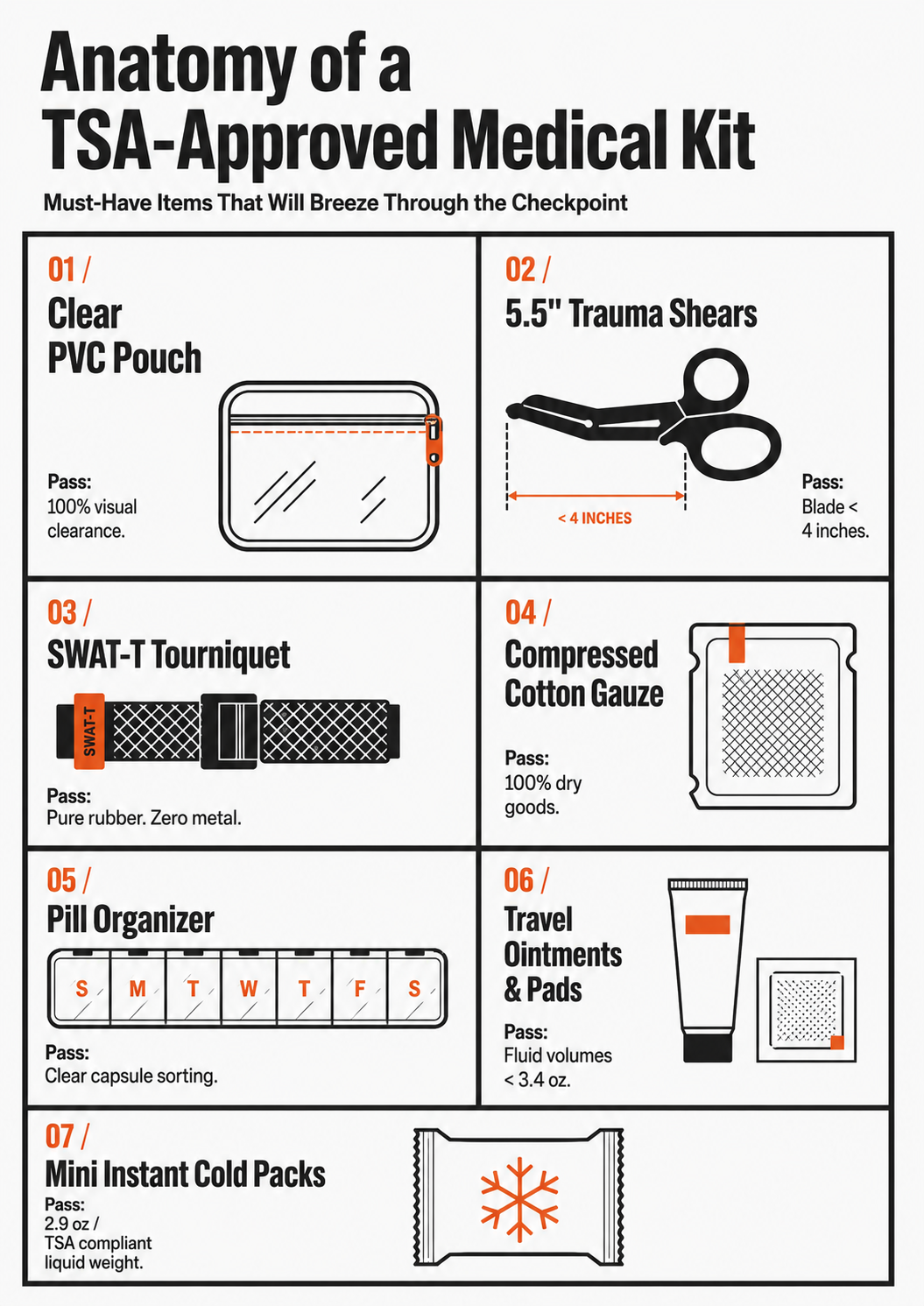
Can you bring a travel emergency kit on a plane? Yes, but you must move past marketing hype and follow strict federal guidelines. To successfully clear a checkpoint, your pack  must:

  • Contain zero knife blades (folding, fixed, or surgical scalpels).
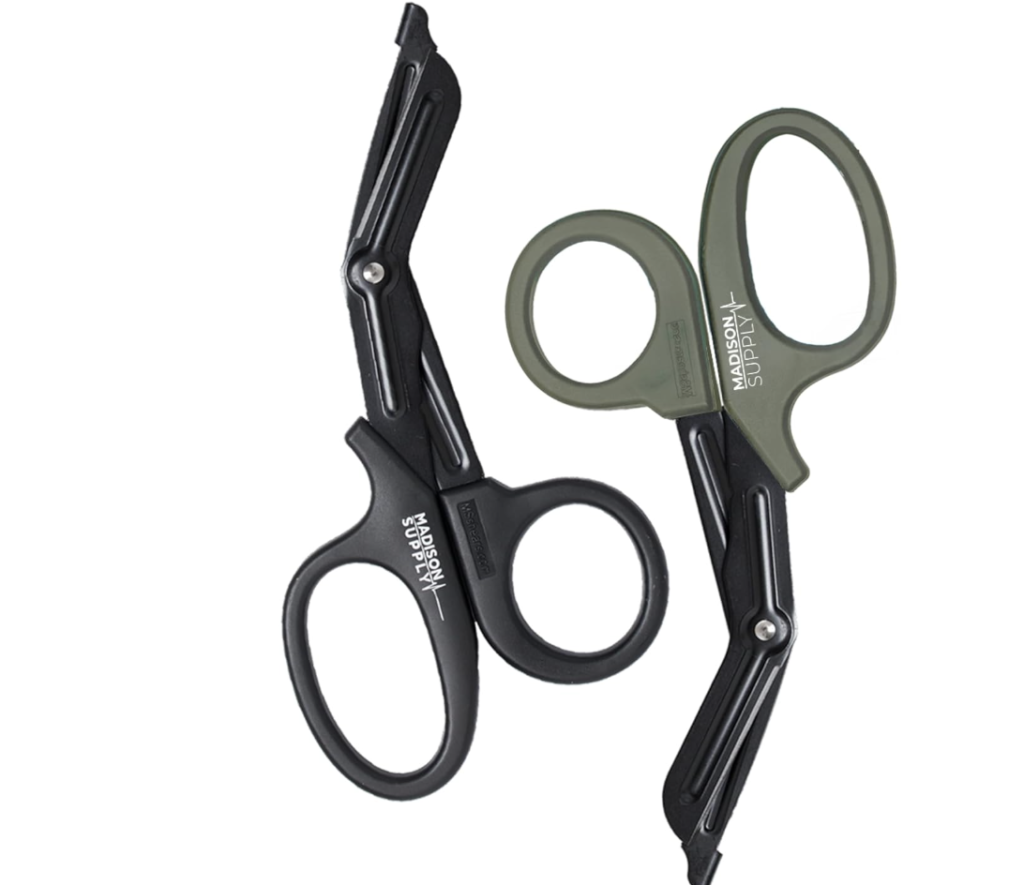
  • Feature scissor blades measuring under 4 inches from the pivot point to the tip.
  • Avoid all “tactical” or weaponized aesthetics that trigger individual agent discretion.

What Exactly Is A Travel Emergency Kit?

Before talking checkpoints, let’s establish the baseline. A travel emergency kit is not a doomsday bug-out bag. It is a compact, localized problem-solver designed specifically for the threats you face while in transit. The goal is self-reliance when you are isolated in an unfamiliar terminal or city.

Rather than a bulky box of generic supplies, a purpose-built travel kit usually contains:

  • Specific Medications: Over-the-counter pills for motion sickness, fever, allergic reactions, and the dreaded traveler’s stomach.
  • Real Wound Care: Blister treatments, flat-packed clotting gauze, and durable bandages that actually stick to you when you are sweating.
  • Hydration Packets: Powdered electrolytes to quickly replace the severe fluids you lose from food poisoning or dry airplane cabin air.
  • Basic Fix-It Tools: Bladeless, TSA-approved mini-tools to fix a blown suitcase zipper, cut a stubborn zip-tie, or handle minor gear failures.

Why Bring A Travel Emergency Kit?

airport go bag 2026; TSA Compliant Travel Emergency Kit Packing List 2026
TSA Compliant Travel Emergency Kit Packing List 2026

You don’t have to be a hardcore survivalist anticipating a total grid collapse to carry a dedicated kit. If you are flying with kids, elderly parents, or a spouse with specific daily requirements, packing a localized emergency kit is not paranoia but basic family preparedness.

When a toddler spikes a sudden fever at 2:00 AM in a foreign hotel, or someone gets severe food poisoning on a Sunday when local pharmacies are shuttered, nobody is coming to help you. You are the first responder.

Carrying a personalized kit provides several immediate, practical benefits for active families:

  • Skipping the Translation Nightmare: Frantically trying to mime “stomach cramps” to a pharmacist who does not speak your language is awful. Having the exact medication you need in your carry-on skips this entirely.
  • Buying You Time: A travel kit stabilizes minor injuries or sudden illnesses until you can actually find and reach a proper local clinic.
  • Saving Money and Hassle: Airport terminals and resort gift shops will absolutely overcharge you for a single dose of pain reliever or a single bandage.
  • Saving the Trip: A blown-out blister on a walking tour or a sudden allergic reaction to a local food can ruin an expensive excursion. Immediate, on-the-spot treatment keeps your family’s plans on track without missing a beat.

 How to Carry Travel Emergency Kit Without Confiscation

 If traveling empty-handed often leaves you worried about self-reliance and your family’s safety, there’s a legal, proven way to carry pocket EDC tools and avoid confiscation. If you must bring your EDC on a flight, you must follow letter-of-the-law regulations.

To avoid the sting of confiscation and ensure your carry-on gear actually performs under stress, adhere to these core mandates:

  • The 7-Inch Tool Limit: General hand tools like tweezers and small pliers are fully cleared for carry-on use, provided they measure 7 inches or shorter end-to-end.
  • The 4-Inch Scissor Rule: You can pack scissors, but the blades must measure less than 4 inches from the pivot point (the hinge) to the tip.
  • The Zero-Blade Mandate: Knives of any length whether folding, fixed, or tucked inside a multitool are strictly prohibited. This includes box cutters and spare razor blades.
  • The “Tactical” Red Flag: Items designed or marketed as weapons will almost always be seized. Keep the aesthetic strictly functional, professional, and “boring.”
  • The “Officer Discretion” Clause: The final decision rests with the individual officer. Choosing discreet, utility-first gear is your best defense against having it flagged as a threat.

VETTED TSA-COMPLIANT TRAVEL EMERGENCY KIT 2026

Here is the perfectly balanced, 8-item travel emergency kit layout. Every single piece matches your exact packing categories, completely optimized with product solutions that are 100% compliant with checkpoint rules.

1. EMERGENCY TOOL (CUTTER): FISKARS FOLDING TRAVEL SCISSORS

TSA Rule: Scissors must have blades measuring less than 4 inches from the pivot point to the tip.

Product: Stainless steel scissors that fold in on themselves for compact travel.

TSA Compliance: Unfolded, FISKARS measures 3.9 inches from the pivot point. You need these to cut medical tape, trim loose clothing threads, or open tough product packaging.

Additional specs: How to show staff/prove they’re compliant if questioned:
Compact, durable stainless steel, loop handles for ease of use. PROVE IT: Keep them folded in the tray. If asked, open them and physically point out the pivot hinge and politely ask the agent to measure from that point to the tip.

2.EMERGENCY TOOL (EXTRACTOR): UNCLE BILL’S SLIVER GRIPPER TWEEZERS

TSA Rule: Tweezers and minor personal grooming tools under 7 inches are fully permitted in carry-on bags.

Product: A single-piece, spring-tempered stainless steel precision tweezer with a flat keychain clip.

TSA Compliance: This tweezer has zero cutting blades, measures under 2 inches long, and easily clears the 7-inch tool limit. It is essential for pulling out painful splinters, glass fragments, bee stingers, or ticks after an outdoor excursion.

Additional specs: How to show staff/prove they’re compliant if questioned:
Made from high-quality stamped stainless steel, includes a protective clip. PROVE IT: Slide the tweezers out of the flat guard clip and pinch the prongs together to demonstrate it is a standard grooming tool, not a knife blade.

3.POWER & ELECTRONICS: ANKER NANO PORTABLE POWER BANK

TSA Rule: Portable chargers and power banks containing lithium-ion batteries must be packed in carry-on bags only. They are strictly prohibited in checked luggage due to fire safety.

Product: A compact, pocket-sized portable power bank with a built-in charging connector for your smartphone.

TSA Compliance: Anker Nano is under the 100-watt-hour limit mandated by federal aviation rules, making it completely legal for cabin transit. Keeping your phone alive ensures access to emergency communication, digital documents, and maps.

Additional specs: How to show staff/prove they’re compliant if scooped:
Built-in foldable USB-C or Lightning connector, clear capacity markings on the shell. PROVE IT: Point out the factory-printed capacity label (e.g., “5,000mAh / 18Wh”) on the plastic casing to prove to the officer it is well below the legal watt-hour limit.

4. EMERGENCY BLANKET: SWISS SAFE MYLAR SPACE BLANKETS

TSA Rule: Mylar emergency blankets and standard outdoor survival wraps are universally permitted in both carry-on and checked luggage.

Product: A lightweight, weatherproof, heat-reflective space blanket that folds down to the size of a deck of cards.

TSA Compliance: Swiss appears as thin plastic film on the X-ray, containing zero metallic wires or rigid structures. It provides life-saving warmth in extreme cold conditions, stranded transit vehicles, or drafty airport terminals.

Additional specs: How to show staff/prove they’re compliant if questioned:
Retains up to 90% of body heat, waterproof and windproof, packs completely flat. PROVE IT: Unquestionable at security. It sits flat in your pouch and can be left in your bag during the X-ray scan.

5. SUN, BUG, & SANITIZATION (TOILETRIES): BADGER SUNSCREEN & INSECT REPELLENT SOLID STICK

TSA Rule: Solid stick formulas (such as solid deodorants or solid sunblocks) are completely exempt from the 3-1-1 liquid pouch rule.

Product: A dual-purpose mineral sunscreen and all-natural bug repellent packaged as a solid roll-up stick.

TSA Compliance: Unlike traditional liquid sunscreens and spray bug repellents (DEET/Picaridin gels), this solid stick format can be tossed directly into your kit without triggering liquid limits or leaking inside your bag.

Additional specs: How to show staff/prove they’re compliant if questioned:
Broad-spectrum sun protection, DEET-free mineral bug defense, solid roll-up container. PROVE IT: Roll the stick up slightly to show the agent that it is a hard, dry solid substance, not a gel or liquid cream.

6. FIRST AID CORE & PHARMACY: WELLY HANDY BANDAGE TIN (WITH BLISTER MEDS & ANTISEPTIC WIPES)

TSA Rule: Non-liquid medications in pill form, dry wipes, and fabric bandages are allowed in unlimited quantities through security checkpoints.

Product: A stack of premium fabric bandages and antiseptic wipes in a durable metal tin, paired with your own personal prescription and “Big 3” over-the-counter blister packs (Loperamide, Ibuprofen, and Benadryl).

TSA Compliance: Keeping your primary first-aid items and factory-sealed medication blister packs inside a single, organized container gives you an undeniable medical presentation. It completely avoids the “loose junk” look that triggers manual searches.

Additional specs: How to show staff/prove they’re compliant if questioned:
Reusable metal storage tin, highly flexible fabric bandages, factory-labeled medication foil packs. PROVE IT: Pop open the lid of the tin. Show the agent that it contains nothing but clearly marked, factory-sealed medical pills and standard bandages.

7. TRAVEL DOCUMENTS HOLDER: ZERO GRID TRAVEL WALLET & PASSPORT HOLDER

TSA Rule: Passport holders, document wallets, and fabric organizers are fully cleared through security.

Product: A zippered, heavy-duty Ripstop nylon wallet designed to hold passports, boarding passes, ID cards, and critical health forms.

TSA Compliance: It contains no prohibited elements. Keeping your essential documents organized flat prevents bags from appearing dense or unreadable under the scanner.

Additional specs: How to show staff/prove they’re compliant if questioned:
RFID-blocking fabric, water-resistant nylon, interior zippered mesh slots. PROVE IT: Send it through the X-ray scanner zipped up. The organized, flat layout ensures it passes the scan cleanly without looking like a dense “threat” mass.

8. THE KIT VESSEL (TSA-APPROVED STORAGE): PACKISM TSA APPROVED CLEAR QUART SIZE BAG

TSA Rule: Security checkpoint rules strongly favor clear, single-compartment bags that measure roughly 7.5 x 5.5 x 2.2 inches (1 quart capacity) to instantly visually verify items.

Product: A thick, transparent travel bag with reinforced seams and a heavy-duty zipper designed specifically to pass security checkpoints smoothly.

TSA Compliance: Instead of messy loose items floating around your backpack, everything on this list (items 1 through 7) slides perfectly into this clear bag. The agent can instantly look right through the plastic at the checkpoint without turning your bag inside out.

Additional specs: How to show staff/prove they’re compliant if questioned:
Clear waterproof PVC material, triple-reinforced zipper tracks, standard 1-quart flight dimensions. PROVE IT: Pull the entire clear bag right out of your carry-on and place it directly into the plastic bin. The completely transparent design strips the agent of any reason to suspect hidden or prohibited gear.

Which TSA-Compliant Travel Kit Essentials Should You Grab?

Choosing the right travel gear comes down to your specific needs:

  • For the Minimalist: Start with the “Big 3” Blister Packs tucked inside the Welly Tin and a pack of Liquid I.V. They take up practically zero space but solve the most common, trip-ruining threats: severe sickness and fluid loss.
  • For the Professional: Prioritize the Anker Power Bank and the Zero Grid Holder. Keeping your device charged and your immediate travel documents secure eliminates the two biggest friction points of modern travel.
  • For the Family Protector: Pack the entire 7-item system inside the Packism Clear Bag. It keeps your gear clean, completely organized, and 100% visible to airport security so you can step up as the first responder the moment your family needs you.

Before you head to the terminal, remember the golden rule of air travel: The TSA officer has the final word. Even if an item is mathematically compliant and “bladeless,” an individual agent can still deem it a security risk based on their own discretion. To minimize the headache, keep your gear looking like standard, professional family supplies rather than tactical threats. When in doubt, check the Official TSA “What Can I Bring?” Tool Search or tweet a photo of your gear to @AskTSA for a real-time ruling before you pack.


The Average Monthly Mortgage Payment Is Up 44 Percent To $2,005, But American Families Are Paying Even More For Health Insurance

U.S. households are being financially squeezed at a level that we have never seen before. I have often said that we are in a long-term cost of living crisis that never seems to end, and that is not an exaggeration at all. Just about everything has been getting more expensive in recent years, and as a result our standard of living has been going down. In many areas of the country, you now have to earn six figures just to live a basic middle class lifestyle. The numbers that I am going to share with you in this article may be hard to believe, but they are very real. Inflation has been out of control for many years, and hard working American families are being absolutely crushed.

For the first time in U.S. history, the average monthly mortgage payment now exceeds $2,000

Homeowners faced a sticker shock at the end of 2025 as the average monthly mortgage payment topped $2,000 for the first time—a historic milestone reflecting the combined pressure of high home prices and elevated interest rates.

In the fourth quarter of last year, the average payment for existing mortgage holders climbed to $2,005, representing a striking 44% surge compared to 2021, according to the latest quarterly outstanding mortgage report from the Realtor.com® economic research team.

In other words, the typical homeowner saw their monthly mortgage payment jump by more than $600 in just three years, an eye-watering surge.

Take another look at those figures.

All along, federal bureaucrats have been feeding us numbers that show that the inflation rate is very low, but the average monthly mortgage payment has risen by 44 percent just since 2021.

Needless to say, someone is not telling us the truth.

But that isn’t even the worst part.

Today, what the average American family is paying for health insurance each month is even higher than the average monthly mortgage payment…

The numbers don’t lie. The average American family now pays over $2,200 a month for health insurance; surprisingly, that’s more than the average monthly mortgage payment of $2,000. Let that sink in. Keeping a roof over your head costs less than keeping your family covered.

That is not a market failure. That is a system rigged by liberals and government bureaucrats designed to benefit corporate giants at the expense of everyday Americans. Premiums are soaring, and insurers are cashing in. It needs to stop.

Americans are noticing. A recent poll found that a staggering 90 percent of Americans say health insurance companies have too much control and should be broken up, with 74 percent strongly agreeing. The overwhelming majority of Americans know there is a problem. They are screaming for justice.

That is outrageous.

Is there anyone out there that wants to attempt to defend how expensive health insurance has become?

Our system is so broken, and the politicians in Washington have given up on trying to fix it.

Meanwhile, pretty much everything else is becoming more expensive too.

And thanks to the war in Iran, American households have had to shell out an extra 100 billion dollars in just three months…

The war in Iran has cost US households $100 billion in three months, Moody’s Analytics says.

Now in its fourth month, the conflict has cost nearly $750 per household. The increased cost to consumers has mostly been felt in energy prices, but the inflation picture continues to deteriorate the longer the war drags on without a resolution in sight. What’s more, Moody’s says that tailwinds for household like Donald Trump’s tax cuts have been offset by war-fueled cost increased.

This is money that is coming directly out of your pockets.

The rising cost of gasoline alone has sucked an extra 400 dollars out of the typical U.S. household…

According to researchers at Brown University’s Watson School of International and Public Affairs, Americans have paid an additional $51.7 billion in gasoline and diesel costs since the conflict began on February 28, equivalent to nearly $400 per household. And Moody’s Analytics, in findings shared with CNBC, puts this figure even higher, at $450.

There is no end in sight for the crisis in the Middle East, and that means gasoline prices are likely to go significantly higher.

Commercial oil inventories are being rapidly depleted, and the Strategic Petroleum Reserve is “dropping toward levels not seen since the 1980s”

America’s emergency oil reserve is dropping toward levels not seen since the 1980s, as the United States rapidly drains its supplies to stabilize global energy markets rattled by the war with Iran.

According to the latest report from the Energy Information Administration (EIA), the U.S. has 365.1 million barrels of oil sitting in the Strategic Petroleum Reserve (SPR) in the week ending May 22, compared to 374.2 million a week prior and down by over 50 million barrels since the conflict began on February 28.

The price of oil has a direct impact on prices for just about everything else, and so that is really bad news.

As ordinary Americans are being squeezed harder and harder, household debt has been rising and the credit card delinquency rate has spiked to a very alarming level

According to data released by the New York Fed in May, total U.S. household debt climbed to an all-time high of $18.8 trillion in the first quarter of 2026. Much of this is housing debt, and credit card balances dropped slightly over the period, but the rising total has coincided with an increase in late payments.

The percentage of credit card balances at least 90 days delinquent reached 13.1 percent in the first quarter, up 0.4 percent from the previous one and reaching its highest rate in 15 years.

Millions upon millions of Americans are working as hard as they can and it still isn’t enough.

To many people, it just seems like there is no way that they can win, and so many are choosing to simply drop out of the game.

In fact, one out of every three American men are no longer in the workforce at all

The number of American men participating in the workforce has fallen to one of its lowest levels in nearly two decades, according to new federal labor statistics.

Just 66 percent of men age 20 and older were employed or actively seeking work as of April, according to data released earlier this month by the US Bureau of Labor Statistics. That figure has dropped sharply from 73 percent in 2006 and now sits near levels last seen during the fallout from the 2008 financial crisis.

The numbers mean roughly one in three American men are no longer in the workforce.

This is what a crumbling economy looks like.

Only 66 percent of American men that are at least 20 years old are working.

How low does that number have to drop for us to admit that we have a historic crisis on our hands?

I have heard from so many readers that are feeling more financial stress right now than they ever have in their entire lives.

That isn’t a coincidence.

Decades of incredibly foolish decisions have resulted in a sl0w-motion economic decline that has really started to pick up speed in recent years.

Now the pain is beginning to feel like it is unbearable, but the truth is that our problems are only going to intensify from here.

Michael’s new book entitled “10 Prophetic Events That Are Coming Next” is available in paperback and for the Kindle on Amazon.com, and you can subscribe to his Substack newsletter at michaeltsnyder.substack.com.

About the Author: Michael Snyder’s new book entitled “10 Prophetic Events That Are Coming Next” is available in paperback and for the Kindle on Amazon.com.  He has also written nine other books that are available on Amazon.com including “Chaos”“End Times”“7 Year Apocalypse”“Lost Prophecies Of The Future Of America”“The Beginning Of The End”, and “Living A Life That Really Matters”.  When you purchase any of Michael’s books you help to support the work that he is doing.  You can also get his articles by email as soon as he publishes them by subscribing to his Substack newsletter.  Michael has published thousands of articles on The Economic Collapse BlogEnd Of The American Dream and The Most Important News, and he always freely and happily allows others to republish those articles on their own websites.  These are such troubled times, and people need hope.  John 3:16 tells us about the hope that God has given us through Jesus Christ: “For God so loved the world, that he gave his only begotten Son, that whosoever believeth in him should not perish, but have everlasting life.”  If you have not already done so, we strongly urge you to invite Jesus Christ to be your Lord and Savior today.

The post The Average Monthly Mortgage Payment Is Up 44 Percent To $2,005, But American Families Are Paying Even More For Health Insurance appeared first on The Economic Collapse.

The Total Collapse Of Negotiations With Iran Threatens To Cause Global Economic Devastation

This article was originally published by Michael Snyder at The Economic Collapse Blog.

This is a moment in history that we will remember for a long time to come. Even though we were told over and over again that a deal with Iran was almost “finalized”, the truth is that there never was going to be a deal with Iran. It was all smoke and mirrors. The U.S. couldn’t give Iran what it was demanding, and Iran simply refused to give the U.S. what it was demanding. Now negotiations have totally collapsed, and it appears that the war is back on. Needless to say, this is going to be absolutely devastating for the global economy.

The Iranians are absolutely furious that Israeli troops have been advancing deep into Lebanese territory during the ceasefire period, and they are identifying that as the primary reason why they have decided to pull out of talks with the United States…

Iran negotiators will stop exchanging messages with the U.S. through intermediaries, and Tehran will move to fully close the Strait of Hormuz, in retaliation for ongoing ceasefire violations, Iran’s state-affiliated news outlet Tasnim said Monday.

The report, in a translated post on the social media site Telegram, homed in on Israel’s military operations in Lebanon against the Iran-backed militia Hezbollah.

“No dialogue will take place” until Israel fully withdraws from occupied areas in Lebanon and stops all attacks in both Lebanon and Gaza, per Tasnim.

Israel will stop shooting as long as Hezbollah agrees to stop sending attack drones into northern Israel.

But there is no way that we are going to see the IDF completely pull out of Lebanon.

If the Iranians are waiting for that to happen, they will be waiting for a really, really long time.

The Iranians are alleging that the U.S. naval blockade of the Iranian coastline is also a violation of the ceasefire, and they want that to end too.

President Trump has vowed to keep that blockade going until a deal is finally reached, and so the Iranians are not going to get that either.

So it appears that any hope for a deal is completely dead, and the Iranians apparently intend to “completely block the Strait of Hormuz and activate other fronts including the Bab al-Mandeb Strait”

“Also, the resistance front and Iran have resolved to completely block the Strait of Hormuz and activate other fronts including the Bab al-Mandeb Strait, in order to punish the Zionists and their supporters,” the report said.

The Bab el-Mandeb Strait is a trade chokepoint that connects the Red Sea to the Gulf of Aden.

Since the war began, Saudi Arabia has still been able to export quite a bit of oil by sending it via pipeline to ports on the Red Sea.

But if the Bab al-Mandeb Strait is also closed, the Saudis won’t be able to export any oil at all.

Last week, I published an article that discussed the fact that global oil inventories have already been dropping at the fastest pace ever recorded.

Shutting down the Bab al-Mandeb Strait would dramatically accelerate the depletion of existing supplies.

In other words, we are about to enter unprecedented territory.

Once news broke that the Iranians were cutting off negotiations, the price of oil rose by quite a bit on Monday

The price of oil rose sharply on Monday, after Iranian government-aligned media reported that the country was cutting off talks with the United States to end the ongoing war.

U.S. crude oil soared as much as 8.5% to nearly $95 per barrel, an increase of almost $8. International Brent crude climbed as much as 7.3% to more than $97 per barrel, a $6 spike.

Heating oil, a proxy for jet fuel, also rose 7%, while wholesale gas prices rose 4%.

Of course this is just the beginning.

If the crisis in the Middle East is not resolved, the price of oil is going to go absolutely haywire.

A few days ago, the CEO of Chevron made some very alarming comments that have received a lot of attention…

That is what made Chevron CEO Mike Wirth’s remarks at the Bernstein 42nd Annual Strategic Decisions Conference on May 28, 2026, so striking.

He wasn’t hedging.

“The buffers and the shock absorbers are being steadily drawn down, and the ability for the market to absorb this imbalance is drastically diminished today versus where we started,” Wirth said, according to Seeking Alpha.

He is exactly correct.

We are in a far worse position today than we were when this war began.

And Wirth is projecting that the months of June and July could represent a major turning point…

Wirth went further: “Over the next few weeks, we’re likely to see those pressures flow through more directly to physical prices, and there’s more upwards pressure that I would expect as we get into June and certainly into July.”

That is a specific, directional warning from the CEO of one of the world’s largest energy companies. The Iran war has been grinding through global oil reserves for more than ten weeks. The cushion that absorbed the initial shock is nearly gone. And the data is starting to confirm what Wirth is describing.

All along there was hope that we would be bailed out by a deal between the Iranians and the Trump administration.

But now the rug has been pulled out from underneath our feet.

Exxon Senior Vice-President Neil Chapman recently warned that once inventory levels start hitting critical levels, we could see the price of oil soar to 150 dollars or 160 dollars a barrel

There have been others who have warned that the price of oil could soon hit 180 dollars a barrel.

It is difficult to project exactly how high the price of oil will go because we have never faced anything like this before.

And the higher the price of oil goes, the worse it is going to be for the global economy.

Of course, the collapse of negotiations is also really bad news for our farmers, because now there is no end in sight for the global fertilizer crisis

The effective closure of the strait of Hormuz has throttled global supplies of fertilizer, as well as oil. So far, the effect on consumers has been mostly felt as high prices at the gas pump, but global food supply chains, from seed to grocery shelf, tend to have longer lags. On May 7, John Denton, Secretary General of the International Chamber of Commerce warned during an interview with Forbes TV that the fertilizer shortage could cause deadly food scarcity and price hikes.

In April, a statement by the American Farm Bureau Federation said that around 70% of U.S. farmers report being unable to afford all the fertilizer they need. The AFBF’s Fertilizer Availability Survey of nearly 6,000 farmers and ranchers across the country also found that nearly six in 10 U.S. farmers report worsening finances, because of rising fertilizer and fuel costs during spring planting.

We had one shot at avoiding a horrifying global economic implosion.

We desperately needed the Strait of Hormuz to be reopened, and that isn’t going to happen.

If you have been waiting for a sign that will make it clear which way things are going to go, you just got it.

From this point forward, global events are going to move at a blinding pace.

Negotiations have collapsed, Iran has chosen war, and the crisis in the Middle East is about to get really crazy.

Michael’s new book, entitled “10 Prophetic Events That Are Coming Next,” is available in paperback and for the Kindle on Amazon.com, and you can subscribe to his Substack newsletter at michaeltsnyder.substack.com.

About the Author: Michael Snyder’s new book, entitled “10 Prophetic Events That Are Coming Next,” is available in paperback and for the Kindle on Amazon.com.  He has also written nine other books that are available on Amazon.com, including “Chaos”“End Times”“7 Year Apocalypse”“Lost Prophecies Of The Future Of America”“The Beginning Of The End”, and “Living A Life That Really Matters”.  When you purchase any of Michael’s books, you help to support the work that he is doing.  You can also get his articles by email as soon as he publishes them by subscribing to his Substack newsletter.  Michael has published thousands of articles on The Economic Collapse BlogEnd Of The American Dream, and The Most Important News, and he always freely and happily allows others to republish those articles on their own websites.  These are such troubled times, and people need hope.  John 3:16 tells us about the hope that God has given us through Jesus Christ: “For God so loved the world, that he gave his only begotten Son, that whosoever believeth in him should not perish, but have everlasting life.”  If you have not already done so, we strongly urge you to invite Jesus Christ to be your Lord and Savior today.

Hurricane Season US 2026: Tracking Updates, Regional Forecasts, and Prep Guide

Hurricane Updates US Today (as of June 2, 2026)

Hurricane season officially kicked off yesterday, June 1. The big headline for this year is a “below-normal” forecast for the Atlantic, but an unusually active outlook for the Pacific.

Here is what you actually need to know about your region right now:

Atlantic & Gulf Coast (East Coast, Florida, Texas)

Government forecasters at NOAA are predicting a slower season than usual for the Atlantic basin.

  • The Forecast: They expect 8 to 14 named storms, with 3 to 6 of those becoming hurricanes.

  • The Cause: A strong El Niño weather pattern is forming. This creates high-altitude winds that basically chop the tops off developing storms before they can grow.

  • The Reality Check: A quiet forecast doesn’t mean a zero-risk forecast. Weather experts emphasize that some of the most destructive hurricanes in history hit during otherwise quiet years. If a storm hits your neighborhood, it doesn’t matter what the overall forecast was.

Pacific Basin & West Coast (Hawaii, California)

While El Niño calms down the Atlantic, it does the exact opposite in the Pacific Ocean by heating up the water and feeding storm systems.

  • The Forecast: Forecasters are expecting an above-average season out west, with up to 22 named storms predicted.

  • Right Now: The National Hurricane Center is already tracking a cluster of storms off the coast of Baja California. It has an 80% chance of turning into a tropical depression over the next week. If you live in Hawaii or along the West Coast, it is time to start paying attention.

What to Do Today

A quiet start in the Atlantic gives you a perfect window to get ready without fighting crazy crowds or staring at empty shelves at the hardware store.

  • Water: Store 1 gallon of water per person, per day, for at least a week.

  • Power: Check your flashlights, buy fresh batteries, and make sure your emergency radio works.

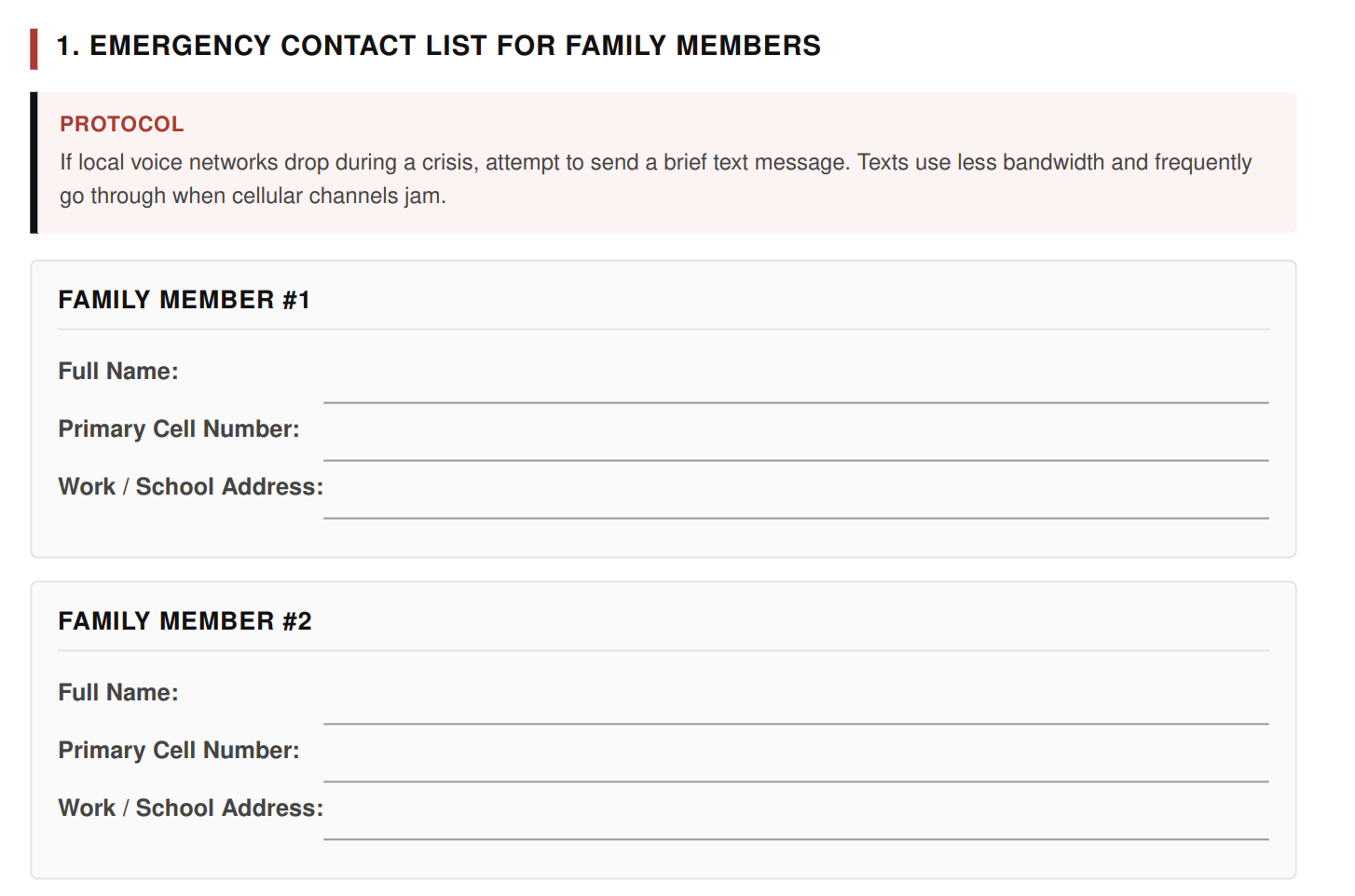
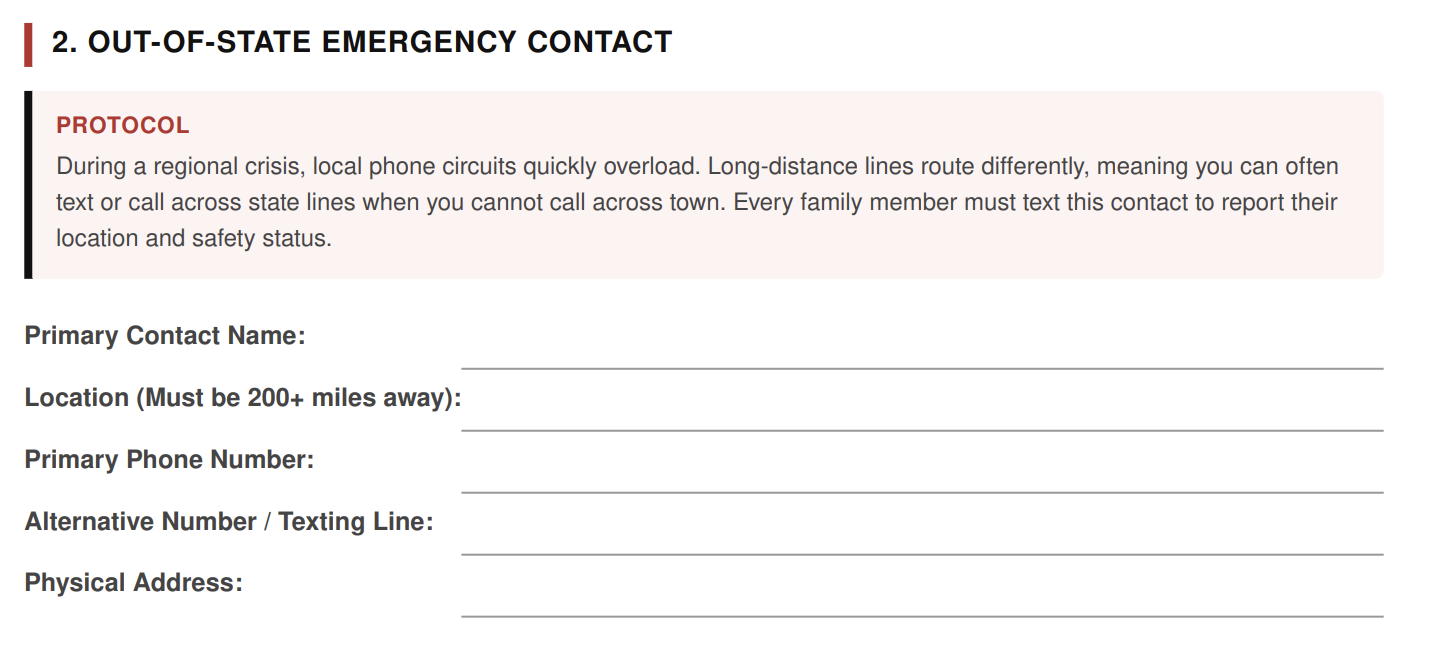
  • Plan: Pick one out-of-state relative everyone in the family can text if local cell lines go down.

HURRICANE PREPAREDNESS RESOURCES

NEWS

Hurricane Season 2026: The Hidden Risks of a Below-Normal Forecast

At a glance: why a below-average forecast can trick people into dropping their guard, and the true risks hiding behind the numbers this season.

READ MORE →

Hurricane Season 2026

BUG OUT BAG

The 2026 Hurricane Go-Bag Essential Items

The 2026 hurricane season forecast demands fast action. Make sure your mobile evacuation kit is packed with these non-negotiable survival essentials.

READ MORE →

Hurricane Go-Bag

PERSONAL SAFETY

Here’s What Your Hurricane Survival Kit Should Look Like

Before the time of distress even transpire, one must be fully equipped. A deep dive into staging water, rations, communications, and power tools.

READ MORE →

Hurricane Survival Kit

NATURAL DISASTERS

Hurricane Season: What to Consider When Bugging In vs. Out

Hurricane season is here, and that means answering one massive question: Do you hunker down and fortify, or hit the road ahead of the storm surge?

READ MORE →

Bugging In vs Out

PERSONAL SAFETY

Hurricane Survival Guide For Every Family

Last Updated: May 2026. A comprehensive, step-by-step breakdown to keep your family safe, connected, and accounted for when lines go down.

READ MORE →

Hurricane Survival Guide

SELF SUFFICIENCY

Hurricanes | 11 Tips to Help Prepare Homeowners For Hurricanes

From reinforcing garage doors to clearing structural weak points, these 11 field-tested tips will help protect your property from devastating winds.

READ MORE →

Homeowner Preparation

/* Interactivity & Mobile overrides handled through simple global block */
.peg-readmore:hover {
transform: translateX(4px) !important;
}
@media (max-width: 640px) {
.peg-row {
flex-direction: column-reverse !important;
}
.peg-text-block {
padding-right: 0 !important;
margin-top: 15px !important;
}
.peg-image-block {
width: 100% !important;
min-width: 100% !important;
height: auto !important;
}
.peg-image {
aspect-ratio: 16 / 9 !important;
}
}

For official live alerts, you can check out NOAA’s updates, and use the interactive tracking map below from Windy.com to monitor live storm paths yourself.

Manual Wood Splitter: Best Options & How to Use Them

A Complete Guide On Finding The Best Manual Wood Splitter For YOU

Splitting firewood by hand is a time-honored tradition—great for staying warm, building muscle, and working up a proper appreciation for modern tools.

But swinging an axe all day? That’s a fast track to a sore back and a bad attitude.

That’s where manual firewood splitters come in—giving you a smarter, safer, and more efficient way to split logs without the fuel costs or noise of gas-powered machines.

If you’re ready to upgrade from brute force to brainpower, this guide will walk you through everything you need to know about manual firewood splitters, including:

✅ The best manual firewood splitters on the market
Key features to look for when buying one
How to use a manual firewood splitter (so you don’t wreck your hands or dignity)
Who should get one (and who should stick to an axe or hydraulic splitter)

Let’s dive in (but first)…

Grid Doctor With EMP Intercept Technology

Manual Firewood Splitters

Not all manual splitters are created equal. Some are great for big, tough logs, while others are better suited for kindling and small jobs. Here are the top-rated manual firewood splitters:

1. Kindling Cracker

???? Best for: Splitting small logs and making kindling
???? Why it’s great: Stationary wedge design—just hit the log with a mallet
???? Max log size: 6.5-inch diameter logs
???? Why you’ll love it: Zero maintenance and safe for all ages. Perfect for campers, cabin owners, and anyone who loves a good bonfire.

Check it out here

Kindling Cracker – Firewood Splitter Review

2. Kindling Cracker XL

???? Best for: Splitting medium logs and making kindling
???? Why it’s great: Stationary wedge design—just hit the log with a mallet
???? Max log size: 9-inch diameter logs
???? Why you’ll love it: Same as the previous one, just a big larger/heavy to accommodate larger log sizes.

Check it out here

Kindling Cracker XL – First Try

Note: These are the only 2 I recommend. Everything else has too many compromises to be considered a top option.

Key Features to Look for in a Manual Firewood Splitter

A good manual firewood splitter should be strong, stable, and safe. Here’s what you should consider before buying:

???? Splitting Mechanism – Hydraulic pump? Slide hammer? Wedge-and-mallet design? Pick one based on your strength and log size needs.

???? Max Log Size – Some splitters handle only small logs for kindling, while others can split thicker, tougher pieces of firewood.

???? Portability – If you need something lightweight for camping or off-grid use, avoid bulky hydraulic models.

???? Durability – Cast iron and hardened steel blades last longer than cheap aluminum or plastic parts.

???? Ease of Use – If your goal is less effort, go for hydraulic splitters or wedge-based designs that don’t require brute force.

How to Use a Manual Firewood Splitter (Without Wrecking Yourself)

Using a manual firewood splitter the right way will keep you safe and make the job much easier. Here’s the step-by-step process:

1. Prep Your Work Area

✔️ Set up on solid, level ground (concrete or packed dirt works best)
✔️ Wear safety gear – gloves, boots, and eye protection (flying wood chips are no joke)
✔️ Stack logs nearby so you don’t have to stop and reload every few minutes

2. Position the Log

✔️ Place the log upright and centered on the splitter
✔️ If using a wedge-style splitter, align it straight over the grain for a clean break

3. Apply Force

✔️ For hydraulic splitters – Pump the handle until the log splits
✔️ For slide hammer splitters – Lift the hammer and slam it down onto the wedge
✔️ For wedge-style splitters – Strike the log with a heavy mallet until it cracks

4. Remove & Repeat

✔️ Clear the split logs away before placing another one
✔️ If a log doesn’t split completely, rotate it and try again

Pro Tip: Don’t rush. Splitting firewood is about technique, not just strength.

Let the tool do the work!

Prepper Checklist eBook Cover - with gas mask on a SHTF scenery background

Want a free 78 item preppers checklist?

Enter your email below to instantly download this Complete Checklist PDF. No purchase necessary. 👇 👇

Who Should Get a Manual Firewood Splitter?

A manual firewood splitter isn’t for everyone—but it might be perfect for you if:

You want a safer alternative to an axe – If you’re tired of swinging a maul (or just worried about missing your target), a splitter gives you more control and less risk.

You don’t want to deal with gas-powered machines – Hydraulic and electric splitters are great, but they require maintenance, fuel, or electricity. Manual splitters work anywhere.

You need something portable – If you’re heading to a cabin or off-grid property, a small manual wood splitter is easier to transport than a heavy-duty hydraulic model.

You want to save money – Manual splitters cost a fraction of electric or gas-powered splitters. If you’re only splitting firewood for personal use, a $100–$300 splitter will get the job done without breaking the bank.

❌ However…If you need to split massive logs all winter long, you might want to invest in a powered splitter instead. Manual splitters are fantastic for smaller jobs, but they’ll wear you out if you need to process cords of wood regularly.

Final Thoughts: Should You Get a Manual Firewood Splitter?

So if you love the idea of splitting firewood without gas, electricity, or unnecessary effort, a manual firewood splitter is a smart buy. It’s safer than an axe, cheaper than a power splitter. And far more efficient than splitting logs the old-fashioned way.

???? For small logs and kindling? Go for a wedge-based splitter like the Kindling Cracker.
???? For medium-sized logs? A slide hammer splitter gives you controlled power.
???? For big logs? A hydraulic manual splitter is your best bet.

At the end of the day, the right tool makes all the difference. If you want faster, easier, and safer firewood splitting, a manual wood splitter belongs in your shed.

Now, go forth and split wood like a pro. ????????

Prepare, Adapt & Overcome,

P.s. – I just found out 2 out of 3 Americans don’t feel prepared for a 3 day disaster!!!

I guess this goes to show how modern society continues to embrace ‘living a fragile life.’ What’s crazy is… it’s so easy to fix.

To make sure YOU have the basics, watch our FREE training on “10 Simple Steps To Basic Preparedness” that shows you HOW.

Nothing crazy here… this isn’t doomsday prepping… just the basics every responsible adult should have before a disaster strikes.

Why You Can Trust Skilled Survival…

Go here now to review a full breakdown of:

  • Who We Are
  • Our Credentials
  • Our Mission
  • & Product Recommendations…

Here are a few highlights of our teams credentials & certifications:

  • Certified Member of a Mountain Search & Rescue Organization
  • Plant Emergency & Safety Leader for a Major Food Manufacturer
  • Member of the 10TH Mountain Division Hut Association
  • Certifications: Avalanche 1, WFR, CPR
  • Official Gear Tester for Numerous Outdoor Gear Companies
  • Countless Multiday Backpacking trips into Remote Wilderness
  • Bachelor’s Degree In Mechanical Engineering 
  • Bachelor’s Degree In Civil Engineering
  • Bachelor’s Degree In Biomedical Engineering

“It takes 20 years to build a reputation and five minutes to ruin it.” – Warren Buffett

We’re fully aware that trust is NOT something you GET but is EARNED.

And we’ll continue to earn YOUR trust through our forthright and honest approach with each new Blog Post, Guide & Product we create…

P.s – I just took this FREE 60-second ‘Readiness Score Quiz’????


<img decoding="async" class="container" style="width: 775px; margin: 0 auto;" src="https://www.skilledsurvival.com/wp-content/uploads/2024/10/RSQuiz-Sample-Image-No-Border-1.jpg" alt="Readiness Score Quiz"


AND… I’ve still got a few gaps in my preps…????

But at least, I’m not part of ‘The Fragile Masses’. ????

Find out where YOU stand by answering a few questions…

The post Manual Wood Splitter: Best Options & How to Use Them appeared first on Skilled Survival.