
No products in the cart.
Biden’s Presidency Will Be A Catalyst For Secession – And Perhaps Civil War

This article was originally published by Brandon Smith at Alt-Market.us.
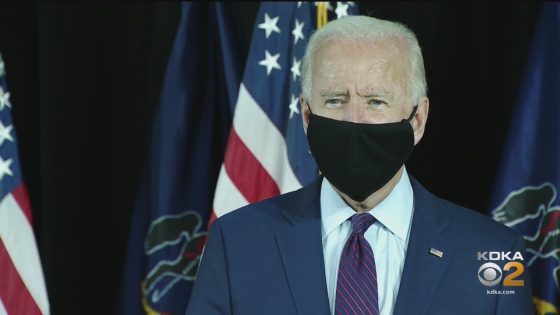
Over the past few months, I have written a handful of articles that discussed what would probably happen if Joe Biden actually entered the White House and launched his administration. My initial belief was that Trump would refuse to concede and that this would be a trigger for national chaos blamed on conservatives, but I have also noted that Biden’s entry is almost just as disruptive, as it sends a signal to the political left that it is “open season” on anyone that disagrees with their ideology.
Of course, conservatives are not going to simply sit still and be purged and abused, they are going to strike back, and this sets the stage for a number of events and outcomes, some of which are completely unpredictable, even for establishment globalists.
First, though, we need to address how Biden and the globalists are going to create chaos so that they can then demand their own brand of “order”.
In my article ‘A Biden Presidency Will Mean A Faster US Collapse’, published in October, I outlined why the ongoing economic crisis will accelerate in the wake of a Biden takeover. More specifically, I predicted that Biden would implement a federal covid lockdown, probably within the first year of his presidency, similar to the Level 4 lockdowns implemented in Europe and Australia. Biden may lure Americans into complacency with promises of “relief” and fewer restrictions in his first couple of months, but he will then use the rather convenient news of “covid mutations” to bring in even harsher mandates.
Such a lockdown, if Americans submit, would mean an even larger spike in unemployment, a loss of hundreds of thousands of small businesses as well as a huge loss in tax revenues for some states (mostly blue states).
Another scenario is that Biden leaves the lockdowns in the hands of state governments, but pursues a nationwide program for medical passports. The passport, of course, would require people to take the vaccine and accept contact tracing apps on their phones; meaning 24/7 surveillance on the public. At least 30% of Americans have said in polling that they will refuse the vaccines outright. Another 60% have said they are wary of the vaccines and need proof of their effectiveness. So, the medical passports will lead to millions of people being denied participation in the mainstream economy and collapse happens anyway.
In other words, the elites are going to try to hold the economy hostage while telling the public that if we don’t accept medical tyranny it will be OUR FAULT if the system breaks down.
The economic crisis, however, started long before the pandemic, long before Biden, and long before Trump. It has been building since the credit crash of 2008, and in the 12 years since, the Federal Reserve and other central banks have been pumping out trillions in stimulus while encouraging non-stop debt accumulation. Right before the beginning of the pandemic, the US was suffering from the highest corporate debt in history, the highest consumer debt in history as well as the highest national debt in history.
What we are witnessing right now is the final phase of a collapse scenario that was more than a decade in the making, and Biden is about to help finish the job.
Biden will no doubt seek to hyperinflate the dollar in the name of offsetting the losses and keep things afloat for a short time, but the real agenda will be to trigger price spikes in goods as well as eventually killing the dollar altogether. No amount of stimulus will stop the crash that has already been set in motion; the bailout measures from this point on are Kabuki theater, a show put on for the masses to make us believe that the government and the banks “did everything they could” to save us. The elites have no intention of stalling or stopping the collapse; their “great reset” demands it.
One’s initial assumption would be that Biden would then take the blame for the economic crisis, but it appears that the establishment is going to set up a Herbert Hoover narrative and lay all the blame squarely on Trump and conservatives. In the past I have noted that Trump’s trajectory was very similar to Herbert Hoover’s, in that he was a business mogul and Republican that pushed for corporate tax cut policies and also extensive tariffs.
Hoover also served only one term, taking the blame for the crash of 1929 and the advent of the Great Depression, even though the crash was primarily caused by the Federal Reserve’s ultra-low interest rates and easy money, followed by a series of rate hikes (a fact which former Fed chairman Ben Bernanke would later openly admit to in 2002). This launched the three-term dominion of Franklin D. Roosevelt, one of the most communistic presidents in our history and the initiator of socialist programs which have since buried the American public in Quadrillions of dollars in unfunded liabilities.
Biden’s latest statements indicate he will be introducing numerous executive orders to “correct the mistakes of the Trump administration”, thereby implanting the idea that whatever happens next is Trump’s fault. The “Reset” globalists and their central banking partners will have to bring down the US economy very quickly under a Biden White House. Why? Because if they wait, or if they try to drag out the collapse and the worst happens a few years down the road, Biden and the globalists will get the blame. They MUST crash the old world order now so that Trump and conservatives can be saddled with the consequences.
The strategy seems to be this: Demonize conservatives as much as possible as quickly as possible so that our purge from social platforms can be rationalized. When we are incapable of defending ourselves in the public sphere because we have been removed from the internet, the establishment and leftists can blame us for everything going wrong. The public would have no access to any other points of view or contradictory facts and evidence because the alternative media will be gone. We become the monsters, the bogeymen, and the source of all American suffering.
We didn’t fall into the trap of supporting martial law measures during the BLM riots, so this must be Plan B.
Will their plan work? I doubt it. Just as the globalist rollout of the pandemic lockdowns and medical tyranny is failing to gain traction in the US as huge numbers of people refuse to take the questionable vaccines, I suspect millions upon millions of Americans are already savvy to the propaganda schemes of the establishment and will not buy-in. But, that doesn’t mean the elites won’t try it anyway.
In early November in Issue #47 of my newsletter, The Wild Bunch Dispatch, I war-gamed the Biden scenario extensively and concluded that if he was to enter the White House it would have to be followed by a massive erasure of conservative media platforms from the internet. I stated that:
“If Biden does indeed enter the White House and take control of the presidency, expect certain consequences right away: A complete full spectrum censorship campaign of conservative news sources will be undertaken by tech companies and government. There is no way Biden and the democrats could keep control of the situation while conservatives are able to share information in real-time. Do not be surprised if web providers suddenly start kicking conservative sites off their servers, just as Bitchute (a YouTube alternative) was kicked off their server for 24 hours on election night.”
This is already happening, and Biden hasn’t even stepped foot into the role of “commander and chief” yet. The coordinated effort by Big Tech to remove Parler, a Twitter alternative, from the web completely was not all that surprising. Luckily, Parler will be back up and running by the end of the month, but the censorship campaign is only going to get worse from here on. Biden WILL support and defend the censorship efforts by Big Tech and the fascist marriage between government and the corporate world will be complete.
To summarize, the globalists have to silence us before they can effectively demonize us. The truth is on our side; facts and logic are on our side. They can’t win the war of ideas if we are allowed to speak; this is why they are so desperate to silence us.
Sweeping gun control measures will be issued by Biden, but only after the conservative purge from the internet is close to finished. If conservatives are isolated from one another in terms of communication, this makes it harder to organize a defense against aggressive gun confiscation. Biden will most likely try to exploit Red Flag gun laws first, this would allow federal agencies to declare anyone to be “a threat to public safety” without due process, and have their guns taken away preemptively.
There is an obvious outcome to all of these actions and I don’t think it’s far fetched to suggest that conservative counties and states will demand secession. At the very least, conservatives are going to continue to relocate to red states and red counties, just so they can continue to do business and make a living without government interference. There’s no way that most conservatives controlled states or counties are going to submit to federal lockdown mandates or medical passports, and economies in conservative regions are going to remain stable because of this while blue states are going to crumble.
Biden will seek to retaliate against conservative controlled areas of the country in response.
There comes a point when it is impossible for those that value freedom, logic, and reason to live side-by-side with those that are irrationally obsessed with control. The American constitutional framework in particular was designed to prevent collectivism from overriding individual liberties, but if the system is sabotaged through subversion and the Bill of Rights is violated, then maintaining the system is no longer plausible.
The best option for a number of reasons is to separate. Secession is often referred to as “running away” from a cultural problem, but this is an ignorant way of looking at it.
We are reaching a stage right now in the US where it will be virtually impossible to voice political concerns without risking retribution. If you are a conservative, you will be targeted.
If conservatives and moderates migrate away from leftist controlled areas and congregate in red states or red counties, then it will be difficult for leftists to attack them for voicing their views. If your employer is a conservative, then he’s not going to care if a leftist mob demands you be fired. If you own a business in a conservative community, then the people that live there will continue as your customers regardless of what leftists say about you.
Conservatives and moderates MUST start to physically separate from the political left. We must remove ourselves from the blood-sucking parasites that have attached themselves to us. This allows us to remain free to think and speak as we like, and it takes all power away from leftists to hurt us by disrupting our means of making a living.
Secession is a more extreme measure, but it WILL become necessary if leftists refuse to accept that we are no longer participating in their games of fear and subterfuge. Leftists are collectivist by nature, and collectivists see people as property. Walking away is not an option in their minds. So, though we might successfully separate, this would only be the beginning of the battle.
The important thing is to first make sure that conservatives KNOW that there are places they can go where their civil rights are valued and defended. If conservatives feel completely isolated and alone, many will give up, go dark, and pray they are not discovered. This is unacceptable.
The advantage of secession is clear; by separating, conservatives force the enemy to come to them, on the ground they have prepared. The leftists will be the aggressors by default. They will try to present the situation otherwise, but it won’t matter. We will have the moral high ground as well as the superior strategic position.
There are multiple narratives that will be used to demonize the secession movement beyond the terrorism angle. In particular, I think the government and the media will try to tie secession to “foreign entities”. In other words, they will claim the secession movement is being funded or supported by Russia, or some other foreign power. This is what almost every government in history has done when faced with a viable secession or rebellion that could threaten their control – They accuse the people that want to separate of being agents for evil outsiders.
It doesn’t matter.
Conservatives cannot live with leftists, their cultism and zealotry have made it impossible. And, we will not live under a globalist tyranny built around their reset agenda. Separation allows us to consolidate for defense and protects us economically. It is the only way to ensure that we remain free.
The globalists and the leftists will try to stop us; they can’t help themselves. They are insane, after all. This will lead to a war many of us have been expecting for quite some time. At the very least, with separation and secession, we will be in the best possible position to stop them. If we remain isolated from each other, the fight will be over before it even begins.
The post Biden’s Presidency Will Be A Catalyst For Secession – And Perhaps Civil War first appeared on SHTF Plan – When It Hits The Fan, Don’t Say We Didn’t Warn You.
 In this article, we break down everything you need to know to make a wise choice when purchasing a Solar Radio!



 Midland is a common sight at the small electronics counter of many outdoor stores. One of their most popular units is their

 FosPower is a familiar electronic brand these days and their gear gets many favorable ratings across many sites.


 Running Snail has recently improved its compact hand crank and solar charging radio. It now includes


 Tenergy is another new company, and I have limited experience with their products, but


 One of the few radios that claim to be water-resistant is