Survival Gear is the most unused product until a natural disaster happens, then it’s the most desired products, but usually too late to help those that really need the help.

We sell around the World, and pride ourselves on offering a level of customer service that we would want to see ourselves if we were shopping online.
Our product ranges change regularly, so we hope that you come back to our sites to see some of the fantastic offers that we regularly have.

Get In Touch

UPDATE: Ruger Mark IV 22/45 Lite Optic-Ready With Co-Witness Sights

@media (max-width:576px) { .read-more-content { height: 570em; } }

Ruger just expanded its popular Mark I/V 22/45 Lite with an optic-ready variant featuring co-witness sights. The addition provides even greater utility as more shooters turn to running optics on pistols for defense or sport.

The new pistols feature a standard Shield RMS footprint for reflex optics. It resides in place of the Picatinny rail. The pistol also utilizes a raised front fiber-optic sight and adjustable rear sight, co-witnessing with most micro red cots currently on the market. An attractive ventilated rib rests atop an anodized receiver.

Like all 22/45 pistols, the new model combines a lightweight, precision-molded, polymer grip frame with a ported, anodized aluminum receiver. It delivers a custom look that shooters just seem to love–without paying a custom price. Chambered in .22 LR, the pistol weighs 22.5 ounces with a 4.4-inch stainless steel barrel, threaded 1/2″-28 for accessories or suppression.

On November 7, 2022, Ballistic reported:

This bad boy comes ready to race, plink, hunt or shoot. Whatever your shooting pleasure, the new Davidson’s exclusive offering of Ruger Mark IV 22/45 Lite pistols, topped with Riton 3Tactix MPRD2 red dots, is ready for the challenge.

The Davidson's Ruger Mark IV 22/45 Lite pistols feature anodized, colored finishes.

Davidson’s Exclusive Ruger Mark IV 22/45 Lite Pistols

The Mark IV 22/45 remains an extremely popular rimfire platform. With an entire cottage industry of accessories and components supporting it, you can really customize the pistol. But Davidson’s did the work for you on this one. It comes with anodized colors, threaded barrels and the popular 22/45 1911-style grip angle. Throw in 1911-style grip panels and the upgraded one-button tool-less takedown, and the 22/45 excels.

The Mark IV 22/45 Lite mount presents a clean look.

The Davidson’s exclusives come with a 4.4-inch barrel, 1/2-28 threaded barrel and an ambidextrous manual safety. The red and purple anodized aluminum uppers, complete with custom ventilation cuts, gives these pistols a signature look.

Now the platform comes ready to go with a red dot sight. Gone are the old irons, with these models pre-fitted with Riton 3Tactix MPRD2 red dots. The compact, versatile optics feature shake awake, auto brightness and auto off. It comes with a 3 MOA dot to ensure rapid target acquisition. Each optic typically sports a retail value of around $350.

The Davidson’s models forgo iron sights, even removing any and all mounting rails. The company worked with Ruger to machine a custom mount for the 3TMPRD2. The resulting package delivers a clean, streamlined appearance. It should prove extremely fun on the range or in competition.

The Mark IV 22/45 Lite from Davidson's come in both red and purple.

The Davidson’s Ruger Mark IV 22/45 pistols retail for $1,048. For even more info, please visit davidsonsinc.com.

Davidson’s Ruger Mark IV 22/45 Lite Specs

  • Safety: Manual Safety
  • Frame Finish: Red Anodized
  • Drilled & Tapped: Yes
  • Suppressor Ready: Yes
  • Optic: Riton Red Dot
  • Grips: Checkered Black Synthetic
  • Features: Ergonomic Bolt StopOne Button Takedown
  • Finish: Black, Red
  • Magazine Count: 2.000
  • Firing System: Internal Hammer
  • Frame Material: Aluminum Upper
  • Barrel Configuration: Single
  • Muzzle: 1/2×28 Thread Pitch
  • Threaded Barrel: Yes
  • Rifled Barrel: Yes
  • Forend Rail: Picatinny Rail

Didn’t find what you were looking for?

The post UPDATE: Ruger Mark IV 22/45 Lite Optic-Ready With Co-Witness Sights appeared first on Ballistic Magazine.

Ammo Storage: How To Avoid Common Amateur Mistakes

Are you protecting your ammo storage? Doing so is not complicated, but it’s also not optional.

Ammo Storage

Are you treating it like the critical survival investment it is?

I sure hope so because…

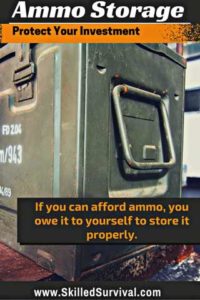
If you can afford stock ammo, you owe it to yourself to store it properly.

You should treat your ammunition like you treat precious metals.

Both investments require good practices to maintain for the long haul.

If you don’t properly maintain your ammo (and neglect it), your ammo’s useful shelf life will be cut short.

This is a travesty because ammo will be the lifeblood when SHTF.

Remember, in a long-term survival scenario, he who has the most firepower; often wins.

Ammo is arguably the most important item you can stockpile.

It provides the ability to hunt, barter, defend your home and family, intimidate others, etc.

And these are all critical survival and preparedness tactics.

But to rely on these survival tactics, you must:

  1. Purchasing large quantities of ammo
  2. Store it for the long haul

It’s obvious, but worth saying again, “Firearms a just poorly designed baseball bats without ammunition.”

At this point, you’re probably asking a simple question –

“How fast can poorly stored ammo become compromised?”

Today, I’ll be covering the following ammo storage topics in detail:

Is There Really An Ammunition Shelf-Life?

Let me start out by saying ammo does, in fact, have a shelf life.

But unlike food, which has a shelf life measured in days or weeks, ammo’s shelf life is measured in years and decades.

It all depends on how you store it.

If you store it right, ammo will easily outlive you, probably outlive your kids and possibly even your grandkids.

In near-ideal conditions, modern ammo will last centuries.

But if you store your ammo improperly, degradation starts on day one.

Slowly at first, but over a few years or decades, you may find your ammo useless.

And even if it still fires, the accuracy will likely be jeopardized.

↓ Does Ammunition Expire? ↓

As A Way To Introduce You To Skilled Survival, We’re Giving Away Our #78 Item Complete Prepper Checklist. Click Here To Get Your FREE Copy Of It.

Old Ammo Vs. New Ammo

Modern materials, design improvements, and automated manufacturing processing have helped improve today’s ammo’s shelf life.

And that’s great news for those of us who started stockpiling ammo over the last couple of decades.

When we talk about older ammo, I’m primarily referencing ammo that was manufactured after the 1930s; when smokeless powder was introduced.

↓ Black Powder Vs. Smokeless Powder – Education! ↓

Older bullets had a much shorter shelf life unless they were meticulously stored, and regardless they are quickly reaching the end of their reliable shelf lives.

Today, the risk vs. reward of shooting older ammo may not be worth it.

And the risk vs. reward equation keeps getting worse as each year passes.

↓ Will These 90-Year-Old .22 Rounds Still Function? ↓

The bottom line is your ammo stockpile is an investment in your future.

You want to protect this investment as long as humanly possible. So let’s learn how to do that.

How To Store Ammo The Right Way

Properly storing your ammunition is not complicated.

You only need to follow some simple storage principles and take meaningful action.

Yes, that’s it.

Here’s the first primary storage principle:

Store your ammunition in a cool, dry, dark location.

Let’s break that down; if you keep your ammo in a:

  • Cool
  • Dry
  • Dark

place, you win.

Follow this, and you’ll extend your ammunition stockpile from decades to centuries.

Now, once we begin analyzing these principles, we discover there’s a bit more to it.

So let’s deep dive into each of these ammo storage principles.

↓ How To Store Ammunition – Long Term ↓

Keeping Your Ammo Cool

You want to keep your ammunition cool. Not cold but cool.

You also want to avoid warm or hot storage locations.

Constant warm temps or consistently cool temps are not the main concern.

It’s the extreme temperature swings that are the real problem.

The integrity of ammo is compromised if it’s subjected to extreme temperature cycles. It’s hard on ammo to go from 100 degrees to 0 degrees and back to 100 degrees, year after year.

Why is this bad?

These temperature swings tend to invite humidity.

And as we’ll discuss shortly, humidity is the real threat to your ammunition.

That’s why garages, attics, unheated cabins, and vehicles are such poor ammo storage locations.

Now it’s highly dependent on your local climate, but these storage locations move through extreme temperatures seasonally for most of us.

In winter, overnight temps can reach sub-zero degrees in garages, attics, etc. And in the summer, north of 100 F.

Ammo stored in these conditions for a few years won’t hurt it much.

Your ammo won’t typically go bad in a matter of a couple of years.

But if left in these locations over several decades, the temperature swings will begin taking a significant toll on your ammunition’s shelf life.

So, where should your ammo be stored?

Traditionally, basements are popular ammo storage locations.

Why? Because basements are located below ground level.

Ground temperatures change much less than air temperatures.

So while air temps will change from 0 degrees to 100 degrees seasonally, ground temps 10 feet below the surface tend to stay in a range of 20 degrees.

So, for example, if soil temps 10 feet underground average 50 degrees, it may rise to 60 degrees in the summer and drop to 40 degrees in winter.

This is significantly less variation than air temps.

And at 30 feet below the surface, temperature swings become negligible.

At this depth, ground temps stay constant regardless of the air temps.

So we can take advantage of the earth and support the “constant cool” principle of ammunition storage.

That’s why basements tend to be popular ammo storage locations but also have downsides.

Which we’ll cover next…

Caching Ammo-Small 2

Keeping your Ammo Dry

Moisture (a.k.a. humidity) is even more dangerous to your ammunition than temperature swings.

Moisture is corrosive to metal. And the ammo is made of metal (casings, primers, and bullets).

Hence, moisture exposure will eventually rust your ammo.

It will begin with small amounts of surface rust, which you can sand off, and your ammo will still fire, but even this may affect your ammo’s accuracy.

And if this rust is allowed to fester, it will eventually (over several decades) render your ammunition useless.

So we need to control moisture exposure to our ammunition.

But guess which part of our homes tends to have the highest humidity levels?

You’ve probably guessed it, basements.

Rain soaks into the ground. Ground contacts your home’s foundation. This ground moisture is dangerous to foundations if allowed to accumulate.

That’s why ensuring your gutters and downspouts are working properly is important to avoid foundation problems (i.e., cracking, settling heaving, etc.)

Many homes have sump pumps to help manage basement moisture issues.

Basements and humidity are a big concern for your ammo.

When massive flooding occurs, which area will get wet first?

Your basement.

So from a moisture standpoint, basements present a bit of a problem. However, there are solutions to help manage these risks.

First, if you do store your ammo in a basement, don’t set it on the floor.

Keep it in cabinets or racks. The higher, the better.

That way, if your basement floods, your ammo will likely remain above the water level.

Another way to manage the increased humidity in the basement air is to get a good dehumidifier.

An Affordable Dehumidifier For Your Basement

This dehumidifier unit will continuously pull moisture out of a damp basement.

Keeping Your Ammo “In the Dark”

UV light is also a destructive force.

Over long periods of exposure, the sun’s harmful UV rays will break down nearly everything.

You’ve seen this process with vehicles. Leaving a vehicle out in the sun for years will deteriorate the exterior metal and paint.

Now compare that vehicle to one that’s stored in a garage when not in use.

Over long periods of time, UV ray exposure will take a toll on your ammo.

The good news is most indoor storage locations will do just fine.

So a closet, pantry, and basement are all protected from UV rays. Plus, the inside of your ammo cans will be dark as well.

So if you store your ammo in a windowless location in ammo cans, UV rays will not cause you any ammo problems.

Organization Matters…A Lot

Good ammo storage takes organization and discipline.

Remember, you’re potentially stockpiling your ammo for decades.

So it’s important to stay organized and maintain control of your ammo storage efforts.

It’s not ‘set and forget’. You must maintain a process.

↓ How I Organize My Ammo Cans | MTM Ammo Can Organizers ↓

First, you should label your ammo cans.

You want to identify what’s in your ammo can without opening it.

Labels will help quickly inventory your stockpile and save you time in an emergency.

If you need ammo for your 22 survival rifle right now, you want to avoid dumping out several ammo cans on the floor to find which one has your 22 LRs.

Essential Tool For Keeping Ammo Storage Organized

So get yourself a quality labeler.

A labeler is one of my favorite prepping tools.

It comes in handy for more than just your ammo.

It’s also a perfect tool for food stockpiles and rotation practices. It also helps keep my gear and survival supplies organized.

I also label key areas of my home for emergencies.

I’ve labeled the main water shutoff valve, the natural gas shut-off valve, etc.

As the head of the household, I must know how to find and shut these components off in emergencies.

But for my family, it’s less intuitive.

But by adding labels, it’s easy to walk them through the process and for them to recall and find them in an emergency.

I can’t assume I will be available when emergencies happen.

Worth every penny for my peace of mind.

Next, create a desiccant check schedule.

Every few months, open up each ammo can and check your desiccants.

Create an email reminder, write it on a calendar, and make sure you check your ammo storage regularly.

As A Way To Introduce You To Skilled Survival, We’re Giving Away Our Ultimate Firearms Survival Guide.Click Here To Get Your FREE Copy Of It.

Best Ammo Cans On The Market Today

The third way to manage humidity is storing your ammo in ammo cans.

The key is to ensure the rubber gaskets are in good shape and create an airtight seal when latched.

That’s why I steer clear of used ammo cans. I don’t trust used seals. They are often dried out and cracked.

It’s not worth the risk to me. Fresh seals ensure a quality airtight seal.

Quality ammo cans will completely isolate the internal air (inside the can) from the external air (outside the can).

I also tend to steer clear of plastic ammo cans as well:

↓ Ammom Box Plastic Vs. Steel…What Should You Buy ↓

Ok, with all that said, let’s review a few of the best ammo cans on the market today:

1. Our Top Recommendation


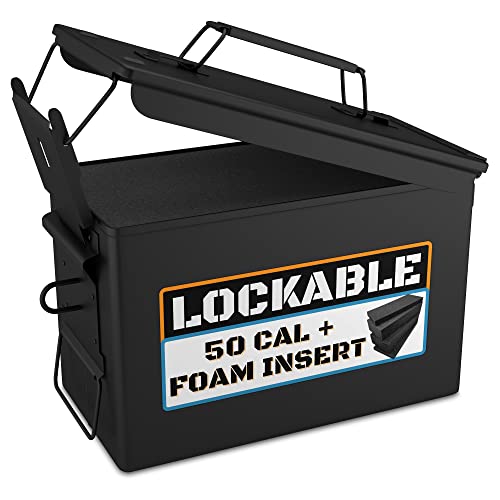
Solid Tactical 50 Cal or 30 Cal Metal Ammo Can

This excellent ammo can is both air and watertight, and you can be confident because each is individually tested before being sold.

The Solid Tactical Ammo Can also come with 3 desiccant packs. That way, you can add your ammo immediately, and the desiccant packs will remove all moisture from inside the can.

This can is tough as hell since it’s made of steel and comes with a money-back guarantee!


Check Today’s Price

We earn a commission if you make a purchase, at no additional cost to you.

↓ Unboxing – Solid Tactical 50 Caliber and 30 Caliber Ammo Can ↓

2. Budget Option


Generic Budget-Friendly Metal Ammo Can

If price is your biggest concern, and you’re looking for the “cheapest” metal ammo box, here it is.

This ammo box serves its purpose.

The paint job is solid in and out, and the overall material build is good, too.

Thos some folks mention a few minor QA issues. But overall recommended IF you’re on a strict budget.

Way better than doing nothing!


Check Today’s Price

We earn a commission if you make a purchase, at no additional cost to you.

3


Redneck Convent Metal Ammo Case Can

This metal ammo can feature a “WORRY-FREE SEAL” that’s considered air and watertight.

It comes with a hinged lid with a locking latch and a flat-folding handle.

It’s built to last since it’s made of heavy gauge solid steel. The lid includes a rubber gasket that ensures a tight fit to keep water and air out.

It comes in classic camo green color (.30 caliber or .50 caliber), tan color (.50 caliber only), or black color (.50 caliber only).

Here’s a helpful comment from one reviewer to consider:

“Here’s what I consider the biggest advantage of this container. I stored loose ammunition in this can, and also in plastic ammo cans made by Plano and MTM. The plastic cans had rubber seals around the inside of the lid. So I assumed they would keep out moisture from humid air. I placed desiccant packs in all the containers…. the kind of desiccants that have beads that go from blue (when dry) to pink (when saturated). The desiccants in the plastic ammo boxes turned pink in less than two weeks. However, the desiccants in this metal can were still blue in the same period. For this reason alone, not to mention the superior strength of the Redneck can… I’m buying more metal cans to store all my ammo.”

One concern is the stackability of these.

The carry handle creates a small “void” on the bottom of each can that’s slightly off-center. This causes a very high stack of them to slant…


Check Today’s Price

We earn a commission if you make a purchase, at no additional cost to you.

And just for fun, here are 25 survival uses for ammo cans!

↓ Why Buy Ammo Cans? 25 Survival Uses ↓

As A Way To Introduce You To Skilled Survival, We’re Giving Away Our #78 Item Complete Prepper Checklist. Click Here To Get Your FREE Copy Of It.

More About Desiccants

Good ammo cans keep the air inside the can from co-mingling with the air outside the ammo can. Allowing for complete control over the air inside the ammo can.

When you isolate and control the ammo can air, you can now 100% control the humidity.

How so? Using something called a desiccant.

With Silica Gel Dehumidifier Desiccants.

Toss one of these desiccant canisters into each air-controlled ammo can, and they will remove the moisture from the air.

Silica Gel Desiccants use particle physics (osmosis) to attract air moisture particles.

By trapping the moisture in the desiccant, the remaining air inside the ammo can will remain dry.

So the surrounding ammo can air that touches your precious ammo will be arid with little to no moisture.

And as we discussed earlier, moisture is what causes metals to corrode.

So by removing moisture from a controlled box of air, you eliminate ammo corrosion.

It’s simple math.

  • No moisture equals no rust.
  • No rust equals no corrosion.
  • And eliminating ammo corrosion extends your ammo’s shelf life, reliability, and accuracy.

In this process, you’ll occasionally find desiccants that need a recharge.

My Recommended Rechargeable Desiccant

I like these particular desiccants for four reasons.

1. First, they’re designed for up to a 3-square-foot area.

Three square feet is more than enough for a regular-sized ammo can.

So I can standardize on one desiccant style and size for all my ammo cans.

I prefer to use universal parts and components whenever possible.

It’s always a headache to use several styles of desiccants and then have to keep track of backups for each can. No thanks.

2. Second, they include a color code.

If you see an orange color, they are still doing their job.

If it’s no longer orange but clear, it’s time to recharge them. This color coding makes it simple.

Open your ammo can, look at the desiccant color, note the ones with clear color, and replace them.

Easy peasy.

3. Third, they are rechargeable.

They pull moisture from the air continuously until they “fill up.”

At some point, the desiccant can no longer draw more moisture from the air because it’s reached its moisture capacity.

It’s at this time that the color turns clear. But they are not one and done.

You get to reuse them over and over again.

These desiccants just need 3 hours in an oven at 300 degrees to reset them.

So these amazing desiccants are a nice little investment and worth every penny.

4. Fourth, they don’t use cancer-causing chemical agents.

They don’t use the nasty chemical Cobalt Chloride.

This chemical has become classified as Group 2B, which states Cobalt Chloride is possibly carcinogenic to humans.

No way I’m handling a carcinogen and putting them in my oven.

With these desiccants, you never have to worry about that.

As A Way To Introduce You To Skilled Survival, We’re Giving Away Our #78 Item Complete Prepper Checklist. Click Here To Get Your FREE Copy Of It.

Action Plan

Ammo Storage Action Plan

1. Decide on a cool, dry, dark, and safe location.

Put some serious thought into your ammo storage site based on what we discussed earlier.

The best advice I can provide is where NOT to store your ammo.

Don’t store your ammo in an:

  • An unheated/cooled garage
  • An unheated/cooled attic
  • Your vehicle

2. Purchase high-quality ammo cans and put all your ammo into them.

I recommend you dedicate each ammo can to only one caliber size for sound organizational practices.

Don’t mix and match.

Then label each ammo can so you know exactly what’s inside without having to open it.

↓ How Much 9mm Fits Into An Ammo Can? Surprisingly HEAVY ↓

3. Add fresh desiccants to each ammo can.

4. Create a master schedule and reminders to check your ammo can’s desiccants.

Then replace and recharge as necessary.

See, that wasn’t so hard!

Here’s a short video overview of your ammo storage plan:

↓ Ammunition Storage 101 ↓

And finally, keeping all your ammo cans stashed away in a large gun safe is a good idea.

That way, everything is double secure from intruders, fires, or kids.

Congratulations!

You are now on your way to protecting your ammo storage investment correctly.

The way that maintains your precious ammo investment for years, decades, and centuries to come.

Prepare, Adapt, and Overcome,

“Just In Case” Jack

P.s. Are you ready for the tough times ahead?

Find out now by taking my short Readiness Score Quiz – it’s absolutely free.
Once complete, you’ll know exactly where you stand on the “fragile” vs.” resilient” spectrum.

The post Ammo Storage: How To Avoid Common Amateur Mistakes appeared first on Skilled Survival.

How To Disappear Completely: The Great Vanishing Act

How To Disappear Completely Without A Trace…

How To Disappear Completely

I’m not here to question the reasons why you want to disappear.

I’m sure your interest in disappearing is complicated, diverse, and very personal.

  • Maybe you are a curious surfer casually perusing the Skilled Survival site.
  • Maybe you owe the mob a fortune in money you don’t have, and they’ll break your legs and feed you to the sharks.
  • Or perhaps you are preparing to do something so dastardly – so sinister – so illegal – you’ll need to vanish from the face of this earth.

Whatever your motivation, be it for good or evil, the following is a guide to disappearing entirely.

Are You Ready For The Tough Times Ahead? Take My 60 Sec Quiz To See If You’re Part Of ‘The Fragile Masses’ Or Not… Start Quiz Now!

Disappearing IS A Big  Deal

It’s an action not to be taken lightly. It scares people and raises a lot of attention among authorities.

In some special cases where your life is in danger, government agencies and professional services can help you legally obtain a new identity.

However, if circumstances require it, and you must take matters into your own hands, then this guide is for you.

It’s a last desperate measure, but if you are really getting ready for the Great Vanishing Act, all on your own, then I wish you Good Luck.

You’re going to need it.

How To Disappear Completely Without A Trace Advice – Former CIA Agent

Preparation Is Key

Disappearing takes time. If you were hoping to split town as soon as you are done reading this guide, get ready to be disappointed.

There are multiple steps involved with disappearing, and the more time spent preparing, the better your chances.

But, sometimes, the choice to disappear is forced upon us in a rush, for which case this section has been broken up into two parts.

Long Road

The Long Game – Creating Your Master Plan

First off, start distancing yourself from others.

You need to start cutting ties to your old life slowly. This means seeing friends and family less and less over time.

Continue this process slowly until you don’t see each other at all. They won’t have any reason to expect to hear from you at that point.

This process will require you to lie a lot.

Get used to it.

Making excuses and weaseling from family plans will seem like child’s play once you start lying about your character.

This venture requires you to constantly fib, deflect, and mislead for the rest of your life until the lie becomes your new reality.

You’re not ready to disappear if you aren’t prepared for that.

Start withdrawing all your money.

Your days of Visa, PayPal, and Venmo are over.

You are a cash or crypto-only person now and must get all your money out of the banks.

Become unbanked or convert everything to cryptocurrencies.

Do this slowly so as not to raise any eyebrows.

Over several months, convert your fiat to cryptocurrencies and withdraw varying amounts of cash from all accounts under your name.

Do this until they are all completely drained.

When done, you should have a fat stack of crypto on a hardware wallet and cash tucked away in a diversion safe, some closet, or crawlspace.

Having no money to your name makes the disappearing process much more challenging.

So if you’re truly broke, start saving now.

You’ll want to save as much money as possible between now and the vanishing day.

Kill your social media accounts.

Deleting these accounts won’t truly erase your information.

They have databases of your past information that authorities can obtain. However, it’s still a smart way to start detaching yourself from the information grid as best you can.

So say goodbye to Facebook, Twitter, Instagram, Tinder, and even email accounts – it is wise to delete everything.

↓ How To Remove Your Personal Data From The Internet | Tutorial ↓

Once again, do this SLOWLY; otherwise, people will take notice.

Provide an excuse to your closest friends like “I’m addicted and need a break” or “I just don’t have the time or energy to keep up with it anymore.”

The excuse doesn’t even need to be that good as long as you have one.

Do you have any pets?

You’ll probably need to take them to a shelter. Or allow a friend or neighbor to adopt them under some other pretext.

Pets cannot come with you on your disappearing adventure.

They will raise your attention and make you more recognizable.

However much you love your animals, they’ve got to go, and it is more humane to put them up for adoption/give them away than it is to abandon them entirely.

It is one of the many harsh realities of the Great Vanishing Act, but you must accept it.

Quit your job or request time off.

Before your big breakaway, you’ll need time to make last-minute preparations.

You’ll also want a head start before anybody begins questioning your absence.

If you don’t quit ahead of time, your current employer will be the first to notice your missing.

So make certain your employer thinks you quit or you’re on a nice long, much-needed vacation.

Be as thorough as possible.

Try to avoid a lease on your residence if you rent so landlords don’t come looking. Or start paying a couple of months in advance to buy time when you do leave.

You’ll want to do this well ahead of time to get them used to you paying several months at a time.

Tell your neighbors you’ll be on vacation for a while (also perhaps even give them a false lead as to where).

Tie up any and all loose ends you can think of to give yourself more time to travel and escape before the search is on.

Measuring Ruler

The Short Game – How To Disappear

Compile all of your identification.

Get every school ID, driver’s license, birth certificate, social security card, and bank statement.

Collect anything with your name and definitely your picture, all in one place.

There are different theories as to what you should do with these documents once they’re collected:

Some sources say you should keep them. Some say you should get rid of them.

Whatever you choose to do with your IDs and personal documents is up to you, but once again, be thorough.

Don’t leave anything behind, whether you take it all with you or burn it in a bonfire: leave no trace.

Destroy your pictures and avoid new ones.

It sounds drastic, but photos of you will be your own worst enemy.

Family members may start going door to door and store to store carrying a recent photo of you from the life you’re trying to flee.

The process of eliminating photos and avoiding getting your picture taken also makes it clear to family and authorities that you want to disappear.

That this was a conscious decision.

You weren’t murdered or kidnapped – you chose to vanish.

It may seem counterintuitive but trust me; it will work in your favor. If the cops think you disappeared from some malicious or accidental incident, they will search harder for you.

If they get the sense that you left on purpose and went to great lengths to plan it, they won’t search as hard.

Cancel your mobile phone plan.

It’s of no use to you now.

You are more like a fugitive, not a social participant.

However, if you really need one, buy a cheap burner phone (like this one) under an assumed name.

Just don’t hesitate to break it in two and ditch it if someone starts catching on.

Ditch your car.

You probably had some good times together, but few things are more traceable and recognizable than a person’s car.

Sell it for cash.

And if it’s not worth much, leave it running, unlocked, in a bad part of town, with the deed in the glove box, and let some thief do all the work for you.

Once your old car is gone, it’s time to buy a used car with cash.

This car shouldn’t be flashy or unique. Find something in a neutral color, a few years old, with some dings and dents.

You want it to be boring but reliable.
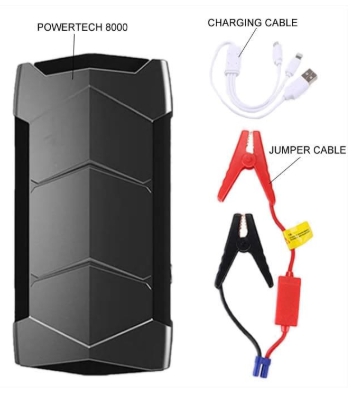
PowerTech 8k Vehicle Jumper

Speaking of reliability, the last thing you can afford is a dead battery while on the move.

So make sure to get this one critical piece of “disappearing gear,” like a portable jump starter.

It’s small, powerful, and worth every penny to prevent getting stuck on the side of the road.

Just toss something like a Powertech 8k in your bug-out bag, and you can thank me later…

Exclusive Bonus Content – Skilled Survival’s 104 Item Bug Out Bag Checklist – the only bug out checklist worth using. Click Here To Get Your FREE Copy Of It.

Psychosis

More Tips & Tricks On How To Disappear

In the book, “How To Disappear Completely and Never Be Found” by Doug Richmond, he suggests the following…

Search for babies who died the day you were born and contact the government requesting their birth certificate. He emphasizes that this is normal because people always lose birth certificates.

Now use that document to acquire a social security number, driver’s license, and other personal documentation.

With that, move to a busy city, rent a small apartment, and spend several months developing a short employment history. Mainly with temp jobs or construction gigs.

Then once that is established, walk out the door and never return.

He calls this Pseudocide – or faking your own death.

↓ How To Fake Your Own Death – EPIC HOW TO ↓

Remember that government controls are on the rise; now, more than ever, they’re using electronic surveillance and looking for terrorists.

↓ America’s Surveillance State: The Surveillance Machine ↓

They will take notice of anyone who is trying to falsify identities and get into the country to wreak havoc.

This book was written in 1995 – a lot has changed in the last two decades.

Requesting personal documentation under a false identity from the federal government is highly illegal.

This behavior will have some immense repercussions today, should you get caught.

Instead of disappearing on your own terms, masked special forces might blast through your window late some night, bag you, tag you, and ship you off to Guantanamo.

That’s called disappearing on their terms.

Not good.

 Jump Over River

Getting The Hell Out Of Dodge

You thought the preparation was complicated? Well, to do this right, you need a good bug-out bag when you make your break.

Limit what’s in your “go bag” to the bare necessities.

Such items include essential medical supplies, personals, small multi-tools, maybe a portable solar charger (or a solar-powered phone charger), a change of underwear and socks, a lockpicking toolset, et cetera.

This post is a checklist of 104 go items.

Read it carefully, then decide what to take and what to leave.

Exclusive Bonus Content – Skilled Survival’s 104 Item Bug Out Bag Checklist – the only bug out checklist worth using. Click Here To Get Your FREE Copy Of It.

Changing your appearance.

As much as you treasure that favorite t-shirt and jeans combo, ditch them.

Go to a cheap clothing store and buy several outfits that you would NEVER normally choose.

Dye your hair, but don’t pick a crazy color.

If you’re a natural blonde, go brunette, and vice versa. Wear a new hat – hats are great for concealing faces.

Fedora Hat

Fedora Hat

Choose a hat that you’d never be caught wearing in your old life; maybe for you, that’s a Fedora.

Also, practice using new mannerisms and try to mask your old mannerisms as best as possible.

Likely, people will already look for you – and someone might recognize you anyway.

You need to make a stranger of yourself.

But don’t make yourself strange; you must blend into a crowd and mask your identity.

This means you can’t stick out or be remembered.

Be the background. Stick to the shadows.

Act absolutely normal.

Travel on your own terms.

Covering distances on foot or by bicycle is your best option.

These transport forms cannot be easily tracked and do not require licenses or IDs to use.

Public transportation (i.e., buses, trains, subways, etc.) is acceptable; remember, many of these are under constant video surveillance.

And under no circumstances do you take a cab or hitchhike.

When you get into a car with someone else at the wheel, you have just put your entire situation in their hands.

They may recognize you and contact the authorities, or crash the car and get the police or EMTs involved.

Travel on your own terms; never let someone else manage your great vanishing act.

↓ How to travel the world with almost no money ↓

G.T.F.O.

The further, the safer – the more isolated, the better.

Head for the border or get way out of town.

If you are in the US, your best bet is the South. And I’m not talking about Mexico.

While it may be a developing country, and it may even be “easy” to get to without an ID, Mexico is a lousy safe haven and is currently rather tumultuous.

Keep moving. Go to Central or South America. There are plenty of ideal towns, cities, and villages you can access down there.

If crossing the border is out of the question or outside the realm of possibility, travel as far as possible

Many isolated or busy locations do not require a passport to get to; just be warned: it is usually easier to find someone on the run if they haven’t left their home country.

But whether you flee the country or hide amongst us, you must go somewhere people will not expect.

If you’ve always dreamed of visiting Jamaica, do not hide there.

If your family is from South Africa, that’s off-limits to you.

Find someplace unpredictable.

It doesn’t have to be a place you’ll be unhappy or uncomfortable; it just has to be a place you’ve never spoken to anyone about before.

This is a good point to lay some false leads.

When you leave home, place clues like road atlas maps or do extensive internet research that leads investigators in the completely wrong direction.

If your destination is Nome, Alaska, leave books, maps, and research for Los Buzos, Panama, all over your house when you split.

False leads will buy you time.

Another important decision is a big busy city or a tiny isolated town.

There isn’t really an in-between option here. The easiest place to disappear is either in the midst of a throng or the emptiness of the natural world.

Rent a small studio under an assumed name in a city of hundreds of thousands.

Or vanish into the woods and build a house on the outskirts of a tiny town.

Maybe you even go full Jeremiah Johnson and live off the fat of the land in the heart of the wilderness.

Whatever you decide, remember: this may be your home for a while, so choose wisely.

Man Standing At Cave Entrance

The New You & Your New Life

Disappearing is more than just running away and covering your tracks.

If you want to disappear forever and never be found, the implication is that you, your character, your mannerisms, your likes and dislikes, hobbies, and ideas ALL DISAPPEAR.

This is undoubtedly the most difficult and most important step of the process.

Be an actor.

Your identity must change to its core.

Create a character history.

You must learn to answer all the following questions naturally should anyone ask:

  • Where did you come from?
  • What did you do before?
  • Where is your family?
  • What kind of food do you like?
  • What is your favorite beverage?
  • Who’s your favorite author?
  • What is your favorite musician?
  • Favorite food?

Bottom line:

Recreate everything!

Of course, making new friends will eventually be necessary.

No matter where you end up, neighbors and locals will become a part of your life, and it isn’t wrong to make friends with them.

Just make sure to do so under your assumed identity.

Hell, having people who can confirm your name and backstory might even be helpful in this situation.

Especially should the relevant authorities come snooping in your new location.

So don’t be afraid to meet people, be afraid of revealing your true identity.

Becoming Comfortable and Falling Into Old Habits.

Don’t do it!

Stay on your guard at all times – paranoia can be both a curse and an invaluable tool.

Watch yourself, and do everything you can to avoid old habits.

Contacting people from your past.

NEVER DO IT.

I guarantee the urge will grip you at some point.

UNDER NO CIRCUMSTANCES are you to visit, call, write, email, IM, or otherwise contact your family or friends to let them know you’re okay.

They are not part of your life anymore. And any form of contact between you is a step towards discovery and ruin.

The lure of personal success.

I can understand the appetite for success.

Some people cannot stifle this hunger – to be better, have more, and be recognized.

It is something that man cannot bury, cannot completely suppress.

Maybe you went from being a successful stockbroker or businessman before your life on the run. Or maybe you used to write books.

Whatever your draw, people are driven toward success, and avoiding it isn’t entirely necessary.

You can still be successful in your life on the run.

Your new identity can still find prosperity and recognition – just not for the same talents or reasons you had in your life.

Find new hobbies, interests, and skills you never knew you had, and exploit those.

Stay under the radar but don’t be confined by your exile.

Moving is OKAY.

Moving is even encouraged after a while.

If you can, change your name for the first few moves.

This should become easier in less developed countries, but travel by nickname if it is an issue.

Make following your trail as confusing as possible: are we looking for Juan? Or John? Or Peter?

The more you move, the harder it will be to find you.

Above all – stay safe, stay alert, and stay disappeared.

Next Steps

One article isn’t nearly enough information to prepare for an effort of this scale.

I’ll reiterate:

Disappearing is a big deal.

It has repercussions that reach beyond your own life.

Someone will eventually notice no matter how detached you may feel from the world around you.

Once they do, it’s a countdown to a pursuit.

The better prepared you are, and the more you have studied, the more time you will have to complete the Great Vanishing Act in its entirety.

Good luck, friend.

Will Brendza

P.s. Are you ready for the tough times ahead?

Find out now by taking my short Readiness Score Quiz – it’s absolutely free.
Once complete, you’ll know exactly where you stand on the “fragile” vs.” resilient” spectrum.

The post How To Disappear Completely: The Great Vanishing Act appeared first on Skilled Survival.

Role Reversal: The Collapse of the Dollar-Enforced Empire

This article was originally published by Patrick Barron at The Mises Institute. 

The Soviet Empire started to crumble around 1989. The time period between the forming of the North Atlantic Treaty Organization (NATO) in the late 1940s and the retreat of Russia from Eastern Europe with the eventual collapse of communism in Russia is known as the Cold War. There was a great power confrontation in Europe that did not result in war.

Essentially, US-led NATO stood its ground to prevent further Soviet expansion from the territory it occupied at the end of World War II and waited for the inevitable collapse. Now, perhaps not everyone saw the collapse of the Soviet empire as inevitable. But all one had to do was view the Soviet empire for oneself, up close and personal, which is what I did in the early 1970s as a young Air Force officer.

The State of the Communist Economy

The Russian economy at that time is painful to describe. Moscow and Leningrad (Saint Petersburg), the so-called jewels of the Soviet Union, were depressing. Everything was shoddily built. There were very few cars on the streets. There were no retail shops deserving of the name. Lines formed in the middle of the night awaiting the opening of the few bakeries. I saw this for myself from my hotel window on the Nevsky Prospekt in Leningrad. GUM, the “world’s largest department store” near Moscow’s Red Square, sold nothing that was equal to what could be found in any garage sale in the West.

Actually, that should not be a surprise since at one time all those garage-sale goods were marketable. I did not visit Berlin, but those who did say that crossing the Brandenburg Gate from West Berlin to East Berlin was shocking. The very idea that the Soviet economy and lifestyle was in any way superior was ludicrous. It took brutal police power and the infamous Berlin Wall to prevent mass exodus to the West.

The Peaceful Collapse of the Soviet Empire

I’m sure that life only got worse in the years between my visit to the Soviet Union in the early 1970s until its final collapse. And the collapse occurred without a shot fired between the Great Powers. The collapse came very quickly and without warning. Author Amity Shlaes was a reporter for the Wall Street Journal Europe at the time.

Returning to New York from Berlin, Shlaes called her boss between planes in London and was told to return to Berlin. Something was happening. She told her boss that she had just left Berlin and that nothing was happening. Her boss told her to go back for a few days anyway. She did as ordered and witnessed the German people tearing down that despicable insult to humanity.

How the US Enforces the American Empire

The American empire is not enforced by walls with armed guards to prevent its citizens from escaping but, instead, by the almighty dollar. Since the enthronement of the dollar as a reserve currency in 1944 at the Bretton Woods conference and then the establishment of the petrodollar in the early 1970s, almost all international trade has been conducted in dollars. Thusly, dollars are held by every country’s central bank to settle international trade flows. Alasdair Macleod of Goldmoney calculates that foreigners hold around $31.8 trillion in US liabilities, of which $5.8 trillion is held by “official” institutions. (Refer to US Treasury International Capital figures.)

But the US has abused this “special privilege” by printing dollars out of thin air. It has funded its empire of hundreds of bases worldwide with excess dollars. Furthermore, it has enforced compliance with its expansionist foreign policy by freezing dollar accounts held by foreign central banks, foreign businesses, and foreign individuals whom it dislikes. By cutting them out of the international financial messaging system known as SWIFT, it has created great hardship on nations held to be offensive to the US.

Today the Roles Are Reversed

But these nations have discovered America’s Achilles’ heel and are doing something about it. The almighty dollar rests on a base of sand known as fiat money, which is not redeemable in a desirable commodity such as gold or silver. This characteristic has led to the inflation of the dollar over the past fifty years at an ever-accelerating rate. Such inflation causes the exchange value of the dollar to shrink.

Since President Richard Nixon took the US off what was left of the gold standard in the fall of 1971, the dollar’s value against gold has shrunk by 98 percent. No one believes that this debasement will end or even slow down. In fact, the US seems determined to accelerate the dollar’s depreciation to pay for its military adventures and expanding welfare programs. Combining the debasement of the dollar with the trade sanctions has created an intolerable situation for those currently in America’s bad graces.

But these nations are countering American hegemony by deploying their own arsenal—not nuclear weapons but gold. Like America and NATO during the Cold War, these nations are standing their ground and arming themselves with an alternative and better reserve currency; i.e., a currency backed by gold and to be used at least initially for settling international trade.

Russia has been working on the framework of a new trade settlement currency for quite some time, and now China and others—such as Iran, India, Brazil, and South Africa—are joining the project. There is nothing nefarious per se about establishing an alternative trade settlement system. One may call it rational self-interest.

It is a peaceful project, but its results may be devastating for countries that depend upon a stable dollar. Those who join the new system will no longer need to hold dollars. This fall in the demand to hold dollars will lead to an inevitable fall in its purchasing power, perhaps even to its total collapse. This could happen literally overnight and without warning, just like the fall of the Berlin Wall.

Blinded by Fallacious Ideologies

Of course, no one in a position of power in the US understands anything about real money and real finance. They are blinded by the promise of Keynesian economics and modern monetary theory, which posits that creating aggregate demand (Keynesianism) funded by massive money printing (modern monetary theory) is the sure path to economic progress. They fail to acknowledge that the steady fall in the purchasing power of the dollar and the rise of an alternative trade settlement system are the inevitable consequences of their blindness.

I see nothing that can stop the continued debasement of the dollar, now coupled with arrogant and harmful financial sanctions, that will prevent the peaceful establishment of an alternative international reserve currency and all the consequences that it will bring to an unprepared US-dominated world.

SHTF Plan: Step-By-Step Guide To Surviving Any Disaster

When disaster strikes and the SHTF (sh*t hits the fan), the time for planning has passed, and you need to be ready to rock and roll. Buying stuff and putting together kits is easy, but having supplies doesn’t ensure your survival. A good emergency plan and survival skills will give you a huge headstart. As…

The post SHTF Plan: Step-By-Step Guide To Surviving Any Disaster appeared first on Survival Cache.

10mm Glock Pistols: Enough Gun And Then Some

@media (max-width:576px) { .read-more-content { height: 720em; } }

10mm Glocks Offer the Perfect Combination of Magazine Capacity & Sheer Power

I’m often asked: “If you could have only one survival handgun, and ammunition availability was not a factor, what handgun would you choose?” My answer, without hesitation: 10mm Glocks—any of them. 

Why? 

The simple reason is its versatility. 10mm Glocks can easily accomplish every task a serious handgun can be called on to perform, from personal protection to hunting game, and it has all the advantages the Glock design offers—durability, reliability, accuracy, and ease of shooting and maintenance.

Glock currently has six handguns chambered 10mm: the Glock 20 Gen4, Glock 20 SF, Glock 20 Gen5 MOS, Glock 29 Gen4, Glock 29 SF, and Glock 40 Gen4  MOS. The Glock 20 Gen4, Glock 20 Gen5 MOS, and Glock 20 SF are full-sized pistols that fire the potent 10mm cartridge, and though the three are nearly identical, each has distinctive features that may appeal to different shooters. The Glock 29 Gen4 and Glock 29 SF are both subcompact handguns while the Glock 40 Gen4 MOS possesses a longer slide and barrel.

Glock 20 Gen4

The Glock 20 Gen4 provides interchangeable backstraps that allow you to better fit the pistol to your hand, and the texture of the grips is more aggressive. Gen 4 Glocks also feature a reversible magazine catch that’s much larger than those found on prior generations and accommodates both left- and right-handed shooters. 

  • Size: Standard
  • Caliber: 10mm AUTO
  • Magazine Capacity: 15
  • Barrel Length: 4.61 inches
  • Overall Length: 8.07 inches
  • Overall Width: 1.34 inches
  • Height (with Magazine): 5.51 inches
  • Weight (with Empty Magazine): 30.69 oz.
  • Weight (with Loaded Magazine): 39.86 oz.
  • Trigger Pull Weight: 6.29 lbs.

Glock 20 SF

The Glock 20 SF’s design allows for enhanced controllability and accuracy. The SF (Short Frame) design features a reduced grip size, making it easier to handle for those with smaller hands. It retains the 15-round magazine capacity and 4.6-inch barrel found on the Glock 20 Gen4.

  • Size: Standard
  • Caliber: 10mm AUTO
  • Magazine Capacity: 15
  • Barrel Length: 4.61 inches
  • Overall Length: 8.07 inches
  • Overall Width: 1.34 inches
  • Height (with Magazine): 5.51 inches
  • Weight (with Empty Magazine): 30.51 oz.
  • Weight (with Loaded Magazine): 39.68 oz.
  • Trigger Pull Weight: 6.29 lbs.

Glock 20 Gen5 MOS

The latest in the Glock 20 series is the Glock 20 Gen5 MOS. Shooters will appreciate the nDLC surface finish on the major metal components that withstands years of hard use and resist rusting. Other features include a texturized frame, reversible magazine catch, ambidextrous slide stop lever, Glock’s  Modular Backstrap System (MBS) for customization, and shooters can add optics if so desired.

  • Size: Standard
  • Caliber: 10mm AUTO
  • Magazine Capacity: 15
  • Barrel Length: 4.61 inches
  • Overall Length: 8.07 inches
  • Overall Width: 1.38 inches
  • Height (with Magazine): 5.51 inches
  • Weight (with Empty Magazine): 29.81 oz.
  • Weight (with Loaded Magazine): 38.80 oz.
  • Trigger Pull Weight: 5.85 lbs.

Glock 29 Gen4

The Glock 29 Gen4 may be smaller than its other 10mm Glock counterparts, but it doesn’t scrimp on punch. The Glock 29 Gen4 design offers an aggressive grip texture for a secure hold on the handgun which makes it ideal for concealed carry or as a backcountry traveling companion.

  • Size: Subcompact
  • Caliber: 10mm AUTO
  • Magazine Capacity: 10 (optional 15)
  • Barrel Length: 3.78 inches
  • Overall Length: 6.97 inches
  • Overall Width: 1.38 inches
  • Height (with Magazine): 4.53 inches
  • Weight (with Empty Magazine): 26.81 oz.
  • Weight (with Loaded Magazine): 32.63 oz.
  • Trigger Pull Weight: 6.29 lbs.

Glock 29 SF

The Glock 29 SF features a reduced-yet-ergonomic grip size, to make it more comfortable for those with smaller hands without sacrificing accuracy or magazine capacity. 

  • Size: Subcompact
  • Caliber: 10mm AUTO
  • Magazine Capacity: 10 (optional 15)
  • Barrel Length: 3.78 inches
  • Overall Length: 6.97 inches
  • Overall Width: 1.38 inches
  • Height (with Magazine): 4.53 inches
  • Weight (with Empty Magazine): 26.81 oz.
  • Weight (with Loaded Magazine): 32.80 oz.
  • Trigger Pull Weight: 6.29 lbs.

Glock 40 Gen4 MOS

The G40 Gen4 MOS couples a longer slide and barrel for amplified velocity and a higher magazine capacity. The MBS design and the reversible magazine catch allow for customization for all hand sizes. The MOS configuration makes adding a reflex sight on the slide a breeze–no need to mill the slide or purchase a separate mounting system.

  • Size: Long Slide
  • Caliber: 10mm AUTO
  • Magazine Capacity: 15
  • Barrel Length: 6.02 inches
  • Overall Length: 9.49 inches
  • Overall Width: 1.34 inches
  • Height (with Magazine): 5.47 inches
  • Weight (with Empty Magazine): 35.45 oz.
  • Weight (with Loaded Magazine): 44.62 oz.
  • Trigger Pull Weight: 5.39 lbs.

10mm Brings the Power

10mm is the most powerful cartridge in the Glock product line. With 15 rounds in the standard-capacity magazine (limited to 10 in certain states) and one in the chamber, it easily eclipses the firepower of any other 10mm handgun made. Several companies make 10mm ammunition, and it is one of the few pistol cartridges made in two power bands. Considering that the .357 Magnum is relegated mostly to six-shot revolvers, the advantages of owning a Glock 10mm are clear—not only is your ammunition more ballistically potent, but you’re also afforded six to 11 additional shots (depending on your state’s magazine laws).

The usual downside of having greater power is increased recoil, less control of the handgun, and more difficulty shooting accurately. Polymer-frame pistols are also lightweight, which means that, in shooting them, more recoil is transmitted to the shooter than with heavier steel builds. However, Glock’s series of 10mm pistols are easily the most controllable 10mm handguns that I have ever shot—a fact attributable to their stellar engineering.

Glock pistols place the center axis of the barrel nearer to the shooter’s hand while other pistols rely on a hammer to strike a firing pin. The Glock design uses a steel rod called a striker that is under spring tension and is released by the trigger, which drives the striker forward and into the primer. Without needing the necessary room on the frame to incorporate a hammer and its arc of movement, the barrel can be mounted much lower. Consequently, the recoil impulse is channeled mostly rearward, rather than rearward and upward as with pistols with greater bore-over-hand height. When recoil is directed rearward, you can recover your sights more quickly, making follow-up shooting easier, quicker, and more accurate, whether you’re holding the pistol with two hands or one.

The second reason why these Glocks handle the full-power 10mm load better than their competitors is its polymer frame, which flexes slightly to absorb some of the shock of the recoil.

Six Choices

Which 10mm Glock is ideal for you? Much depends on the size of your hand, whether you wish to use it for competition or purely for self-defense, and if you intend to use full-power loads frequently. Grip size and handgun fit are very important to marksmanship. To accommodate the longer 10mm round, the frame is necessarily larger than those used on Glock’s 9×19- and .40-chambered pistols. Consequently, shooters with long fingers and palms will find the standard sizes suitable, ergonomically speaking. Those with medium or small hands, however, won’t be as comfortable handling the standard grips, especially if they intend to shoot while wearing gloves. For them, the Glock 20 Gen4, with its adjustable grip size, or the Short Frames are the answer. 

10mm Glock: Accuracy & Reliability You Can Depend On

Are 10mm Glock pistols reliable and accurate? Absolutely. I still own a Glock 20 made in the late 1980s. That pistol and the pistols tested for this article worked 100 percent with several brands and loads of ammunition. Their accuracy is very good. Using Federal American Eagle 180-grain FMJ ammo, my G20 Gen4 test pistol easily turned in five-shot groups measuring less than 3 inches. Moreover, the trigger pull was extremely smooth, and with its fixed sights the Glock 20 Gen4 shot very close to point of aim. No drifting to adjust for windage was necessary.

Glocks are simple to maintain, and removing the slide assembly shows why. The striker-firing mechanism is enclosed and has fewer dirt-attracting components than hammer-fired designs. The machining of the steel slide is simple and neatly done without leaving tool marks. My Glocks take less time to clean than most pistols I own. When all is said and done, I’m proud to say I’m a “Glock guy.”

Didn’t find what you were looking for?

The post 10mm Glock Pistols: Enough Gun And Then Some appeared first on Ballistic Magazine.

Best Portable Stoves To Cook Meals In An Emergency

The Best Portable Stoves To Own In An Emergency

Best Portable Stoves

A portable stove is both lightweight and compact.

We’re talking light enough to transport from place to place with ease.

The critical word here is; “ease.”

Sure, “technically,” you can move your kitchen stove, but not with ease.

Portable stoves are the kind you can pick up, pack, and store in a vehicle or backpack without hassle.

For it to be genuinely” portable,” it must be extremely small and lightweight.

At least small enough for a petite human to carry by themselves (without throwing out their back).

Yet, just because they’re small and light doesn’t mean they’re not fantastic at cooking food.

The best ones function as well as your standard kitchen stove.

So today, we’re going to be covering the following topics:

Are You Ready For The Tough Times Ahead? Take My 60 Sec Quiz To See If You’re Part Of ‘The Fragile Masses’ Or Not… Start Quiz Now!

Best Portable Stoves On The Market Today

Over the years, we’ve had the opportunity to test many different stove models across various designs.

Each type has great features, but no stove can be the best for all situations.

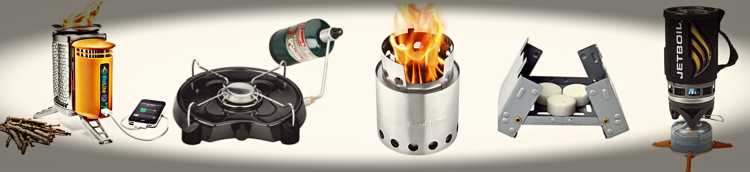
Here are a few of our favorites for some of the most common stoves on the market today.

1.


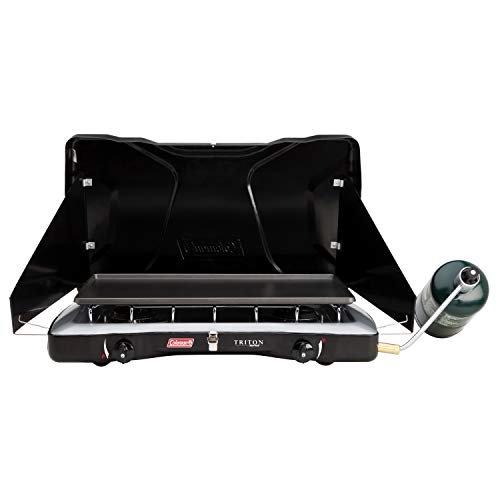
Coleman Gas Camping Stove | Triton Propane Stove 2 Burner

The quintessential camp stove that nearly everyone grew up with. The Coleman white gas stove has been a mainstay of the campground for decades.

Set on a flat surface like a picnic table, they opened like a suitcase. With the lid and side screens providing a wind block.

They were easy to use and relatively indestructible – and you can find many from decades past still in use today.

Over the years, many other manufacturers have copied the design. There are now dozens of options.

Some are based on simpler propane burner designs that don’t require a large fuel tank.

You can find models with 2 burners.

Others feature a single burner on one side and a griddle on the other for pancakes or eggs.

Adapters allow you to use large BBQ-style propane tanks.

Often fueling multiple stoves and even lanterns simultaneously, which is GREAT if you’re in a large camp and cooking for more than a couple of people at a time.

If you’re traveling by car, inflatable boat, or horse, this is the camp stove you need!


Check Today’s Price

We earn a commission if you make a purchase, at no additional cost to you.

↓ Coleman Triton Series 2 Burner Stove Review ↓

2.


GasOne GS-800 Emergency Gear Camping Mini Butane Portable Gas Stove

This classic butane stove is smaller than the Coleman because it only has a single burner.

However, that can be a major plus since portability is high on your priority list.

It includes heat-resistant knobs (so you don’t burn your fingers adjusting heat controls). It has the convenience of a piezo ignition switch. And can pump out an impressive 7,172 BTUs.

So it’s a bit of a tradeoff from a two-burner setup to a single burner, but that might make sense for you.


Check Today’s Price

We earn a commission if you make a purchase, at no additional cost to you.

↓ GasOne Mini Stove Gs-800 Review ↓

3.


Jetboil Flash Camping and Backpacking Stove Cooking System

Suitcase stoves may still dominate the campground; the backcountry belongs to JetBoil.

In the early 2000s, JetBoil released its “personal cooking system.” It was a combination of a small butane canister and a miniature stove.

One with an insulated 1L cooking pot and an integrated heat exchanger.

The whole thing snapped together. This means keeping things from tipping and simplifying cooking.

Boiling 1L of water took only 2-3 minutes, lightning-fast compared with other stoves of the day.

When finished, the entire system nests inside the cooking pot and slips easily into a pack.

Now, the original JetBoil has been replaced by the JetBoil Flash. A new version of the JetBoil with an improved heat exchanger and lighter materials.

It’s an excellent option for one person, especially if you have a lot of freeze-dried meals!


Check Today’s Price

We earn a commission if you make a purchase, at no additional cost to you.

↓ Jetboil Flash Cooking System Review ↓

4.


Snow Peak LiteMax Titanium Stove

When every ounce matters, even the JetBoil seemed like a brick of lead to the designers at SnowPeak.

A company dedicated to super lightweight gear for thru-hikers.

When you’re hiking 20-30 miles per day, a 2oz stove that fits inside a coffee cup is an impressive upgrade.

SnowPeak has upped the game with their LiteMax Titanium. Cutting weight while bringing the boil time down to just over 4min for 1L of water.

There are few moving parts, making it reliable and simple to set up.


Check Today’s Price

We earn a commission if you make a purchase, at no additional cost to you.

↓ Gear Review: Snow Peak Gigapower Lite Max Stove ↓

5.


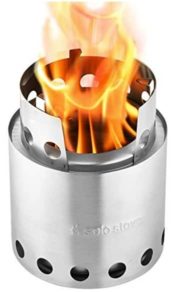
Solo Stove Simple Portable Camp Stove

How about investing in the #1 wood-burning backpacking stove recommended by Backpacker Magazine?

If you want a wood-burning backpack stove, then look no further than the Solo Stove.

These compact stoves have proven themselves to be lightweight and efficient. Plus, you don’t need to carry any fuel canisters around with you.

Just pick up the twigs and small branches on the ground, use a bit of fire-starting tinder, and you’ll be cooking your meal in no time.


Check Today’s Price

We earn a commission if you make a purchase, at no additional cost to you.

↓ Solo Stove Titan Review (Cool Wood Burning Camping Stove) ↓

6.


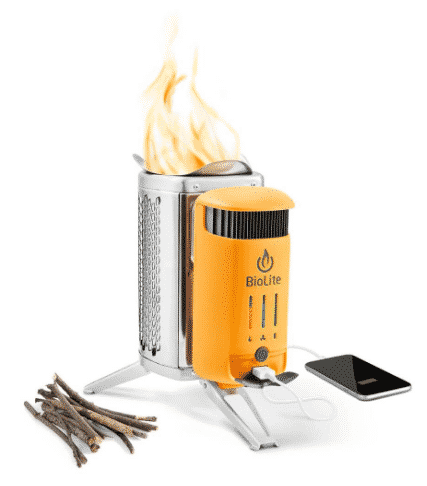
BioLite Portable Camp Stove

The BioLite CampStove 2+ is the latest in portable stove technology!

The BioLite Stove is a wood-burning backpacking stove that allows you to turn the heat you generate from twigs and sticks into usable electricity.

The unit weighs a bit more than the Solo Stove; however, that extra bit of weight comes with a very nice feature.

There is just something awesome about being able to use your portable stove for cooking a meal and charging your phone at the same time!


Check Today’s Price

We earn a commission if you make a purchase, at no additional cost to you.

↓ BioLite Camp Stove 2 Charging With Fire!! ↓

7.


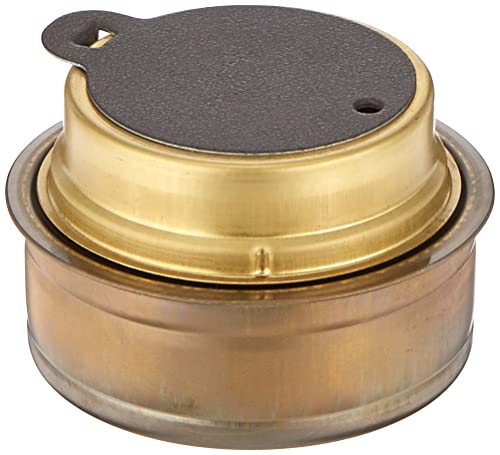
Trangia Alcohol Spirit Burner with Screwcap

An alcohol-based portable burner stove is not for everyone, but some people absolutely love it.

Why the disparity? Because it’s an alcohol burner.

It’s one of the most versatile and user-friendly alcohol burners on the market.

The Trangia’s O-ring lined screwcap allows you to store excess fuel inside the stove without leakage.

The stove could hardly be simpler to operate. Just fill it up with your preferred alcohol fuel and light it aflame with a match, lighter, or fire rod.

Simple, lightweight, and user-friendly, what’s not to like?


Check Today’s Price

We earn a commission if you make a purchase, at no additional cost to you.

↓ Alcohol Stove Review | TA Outdoors ↓

As A Way To Introduce You To Skilled Survival, We’re Giving Away Our #78 Item Complete Prepper Checklist. Click Here To Get Your FREE Copy Of It.

Portable Stoves Vs. Grills Vs. Skillets

Before we can get into all the different types of portable stoves, there are on the market. It’s wise to sort out all the confusion between stoves, grills, and skillets.

Here’s the simplest way to think about the differences:

  • Stoves = Cooking food in pots, pans, or special cups over a controlled flame
  • Grills = Cooking food directly over grates (without pots or pans)
  • Skillet = Cooking food directly over a flat heated surface (again, without pots or pans)

See, that wasn’t so hard. Now you can impress all your camping and survival buddies with this new-found knowledge!

And more importantly, you have a better sense of whether you’re truly in the market for a portable stove, grill, or skillet.

If you’re still in the market for a portable stove, keep reading…

Types Of Portable Stoves

Different Types Of Portable Stoves

There are several categories of portable stoves; each has pros and cons depending on your goals and usage plans.

Here are the major categories:

1. Fuel Source Categories

  • Portable Electric Stoves
  • Portable Gas Stoves
    • Propane Stoves
    • Butane Stoves
  • Wood Burning Backpacking Stoves

So let’s go through each of these categories in detail.

↓ What Is The Best Survival Cooking Stove? ↓

Portable Electric Stoves

Regarding “plug and play,” electric stoves are the easiest and most convenient to use. You don’t have to worry about buying and storing a separate fuel source such as propane or butane.

However, that convenience is a double-edged sword.

Electric stoves only make sense at locations with a reliable (and abundant) electrical power source.

This is a decent setup for a modern campsite (with electrical hookups). However, if the power goes out due to a major storm or out-of-control wildfires, etc. – your portable electric stove becomes a large, expensive paperweight!

So for certain locations, a portable electric stove is the way to go, but it’s not very versatile.

If you want a portable stove that will work anywhere (no matter the circumstances), DO NOT get an electric one.

Portable Gas Stoves

Today, one of the most popular portable stove options is the one that burns liquid gas. Here’s a list of the possible liquid gas stove choices:

  • Kerosene
  • White gas
  • Gasoline
  • Alcohol
  • Methanol
  • Ethanol

Now, some stoves can burn multiple fuel types without any modification – which is a nice feature!

Other stoves need specific jet nozzles for each fuel type, which can be a pain to deal with.

Some portable gas stoves are designed to only work with one gas.

Many liquid stoves require some pressurization or priming before they start. Some even need pressurization control during the operation.

Nowadays, most gas-fueled stoves burn either propane or butane.

Propane is easier to find and performs better in the cold. However, the containers are often heavier than butane – which is a concern for backpackers.

Butane stoves have a very high heat output per weight. This makes them fuel-efficient but prone to scorching rather than simmering.

Butane containers are smaller and not easily refilled.

Both options are about as simple as it gets. Just attaching the fuel canister, turning a valve, and lighting the burner – that’s it.

However, with a gas stove, you can cook a meal anywhere – as long as you don’t forget to pack (or run out of) fuel canisters. 

So double-check all your essential camping gear before heading out, and you’ll be fine.

Wood Burning Backpacking Stoves

Finally, the new kid on the block is wood-burning backpacking stoves.

These units are becoming more popular with campers, backpackers, and even backyard bonfires.

You haul the stove around with a wood-burning backpacking stove, using natural fuel like downed twigs and branches. The smaller versions take a few sticks, while larger ones need branches.

Not worrying about transporting gas or depending on electricity is a very attractive feature for those interested in self-reliance.

These units don’t care if the power is out or if you run out of propane. You eliminate these headaches completely with a portable wood-burning stove.

As A Way To Introduce You To Skilled Survival, We’re Giving Away Our Ultimate Camping Essentials Checklist. Click Here To Get Your FREE Copy Of It.

Best Portable Stove Features To Look For

The best portable stoves share several key features you’ll want.

Lightweight

The “portable” part of the “portable stove” means the stove is designed to be lightweight, but that can mean different things to different users.

A backpacker may consider anything over a couple of ounces to be too heavy. While someone who’s traveling by car, boat, or horse may be happy with a camp stove weighing several pounds.

So pay close attention, but generally, the lighter, the better.

Durable

Anything designed to be portable is bound to get banged around every once in a while. If you are lucky enough to stay in one place, that can be minimal after the initial setup.

However, if you’re always on the move, that means extra wear and tear on valves, fuel lines, and moving parts.

Besides, dropping your heavy pack down to rest has been the cause of many portable stove malfunctions.

This abuse makes a durable, proven design a must.

Reliable

Something as crucial as a stove should be reliable if it’s worth adding to your camping gear or survival gear.

This means it has to light under just about any conditions – wind, rain, high altitude, freezing cold.

Many stoves have a piezoelectric starter. But if that spark fails, I still keep some windproof matches and a survival lighter with most stove kits.

A repair kit for crucial parts and the knowledge of how to use it can also be a lifesaver.

Easy To Use

Another critical factor in choosing a portable stove is its ease of operation.

You want one with fine-tuned controls over your heat adjustments. The simplicity of design, setup, and availability of fuel all play into this factor.

Making heat control one of the most important variables.

Some stoves are hard to put together but work almost like a standard kitchen stove once set up. Others are simple to set up but need tedious adjustments and fuel management.

At the end of the day, choose a portable stove that matches your ability to use it properly.

Reasons To Invest In A Portable Stove

Nowadays, modern portable stoves are designed with camping and recreation in mind.

From backpacking stoves only weighing a few ounces. To “suitcase stoves” with several high-output burners.

But to make a wise purchase, you must understand what, where, and how you want to use a new portable stove.

Camping

Portable stoves make an excellent addition to a campsite.

I enjoy cooking my camp meals over a nice campfire. However, sometimes it makes more sense to cook over a portable stove instead.

One reason is to manage the high cost of firewood. Instead of using costly firewood for your meals, save your firewood for sitting around after the sun goes down!

Not to mention the increase in widespread summertime campfire bans across the arid US.

Because there’s nothing quite as disappointing as showing up at a campsite with no way to cook your food.

If you’re only cooking method is via campfire, and there’s a bane on campfires – you’re going to be one unhappy camper ?

Backpacking

Backpacking and portable go together like macaroni and cheese – which is to say they are inseparable.

If a piece of gear is not portable, then it’s not for backpacking.

That’s why so many backpackers add a lightweight, portable stove for their backcountry meals.

Sure, you can pack meals that don’t require a stove, and many backpackers choose this option. However, a nice warm, filling meal while on the trail is hard to pass up.

With the minimalist, lightweight stove designs on the market today, adding a portable stove to a backpack is not much of a burden.

Bugging Out

Bugging out and backpacking are technically very similar.

With both activities, you carry gear in a backpack to survive a long-distance trek. However, you do this with backpacking to enjoy nature and explore the wilderness.

With bugging out, you’re preparing for a dire emergency when you’re forced to leave your home.

But regardless, portable stoves are an ideal solution for both situations.

Power Outage Emergencies

What’s your survival cooking strategy? How do you plan to cook food if electricity is out for several weeks, a month, or a year?

Extreme? Maybe, but we like to plan for the worst and hope for the best.

So having a portable stove (and a means to fuel it) not only provides you with warm meals just about anywhere. It also provides a warm meal anytime – even if the power is out indefinitely.

Investing in some piece of mind is always a good thing.

Survival Emergencies

In wilderness outdoor adventures, every member of your family (or group) should have a lightweight, portable stove.

If you get split up, a single stove isn’t going to cut it. Someone will be without an emergency stove – a dangerous situation for survival.

They don’t all have to be able to cook a 4-course meal.

But everyone should carry a stove capable of heating up a freeze-dried meal or boiling water to make it safe for drinking.

Tailgating

Tailgating and grilling go hand in hand, so many people may prefer to go with a portable grill. And while that works just fine, maybe you’d prefer not to buy a portable stove and grill.

Instead, getting a portable stove for all the other reasons above may make more sense than using it for tailgates.

You can pan-sear just about any tailgate foods you can think of – plus, you can keep your cheesy salsa deep warm on a low burner!

caution

Portable Stove Safety Tips

Of course, any article about stoves has to include safety tips and warnings.

A quick glance at a manual for any portable stove and you’ll see it comes with pages of warnings.

What does it all boil down to in the end? Make sure you read all the warnings thoroughly, but here are a few highlights:

Stoves get hot. (Duh!)

Even after you turn them off, most stoves remain hot for several minutes (or longer). You can burn yourself or your gear if you don’t let them cool before packing away.

Fuels Release Toxic Fumes

Burning any fuel releases carbon dioxide and other exhaust gases into the atmosphere.

Without ventilation, operating a stove in an enclosed space can be dangerous.

If you need shelter from the weather while cooking, make sure you open some vents for fresh air.

Be careful with stove fuel.

You should clean all fuel spills immediately but with care. In extreme cold, spilling fuel on exposed skin can cause frostbite as the fuel evaporates.

Also, allow any fuel vapors to dissipate before starting a stove. A spark can create a dangerous flash explosion if excess fuel vapors accumulate.

Cannot Fly With It

If you plan to fly with a stove, taking fuel (or even used, empty fuel bottles) with you on the plane is nearly impossible.

So consider fuel availability at your destination when selecting your portable stove.

Final Thoughts

If you’re this far into the article, you’re serious about investing in a quality portable stove.

However, to get the right portable stove for you – it’s important to understand how to intend to use it.

You should also have the key features you want in your portable stove as well.

Once you’ve done that, you can purchase with confidence. An investment purchase you can be proud of and will last a lifetime.

Jason K.

P.s. Do you know where the closest nuclear bunker is from your home?

There are a lot of natural nuclear shelters in the US that are absolutely free. And one of them is near your home.

Click on the image above to find out where you need to take shelter.

The post Best Portable Stoves To Cook Meals In An Emergency appeared first on Skilled Survival.

Best Tactical Watches For The Most Unforgiving Terrain

The Benefits Of A Tactical Watch Go Way Beyond Just Telling Time

Best Tactical Watches

Investing in a tactical watch shouldn’t be about looking cool (although that is definitely a side benefit)!

It’s about wearing a real piece of survival gear.

One that’s ready to deploy at a moment’s notice.

The uses of a tactical watch go way beyond merely telling time, especially newer models.

The latest ones are full of useful sensors and technology.

Heck, the best tactical watches are small wrist computers.

They provide critical data in survival situations or outdoor adventures.

It’s the reason tactical watches are on the recommended overseas deployment list.

And it’s why they’re extremely popular with civilians as well,

And the more advanced they get, the more “in demand” they become because a tactical watch is a survival accessory you’ll wear every single day.

So today, here’s exactly what we’re going to cover in this buyer guide:

Are You Ready For The Tough Times Ahead? Take My 60 Sec Quiz To See If You’re Part Of ‘The Fragile Masses’ Or Not… Start Quiz Now!

Best Tactical Watches on The Market Today

With so many watch choices and features available, finding the perfect tactical watch is an epic challenge.

So to help you narrow your search down, here are a few of the best tactical watches you can find on the market today:

1. Our Top Recommendation (the one I own)


Garmin Instinct Tactical Watch Series

When it comes to rugged tactical watches, Garmin is a name you can trust.

This bad boy is built to withstand even the harshest of conditions and keep ticking like a well-oiled machine.

One of the first things you’ll notice about the Instinct Tactical is its tough, no-nonsense design. The watch face is protected by a high-strength thermoplastic casing and reinforced with scratch-resistant Corning Gorilla glass.

It’s also water-resistant up to 100 meters, so you can take it swimming, kayaking, or out in a good ol’ fashioned downpour without worry.

But the Instinct Tactical isn’t just a pretty face – it’s also loaded with a whole heap of features that’ll make your survivalist’s heart skip a beat.

First up, it’s got built-in GPS, GLONASS, and Galileo satellite systems, so you can navigate even the most treacherous of terrains with ease.

Plus, it’s got a 3-axis compass and barometric altimeter, so you can get an accurate read on your location and altitude at all times.

And that’s not all – the Instinct Tactical also has a range of specialized tactical features, including stealth mode (which disables wireless connectivity and mutes all tones), a dual-position GPS formatting option (that allows you to switch between MGRS and latitude/longitude), and a Jumpmaster mode (that calculates high-altitude release points based on military guidelines).

But perhaps my favorite feature of the Instinct Tactical is its long battery life – this watch can go up to 14 days in smartwatch mode, up to 16 hours in GPS mode, and up to 40 hours in Ultratrac battery saver mode.

All in all, the Garmin Instinct Tactical Watch Series is a top-notch survival tool that any serious survivalist would be proud to wear on their wrist.


Check Today’s Price

We earn a commission if you make a purchase, at no additional cost to you.

↓ The BEST SURVIVAL Watch: Garmin Tactical Instinct ↓

2.


Casio Men's GW-9400BJ-1JF G-Shock Master of G Rangeman

Casio makes this rugged, military-grade tactical watch is built to withstand just about anything you can throw at it. When you strap it onto your wrist, you’ll feel ready to take on the world.

The G-Shock Master of G Rangeman features a triple sensor that measures altitude, barometric pressure, and temperature. That’s right, folks, this watch is like having a tiny little weather station right on your wrist!

It’s perfect for outdoor enthusiasts who want to stay on top of changing weather conditions.

And speaking of the great outdoors, this watch is also equipped with a compass and GPS capabilities. So whether you’re hiking in the mountains or exploring a new city, you’ll always know which way you’re headed.

But that’s not all! The G-Shock Master of G Rangeman is also shock-resistant and water-resistant up to 200 meters and features a solar-powered battery.

So you don’t have to worry about it dying on you in the middle of your adventures.

 It’s tough, durable, and packed with features that make it a must-have for anyone who loves the great outdoors.


Check Today’s Price

We earn a commission if you make a purchase, at no additional cost to you.

↓ Casio Rangeman GW9400: Tactical Watch? ↓

NOTE: Casio has an entire series of these G Shock watches with triple sensor technology and hundreds of color options.

So if you like this watch, you might find a variation of it that you like even better.

↓ Top 5 Best Casio G Shock Watches For Tactical ↓

3.


Garmin tactix 7, Pro Edition, Ruggedly Built Tactical GPS Watch

Now, let me tell ya, this watch ain’t your average wristwear.

No, sir, this thing is built tough as nails and ready for any adventure you can throw at it.

With a fiber-reinforced polymer case and a scratch-resistant sapphire lens, you can bang this bad boy around all you want, and it’ll keep on tickin’.

But the Tactix 7 isn’t just tough on the outside – it’s got some serious smarts too.

It’s preloaded with TOPO maps and features a 3-axis compass, barometric altimeter, and multiple global navigation satellite systems (GPS, GLONASS, and Galileo) to help you navigate like a pro.

Plus, with up to 12 days of battery life in smartwatch mode, you can stay out in the wild as long as you want without worrying about charging up.

It’s got built-in activity profiles for everything from running and swimming to skiing and golfing, and it can even measure your heart rate and oxygen saturation levels.

The Tactix 7 also has advanced training features like workout suggestions and recovery time and performance metrics like VO2 max and training load.

So, whether you’re hitting the trails, conquering the slopes, or want a watch that can keep up with your active lifestyle, the Garmin Tactix 7, Pro Edition, Ruggedly Built Tactical GPS Watch is the perfect companion.

Trust me; this watch is so good; it might just become your new best friend.


Check Today’s Price

We earn a commission if you make a purchase, at no additional cost to you.

↓ The Most Tactical Watch EVER: Garmin Tactix 7 ↓

4.


Luminox Original Navy SEAL Mens Tactical Watch

The Luminox EVO Navy SEAL watch is constructed from highly durable polyurethane.

Its backlight glows 100x brighter than an average watch.

A durable mineral dial window protects it. And it has a handy date dial at the 3 o’clock mark.

It is water-resistant to up to 200 meters. This watch can be used for any and all outdoor sports, survival, and day-to-day uses.

Just about the only thing you can’t do with it is scuba diving.


Check Today’s Price

We earn a commission if you make a purchase, at no additional cost to you.

↓Luminox Dive Watch: Navy SEAL Choice ↓

5.


Timex Men's Expedition Shock Digital Compass Watch

Timex is one of the most trusted names in watchmaking. You can trust that their watches are both highly durable and extremely reliable.

This tactical outdoor watch is made with the survivalist in mind. It features an easy-to-read digital display with date, day, time, and compass functions.

It’s both shock-resistant and water-resistant, up to 200 meters.

The Timex Expedition is one of the most affordable and effective tactical watches.


Check Today’s Price

We earn a commission if you make a purchase, at no additional cost to you.

↓ Timex Watch Expedition Military Series Shock Digital Compass ↓

6. Our Budget Choice


Casio Men's GD100-1BCR G-Shock Watch

Made in the USA, this shock-resistant watch remains water-resistant up to 200 meters.

It has a large digital display face and can track up to four different time zones simultaneously.

It has five separate alarm options, a stopwatch, a timer, a full auto-calendar, and an LED backlight.

This tactical watch is easy to read, helping keep track of various applications.


Check Today’s Price

We earn a commission if you make a purchase, at no additional cost to you.

↓ Casio G-Shock GD-100-1BDR Unboxing & Overview + Close Ups! ↓

As A Way To Introduce You To Skilled Survival, We’re Giving Away Our #78 Item Complete Prepper Checklist. Click Here To Get Your FREE Copy Of It.

What Is A Tactical Watch Anyway?

In the wide world of everything watches, it’s easy to get confused about what is and what’s not a “tactical watch.”

For example, here’s a random list of typical watch categories:

  • Pocket watches
  • Dress watches
  • Diving watches
  • Climbing watches
  • Collectible watches
  • Survival watches
  • Belt-loop watches
  • Digital watches
  • Analog watches
  • Stopwatches
  • Military watches
  • Etc.

So as you can see, there’s an overwhelming number of ways in which to categorize watches.

And there are even more subcategories within each category.

This extensive categorization only helps to exacerbate the confusion.

But I think we can all agree that the best tactical watches are at the forefront of watch technology.

They are the most durable, toughest, multifunctional, lightweight, technology-filled watches on the market. I like to say:

“I’ll know it’s a tactical watch when I see it.”

Because they are badass, and if you’re serious about survival, you should invest in one.

But a tactical watch should never be an impulse buy.

It’s NOT something you grab in the checkout line of a supermarket. It’s a serious investment!

Navy SEAL “Coch’s” Tactical Watch Collection

That’s why you must determine exactly what you want, need, price range, and goals.

After all, someday, your life may very well depend on this piece of survival gear.

So, don’t be silly and hinge your own existence on a poorly made, basic, cheap, fragile watch!

Make sure you are getting the very best tactical watch for your money.

Trust me; it’ll pay off in the long run.

↓ The Reason Military Guys Wear Their Watch Like This??? ↓

Internal Gears Of A Watch

Best Tactical Watch Features To Look For

Tactical watches come in various shapes, sizes, weights, price ranges, and colors. But, as with any piece of gear, there are a few features that all the best tactical watches have.

A tactical watch does not need all these features to be useful. But ideally, it should have as many of them as possible.

Scratch Resistance

The crystal or plastic that makes up the face of a watch must be resistant to scratches and scrapes.

Otherwise, it may become difficult (if not impossible) to see through it over time.

And if you get to the point where you can’t see the hands on your watch or the numbers – you might as well disassemble it for parts.

Water Resistance

This is a non-negotiable quality of a tactical watch. If water ruins it, it was never meant for survival purposes in the first place.

You need to check and see how deep your watch is rated to withstand water. The deeper it can go without succumbing to water pressure damage, the better off you will be.

Diving watches are particularly useful because they are designed to handle depths of hundreds and thousands of meters.

But a great diving watch will be insanely expensive.

And a quality tactical watch will be able to survive hundreds of meters anyway, which is more than enough for the average survivor outdoorsman.

Backed By A Strong Warranty

Of course, you never want to break your tactical watch or have to send it back for repairs (or replacement). But stuff happens.

After all, these watches are designed to take a whipping, deal with stress and shock, and keep on ticking. Sometimes, they are exposed to more than they can handle and break.

Which is a major bummer when you’re investing in something that’s supposed to last for years.

That is why it is always good to check and see if the manufacturer of a tactical watch offers a damage warranty.

It will offer you some peace of mind as a form of watch insurance.

Warranties are one of those things that you don’t need until you really need them.

Reliability

Some survival tools do not have to run like clockwork, but a tactical watch does. If your watch is not reliable, you should get rid of it.

  • You should stop wearing a watch that measures some days less accurately than others.
  • If the internal compass never points north – take it off.
  • Your watch is unreliable if the altimeter says you’re below where you actually are.

The bottom line is that if you CAN’T trust your watch, it’s time to find a new one.

A tactical watch worth wearing needs to be extremely accurate and reliable.

That’s why people like to buy their watches from brands they trust.

Some tactical watch manufacturers have been in the industry for over a century. Their brand names are synonymous with quality.

This is where it helps to spend the extra few dollars for the brand name. They have proven their value time and time again.

It Looks Amazing

OK, let’s be real for a second: watches are an accessory, no matter how you slice them. And many of them look fantastic, on top of being extremely useful.

I said it before and will say it again – vanity should never be a driving force in a tactical watch investment.

Just because something looks slick, badass, and incredible does not mean it’s any good.

Watch designers, manufacturers, and marketers know humans’ bias towards cool-looking survival gadgets. But that means there are many badass-looking watches out there that are not very good!

However, if you find a functional survival watch that also looks great, that’s a win-win.

Because, honestly, watches are fashion accessories. But that does not mean they are not the first and foremost survival tool.

So try to find a quality one that you’ll also enjoy wearing.

Triple Sensor Technology (optional)

If you can pay a bit more for your tactical watch, you should get one with triple-sensor technology

The best tactical watches are ones that include 3 advanced sensors:

  1. Altimeter
  2. Barometer
  3. Temperature

1. Altimeter

An altimeter measures your current altitude based on atmospheric pressures.

This comes in handy when you’re in mountainous terrain. It’s much easier to find your exact location on a topographical map if you know your current elevation.

↓ Using An Altimeter To Help You Navigate ↓

2. Barometer

A barometer measures the change in atmospheric pressure over time.

And since weather changes are correlated with changes in atmospheric pressure, you’ll be able to predict the weather well before it arrives.

When the pressure rises, the weather is likely to improve; when it’s falling, there’s usually worse weather ahead.

I think it’s fairly obvious how this is a major advantage in a survival or outdoor adventure situation!

↓ The Barometer Explained ↓

3. Temperature

Everyone likes to know the temperature at all times, and with this sensor, all you’ll need to do is look down at your wrist.

But this sensor can do more than tell you the current temperature; it can also help predict your destination temperature based on your current location temperature!

Temperatures generally decrease by approximately 3.6°F with every increase of 1,000 feet. If the temperature at 5,000 feet is 50°F, therefore, the temperature at 8,000 meters will probably be about 39.2°F.

The bottom line is tactical watches with triple-sensor technology are incredibly useful. You should get one with these advanced sensors if your budget allows it.

As A Way To Introduce You To Skilled Survival, We’re Giving Away Our Ultimate Survival Gear Checklist. Click Here To Get Your FREE Copy Of It.

Best Survival Uses For A Tactical Watch

Simply put, the practicality of these things goes far beyond their ability to tell time.

So let’s cover those abilities now.

Navigation

If you wear a tactical watch, it will likely have a digital compass built-in.

With a compass, you’ll never be completely lost.

Sure, you might be somewhere you’ve never been, but you’ll know in which direction you’re heading. This is critical for survival situations and any outdoor adventure, for that matter.

Don’t underestimate the power of the compass and having one strapped to your wrist at all times.

Accurate Countdowns

Accurate countdown timers are essential tools when you need to count down things. There is an unlimited number of countdown tasks.

For example, countdown timers come in handy when :

  • Backyard Grilling
  • Lighting Bomb Fuses
  • Coordinating Ambushes
  • Scheduling A Watch Guard

Sometimes an accurate countdown timer is a “nice to have” feature (like grilling), but sometimes it’s a life or death one (like lighting a fuse). But most countdown tasks fall somewhere in the middle.

And with an accurate timer on your wrist, you’ll be ready no matter the circumstances.

 Signaling In Distress

Many watch faces are made of crystal or another highly reflective material.

So if you’re ever lost and forgot to pack a signaling mirror, you can use your tactical watch instead. Angle the sun into it and flash at rescuers to alert them of your distress and location.

If the back of your watch is reflective enough, you can polish it up and use it as a reflector distress signal.

Team Synchrony

Chronological synchronicity is necessary if you plan a raid or escape with others.

You can sync up your times and operate simultaneously if you both have tactical watches.

Which makes the meeting at a specific time and location much more accurate.

Starting a Fire

I recommend this only if you are in serious trouble and your watch is broken or out of battery. (Namely, because it requires disassembling your timepiece, which will almost certainly ruin it).

But, if you take the crystal face out of the watch, it can be used to concentrate sunlight and start a fire.

If the sun is out, this is easier to start a fire than with sticks.

And, perhaps best overall, each of these survival applications is strapped to your wrist.

Like having a multi-tool or a survival kit latched to your arm at all times. Except these are elegant and classy and un-intrusive.

Final Thoughts

When people think of watches, they rarely think of survival gear.

To most people, watches are a simple fashion accessory that can tell time, nothing more.

But as survivalists, we know better. Tactical watches combine a ton of gear and sensors into a single device.

They are a data-based survival multi-tool.

They bring practicality together with durability, simplicity, and ease of use.

Any survivalist or outdoorsman worth his salt should wear a tactical survival.

If you choose not to, you’re at a major disadvantage.

Will Brendza

P.s. Are you ready for the tough times ahead?

Find out now by taking my short Readiness Score Quiz – it’s absolutely free.
Once complete, you’ll know exactly where you stand on the “fragile” vs.” resilient” spectrum.

The post Best Tactical Watches For The Most Unforgiving Terrain appeared first on Skilled Survival.

Glock Guy Vs 1911 Guy: Tactical Tupperware Takes on Old Slabsides

@media (max-width:576px) { .read-more-content { height: 1020em; } }

Talk to anyone at the gun shop or the shooting range and get ready to listen to all the things they “know.” Of all the opinionated, self-righteous, pretentious gun guys (and yeah, I’m one of them), no two are as high and mighty as the self-proclaimed “1911 Guy” and the “Glock Guy.” One has been overbearingly mocking all other firearms since Jeff Cooper declared the 1911 the “service pistol of choice.” The other believes that 2/3 of all law enforcement and the winner of the most stringent reliability testing in history can’t be beat. Both hold their convictions with equal fervor and despise anyone that views things differently.

Glock Guy Vs 1911 Guy: The Battle

I decided a face-to-face, moderated debate would be the easiest way to settle this once and for all. I cast a wide net looking for the most blow hard, I mean die hard fans, then invited them to sit down and chew the fat. Tom “Dubya Dubya Eye Eye” Wilson was chosen to represent the 1911 crowd while Gavin “Glockaholic” Wilson was chosen to represent the Glockaphiles. Interestingly, they are grandfather and grandson. I bet Thanksgiving dinners are a real joy.

A face-off between 1911 and Glock fans.

THE DEBATE

The scene is a dinner table adorned with a red and white checkered tablecloth. Tom and Gavin sit across from each other, scowling. I sit in between as the moderator.

FM: Well Tom, we will begin with you. In 50 words or less, can you tell me why the 1911 is the superior handgun of choice?

TW (angrily): Do I need to explain it again? When John Moses Browning went up on the mountain and received the 1911 design from our Lord and Savior himself, it was the greatest gift ever given to man! It was far better than the Bible! Or life! This gun was given to us to save all mankind from all forms of evil and wielding it is the equivalent of becoming a god yourself.

FM (long pause): …Uh, OK. And Gavin, can you please give me your reasons for believing the Glock is the ultimate handgun?

GW: Well, duhhhh. Gaston Glock designed the first Glock frame from a single piece of space-age polymer. He did it without any tools, just his teeth. Then he carved the slide from a meteorite that fell to earth in his backyard. Also with his teeth. When he was done, the Glock 17 was born in all its glory. The first one fired over a million rounds without a single malfunction and the bullets it fired were so lethal that bad guys died just from hearing the gunshots as they reverberated around the globe. You can Google it.

A modern grip on a Glock
(Photo by Alex Landeen)
FM: …Yeah… OK, let’s move on. There are lots of different versions of each of these guns. Tom, describe to me your ultimate 1911A1 for everyday carry and self-defense.

TW: First, it should be a 1911, not a 1911A1. Those so called “improvements” were for mollycoddles who can’t handle a real gun. Next, it should be made of American stainless steel. None of that aluminum frame stuff to make it lighter for ninnyhammers. The grips should be real ivory from a poached elephant with the USMC globe and anchor scrimshawed into them. Other than that, everything is stock. The gun is perfect from its inception.

FM: I see you are a real traditionalist. Why mess with a good thing? Gavin, describe your ultimate Glock for everyday carry.

GW: Bro, Glocks were born awesome and then redefine greatness every year as they get better. First, it would be a Glock 19 Gen 5 with a Battlefield Green frame, Grey Ghost Precision slide in Flat Dark Earth with threaded barrel that has been gold phosphate plated, Aimpoint Acro P-1 sight, Night Fision tritium suppressor height sights, Surefire X300 Ultra light, Zev Fulcrum Ultimate Trigger and titanium skeletonized striker. Oh, and I would change out the back plate to one made from Beskar steel that has the Mandalorian crest because I like to subtly personalize my gat.

A 1911 Guy carrying a Springfield Armory 1911.
(Photo by Alex Landeen)
FM: Wow, I see. Gavin, I see you have picked the 9mm as the caliber of choice. Tom, am I right in assuming your 1911 will stick with the traditional .45?

TW (face turning bright red): There is no other caliber you Gollumpus! .45 is, was and always shall be the only caliber that is guaranteed to kill a man dead just from the sheer terror of know that is what is going to be shot at him! I load my magazines every other round with 230-grain ball ammo for penetration, then a Speer 200 gr jacketed hollow points. The “Flying Ashtray” bullet can turn a human being inside out. In fact, I once saw it happen on the battlefield with my own two eyes!

FM: That must have really been something. What battle was it?

TW: What?

FM: I asked what battle were you in where you saw a man shot by a .45 and turned inside out?

TW: Uh… it was the uh Mexican American War.

FM (quietly): That was in the mid 1800s…

TW: You calling me a liar boy?!!! (Tom fumbles a small container out of his shirt pocket and puts a nitro pill under his tongue.)

A cup and saucer grip on a 1911.
(Photo by Alex Landeen)
FM: And you Gavin, why do you choose the 9mm when Glocks are available in at least a half dozen different calibers?

GW: Dude, the 9mm is actually the 9×19 parabellum. Para Bellum! That means “for war.” .45 is .45 ACP. ACP stands for “Army of Cadet Pedophiles.” You can look it up.

FM: I’m not sure that is what ACP stands for, but we will move on. Could each of you describe what is wrong with the design of the other man’s preferred firearm. Gavin, you can go first this time. What do you not like about the 1911?

GW: What’s to like? It weighs 8,000 pounds, it holds about five rounds, it has 14 unnecessary safeties levers and buttons, and it jams on everything but ball ammo. It takes 30 minutes and special tools to disassemble, two hours to reassemble and may or may not work afterwards.

FM: Again, I’m not sure all of that is 100% accurate, but we will give Tom a chance to respond.

TW: Blasphemy! I am no longer your grandfather you milksop! I always said you looked more like that travelling Bible salesman than anyone in this family, you ungrateful lubberwort!

A modern, competitive shooter grip on a Glock.
(Photo by Alex Landeen)
FM: Let’s try to stay on topic. Tom, what do you dislike about the Glock?

TW: Dislike? I loath that hunk of plastic refuse. It is inherently dangerous because it has no safeties. Why I have seen them go off just sitting on the shelf in the gun store. Three innocent children were killed! And a dog! You have to pull the trigger to disassemble them. I read that more than 10 million people get killed every year due to this design flaw alone! They feel squishy in your hand and speaking of squishy, have you tried that trigger? Atrocious! And talk about ugly! They look like they were born at the top of the ugly tree and hit every limb on the way down. Kind of like my grandson’s pink-haired freak of a girlfriend!

FM: That is about enough of the personal attacks. I’m sure Rai is a lovely girl. We are trying to have an honest debate here. However, in hopes of salvaging this family, let’s take a minute and each of you have to say something nice about the other one’s preferred gun. Tom, can you find one good thing to say about Glocks?

TW: (grumbles and stares at the floor, kicking at the table leg) I guess the case for them is OK.

FM: The case?

TW: Yeah, I keep sandwiches in it when I go fishing. It keeps the bread from getting soggy. I hate soggy bread.

FM: That wasn’t quite what I was looking for, but I will let Gavin respond. Gavin, what is something you like about the 1911?

GW (eyes roam about the room as if looking for something): Well, since it weighs a ton, I guess you can jam it under the door to keep it from swinging closed.

FM: A doorstop? Yes, well, I see neither of you is going to make a sudden change in your core beliefs. I’ll leave off by providing you with this card that has the number to a local family counselor and remind you both that you can pick your nose but you can’t pick your family. …you also can’t wipe your family on the couch.
A fun shoot-off for Glock vs 1911.
(Photo by Alex Landeen)

No one has more undying, steadfast belief in their weapon system than the Glock Guy and the 1911 Guy. The only thing that brings them together is scoffing at every other type of firearm they encounter. Often their facts about these guns are mired in misunderstanding and unbridled hatred. Which is what makes it so fun to get them riled up. So, the next time you meet a Glock Guy, be sure and ask him about why it’s called tactical Tupperware. And greet your local 1911 Guy with a comment about stacking tolerances. Then sit back and calmly watch their heads explode. It’s possibly the most entertaining thing you will do all day.

THAT’S A WRAP

Editor’s Note: We hope you enjoyed this first installment of Ballistic’s Roundtable. If you care to shoot us over some other “gun debate ideas,” we’d love to entertain them. Hit us editdesk@athlonoutdoors.com.

This article originally appeared in the April-May 2022 issue of Ballistic Magazine. Get your copy or digital subscription at OutdoorGroupStore.com.

April-May 2022 Ballistic Magazine

Didn’t find what you were looking for?

The post Glock Guy Vs 1911 Guy: Tactical Tupperware Takes on Old Slabsides appeared first on Ballistic Magazine.