Survival Gear is the most unused product until a natural disaster happens, then it’s the most desired products, but usually too late to help those that really need the help.

We sell around the World, and pride ourselves on offering a level of customer service that we would want to see ourselves if we were shopping online.
Our product ranges change regularly, so we hope that you come back to our sites to see some of the fantastic offers that we regularly have.

Get In Touch

9 Shipwreck Survival Skills You Should Know About

You may have witnessed a shipwreck in the movies, in the news, on television, or the internet. But have you ever thought that if you do get shipwrecked, will you be able to survive it?

Surviving a shipwreck starts from the moment the vessel starts to take in water unnaturally – where it tilts and sinks in the process. There can be two scenarios you can find yourself in. Either you will be adrift at sea or you will end up on land. The end goal is to survive either one to the point where you can get rescued.

Shipwreck Survival Skills: Surviving the Deep Waters


1. Be Ready

Be Ready | Shipwreck Survival Skills You Should Know About
Always hope for the best but prepare for the worst. Have a bug out bag with you before taking a sea trip. There are tons of ways to build your own survival bag where you can be comfortable bringing it around with you. It will contain all the necessary essentials for your survival at sea. In case you might not be able to grab a life vest, learn how to stay afloat by taking swimming lessons.

2. Be Informed

Read the emergency signs all over the place once you board the ship. There are a few things you need to do before the ship heads out to sea. These are:

  • Determine where the nearest exit is from your room.
  • Familiarize yourself with the insides of the ship.
  • Find out where the life vests and life rafts are. Don’t forget to read the instructions on how to use a life vest and deploy a lifeboat.
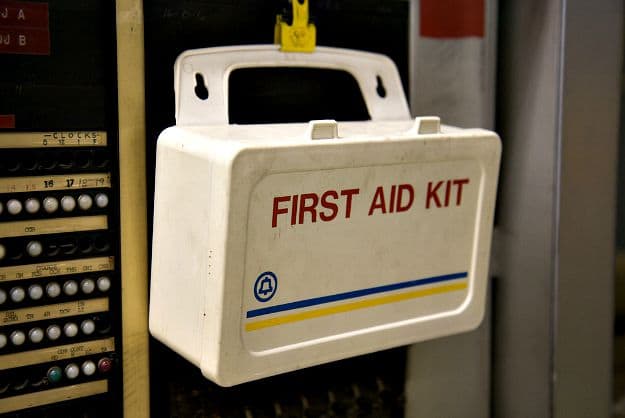
  • Locate where they place a first aid kit.

3. Stay Calm

Stay Calm | Shipwreck Survival Skills You Should Know About
Stay Calm Photo by Wikimedia Commons

You have to stay calm when evacuating the ship. You must keep a sound mind when doing this as there will be a lot of screaming and shouting going on. Pay attention to the instructions of the captain or crew over the PA system. If you’ve done the first step, you may already have a life vest on you and would be heading to the life raft. Make sure you leave everything else except your bug-out bag.

4. Jump up Top and Stay Away

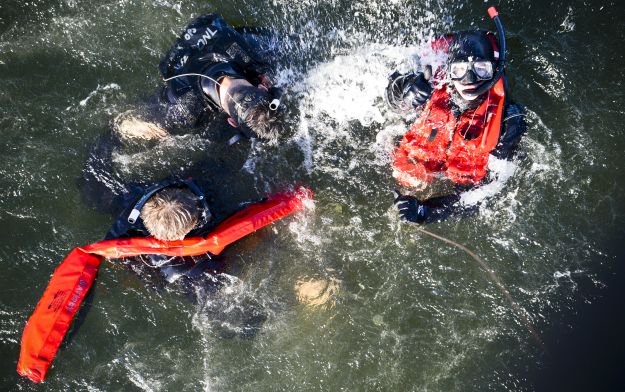
If you fail to get on a life raft and you have to jump off the ship, do this at the topmost part of the ship and at a spot away from everybody else. If you jump at the lower sections, someone might land on you hurting you or knocking you unconscious. Once in the water, swim farthest away from the ship and onto a raft or floating debris. Just watch out because there might be other people trying to grab you out of panic pulling you underwater.

5. Perform First Aid Treatment

Perform First Aid Treatment | Shipwreck Survival Skills You Should Know About
Perform First Aid Treatment Photo by Marcin Wichary via Flickr

If you have cuts or wounds, you can wrap them up to minimize or stop the bleeding. Add some extra layers of clothing on you to help your body cope with temperature changes in the water. Hypothermia can set in if you have very less clothing on you.

6. Stay Together

Tie all life rafts together. Staying in a group will increase your chances of survival. If life rafts are unavailable, put your arms over each other’s shoulder and form one huge ring of people. This will ease the efforts of floating on your own and be able to help those who don’t have life vests. It will also make you a bigger target for search and rescue teams above and on sea level.

7. Be Ready to Defend Yourselves

Being together will also give you the capability of defending each other especially from predators of the sea like sharks and killer whales. Grab any pole or a stick you can use to poke at them. If worse comes to worst, aim for the eyes and the gills.

8. Signal Rescue Units

Signal Rescue Units | Shipwreck Survival Skills You Should Know About
Signal Rescue Units Photo by Military.com

This is where your bug-out bag will come in handy. It will contain flares, light sticks, waterproof flashlights, and a signal mirror. It may also contain a cell phone and a two-way radio. You can use any of these to call or signal for help. If you’re on an uninhabited island, you can start a signal fire using the fire-starting kit in your bug out bag. You can use leaves and brightly colored clothing to form an SOS sign.

9. Head for the Nearest Island

If an island is in view, head off and start swimming or rowing for it. Other survival skills like starting a fire, building a temporary shelter, foraging or hunting for food, and acquiring drinkable water will come into play. If you’re on an uninhabited island, that is. If you are fortunate and land on an island with even the smallest of populations, then you’re more than blessed because an inhabited island will mean there may be forms of communication and a hospital.


Watch this video by AWE me on how to survive a shipwreck – EPIC HOW TO:

There are a lot of survival methods for castaways at sea or on an island. Ultimately, be of sound mind and never lose hope. Never allow your circumstance to weaken your morale or will to live. A person with a broken spirit is already a dead one.

Do you have any more suggestions or comments you might want to add about how to survive a shipwreck? Please add them in the comments section below!

Check out 9 Shipwreck Survival Skills You Should Know About at https://survivallife.com/shipwreck-survival-skills/

Up Next: Survival Skills | The Psychology Of Staying Alive


The contents of this article are for informational purposes only. Please read our full disclaimer here.


Editor’s Note: This post was originally published on March 21, 2017, and has been updated for quality and relevancy.


Featured Image by Want some Moore??!

10 Things That Just Happened In America During The Holiday Season That Will Make You Cringe

Everything is great in America, isn’t it?  After all, the new Star Wars movie just came out, stock prices just hit another all-time record high, and Americans spent more money on Christmas gifts this year than ever before.  According to some people, this is the greatest time to be alive in all of American history, and the years that are ahead of us are going to be even better.  Of course if you are gullible enough to believe that there is a giant bridge in California that I would like to sell to you.  We live at a time when our society is literally falling apart all around us, and throwing even more money at our problems is not going to fix them.  As I noted the other day, “the suicide rate is at an all-time high, we are fighting the worst drug crisis in our history, according to the CDC more than 110 million Americans have an STD, and we have the highest percentage of children living with a single parent of any nation in the entire world.”  In other words, anyone that is attempting to argue that this is a golden era in America history is being more than just a little bit delusional.

Yes, the stock market has been soaring in recent days, and that is a good thing.

But investors are pouring their money into stocks because they believe that America has an exceedingly bright future.

When that optimism disappears, stock prices will collapse, and then what will we have to brag about?

Everywhere around us, the fabric of our society is deteriorating, and our decline seems to be accelerating with each passing month.

In this article, I am going to share yet more examples of our stunning societal decline with you.  The following are 10 things that just happened in America during the holiday season that will make you cringe…

#1 Two real life grinches were trying to ruin the holidays for as many people in Roseville, California as possible before the police caught up with them.  According to one media report, they were caught “with approximately 100 stolen packages” in their van: Two men are behind bars after they were found with approximately 100 stolen packages in Roseville, according to the Roseville Police Department.

#2 This is known as “the season of giving”, but one 65-year-old guy in Colorado decided it would be more fun to do it with other people’s money: Just after noon on Monday, a 65-year-old man walked into a downtown Colorado Springs, Colorado bank and stole thousands of dollars before running outside and tossing the cash up into the air while yelling “Merry Christmas!”

#3 Speaking of Colorado, one group of high school students was recently forced to recite poetry that contained worship of Moloch.  Apparently that whole “separation of church and state” thing does not apply to pagan deities: A school in Steamboat Springs is under scrutiny after a parent reported an assignment in which students were required to recite sexually explicit and/or distasteful poetry that includes worship of the pagan deity Moloch as well as conveying the topic of “sexting” in society – which was assigned to eleventh grade students without parental consent.

#4 Considering the fact that the streets of San Francisco are constantly littered with human waste, one homeless man decided that it must be okay to defecate in the middle of a grocery store too: The picture shows a disheveled gentleman in a man-bun with his pants around his knees, feces clearly visible on the floor near a chip display as he prepared to wipe.

#5 Don’t let your kids hear about this or you will be sorry.  This holiday season, “fart launchers” became one of the most popular toys in America: The Fart Launcher’s reek, “while incredibly accurate … is organic, plant-based, doesn’t get caught in fabric and dissipates in minutes,” WowWee brand manager Andrew Yanofsky tells The Post.

#6 It just wouldn’t be the holidays unless “Florida man” did something really crazy.  In this instance, a Florida man was trying to bust down a bathroom door with a hatchet: A Shalimar man is charged with trying to attack another man with a hatchet after using the weapon and his feet to bust down a bathroom door. The Okaloosa County Sheriff’s Office arrested 39-year old Jason Godwin Christmas Day for aggravated assault with a deadly weapon without intent to kill and culpable negligence.

#7 You may have been safe, warm and well fed this holiday season, but more than half a million Americans didn’t have a home at all: While millions of Americans celebrate Christmas this year with loved ones, carving turkey and sharing gifts, others are not so fortunate. According to the Department of Housing and Urban Development, over half a million of us will spend Christmas on the streets. The government agency estimates that on any given day, around 553,000 Americans are homeless. A third of those are families with young children. African Americans and those with disabilities are particularly likely to become homeless.

#8 One rapper in Los Angeles decided that the best way to address the problem of homelessness was to climb on top of a tall building and throw cash down on to the homeless people living on Skid Row so they could fight over it: The 22-year-old rapper known as Blueface climbed onboard a black Mercedes SUV in Skid Row before throwing money out of a bag while dozens of people below scramble to catch the flying cash and pick it up from the ground. The artist, whose real name is Jonathan Michael Porteris, is known for the Benjamin Franklin tattoo on his cheek and a handful of hit tracks that reached viral status in recent years.

#9 Providing daycare for working parents is apparently quite lucrative if you pack them in like sardines.  When police investigated a suspicious residence in Colorado Springs recently, they found 26 children and two adult workers hidden behind “a false wall”: Not finding any children, officers spoke with Faith, who, according to Sokolik, “refused to cooperate.” While still in the home, officers said they heard the sound of children, Sokolik said. Eventually, they found “a false wall” leading to a finished basement, where they discovered 26 children — 20 more than the license allowed — all under the age of 3, and two adults, police said.

#10 This last item on the list should definitely break your heart.  For many Americans, this is one of the most difficult times of the year.  And when the pressure becomes too much, unfortunately some people completely snap.  On Christmas Day, a 40-year-old mother in Boston threw her two young children off of the roof of a nine-story parking garage before killing herself as well: A Boston woman who pushed her two young children from the top of a parking garage and then killed herself in a double murder suicide has been identified. Erin Pascal, 40, was named on Thursday as the woman whose body was found on the sidewalk next to those of her two young children; four-year-old daughter Allison and 16-month-old Andrew.

It is such a tragic thing when someone commits suicide, because that is never, ever the solution to anything.  There is so much to live for, but our society trains us to relentlessly chase things that don’t really matter.

Sadly, even though the suicide rate is already at a record high, it is likely to go even higher as our society continues to deteriorate in 2020 and beyond.

What we need is not more money.

What Americans really need is more faith, more hope and more love, and those three are in very short supply in our society today.

About the Author: I am a voice crying out for change in a society that generally seems content to stay asleep. My name is Michael Snyder and I am the publisher of The Economic Collapse Blog, End Of The American Dream and The Most Important News, and the articles that I publish on those sites are republished on dozens of other prominent websites all over the globe. I have written four books that are available on Amazon.com including The Beginning Of The End, Get Prepared Now, and Living A Life That Really Matters. (#CommissionsEarned) By purchasing those books you help to support my work. I always freely and happily allow others to republish my articles on their own websites, but due to government regulations I need those that republish my articles to include this “About the Author” section with each article. In order to comply with those government regulations, I need to tell you that the controversial opinions in this article are mine alone and do not necessarily reflect the views of the websites where my work is republished. This article may contain opinions on political matters, but it is not intended to promote the candidacy of any particular political candidate. The material contained in this article is for general information purposes only, and readers should consult licensed professionals before making any legal, business, financial or health decisions. Those responding to this article by making comments are solely responsible for their viewpoints, and those viewpoints do not necessarily represent the viewpoints of Michael Snyder or the operators of the websites where my work is republished. I encourage you to follow me on social media on Facebook and Twitter, and any way that you can share these articles with others is a great help.

The post 10 Things That Just Happened In America During The Holiday Season That Will Make You Cringe appeared first on The Economic Collapse.

EMP Protection – How To Plan For A Massive Magnetic Pulse Attack

EMP Protection - Electro Magnetic PulseIt’s Time To Take Action.

Because a massive electromagnetic pulse attack is a very real possibility.

That’s why you desperately need an EMP protection plan.

Don’t believe everything you’ll hear.

Kim Jong Un will continue his North Korean nuclear tests. 

Meetings and fake handshakes will not change the collision course we’re on.

And if it’s not North Korea, it will be some other terrorist organization or country.

That’s why it’s long overdue to protect yourself from a massive EMP attack.

  • But what would an EMP attack really look like on United States soil?
  • How bad could the destruction be?
  • What are your EMP protection and survival options?
  • What’s the best EMP Emergency Management Plan?
  • What is EMP anyways?

In this guide, we’ll answer all these questions and more.

Specifically, I want to educate you by discussing the following EMP topics:

As A Way To Introduce You To Skilled Survival, We’re Giving Away Our #78 Item Complete Prepper Checklist. Click Here To Get Your FREE Copy Of It.

WHAT IS EMP – ELECTROMAGNETIC PULSE EXPLAINED


When a conductor moves through a magnetic field it produces an electrical current.

This useful technology is how generators work at your local power plant.

Likewise, when a moving magnetic field passes a conductor, it creates current.

This phenomenon is called Electro-Magnetic Pulse, or EMP for short.

It sounds technical; it seems complicated.

But at first, it doesn’t really sound all that scary.

It sounds like something you’d hear a boring physics professor talk about.

Not a serious national security concern.

But don’t be fooled, it’s real and it is scary.

Because what happens if the magnetic field produced is much stronger when it passes through a wire?

Perhaps a pulse large enough to damage the wire.

A pulse so intense that it could fry the microscopic wiring in small circuitry.

Given a strong enough magnetic field, microelectronics are destroyed by an electrical burst.

By destroyed, I mean entirely burned out.

The destruction of electrical components in this manner is called an EMP attack.

Nuclear Attack Bomb Explosion

THE WEAPON THAT CAN PRODUCE AN EMP ATTACK


One way to create a broad-scale EMP pulse is to detonate a nuclear warhead like a hydrogen bomb.

The energy release of a nuclear blast creates a sizeable electromagnetic pulse. This pulse radiates outward in all directions.

Any electrical wiring in the path of the pulse will burn out.

The nuclear explosion does not have to be very large to generate a dangerous EMP. At least one hazardous for our computer friends, not so much for us.

Unlike the radiation from a nuclear explosion, an EMP is not dangerous to people. Unless you have a pacemaker installed.

But it will destroy most unshielded electrical components.

A nuclear EMP pulse is fairly complex and is often broken into three component pulses:

E1 Pulse

An E1 pulse occurs when gamma radiation from detonation ionizes atoms in the upper atmosphere.

The E1 pulse is the fastest component of nuclear EMP. It’s brief but intense.

As the E1 pulse moves through the earth’s magnetic field, it creates microwaves. These microwaves strike the surface with an intense surge of power.

It induces high voltages in electrical conductors. Thus causing significant damage by electrical breakdown voltages.

The E1 pulse can destroy computers and communication equipment.

E2 Pulse

The E2 pulse is comparable to the pulse created during lightning strikes.

Fortunately, our national infrastructure is (for the most part) already prepared for an E2 pulse.

E3 Pulse

The E3 component is different from both E1 and E2. E3 is a much slower pulse.

The E3 component has similarities to a geomagnetic storm caused by a solar flare.

Like a solar flare, E3 can produce powerful currents. Intense enough to damage power lines and transformers (i.e., critical infrastructure).

INTRODUCING HIGH ALTITUDE DETONATIONS


An EMP pulse travels line of sight. So it can cover a vast area if the nuclear detonation occurs high in the atmosphere.

Most nuclear military weapons are not intended for high altitude detonations. Because high altitude detonations do little damage to the enemy and less fallout.

However, at high altitudes, the EMP would travel towards everything in its line of sight. Covering thousands of square miles!

It’s true that an EMP diminishes with distance. But it may still be strong enough at thousands of miles to fry most microelectronics.

Making the nuclear EMP a near-perfect weapon for a terrorist group or a rogue nation.

Here’s an interesting question.

If you were a terrorist organization and could only lay your hands on one nuclear weapon. Would you want to blow up one city? Or detonate it high enough to wipe out the electrical systems for thousands of cities?

Aside from nuclear weapons, there are EMP-generating devices. These are called “explosively pumped flux compression generators.”

These use electromagnetic physics to generate large pulses of electromagnetic energy.

The basic idea is to generate an electromagnetic pulse in a coil surrounding a metal core. While at the same time compressing the coil into the core using explosives.

This change in core geometry causes a compression of the electromagnetic field.

EMP’s (whether nuclear or flux compression) have the potential to change the world.


Exclusive Bonus Content –
Skilled Survival’s 104 Item Bug Out Bag Checklist – the only bug out checklist worth using. Click Here To Get Your FREE Copy Of It.

Circuit Board

EMP DAMAGE – HOW MUCH ARE WE TALKING? 


Any devices not shielded against a large EMP attack is likely to be damaged or destroyed.

We’re talking damage to the following:

  • Power Grids
  • Laptops
  • iPad
  • iPod
  • Smart Phones
  • Cell Phone Towers
  • Telephones
  • Desktop Computers
  • Mainframe Computers
  • Routers
  • Automobile Engine Management Computers
  • Jet Aircraft Systems
  • Air Traffic Control Systems
  • Banking Systems
  • Hospital Diagnostic Machines
  • Televisions
  • Internet Servers
  • Refrigerators
  • Thermostats
  • Plus Anything Else With A Micro Chip

Which is damn near everything these days.

Can you imagine everyone within a thousand-mile radius losing all power and technology?

How about a city like New York or Los Angeles? We are talking about 8-10 million people finding themselves in a pre-industrial world without power!

The only things that still work are mechanical in nature (i.e., guns and bullets).

Near-instant anarchy.

EMP PROTECTION PLAN TO PROTECT YOUR ELECTRONICS


There are several ways to protect against an EMP attack.

One EMP protection technique is known as electrical shielding.

If an electrical cable includes a grounded shield, the electromagnetic pulse won’t penetrate the shield.

It will induce a current in the shield and release that current harmlessly into the ground.

This is great for cables, but what about smaller devices, such as microelectronics?

Galvanized Trash Cans

INTRODUCING THE FARADAY CAGE


You can shield entire devices using something known as a Faraday Cage.

Named after Michael Faraday, an early scientist in the field of electromagnetics.

Faraday discovered electromagnetic fields won’t penetrate a container made out of certain metals.

Instead, the field impinges on the exterior of the cage. Since all sides of the cage are electrically connected, there’s no induced electrical current.

For current to flow, there must be a differential in electrical potential.

It’s as if there is a short-circuit before the current even begins to flow.

Devices held inside the cage are then protected from damaging currents.

Nested EMP Faraday cages are even better for EMP protection. Essentially, nesting is a cage within a cage.

You can buy a faraday bag or build your own.

You can build a simple Faraday cage by covering a box in aluminum foil. If you want to protect your devices, wrap them in a layer of aluminum foil.

But take care, they must be completely covered with no gaps in the foil.

Also, if you wish to use multiple layers of foil, place a layer of insulation between them. Insulation is any material that won’t conduct electricity – like cardboard.

Adding the extra layers of thickness to the foil means nothing. The only reason to double wrap is to prevent gaps in the foil.

A galvanized trash can is also a great solution to store several devices.

Or use both foil and a trash can. Just put your electronics inside a foil-lined cardboard box and place the box inside a trash can.

Ensuring the trash can lid closes entirely and creates a perfect seal.

As A Way To Introduce You To Skilled Survival, We’re Giving Away Our #78 Item Complete Prepper Checklist. Click Here To Get Your FREE Copy Of It.

MASSIVE EMP STRIKE – THE AFTERMATH 


Now that you have all your devices protected when the terrorist EMP event strikes you’ll be ready.

Assuming you knew in advance an attack was coming and took these defense precautions.

So let’s say you did.

The “Event” Happens, And The Lights Go Out

You quickly retrieve your fully functional cell phone from your foil-lined trash can, a.k.a. Faraday Cage.

And presto, you have one of the very few functioning cell phones in the Northern Hemisphere. Congratulations!

  • Did your EMP protection plan pay off? Yes and no…
  • How many bars do you have? None?
  • Can you hear me now? No?
  • You pull out your protected laptop or IPad and boot up. Internet connection? Nope.

You’ve got a four-hour charge on the device, great.

Now, where are you going to plug in your charger (because you remembered to add a charger to your Faraday cage, right)?

  • No sweat. I’ve got a home generator – nope – it’s fried by EMP.
  • Oh, but I have home solar panels (or a solar phone charger) – nope – fried by EMP.
  • I installed a windmill – nope – the inverter is fried.

Bottom line: The power is out, and it’s going to stay out for a very long time (maybe even years).

  • The utility distribution system has been fried.
  • Cell phone towers are fried.
  • The water company’s filtration and pumping systems are fried.

Food will quickly begin to spoil, and we just lost a war without firing a single bullet.

YOUR 3 EMP PREPARATION OPTIONS 


So the way I see it, you have 3 EMP protection options:

EMP Preparation Option 1

Plan for an Amish future.

Plan to revert to an 1860 agrarian society. One with the same survival skills our great-great-grandparents lived by.

The sort of skills our modern society has long since forgotten.

EMP Preparation Option 2

Store all your devices and appliances inside a Faraday cage or a Faraday bag.

EMP Preparation Option 3

Installing EMP Sheild devices on your home and vehicles.

These EMP Shields are designed to shunt massive electrical surges to protect your home electronics that are plugged in. We’re talking about extremely expensive appliances and devices such as:

  • Refrigerators
  • Freezers
  • Clothes Washers / Dryers
  • Dish Washers
  • Televisions
  • Computers

Sure, the power grid may get fried during a massive EMP but at least you can protect your home’s electrical systems and devices. Once power is restored, you’ll still have working devices, unlike most of your neighbors!!

Plus, if you happen to have solar panels on your roof, you can get an EMP shield shunting device to protect those as well! So you may be one of the few people who actually make it through an EMP attack with a power source and appliances!

Worth the small investment in EMP shield devices if you ask me…

Oh, and you can get an EMP shield for your vehicle as well – so your vehicle doesn’t become a massive hunk of junk due to the electrical components in your vehicle becoming fried.

Here’s a quick overview of how EMP Sheilds work:


So those are your three options, and I believe you should invest in all 3!

Why? Because for only a few dollars, you can protect yourself in a well-rounded way from any EMP attack!

  • You can use EMP shielding to protect your large home devices and appliance.
  • You can use Faraday cages or Faraday bags to protect backup devices (especially mobile devices…)
  • Learning survival skills is ALWAYS a good thing. But even if YOU are one of the lucky few that has power, it’s still gonna get rough if nobody else does for weeks or months.. you’d better be ready to defend it.

You’ll likely be the only one on your block (maybe your town) with any electrical power.

An EMP blast from a single nuclear device at 20 miles altitude will cover a significant portion of the US with an EMP.

An enemy doesn’t have to destroy the entire nation to destroy its society. It only needs to kill off large portions of the population!

Even the US Government admits as many 9 of 10 Americans could die within one year of an EMP attack on our homeland!

There are too many people, with too few survival skills. The majority of the US population would quickly perish with no power for a year.

Looting, rioting, and murder will be rampant – everywhere. Epic chaos.

That’s why it’s time to take EMP protection seriously and learn some real survival skills.

FINAL THOUGHTS – THE BEST EMP PROTECTION PLAN


Step 1 – 

Install EMP Shields on your home, vehicles, and solar system (if applicable). These devices also protect your appliances and devices from lightning strikes.

Step 2 –

Aquire backups for all your mobile devices – smartphones, emergency crank radios, tablets, flashlights, phone solar chargers, etc. Put each of these devices into a homemade Faraday cage or buy a Faraday bag.

Step 3 – 

Brush up on your off-grid homesteading skills. You’ll at least want a book that can help you figure out how to live without power for an extended period of time.

EMP Protection is like most other long-term emergency disaster preps in many ways.

You should have a massive stockpile of prepper food and lots of water. And the self-reliance survival skills to continually replenish your stocks.

Throw in some defense skills as well – to protect your resources and some basic medical supplies.

Food, water, and medicine.

Yes, it’s really as simple as that, but just because it’s simple doesn’t mean it’s easy.

The best way to describe the survival skills you need to learn to prepare for an EMP attack is this:

The skills our great-great-grandparents called everyday life we now call survival and prepping. So look backward in time for inspiration via The Lost Ways.

That’s how you prepare for life without power long term.

By investing in all 3 steps, you’ll begin your journey to becoming one of the resilient few and avoid becoming one of the fragile masses!

Prepare, Adapt and Overcome,
Just In Case Jack

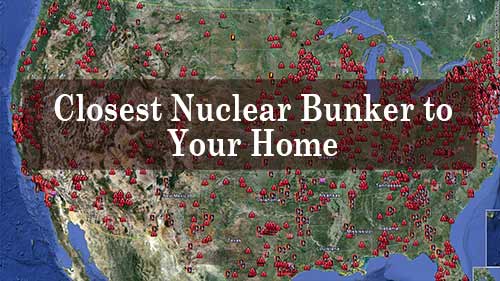
P.s. Do you know where the closest nuclear bunker is from your home?

There are a lot of natural nuclear shelters in the US that are absolutely free. And one of them is near your home.

Click on the image above to find out where you need to take shelter.

Photo Credit Circuit Board / Garbage Cans

The post EMP Protection – How To Plan For A Massive Magnetic Pulse Attack appeared first on Skilled Survival.

War Is Over If You Want It: Pointers for Spreading Some Christmas Cheer

This article was originally published by John W. Whitehead at The Rutherford Institute. 

“And so this is Christmas
And what have we done
Another year over
A new one just begun.
And so happy Christmas
We hope you have fun
The near and the dear one
The old and the young.
A very Merry Christmas
And a happy new year
Let’s hope it’s a good one
Without any fear.
War is over, if you want it
War is over now.”

― John Lennon & Yoko Ono, Happy Xmas (War Is Over)

What a year.

It feels as if government Grinches and Corporate Scrooges have been working overtime to drain every last drop of joy, kindness, and liberty from the world.

After endless months of gloom and doom, it’s hard not to feel like Charlie Brown in A Charlie Brown Christmas as he struggles to feel happy and find the true meaning of Christmas in the midst of rampant commercialism, political correctness and the casual cruelty of an apathetic, self-absorbed, dog-eat-dog world.

Then again, isn’t that struggle to overcome the darkness and find the light within exactly what Christmas—the celebration of a baby born in a manger—is all about? The reminder that we have not been forgotten or forsaken. Glad tidings in the midst of hard times. Goodwill to counter meanness. Innocence in the face of cynicism. Hope in the midst of despair. Comfort to soothe our fears. Peace as an answer to war. Love that conquers hate.

As “fellow-passengers to the grave,” we all have a moral duty to make this world (or at least our small corners of it) just a little bit kinder, a little less hostile and a lot more helpful to those in need.

No matter what one’s budget, religion, or political persuasion, there is no shortage of things we can each do right now to pay our blessings forward and recapture the true spirit of Christmas.

For starters, move beyond the “us” vs. “them” mentality. Tune in to what’s happening in your family, in your community and your world, and get active. Show compassion to those in need, be kind to those around you, forgive those who have wronged you, and teach your children to do the same. Talk less, and listen more. Take less, and give more. Stop being a hater. Stop acting entitled and start being empowered. Learn tolerance in the true sense of the word. Value your family. Count your blessings. Share your blessings. Feed the hungry, shelter the homeless and comfort the lonely and broken-hearted. Bridge bridges, and tear down walls. Stand for freedom. Strive for peace.

One thing more: make time for joy and laughter. Shake off the blues with some Christmas tunes, whatever fits the bill for you, be it traditional carols, rollicking oldies, or some rocking new tunes. Watch a Christmas movie that reinforces your faith in humanity.

Here are ten of my favorite Christmas movies and music albums to get you started.

First the movies.

It’s A Wonderful Life (1946). An American classic about a despondent man, George Bailey who is saved from suicide by an angel working to get his wings. This film is a testament to director Frank Capra’s faith in people. Sublime performances by James Stewart and Donna Reed.

The Bishop’s Wife (1947). An angel comes to earth in answer to a bishop’s prayer for help. Cary Grant, David Niven and Loretta Young help energize this tale of lost visions and longings of the heart.

Miracle on 34th Street (1947). By happenchance, Kris Kringle is hired as Santa Claus by Macy’s Department Store in New York City for the Thanksgiving Day Parade. Before long, Kringle, who believes himself to be the one and only Santa Claus, has impacted virtually everyone around him. Funny, witty and heartwarming, this film is stocked with some fine performances from Maureen O’Hara, John Payne, and young Natalie Wood. Edmund Gwenn won the Academy Award for the best supporting actor for his role as Saint Nick.

A Christmas Carol (1951). This is the best film version of the penny-pinching Scrooge’s journey to spiritual enlightenment by way of visits from supernatural visitors. Alastair Sim as Scrooge gives one of the finest film performances never to win an Oscar. The Man Who Invented Christmas (2017) provides a wonderful glimpse into how Charles Dickens came to write A Christmas Carol.

A Christmas Story (1983). Ralphie is a young boy obsessed with one thing and only one thing: how to get a Red Ryder BB-gun for Christmas. Ralphie’s parents are wary, and his mother continually warns him that “you’ll shoot your eye out.” Based on Jean Shepherd’s autobiographical book In God We Trust, All Others Pay Cash, at the heart of this timeless comedy is the universal yearning of a child for the magic of Christmas morning. A great cast, which includes Darren McGavin, Peter Billingsley, Melinda Dillon and a voice-over narrative by Shepherd himself.

One Magic Christmas (1985). If you grew up in a family where times were tough, this film is for you. A guardian angel comes to earth to help a disillusioned woman who hates Christmas. This tale of redemption and second chances is a delight to watch. And Harry Dean Stanton makes a first-class offbeat angel.

Prancer (1989). This story of an eight-year-old girl who believes that an injured reindeer in her barn is actually one of Santa’s reindeer is one of the most down-to-earth Christmas films ever made. It’s a testament to the transforming power of love and childhood innocence. Sam Elliott and Cloris Leachman are fine in supporting roles, but Rebecca Harrell shines. Filmed on location in freezing, snowy weather, this film is a treat for those who love Christmas.

Home Alone (1990). Eight-year-old Kevin, accidentally left behind at home when his family flies to Paris for Christmas, thinks he’s got it made. Hijinks ensue when two burglars match their wits against his. A funny, tender tribute to childhood and the bonds of family.

Elf (2003). Another modern classic with a lot of heart. Buddy, played to the hilt by Will Ferrell, is a human who was raised by elves at the North Pole. Determined to find his birth father, Buddy travels to the Big Apple and spreads his Christmas cheer to everyone he meets. This film has it all: Santa, elves, family problems, humor, emotion and above all else, a large dose of the Christmas spirit. One of the best Christmas movies ever made.

The Christmas Chronicles (2018). The story of a sister and brother, Kate and Teddy Pierce, whose Christmas Eve plan to catch Santa Claus on camera turns into an unexpected journey that most kids could only dream about. Kurt Russell’s star turn as Santa makes for movie magic.

Now for the music.

Out of the hundreds of Christmas albums I’ve listened to over the years, the following, covering a broad range of musical styles, moods, and tastes, each in its own way perfectly captures the essence of Christmas for me.

It’s Christmas (EMI, 1989): 18 great songs, ranging from John Lennon’s “Happy Xmas (War Is Over)” to Bing Crosby’s “White Christmas.” The real treats on this album are Greg Lake’s “I Believe in Father Christmas,” Kate Bush’s “December Will Be Magic Again” and Aled Jones’ “Walking in the Air.”

Christmas Guitar (Rounder, 1986): 28 beautifully done traditional Christmas songs by master guitarist John Fahey. Hearing Fahey’s guitar strings plucking out “Joy to the World,” “Good King Wenceslas,” “Jolly Old Saint Nicholas,” among others, is a sublime experience.

Christmas Is A Special Day (The Right Stuff, 1993): 12 fine songs by Fats Domino, the great Fifties rocker, ranging from “Amazing Grace” to “Jingle Bells.” The title song, written by Domino himself, is a real treat. No one has ever played the piano keys like Fats.

Christmas Island (August/Private Music, 1989): “Frosty the Snowman” will never sound the same after you hear Leon Redbone and Dr. John do their duet. Neither will “Christmas Island” or “Toyland” on this collection of 11 traditional and rather offbeat songs.

A Holiday Celebration (Gold Castle, 1988): The classic folk trio Peter, Paul & Mary, backed by the New York Choral Society, sing traditional and nontraditional holiday fare on 12 beautifully orchestrated songs. Included are “I Wonder as I Wander,” “Children Go Where I Send Thee,” and “The Cherry Tree Carol.” Also thrown in is Bob Dylan’s “Blowin’ in the Wind.”

The Christmas Album (Columbia, 1992): Neil Diamond sings 14 songs, ranging from “Silent Night” to “Jingle Bell Rock” to “The Christmas Song” to “Come, O Come Emmanuel.” Diamond also gives us a great rendition of Lennon’s “Happy Xmas (War Is Over).” A delightful album.

A Charlie Brown Christmas (Fantasy, 1988): 12 traditional Christmas songs by the Vince Guaraldi Trio. The pianist extraordinaire and his trio perform “O Tannenbaum,” “The Christmas Song” and “Greensleeves.” Also included is the Charlie Brown Christmas theme.

The Jethro Tull Christmas Album (Fuel Records, 2003): If you like deep-rooted traditional holiday songs, you’ll love this album. The 16 songs range from “God Rest Ye Merry Gentlemen” to Ian Anderson originals such as “Another Christmas Song” and “Jack Frost and the Hooded Crow.” With Anderson on flute and vocals, this album has an old-world flavor that will have you wanting mince pie and plum pudding.

A Twisted Christmas (Razor Tie, 2006): Twisted Sister, the heavy metal group, knocks the socks off a bevy of traditional and pop Christmas songs. Dee Snider’s amazing vocals brings to life “Oh Come All Ye Faithful,” “Deck the Halls,” “I Saw Mommy Kissing Santa Claus,” among others—including “Heavy Metal Christmas (The Twelve Days of Christmas).” Great fun and a great band.

Songs for Christmas (Asthmatic Kitty, 2006): In 2001, independent singer/songwriter Sufjan Stevens set out to create a Christmas gift through songs for his friends and family. It eventually grew to a 5-CD box set, which includes Stevens’ original take on such standards as “Amazing Grace” and “We Three Kings” and some inventive yuletide creations of his own. A lot of fun.

Before you know it, Christmas will be a distant memory and we’ll be back to our regularly scheduled programming of politics, war, violence, materialism and mayhem.

As I make clear in my book Battlefield America: The War on the American People, there may not be much we can do to avoid the dismal reality of the American police state in the long term—not so long as the powers-that-be continue to call the shots and allow profit margins to take precedence over the needs of people—but in the short term, I hope you’ll do your part to “spread a smile of joy” and “throw your arms around the world at Christmastime.”

This Is America: 10 Examples That Show How Dramatically The U.S. Has Changed As We Approach 2020

One thing that you can count on in life is that things are going to change.  And these days the pace of change in America is absolutely breathtaking.  Our culture is in the process of being radically transformed, and the direction of that change has not altered very much at all no matter which political party has been in power in Washington.  Many of the values that are now embraced by a solid majority of the population run directly counter to the values that once dominated our society, but only a small minority of Americans seem alarmed by that fact.  It appears to be exceedingly unlikely that there will be any deviating from the path that our nation has chosen, because at this point the American people seem quite satisfied with the dramatic “progress” that is taking place.

So what do you think?

Are we on the right track as a nation?

As you ponder that question, here are 10 examples for you to consider that show how dramatically the U.S. has changed as we approach 2020…

#1 The ACLU has started a campaign to make tampons available in all men’s restrooms across America

The American Civil Liberties Union (ACLU) is calling for men’s restrooms to include tampons in order to prevent discrimination against “every person who menstruates.”

“While free menstrual products are not uniformly provided in women’s restrooms, they are almost never available in men’s restrooms, even for pay,” the group said in a statement Tuesday.

#2 Senseless violence is on the rise all over the country.  On Sunday, we witnessed the worst mass shooting in the city of Chicago “since at least 2013”

Chicago police are questioning a person of interest after 13 people were wounded, four of them critically, during a shooting inside a memorial gathering early Sunday in the Englewood neighborhood on the South Side, authorities said.

More people were wounded in the shooting than at any other in the city since at least 2013, when 13 people were shot in Back of the Yards, according to data gathered by the Tribune.

#3 It has been another banner year for homicides in the Baltimore area, and 7 more people were shot outside of a hookah lounge very early on Sunday morning

After seven people, including three teenagers, were shot outside a downtown hookah lounge early Sunday morning, Baltimore leaders are again looking for answers to stem what police are calling a “brazen” level of violent crime.

Two unidentified men — one armed with a rifle and the other, a handgun — approached a crowd of people standing in line outside the iVilla Hookah Lounge at 225 Park Ave. around 1:45 a.m. and opened fire, striking and wounding seven people, Baltimore police said.

#4 State legislators in California keep talking about how much they love “education”, but once again California has the highest percentage of residents that “have never completed ninth grade”

California once again ranked No. 1 among the 50 states for the percentage of its residents 25 and older who have never completed ninth grade and 50th for the percentage who have at least graduated from high school, according to new five-year estimates (2014-2018) released Thursday by the Census Bureau’s American Community Survey.

#5 Speaking of California, Dr. Marc Siegel says that San Francisco has become a city that is “awash in human waste” because of all the drug addicts that are pooping wherever they feel like doing so…

Fox News medical correspondent Dr. Marc Siegel says San Francisco residents should be worried about the homeless crisis‘ effect on their health after video surfaced of a homeless man defecating in the middle of an aisle at a local grocery store.

“Isn’t it ironic that a city of germaphobes, of exercise-conscious, environmentally conscious [people] … are now in a city that’s awash in human waste, which is spreading hepatitis A outbreaks every year,” Siegel said on “Tucker Carlson Tonight” Tuesday. “Big outbreaks of hepatitis A, rats in the streets feeding off of the garbage in sewage, typhus, typhoid fever, rotten bacterial infections and even the plague may be coming.”

#6 In our “if it feels good, do it” society, all of the traditional rules regarding sex, marriage and family have been discarded.  This has paved the way for completely new “arrangements” that would have seemed extremely bizarre to past generations of Americans.  For example, one polyamorous woman in Florida has decided to raise her coming baby with all four of her “partners”

Tory Ojeda, 20, from Jacksonville, Florida, met one of her partners Marc, 18, in high school and then started a relationship with Travis, 23, two months later.

Their love story began three years ago and she has since announced her engagement to Travis in July.

She also found love with their long-term mutual friends Ethan, 22, and Christopher, 22. While seven months ago, Tory and Chris found out that they were pregnant with a baby girl.

#7 Last week, the fact that a man was just sentenced “to more than 15 years in prison for burning an LGBTQ flag” made headlines all over the nation

A man has been sentenced to more than 15 years in prison for burning an LGBTQ flag that was flying at a church in central Iowa.

Adolfo Martinez, 30, of Ames, was sentenced Wednesday to 15 years for the hate crime of arson, as well as a year for the reckless use of explosives or fire, and 30 days for harassment. The sentences are to be served consecutively, Story County court records show.

#8 Meanwhile, illegal immigrants can commit serious crime after serious crime in the state of California and just keep getting released.  The following comes from the official White House website

A citizen of Guatemala and alleged gang member was arrested by SFPD more than 10 times between 2013 and 2017 for charges including rape, domestic battery, second degree robbery, assault, and vehicle theft. On each occasion, ICE requested notification of his release or transfer of the individual to ICE custody. Each time, ICE’s request was declined.

#9 In her brand new Netflix stand-up special, Michelle Wolf told America that getting an abortion made her feel like a “god”

“You can feel any way you want after an abortion,” Wolf said, before imploring members of the crowd to “get one” and see how they feel afterward.

The comic went on to describe her own emotions after getting a termination. “You know how my abortion made me feel? Very powerful,” she boasted,” according to the Daily Wire. “I walked out of there being like, ‘Move over Morgan Freeman, I am God!”

#10 30 years ago, about two-thirds of the population of the country attended church services at least somewhat regularly.  But today, only about one-third of all Americans say that they attend church services regularly

About one-third of Americans now say they worship weekly and two-thirds say they rarely or never attend a service.

The decline in attendance is real. The northern states are seeing much more decline than southern states.

Of course the examples I have just shared with you are just the tip of the iceberg.

In America today, the suicide rate is at an all-time high, we are fighting the worst drug crisis in our history, according to the CDC more than 110 million Americans have an STD, and we have the highest percentage of children living with a single parent of any nation in the entire world.

I would love to hear someone out there try to make a coherent case that America is actually moving in the right direction, because up to this point I have been completely unable to find anyone that can make the other side of the argument.

And that is because it has become glaringly obvious that we are in the process of committing national suicide.

The change that our country needs is not going to happen in Washington.

What we really need is a fundamental change of direction in our hearts, because it is in our hearts where the real problem is festering.

About the Author: I am a voice crying out for change in a society that generally seems content to stay asleep. My name is Michael Snyder and I am the publisher of The Economic Collapse Blog, End Of The American Dream and The Most Important News, and the articles that I publish on those sites are republished on dozens of other prominent websites all over the globe. I have written four books that are available on Amazon.com including The Beginning Of The End, Get Prepared Now, and Living A Life That Really Matters. (#CommissionsEarned) By purchasing those books you help to support my work. I always freely and happily allow others to republish my articles on their own websites, but due to government regulations I need those that republish my articles to include this “About the Author” section with each article. In order to comply with those government regulations, I need to tell you that the controversial opinions in this article are mine alone and do not necessarily reflect the views of the websites where my work is republished. This article may contain opinions on political matters, but it is not intended to promote the candidacy of any particular political candidate. The material contained in this article is for general information purposes only, and readers should consult licensed professionals before making any legal, business, financial or health decisions. Those responding to this article by making comments are solely responsible for their viewpoints, and those viewpoints do not necessarily represent the viewpoints of Michael Snyder or the operators of the websites where my work is republished. I encourage you to follow me on social media on Facebook and Twitter, and any way that you can share these articles with others is a great help.

10 Best Tactical Flashlights To Make You Fearless Of The Dark

Best Tactical FlashlightsA tactical flashlight is one of the most crucial items found in a survival gear list.

Sure, there are several other pieces of gear of similar importance, such as:

But none of those can do what a tactical flashlight can; create a massive amount of light at the click of a button.

And the dark can be an extremely dangerous element in survival and emergency situations…

But here’s the good news, there are tons of tactical flashlights on the market today. And more options are better, right?

Yes and No.

You see, with so many choices comes something called analysis paralysis.

The more choices you have, the more time you spend researching those options. You find yourself agonizing over every small detail and struggle to make a purchase.

That’s why nowadays, finding the BEST tactical flashlight FOR YOU is no small task.

But today I’m going to share everything I know about tactical flashlights, including the types, the features, and the ones I like best:

Note: feel free to skip ahead to any section by clicking any of the headlines above.

The bottom line is this: The right tactical flashlight comes down to finding the proper mix of features, uses, and prices.

But first, you need to decide which type of flashlight to get…

As A Way To Introduce You To Skilled Survival, We’re Giving Away Our Ultimate Survival Gear Checklist. Click Here To Get Your FREE Copy Of It.

High Powered Flashlight

3 MAIN TACTICAL FLASHLIGHT CATEGORIES


I find it easiest to break down the wide range of tactical flashlights into categories based on size.

Large Tactical Flashlights

Large tactical flashlights are the workhorse of the tactical light market.

These larger frame models often include a higher capacity battery and better optics that allow for more accurate beam focus.

Plus, most large tactical flashlights have several light modes. And some even include different sets of LED batches to support high and low-output settings.

This new technology can dramatically increase light output levels. For example, tactical flashlights now regularly reach output levels of more than 2000 lumens!

We’re talking about lumen output levels usually found in emergency service and search and rescue operations. These are the large tactical flashlights that first responders carry because they require the most intense light output possible.

An output level that can stretch over several football fields in length, because that’s what’s necessary to help save lives.

Not everyone MUST own one of these larger tactical flashlights, but it’s not a bad idea either. Most family leaders can take comfort in owning something this bright.

It can also come in handy if you find yourself in an emergency.

But maybe you don’t want to invest in such a large, expensive flashlight – that’s where smaller, EDC flashlights come into play…

Small “Everyday Carry (EDC)” Tactical Flashlights

Small tactical flashlights are, by definition, small. These lights are often the best bet for everyday carry.

They’re the flashlights that fit easily into your pocket or bag without weighing you down.

They feature smaller batteries. But they often lack some of the advanced beam focusing features found on larger models. But they can still sport an extremely bright beam up to 1000 lumens.

This output level is still excellent for everyday tasks, such as:

  • all sorts of work situations
  • checking out a noise in the backyard
  • hiking into a favorite hunting spot before dawn
  • signaling for help in a survival situation

I believe everyone should own at least one EDC tactical flashlight, especially with today’s technology where you can get a whole lot of lumens in such a small device.

OK, now let’s talk about the smallest of the smallest, microlights…

Micro Tactical Lights

Micro tactical lights are the smallest of the small.

The extra small batteries prevent these to have the massive lumen outputs of their big brothers. You’ll typically find them at under 100 lumens.

But the amount of lumens is NOT what makes them great. Micro tactical lights can fit into nearly any space.

They can give enough light to search for dropped keys, find an outlet in the dark, or slowly make your way down a trail.

And they take up nearly zero space and weigh next to nothing. So while the high output is NOT their superpower –instead, it’s their tiny size and weight.

The bottom line is: micro tactical lights are 100% worth adding to your gear strategically, such as adding one to your keychain or tactical backpack.

Tactical EDC FlashlightKEY FEATURES TO LOOK FOR IN THE BEST TACTICAL FLASHLIGHTS


Now, how do you go about choosing the best tactical flashlight for YOU?

Well, it’s best to understand all the key features available first. That way, you know what strikes you as a “must-have feature” vs. a “nice-to-have feature” before you even start comparing flashlight models.

So here’s a quick rundown of the most important ones so you can weed out the tactical lights that don’t measure up.

Affordability

As much as we like to think otherwise, price is ALWAYS a factor in choosing gear. Make sure you know your budget and personal needs before researching.

  • Maybe you’re ok with one very expensive, full-featured tactical flashlight.
  • Or perhaps you’d like a more budget-friendly EDC tactical flashlight instead.
  • Or maybe you’d like one of each (for redundancy) and are looking for good deals on both.

The good news we’ve got you covered no matter your specific situation. Because we cover lots of options below at different price points.

Light Output

You measure the light output power of a tactical flashlight in something called lumens.

So how do you know how many lumens is enough? It depends on how you intend to use it.

If you only need a flashlight to check under the car seat on occasion, you can get by with only one hundred lumens or so.

If instead, you ever need to shine light across a small canyon, it’s best to upgrade to the thousands of lumens range.

Power Source Options

There are tactical flashlights with just about every type of battery imaginable.

Lithium-ion batteries are popular because they are so easy to use. Plus, they are rechargeable via solar, USB, or external battery packs, making them highly versatile.

Removable batteries such as AA/AAAs are ubiquitous. Removable batteries allow you to share and swap power among several devices. Plus, you can always reload fresh batteries without the need to stop for recharging.

Don’t overlook this feature for emergency situations. It’s the reason I prefer my tactical flashlights to utilize removable, replaceable batteries.

Different Light Modes

Most tactical flashlights have at least a high and low output mode. But you can also find models with variable light output, strobe, and SOS modes.

Some even have different colored LEDs as part of their “mode” feature.

Switch Type

While the “switch type” seems like a minor detail, it’s NOT. The type of switch used on a tactical light can make a significant difference in how easy it is to use.

Simple push-button switches are durable but they don’t give you the ability to have extra control modes.

Twist on/off switches are fairly foolproof. But they aren’t always the easiest to use one-handed or with slippery or cold hands.

Soft-touch digital switches can control lots of modes and still operate with one-hand. But they’re not as intuitive and can take a bit of learning to control all the options.

Durability

Durability is another critical feature of any piece of survival gear.

But some tactical flashlights can take durability to a whole other level. Even to the point of doubling as a close-quarters weapon.

First off, they can blind a threat with the super bright LEDs and they can act as a crude club if worst comes to worst.

As you can guess, success as a melee weapon depends on it being solidly built to take intense impacts.

Even without use as a weapon, your light will be subject to all kinds of drops, bangs, and dings in your pack and during use.

So insane durability is an absolute must. And avoid purchasing any tactical flashlights that have durability concerns.

Water Resistance

While waterproof construction isn’t a “must-have feature” for everyone, I wouldn’t buy one that wasn’t.

Electronics don’t respond well to water, whether from a torrential rainstorm or an accidental drop into a toilet.

The bottom line is: waterproofing measures protect the sensitive electrical circuits inside a flashlight. So you should think of waterproofing as a specific form of flashlight durability.

OK, now that you know all the different features, it’s time to start looking at some of my favorite tactical flashlights.

As A Way To Introduce You To Skilled Survival, We’re Giving Away Our Ultimate Survival Gear Checklist. Click Here To Get Your FREE Copy Of It.

10 BEST TACTICAL FLASHLIGHTS ON THE MARKET TODAY


Let’s go over 10 of the best tactical flashlights on the market by category.

We’ll start off with several EDC flashlights, then move on to the largest super-bright category and wrap up with microlights.

EDC Tactical Flashlights

It seems the majority of people looking for a tactical flashlight want to use it for everyday purposes. That means they want a compact but bright light that fits in their pocket.

Because, as we all know, “the best flashlight in an emergency” is the one you have with you.

EDC flashlights tend to have a light output in the 300 to 1000 lumens range. They also have decent optics and most common flashlight features.

Here are a few of the best EDC tactical flashlights that fit the bill nicely:

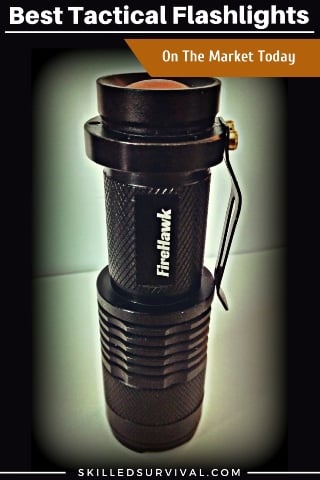
1 – FireHawk Tactical Flashlight
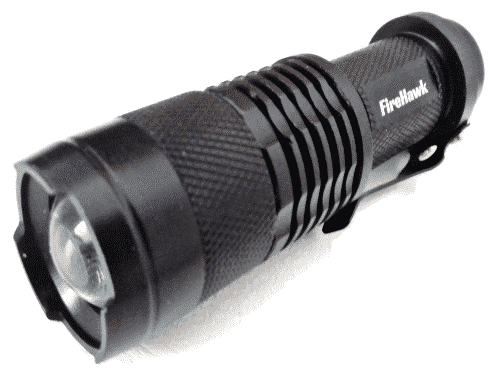
The FireHawk one of the best all-around EDC tactical flashlights.

It has the near-perfect balance of lumens, durability, beam control, waterproof design, AND extreme affordability.

Not only is it bright, but it’s tough as hell and can be used as a small fist-sized melee weapon in a pinch.
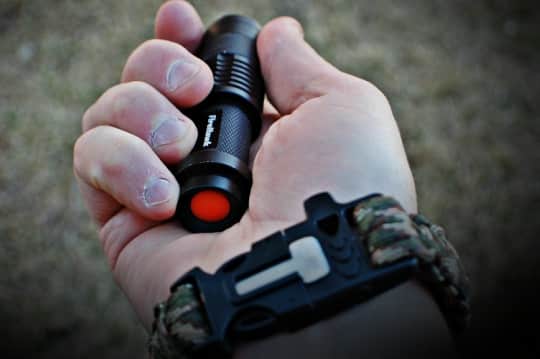
FireHawk In Hand

FireHawk In Hand

Plus, it has a simple slide beam control and uses a single AA battery. That means its overall size is compact – ideal for everyday carry!

This is one tactical flashlight you can put in your pocket or purse and barely even noticing it’s there – until you need to use it!

Sure, in some situations, more lumens can be helpful but that can comes at the cost of more weight and a much higher price point.

Instead, this EDC flashlight is one of the best in “lumens per ounce” AND “lumens per $” you can find.

Pros

  • Small, Light & Compact – Fits In Pocket or Purse
  • Tough – Aluminum Alloy Construction
  • Easy / Intuitive To Use
  • Great Price

Cons

  • Not USB Rechargable

Check Out Today’s Price

At the time this article was published, you could get a FireHawk Tactical Flashlight for FREE. Just help pay shipping and handling and it’s all yours…


2 – Fenix FX-PD35TAC (1000 lumens)

The FX-PD35TAC is one of several Fenix models that made our list. And this model shares many of the best features Fenix is known for, such as:

  • rugged construction
  • high output light
  • top of the line materials

This 1000 lumen light can reach out over 600ft, enough to cover two football fields.

Plus, it runs on either rechargeable or CR123A lithium batteries. This optionality helps to add a level of versatility not found in most other EDC flashlight models.

Pros

  • Rugged
  • High power
  • Versatile power options

Cons

  • Batteries are expensive

Check Out Today’s Price


3 – Nitecore P12 Flashlight (1200 lumens)

Nitecore is a brand with a solid reputation and a loyal following. That’s why it’s no surprise this is one highly-rated flashlight.

A compact 1200 lumen flashlight, the P12 is only 6 inches long and easily fits in the palm of your hand.

Yet, it throws a beam of light nearly 800ft!

It comes with a lot of great accessories as well, including a hard holster and an adjustable pocket clip.

Pros 

  • Comes with accessories
  • Bright light

Cons

  • Not USB rechargeable

Check Out Today’s Price


4 – SureFire X300 WeaponLight (1000 lumens)

One of the first requests from a tactical light is a weapon rail mount. Well, a weapon rail mount is one of the best features you get with a SureFire X300 series flashlight.

It mounts to a wide variety of weapon rails, allowing you to lock a super-bright beam of light onto a target.

Making the SureFire a SUPER bright gun light, with an intense center focused beam to put as much light downrange as possible.

Now, it’s not the most inexpensive option. But this is a more technical light than most other tactical handheld flashlights.

Why? Because it must endure the punishing recoil of a firearm without flinching. So you know it’s got extreme durability!

Pros

  • Mounts to firearms rails
  • Has a strong center focused light beam

Cons

  • Expensive

Check Out Today’s Price


High-Output Tactical Flashlights

Now, if you need one of the brightest lights out there, it’s time to take a look at the following high-powered options.

They’re the next best thing to a light-saber and will cut through the darkness just as well.

5 – Streamlight 88060 Pro Tac HL 4 (2200 lumens)

I keep a Streamlight 88060 Pro Tac HL 4 flashlight in my vehicle gear cache.

It’s there with the rest of the search and rescue gear I own. And it has been an enormous help searching rugged canyons where the 1000ft beam can cover a lot of ground.

At 2200 lumens, it’s one of the most powerful flashlights on the market.

It can run on either rechargeable lithium-ion batteries or disposable CR123A lithium batteries. This “optionality” makes it one of the most versatile tactical flashlights.

The ability to swap out batteries makes it much easier to keep it powered up. But swaps will rarely be necessary because when it’s fully charged, it can last nearly 150 hours on low. But only 90 minutes on high!

It’s also water-resistant and backed by a limited lifetime warranty.

Pros

  • Replaceable batteries
  • Lifetime warranty
  • Rugged rubberized body

Cons

  • Not USB rechargeable

Check Out Today’s Price

6 – WISSBLUE H1 (3800 lumens)

As if the Streamlight wasn’t powerful enough, the WISSBLUE H1 clocks in at an incredible 3800 lumens!

It can also use several different removable batteries, including 18650 and CR123A cells.

I’ll be honest; I don’t have hands-on experience with this model. But the claimed range of over 1200ft is impressive!

It’s also fully waterproof and comes with a holster, charger, and lanyard.

Pros

  • Holster included
  • Can be used as firearm light

Cons

  •  Bulky

Check Out Today’s Price


7 – Fenix TK75 (5100 lumens)

Fenix makes some of the most potent lights (of all kinds) on the market – and several of my caver friends swear by them.

These are people who trust Fenix lights with their lives, so that’s not a small endorsement.

The TK75 boasts a range of nearly 2800ft. And it uses replaceable batteries to make recharging easy.

It also has a longer working life at high-power than most other lights on this list. But that comes at a price, as this is, by far, the most expensive light on this list.

Pros

  • USB recharging built-in to the battery carrier
  • Incredibly bright

Cons

  • Expensive

Check Out Today’s Price

8 – Bestsun Super Power LED Flashlight (15,000 lumens)

The Bestsun might be a bit questionable as an official “tactical flashlight.” But I decided to include it because of the ridiculous 15 THOUSAND lumen rating!

Yes, I agree, this seems ludicrous at first glance. But this light sports 16 individual T6 LEDs driven by four 18650 batteries.

That’s a tremendous amount of power with a ton of high-output LEDs. But there are no focusing optics.

So you can’t direct or focus the beam of light. That’s why it’s hard to judge the actual range for this flashlight.

Due to the lower price and the unknown reputation of the manufacturer, you may want to be careful.

You may not want to use this as your primary tactical flashlight, but it might be a nice one to snag as an experimental backup.

 Pros

  • INCREDIBLE lumen rating
  • Uses standard battery sizes

Cons

  • Build quality may not be the best

Check Out Today’s Price

Micro Lights

Having at least one quality EDC flashlight is a must. But it’s also nice to have a microlight on your keys or a zipper pull when you have limited gear space.

These are some great options for a sub-100 lumen light that you can count on when all other lights go out:

9 – Pelican Progear Keychain Flashlight (16 lumens)

Only 16 lumens? I get it. That doesn’t seem like much compared to the rest of this list. But this is a light for close-quarters work and backup.

It runs on coin-cell batteries and is water-resistant.

The Pelican Progear is a great little backup light and can fit ANYWHERE in your gear.

Pros

  • Tiny
  • Solid construction

Cons

  • Only for close task lighting

Check Out Today’s Price


Streamlight 73200 KeyMate (35 lumens)

The Streamlight KeyMate is an ideal addition to your keychain and will be with you at all times.

It provides just enough illumination for some close-in work. And it includes several light modes, including strobe.

Pros

  • Area lighting mode
  • Direct USB recharging

Cons

  • The clip can pop off your keyring
  • Thick for a “key”

Check Out Today’s Price

10 – ThruNite Ti3 EDC Light (120 lumens)

For such a small package, the ThruNite Ti3 packs a lot of light. Making it an ideal solution to add to your keychain.

It also comes with a pocket or hat brim clip, allowing it to function as an improvised headlamp.

The textured barrel helps with the one-handed operation of the twist switch.

Pros

  • Hat clip mode
  • Intuitive twist design
  • High 120-lumen output

Cons

  • Larger than other “micro” lights (too big for a keyring)

Check Out Today’s Price


FINAL THOUGHTS


Tactical flashlights are a vast segment of the flashlight market today. And the number of new features and functions seems to be growing daily.

But with careful consideration, you CAN find the right one (or ones!) for your needs.

And once you’ve found them, they should have a prominent spot in your EDC gear, your vehicle kits, and all your other survival kits as well, including your:

So, when in doubt, go with several sources of light. Why? Because a dependable light source is a critical resource in emergencies and life-threatening situations.

You can’t afford to stumble around in the dark when success depends on being able to see.

And there are no “do-overs” in survival or emergencies. That’s why it’s wise to invest in a high powered tactical flashlight today.

Jason K.

P.s. Do you know where the closest nuclear bunker is from your home?

There are a lot of natural nuclear shelters in the US that are absolutely free. And one of them is near your home.

Click on the image above to find out where you need to take shelter.

The post 10 Best Tactical Flashlights To Make You Fearless Of The Dark appeared first on Skilled Survival.

How to Know When to Bug Out

Are You Ready for SHTF?

A year or so ago, I became interested in preparing for a disaster, so I went to the Internet to see what other folks are doing to prepare. I was surprised to learn the number of people who have been preparing for quite some time, and also at the level of their preparations; purchasing remote properties, building up a personal arsenal, and buying and storing food stocks for their families.

I figured I needed to ‘get on board’ and start my own preparations. I had a lot to do and a lot to consider; food stocks, weapons and ammunition, off-the-grid living,communications, tools, skills, bug out bag, get home bag, maps, cash, precious metals, and much more. Whew!

I am a planning-type person, and I don’t usually do anything without careful consideration and a solid plan. I like to think through what I will do, what I might need in the way of tools, parts, etc., and what my desired results are before I begin a project. Like all my projects, whether they be a family vacation, changing the brakes on my car, or preparing for a disaster, I feel a need to plan.

I decided to work on my preparedness tasks in parallel. As I was building up my food stocks, I also built up my weapons and ammo stock, and continued to read and learn about preparedness and survival. When I began to tackle a bug out plan, I found the task quite difficult as I thought through the three elements of how I tackle projects:

  1. What is the task or tasks involved?
  2. What items and tools will I need?
  3. What are my desired results?

Right away, I knew the answer to question three. In a bug out situation, I desired to stay alive and have the best quality of life possible for the situation. Answering questions one and two were not so easy. The planning gene in my head caused me to think about what actually is involved with pre and post “bugging out” in order to answer the first two questions. As I thought about making my plan, a sound solution to bugging out became quite murky.

There are many websites, blogs, and videos available via the Internet that provide information, ideas, and examples of bug out situations, bug out equipment, and bug out strategies, and I eagerly studied as much as a I could. I initially thought bugging out was a mighty fine idea when the SHTF. After careful consideration, though, I have concluded that bugging out should be my last resort, my “plan Z”, and only after I’ve tried every possible way to avoid it. I offer these bug out cons for your consideration:

The Plan

Everyone should have a plan and equipment for bugging out for those extreme situations when your back is to the wall, or marauding gangs are torching every house on your street. If you must bug out, have a pre-planned destination, and you must get there before your supplies run out. Essential to your bug out plan is to clearly define the condition(s) that would trigger your “got to bug out” alarm.

Remember, though, you’ll be quitting your job, abandoning your house, and your bills will pile up in your overflowing mailbox and remain unpaid. When a crisis occurs, you will not have time to make a successful bug out plan, so you must make your plan now. Anyone can make a plan, but it takes careful thought and consideration to make a successful plan.

Quality Of Life

The notion of bugging out is quite simple; grab your stuff and go. However, after bugging out and arriving “somewhere”, then what? What will you do and what will be your quality of life? When you are at home, all your equipment, food stocks, weapons, and gear are basically within easy reach.

If you have prepared and planned well, you can stay indoors for quite some time and enjoy a high quality of life. You can continue to sleep in your bed, have a bathroom down the hall, and even keep up with current events and what’s happening in your neighborhood.

The act of bugging out brings on its own set of potentially dangerous problems that you will have to deal with and suffer through “on the fly.” In all of my Internet travels, I have yet to see a bug out bag that was stocked and equipped as well my home. Bug out bags usually provide basic survival-type equipment and rations for up to 7 days.

The prospect that my situation would become that much more precarious after my rations ran out is none too appealing. Can I really depend upon hunting, fishing, and berry scavenging?

Land Mines

You are much safer in your own home in most situations. With adequate planning and supplies, you can hunker down and survive through chemical and even biological gas clouds. You can still call the police who might be able to assist you. You and your neighbors might band together to improve your collective security. Think long and hard before you engage in bugging out.

On your way to your pre-determined bug out destination, you need to avoid being ambushed, injured, robbed, or worse. You will not know who is friend or foe, and you must remain as inconspicuous and “normal” as possible.

I think it is unwise to assume you can and will homestead in the forest, hunting and fishing like Daniel Boone until “someone” gives an “all clear” and you can return home. You will not be the only person in the forest, and any food that is available will quickly be hunted or scared away. Your forest will soon be overrun with survivalist who claim hunting territories, and battles will ensue. Gangs will form and if you’re a loner, you will not survive.

Under such conditions, it would be nearly impossible for you to rest or sleep. You’d have to be on your guard 24/7. You couldn’t leave your camp to hunt or fish for fear of coming back to nothing, or a pack of squatters who have taken over your camp and everything you depend upon.

If you knew or sensed that others were in your forest, having a camp fire would be a bad idea because it would give away your location. How would you stay warm, or cook your kill? What if someone off in the distance sees smoke and calls 911 to report a forest fire? What about the winter cold or the summer mosquitos?

What would you do? Remember, you took only your bug out bag which did not have a sleeping bag or multi-season clothing. Sure, you have your big bowie-knife, your .22 rifle, and your length of para cord, but what about those other hundred items you need now that are back home?

Remote Hideaway

If you are one of the fortunate individuals who has some land in a remote location that you have already set up to be your bugged out location, great! The difficult task for you is to know when to bug out and before the crisis or disaster occurs. Timing will be critical. Bugging out after the crisis only increases your chances that you’ll be stuck in gridlock traffic, apprehended, robbed, or again, even worse.

Predicting when and where a disaster or crisis will occur is anyone’s guess. If you guess wrong, then you would have bugged out for nothing, and increased your chances of coming home to a looted and ransacked house.

Abort! Abort!

If you decide to return home, your immediate task would be to navigate your way through or around newly formed gangs and other non-friendlies you might encounter. If you bugged out with your get home bag, it is safe to say that any food you had in your get home bag would have already been eaten a long time ago.

You might arrive home only to find that your house has been looted, and all the food, gear, weapons, and supplies you didn’t take with you when you bugged out are gone. Your windows are broken, your electronics have disappeared, and you quickly discover thieves stole all the copper wires and pipes in your house, along with your refrigerator.

We all know that thieves are not a considerate lot. Since they took your copper pipes and left the water turned on, your house is now flooded, and your water bill is over $1,000. To add insult to injury, every thread of clothing, shoes, tools, and anything of any value that you had is now gone. Was it bugging out or going home that was the wrong decision?

Conclusion

I am unable to convince myself that I, after being so dependent upon grocery stores, utilities on demand, and sound shelter for decades, could just set up camp in the forest for an unknown length of time with only a bug out bag. You know, I am not the MacGyver type.

What do you think? Is “bugging out” a better plan than “bugging in”?

Courtesy of The Survivalist Blog.

Gear Review – Osprey Talon 11 Pack

I recently went on a day hike in the desert and brought my Camelbak M.U.L.E. I’ve had this pack for at least ten years, maybe more. It’s been a good companion, holding 100 oz in the bladder and a few other items. Before my hike I had wanted to pack a rain jacket but didn’t have the room. Climbing over rocks later on, I got hot but didn’t have the space to stow my fleece. Then it rained on me. It was evident I needed something with more storage space that was still light. I wanted something that was good quality but not covered in MOLLE webbing. I love bags, so any excuse to get a new one is good enough for me!
By J. Bridger, contributing author to SHTFblog and Survival Cache

Enter the Osprey Talon 11. If you’re looking for a day hike pack, an everyday carry bag, or an innocuous pack for a grab-and-go bag, this is a good contender. It’s lightweight, comes in two sizes, has enough capacity to carry your essentials, and has a great suspension system. It will carry whatever you put in it comfortably. It has good back ventilation, a sternum strap, and a hip belt. Let’s take a closer look!

I mentioned the Osprey Talon 11 comes in two sizes: you have Small/Medium and Medium/Large. Confused? Me too. Moving on. It comes in several colors: Black, red, bright green, blue, and yerba green. I chose yerba green, which is similar to a dark olive drab. An added bonus is Osprey’s All Mighty Guarantee. I appreciate good customer service, and steer clear of companies that don’t share that sentiment. If your pack needs repaired, they’ll fix it, doesn’t matter how or when. Simple!

 Capacity

The S/M has 9 liters of storage and the M/L has 11 liters. It’s on the small side for a day pack. If it were any smaller, I’d want a bigger one. The Osprey Talon 11 has one main pocket, and a separate pouch for a water bladder (sold separately). It can accommodate a 3-liter bladder (though keep in mind this will limit how much you can fit in the main pocket). My 3L Hydrapak takes up a substantial part of the pack’s capacity. That’s okay, I bought this pack mainly to carry water. I can cram 3 full size bath towels into it, if that gives you any idea of its capacity. It can hold my day hike loadout with a little room to spare: 3L Hydrapak, down jacket, rain jacket, beanie, headlamp, Spyderco PM2, bic lighter, water tablets, Chapstick, handkerchief, compass and map, and 6” Emergency Trauma Dressing.

Features

The Osprey Talon 11 pack is loaded with features, almost too many. I don’t like having loops hanging off the pack to snag. Luckily, I was able to remove some of them without damaging the pack. I can reattach them later if I decide I want to; I really appreciated this feature. Inside the main pocket is a mesh pocket with a clip for your keys. I can nearly fit my spread-out hand inside; it’s a good size. On the front flap, there is a top pocket that is a little larger than the inside pocket. If your pack is stuffed full, these will really only accommodate flat items. On either side of the pack are two elastic pouches. These are too small for a 1L Nalgene but will hold one of the smaller, thin walled 17-ounce water bottles perfectly. There is a cinch strap on each side that you can place over the side pouch or tuck inside.

The hydration compartment has a buckle to hang your bladder. You can get into this pouch without opening the main compartment. A small handle is sewn on top of the Osprey Talon 11. On the front of the bag is a neat device you can use to attach a helmet. This would be great for biking, kayaking, or outdoor climbing. I was able to untie this and remove it without permanently damaging anything. There is a generous amount of shock cord underneath, which I like. It’s a great place to hang wet socks to dry. The compartment buckles at the top, allowing you to stuff something larger inside, like a shirt. Below this are two slots for a bike light.

The sternum strap has a built-in whistle that works surprisingly well. This is a great addition that shows how much thought was put into the Talon. If you’re lost, you can blow the whistle instead of yelling (it’s louder and saves energy). The hip belt is one of my favorite features of this pack; they are made of breathable material and have a generously sized pocket on each side. They can be a little difficult to get into when you’re wearing the pack, but it’s far from impossible to access. These hip belt pockets are perfect for holding a compass, Chapstick, and Cliff bar. The hip belt is easy to tighten and loosen; Osprey really did an awesome job here.

The shoulder straps are comfortable and have lots of adjustment. There are two usable elastic loops on each strap, perfect for hydration tube routing. On the left strap, there is a long skinny elastic pouch sized just right for a pocket knife or a Surefire G2 Nitrolon-sized flashlight. It’s too narrow for a cell phone, and I wouldn’t want to cram my Wiley-X’s in there. Also, on the left shoulder strap of the Osprey Talon 11 pack is a short piece of shock cord to secure your hiking poles, with the help of a loop hanging off the bottom left side of the pack. I won’t use this feature, so I easily removed both to keep things simple. Lastly, on the right side of the pack is an ice axe attachment. I also won’t be needing this, so I tucked the loop up under the front flap and removed the shock cord. 
 Osprey Talon 11 Uses

This bag is well thought out and could easily fill many different roles. I intend to use it as a day hike pack, but it could also be used as a range bag, everyday carry bag, laptop bag, canyoneering or small climbing bag (It holds a 45-meter static line, harness, and has a helmet attachment point), or a go bag. It’s also small enough to be a carry-on personal item for a weekend flight. The Osprey Talon 11 is lightweight, well built, and has an awesome warranty. You really can’t go wrong with this one!


Specs:

Weight: 1lb 6oz (22 oz)

Capacity: Medium/Large = 11 Liters. Small/Medium = 9 liters.

Features: hip belt, sternum strap, helmet attachment, hiking pole attachment, ice axe attachment, hydration compartment.

Cost: $100

 Pros:

Hip belt and pockets

Ventilated back

Lightweight

Osprey’s All Mighty Guarantee

Packed with features

 Cons:

Doesn’t come with a bladder


Get Me Home Bag

Written by Wild Bill on The Prepper Journal.

Editor’s Note: This came in at a fortuitous time, as it relates to an end-of-year deal I’m trying to put together. Guest contributor Jonas Grumby writes about the “Get Me Home Bag,” which he says is different from the bug-out bag. What say you? Is he onto something?

The Prepper Journal has many entries that discuss bugging out or hunkering down. This will not be another one. Not exactly, anyway. Let’s imagine you have a emergency plan that involves leaving or staying put. In a perfect world, we are at home with the entire family when the balloon goes up.

But we don’t live in a perfect world. 

What is your zombie plan?

We have jobs where we commute an average of 7 to 16 miles with a 27-minute  drive time. Natural disasters such as hurricanes give enough time to leave, but earthquakes, tornadoes, and flash floods give little, if any, warning. Let’s not forget that civil unrest, such as the 1992 Los Angeles Riots and the Ferguson Riots, can flare up and spread very quickly.

What are your plans should this regional emergency occur while you are at work? Driving home might be the fastest option, but what if it isn’t? What if traffic, road damage or ‘I forgot to get gas during lunch’ prevent it? You’ll have to walk.

But can you? Aside from the physical element of hiking home, do you have the supplies needed to walk the 3, 6, or 10 miles (or further)? If you don’t have a Bug Out Bag (BOB) in your vehicle already, you should think about creating a Get Me Home Bag (GMHB).

Photo by Axel Holen on Unsplash

The get me home bag

Here are some things to consider having in your office or vehicle at all times:

  • Footwear – for people working in an office setting, this is a big factor. Dress shoes or heels may look nice in the boardroom, but walking home in them will be a nightmare. Do you have any place to store a pair of sturdy sneakers or lightweight hiking boots and a couple of pairs of socks?
  • Hydration – For people like me who live in Phoenix, this can be a life-or-death issue. Having to walk home in June could literally kill you during normal times. Imagine trying it during an emergency. If you can get water from your office or other safe location (water bottles?), then you’re off to a good start. You’ll have clean water as well as extra water holders for the journey home. If you don’t, having a 1L water container like a Nalgenebottle will be important.
  • Flashlight – While most phones have flashlights, they’re really only good for a very short distance and they drain your emergency communication device. Some flashlights can run on lithium batteries (higher power but short lifespan) or AA-batteries (less powerful, long lasting and easy to find anywhere). Current generation of LED make these very powerful, even on alkaline batteries. I carry a small flashlight with me all the time, much to the amusement of some coworkers.
  • Cellphone – Everyone has a cellphone, but do you always have it with you? Are you always charging it, or do you wait until you get in the car for your trip home? You’ll need a way to charge it.
  • Portable Power Pack – Cellphones no longer have the 3-5 day battery that some older units did. If you’re away from a regular power source (or the power is down), a small portable power pack will keep your phone going for a long time.
  • Knife and Multi-tool – Most multi-tools have an integrated blade, so you might even be able to ditch the folding knife. That said, I prefer a separate knife I can always carry, like the flashlight.
  • Maps – Work commutes can get to the point where it’s like being on autopilot. But is that route the best one? The most direct route might not be viable on foot, especially if you have to go through any sketchy areas. A map can help you plan which ways to take, and which to avoid.
  • Food, safety and comfort – For a 6-16 mile walk home, you may not need food. But if it happens at the end of the workday, you’re likely to be hungry. If you have to hole up for the night, you’ll be glad you have something to eat. 
    • Having some snacks or something to eat can be a good morale boost as well as fuel for the journey. You don’t have to have a full MRE, but they’re convenient and keep well. Trail mix, nuts or other calorie-dense foods should suffice.
    • Most employers have policies against self-defense tools on property, but you can always leave something like that in your vehicle. Some states like Arizona even have laws permitting employees having firearms in their vehicles while at work. Check you local laws and company policy for details.
    • Don’t forget some toilet paper, some first aid (band aids and moleskin) and something to protect against sun and dust (a shemagh works well for these) and a pair of gloves to protect your hands.

The get me home bag

I’m lucky…I work less than 7 miles from home. Pictured below is the kit I have assembled. It’s easily stored in a small drawer at work, or my laptop backpack, which doubles as my get home bag. I happen to have a decent supply of MREs, but I could make my kit smaller by substituting some trail mix and energy bars.

My get home bag

These items can easily be integrated into a larger bug-out bag you may already have, or even be redundant to your BOB. Remember, two is one and one is none when it comes to life-critical supplies. The most expensive thing in that kit was the MSR water filter. 

Not pictured are the shoes and extra socks I kept in my desk drawer, nor is my first aid kit (aside from the Israeli pressure bandage)…because it needs to be restocked. I had forgotten I’d used some supplies at work awhile back, and never replenished them.

Writing this wound up being a teaching moment, and a reminder to review your supplies on a regular basis. It’s easy to ‘set it and forget it’, then realize when it’s too late that you’re missing something. 

Lesson learned.

The post Get Me Home Bag appeared first on The Prepper Journal.

Will Climate Change Attract More People to Prepping?

Climate change is all over the news. Let’s take a look at what this might mean for preppers and the prepping market as a whole, but first…

Is Climate Change Real?

Climate change is a political subject, and in today’s political climate, that means it’s a polarizing subject. Those on the right say it isn’t happening. Those on the left say the sky is falling. There isn’t much common ground.

By Rangerman, contributing author to SHTFblog and Survival Cache

Farmer examining corn plants in field during a drough

Self-identifying as the political middle, I generally try to avoid political subjects these days. Those on the left call me conservative while those on the right call me liberal. Where I stand really depends on the issue, however. As for climate change, I believe the science. It’s real. It’s happening.

That puts me in a precarious position. I write to preppers, and preppers are an overwhelming conservative audience. It’s not uncommon, if I write something about climate change, to hear people call me names, tell me I’ve been duped, and just stop following me altogether. But one thing you quickly learn after throwing yourself out there online, is that you can’t please everyone. People will call you names no matter the position you take. You need thick skin.

I have seen the conversation change over time, however. Fewer people are outright denying that climate change is happening. People are transitioning from “it’s not real” to “it’s real, but it’s not man-made.” Alternatively, they are going from “it’s not real” to “it’s happened before, and there’s nothing we can do about it.”

But this post isn’t about whether climate change is real or not. I’m not going to cite the evidence that climate change is real, or that humans are the major cause of global warming. This post assumes that climate change is happening.

Climate Change will Draw More People to Prepping

I’ve been in the prepping business long enough to see the ebbs and flows of the market. I was on the early side of it, when “prepper” was still associated with the fringe “survivalist” folks – loners in the woods sitting on stockpiles of guns and ammo. Since then, “prepper” has become a household term with prepping becoming far more mainstream than it has ever been to the point freeze dried food can be purchased in everyday places like Costco. Reasonable people are preppers. In fact, once you look at the many reasons to prepare, “reason” follows that you must prep!
The same as 9/11, the government’s poor response to Katrina, and the Great Recession, global warming will draw another wave of people to prepping. It may be the biggest draw ever. This may be a different crowd than your typical recession prepper, civil unrest prepper, etc., but the climate change prepper will grow in numbers. You can see this already through events like climate change preparedness forums. These preppers will be younger, as today’s youth will face more of the consequences of global warming.

Climate Change Preppers Will Prep in Both Similar and Different Ways

Similar Ways of Prepping for Climate Change

What will prepping for climate change look like? In many ways, not that much different from prepping for anything else. A big part of prepping is preparing for natural disasters. Natural disasters and climate change go hand-in-hand. According to NASA, some of the effects of climate change on the United States will be:

  • Rising Temperatures – This will not be uniform across the country or over time.
  • Frost-free Growing Seasons Will Lengthen – Food-wise, this could be seen as a good thing, but read on.
  • More Droughts and Heat Waves – Just when you think the growing season will extend, heat waves and droughts will stress food security.
  • Hurricanes Will Become Stronger and More Intense – Storm intensity and rainfall from hurricanes will increase will require greater preparation for hurricanes.
  • Sea Levels Will Rise – Expect greater storm surges and higher tides. Don’t forget that warming oceans also impacts fishing.

Also read: Killer Climate

As preppers, we should already be aware of the necessary basics for prepping. If you’re new to prepping, you can start by reading FEMA’s Are You Ready? book… but many preppers have pretty strong feelings about FEMA and their Katrina response. Still, the book covers the basics. If you’re following sites like SHTFblog and SurvivalCache, however, you’re already ahead of the game.

The basics, of course, include everything from having an emergency plan, having food and water stored, making a bug out bag, to the more mundane subjects of having financial protection for your house, apartment, etc. These are not new ideas for most preppers, but in what ways will climate change require new means of prepping?

Different Ways of Prepping for Climate Change

The same as prepping for a recession requires different methods than prepping for civil unrest, prepping for climate change will require different methods as well. While climate change will require preparing for more hurricanes in certain areas, there are longer-term issues that will need to be addressed. Here are a few:
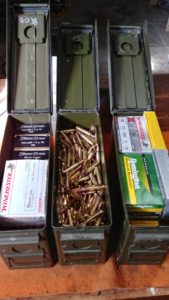
  • Environmental Migration – There are already indications that climate change is driving mass migration around the globe. While the United States may not face the type of migration problems that people in Bangladesh, Africa, Central America, and Australia might face, the people in these places will have to go somewhere when drought and famine strike. Their migration will cause political and economic challenges around the globe. How can you prepare for that as an individual? I don’t know.
  • Food Shortages – Erratic weather will wreak havoc on agriculture. Farmers will experience drought, then abnormally heavy rainfall, then drought, then hail, etc. Food prices will swing up and down. The household impact will be felt at the grocery store checkout.
    • Gardening – Preparing for this could, and should, include growing more food at home. That could mean anything from an herb garden off your deck to a full-size family survival garden. Gardening, and doing it well, requires knowledge and experience. You can’t just go and plant a garden expecting results. Good soil often takes years to produce. Knowing how to prevent pests and crop disease also takes experience. That’s not even covering seed saving.
    • Preserving Food – If you’re growing your own food, you will eventually graduate to producing food that will take you through winter. That means not only growing more but preserving it. Buy a copy of the USDA Complete Guide to Home Canning and learn how to can. Maybe you will build a root cellar and/or dry storage.
    • Stocking Up – Remember that what hits farms will also hit you, so your garden could be subject to the same erratic weather. Stocking up on non-perishables is a basic tenet of prepping. For climate change, you will want to do more of that. Take advantage of sales. Stock a pantry and rotate stock. When there are shortages and prices are high, you can use the stock you already have.
  • Finances – Having your financial house in order makes sense on every level, and it also applies here. Energy may cost more. Homeowner’s insurance may cost more. Food may cost more. And, depending on where you live, you may also be face with…
  • Moving – Some people are already experiencing the urge to flee (think people in California who are under a near-constant threat of wildfires). People living along the coast may also be finding an urge to move inland. More and more people will be wondering where to escape climate change in the United States. Real estate prices will decline in some places, rise in others. If you are not wedded to a particular area, or your kids/grandkids are wondering where to live, getting ahead of the population move may be wise.

Why Climate Change Preppers Should be Welcomed

h2o survival storageWhether you believe climate change is happening or not, whether you think it’s man-made or not, climate change preppers should be welcomed into the prepping community. Even if they don’t align with the typical prepper’s political beliefs, the more people that are prepared the better – regardless of their reasons!

Think of this practically, even if you have distaste for those with dramatically different political beliefs. If your neighbor is prepared, and your neighbor’s neighbor, that means greater security for you WTSHTF. Every prepared person means one less hungry person looking for what you might have. How can that be a bad thing?

And remember! When the apocalypse hits, when disease is rampant, politics will all get tossed aside when people band together for mutual survival. That bleeding-heart liberal down the street might be covering second watch when the neighborhood defenses go up against the hordes of zombies.