Survival Gear is the most unused product until a natural disaster happens, then it’s the most desired products, but usually too late to help those that really need the help.

We sell around the World, and pride ourselves on offering a level of customer service that we would want to see ourselves if we were shopping online.
Our product ranges change regularly, so we hope that you come back to our sites to see some of the fantastic offers that we regularly have.

Get In Touch

Hammock vs Tent: Which Is Best For Camping & Survival?

Hammock Vs TentToday, we’re diving into one of the most heated debates among outdoor enthusiasts: hammocks vs. tents.

That’s right, we’re going to pit these two camping shelters against each other and see which one comes out on top.

So grab your compass, lace up your boots, and let’s get this showdown started!

THE #1 Prepping Question:

Which ‘SHTF threat’ do YOU fear MOST… because you’re LEAST prepared for it?!?🤔

One Question SurveyFind out NOW by answering my 1-Question Survey… 📋

Then reserve your spot in my FREE Course that shows you (step-by-step) the BEST way to eliminate this fear once and for all! 📈

Hammock Vs Tent: Comparison Chart

Hammock Vs Tent Comparison Chart

The Contenders: A Brief Overview

Hammocks

Hammocks are the epitome of laid-back camping.

They’re lightweight, compact, and offer a unique sleeping experience that keeps you off the ground and swaying gently between trees.

But don’t be fooled by their relaxed demeanor—hammocks can be a serious contender for your camping and survival gear.

Tents

Tents are the classic choice for campers worldwide.

They’ve been around for centuries, evolving from basic shelters to high-tech engineering marvels.

Tents offer a familiar and reliable way to stay protected from the elements, with plenty of room to stretch out and store your gear.

THE #1 Prepping Question:

Which ‘SHTF threat’ do YOU fear MOST… because you’re LEAST prepared for it?!?🤔

One Question SurveyFind out NOW by answering my 1-Question Survey… 📋

Then reserve your spot in my FREE Course that shows you (step-by-step) the BEST way to eliminate this fear once and for all! 📈

Comfort: Rest Easy or Toss and Turn?

When it comes to getting a good night’s sleep in the great outdoors, comfort is king.

Let’s see how hammocks and tents stack up.

Hammocks: Cradle of Comfort

Hammocks are like a cozy cocoon that cradles you in comfort.

The gentle sway can lull you to sleep faster than a lullaby.

Plus, you avoid the hard, uneven ground and any creepy crawlies that might be lurking.

However, getting the perfect hang angle and finding the right trees can be a bit of a challenge.

And if you’re a side or stomach sleeper, you might find a hammock a bit restrictive.

Tents: Home Away from Home

Tents provide a flat, stable surface to sleep on, which is great for side, back, and stomach sleepers alike.

With a good sleeping pad and bag, you can achieve a level of comfort that’s hard to beat.

Tents also offer more room to move around and store your gear, making them feel like a cozy little home in the wilderness.

However, you’re still dealing with the hard ground and the potential for a less-than-perfectly-flat campsite.

Weather Protection: Battling the Elements

Mother Nature can be unpredictable, so your shelter needs to stand up to whatever she throws your way.

Hammocks: High and Dry

One of the biggest advantages of hammocks is that they keep you off the ground.

This means you won’t have to worry about rain pooling under your tent or waking up to a flooded floor.

With a proper rain fly, hammocks can keep you dry in most conditions.

However, in extreme weather, like high winds or heavy snow, hammocks can be less stable and offer less protection than tents.

Tents: Fortresses of Fabric

Tents are designed to be all-weather shelters.

With a good rainfly and proper setup, tents can handle rain, wind, and even snow.

They offer more protection from the elements, especially in extreme conditions.

The solid walls also provide a barrier against cold winds and help retain warmth. However, tents require more effort to keep dry and ventilated, especially in wet conditions.

Setup and Portability: Quick and Easy or a Chore?

Nobody wants to spend hours setting up camp, especially after a long day on the trail.

Let’s see which option makes setting up camp a breeze.

Hammocks: Quick and Lightweight

Hammocks are a breeze to set up—once you get the hang of it (pun intended).

With practice, you can have your hammock and rain fly up in minutes.

They’re incredibly lightweight and pack down small, making them perfect for backpackers and ultralight hikers.

The downside is that you need trees (or something sturdy) to hang your hammock, which isn’t always available.

Tents: Versatile but Bulky

Tents can take a bit longer to set up, especially if you’re dealing with poles, stakes, and rainflies.

But once they’re up, they’re a reliable shelter that doesn’t depend on trees or other anchor points.

Tents offer more versatility in where you can set up camp, but they tend to be bulkier and heavier than hammocks.

This makes them less ideal for ultralight backpacking but great for car camping or short hikes.

THE #1 Prepping Question:

Which ‘SHTF threat’ do YOU fear MOST… because you’re LEAST prepared for it?!?🤔

One Question SurveyFind out NOW by answering my 1-Question Survey… 📋

Then reserve your spot in my FREE Course that shows you (step-by-step) the BEST way to eliminate this fear once and for all! 📈

Space and Storage: Room to Roam or Cozy and Compact?

Whether you like to spread out or keep things minimal, space is a crucial factor in choosing your shelter.

Hammocks: Cozy and Compact

Hammocks are designed for one person (though double hammocks are available), and they don’t offer much room for gear storage.

You’ll need to get creative with your packing and use gear slings or hang your backpack from a tree.

This minimalistic approach is great for those who like to travel light and keep things simple.

However, if you like having space to move around or keep your gear close, hammocks might feel a bit cramped.

Tents: Spacious and Secure

Tents come in a variety of sizes, from solo shelters to multi-person palaces.

They offer plenty of room to move around and store your gear, keeping everything dry and secure.

The extra space can make a big difference in comfort, especially on longer trips.

The downside is that all this extra room comes at a cost in terms of weight and bulk.

Versatility: Multi-Use Marvels

Versatility is key when it comes to survival gear.

Let’s see how hammocks and tents can pull double duty.

Hammocks: More Than Just a Bed

Hammocks can be incredibly versatile.

Besides being a great place to sleep, they can also serve as a chair, lounger, or even a makeshift stretcher in an emergency.

Some hammock setups can be converted into ground shelters if needed.

However, their primary function is as a sleeping system, so their versatility is somewhat limited compared to a tent.

Tents: Shelter Supreme

Tents are the ultimate multi-use shelters.

Besides providing a place to sleep, they can serve as a changing room, gear storage, and a refuge from bugs and weather.

In an emergency, a tent can be used as a signal (bright colors), a rainwater collector (with the rainfly), or even a makeshift raft (in extreme cases).

Their versatility and reliability make them a staple in any survival kit.

THE #1 Prepping Question:

Which ‘SHTF threat’ do YOU fear MOST… because you’re LEAST prepared for it?!?🤔

One Question SurveyFind out NOW by answering my 1-Question Survey… 📋

Then reserve your spot in my FREE Course that shows you (step-by-step) the BEST way to eliminate this fear once and for all! 📈

Cost: Budget-Friendly or Investment?

When it comes to camping gear, you often get what you pay for.

Let’s talk about the cost of hammocks vs. tents.

Hammocks: Budget-Friendly

Hammocks can be a more budget-friendly option, especially for solo campers.

You can get a decent hammock setup for less than a comparable tent.

However, you’ll also need to consider the cost of additional gear like a rain fly, bug net, and underquilt (for colder weather).

Overall, hammocks can be a great option for those looking to save money and pack light.

Tents: Investment in Comfort

Tents tend to be more expensive, especially high-quality models.

But this investment pays off in terms of comfort, space, and protection from the elements.

If you’re serious about camping or survival, a good tent is worth every penny.

Plus, tents are more versatile and can accommodate multiple people, making them a better value for group camping.

The Verdict: Which is Best for You?

Alright, folks, it’s decision time.

Both hammocks and tents have their strengths and weaknesses, and the best choice depends on your specific needs and preferences.

Choose a Hammock If:

  • You prioritize lightweight and compact gear.
  • You enjoy a unique sleeping experience and don’t mind a bit of a learning curve.
  • You often camp in areas with plenty of trees.

Choose a Tent If:

  • You want maximum protection from the elements.
  • You need more space and storage for gear.
  • You prefer a versatile shelter that can handle a variety of conditions.

My Personal Take

Personally, I think there’s a place for both hammocks and tents in your camping arsenal.

Hammocks are fantastic for short trips, ultralight backpacking, and summer camping.

They’re a blast to use and add a bit of fun to your camping experience.

Tents, on the other hand, are the go-to choice for longer trips, group camping, and harsher conditions.

They offer the comfort, space, and protection you need when the going gets tough.

So why not have both?

That way, you’ll be prepared for any adventure that comes your way.

Just remember, the best shelter is the one you have with you when you need it.

So pick the one that fits your style, pack it up, and get out there!

Why Trust Skilled Survival…

Go here now to review a full breakdown of:

  • Who We Are
  • Our Credentials
  • Our Mission
  • & Product Recommendations…

Here are a few highlights of our teams credentials & certifications:

  • Certified Member of a Mountain Search & Rescue Organization
  • Plant Emergency & Safety Leader for a Major Food Manufacturer
  • Member of the 10TH Mountain Division Hut Association
  • Certifications: Avalanche 1, WFR, CPR
  • Official Gear Tester for Numerous Outdoor Gear Companies
  • Countless Multiday Backpacking trips into Remote Wilderness
  • Bachelor’s Degree In Mechanical Engineering 
  • Bachelor’s Degree In Civil Engineering
  • Bachelor’s Degree In Biomedical Engineering

“It takes 20 years to build a reputation and five minutes to ruin it.” – Warren Buffett

We’re fully aware that trust is NOT something you GET but is EARNED.

And we’ll continue to earn YOUR trust through our forthright and honest approach with each new Blog Post, Guide & Product we create…

Prepare, Adapt & Overcome,

  • Cofounder Of Skilledsurvival.com & TheResilientLife.com
  • Born & Raised On A Rural Farm In The Midwest
  • Mechanical Engineering Grad From A Major University
  • Engineer With A Major Food Manufacturing Company
  • 10+ Years Researching, Writing, & Teaching Preparedness
  • Mission: Help Folks Stop Living A Life Fragile To The Future
  • The post Hammock vs Tent: Which Is Best For Camping & Survival? appeared first on Skilled Survival.

    Red Alert! Virtually All Of Our Personal Information, Including Social Security Numbers, Has Been Stolen And Posted Online By Hackers

    Most Americans don’t even realize that virtually all of their personal information has been stolen and posted online for free.  The personal records of 2.9 billion people were stolen from a major data broker known as National Public Data earlier this year, and this month almost of the information that was stolen was posted online for anyone to freely take.  We are talking about names, addresses, phone numbers, employment histories, birth dates and Social Security numbers.  This is one of the most egregious privacy violations in the history of the world, but hardly anyone knows what has happened.  So please share this article as widely as you possibly can.

    USA Today is reporting that the original theft of this data occurred “in or around April 2024″…

    An enormous amount of Social Security numbers and other sensitive information for millions of people could be in the hands of a hacking group after a data breach and may have been released on an online marketplace, The Los Angeles Times reported this week.

    The hacking group USDoD claimed it had allegedly stolen personal records of 2.9 billion people from National Public Data, according to a class-action lawsuit filed in U.S. District Court in Fort Lauderdale, Florida, reported by Bloomberg Law. The breach was believed to have happened in or around April 2024, according to the lawsuit.

    The company that this data was stolen from is a Florida-based background check company known as National Public Data.  The following is what Wikipedia has to say about this particular firm…

    Jerico Pictures, Inc., doing business as National Public Data[1][2] is a data broker company that performs employee background checks. Their primary service is collecting information from public data sources, including criminal records, addresses, and employment history, and offering that information for sale.

    Of course there are hordes of other data brokers out there these days.

    They collect vast troves of information on as many people as they possibly can, and then they monetize that information in various ways.

    Equifax, Epsilon and Acxiom are the three largest data brokers in existence today.  Each one of them brings in more than 2 billion dollars of revenue annually.

    As you can see, collecting and selling our personal information is very big business.

    And when one of these data brokers gets hacked, it is a major disaster for all of us.

    One member of the hacking group that stole this data claims to have “the full NPD database”

    Last week, a purported member of USDoD identified only as Felice told the hacking forum that they were offering “the full NPD database,” according to a screenshot taken by BleepingComputer. The information consists of about 2.7 billion records, each of which includes a person’s full name, address, date of birth, Social Security number and phone number, along with alternate names and birth dates, Felice claimed.

    How much damage could criminals do to your life if they had your name, address, phone number, employment history, date of birth and Social Security number?

    You might want to think about that.

    According to a law firm that is involved in litigation over this matter, a total of 277.1 gigabytes of data were stolen…

    The class-action law firm Schubert, Jonckheer & Kolbe said in a press release that the stolen file includes 277.1 gigabytes of data, and includes names, address histories, relatives and Social Security numbers dating back at least three decades.

    According to a post from a cybersecurity expert on X, formerly Twitter, USDoD claims to be selling the 2.9 billion records for citizens of the U.S., U.K. and Canada on the dark web for $3.5 million.

    You may not want anyone to know where you were living 30 years ago.

    But now just about anyone can easily find out, because the vast majority of the information that was stolen has been posted online for free

    About four months after a notorious hacking group claimed to have stolen an extraordinary amount of sensitive personal information from a major data broker, a member of the group has reportedly released most of it for free on an online marketplace for stolen personal data.

    The breach, which includes Social Security numbers and other sensitive data, could power a raft of identity theft, fraud and other crimes, said Teresa Murray, consumer watchdog director for the U.S. Public Interest Research Group.

    “If this in fact is pretty much the whole dossier on all of us, it certainly is much more concerning” than prior breaches, Murray said in an interview. “And if people weren’t taking precautions in the past, which they should have been doing, this should be a five-alarm wake-up call for them.”

    Read that last paragraph again.

    An entire dossier on your life is just sitting out there, and virtually anyone that has a vendetta against you can access it.

    So what can we do to protect ourselves?

    Some experts are encouraging people to make certain that their antivirus programs are up to date.  I think that is definitely a good idea, but I don’t know how that will protect anyone from information that has already been stolen.

    It is also being suggested that people should update their passwords.  Needless to say, this is something that everyone should be doing on a regular basis anyway.

    In the weeks and months ahead, keeping a close eye on your credit report will be important.  If your identity is being used by someone, you don’t want that to go unchecked for very long or else your credit could be ruined.

    But ultimately there is not much that you can do to keep nefarious individuals from accessing personal information that is being freely copied and passed around the Internet.

    To a very large degree, the damage has already been done.

    It is being projected that cybercrime will cost the world 10.5 trillion dollars annually by the year 2025.

    Just like everywhere else in our society, there are vast hordes of predators on the Internet that are relentlessly searching for new victims, and this is yet another sign that our society is in an extremely advanced stage of decay.

    We should have never allowed ourselves to become so dependent on the Internet, but there is no going back now.

    Michael’s new book entitled “Chaos” is available in paperback and for the Kindle on Amazon.com, and you can subscribe to his Substack newsletter at michaeltsnyder.substack.com.

    About the Author: Michael Snyder’s new book entitled “Chaos” is available in paperback and for the Kindle on Amazon.com. He has also written seven other books that are available on Amazon.com including “End Times”“7 Year Apocalypse”“Lost Prophecies Of The Future Of America”“The Beginning Of The End”, and “Living A Life That Really Matters”.  When you purchase any of Michael’s  books you help to support the work that he is doing.  You can also get his articles by email as soon as he publishes them by subscribing to his Substack newsletter.  Michael has published thousands of articles on The Economic Collapse BlogEnd Of The American Dream and The Most Important News, and he always freely and happily allows others to republish those articles on their own websites.  These are such troubled times, and people need hope.  John 3:16 tells us about the hope that God has given us through Jesus Christ: “For God so loved the world, that he gave his only begotten Son, that whosoever believeth in him should not perish, but have everlasting life.”  If you have not already done so, we strongly urge you to invite Jesus Christ to be your Lord and Savior today.

    The post Red Alert! Virtually All Of Our Personal Information, Including Social Security Numbers, Has Been Stolen And Posted Online By Hackers appeared first on The Economic Collapse.

    WHO Functions as Big Pharma’s Profit Maker and Propaganda Pusher

    This article was originally published by Cassie B. at Natual News. 

    Big Pharma has been working with the World Health Organization to reorganize the drug market in a way that reduces regulatory barriers to forcing populations to undergo health interventions any time the WHO sees fit to declare a pandemic.

    Journalist Max Jones recently investigated the new strategy, which will help the pharmaceutical industry protect its profits as a number of its top-selling drugs are poised to lose their patent protection in the coming years. With as much as $180 billion in sales at stake, they’re scrambling to find a new source of revenue – and biologics could be their meal ticket if they can get the regulatory pieces in place to support them.

    The WHO’s revisions to the International Health Regulations (IHR) are set up with this goal in mind. When you consider the fact that WHO gets 80% of its funding from private stakeholders, it makes perfect sense that they’d be so willing to support them.

    There are four main components to the plan for Big Pharma to secure the emerging pandemic market with help from the WHO and its recently passed amendments to the IHR and its proposed pandemic treaty.

    Biosurveillance of “pathogens with pandemic potential”

    The World Health Organization has already started to call on its member states to set up infrastructure for carrying out biosurveillance on their populations, with private WHO stakeholders like the Bill & Melinda Gates Foundation already funding these initiatives.

    Facilitating the sharing of research and data

    The IHR amendments dictate that the director general of the World Health Organization will support countries in their research and development and facilitate data sharing during a pandemic, which could help to coordinate responses to outbreaks and methods of prevention.

    This, Jones points out, also means working together to share data about diseases that they claim are “likely to cause epidemics on the future” – which could really be anything if they deem it convenient and profitable. Indeed, the same global organizations that are working with the WHO will likely do this research and develop associated vaccines and then profit from them.

    Developing new regulatory mechanisms

    The World Health Organization is also seeking ways to make it easier for unapproved medical products to hit the market during a so-called emergency or pandemic, much like what happened with the experimental COVID-19 vaccines. There is also a provision in the proposed treaty to ensure member countries have “legal, administrative and financial frameworks in place to support emergency regulatory authorizations for the effective and timely approval of pandemic-related health products during a pandemic.”

    Paving the way for worldwide mandates of unapproved products

    Finally, the Big Pharma – WHO plan seeks to establish a system that will allow for unapproved products to be mandated around the world. This could function in a similar manner to the vaccine passports adopted during the COVID-19 pandemic that may not have been absolute requirements but served to exclude people and restrict their freedoms for not complying with vaccine mandates. It’s worth remembering that the WHO is also working on its Global Digital Health Certification Network to digitize people’s health and vaccine records.

    “Verification systems of this size will place the right of citizens to do basic activities — like traveling, eating at a restaurant or working their job — in the hands of governments and potentially employers,” Jones warned.

    “The rights of civilians will be conditional, dictated by data stored in a massive digital hub that is global in its sharing abilities. Not only will domestic governments have access to the health information of their own citizens under this system, but an entire global bureaucracy will as well,” he added.

    “Experiment Gets An F-Minus”: Nantucket Residents Fume Over Broken Wind Turbine Blade Polluting Beaches

    This article was originally published by Tyler Durden at ZeroHedge. 

    “The great Nantucket experiment gets an F-minus,” Kevin O’Leary, chairman of O’Leary Ventures, told Bloomberg, referring to the offshore turbine failure that resulted in broken fiberglass littering the pristine beaches of Nantucket last month. The turbine is part of the offshore Vineyard Wind project.

    O’Leary continued, “It’s not a golden example of success in wind turbines, that’s for sure.”

    The federal government ordered Vineyard Wind’s project south of Nantucket last month to halt construction and electricity generation following the blade malfunction.

    Nantucket Current has confirmed this photo of the broken turbine approximately 15 miles off the southwest coast of the island. Source: Nantucket Current

    The company managing the project determined the turbine blade failure was due to a “manufacturing deviation,” adding that before energy can be produced, all blades across the project will be inspected with ultrasound technology and drones, reported local media CapeCod.

    Source: Bloomberg

    Vineyard Wind CEO Klaus Møller stated, “We believe we have the right plan in place to recover the rest of the blade, secure any debris offshore and onshore, and safely and responsibly resume the installation program so we can put this project back on track to deliver needed clean power to the New England region.”

    Nantucket is merely a casualty of the Biden-Harris administration’s push to ‘greenify’ the US economy with unreliable wind and solar. The admin has pledged to develop 30 gigawatts of offshore wind by 2030.

    Now community leaders on the small island, home to some of Biden’s wealthy Democrat donors, plan to renegotiate the island’s “good neighbor” agreement with Vineyard Wind, according to Bloomberg.

    Gabriel Frasca, chef and part owner of Straight Wharf Restaurant on the island, said the offshore wind power project sounds like a great idea in a vacuum, but this “well-intentioned idea” has “calamitous, unintended consequences.”

    The Biden-Harris administration pitched the American people that green energy was desperately needed to defeat ‘climate change’ and that these green projects would yield beneficial returns. We’re all glad Harris wasn’t the ‘Green Czar’… However, Democrats didn’t explain any consequences of broken blades and entirely left out that this type of power generation is unreliable if the wind doesn’t blow. Also, for solar, if the sun doesn’t shine, where does the power come from?

    For Nantucket residents, the consequence of greenifying the power grid was at the expense of fiberglass shards.

    Source: Nantucket Current

    Source: Nantucket Current

    Source: Nantucket Current

    Pat McEvoy, managing director at Canaccord Genuity and Nantucket resident, said the green energy push offshore “was jammed down our throats by the federal government.” He added, “We were not represented in this process.”

    Even after the blade failure, Massachusetts Governor Maura Healey told Bloomberg on Monday, “We need to do everything we can to transition away from fossil fuels and we’ve got a huge asset resource just sitting out there in the ocean.”

    Again, the view Democrats have in building out green projects is irrational because they are blinded by their ‘climate alarmist’ beliefs. Closing down coal and NatGas power generators for unreliable renewable energy is disastrous for power grids, especially when AI data centers, electric vehicles, and reshoring trends increase load demand.

    Nantucket residents are furious.

    Will some white liberal women finally change their minds on ‘green’ energy?

    How Many Warnings Is California Going To Get Before “The Big One” Finally Strikes?

    Time is running out for the state of California.  Scientists are telling us that “the Big One” is way overdue, but most people living in California don’t seem to care.  Every once in a while there is a “reminder” that they live in earthquake country, and those “reminders” seem to be coming a lot more frequently these days.  Two weeks ago, a magnitude 4.9 earthquake hit southern California, but that was quickly forgotten.  One week ago, a magnitude 5.2 earthquake hit southern California, but that was quickly forgotten as well.  This week, southern California has been shaken by a magnitude 4.4 earthquake, but this one will soon be forgotten too…

    A magnitude 4.4 earthquake rumbled underneath Los Angeles at 12:20 p.m. Monday, less than a week after a bigger one jolted much of Southern California.

    The U.S. Geological Survey placed the epicenter of Monday’s quake near the Highland Park neighborhood in the city’s northeast and three miles from Pasadena, site of the New Year’s Day Rose Parade. The quake was felt at least as far west as the San Fernando Valley and as far south as Orange County.

    Some news outlets are reporting that this quake could be felt as far away as San Diego.

    When it occurred, Alexi Lalas was right in the middle of his podcast

    A medical building also shook and inhabitants said glasses and dishes rattled in many places, while former USMNT star Alexi Lalas was hosting his ‘State of the Union’ podcast when the earthquake hit.

    ‘Ooh we just had a earthquake… damn, that was a big one,’ Lalas said before asking if everyone on his production was ‘good’ and claiming ‘that was big.’

    It was definitely a big quake.

    But soon everyone will forget it.

    I just don’t understand why more people are not taking these quakes seriously.

    Interestingly, this earthquake happened on the very first day of school for the Los Angeles Unified School District

    It struck on the first school day for the Los Angeles Unified School District. At least one high school, John Marshall in Los Feliz, alerted parents that they had evacuated the buildings to check for damage, but didn’t see any immediately.

    Can you imagine sitting there and your entire classroom starts to rattle?

    This new quake has struck less than a week after a magnitude 5.2 earthquake in another area of southern California was quickly followed by 277 aftershocks

    Last Tuesday, a magnitude 5.2 earthquake and a swarm of aftershocks in farmland almost 90 miles northwest of downtown Los Angeles didn’t do much damage but did send the fire department’s 106 stations into earthquake mode, triggering a land, sea and air survey.

    More than 277 aftershocks to the Aug. 6 quake, the largest in Southern California in three years, included two with a magnitude of 4 or greater.

    And the week before that a magnitude 4.9 earthquake hit an area near Barstow

    That shake followed a little over a week after a 4.9-magnitude temblor struck to the East of Barstow and was also felt throughout much of Southern California.

    When the giant ball of fire that our planet revolves around is very active, we tend to experience more seismic activity.

    Unfortunately, solar activity is likely to remain at very high levels for the next couple of years

    We are in a period known as solar maximum, in an 11-year cycle of the sun when increased solar activity erupts.

    Every 11 years or so, the Sun’s magnetic field flips completely, with the Sun’s north and south poles switching places, according to the National Aeronautics and Space Administration. Solar maximum happens in the middle of the cycle.

    Space weather activity and things like this are more likely to happen through the remainder of 2024, through 2025 and even into 2026, Dahl said.

    That is certainly not good news.

    And scientists openly admit that “the Big One” is definitely overdue

    Paleoseismologists expect big ones to occur there every 150 to 200 years, Greg Beroza, a Stanford professor and a co-director of the Southern California Earthquake Center, told me: “We’re overdue.” Teams of scientists have been trying to improve on that chillingly vague forecast, he said, so that the quake’s arrival can be predicted days, weeks, or even months ahead of time—but there is no guarantee that they’ll succeed.

    The Northridge quake in 1994 was not a “Big One”.  In fact, it wasn’t even close.

    When “the Big One” finally arrives, it is going to cause a monumental amount of damage.

    One team of scientists that has studied this has concluded that “the Big One” could literally “plunge large parts of California into the sea almost instantly”

    The Big One may be overdue to hit California, but scientists near LA have found a new risk for the area during a major earthquake.

    They claim that if a major tremor hits the area, it could plunge large parts of California into the sea almost instantly.

    The discovery was made after studying the Newport-Inglewood fault, which has long been believed to be one of Southern California’s danger zones.

    I know that I have covered this before.

    But I am going to cover it again, because this is important.

    Cal State Fullerton professor Matt Kirby says that when “the Big One” finally hits, land on the western side of a major fault line could suddenly drop by up to three feet and if that happened it would allow water from the Pacific Ocean to come flooding in

    The study showed that land within major Californian seismic faults could sink by 1.5 and three feet instantly.

    The last known major quake occurred on the San Andreas fault in 1857.

    Seismologists estimate the 800 mile-long San Andreas, which runs most of the length of the state, should see a large quake roughly every 150 years.

    ‘It´s something that would happen relatively instantaneously,’ Kirby said.

    ‘Probably today if it happened, you would see seawater rushing in.’

    A lot of people living in California make jokes about such a disaster, but the truth is that someday this will occur.  In my latest book entitled “Chaos”, I have an entire chapter that is dedicated to what is going to happen to the state.  We have been warned over and over again for decades, but most of those that live in the region are not interested in such warnings.

    For the moment, millions of people are partying as if disaster will never come.

    But someday time will run out and the geography of the state of California will suddenly be altered dramatically.

    Michael’s new book entitled “Chaos” is available in paperback and for the Kindle on Amazon.com, and you can subscribe to his Substack newsletter at michaeltsnyder.substack.com.

    About the Author: Michael Snyder’s new book entitled “Chaos” is available in paperback and for the Kindle on Amazon.com. He has also written seven other books that are available on Amazon.com including “End Times”“7 Year Apocalypse”“Lost Prophecies Of The Future Of America”“The Beginning Of The End”, and “Living A Life That Really Matters”.  When you purchase any of Michael’s  books you help to support the work that he is doing.  You can also get his articles by email as soon as he publishes them by subscribing to his Substack newsletter.  Michael has published thousands of articles on The Economic Collapse BlogEnd Of The American Dream and The Most Important News, and he always freely and happily allows others to republish those articles on their own websites.  These are such troubled times, and people need hope.  John 3:16 tells us about the hope that God has given us through Jesus Christ: “For God so loved the world, that he gave his only begotten Son, that whosoever believeth in him should not perish, but have everlasting life.”  If you have not already done so, we strongly urge you to invite Jesus Christ to be your Lord and Savior today.

    The post How Many Warnings Is California Going To Get Before “The Big One” Finally Strikes? appeared first on End Of The American Dream.

    Hammock vs Tent: Which Is Best For Camping & Survival?

    Hammock Vs TentToday, we’re diving into one of the most heated debates among outdoor enthusiasts: hammocks vs. tents.

    That’s right, we’re going to pit these two camping shelters against each other and see which one comes out on top.

    So grab your compass, lace up your boots, and let’s get this showdown started!

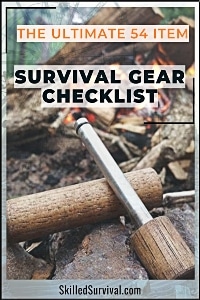
    Survival Gear Checklist eBook Cover -with fire piston on a rock and campfire in the background

    Want a free 54 item survival gear checklist?

    Click here to instantly download this Complete Checklist PDF. No purchase necessary.

    Hammock Vs Tent: Comparison Chart

    Hammock Vs Tent Comparison Chart

    The Contenders: A Brief Overview

    Hammocks

    Hammocks are the epitome of laid-back camping.

    They’re lightweight, compact, and offer a unique sleeping experience that keeps you off the ground and swaying gently between trees.

    But don’t be fooled by their relaxed demeanor—hammocks can be a serious contender for your camping and survival gear.

    Tents

    Tents are the classic choice for campers worldwide.

    They’ve been around for centuries, evolving from basic shelters to high-tech engineering marvels.

    Tents offer a familiar and reliable way to stay protected from the elements, with plenty of room to stretch out and store your gear.

    Bug Out Bag Checklist eBook Cover - a man walking away wearing a military style backpack

    Want a free 104 item bug out bag checklist?

    Click here to instantly download this Complete Checklist PDF. No purchase necessary.

    Comfort: Rest Easy or Toss and Turn?

    When it comes to getting a good night’s sleep in the great outdoors, comfort is king.

    Let’s see how hammocks and tents stack up.

    Hammocks: Cradle of Comfort

    Hammocks are like a cozy cocoon that cradles you in comfort.

    The gentle sway can lull you to sleep faster than a lullaby.

    Plus, you avoid the hard, uneven ground and any creepy crawlies that might be lurking.

    However, getting the perfect hang angle and finding the right trees can be a bit of a challenge.

    And if you’re a side or stomach sleeper, you might find a hammock a bit restrictive.

    Tents: Home Away from Home

    Tents provide a flat, stable surface to sleep on, which is great for side, back, and stomach sleepers alike.

    With a good sleeping pad and bag, you can achieve a level of comfort that’s hard to beat.

    Tents also offer more room to move around and store your gear, making them feel like a cozy little home in the wilderness.

    However, you’re still dealing with the hard ground and the potential for a less-than-perfectly-flat campsite.

    Weather Protection: Battling the Elements

    Mother Nature can be unpredictable, so your shelter needs to stand up to whatever she throws your way.

    Hammocks: High and Dry

    One of the biggest advantages of hammocks is that they keep you off the ground.

    This means you won’t have to worry about rain pooling under your tent or waking up to a flooded floor.

    With a proper rain fly, hammocks can keep you dry in most conditions.

    However, in extreme weather, like high winds or heavy snow, hammocks can be less stable and offer less protection than tents.

    Tents: Fortresses of Fabric

    Tents are designed to be all-weather shelters.

    With a good rainfly and proper setup, tents can handle rain, wind, and even snow.

    They offer more protection from the elements, especially in extreme conditions.

    The solid walls also provide a barrier against cold winds and help retain warmth. However, tents require more effort to keep dry and ventilated, especially in wet conditions.

    Setup and Portability: Quick and Easy or a Chore?

    Nobody wants to spend hours setting up camp, especially after a long day on the trail.

    Let’s see which option makes setting up camp a breeze.

    Hammocks: Quick and Lightweight

    Hammocks are a breeze to set up—once you get the hang of it (pun intended).

    With practice, you can have your hammock and rain fly up in minutes.

    They’re incredibly lightweight and pack down small, making them perfect for backpackers and ultralight hikers.

    The downside is that you need trees (or something sturdy) to hang your hammock, which isn’t always available.

    Tents: Versatile but Bulky

    Tents can take a bit longer to set up, especially if you’re dealing with poles, stakes, and rainflies.

    But once they’re up, they’re a reliable shelter that doesn’t depend on trees or other anchor points.

    Tents offer more versatility in where you can set up camp, but they tend to be bulkier and heavier than hammocks.

    This makes them less ideal for ultralight backpacking but great for car camping or short hikes.

    Survival Gear Checklist eBook Cover -with fire piston on a rock and campfire in the background

    Want a free 54 item survival gear checklist?

    Click here to instantly download this Complete Checklist PDF. No purchase necessary.

    Space and Storage: Room to Roam or Cozy and Compact?

    Whether you like to spread out or keep things minimal, space is a crucial factor in choosing your shelter.

    Hammocks: Cozy and Compact

    Hammocks are designed for one person (though double hammocks are available), and they don’t offer much room for gear storage.

    You’ll need to get creative with your packing and use gear slings or hang your backpack from a tree.

    This minimalistic approach is great for those who like to travel light and keep things simple.

    However, if you like having space to move around or keep your gear close, hammocks might feel a bit cramped.

    Tents: Spacious and Secure

    Tents come in a variety of sizes, from solo shelters to multi-person palaces.

    They offer plenty of room to move around and store your gear, keeping everything dry and secure.

    The extra space can make a big difference in comfort, especially on longer trips.

    The downside is that all this extra room comes at a cost in terms of weight and bulk.

    Versatility: Multi-Use Marvels

    Versatility is key when it comes to survival gear.

    Let’s see how hammocks and tents can pull double duty.

    Hammocks: More Than Just a Bed

    Hammocks can be incredibly versatile.

    Besides being a great place to sleep, they can also serve as a chair, lounger, or even a makeshift stretcher in an emergency.

    Some hammock setups can be converted into ground shelters if needed.

    However, their primary function is as a sleeping system, so their versatility is somewhat limited compared to a tent.

    Tents: Shelter Supreme

    Tents are the ultimate multi-use shelters.

    Besides providing a place to sleep, they can serve as a changing room, gear storage, and a refuge from bugs and weather.

    In an emergency, a tent can be used as a signal (bright colors), a rainwater collector (with the rainfly), or even a makeshift raft (in extreme cases).

    Their versatility and reliability make them a staple in any survival kit.

    Camping Gear Checklist eBook Cover - roasting marshmallows on sticks over a campfire

    Want a free camping essentials checklist?

    Click here to instantly download this Complete Checklist PDF. No purchase necessary.

    Cost: Budget-Friendly or Investment?

    When it comes to camping gear, you often get what you pay for.

    Let’s talk about the cost of hammocks vs. tents.

    Hammocks: Budget-Friendly

    Hammocks can be a more budget-friendly option, especially for solo campers.

    You can get a decent hammock setup for less than a comparable tent.

    However, you’ll also need to consider the cost of additional gear like a rain fly, bug net, and underquilt (for colder weather).

    Overall, hammocks can be a great option for those looking to save money and pack light.

    Tents: Investment in Comfort

    Tents tend to be more expensive, especially high-quality models.

    But this investment pays off in terms of comfort, space, and protection from the elements.

    If you’re serious about camping or survival, a good tent is worth every penny.

    Plus, tents are more versatile and can accommodate multiple people, making them a better value for group camping.

    The Verdict: Which is Best for You?

    Alright, folks, it’s decision time.

    Both hammocks and tents have their strengths and weaknesses, and the best choice depends on your specific needs and preferences.

    Choose a Hammock If:

    • You prioritize lightweight and compact gear.
    • You enjoy a unique sleeping experience and don’t mind a bit of a learning curve.
    • You often camp in areas with plenty of trees.

    Choose a Tent If:

    • You want maximum protection from the elements.
    • You need more space and storage for gear.
    • You prefer a versatile shelter that can handle a variety of conditions.

    My Personal Take

    Personally, I think there’s a place for both hammocks and tents in your camping arsenal.

    Hammocks are fantastic for short trips, ultralight backpacking, and summer camping.

    They’re a blast to use and add a bit of fun to your camping experience.

    Tents, on the other hand, are the go-to choice for longer trips, group camping, and harsher conditions.

    They offer the comfort, space, and protection you need when the going gets tough.

    So why not have both?

    That way, you’ll be prepared for any adventure that comes your way.

    Just remember, the best shelter is the one you have with you when you need it.

    So pick the one that fits your style, pack it up, and get out there!

    Why Trust Skilled Survival…

    Go here now to review a full breakdown of:

    • Who We Are
    • Our Credentials
    • Our Mission
    • & Product Recommendations…

    Here are a few highlights of our teams credentials & certifications:

    • Certified Member of a Mountain Search & Rescue Organization
    • Plant Emergency & Safety Leader for a Major Food Manufacturer
    • Member of the 10TH Mountain Division Hut Association
    • Certifications: Avalanche 1, WFR, CPR
    • Official Gear Tester for Numerous Outdoor Gear Companies
    • Countless Multiday Backpacking trips into Remote Wilderness
    • Bachelor’s Degree In Mechanical Engineering 
    • Bachelor’s Degree In Civil Engineering
    • Bachelor’s Degree In Biomedical Engineering

    “It takes 20 years to build a reputation and five minutes to ruin it.” – Warren Buffett

    We’re fully aware that trust is NOT something you GET but is EARNED.

    And we’ll continue to earn YOUR trust through our forthright and honest approach with each new Blog Post, Guide & Product we create…

    Prepare, Adapt & Overcome,

  • Cofounder Of Skilledsurvival.com & TheResilientLife.com
  • Born & Raised On A Rural Farm In The Midwest
  • Mechanical Engineering Grad From A Major University
  • Engineer With A Major Food Manufacturing Company
  • 10+ Years Researching, Writing, & Teaching Preparedness
  • Mission: Help Folks Stop Living A Life Fragile To The Future
  • The post Hammock vs Tent: Which Is Best For Camping & Survival? appeared first on Skilled Survival.

    A “Retail Apocalypse” Is Gaining Momentum All Over America. Is Your Favorite Chain Closing Stores?

    Why are retailers closing thousands of stores if the U.S. economy is in good shape?  Of course the truth is that the U.S. economy is not in good shape at all.  The cost of living crisis is absolutely crushing working families all over the nation, and U.S. consumers simply don’t have as much discretionary income as they once did.  Needless to say, our retailers are highly dependent on discretionary spending, and many of them have been reporting very disappointing sales numbers recently.  Sadly, the problems that our retailers are experiencing are only going to intensify as U.S. economic activity continues to slow down.

    According to CBS News, U.S. retailers have announced the closing of more than 3,000 locations in 2024…

    The retail industry is going through a tough time as it copes with inflation-weary consumers and a rash of bankruptcies, prompting chains to announce the closures of almost 3,200 brick-and-mortar stores so far in 2024, according to a new analysis.

    That’s a 24% increase from a year ago, according to a report from retail data provider CoreSight, which tracks store closures and openings across the U.S.

    The closing of 3,200 stores sounds really bad, but it is important to note that the quote above is from a CBS News story that was published on May 13th.

    Since that time, there have been a lot more store closing announcements.

    For example, last week we learned that Big Lots plans to close nearly 300 stores

    Two months after announcing plans to close about 40 stores nationwide due to financial woes, Big Lots has indicated on its website it intends to close almost 300 stores.

    The discount retailer announced in June it was facing several areas of financial strain that would result in 35-40 stores closing across the country. However, an audit of the Big Lots website on Aug. 2 reveals almost 300 stores are slated to close in the United States, including 18 in New England.

    Meanwhile, a home goods retailer that has been in business since 1890 is preparing to permanently shut down over 170 stores

    A home goods retailer is closing all of its more than 170 stores after filing for bankruptcy.

    Conn’s HomePlus, based in The Woodlands, Texas, operates stores in 15 states, including 11 in Louisiana. The company began in 1890 in Beaumont, TX. The Conn’s HomePlus store on Derek Drive in Lake Charles is included in the closures.

    Burdorf Interiors has been in business for even longer, but now they have also reached the end of the road

    Burdorf Interiors, a 157-year-old local business, is shutting down, according to Louisville Business First.

    The company announced the closure in a news release Wednesday.

    “It’s with a heavy heart that we are announcing the closing of Burdorf Interiors,” the release said. “The business has been open in several locations throughout Louisville since 1867.

    Just think about that.

    They opened their doors just after the end of the Civil War, and now it is all over.

    Drug store chains have been hit particularly hard by our ongoing retail apocalypse.

    Rite Aid was once a retail powerhouse that was expanding like crazy, but now they plan to close 780 stores

    Rite Aid, which was based in East Pennsboro Township near Camp Hill for decades and is now based in Philadelphia, filed for Chapter 11 bankruptcy in October to begin restructuring to significantly reduce its debt.

    Since October, the company has announced in bankruptcy filings the closing of 780 stores.

    Of course Dollar Tree has Rite Aid beat.

    During the course of the next few years, Dollar Tree plans to close almost 1,000 stores

    Dollar Tree on Wednesday said it plans to close nearly 1,000 stores over the next several years, after disclosing significant losses in its latest earnings report.

    The discount store chain lost $1.7 billion in the fourth quarter, down sharply from earnings of $452.2 million a year ago.

    Unfortunately, this is just the beginning.

    Analysts at UBS are projecting that approximately 45,000 stores will be permanently shut down in the U.S. during the years in front of us…

    About 45,000 retail stores may close in the coming years as retail’s physical footprint increasingly shifts to serve as fulfillment and distribution centers, UBS analysts led by Michael Lasser said in an April 22 report.

    Can you imagine what this is going to look like?

    Our landscape is going to be peppered with thousands upon thousands of derelict buildings that have been boarded up to keep criminals out.

    Of course some of our core urban areas already have lots and lots of empty commercial spaces that used to be thriving retail locations.

    One of the primary reasons why retailers are shutting down so many locations in core urban areas is because shoplifting in this country has risen to unprecedented levels.

    According to a recent survey that was conducted by LendingTree, close to a fourth of the entire population admits that they have shoplifted

    Nearly one-quarter of American adults have shoplifted, according to a new survey from LendingTree, the personal finance site. Roughly 1 in 20 consumers have shoplifted within the past year.

    Shoplifting is a complicated crime. The motive can range from adolescent rebellion to adult thrill-seeking to hand-to-mouth poverty. Many of us steal things we don’t need and won’t use.

    “I’ve learned that a lot of people have given shoplifting a try for lots and lots of reasons,” said Matt Schulz, chief credit analyst at LendingTree.

    At this point, shoplifting has become one of our primary national pastimes.

    And it is increasingly becoming a “team sport” in many parts of the nation.

    On Friday night, a team of approximately 50 teens stormed a 7-Eleven in Los Angeles and completely ransacked it

    A large group of juveniles used “bodily force” to ransack a 7-Eleven store in Los Angeles Friday night, authorities said.

    A Los Angeles Police Department spokesperson confirmed to KTLA that about 50 teens descended upon the 7-Eleven at the corner of Olympic and La Cienega boulevards in Pico-Robertson at 7:50 p.m.

    The teens, many of whom were wearing masks, forcibly stole property from the store, the spokesperson said.

    This particular incident barely made a blip in the news cycle.

    Why?

    These days, giant mobs loot stores so frequently that this sort of thing isn’t even considered to be very newsworthy anymore.

    The thin veneer of civilization that we are all depend upon is disintegrating right in front of our eyes, and our once great country is descending into complete and utter chaos.

    If things are this bad now, what will our cities look like once economic conditions become far more painful than they are currently?

    Michael’s new book entitled “Chaos” is available in paperback and for the Kindle on Amazon.com, and you can subscribe to his Substack newsletter at michaeltsnyder.substack.com.

    About the Author: Michael Snyder’s new book entitled “Chaos” is available in paperback and for the Kindle on Amazon.com. He has also written seven other books that are available on Amazon.com including “End Times”“7 Year Apocalypse”“Lost Prophecies Of The Future Of America”“The Beginning Of The End”, and “Living A Life That Really Matters”.  When you purchase any of Michael’s  books you help to support the work that he is doing.  You can also get his articles by email as soon as he publishes them by subscribing to his Substack newsletter.  Michael has published thousands of articles on The Economic Collapse BlogEnd Of The American Dream and The Most Important News, and he always freely and happily allows others to republish those articles on their own websites.  These are such troubled times, and people need hope.  John 3:16 tells us about the hope that God has given us through Jesus Christ: “For God so loved the world, that he gave his only begotten Son, that whosoever believeth in him should not perish, but have everlasting life.”  If you have not already done so, we strongly urge you to invite Jesus Christ to be your Lord and Savior today.

    The post A “Retail Apocalypse” Is Gaining Momentum All Over America. Is Your Favorite Chain Closing Stores? appeared first on The Economic Collapse.

    Are Religious Leaders In Israel Getting Ready To Sacrifice A Red Heifer?

    Is the world about to be shocked by the sacrifice of a red heifer in the land of Israel?  On September 15th, 2022 five perfect red heifers were flown into Israel from the state of Texas.  That got a lot of attention, but at that time all of those red heifers were too young to qualify for a red heifer sacrifice.  A couple of years have passed since then and now they are all old enough to qualify, and it is being reported that rituals that would be part of a red heifer sacrifice are being practiced.  The information that I am about to share with you is quite stunning, but it does not mean that a red heifer sacrifice is about to take place.  Ultimately, authorities in Israel will decide when they feel that the time is right.

    I think that those that brought the red heifers to Israel were planning to sacrifice one of them once they reached the proper age.

    But then the war started and that changed everything.  In fact, a spokesperson for Hamas identified the red heifers as one of the reasons why Israel was attacked on October 7th, 2023…

    Twenty miles north of Jerusalem, five Texas Red Angus cows chew on grass, oblivious to the fact that their mere presence in Israel was cited by Hamas as a reason for its massacre of Israeli civilians on October 7. The terror organization’s spokesperson says the cows were a justification for the attack, stating that bringing them to Israel was “an aggression” based on a “detestable religious myth.”

    Apparently Hamas was convinced that if a red heifer was sacrificed Israel would make a move to take control of the Temple Mount so that the rebuilding of the Temple could begin…

    Hamas has called the importation of the red cows an act of “aggression” because it falsely believes that the presence of the cows may ignite the rebuilding of the Temple, which the group thinks would end Arab control of the Temple Mount, where the Al-Aqsa Mosque is located.

    Those that are involved in the red heifer project did not want to inflame tensions even more, and so the sacrifice of a red heifer was put off for another time.

    But now that Hamas has almost been totally defeated, does that change things?

    Middle East Eye is reporting that some of those involved in the red heifer project have been practicing for the day when a sacrifice will finally be allowed…

    A group of religious Israelis have been pictured practising the ritual of the red heifer, which is meant to herald the building of a new Jewish temple on the site of Al-Aqsa Mosque.

    According to Jewish tradition, the ashes of a perfectly red heifer cow are needed for the ritual purification that would allow a third temple to be built in Jerusalem.

    Israeli journalist Yinon Magal was the one who originally broke this story.  The following is an English translation of what he posted on Twitter…

    “Temple worshipers are now practicing the mitzvah [religious duty] of a red cow in front of the Temple Mount, which will enable the return of purity and the observance of all the temple mitzvahs,” posted journalist Yinon Magal on Tuesday, along with a picture of activists from the Temple Institute.

    The photograph that accompanied that post is below…

    There are two things that immediately jump out at me from this picture.

    Number one, the cow that we see is most certainly not one of the five red heifers.

    In fact, it is obviously not anywhere close to being a perfect red heifer.

    Number two, this photograph was not taken on the Mount of Olives, because we can see the Mount of Olives in the background.

    When they decide that the time has finally come for a red heifer to be sacrificed, it will be sacrificed on the Mount of Olives.

    But of course practice for such a ceremony can be conducted anywhere.

    Ever since 1921, Jewish people have been prohibited from entering the Temple Mount unless they are ritually clean, and they can’t be ritually clean without the ashes of a red heifer

    The Chief Rabbinate of Jerusalem has also, since 1921, officially banned Jews from entering the Temple Mount. It ruled that Jews are forbidden to enter the site unless “ritually clean”, which is impossible without the ashes of a red heifer.

    Many religious leaders are very much looking forward to the day when the ashes of a red heifer are finally available.

    But one official from the Temple Institute recently told the Daily Wire that there “is no plan right now for using a kosher red heifer, killing it and turning it into ashes”…

    Conducting a red heifer ceremony is controversial in rabbinic circles, and there is far from a consensus over whether it can even be done, according to the Temple Institute, which provides rabbinical supervision for the cows.

    “There is no plan right now for using a kosher red heifer, killing it and turning it into ashes,” Yitzchak Reuven, the director of international development for the Temple Institute told The Daily Wire. “Anyone saying this is making it up. We will only do this when the time is right, because there is no point in doing it if the Jewish and rabbinic world won’t accept it.”

    That sounds pretty definitive.

    So even though they may be doing practice runs, we may not see the real thing for a while.

    Meanwhile, the clock is ticking for the five red heifers.

    In a previous article, I explained that the Temple Institute has determined that a red heifer does not qualify for a red heifer sacrifice until its third year has begun…

    As for the time the red heifer may be used for this commandment –  the Sages state that it is valid when it reaches maturity, i.e. from the beginning of its third year. [13] From this age and onward the red heifer is valid without age limitations. Though, ideally, one should not wait till it passes the age of four, lest it grows hairs of colors that deem it invalid. [14]

    All of the red heifers that were flown into Israel in 2022 are now old enough to qualify.

    But as time passes, there is a risk that these red heifers will develop hairs that are not red and be disqualified.

    More than half a million dollars has already been spent on these particular red heifers, and if every single one of them is ultimately disqualified those involved in the project will have to start from scratch.

    I don’t think they want to do that.

    So we shall see what happens.  Personally, I have a feeling that there is more going on behind the scenes than we are being told.

    Michael’s new book entitled “Chaos” is available in paperback and for the Kindle on Amazon.com, and you can subscribe to his Substack newsletter at michaeltsnyder.substack.com.

    About the Author: Michael Snyder’s new book entitled “Chaos” is available in paperback and for the Kindle on Amazon.com. He has also written seven other books that are available on Amazon.com including “End Times”“7 Year Apocalypse”“Lost Prophecies Of The Future Of America”“The Beginning Of The End”, and “Living A Life That Really Matters”.  When you purchase any of Michael’s  books you help to support the work that he is doing.  You can also get his articles by email as soon as he publishes them by subscribing to his Substack newsletter.  Michael has published thousands of articles on The Economic Collapse BlogEnd Of The American Dream and The Most Important News, and he always freely and happily allows others to republish those articles on their own websites.  These are such troubled times, and people need hope.  John 3:16 tells us about the hope that God has given us through Jesus Christ: “For God so loved the world, that he gave his only begotten Son, that whosoever believeth in him should not perish, but have everlasting life.”  If you have not already done so, we strongly urge you to invite Jesus Christ to be your Lord and Savior today.

    The post Are Religious Leaders In Israel Getting Ready To Sacrifice A Red Heifer? appeared first on End Of The American Dream.

    Hammock vs Tent: Which Is Best For Camping & Survival?

    Hammock Vs TentToday, we’re diving into one of the most heated debates among outdoor enthusiasts: hammocks vs. tents.

    That’s right, we’re going to pit these two camping shelters against each other and see which one comes out on top.

    So grab your compass, lace up your boots, and let’s get this showdown started!

    Survival Gear Checklist eBook Cover -with fire piston on a rock and campfire in the background

    Want a free 54 item survival gear checklist?

    Click here to instantly download this Complete Checklist PDF. No purchase necessary.

    Hammock Vs Tent: Comparison Chart

    Hammock Vs Tent Comparison Chart

    The Contenders: A Brief Overview

    Hammocks

    Hammocks are the epitome of laid-back camping.

    They’re lightweight, compact, and offer a unique sleeping experience that keeps you off the ground and swaying gently between trees.

    But don’t be fooled by their relaxed demeanor—hammocks can be a serious contender for your camping and survival gear.

    Tents

    Tents are the classic choice for campers worldwide.

    They’ve been around for centuries, evolving from basic shelters to high-tech engineering marvels.

    Tents offer a familiar and reliable way to stay protected from the elements, with plenty of room to stretch out and store your gear.

    Bug Out Bag Checklist eBook Cover - a man walking away wearing a military style backpack

    Want a free 104 item bug out bag checklist?

    Click here to instantly download this Complete Checklist PDF. No purchase necessary.

    Comfort: Rest Easy or Toss and Turn?

    When it comes to getting a good night’s sleep in the great outdoors, comfort is king.

    Let’s see how hammocks and tents stack up.

    Hammocks: Cradle of Comfort

    Hammocks are like a cozy cocoon that cradles you in comfort.

    The gentle sway can lull you to sleep faster than a lullaby.

    Plus, you avoid the hard, uneven ground and any creepy crawlies that might be lurking.

    However, getting the perfect hang angle and finding the right trees can be a bit of a challenge.

    And if you’re a side or stomach sleeper, you might find a hammock a bit restrictive.

    Tents: Home Away from Home

    Tents provide a flat, stable surface to sleep on, which is great for side, back, and stomach sleepers alike.

    With a good sleeping pad and bag, you can achieve a level of comfort that’s hard to beat.

    Tents also offer more room to move around and store your gear, making them feel like a cozy little home in the wilderness.

    However, you’re still dealing with the hard ground and the potential for a less-than-perfectly-flat campsite.

    Weather Protection: Battling the Elements

    Mother Nature can be unpredictable, so your shelter needs to stand up to whatever she throws your way.

    Hammocks: High and Dry

    One of the biggest advantages of hammocks is that they keep you off the ground.

    This means you won’t have to worry about rain pooling under your tent or waking up to a flooded floor.

    With a proper rain fly, hammocks can keep you dry in most conditions.

    However, in extreme weather, like high winds or heavy snow, hammocks can be less stable and offer less protection than tents.

    Tents: Fortresses of Fabric

    Tents are designed to be all-weather shelters.

    With a good rainfly and proper setup, tents can handle rain, wind, and even snow.

    They offer more protection from the elements, especially in extreme conditions.

    The solid walls also provide a barrier against cold winds and help retain warmth. However, tents require more effort to keep dry and ventilated, especially in wet conditions.

    Setup and Portability: Quick and Easy or a Chore?

    Nobody wants to spend hours setting up camp, especially after a long day on the trail.

    Let’s see which option makes setting up camp a breeze.

    Hammocks: Quick and Lightweight

    Hammocks are a breeze to set up—once you get the hang of it (pun intended).

    With practice, you can have your hammock and rain fly up in minutes.

    They’re incredibly lightweight and pack down small, making them perfect for backpackers and ultralight hikers.

    The downside is that you need trees (or something sturdy) to hang your hammock, which isn’t always available.

    Tents: Versatile but Bulky

    Tents can take a bit longer to set up, especially if you’re dealing with poles, stakes, and rainflies.

    But once they’re up, they’re a reliable shelter that doesn’t depend on trees or other anchor points.

    Tents offer more versatility in where you can set up camp, but they tend to be bulkier and heavier than hammocks.

    This makes them less ideal for ultralight backpacking but great for car camping or short hikes.

    Survival Gear Checklist eBook Cover -with fire piston on a rock and campfire in the background

    Want a free 54 item survival gear checklist?

    Click here to instantly download this Complete Checklist PDF. No purchase necessary.

    Space and Storage: Room to Roam or Cozy and Compact?

    Whether you like to spread out or keep things minimal, space is a crucial factor in choosing your shelter.

    Hammocks: Cozy and Compact

    Hammocks are designed for one person (though double hammocks are available), and they don’t offer much room for gear storage.

    You’ll need to get creative with your packing and use gear slings or hang your backpack from a tree.

    This minimalistic approach is great for those who like to travel light and keep things simple.

    However, if you like having space to move around or keep your gear close, hammocks might feel a bit cramped.

    Tents: Spacious and Secure

    Tents come in a variety of sizes, from solo shelters to multi-person palaces.

    They offer plenty of room to move around and store your gear, keeping everything dry and secure.

    The extra space can make a big difference in comfort, especially on longer trips.

    The downside is that all this extra room comes at a cost in terms of weight and bulk.

    Versatility: Multi-Use Marvels

    Versatility is key when it comes to survival gear.

    Let’s see how hammocks and tents can pull double duty.

    Hammocks: More Than Just a Bed

    Hammocks can be incredibly versatile.

    Besides being a great place to sleep, they can also serve as a chair, lounger, or even a makeshift stretcher in an emergency.

    Some hammock setups can be converted into ground shelters if needed.

    However, their primary function is as a sleeping system, so their versatility is somewhat limited compared to a tent.

    Tents: Shelter Supreme

    Tents are the ultimate multi-use shelters.

    Besides providing a place to sleep, they can serve as a changing room, gear storage, and a refuge from bugs and weather.

    In an emergency, a tent can be used as a signal (bright colors), a rainwater collector (with the rainfly), or even a makeshift raft (in extreme cases).

    Their versatility and reliability make them a staple in any survival kit.

    Camping Gear Checklist eBook Cover - roasting marshmallows on sticks over a campfire

    Want a free camping essentials checklist?

    Click here to instantly download this Complete Checklist PDF. No purchase necessary.

    Cost: Budget-Friendly or Investment?

    When it comes to camping gear, you often get what you pay for.

    Let’s talk about the cost of hammocks vs. tents.

    Hammocks: Budget-Friendly

    Hammocks can be a more budget-friendly option, especially for solo campers.

    You can get a decent hammock setup for less than a comparable tent.

    However, you’ll also need to consider the cost of additional gear like a rain fly, bug net, and underquilt (for colder weather).

    Overall, hammocks can be a great option for those looking to save money and pack light.

    Tents: Investment in Comfort

    Tents tend to be more expensive, especially high-quality models.

    But this investment pays off in terms of comfort, space, and protection from the elements.

    If you’re serious about camping or survival, a good tent is worth every penny.

    Plus, tents are more versatile and can accommodate multiple people, making them a better value for group camping.

    The Verdict: Which is Best for You?

    Alright, folks, it’s decision time.

    Both hammocks and tents have their strengths and weaknesses, and the best choice depends on your specific needs and preferences.

    Choose a Hammock If:

    • You prioritize lightweight and compact gear.
    • You enjoy a unique sleeping experience and don’t mind a bit of a learning curve.
    • You often camp in areas with plenty of trees.

    Choose a Tent If:

    • You want maximum protection from the elements.
    • You need more space and storage for gear.
    • You prefer a versatile shelter that can handle a variety of conditions.

    My Personal Take

    Personally, I think there’s a place for both hammocks and tents in your camping arsenal.

    Hammocks are fantastic for short trips, ultralight backpacking, and summer camping.

    They’re a blast to use and add a bit of fun to your camping experience.

    Tents, on the other hand, are the go-to choice for longer trips, group camping, and harsher conditions.

    They offer the comfort, space, and protection you need when the going gets tough.

    So why not have both?

    That way, you’ll be prepared for any adventure that comes your way.

    Just remember, the best shelter is the one you have with you when you need it.

    So pick the one that fits your style, pack it up, and get out there!

    Why Trust Skilled Survival…

    Go here now to review a full breakdown of:

    • Who We Are
    • Our Credentials
    • Our Mission
    • & Product Recommendations…

    Here are a few highlights of our teams credentials & certifications:

    • Certified Member of a Mountain Search & Rescue Organization
    • Plant Emergency & Safety Leader for a Major Food Manufacturer
    • Member of the 10TH Mountain Division Hut Association
    • Certifications: Avalanche 1, WFR, CPR
    • Official Gear Tester for Numerous Outdoor Gear Companies
    • Countless Multiday Backpacking trips into Remote Wilderness
    • Bachelor’s Degree In Mechanical Engineering 
    • Bachelor’s Degree In Civil Engineering
    • Bachelor’s Degree In Biomedical Engineering

    “It takes 20 years to build a reputation and five minutes to ruin it.” – Warren Buffett

    We’re fully aware that trust is NOT something you GET but is EARNED.

    And we’ll continue to earn YOUR trust through our forthright and honest approach with each new Blog Post, Guide & Product we create…

    Prepare, Adapt & Overcome,

  • Cofounder Of Skilledsurvival.com & TheResilientLife.com
  • Born & Raised On A Rural Farm In The Midwest
  • Mechanical Engineering Grad From A Major University
  • Engineer With A Major Food Manufacturing Company
  • 10+ Years Researching, Writing, & Teaching Preparedness
  • Mission: Help Folks Stop Living A Life Fragile To The Future
  • The post Hammock vs Tent: Which Is Best For Camping & Survival? appeared first on Skilled Survival.