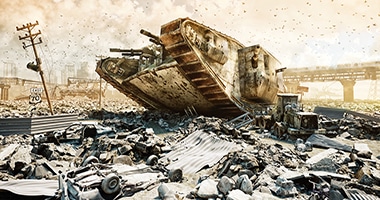
Survival Gear is the most unused product until a natural disaster happens, then it’s the most desired products, but usually too late to help those that really need the help.

We sell around the World, and pride ourselves on offering a level of customer service that we would want to see ourselves if we were shopping online.
Our product ranges change regularly, so we hope that you come back to our sites to see some of the fantastic offers that we regularly have.

Get In Touch

Lights, Camera, Uzis: The History of Hollywood’s Uzi Love Affair

@media (max-width:576px) { .read-more-content { height: 930em; } }

Joining the AK-47, the Israeli-made Uzi arguably stands among the most infamous firearms ever produced. To gun-grabbing activists and anti-Second Amendment politicians, all submachine guns take on the description of Uzis. Yet, the fact remains there might be similar looking weapons, and even variations based on the original, but there is really only one true Uzi.

The History of the Uzi in Hollywood

Developed after World War II by Major Uziel “Uzi” Gal of the Israel Defense Forde (IDF), the compact submachine gun (SMG) became one of the first domestically designed and produced firearms in the newly independent Middle Easter state. Certainly not the first weapon utilizing a telescoping bolt design, allowing magazine placement within the pistol grip, the Uzi became the first gun to successfully incorporate the design.

The open-bolt, blowback-operated SMG, first issued to IDF special forces in 1954, became general issue two years later with paratroopers and tank and armored vehicle crews. However, due to its compact size, the Uzi never became standard issue for the IDF. Yet it proved ideal for close-quarters combat and in special operations.

Best-Kept Military Secret

First used in the Sinai desert against Egyptian forces during the Suez Crisis, the weapon’s compact size helped lead to its international success. From the 1960s through the 1980s, more Uzi SMGs sold and went to the military, law enforcement and security forces than any other SMG ever made.

A surprising fact is that despite its success and international popularity, it wasn’t actually until 1976 that the mainstream American public ever likely even knew of the gun’s existence. It was featured in no movies, and apart from some footage of the IDF engaged in combat during the Six Day War in 1967 or the Yom Kippur War in 1973, it rarely appeared in the media and might just have been the best-kept secret in firearms.

That changed on June 27, 1976, when an Air France Airbus A300 jet airliner with 248 passengers was hijacked by Popular Front for the Liberation of Palestine terrorists and members of the German Revolutionary Cells.

It may have lacked any big names, but the Israeli-made film Operational Thunderbolt was the most accurate depiction of the July 4, 1976 raid on the Entebbe airport to free hostages being held by Palestinian terrorists. Dozens of Uzis could be seen in the film

The Entebbe Raid

It was on July 4, 1976, while across the United States bicentennial celebrations were underway, that a daring raid by IDF commandos took place at the Entebbe airport in Uganda to free those hostages. It became known as Operation Thunderbolt, conducted under the command of Lt. Col. Yonathan “Yoni” Netanyahu–younger brother of Prime Minister Benjamin Netanyahu. The operation ultimately killed all seven hijackers/terrorists, along with upwards of 45 Ugandan soldiers and three hostages. Lt. Col. Netanyahu also fell during the operation–the only member of the IDF killed during the raid.

The Uzi received its closeup, chief among the firearms used during the raid. Three different films completed production–two for American network TV–within months of the daring operation.

The first, Victory at Entebbe, aired on ABC in December 1976, less than six months after the raid. It featured a surprising number of stars including Kirk Douglas, Anthony Hopkins and Burt Lancaster, but unfortunately it didn’t feature any Uzis. However, the NBC production, Raid on Entebbe, aired just a month later and its cast included Peter Finch, James Woods and Charles Bronson. More importantly, it was the first movie to feature IDF soldiers armed with the Uzi.

First of Many

While it wasn’t technically a “big screen” debut, the Uzi had its moments. In the film terrorists/hijackers and the IDF alike are armed with the SMG, an inaccuracy as the terrorists were reported to be armed with Czechoslovakian-made CZ Vz. 61 E Skorpions and later were equipped with AK-47s provided by the Ugandan forces.

TV character actor Stephen Macht, who played Netanyahu, has the notable distinction of being the first “star” to carry the Uzi in a movie. He certainly wasn’t to be the last. Nor was Raid on Entebbe to be the final word on the operation.

Charles Bronson wilds an Uzi in Raid on Tntebbe.

A third movie, Operation Thunderbolt, produced in Israel and released int he summer of 1977, elevated to the best of the bunch. It proved vastly superior to the 2018 Seven Days in Entebbe.

Operation Thunberbolt lacked in marquee stars–Klaus Kinsi and Sybil Danning served as the biggest international names. But the productions utilized full-sized exterior sets, including three of the Hercules transports used during the actual raid. The IDF commandos correctly carry the Uzi. Of note: this film marks the first to use actual Soviet-made AK-47s as well.

Supporting Roles

Despite appearing in two of the three early films about the Entebbe raid, the Uzi wasn’t quite a star. The word “Uzi” truly entered the modern vernacular by the 1980s. But in 1976, the SMG appeared in the film Two-Minute Warning, starring John Cassavetes. A year later, sex symbol Raquel Welch wielded an Uzi in Stuntwoman. Robert Shaw’s character in Black Sunday–the final role before his death–used an Uzi as well. In this film, the Uzi takes on a suppressor in film for the first time.

Raquel Welch was arguably the first big screen "starlet" to be seen with an Uzi in the film Stuntwoman

In subsequent films, the Israeli SMG remained largely in the background such as in the 1978 film Midnight Express, and few apart from firearms enthusiasts likely could have identified the weapon by name.

The first time the gun appeared in extended combat scenes came in the 1978 mercenary film The Wild Geese, used alongside the L1A1 SLR (FN FAL) and Sterling L2A1 SMG. A total of five identical Uzis saw action in the production, filmed in South Africa. Both Richard Burton and Roger Moore carry one during the film.

Cry Havoc

Arguably the first film to even use the name of the weapon came in another mercenary-themed film, 1980’s The Dogs of War, starring Christopher Walken, Tom Berenger and Paul Freeman. All three of the soldiers of fortune carried one in the film’s climactic raid.

The process of buying the firearms and ammunition made up a significant part of the story as does the smuggling of the contraband weapons out of France. In Frederick Forsyth’s novel, German MP40s from World War II saw action in the armed coup in Africa. But the filmmakers changed it to Uzis–finding enough functioning surplus MP40s for the production likely proved impossible.

In fact, there weren’t even enough Uzis! In addition to real Uzis that the principal stars carried, in some scenes Military Armament Corporation Model 10, more commonly and erroneously known as the MAC-10, were dressed up to look like the Israel SMG. Those faux MAC-Uzis, as they have become known, showed up again in the films Stripes, Raw Deal and The Killer Elite, as well on TV’s The A-Team.

During the final act of The Dogs of War, Walken’s character carries an Uzi fitted with a Sionics Two Stage Sound Suppressors and Star-Lite scope. Accurately depicting a night vision scope, the suppressor produced the near silent “pop, pop” sounds common with movie “silencers.”

Tom Berenger with an Uzi in Dogs of War.

Decade of the Uzi

It could be argued the early to mid-1980s were the “golden age” for the Uzi, as it was seen in numerous films including Death Wish 2 (1982), Uncommon Valor (1983) and even in Scarface (1983), where Al Pacino’s character Tony Montana used one after he dropped his “little friend.”

The firearm featured a call out directly in the 1984 teen horror comedy Night of the Comedy, which humorously depicted the death of most of humanity. In once scene the two teenage female survivors discuss their jamming-prone MAC-10s. So one suggests there Green Beret father–if around–would get them Uzis!

Perhaps the biggest shout-out to the Uzi to date occurred in James Cameron’s 1984 science fiction classic The Terminator when Arnold Schwarzenegger’s T-800 character asks to see various firearms at a Los Angeles gun shop and simply utters, “Uzi 9mm.”

Not Quite Right

However, there were a few notable problems with that scene. First, the Uzi had a short barrel rather than the 16-inch barrel fitted to the civilian semi-automatic Uzi carbine. Moreover, it is clearly an open-bolt Uzi, meaning the fully-automatic version and not the semi-automatic Carbine. Director Cameron had later tried to suggest that the T-800 may have converted the Uzi, but without the right tools, not to mention parts, such a conversion would be nearly impossible. Still as the gun shop owner (played by Dick Miller) noted, the T-800 knows his guns and the Uzi was a “fine choice.”

The T-800 in The Terminator is armed with the "Uzi 9mm" he acquired earlier in the film

By the late 1980s and early 1990s, the Uzi practically became a household name, and it appeared in more than two dozen additional movies and was carried by such actors as Mel Gibson (Air America),Kevin Spacey (The Usual Suspects), Harrison Ford (Patriot Games), John Travolta (Face/Off), Hilary Duff (War, Inc.) and Colin Farrell (Seven Psychopaths).

The Uzi has also appeared in countless TV shows including Doctor Who, Knight Rider, Miami Vice, The Sopranos, Breaking Bad and The Walking Dead.

Small Gun, Big Screen

The Uzi was much like the Baldwin family—there was more than one that appeared in the movies. This included the semi-auto Uzi Carbine, which has even stood in at times for the original Uzi including in 2004’s Hotel Rwanda, which depicts the firearm in use with UN forces, who wouldn’t have carried the semi-automatic civilian weapon.

In addition, there are the Mini and Micro Uzis. The former was introduced in 1980 and was largely employed with security forces and paramilitary forces that required a compact and even concealable SMG. It was first seen in the 1986 action film The Delta Force, starring Chuck Norris and Lee Marvin. Filmed primarily in Israel, the Mini Uzi was readily available to the armorers, but it subsequently appeared in more than a dozen films including several Hong Kong action films of the late 1980s and early 1990s.

The even more “compact” Micro Uzi introduced in 1986 has also been a staple in action films beginning with 1985’s Commando. Chuck Norris also double-carried Micro Uzis in the 1985 remake of Invasion U.S.A. However, many of the weapons seen in these films aren’t actually the mil-spec versions, but rather the civilian versions imported and sold by Action Arms. Regardless of the model, few weapons have been as iconic as the Uzi.

This article originally appeared in the April-May 2021 issue of Ballistic Magazine. Get your print or digital copy or subscription at OutdoorGroupStore.com.

Didn’t find what you were looking for?

The post Lights, Camera, Uzis: The History of Hollywood’s Uzi Love Affair appeared first on Ballistic Magazine.

14 Over-Hyped & Under-Appreciated Prepping Topics

You’re probably spending way too much time on overhyped prepping topics.

AND way too little time in the underappreciated areas.

That’s not good!

Your time and energy are limited resources.

So using them wisely is critical to make meaningful progress.

And I truly believe after you hear all 14 of these, I’ll change your mind on what’s important and what’s NOT.

NOTE: You can either continue to read this article OR watch the following video (both cover the same content):

↓ 14 Overhyped & Under-Appreciated Prepping Topics ↓

Are You Ready For The Tough Times Ahead? Take My 60 Sec Quiz To See If You’re Part Of ‘The Fragile Masses’ Or Not… Start Quiz Now!

Let’s jump right into the first “Over-Hyped” prepper topic:

1. Wasting Time Trying to Predict The Next Disaster

This is one of the biggest wastes of time out there.

As humans, we have a terrible track record of predicting anything.

Sure, we can predict some minor things, like tomorrow’s weather or your dinner plans.

But not bigger, broader “societal level” predictions.

I’m talking about significant events related to financial markets or future disasters.

And the more specific the predictions, the bigger the waste of time they tend to be.

For example:

Here’s an excerpt from Howard Mark’s recent investing memo “Thinking About Macro”:

“In December of 2019, the median forecast on Wall Street held that the S&P500 would rise 2.7% in 2020. What was the actual return? 18.4%! It was too low by 16 percentage points. Worst yet, in April 2020, after the Pandemic had taken hold (and after the congress and the fed had taken action), the consensus forecast return was revised downward to a negative 11%. That’s nearly 30 percentage points below the eventual outcome.”

These “professional” forecasters are pretty much worthless.

We can’t predict the future when it comes to markets and disasters.

So, instead of predicting the next disaster, focus on being more resilient.

Spend time becoming less fragile to ALL future disasters!

You don’t need to predict a future disaster – assume there will be turmoil.

And then focus on taking action to be ready for it.

OK, here’s a quote from one of my favorite books on understanding risks in our lives, Antifragile:

“You can’t predict in general, but you can predict that those who rely on predictions are taking more risks, will have some trouble, perhaps even go bust. Why? Someone who predicts will be fragile to prediction errors….”

I think this is saying that those who spend time predicting and “believing” they can figure out BEFORE EVERYONE ELSE are fooling themselves.

They’re fragile because they assume their prediction powers will help them see the future.

Giving them time to “move out of the way” before disaster strikes.

But they rely on their “false sense of prediction accuracy” to protect themselves.

Instead, they should invest their time and energy in becoming resilient to ANY future mishaps.

One more quote from the book “The Black Swan” (by the same author) sums it all up by simply saying:

“Invest in preparedness, not in prediction.”

2. Mastering Wilderness Survival Skills

OK, before you get upset with me, let me say there is SOME value in learning Survival Skills.

It’s just not as much as you think.

Let me ask you a few questions:

What are the odds of spending a night in a debris shelter?

Extremely low. You’d need to be stranded in the woods without a vehicle or backpack.

And be more than a day’s hike from any town or village.

It’s just not likely to happen.

Or what about starting a fire with sticks?

Nearly zero if you always keep an electric lighter or Ferro rod with you.

How about making your own bow and arrows from scratch?

Perhaps this skill comes in handy in a worst-case mass human extinction situation.

But if that happens, you’ll find both by scavenging sporting stores or abandoned homes.

Now compare those bushcraft skills that you’ll likely never use to the following:

What are the odds of having to live without electricity for a week?

This happens to millions of people throughout the world ALL THE TIME.

What about a deadly pandemic where you don’t want to go into a grocery store without a gas mask?

Seems much more possible nowadays.

Or how about a wildfire tearing through your neighborhood?

Again, it happens every year, and it’s getting worse; that’s why you should have a bug-out plan

So, unless you become unlucky and end up stranded on an island, most bushcraft skills are just a fun hobby AT BEST.

They’re mostly just for entertainment purposes (like the video below):

↓ Primitive Technology: Wattle And Daub Hut ↓

So, instead, focus more on your limited time, energy, and resources where you’ll get the most bang for your buck.

Abilities that will significantly improve your overall resiliency to the most likely emergencies.

3. Buying All the Latest Survival Gadgets

I enjoy checking out all the latest survival gear and gadgets on the market.

It’s cool to analyze them and even test them out occasionally.

The latest tactical watches are chalked full of technology, but they have a high price tag to match.

But again, these fancy new gadgets are NOT likely to be the gear you need in most emergencies.

Most essential survival gear has already been invented.

And while this “old school gear” seems dull, they’re proven and work.

For example:

These are “older” but proven technologies that are much more important than the coolest survival gadgets you see coming on the market today.

Thus, making most of the latest survival gadgets an overhyped prepping topic.

4. Paying Attention To Overly Fear-Based Survival Products

I hate hyper-fear-based marketing.

Perhaps you know what I’m talking about. It’s those 30-minute video sales pitches that tell a doomsday story.

Often these stories are about a 3rd world country OR the coming apocalypse.

Ancient biblical predictions are being proven today, and the end times are here.

The reason marketers do it is because IT WORKS.

But it’s not accurate.

It’s a fear-based story to get you to buy their product to reduce the discomfort they created.

In my opinion, it’s not ethical. It’s pure manipulation.

It works because it preys on humans’ attention filters.

We don’t have the mental capacity to consume even a fraction of all the available information.

So we use a simple filter to ignore the mundane, boring stuff.

And only allow the most dramatic and exciting stuff to get through.

That’s why most media stories are negative.

They focus on storms, shootings, diseases, floods, building collapses, plane crashes, etc.

The more dramatic the news, the more we listen and pay attention to it.

It’s hardwired into our brains for evolutionary reasons.

Because those who paid attention to a wild animal attack survived, and those who didn’t survive.

And the media and marketers know fear is the easiest way to grab and keep your attention—fear in the name of profits.

Instead, I use reason and logic to talk to you with respect.

I want to see EVERYONE work towards becoming more resilient over time.

Sure, some urgency is called for; you never know when the next big collapse or disaster will be.

And a bit of urgency can help create a healthy amount of motivation.

But you should ensure that the product being pitched has real value first.

They should be willing to EARN YOUR TRUST before you buy.

If everything you hear is the end of the world, scary and fear-based, AND their $37.95 product is the ONLY solution to this problem.

And everyone who doesn’t buy it will perish tomorrow.

Then shut it off immediately and look for a product that has more respect for you.

5. Continuous “News” Cycle Consumption

This prepping topic is somewhat related to the previous one.

What is objective truth nowadays?

Who the hell knows?

Seriously, it seems like TRUTH is a myth of yesteryears.

Or maybe the past truth was only an illusion held firm by a select number of media outlets…

But it’s seemingly harder to get to the heart of any issue without a political spin or a hidden agenda tied to it.

And the news media makes money off YOU PAYING ATTENTION.

They put those flashing red scrolling emergency banners at the top and bottom of your screens because they help increase your watch time.

↓ Breaking News Flash Banner ↓

The more people watch, the longer they watch, and the more they can charge advertisers during commercial breaks.

Most news outlets (cable, radio, newspapers, etc.) use “controversy” and “fear” to get you hooked.

For example:

When listener numbers on hardcore political talk radio show start to soften, the producers prod the on-air hosts to stir up the pot.

To create some anger to get their listeners hot and bothered.

It’s an outrage machine (see the video below for more details):

↓ Dan Carlin: Fake News, Misinformation, and Being And Informed Citizen ↓

And if you consider yourself to be “tuned in” and “in the know,” you’re probably paying a high price to be “informed.”

You’re paying for this “informed status” at the cost of your internal peace and happiness.

You’re handing over your calm for what?

Restless nights, arguments with family and neighbors, mistrust of anyone with a different political stance…

I think it’s a terrible trade-off.

Because I believe statistics and narratives can be spun in any way the media desires.

So what you hear is what you WANT to hear.

Instead of having a productive discussion about how best to live as a society – nowadays, it’s all about hate, blame assignment, and finger-pointing.

And it’s just not helpful.

Instead, I focus most of my time and energy on things I CAN CONTROL.

And for the most part, the 24-hour news has minimal impact on my life and resiliency.

It’s got an insanely high noise-to-signal ratio.

Most “news” you consume daily is noise.

Very little is essential a few months or even a year later (minimal signal).

It’s mostly just junk (or noise).

The more information you consume daily, the more noise gets in.

And if something is truly a signal, don’t worry; you’ll hear about it in other ways.

Your neighbors will mention it, or your emails will include a reference.

Here’s what the book Antifragile has to say about the “signal to noise” problem:

“Thanks to [constant news cycles], we are living more and more in virtual reality, separated from the real world, a little bit more every day, while realizing it less and less. Consider that every day, 6,200 persons die in the United States, many of preventable causes. But the media only reports the most anecdotal and sensational cases (hurricanes, freak incidents, small plane crashes) giving us a more and more distorted map of real risks. In an ancestral environment, the anecdote, the “interesting” is information; no longer today. Likewise, by presenting us with explanations and theories the media induces an illusion of understanding the world.”

Well said.

OK, let’s move on to the over-appreciated prepping topics to which you should pay more attention, but you probably are not.

6. Measuring How Resilient You Are (OR Not)

I want to start with a couple more prepping quotes from Antifragile (again, it’s one of my favorite books):

“It is far easier to figure out if something is fragile than to predict the occurrence of an event that may harm it.”

“Not seeing a tsunami or an economic event coming is excusable; building something fragile to them is not.”

So stop spending so much you’re your time-consuming news and trying to predict the next disaster.

Instead, reallocate that same time and energy into activities and self-improvement with a REAL IMPACT when a future disaster arrives.

Just assume the future holds several major disasters in your lifetime.

Then do something about it.

Go from being a part of “The Fragile Masses” into “The Resilient Few.”

That’s what my website community, “The Resilient Life,” is all about.

We challenge you to take care of the preparedness basics. And then, once those are covered, we give you the motivation to keep going.

To become as resilient to the unknown future as you’re comfortable with.

Go here if you’re interested in learning more about TheResilientLife

7. Don’t Ignore The Prepping Basics

Prepping basics may seem boring to some:

Two weeks of food, 2 weeks of water, medical supplies, yawn…

But the problem is, those “basics” are the building blocks of becoming resilient.

If only everyone in the world had the prepping basics in place. As a human species, we would be much more resilient to all future tragedies (global or local).

But unfortunately, it’s more fun to focus on more interesting topics.

So, if you’re reading this right now and don’t have your prepping basics in place (or you’re wondering what basics I’m talking about), go here now.

8. Honing Your Situational Awareness

Here’s the deal.

Some folks have good situational awareness, while others don’t.

I don’t know if some folks are just blessed by their DNA and brain makeup, or perhaps it’s the way their parents raised them.

It’s probably some combination of both.

But man, if you don’t have good situational awareness, you’re in real trouble when things get chaotic.

It’s hard to think straight when you’re afraid.

And situational awareness is not just during times of chaos – it’s anytime you’re in new or public spaces.

When I go somewhere new, I take stock of the “situation,” like the place’s layout, before relaxing and enjoying myself.

I want to know where the exits are (in case of a fire OR a mass shooting).

I want to take stock of the folks I’m with and watch for anyone who doesn’t quite belong.

Since I have little kids, when I go to the grocery store, I strategically park where they don’t have to walk behind any cars or cross streets.

Sure, it’s a further distance to walk, but it removes the risk of my kids getting run over on accident.

You should learn to stop and think more about the world around you.

To work on improving your sense of situational awareness.

That way, this prepping topic can reduce many unnecessary risks in your life.

9. Plenty Of Water Filtration

AlexaPure Large Water Filter

“When the well is dry, we know the worth of water” – Benjamin Franklin

This is so true.

That’s why you should stockpile water today.

But what if you have some water that becomes contaminated or compromised?

If you’re ever forced to drink contaminated water, you’re putting yourself at extreme risk – especially during an emergency.

Severe uncontrollable diarrhea is deadly during an emergency – especially if you can’t get medical assistance.

Water filtration is one of those “boring, forgotten about” topics in preparedness.

It’s one of those “yeah yeah, I get it” topics.

And that’s fine IF you have your water filtration plan.

Suppose you have a LifeStraw, a few sawyer minis, an AlexaPure Gravity Filter, or a Big Berkey; great.

Just make sure you have plenty of water filtration at your disposal NOW.

If not, then please heed this warning and make this happen TODAY.

Other prepping topics can wait a few days but not water filtration – it’s THAT important.

10. Not Having Any “Plan B” Extreme Weather Strategies

TACT Bivvy In Hand

Tact Bivvy Mylar Survival Blanket

Most of the time, having an abundant supply of clean water is the number 1 survival priority.

However, occasionally, this priority can get trumped by extreme weather conditions.

In general, you can survive about 3 days without water.

But you can perish in 3 hours (or less) due to severe heat exhaustion or hypothermia.

So, what are your plans should the power go out and force you to live in below-freezing conditions for a week?

Or perhaps it’s the opposite – what about 110-degree weather with no AC?

You must plan for these potential extremes to protect yourself and your family.

Maybe you have a wood stove in your home and a nice pile of firewood.

Perfect, you’re good to go.

Or maybe you have a backup generator and a bunch of gasoline to keep it running in the middle of the summer. Great.

But what if these options are outside of what you can afford…

I recommend you get some mylar space blankets for the cold.

OR you could also check out building a makeshift heater with small candles and some clay pots.

And for the summer heat, basements are the easiest way to “beat the heat” if you have one.

Otherwise, shade, a breeze, and a spray bottle with water are the next best options.

Extreme temps are dangerous.

So please, figure out your backup plans before cooking or freezing to death.

11.  Ignoring A Gas Mask & Filters

Mira Safety’s CM-7M

OK, we went from 3 days with dehydration to 3 hours with hypothermia, and now we’re going to go down to 3 minutes.

If you can’t breathe, you can survive for about 3 minutes before you pass out.

And then, over the next 10 mins or so, your body and brain will go into permanent shutdown mode.

Smoke from a fire can significantly impair your ability to breathe.

So, a gas mask can be a lifesaver in such an emergency.

But it has so many more uses than just for traditional smoke.

It can prevent you from breathing in potentially deadly toxins or pathogens.

I’m talking nuclear fallout, chemical agents, never gases, debris dust, or harmful viruses.

In a worst-case scenario, anyone breathing in deadly air without protection could be a part of the “real walking dead.”

Those folks whose time on earth is severely limited but just don’t know it yet.

The bottom line is:

Gas masks are a critical part of a basic preparedness plan.

Unfortunately, many folks feel they are too advanced or doomsday-like to own.

But that’s just wrong.

They are critical Personal Protection Equipment (PPE) and should be a part of your preps.

It’s something you get early in your preparedness journey.

12. Physical Fitness

The truth is:

Being overweight or living with a chronic illness is a significant survival disadvantage.

Now, for many folks, there’s not a lot of choice in the matter.

Sometimes, the hand of cards you’re dealt is not ideal, and you’ll have to make do the best you can.

But for everyone else, you shouldn’t ignore your physical fitness.

You want to be strong and healthy, with plenty of endurance, should a widespread disaster hit.

You want to be the one helping your family and not becoming a burden to them.

At the very least, be someone who pulls your own weight from both a physical and a mental standpoint.

Fitness can help with both of those goals.

13. Personal / Local Emergency Prep

What is more likely in the next 10 years?

A worldwide EMP disaster, a supervolcano explosion, a nuclear holocaust?

OR

You get in a car wreck, lose your job, and deal with a flood, tornado, earthquake, hurricane, etc.

Yes, local/personal emergencies are WAY MORE likely to occur any given year.

But again, planning for those events is not as “interesting” and not as “entertaining” as trying to guess the cause of “the end of the world as we know it.”

But that’s a mistake.

You should focus on becoming more resilient for everyday emergencies first and foremost.

When prepping topics, spend time where the likely payoff is best.

14. Not Performing Simulated Practices

You’ll never know if your survival and preparedness plans have holes in them unless you practice.

We had a Resilient Life member who simulated a weeklong power outage.

They reported several things they were mistaken about.

For example:

They were surprised by how much water they went through.

And underestimated their water needs due to using water for cleanup, cooking, and pets.

They also discovered the value of having many non-electronic entertainment options, such as board games, puzzles, and books.

I’ve also heard many stories from folks who saw a “perfect” bug-out route on a map.

Only to discover the trail was impassable once they tried it.

The bottom line is:

If you haven’t practiced, you’re not prepared.

Prepare, Adapt & Overcome,

  • Cofounder Of Skilledsurvival.com & TheResilientLife.com
  • Born & Raised On A Rural Farm In The Midwest
  • Mechanical Engineering Grad From A Major University
  • Engineer With A Major Food Manufacturing Company
  • 10+ Years Researching, Writing, & Teaching Preparedness
  • Mission: Help Folks Stop Living A Life Fragile To The Future
  • P.s. Are you ready for the tough times ahead?

    Find out now by taking my short Readiness Score Quiz – it’s absolutely free.
    Once complete, you’ll know exactly where you stand on the “fragile” vs.” resilient” spectrum.

    The post 14 Over-Hyped & Under-Appreciated Prepping Topics appeared first on Skilled Survival.

    Taxation as a Weapon against Prosperity

    This article was originally published by Lipton Matthews at The Mises Institute. 

    The Economist magazine in a recent editorial painted a rather positive image of the American economy. After encountering setbacks, the American economy often registers a buoyant recovery. Despite competition from rivals, America has retained her position as the world’s top economy. Some are bewildered by America’s enduring prosperity, but is it reasonable to expect less from a country designed to do business?

    The American Constitution is a fierce protector of property rights and economic freedom. Respect for property rights is so ingrained in the American legal system that for legal purposes corporations are considered as people. Because of this special status, American corporations are poised to defend themselves from government encroachment. A consequence of this is that American companies can be more flexible and responsive to market changes since they are less constrained by the whims of the government.

    For example, the principle of at-will employment makes it easy for American companies to hire and fire workers thereby ensuring the efficient allocation of labor and capital. It also frees companies of the burden of preserving jobs that no longer add value. Instead, they can prioritize attracting new talent to boost productivity. As such, America remains attractive to investors due to less burdensome regulations.

    Further, unlike in other countries, in the United States individuals own the minerals discovered beneath the surface of their homes. Therefore, it is easier for homeowners and entrepreneurs to commercialize discoveries without government intervention. In fact, political involvement slows development because the expertise to capitalize on discoveries is usually lacking in government. Entrepreneurs toiling in the marketplace are more equipped to expedite the business process than bureaucrats who are primarily concerned with using regulations to increase political power.

    America’s innovative approach to mineral development has helped to accelerate the fracking revolution by incentivizing entrepreneurs and homeowners to pursue explorations for minerals. This has created wealth for ordinary people and businesses. Another advantage of America’s light regulatory approach is that it leads to more experimenting. If America had been like other places, then businesses would have to wait a long time for approval, and this would limit the scope for experiments to unlock innovation.

    America’s rich free-market tradition has made her an economic superpower. So, why are policy makers employing taxation to derail progress? The obvious answer is that the state relies on taxation to bolster its coffers. As a predatory institution, the state is motivated to extract resources from private actors and augment its power. However, doing so is to the detriment of societal progress.

    Economic estimates show a positive relationship between low taxes and entrepreneurship. Lower taxes also promote economic growth. Yet, the nascent marijuana industry is being taxed to the point where it is becoming an impediment to growth. Some policymakers are laboring under the impression that citizens have an obligation to enrich the state.

    The thinking is that all activities must be captured by the tax net. New rules will even make PayPal transactions over $600 liable to taxation. Such policies are depriving citizens of investment capital and disposable income. Nevertheless, they are portrayed as the noble goals of a benevolent government.

    Indeed, the state requires money to function, but debates still loom about its legitimacy and that of the income tax. Hence, politicians ought to curb their appetite for spending, promise less, and desist from pursuing useless military excursions. The state should be satisfied with what it collects from citizens because it is not owed anything.

    People are already compelled to pay the income tax. Therefore, if they choose to earn extra income and use PayPal or other platforms to conduct transactions, that’s their business. The government is not entitled to any of what they earn. Few share this view, but the IRS is an intrusive agency whose influence should be curtailed.

    The ingenuity of the American people made this country great rather than rapacious government institutions. Americans must defend themselves against government encroachment instead of passively watching the state taxing them into penury.

    If No Debt Ceiling Deal By Early June, Stocks Crash, The Economy Implodes, And Social Security Payments Don’t Go Out

    We are being warned that there could be some real serious economic doom at the beginning of next month if the Democrats and the Republicans cannot agree on a deal to raise the debt ceiling.  Experts are telling us that the stock market will crash, the economy will immediately plunge into a recession, and tens of millions of Americans will not get their Social Security payments.  Treasury Secretary Janet Yellen says that a U.S. debt default would begin somewhere around June 1st.  She can’t nail down the date precisely, because there is some uncertainty regarding how much tax money will come in over the next few weeks.  But what is exceedingly clear is that time is very short, and there are only four days when the House and the Senate are both scheduled to be in session before June 1st.  So the clock is ticking, and right now both sides are still far apart on any sort of a deal.

    Of course the Republicans in the House have already passed a bill to raise the debt ceiling, but it is not acceptable to the Biden administration.

    The Biden administration has chosen to play hardball, and so we really are facing the possibility of a nightmare scenario.  The following description of what could be ahead comes from the Washington Post

    Federal workers furloughed. Social Security checks for seniors on hold. Soaring mortgage rates. A global financial system sent reeling.

    Leaders from Congress and the White House are trying to forge an agreement to lift the federal debt ceiling, with only a few weeks before the Treasury Department may no longer be able to avert an unprecedented U.S. default. If they fail, and the government can’t meet its payment obligations, economists and financial experts predict chaos.

    According to the Post, there are 7 major things to watch for if a U.S. debt default actually happens…

    -Stocks crash

    -A sudden recession

    -Federal workers in limbo

    -Social Security and Medicare miss payments

    -U.S. borrowing costs soar

    -Economic problems spread worldwide

    -The dollar drops, along with U.S. prestige

    The severity of the crisis will depend upon the duration of the default.

    If the federal government can’t meet its obligations for a few days, it won’t be a very big deal.

    But if there is no deal for several months, things could get really crazy.  In fact, the White House is projecting that stock prices could fall by 45 percent

    Moody’s Analytics has estimated that stock prices could fall by roughly one-fifth, wiping out $10 trillion in household wealth and devastating the retirement accounts of millions of Americans. The White House has estimated that the decline could be closer to 45 percent.

    That would be quite a crash.

    And imagine what our country would look like if over 60 million Social Security recipients did not receive any payments for several months.

    People would be going out of their minds.

    The longer a debt ceiling crisis lasts, the more pressure the American people will put on their politicians.

    And I think that it what the Biden administration is counting on.

    Of course there are many Democrats that actually want Joe Biden to invoke the 14th Amendment in order to avoid a debt ceiling crisis altogether…

    The 14th Amendment, passed by the Senate in 1866 shortly after the end of the Civil War, states “the validity of the public debt of the United States, authorized by law, including debts incurred for payment of pensions and bounties for services in suppressing insurrection or rebellion, shall not be questioned.”

    Biden says that he has been “considering” such a move, but Janet Yellen is publicly telling reporters that it would be “legally questionable”

    “I have been considering the 14th Amendment,” Biden told reporters Tuesday after meeting with congressional leaders at the White House and making little progress on the debt-limit stalemate.

    Treasure Secretary Janet Yellen last week, however, acknowledged serious problems with the 14th Amendment as an answer to the debt crisis.

    “There would clearly be litigation around that; it’s not a short-run solution,” she said at a news conference in Japan, adding it would be “legally questionable.”

    We shall see what happens.

    In the end, I don’t think that Biden will try to use a tortured interpretation of the 14th Amendment to end this crisis.

    Instead, I believe that he will simply wait for the Republicans to fold like they always do.

    For decades, Democrats have watched Republicans fold like a 20 dollar suit whenever some major deadline approaches.

    And there are some Republicans that are already talking like they intend to fold this time around too…

    House Foreign Affairs Committee Chairman Rep. Michael McCaul, R-Texas, said Sunday he does not think the United States will default on its debt.

    Appearing on ABC’s “This Week,” McCaul said he was optimistic the nation would raise the debt ceiling by June 1, noting that defaulting would embolden the country’s adversaries.

    “Our adversaries look at this very closely. They look at when we’re divided. … I think they would love nothing more, particularly China, to see us default in our full faith and credit under the Constitution,” McCaul said. “I think defaulting is not the right path to go down.”

    But there is one key difference now.

    Kevin McCarthy is the one holding the cards for the Republicans, and he does not intend to be steamrolled like other Republican leaders have been in the past.

    There are certain things that he wants, and at this moment he is saying that there will be no deal if he does not get them.

    Having said that, I still expect the Republicans to fold.

    I just can’t help it.

    I have seen it happen time after time, and it is clear that many of them simply do not have a stomach for this sort of a fight.

    So I believe that doom will be averted because the Republicans will eventually cave in and give the Democrats almost everything that they want.

    However, I have to admit that there is a chance that I could be wrong about this.

    Maybe Kevin McCarthy and his team are made of sterner stuff than I suspected.

    If that turns out to be the case, you will want to keep a very close eye on early June, because that is when things would start to get really “interesting”.

    Michael’s new book entitled “End Times” is now available in paperback and for the Kindle on Amazon.com, and you can check out his new Substack newsletter right here.

    About the Author: My name is Michael and my brand new book entitled “End Times” is now available on Amazon.com.  In addition to my new book I have written six other books that are available on Amazon.com including “7 Year Apocalypse”“Lost Prophecies Of The Future Of America”“The Beginning Of The End”, and “Living A Life That Really Matters”. (#CommissionsEarned)  When you purchase any of these books you help to support the work that I am doing, and one way that you can really help is by sending copies as gifts to family and friends.  Time is short, and I need help getting these warnings into the hands of as many people as possible.  I have also started a brand new Substack newsletter, and I encourage you to subscribe so that you won’t miss any of my articles.  I have published thousands of articles on The Economic Collapse BlogEnd Of The American Dream and The Most Important News, and the articles that I publish on those sites are republished on dozens of other prominent websites all over the globe.  I always freely and happily allow others to republish my articles on their own websites, but I also ask that they include this “About the Author” section with each article.  The material contained in this article is for general information purposes only, and readers should consult licensed professionals before making any legal, business, financial or health decisions.  I encourage you to follow me on social media on Facebook and Twitter, and any way that you can share these articles with others is definitely a great help.  These are such troubled times, and people need hope.  John 3:16 tells us about the hope that God has given us through Jesus Christ: “For God so loved the world, that he gave his only begotten Son, that whosoever believeth in him should not perish, but have everlasting life.”  If you have not already done so, I strongly urge you to invite Jesus Christ to be your Lord and Savior today.

    The post If No Debt Ceiling Deal By Early June, Stocks Crash, The Economy Implodes, And Social Security Payments Don’t Go Out appeared first on The Economic Collapse.

    Best Survival Water Filters To Remove Harmful Particles

    How To Find The Best Water Filter For Survival & Preparedness

    Best Survival Water Filters

    If you have to list the most critical resources in your survival plan, water will always be in your top 3.

    Just think about all the ways you use water in your daily life:

    • Drinking / Bathing
    • Flushing / Brushing
    • Cooking / Cleaning

    These are tasks we perform EVERY single day!

    Now imagine, for one minute, it’s gone. Taps dry… You can’t flush your toilets. You can’t bathe. But more importantly, you couldn’t quench your thirst.

    The dehydration countdown would begin. You’d be forced to find a different source of water.

    And while the image of a crystal clear, pure mountain stream sounds appealing, the reality is likely far different in a survival situation.

    When you’re in survival mode, you may have to consume water wherever you can find it –

    • muddy puddles
    • algae-filled ponds
    • livestock tanks
    • river runoff
    • roof runoff (i.e., rainwater harvesting)

    These sources can be saturated with all kinds of bacteria, viruses, and chemicals. You need a way to remove these dangerous contaminants for drinking and cooking.

    You need a survival water filtration action plan.

    So today, we’re going to cover the following topics in detail:

    TABLE OF CONTENTS

    Best Inline Filters

    The Best Small Group Filters

    Best Large-Scale Filters

    3 Different Types of Survival Water Filters

    Filtration vs. Purification

    Critical Water Filter Factors 

    The Best DIY Gravity Water Filters

    Water Filtration Best Practices

    Your Water Action Plan

    Are You Ready For The Tough Times Ahead? Take My 60 Sec Quiz To See If You’re Part Of ‘The Fragile Masses’ Or Not… Start Quiz Now!

    Best Inline Filters

    For most, the first line of defense in water treatment systems is a personal filter to care for their own needs.

    Everyone should have a personal filter in their pack at all times, even if they’re traveling with a group. If your group needs to split up, you don’t want to lose anyone without access to water treatment.

    With the ultra-lightweight options nowadays, there’s no excuse.

    Everyone should add some water filtration insurance to their pocket or pack.

    1 Our Top InLine Pick


    Sawyer MINI Water Filtration System

    I’ve recently become a big fan of the Sawyer Mini Filter.

    This tiny water filter can process up to 100,000 GALLONS of water through a 0.1-micron filter.

    Unlike the LifeStraw, the Sawyer Mini has hose adapters on either side. This design allows you to use a large variety of water retrieval options.

    For example:

    • Splice it into your hydration pack
    • Convert it to a gravity filter
    • Use a small piece of hose to gather water out of a small crack

    Plus, it has a threaded end that screws onto a small bladder (or any soda bottle) to let you filter and drink on the move.

    It also only weighs 2oz and is only 4″ long.

    Again, it’s an excellent survival water filter for daily use or emergencies.


    Check Today’s Price

    We earn a commission if you make a purchase, at no additional cost to you.

    ↓ Sawyer Mini Survival Water Filter Review – Can This Filter 100,000 Gallons? ↓

    2


    LifeStraw Personal Water Filters

    In the past, we’ve detailed the LifeStraw personal straw filter.

    These are impressive little filters that can treat up to 1000L of water. Using a LifeStraw is as simple as, well, drinking from a straw.

    Their 0.2-micron filter material is effective against waterborne bacteria and parasites. Plus, they don’t need any extra chemicals or moving parts to function.

    They’re only 2oz, and just under 9″ long, so they fit in any corner of your pack – or even a coat pocket. And, at this incredible price, they’re easy to stock up on for a group.

    However, The LifeStraw isn’t the only personal filter on the market.


    Check Today’s Price

    We earn a commission if you make a purchase, at no additional cost to you.

    ↓ LifeStraw Review and Field Test ↓

    As A Way To Introduce You To Skilled Survival, We’re Giving Away Our Ultimate Survival Gear Checklist. Click Here To Get Your FREE Copy Of It.

    Best Small-Group Filters

    A personal water filter alone may not be practical when you go from a single person to a group.

    In this case, it’s often helpful to transition to a pump-style filter or purifier.

    They are typically about the size and weight of a 1L water bottle.

    This weight increase makes it harder to carry, and it’s not practical for everyone in a group to have one.

    But with a group, you can share and distribute the weight of other supplies. One person can carry the group filter while another packs more food.

    This distribution helps the group to even out-pack weights accordingly.

    There is a wide range of filter options on the market, from the simple sub-$100 filters to more advanced purifiers costing over $300.

    It comes down to understanding your survival needs and the likely conditions you’ll encounter.

    3 Our Small Group Pick


    MSR MiniWorks EX Backountry Water Filter

    On the less expensive end is the MSR MiniWorks EX purifier system. This system combines a filter and a purifier for better virus protection.

    Plus, the MSR MiniWorks (and most MSR products) commit to designing field-serviceable equipment.

    In this case, you can disassemble the entire filter without tools. A toolless disassembly allows you to clean and replace the filter core anywhere.

    In fact, regular cleaning of the surface of a ceramic filter core (via a scrub pad) helps keep the water flowing.

    The filter/purifier cartridge is good for about 2000L, after which you’d have to replace it with a fresh one.

    While the cost of entry is low, the filter replacement costs will add up over time. Filtration costs are even more of an issue if you depend on the MSR MiniWorks for everyday use.

    Also, the two-step treatment workflow is a bit clunky. However, you can decide whether you feel virus treatment drops are necessary. Then conserve them for the times they seem justified.

    The MSR MiniWorks EX purifier is ideal for small group water treatment. Perfect as a temporary portable filter (traveling to a cabin) that won’t see a ton of use and you’re on a tight budget.


    Check Today’s Price

    We earn a commission if you make a purchase, at no additional cost to you.

    4


    MSR Guardian Water Purifier

    For longer-term and worst-case water situations, check out the MSR Guardian purifier. It’s another decent option, though it is a bit more expensive.

    The Guardian is a mechanical filter purifier.

    Mechanical filters don’t rely on any added chemicals. It uses a tiny filter pore size (10x smaller than the MiniWorks EX). And this filter removes microscopic viruses from the water.

    In the past, mechanical purifiers were incredibly quick to clog with sediments.

    But MSR has found a way to deal with this limitation. They now divert 10% of the water on each pump stroke to flush the filter element.

    I’ve heard stories of people returning their Guardian because they pumped too easily! The users couldn’t believe the water was actually going through the filter.

    Having used one on a couple of trips, it certainly made me double-check at first as well.

    This design allows the Guardian to remove the tiniest viruses without sacrificing flow rates.

    In fact, it maintains flow rates more than double what you find in comparable filters. So when you’re filtering for a large group, that equates to a LOT of saved time and effort every day.

    If your group plans to be on the move and encounter suspect water sources, the MSR Guardian is an excellent survival water filter.

    This massive volume helps to offset much of the cost difference.


    Check Today’s Price

    We earn a commission if you make a purchase, at no additional cost to you.

    ↓ MSR Guardian Survival Water Filter | Purifier Review ↓

    Best Large-Scale Filters

    In the world of survival, having a permanent (or even semi-permanent) camp is indeed a luxury.

    But, with a good plan and essential camping equipment, it’s a great way to conserve resources and energy.

    On a long trip, even a single no-travel day can feel like a vacation from the everyday routine of breaking camp.

    With larger groups, one of the first resources to secure is an abundant clean water supply.

    Sure, you could sit and pump gallons and gallons of water through a hand-held filter. But it’s far more efficient to set up a gravity filter.

    A gravity filter allows you to do other camp chores while your water takes care of itself.

    Our Top Recommended Tap Water Filtration System


    AlexaPure Countertop Gravity Water Filter

    This water filter can withstand years of daily use with only occasional filter changes.

    It provides convenience and protection at the flip of a spigot! The Alexa Pure has even become a staple in homes with modern kitchens.

    These gravity filters consist of stacked stainless steel reservoirs and high-quality ceramic filters.

    But with a sleek stainless steel container, it looks great sitting on your countertops.


    Check AlexaPure’s Price

    We earn a commission if you make a purchase, at no additional cost to you.

    ↓ Alexapure: Better Than Berkey? ↓

    6


    LifeStraw Mission High-Volume Gravity-Fed Water Purifier

    One of the more portable gravity filters, the LifeStraw Mission purifier. This unit combines a 0.02-micron filter purifier (0.02 not 0.2) with either a 5L or 12L reservoir.

    The reservoir is like a dry bag, with a roll-top seal and a hose port on the bottom.

    The LifeStraw Mission also contains a handy pre-filter. That way you can use murky water but remove the larger sediments to prevent clogging of your primary filter.

    From there, the water flows through a modified version of the LifeStraw filter. But, unlike the LifeStraw, this model includes a backwash valve for cleaning.

    The LifeStraw Mission system gives you up to 3 gallons of fresh water per hour. That 3 gallons with no effort on your part except to fill the reservoir and hang it.

    When not in use, the whole system packs down into a small stuff sack and weighs less than a pound. It’s a tremendously useful turn-key system.

    The LifeStraw Mission is an inexpensive way to provide bulk amounts of filtered water for a group camp.


    Check Today’s Price

    We earn a commission if you make a purchase, at no additional cost to you.

    ↓ LifeStraw Mission Gravity Water Purifier ↓

    7


    MSR AutoFlow Gravity Water Filter

    Another gravity filter option is the MSR AutoFlow.

    This unit provides much higher flow rates (1 gallon in about 3 minutes) through a 0.2-micron filter.

    But that high flow rate comes at the cost of virus protection.

    If you’re in a pristine environment in the wild, the MSR AutoFlow is a great option for filtration.


    Check Today’s Price

    We earn a commission if you make a purchase, at no additional cost to you.

    ↓ MSR Autoflow Gravity Microfilter ↓

    Swampy Pond Water

    3 Different Types Of Survival Water Filters

    There are 3 main types of survival water filters. Each type works best for different situations and setups.

    So let’s quickly go over them in general now. Then we’ll review what we consider the best water filters for survival later.

    1. In-Line Filter

    Win A Free LifeStrawIn-line filters are small, portable, hollow tubes with a filter medium inside.

    Think of them as a large straw where the easiest way to use one is to suck (just like a straw).

    The sucking action pulls water through the interior filter medium and removes harmful contaminants. Simple but effective.

    The ones we will cover later (Sawyer Mini Water Filter & LifeStraw) are both lightweight, portable, packable, and ideal for a single person on the move.

    2. Hand Pump Filter

    MSR MiniWorks Filter 1Hand pump filters are larger tubes with a filter medium inside. Since they are larger than inline filters, sucking is no longer effective.

    Instead, they are built with hand pumps.

    The pumping action pulls water through the filter medium to clean the water of contaminants.

    Hand pump filters are larger than inline personal filters. Not too big to pack and carry but bigger and slightly heavier.

    They can also process more water faster than inline filters.

    So they are ideal for small to medium-sized groups on the move.

    3. Gravity Fed Filters

    LifeStraw Mission Water Filter 1Gravity-fed filters are systems that take up the most space to set up.

    The filter itself can be small, but you need a water reservoir above the filter and a collection reservoir below it.

    That’s because gravity filters are passive. You set them up and let them work via gravity while you go away and do other things.

    You don’t have to suck or pump to filter the water; gravity does this for you.

    Again, the filter doesn’t have to be large, but the setup is. So this type of filtration system is not ideal for travel.

    Many of the popular gravity-fed systems are not mobile at all and are better suited for a countertop.

    Due to the passive filtering and the setup size, gravity-fed water filtration systems are best for large groups staying put.

    As A Way To Introduce You To Skilled Survival, We’re Giving Away Our Ultimate Survival Gear Checklist. Click Here To Get Your FREE Copy Of It.

    Filtration Vs. Purification

    First, a little terminology lesson.

    I’m going to be very deliberate with my use of two words.

    So pay attention because they mean very different things in water treatment.

    Term 1 – Filters

    “FILTERS” are mechanical devices that remove particles from the water.

    They’re rated by the LARGEST particle size that can pass through the filter pores.

    Most filters are rated in microns (1/1000000th of a meter). So a 0.2-micron filter can safely remove the majority (i.e., 99.999%) of bacteria, protozoa, and sediments.

    Term 2 – Purifiers

    “PURIFIERS” may or may not remove particles. Instead, they render dangerous contaminants inactive.

    Purifiers add a layer of protection against viruses. It kills viruses that could slip through all but the smallest filters.

    You can purify water through UV light, chemicals, or mechanical filtration.

    Also, some purifiers contain secondary treatment (usually activated carbon or chlorine).

    These secondary treatments remove dissolved chemicals, taste, and odor.

    Today’s article focuses primarily on water filtration; you should also check out our water purification article.

    The bottom line is:

    That the simplest, most cost-effective two ways to purify water are to

    1. boil it or
    2. add water purification tablets to it.

    Nasty Backyard Pool Water

    Critical Water Filter Factors

    There are a lot of factors that go into the selection of the right filter system for you.

    You have to think and plan for future use.

    Remember that your needs may change as you travel, so it’s often best to have a few options.

    Also, I always have backups for emergencies for such a critical resource as water.

    With this in mind, here are the most important aspects to consider in your search for the perfect survival water filter.

    Source Water Quality

    The most important factor in choosing a water treatment system is;

    “What do you need to remove from my water?”

    You’ll need very little treatment near the water source (i.e., glaciers, cold springs, snowmelt).

    In these locations, the water is mostly pure.

    It has had little chance of becoming contaminated with bacteria and viruses.

    These situations are ideal for a basic water FILTER.

    But, if you’re filtering near farms, cities, or swamps (where most of us live), contamination is more likely.

    Upstream human activity has probably contaminated the water to some degree.

    So you’ll need more and better treatment than a basic filter.

    You’ll also want to purify the water to remove viruses, chemical runoff, and bad tastes and odors.

    Group Size

    Another critical factor is the size of the group you plan to provide with clean water.

    If you only have to supply for your own needs, you may be able to get by with a lightweight inline filter or filter straw.

    They’re cheaper, lighter, and take up less space in your pack.

    A personal filter no longer makes sense if this expands to a small party (2-5 people).

    Instead, you’d be better served by a small pump filter.

    They’re faster for filling several water bottles, and you can take turns pumping water.

    Gravity-fed filters are a good option if you camp in one place for a while.

    They remove much of the slow effort of water treatment.

    They can provide gallons a day if someone keeps adding raw water.

    The downside is they’re bulky and sometimes heavy.

    But you can’t beat the convenience of water at the turn of a tap in camp.

    Weight and Size

    Many of our survival plans involve being mobile, even if only while we make our way to a bug-out location.

    The smallest in-line filters weigh nearly nothing and can fit in the tiniest pockets.

    But, as you move into larger systems, the weight and pack size can increase.

    The larger pump style and gravity filters are great options for a cabin or vehicle but won’t work in a pack.

    It all comes down to weighing the technology against your needs.

    You must understand the tradeoffs to develop your survival water filter plan.

    Price

    Finally, we all know quality survival gear doesn’t come cheap.

    When comparing water treatment systems, be sure to check the specifications carefully.

    Two seemingly similar filters can have wildly different prices.

    There’s a significant difference between a 1-micron “filter” and a 0.2-micron “purifier.”

    They are different regarding function and cost, even in similar packaging.

    That said, sometimes, a simple filter is all you need.

    In these cases, paying more for a high-tech purifier leaves you with less for other supplies.

    As A Way To Introduce You To Skilled Survival, We’re Giving Away Our #78 Item Complete Prepper Checklist. Click Here To Get Your FREE Copy Of It.

    Simple DIY Gravity Filter

    Of course, there are those out there who want to keep costs to a minimum and aren’t afraid of DIY.

    If that sounds like you, building a gravity filter from a Sawyer Mini is simple.

    There are several ways to set up a gravity filter, but they almost all use the following:

    • an elevated reservoir (a bucket, bladder, or tank)
    • a length of tubing
    • an inline filter (like the Sawyer Mini)
    • a second reservoir for clean water

    Seriously, that’s it!

    Plumb a valve into the bottom of a 5-gallon bucket (large elevated reservoir).

    Then attach several feet of hose to your inline filter. Let the water drip into a second 5-gallon bucket (or bottle).

    Voila! You have a simple, inexpensive gravity filter.

    The greater the elevation between the reservoir and the filter, the more pressure.

    Head pressure is what’s required you need to force the water through the filter element.

    The good news is a few feet is usually enough, but more will help to increase the flow rate.

    A simple gravity filter can filter at the same rates as the commercial version at a fraction of the cost.

    ↓ Sawyer Mini DIY Gravity Water Filter System ↓

    As A Way To Introduce You To Skilled Survival, We’re Giving Away Our Ultimate Survival Gear Checklist. Click Here To Get Your FREE Copy Of It.

    Finding and Purifying Water Survival Skill

    Water Filtration Best Practices

    Best practices exist no matter what type of water treatment system you choose.

    Techniques you should use to make it work as smoothly and efficiently as possible.

    These best practices should become simple habits when filtering and treating water.

    Water Source Selection Matters

    First, this is critical, don’t make your filters do any more work than they have to.

    Try to find the cleanest, most transparent water available to you.

    Avoid muddy water and water with visible pollution if at all possible.

    The manufacturer’s filter ratings are all based on a generic “bad” water specification.

    But that’s usually much cleaner than something like a stirred-up muddy puddle.

    The more material you put into your filters, the faster the pores clog.

    Soon you’ll notice a drop in flow rates and an increase in the effort to move water through the filter material.

    Eventually, they’ll clog so severely that you won’t be able to use the filters at all.

    Sometimes you don’t have any options, but this is where pre-filtering your water can help.

    I keep a small piece of filter sponge, a survival bandana, and some elastic hair ties with my water filter.

    That way, I always have a prefilter when I encounter silty water.

    I place the sponge over the filter inlet to filter the small debris.

    Then I cover it with at least one layer of the bandana and wrap the whole thing with a hair tie.

    This setup creates a DIY prefilter to remove the sand, muck, and leaves before it enters the filter inlet.

    The pre-filter reduces the work my filter element has to do and extends the filter’s useful life.

    Avoid Cross-Contamination

    One common mistake I see people make with water treatment systems is cross-contamination.

    They allow raw water to drip onto the clean water end of the filter.

    This means the contaminants can pass on to your next batch of treated water.

    This is why most commercial filters have clear labels or color codes to determine which end is which.

    Many also include protective rubber caps for both ends to reduce leakage after use.

    If you’re careful not to cross-contaminate, you reduce your risk of waterborne illnesses.

    Take Time To Learn Maintenance

    Take the time to read and follow the maintenance instructions for your treatment system.

    Many hollow-tube filters (LifeStraw, Sawyer, MSR Guardian) are susceptible to freezing.

    If you leave trace amounts of water in them during sub-zero temps, they will not work again until they thaw.

    Others with ceramic filters can crack if frozen.

    Some need to be flushed with clean water after each use.

    Others only require this if you plan to store the filter for extended periods.

    Some filters need to be scrubbed instead of flushed to prevent clogging.

    Other systems do it automatically.

    Don’t skip them to save a couple of minutes.

    Action Plan

    Water Action Plan

    As you can tell, there are a lot of options out there for water treatment.

    From here, you’ll have to think about your survival water plan.

    Remember, clean water is one of the most crucial elements of your survival plan.

    From cooking, cleaning, and staying hydrated, everything stops without life-giving H20.

    As you can tell, there are a lot of options out there for water treatment.

    These are just a few brands we’ve tried, but they represent a good cross-section of the market.

    We hope they show you how they work and their differences.

    You’ll have a personal water filter with a massive 100,000 filter lifespan. You can also use it to create a simple group gravity filter.

    It’s the easiest, most cost-effective way to cover all your bases regardless of the emergency you’re dealing with.

    From here, you’ll have to think about your survival water plan.

    Remember, clean water is one of the most crucial elements of your survival plan.

    From cooking, cleaning, and staying hydrated, everything stops without life-giving H20.

    There are many ways to ensure your plan doesn’t leave you without clean water.

    And I highly recommend a good backup (or two), just in case.

    If you want the most options at the best price, pick up a couple of Sawyer Minis.

    That way, you’ll kill two birds with one stone.

    Jason K.

  • Born & Raised In The Remote Woods Of Michigan
  • Engineering Degree From A Major University
  • Long Standing Member Of Mountain Search & Rescue
  • Offical Gear Tester For Several Outdoor Companies
  • Avid Outdoorsman: Backpacking, Camping, Fishing
  • Years Researching & Writing About Surival & Gear
  • P.s. Are you ready for the tough times ahead?

    Find out now by taking my short Readiness Score Quiz – it’s absolutely free.
    Once complete, you’ll know exactly where you stand on the “fragile” vs.” resilient” spectrum.

    The post Best Survival Water Filters To Remove Harmful Particles appeared first on Skilled Survival.

    Theft Is Now Costing Retailers In The United States About 100 BILLION Dollars A Year

    If we don’t fix this, will the retail industry be able to survive?  There has always been shoplifting, but in the old days it was at a level that made it only a minor nuisance to the big box retailers.  Unfortunately, now everything has changed.  Highly organized gangs have developed extremely sophisticated plans for how to rapidly loot our major retailers, and the best ones can be in and out in just minutes.  Those goods are then resold online or in the streets, and the amounts that we are talking about are absolutely staggering.  In fact, as you will see below, theft is now costing retailers in this country about 100 billion dollars a year.

    This week, Target made headlines all over the nation when it publicly admitted that theft will cost it 500 million more dollars than it did last year…

    Target said Wednesday that organized retail crime will fuel $500 million more in stolen and lost merchandise this year compared with a year ago.

    Target’s inventory loss, called shrink, totaled about $763 million last fiscal year, based on calculations from the company’s financial filings. With the anticipated increase, shrink this year would surpass $1 billion.

    Let’s do some math.

    763 million from last year plus 500 million more this year equals 1.263 billion dollars.

    Please keep in mind that this is just one chain.

    As Target CEO Brian Cornell openly admitted earlier this week, organized retail crime has become a massive problem “across the entire retail industry”

    ‘The unfortunate fact is violent incidents are increasing at our stores and across the entire retail industry. And when products are stolen, simply put they are no longer available for guests who depend on them.

    ‘Left unchecked, organized retail crime degrades the communities we call home. As we work to address this problem, the safety of our guests and our team members will always be our primary concern.

    ‘Beyond safety concerns, worsening shrink rates are putting significant pressure on our financial results,’ CEO Brian Cornell said on a call with reporters.

    In the entire history of our nation, we have never seen anything quite like this.

    Do you remember all the looting that we witnessed during the riots of a couple years ago?

    Well, now the looting literally never stops, and it has become very sophisticated

    According to the NRF report, which conducted its latest assessment in partnership with global risk advisory firm K2 Integrity, these organized retail crime groups “primarily favor large national retailers and big-box retailers, and cargo shipments for booster operations.” They are also more likely to target everyday consumer goods rather than luxury products. Based on an analysis of 116 groups, 81% exclusively stole general consumer goods.

    These groups have also been planning out their booster operations in advance by studying store layouts, camera and exit locations, understanding the types of anti-theft precautions and knowing the different store policies for stopping suspected thieves, the report said. Boosters are known as the individuals who are paid to commit theft on behalf of these groups.

    In 2020, theft cost U.S. retailers 90.8 billion dollars, and that number increased to 94.5 billion dollars in 2021…

    Last year, a survey from the National Retail Federation, an industry group, found that so-called “shrink” — or losses attributed to theft, fraud or employee error — amounted to $94.5 billion in losses in 2021. That was up from $90.8 billion in 2020. And the survey found that retailers reported a 26.5% increase in organized retail crime, on average.

    The final number for 2022 is expected to be somewhere around 100 billion dollars, and the final number for 2023 is expected to be way above 100 billion dollars.

    For a while, major retailers tried to weather the storm because they had invested so much money in these stores.

    But now retailer after retailer is shutting down locations in the cities where organized retail crime is the worst.  In fact, even Walmart is now shutting down stores in the most troubled areas…

    Walmart decided to shut 17 of its stores across nine states after CEO Doug McMillon warned in December that theft was the highest it’s ever been around the country and if it did not slow down, stores would have to close.

    And the company announced on Tuesday it would be shutting half its Chicago stores, mostly located on the crime-ridden city’s south and west sides, because they are losing tens of millions each year.

    So where do we go from here?

    That is a very good question, because conditions in many of our major cities just continue to get worse and worse.

    For example, an 83-year-old Vietnam veteran says that he actually felt safer walking the streets of Saigon than he does walking the streets of Portland

    ‘I felt safer when I was walking around in downtown Saigon when I was in Vietnam than I do here in Portland,’ 83-year-old Vietnam veteran Armand Martens told Fox 12 Oregon about a homeless camp where people were using drugs and setting fire to properties.

    Martens told how his neighbors have been terrorized by squatters who set up camp next door to their home and even set their property on fire.

    So far, more than 2,600 businesses have left downtown Portland.

    We aren’t just talking about a handful of businesses that have decided that it is time to look for greener pastures.

    What we are witnessing is literally a “mass exodus”, and that is because Portland now resembles a Mad Max movie

    Real estate developer Dustin Michael Miller told ‘Fox & Friends First’ that he’s moving his company out of Portland after his office was targeted in a rain of bullets in an incident he described as ‘absolute madness’.

    ‘It’s not uncommon to see homeless people running around the city with axes and machetes, and it’s just a common thing that nobody does anything,’ Miller said. ‘You call the police, and it’s very rare that they show up.’

    Of course the exact same thing could be said about many other large cities.

    Happy Days star Scott Baio has admitted that he has decided to sell his home and leave Los Angeles for good because the city has literally become “unlivable”

    The actor said he has been ‘forced out’ of his $3.85million home in Woodland Hills, LA, because the city has become ‘unlivable’, citing the homeless doing drugs on the sidewalk in the middle of the day, crime being ‘out of control’, and ‘graffiti on everything’.

    ‘Between the homeless defecating on the sidewalk, doing drugs on the sidewalk in the middle of the day, illegal aliens all over the place, law means nothing, crime is out of control, graffiti on everything… all of my tax dollars, I don’t know what they go for,’ Baoi said.

    This is our country now.

    We have been eagerly embracing evil for decades, and as a result we now have evil all around us.

    I wish that I could tell you that things will be much better a couple years from now.

    But I can’t do that, because it isn’t true.

    In fact, as economic conditions deteriorate it is likely that the looting will go to an entirely new level.

    Decades of very bad decisions have brought us to this point, and now we are paying a very great price for our foolishness.

    Michael’s new book entitled “End Times” is now available in paperback and for the Kindle on Amazon.com, and you can check out his new Substack newsletter right here.

    About the Author: My name is Michael and my brand new book entitled “End Times” is now available on Amazon.com.  In addition to my new book I have written six other books that are available on Amazon.com including “7 Year Apocalypse”“Lost Prophecies Of The Future Of America”“The Beginning Of The End”, and “Living A Life That Really Matters”. (#CommissionsEarned)  When you purchase any of these books you help to support the work that I am doing, and one way that you can really help is by sending copies as gifts to family and friends.  Time is short, and I need help getting these warnings into the hands of as many people as possible.  I have also started a brand new Substack newsletter, and I encourage you to subscribe so that you won’t miss any of my articles.  I have published thousands of articles on The Economic Collapse BlogEnd Of The American Dream and The Most Important News, and the articles that I publish on those sites are republished on dozens of other prominent websites all over the globe.  I always freely and happily allow others to republish my articles on their own websites, but I also ask that they include this “About the Author” section with each article.  The material contained in this article is for general information purposes only, and readers should consult licensed professionals before making any legal, business, financial or health decisions.  I encourage you to follow me on social media on Facebook and Twitter, and any way that you can share these articles with others is definitely a great help.  These are such troubled times, and people need hope.  John 3:16 tells us about the hope that God has given us through Jesus Christ: “For God so loved the world, that he gave his only begotten Son, that whosoever believeth in him should not perish, but have everlasting life.”  If you have not already done so, I strongly urge you to invite Jesus Christ to be your Lord and Savior today.

    The post Theft Is Now Costing Retailers In The United States About 100 BILLION Dollars A Year appeared first on The Economic Collapse.

    America’s New “Woke” Religion


    Have you “seen the light” yet?  As Christianity has declined in the United States, other faiths have moved quickly to fill the void.  In previous articles, I have written about the explosive growth that witchcraft and Satanism have both experienced in recent years.  But Christianity’s main rival in the U.S. is neither one of them.  Today, “woke” ideology and the backlash to it are constantly in the news.  Our politicians are defined by their adherence to it, virtually all of our corporations are very careful to show public submission to it, many of our entertainers have become rabid proponents for it, and our public schools are being transformed into indoctrination centers for the cause.

    As a result, we now have millions upon millions of young people that have a remarkably consistent set of core values.

    Unfortunately, those core values are pretty much the opposite of the core values of the people that once founded this country.

    Throughout much of our history, most Americans derived their core values from religion, and that is still true today.

    You see, the truth is that there is much that is “religious” in the “woke” movement.  It has its own rituals, practices, flags, songs, mantras, gatherings and evangelists.

    Of course there are also heretics, and “cancel culture” has emerged as a way to punish those heretics.

    In this new environment, either you will be “awakened” willingly or you will suffer the consequences.  I really like how Michael Vlahos described the “new national church” that is now evolving all around us…

    What does it mean to be woke? First and foremost, “woke” is a religious signal that you have heard the Good News and Seen the Light. Awakening means both witnessing revealed truth and experiencing spiritual transformation. Today this has taken the form of a collective enunciation: Of a new national church, reformed and transformed, to replace the original American sect, which is wicked and corrupted.

    In simple, practical terms, the Church of Woke is pledged to the destruction of Racism, Patriarchy, and Heteronormativity.

    We are supposed to be a very tolerant society, but there is no tolerance in this new religion…

    In the woke religion, Christian beliefs about justice and truth are supplanted with contemporary doctrines of equality, LGBTQ+, aggressive feminism, anti-capitalism, cultural shame, historical national sin, legacy guilt, claims of privilege, intersectionality, micro-aggression, critical race beliefs, BLM, compelled speech and inclusion of all self-identities; but there’s no tolerance for those who challenge the woke faith. The woke spirit takes a young person who desires to do good and shifts them into a hating machine, an angry, bitter person.

    Let me ask you a question.

    If you encounter an angry person in the street demanding that you change your ways, is that individual more likely to be a Christian preacher or a radical “woke” activist?

    I think that we all know the answer to that question.

    Many of those that are “woke” believe their “gospel” with a fervor that would make the most extreme Islamic jihadists blush.

    If you do not agree with them, you are “evil” and you are part of the problem.

    According to Vivek Ramaswamy, we have now reached a point where “wokeness” actually “meets the Supreme Court test for religion”

    “Wokeness” has become so pervasive across America’s institutions from schools to corporations that author Vivek Ramaswamy argues it meets the Supreme Court test for religion.

    “Wokeness is a secular religion. It isn’t a religion based on God. It isn’t a religion that offers a path to redemption, but it is a secular religion nonetheless,” Ramaswamy, author of Woke, Inc. tells CBN News.

    Meanwhile, the influence of Christianity in our society continues to wane.

    According to a brand new survey that was just conducted by the Public Religion Research Institute, only 16 percent of us still consider religion to be the most important part of our lives

    A survey by the Public Religion Research Institute (PRRI) shows that only 16 percent of Americans say religion is the most important part of their lives — down from a fifth a decade ago.

    Meanwhile, about a quarter of Americans say they used to follow a different religion to the one they currently practice — a share of the population that keeps growing.

    Church attendance has been declining for decades, and the percentage of Americans that identify as Christians “has been steadily dropping”

    The number of Americans who attend church once a week fell from 19 percent in 2019 to 16 percent last year, says the survey of some 6,600 adults across all 50 states.

    Only 64 percent of Americans identify as Christian nowadays — that percentage has been steadily dropping.

    The share of ‘nones’ — those without any religious affiliation — has meanwhile risen to 27 percent.

    What we are witnessing is a shift of seismic proportions.

    Over the past few years, unprecedented numbers of Americans have either switched to a new faith or have decided that it is time to walk away from religion completely.

    Among those that have made a switch, approximately 30  percent say that it was due to “negative religious teachings about or treatment of LGBTQ+ people”

    About 30% said negative religious teachings about or treatment of LGBTQ+ people forced them to change.

    Wow.

    Of course support for the LGBTQ+ agenda is one of the core tenets of the new “woke” religion.

    And once June starts the entire country will be spending an entire month conducting gatherings, parades and celebrations to show how fervently they support “pride”.

    The transformation of America is virtually complete.

    Our entire society has been turned completely upside down, and if we stay on the path that we are currently on there is not going to be a future for our nation.

    But at this point the environment in the U.S. has become so extreme that we are not even allowed to have a debate about such things.

    There shall be no deviating from the new orthodoxy, and those that attempt to do so are likely to get brutally canceled.

    Michael’s new book entitled “End Times” is now available in paperback and for the Kindle on Amazon.com, and you can check out his new Substack newsletter right here.

    About the Author: My name is Michael and my brand new book entitled “End Times” is now available on Amazon.com.  In addition to my new book I have written six other books that are available on Amazon.com including “7 Year Apocalypse”“Lost Prophecies Of The Future Of America”“The Beginning Of The End”, and “Living A Life That Really Matters”. (#CommissionsEarned)  When you purchase any of these books you help to support the work that I am doing, and one way that you can really help is by sending copies as gifts to family and friends.  Time is short, and I need help getting these warnings into the hands of as many people as possible.  I have also started a brand new Substack newsletter, and I encourage you to subscribe so that you won’t miss any of the latest updates.  I have published thousands of articles on The Economic Collapse BlogEnd Of The American Dream and The Most Important News, and the articles that I publish on those sites are republished on dozens of other prominent websites all over the globe.  I always freely and happily allow others to republish my articles on their own websites, but I also ask that they include this “About the Author” section with each article.  The material contained in this article is for general information purposes only, and readers should consult licensed professionals before making any legal, business, financial or health decisions.  I encourage you to follow me on social media on Facebook and Twitter, and any way that you can share these articles with others is definitely a great help.  These are such troubled times, and people need hope.  John 3:16 tells us about the hope that God has given us through Jesus Christ: “For God so loved the world, that he gave his only begotten Son, that whosoever believeth in him should not perish, but have everlasting life.”  If you have not already done so, I strongly urge you to invite Jesus Christ to be your Lord and Savior today.

    The post America’s New “Woke” Religion appeared first on End Of The American Dream.

    Best Karambit Knives For Inflicting Devastating Wounds

    Skilled Survival’s Karambit Knife Buyers Guide

    Interested in Karambit Knives? You’ve come to the right place.

    The karambit is one of the best blades you can wield in a fight.

    It’s unique, it’s powerful, and it’s deadly.

    But, like most things in life:

    “Not all knives are created equal.”

    Some are worth your money, but a handful are complete rubbish.

    That’s why today, I’ll rely on my Engineering, Gear Testing, and SAR Mountain Rescue background to cover the following:

    TABLE OF CONTENTS

    Best Karambit Knives For Sale

    History Lesson Behind This Blade 

    What’s A Karambit Anway?

    Best Karambit Knife Uses

    How To Fight With A Karambit

    Best Karambit Knife Features

    Sharpening This Blade Type

    Are You Ready For The Tough Times Ahead? Take My 60 Sec Quiz To See If You’re Part Of ‘The Fragile Masses’ Or Not… Start Quiz Now!

    Best Karambit Knives On The Market Today

    Once you’re ready to jump into the karambit knife market, you have plenty of models to choose from:

    Folding Karambit Knife

    Some folks want a compact karambit knife.

    A knife you can keep hidden and folded in your pocket.

    But for this setup to work, the folding mechanism must be strong.

    Why? Because it’s the natural weak point.

    This is why folding knives are usually more expensive than fixed-blade knives.

    But they’re more compact and less conspicuous, a big bonus in EDC situations.

    1


    Spyderco Karahawk Specialty Knife

    Many “tactical” knives are way more extensive than necessary.

    But not so with the Spyderco Karahawk. This knife is both compact and efficient.

    When deployed, the folded 4.5” knife can fit into a pocket and quick-draw to a full 6.5”.

    While that sounds like only a 2” blade, the curved profile adds another 0.35” of sharpened edge to the knife, this extra blade length helps provide more leverage during close combat.

    The blade is smooth and straightforward, with no serrations or other features. This clean edge helps sharpen it to a razor’s edge.

    The G10 epoxy/fiberglass scales provide an excellent grip. Plus, it’s impervious to chemicals and extreme temperatures.

    The back of the blade features a positive hook (like the Emerson “Wave Opening” mechanism). As well as a large thumb slot to manually open the blade.

    PROS

    • Compact design is easy to conceal
    • A reversible pocket clip allows for ambidextrous carry

    CONS

    • EXPENSIVE
    • The shorter blade may not suit all fighting styles


    Check Today’s Price

    We earn a commission if you make a purchase, at no additional cost to you.

    ↓ Thoughts On The Spyderco KaraHawk ↓

    2


    FOX 479 G10 Black Emerson Wave Folding Karambit

    Fox Knives has taken some design cues from Emerson. How? They’ve incorporated the “Wave Opening” feature. This feature makes for a swift draw opening from the pocket.

    The adjustable pocket clip keeps the knife ready for a quick draw.

    Better yet, try mounting it on either side of the handle. This setup makes it possible to use the Fox Karambit ambidextrously.

    It features high-quality NC690Co stainless steel. This choice of steel has a very high hardness rating and holds an edge well.

    Plus, the blade is dipped in a black Teflon coating to help inhibit corrosion. This coating cuts down even more on maintenance needs.

    But keep in mind that any stainless steel blade is harder to sharpen than a carbon steel blade. And a karambit-style blade shape also adds complications.

    If you do need to sharpen this blade, it will take some practice with proper sharpening tools.

    PROS

    • Corrosion-resistant stainless steel
    • Wave Opening feature

    CONS

    • Harder to sharpen due to stainless blade and karambit shape


    Check Today’s Price

    We earn a commission if you make a purchase, at no additional cost to you.

    ↓ Fox Knives Folding Karambit Overview ↓

    3


    CRKT Provoke Kinematic EDC Karambit Knife

    Most folding blades have a single pivot point. These pivot points open like a hinge from one end. But the CRKT Provoke proves there ARE other ways to make a folding knife.

    The Provoke uses a unique 4-bar linkage that extends, rather than folds, the blade.

    This extending motion allows you to grasp the handle with a death grip – even while pushing down on the activation point and deploying the blade.

    The Provoke also sports a deep-carry pocket clip. This clip is an unusual feature on these blade shapes due to the position of the finger hole.

    So you can carry the knife even deeper down in your pocket. This knife feature allows the knife to completely disappear into the frame of the knife when not in use. And this makes for a more comfortable handle.

    PROS

    • Deep carry pocket clip
    • Fast deployment with secure grip throughout

    CONS

    • The pocket clip is not adjustable for left-handed carry
    • The complex folding mechanism requires more maintenance


    Check Today’s Price

    We earn a commission if you make a purchase, at no additional cost to you.

    ↓ CRKT Provoke Review ↓

    4


    Smith & Wesson ExtremeOps CK33 7.9in S.S. Karambit Folding Knife

    While most of us know Smith & Wesson from their firearms, they have long produced a line of knives as well.

    The ExtremeOps CK33 is a great starter option to discover if a folding karambit knife will work for your needs.

    It has a generous 3” blade of 7Cr17MoV stainless steel, making it simple to maintain.

    The curvature isn’t too extreme, so it will feel comfortable for those who are familiar with western styles of blades.

    It also features a pocket clip and ambidextrous thumb knob to help open the blade quickly. But the pocket clip position on the knife is upside down (finger hole at the bottom of the pocket). This unique design is not as intuitive.

    PROS

    • Affordable
    • Easy to use and maintain

    CONS

    • Some play in the folding mechanism
    • Somewhat heavy for the size
    • The pocket clip holds the knife in the “wrong” (tip down) position


    Check Today’s Price

    We earn a commission if you make a purchase, at no additional cost to you.

    ↓ Smith & Wesson ExtremeOps Karambit Budget Beater Blade ↓

    5


    The Tactical Karambit Knife

    The Raptor Claw Folding Karambit consists of a 2.5″ stainless steel blade and a 5.25″ black handle.

    It also includes a lightning-fast, spring-assisted opening mechanism for a quick draw. This is important in a self-defense-bladed weapon.

    It also has a robust pocket clip design that allows you to place it discretely deep down in your pocket. This specialty pocket knife lets you easily keep it with you every day and everywhere.

    And at the time this article was published, you could get this quality karambit knife for FREE – just pay a reasonable shipping/handling fee.

    PROS

    • Affordable (FREE +s/h)

    CONS

    • The finger ring can get snagged when pulled out of pocket


    Check Today’s Price

    We earn a commission if you make a purchase, at no additional cost to you.

    Fixed-Blade

    As appealing as folding knives seem, they come with a critical path of failure.

    For this reason, many people prefer a full-tang fixed blade knife for hand-to-hand combat.

    This robust, one-piece build removes this weakness.

    6


    CRKT Du Hoc Fixed Blade Knife with Sheath

    Columbia River Knife Works makes some top-rated and well-built knives. I especially like their Du Hoc karambit blade.

    The high-carbon SK5 steel has a great balance of toughness and edge holding ability. It has a full-tang design of nearly 10” from point to tail.

    Attached to this massive chunk of steel is a highly-textured G10 handle. This handle is perfect for optimal grip performance in all conditions.

    The handle scales attach with a pair of hollow rivets. This attachment setup allows a space to thread paracord through the rivets. This, in turn, allows the knife to be an attachment to a spear shaft for extra reach.

    The Du Hoc also comes with a secure glass-reinforced nylon sheath.

    PROS

    • Simple design with minimal complications
    • High-end materials ensure durability

    CONS

    • The large size makes it very noticeable
    • The sharpened back edge point may not be legal in all locations


    Check Today’s Price

    We earn a commission if you make a purchase, at no additional cost to you.

    ↓ Blade Show: New Mide Year CRKT Knives ↓

    7


    Schrade 9Cr18MoV Grey Ti Coated Karambit

    The SCH111 from Schrade is about as simple as a knife can get – it’s one piece of steel with no frills.

    This design makes the knife extremely lightweight and durable, but not the most comfortable.

    Like many skeleton handle blades, the SCH111 has an open center. This setup allows for a reduction in weight. But it also makes it possible to weave in a paracord handle for grip and secondary utility.

    The skeleton handle also makes it straightforward to attach the SCH111 as a spear point.

    The high-quality stainless steel makes for a durable and maintenance-free knife. This steel choice is a plus if you plan to store the blade in a survival cache for emergencies.

    PROS

    • Lightweight, simple build
    • Low maintenance needs

    CONS

    • Handle (or lack of) makes the knife uncomfortable in the hand


    Check Today’s Price

    We earn a commission if you make a purchase, at no additional cost to you.

    ↓ Karambit Neck Knife – Tactical, Practical, And Affordable ↓

    8


    Schrade 8Cr13MoV Grey Ti Coated Full Tang Fixed Blade

    The SCH112 is another excellent knife from Schrade. And the SCH112 is a very different knife than the SCH111.

    Where the previous knife was a compact skeleton design, the SCH112 has a large, 5.2-inch blade. And it has a grippy, rubberized elastomer handle.

    It’s one piece of 8CR13MoV stainless steel, from the highly curved point to the large finger ring at the base.

    One thing to watch out for is the sheath. The extreme curvature of the blade can expose your fingers during unsheathing.

    This exposure is even more dangerous because the blade is sharp on both sides. But this also makes it more deadly – and thus, illegal to carry in many locations.

    PROS

    • Well-made and durable
    • Sharp out-of-the-box

    CONS

    • Extreme curve to blade makes it dangerous for novice users
    • Sheath makes it difficult to remove safely
    • It May NOT be legal where you live


    Check Today’s Price

    We earn a commission if you make a purchase, at no additional cost to you.

    ↓ Schrade Double Edged Review ↓

    9


    Cold Steel Steel Tiger Karambit

    Cold Steel makes a wide variety of affordable bladed tools, from knives to axes and even swords.

    The Steel Tiger karambit is an excellent entry blade. It comes with an ergonomic handle and a less aggressive curve than the Shrade SCH112.

    With a 4.75” blade and a large Kray-Ex rubberized handle, it’s easy to use and far safer for new users.

    If you’re learning how to use a karambit, get the matching blunt-pointed trainer as well!

    PROS

    • Affordable and well made
    • Sharp out-of-the-box
    • Only sharpened on one side, which is far easier to carry legally

    CONS

    • The sheath isn’t MOLLE compatible


    Check Today’s Price

    We earn a commission if you make a purchase, at no additional cost to you.

    ↓ CS Karambit, ‘Steel Tiger’ Review ↓

    10


    Ape Survival's Black Karambit Knife

    Here’s a solid full-tang black recurve knife from Ape Survival.

    This karambit knife is not too big or small, with an overall length of 7.4 inches.

    It includes a handle with molded finger grips and a finger ring. The finger ring has a pointed end for more effective hammering moves.

    This is NOT a high-end blade, but it is very good for the price…

    As we often say, with survival gear, you get what you pay for, but what happens when the offer is FREE?

    We’ll then it’s a pretty low risk – high reward “purchase.”

    Because when this article was published, you could get this Karambit Knife for FREE – just pay a reasonable shipping/handling fee.

    Click here now, to see if this deal is still available.

    PROS

    • Full tang construction
    • Grip Includes finger molding for superior grip
    • Sheath included
    • FREE (+ s/h)

    CONS

    • The sheath is not MOLLE compatible
    • It could use some sharpening before use


    Check Today’s Price

    We earn a commission if you make a purchase, at no additional cost to you.

    A Brief Karambit History Lesson

    It’s a fact of human nature that conflicts arise.

    And every culture develops particular weapons to defend itself.

    Most modern weapons (i.e., firearms) tend to have a similar design.

    But if you look back at the traditional bladed weapons of a culture, it’ll tell you a lot more about what makes them unique.

    For example:

    In the jungles of Southeast Asia, humans are not at the top of the food chain.

    Both leopards and tigers hold dominance in pockets of pristine habitat.

    These big cats hold a place of reverence in dense jungles and the minds of native people.

    So it’s no wonder that one of the area’s most storied fighting knives takes the shape of a tiger claw!

    As A Way To Introduce You To Skilled Survival, We’re Giving Away Our #78 Item Complete Prepper Checklist. Click Here To Get Your FREE Copy Of It.

    What’s A Karambit Anyway?

    It’s a compact fighting knife with a distinct forward sweeping blade that ends at a point.

    The blade shape likely developed in Western Sumatra.

    It may have stemmed from modifications to a small handheld farm tool.

    Why? Because a similar tool was used to cut and rake roots, thresh, and plant rice.

    It’s similar in design to a small sickle but with a more open hook to the blade.

    Once invented, it spread throughout Southeast Asia over the coming centuries.

    It became a common and popular weapon for the peasant class in the region.

    Karambit Knife Uses

    Despite its humble beginnings, the karambit developed into a fearsome fighting tool.

    One with a reputation for being brutally effective.

    This type of knife is the main blade of choice in many warrior cultures of the region.

    It’s also commonly used in Filipino & Indonesian martial arts.

    It’s still considered one of the deadliest melee weapons of all time.

    The unique design has made it a favorite for hand-to-hand combat instructors.

    Many believe it has a more intuitive striking ability than alternative fighting knives.

    The karambit might be your best choice if you’re looking to win a real knife fight.

    The forward sweep of the blade is reminiscent of a tiger’s claw.

    It hooks and digs into an enemy rather than slicing along the skin.

    The sharp point focuses all its striking energy on one spot.

    This design helps it penetrate deep through clothing, armor, and tissue.

    And once it penetrates the surface, the blade will naturally dig even deeper when a victim tries to pull away.

    Stop and think about THAT!

    This automatic “deepening of the blade” results in devastating injuries, especially if the attack focuses on the body’s weakest points.

    Here’s a video slicing through meats to show how much damage these knives can inflict!

    ↓ A Close Look Inside Karambit Flesh Damage! ↓

    Beyond the distinct forward-curved blade, these blades often include a large finger loop in the handle.

    Adding the finger loop allows for a solid grasp of the knife with either hand.

    And many blade masters have taken advantage of this by learning to fight with one in each hand.

    Also, many work in both upward and downward grip positions.

    Most feature “enclosed” finger loops (as opposed to open ones).

    This closed-loop design helps to keep the blade secure in these different grips.

    This loop can wrap around either the index or little finger, depending on the vertical orientation of the hold.

    This “locked-in” grip allows for powerful cutting strikes from any direction.

    It also allows for a protected “hammer” strike, using the metal loop as a striking point.

    Many include a small point as a part of the loop; this makes a downward hammer blow deadly.

    With a blade so focused on fighting, it’s less versatile than other knives for daily tasks.

    For example:

    Ordinary camp chores (i.e., food and firewood prep) are more complicated.

    Why? Because it’s tricky to use the sharpened curved edge for such delicate peeling and slicing tasks.

    And it’s not made for chopping or batoning wood either.

    However, it works brilliantly for cutting rope, vines, and other tough-to-slice items.

    As A Way To Introduce You To Skilled Survival, We’re Giving Away Our #78 Item Complete Prepper Checklist. Click Here To Get Your FREE Copy Of It.

    How To Fight With A Karambit Knife

    Fighting with a karambit blade takes serious training.

    And intense training is necessary even if you have previously trained with other slicing blades.

    Why? Because the fighting styles are so unique.

    So if you want to master this fighting style, it’s best to seek a professional.

    Look for someone who specializes in fighting with these blades.

    Perhaps a martial art instructor familiar with Filipino methods.

    But you can start with some basic training instructions online.

    And even purchasing some training blades (rubber blades with blunted tips).

    First, you must learn the various grips…

    Here’s a brief overview of one to get you started:

    Reverse And Forward Grips

    The Reverse and Forward grips are the most common.

    But others allow for more reach or to disorient your opponent.

    Paul Ingrahm has produced some of the best instructional videos recently.

    He’s an expert instructor at the Kali Center or Luke Holloway at Raw Combat International:

    ↓ Karambit Basic Flips & Grips ↓

    Once you understand the different grips, tackle each one slowly.

    Make sure you’re comfortable with each style of attack and defense before moving on.

    Many of these knife drills need a partner to master.

    A partner allows you to perform repetitions until they become second nature.

    After you have mastered basic moves, there are plenty of advanced strikes to tackle.

    Many of these advanced moves prove deadly in combat.

    Most of these involve short, high-energy strikes.

    Attacks look more like boxing than a traditional knife fight.

    This setup is due to the frequent use of the reverse grip, which allows you to “punch” the hooked blade forward.

    Here are a couple of combo moves to get a sense of what’s possible:

    ↓ 3 Devastating KARAMBIT Techniques ↓

    Best Karambit Knife Features To Look For

    As with any other critical gear, it pays to invest in quality.

    A Quality Blade Material

    The steel chosen for a knife blade is the most critical part of the entire knife.

    You can’t have to good knife if its steel is poor quality.

    But there are plenty of different “high-quality” steels on the market.

    So you’ll have to choose between two main steel types:

    1. High-carbon

    It’s easy to sharpen to a fine edge but requires maintenance and corrosion prevention.

    2. Stainless steel

    It needs very little maintenance and holds an edge well, but it’s hard to sharpen and can be brittle.

    So your steel preference depends mainly on your skills and diligence in maintaining your blade.

    There is no right answer; just make sure it’s a high-quality metal.

    A Quality Handle

    The handle should be comfortable with either forward or reverse grips.

    And the finger ring should comfortably fit over your index and little fingers.

    Some people like a handle with molded finger position slots to help with the proper grip and finger placements.

    It shouldn’t be too snug, which may prevent you from changing grips.

    Quality Construction

    Ensure the blade and handle are securely connected.

    And any extra design features (pocket clip, folding mechanism, etc.) are well-constructed.

    Full tang is always more robust than partial tangs or a folding knife with hinges.

    But, on the other hand, a folding knife is more convenient to carry.

    Blade Length & Angle

    A karambit’s shape is always forward sweeping.

    But there are variations in blade length and angle:

    • Longer blades are more deadly in combat but more challenging to carry and conceal.
    • Shorter blades have less reach but can fit comfortably in a pocket.

    You should also consider whether you intend to carry the blade concealed.

    And whether you want a folding knife to carry in a pocket or a fixed blade that needs a sheath.

    A Cautionary Note

    Over the years, I’ve encountered several blades that claim to be karambit.

    But their swept-back design is *NOT* and does not function (or fight) the same way.

    These may be fine blades. But they are fundamentally different.

    As A Way To Introduce You To Skilled Survival, We’re Giving Away Our #78 Item Complete Prepper Checklist. Click Here To Get Your FREE Copy Of It.

    How To Sharpen This Unique Blade Shape 

    Due to the inward curving blade, you can’t effectively sharpen it with a flat stone or pocket knife sharpener.

    Instead, it requires a curved surface, such as a diamond honing cone or a gouge sharpener.

    This video shows how to sharpen a forward sweeping blade using a rounded whetstone and strops.

    ↓ Sharpening Method For Recurve Knives ↓

    When you decide to sharpen your karambit blade, work slowly at first.

    Ensure you have the proper technique down and you’re not causing damage to the edge in the process.

    Once you’ve successfully sharpened the blade a few times, it will become muscle memory.

    You’ll quickly settle into an efficient sharpening technique.

    And there’s nothing more satisfying than putting (and keeping) a razor-sharp edge on ALL your bladed tools.

    Final Thoughts

    One thing that separates humans from nearly all large land predators is the lack of claws.

    But with a karambit knife, you can rectify that oversight.

    You can give yourself a devastating claw-inspired hand-to-hand combat weapon.

    It’s a weapon that’s incredibly versatile and deadly (if you know how to use it).

    Sure, it will never match the camp utility of a survival knife or bowie knife.

    It’s an invaluable tool to have in your self-defense weapon arsenal.

    Jason K.

  • Born & Raised In The Remote Woods Of Michigan
  • Engineering Degree From A Major University
  • Long Standing Member Of Mountain Search & Rescue
  • Offical Gear Tester For Several Outdoor Companies
  • Avid Outdoorsman: Backpacking, Camping, Fishing
  • Years Researching & Writing About Surival & Gear
  • P.s. Are you ready for the tough times ahead?

    Find out now by taking my short Readiness Score Quiz – it’s absolutely free.
    Once complete, you’ll know exactly where you stand on the “fragile” vs.” resilient” spectrum.

    The post Best Karambit Knives For Inflicting Devastating Wounds appeared first on Skilled Survival.

    Fighting Blades: Today’s Best Fighting Knives Give No Quarter

    @media (max-width:576px) { .read-more-content { height: 1170em; } }

    Knives were the first equalizer among men. No matter how strong you are, there will be someone stronger, or even worse, multiple adversaries. No matter how big you are, you will find someone bigger … the knife helped to even the odds before Sam Colt made all men equal. Edged instruments subconsciously awakens our primal instincts when a cutting edge meant the difference between survival or perishing.

    No Quarter Given: Today’s Best Fighting Knives

    Sharp-edged objects have been part of human existence soon after we discovered how advantageous our thumbs are; thus, separating us from most other animals. Objects such as flint and bones were sharpened and enhanced so we could stand a chance against critters with large fangs, along with other roaming bands of Neanderthal or Homosapien cousins. Our superior brain power and evolution did the rest. Based on this, our connection to firearms is a mere blip on our timeline compared to knives/edged weapons.  

    There is a primitive appeal to an edged weapon that is hard to deny. It resembles our fascination with the dancing flame of a fire. Each represent a primordial sensation placed in the deepest regions of our brain stem. Every advancement in material technology up to our modern day steels were applied to edge weapon production. The goal being sharper, stronger and more durable weapons. 

    Fighting blades take many shapes and forms, dictated by individual need and mission. Below is an assorted list of production battle blades of various sizes, designs, and price point that proves this point—pun intended.   

    Cold Steel GURKHA KUKRI PLUS

    Cold Steel Gurkha Kukri

    The Cold Steel GURKHA Kukri is created from high end CPM-3V tool steel allowing for hard usage. The Kukri has numerous survival applications from brush clearing, creating shelter, wood chopping, quartering game, etc. Cold Steel decided to offer their version of the Kukri, showcasing its full potential beyond just a chopping weapon with piercing, slashing, and smashing also possible. Cold Steel’s Kukri Plus features a longer, narrower point with more distal tapering to the spine. This resulted in a thinner, sharper point, which penetrates better than more traditional Kukri blade styles. The blade is almost an inch wider near the tip than at the handle, shifting the knife’s balance point forward to allow a substantial blow to be struck with minimal effort, using inertia alone to complete the cut. The Cold Steel GURHKA Kukri combines the chopping power of a hatchet with the finesse of the knife. (coldsteel.com)

    SPECIFICATIONS: Cold Steel GURKHA KUKRI PLUS

    • Blade Length: 12-inch
    • Blade Thickness: 5/16-inch
    • Overall Length: 17-inch
    • Steel: CPM-3V High Carbon Steel
    • Weight: 9.5 oz.
    • Handle: 5-inch Long Kray-Ex
    • Sheath: Secure-Ex
    • MSRP:$764

    Spyderco GENZOW Hatchethawk

    Spyderco GENZOW Hatchethawk

    The GENZOW HatchetHawk combines Spyderco’s state-of-the-art materials and engineering experience. The head has a classic bearded profile that is complemented by a raised toe and a slightly canted edge angle. The design provides a long working edge allowing it to both chop and perform more detailed cutting chores. The underside of the beard is beveled to create a working surface for scraping. For maximum versatility, the opposite side of the HatchetHawk’s cutting edge has a hammer poll that allows the HatchetHawk to be used for driving tent stakes, nails, and spikes. 

    For someone concerned with getting the most use out of an implement, albeit soldier, civilian, survivalist, the GENZOW HatchetHawk supplants the large knife and hatchet. You can dig, pick, punch holes, use it as pry bar and a host of other things you would not want to use your primary cutting edge for. The tomahawk has certain advantages over the knife. It is consoling and a real morale booster to know that your tomahawk outclasses most knives in terms of utility, power, reach and lethality. (spyderco.com)

    SPECIFICATIONS: SPYDERCO GENZOW HatchetHawk

    • Overall Length: 15.82 inch
    • Blade Material: 5160 tool steel
    • Edge: 2.76 in
    • Weight: 25.1 oz
    • MSRP: $269.95

    Benchmade 175 Adamas CBK

    Benchmade 175 Adamas CBK

    Benchmade literature mentions that the 175 Adamas CBK dagger was inspired by law enforcement request for discrete fixed back-up blade. The Adamas is made from 440C stainless steel with a double-edge spear-point with chisel-ground edge. The blade measures 2.5 inches and overall length is 5.47 inches. The Adamas was designed by Shane Sibert. It has vinyl-coated integral full tang shaped to reside in your palm and extend from between your fingers. The Adamas profile and handle indicates that it is meant to be used like a boxer throwing a punch. You can imagine the amount of damage the Adamas blade will create when launched at intended target with the force of a punch behind it. The Adamas push dagger comes with a thermoplastic sheath with 1 inch integral belt slots as well as steel spring belt clip for maximum flexibility in carry style. (benchmade.com)

    SPECIFICATIONS: Benchmade 175 Adamas CBK

    • Overall Length: 5.47-inches
    • Blade Length: 2.50-inches
    • Blade Material: 440
    • Weight: 2.32 oz.
    • MSRP: $110

    Microtech COMBAT Troodon

    Microtech Combat Troodon

    The Microtech Combat Troodon is the battleship of the Microtech’s OTF lineup in that it is the largest with its 3.8-inch blade and 9.5-inch length. A pocket clip allows for right-hand tip down mode of carry. The Microtech OTF knives can have the pocket clip reversed for left-hand carry if desired. The carbide glass breaker on the butt is a nice touch. Weight is 5.12 ounces. Not trying to be shallow or dramatic, but the double-action Microtech Combat Troodon OTF is flat-out intimidating. Cold double-edge steel appearing in the blink of an eye is hard to deny. 

    Microtech utilizes premium M-390 steel–ideal for a tactical knife. It is the blessed with the ability of holding an edge for a long time while still being easy to sharpen. You usually do not get both. The version evaluated for this article was tan version with 6061 T6 aluminum G10 handles. The blade was a double-edged dagger with top being fully serrated. The Combat Troodon’s serrated edge makes short work in terms of cutting any rope or sawing through other mediums. To ease your curiosity, Troodon was a North American bird-like dinosaur similar to a raptor in profile. The blade design of many Combat Troodon make it clear it is as a tactical knife albeit offense or defense; not for camp chores, opening boxes, etc. One of the benefits that OTF knives bring over their folding auto brethren is no need to shift or alter grip after opened. (microtechknives.com)

    SPECIFICATIONS: Microtech Combat Troodon

    • Overall Length: 9.50-inch
    • Blade Length: 3.80-inch
    • Blade Material: M-390 stainless steel
    • Blade Style: Dagger
    • Handle Length: 5.75-inch
    • Weight: 5.80 oz.
    • MSRP: $550

    CRKT Hissatsu

    CRKT Hissatsu

    The CRKT Hissatsu puts on no airs of being anything other than a fighting knife. The tanto blade style chosen by designer James Williams is Osoraku-Zukuri, typified by long point. The point section on an Osoraku-Zukuri-style blade is actually as long or longer than half the blade’s length. James Williams’ bio indicates he is a former Army officer and martial arts practitioner/instructor with over 50 years of experience. The Hissatsu is his vision of what a CQB blade should be with its 7.13-inch blade culminating in a lethal point. After all, Hissatsu rough translation is to finish opponent with one blow. The aesthetics of the CRKT Hissatsu instill a certain martial flare. Hell of a lot of knife for the price. After all this is CRKT’s way. (crkt.com)

    SPECIFICATIONS: CRKT Hissatsu

    • Overall Length:12.25-inch
    • Blade Length:7.13-inch
    • Blade Material: 440A
    • Blade Style: Tanto
    • Weight: 8 oz.
    • MSRP:$94

    Cold Steel Natchez Bowie

    Cold Steel Natchez Bowie

    The Cold Steel Natchez is a knife you can easily see Jim Bowie carrying. He would appreciate its design, high-end material manufacturing, and more importantly heft in his hand. The Natchez Bowie is large and aggressive in its aesthetics. The Natchez features an 11.75-inch blade made from 5/16-inch of CPM 3V steel. The archetypical Bowie-style clip blade is in full effect. The Natchez well represents the original Bowie knife thought process. It can slash as well as thrust with equal efficiency. This is the main reason for the Bowie’s popularity as a fighting knife. The Natchez Bowie is razor sharp out of the box, including the sharpened back edge of the clip point.  

    Within the car genre there is an aphorism stating, “there is no substitute for horsepower.” The Natchez Bowie represents this for fighting knives. Short sword is a fitting description with dismemberment not far-fetched when swinging a blade like the Natchez when full of adrenaline. (coldsteel.com)

    SPECIFICATION: Cold Steel Natchez Bowie

    • Blade Material: CPM 3V
    • Handle Material: Black Linen Micarta
    • Overall Length: 17-inch
    • Blade Length: 11.75-inch
    • Weight: 22.4 oz.
    • Extras: Coffin style handle
    • Origin: Taiwan
    • Includes: Kydex Sheath
    • MSRP: $629

    Steel Will Fervor Dagger

    Steel Will Fervor dagger

    The Steel Will Fervor’s styling harkens back to medieval times. The Fervor is made in Italy, the birthplace of the stiletto dagger. The Fervor’s aesthetics are centered on the sleek 6.69-inch, .22-inch-thick double-edge blade created from Austrian N690Co steel. This European steel is similar to US 440C stainless in terms of corrosion/wear resistance, strength and hardness. The Fervor features a 58-60 RC hardness. The key with knife steel is the consistency and uniformity in its heat treatment.  

    N690Co is a good choice for hard use applications and provides increased point strength, something important with a dagger, while allowing for superior edge geometry. A cannelure runs does the center of the blade. Created by a tool called a fuller, often referred to as a blood groove, the cannelure is a forging technique that serves to strengthen the Fervor’s blade. A good analogy is to think of the fuller groove serving as an I-beam reinforcement allowing for strength to be achieved via less material. This translates into penetration power. (steelwillknives.com)

    SPECIFICATIONS: Steel Will Fervor 1201

    • OVERALL: 11.81 inches
    • BLADE: 6.69 inches
    • WEIGHT: 8.16 ounces
    • Blade Type: N690Co
    • MSRP: $319

    Bear SONG VIII Butterfly with Bowie Blade

    Bear OPS Song

    Before the ascendancy of spring-loaded folders, butterfly knives offered the convenience/potency of one-handed opening capability. Being able to deploy your weapon efficiently is crucial. A balisong can be quiet and simple to deploy by simply dropping the bottom handle and rotating wrist. Even closed the balisong offers some utility as a blunt weapon similar to a Kubotan, enhancing striking or applied to pressure points.

    The Bear OPS Bear Song VIII Butterfly features a 4-inch Bowie-style 154CM blade with taper-ground edge. The handles are Cerakoted stainless steel. Pivot bearings keep the knife moving from closed to open, etc. The Bear Song measures 5.25 inches closed to 9.5 inches when open with a weight of 5.1 ounces. The Bear OPS Bear Song VIII is a more traditional looking balisong. (bearandsoncutlery.com)

    SPECIFICATIONS: Bear OPS SONG VIII

    • Blade Material: 154CM
    • Handle Material: Stainless Steel with Cerakote®
    • Handle Color: Gray
    • Open Length: 9-1/2-inches
    • Closed Length: 5-1/4-inches
    • Blade Length: 4-inches
    • Weight: 5.1 oz.
    • MSRP: $183
    • CRKT Kangee T-Hawk

    CRKT Kangee T Hawk

    CRKT Kangee T Hawk

    The CRKT Kangee T Hawk is a “do-it-all” tomahawk that typify the genre as both tool and weapon. The Kangee was designed by Ryan Johnson and uses one piece of SK5 Carbon steel with RC of 54-55. Two-piece handle scales are attached on either side of the steel body. Flat-grind edges are used on the axe head front and Kangee’s rear spike. Overall length of the CRKT Kangee is 13.75 inches, weighing 1 pound, 8 ounces. 

    Tomahawks have become a mainstay of utility in the military for a long time with the same features attracting civilians and to a lesser degree law enforcement. For many tasks, such as clearing, constructing shelter, digging, breaching, and fighting tools, tomahawks such as the CRKT Kangee have earned their place as gear worthy of having around. A favored feature of the CRKT Kangee is the excellent sheath providing both retention and quick access. The Kangee comes with a Molle equipped form-fitting Kydex sheath that slips over the tomahawk’s head and secures with a buckled strap. (crkt.com)

    SPECIFICATIONS: CRKT Kangee T-Hawk

    • Blade Length: 2.93-inches
    • Blade Edge: Axe w/Spike
    • Blade Steel: SK-5
    • Blade Finish: Powder Coat
    • Overall Length: 13.75-inches
    • Weight: 24 ounces
    • Spyderco Ronin 2

    Spyderco Ronin 2

    SpyderCo Ronin 2

    The Spyderco Ronin 2 is based on an earlier Michael Janich design. The Ronin 2 features a 4-inch Wharncliffe profile blade. The Ronin 2’s Wharncliffe blade style is typified by a straight cutting edge with the spine rounded convexly downward to meet the point. Also, the Ronin 2’s spine profile guides thumb placement, enhancing ability to apply downward pressure. With a Wharncliffe style blade, one can dump power into the cut regardless of whether they are stabbing, slashing or chopping with the knife—it doesn’t matter. A multi-adjustable sheath with G-Clip attachment supports belt carry and clip-style inside-the-waistband carry. The G-Clip is also configurable for vertical, horizontal, or diagonally canted carry and can be attached to both faces of the symmetrical sheath. (spyderco.com)

    SPECIFICATIONS: Spyderco RONIN 2

    • Blade Length: 4.08-inches
    • Blade Edge: Wharncliffe
    • Blade Steel: CTS BD1N
    • Blade Finish: stainless
    • Overall Length: 7.84-inches
    • Weight: 3.9 ounces

    Want more blades? Then check out our full run down of all the knew jabbers we saw at SHOT Show for 2023:

    A Look at Some of the Best Knives Coming Out of SHOT Show 2023

    The Best Knives from SHOT Show 2023.

    Didn’t find what you were looking for?

    The post Fighting Blades: Today’s Best Fighting Knives Give No Quarter appeared first on Ballistic Magazine.