Survival Gear is the most unused product until a natural disaster happens, then it’s the most desired products, but usually too late to help those that really need the help.

We sell around the World, and pride ourselves on offering a level of customer service that we would want to see ourselves if we were shopping online.
Our product ranges change regularly, so we hope that you come back to our sites to see some of the fantastic offers that we regularly have.

Get In Touch

2 Common Animal Traps You Can Build

Knowing how to build several common animal traps will help you find food for wilderness survival.

And because most of them are easily reset, they can sustain you for a long time while bugging out or bugging in when SHTF.

Ready to learn two common animal traps you can build yourself?

Let’s get started!

1. Twitch-Up Snare

Snare traps are favorites among survivalists and trappers in general – especially the twitch-up snare, as it kills the trapped animal quickly.

It’s a great choice for anyone wanting to hunt and feed humanely. Plus, it stops other animals from beating you to your prey in the trap!

Step 1: Location

To build the twitch-up snare, you need to find an animal trail – and, very importantly, a young sapling along that trail.

Step 2: Trigger Bar

Now find 2 sticks to use for the trigger bar. Put these down into the ground in front of the sapling (see YouTube video below for an easy-to-follow demonstration).

Step 3: Setting the Trap

You’ll need a noose for this step. Tie the end to your sapling, bending it to the ground before attaching it to the trigger bar.

Your noose should be open over the trail, so when the animal’s head goes through and sets off the trigger bar, it pulls closed and up, snapping your prey’s neck.

Related: How To Butcher A Rabbit

2. Paiute Deadfall Trap

The Paiute deadfall trap is one of the easiest traps to build – and you can get super creative. We’ll focus on the most basic option for this guide.

Bear in mind the deadfall trap is best for small animals, like mice and rats, though you can easily build bigger ones (be careful not to injure yourself doing so).

Step 1: Location

Once again, find an animal trail for the best results.

There aren’t any other features you need this time around, so you can easily mark off a few promising locations near your homestead or overnight bushcraft camp!

Step 2: Sticks and Stones

For each Paiute deadfall trap, you’ll need one fairly heavy stone (or a log) and some sticks sturdy enough to hold its weight.

You can get fancy here if you’d like (check out the YouTube video below), but sometimes simplest is the best.

Step 3: Setting the Trap

Prop your deadweight up at an angle with your sticks. The idea here is for your prey to nudge at least one of these supports, which will cause the rock to fall onto them.

Ideally, the neck or back will break, but you should be able to trap some at the very least. It’s not the most humane trap, but it’s good for dealing with vermin and supplementing your wilderness diet.

You’ll want to leave some bait under your deadfall trap too, to entice prey.

Don’t Take Trapping Lightly

Unless it’s for protecting your homestead crops and livestock, trapping should only be used for survival.

It’s perfectly okay if you practice trapping skills (in fact, you might want to before SHTF and your life depends on it), but then you need to make sure you take them down.

Always exercise caution when setting up traps. You absolutely do not want to accidentally end up hurting someone else or a pet.

Establishment Democrats Are Looking For A “Savior” To Enter The Race, But Will They Give Us A Devil Instead?

Establishment Democrats are becoming extremely nervous, because they are starting to realize that the field of candidates currently running for the Democratic nomination is exceedingly weak.  The campaign is nearly a year old, there have been nationally televised debates month after month, and at this point only three candidates in the field have any chance of winning.  All of the other candidates have completely flopped, and establishment Democrats are deeply concerned about the weaknesses of the three candidates that are still standing.  Elizabeth Warren and Bernie Sanders are considered to be way too liberal to win a general election, and Joe Biden has been slipping in the polls and his fundraising numbers have been absolutely terrible.   With just a few months left until voting begins, many establishment Democrats are now desperate for a “savior” to come along and bail them out, and that could potentially result in a very familiar name entering the race.

This cycle more Democrats have run for president than ever before, and at first it seemed like at least a few of them would generate a significant level of enthusiasm.  But now that it is clear that it is a three way race between Biden, Warren and Sanders, key Democratic operatives all over the country are evaluating whether there are other options.  The following originally comes from the New York Times

When a half-dozen Democratic donors gathered at the Whitby Hotel in Manhattan last week, the dinner began with a discussion of which presidential candidates the contributors liked. But as conversations among influential Democrats often go these days, the meeting quickly evolved into a discussion of who was not in the race — but could be lured in.

What Democrats care about more than anything else is beating Donald Trump in November 2020, and right now there are serious doubts about those that are leading the race.

Former Obama adviser David Axelrod put it this way

“With Trump looming, there is genuine concern that the horse many have bet on may be pulling up lame and the horse who has sprinted out front may not be able to win,” said David Axelrod, a former adviser to President Barack Obama.

Of course the horse that is “pulling up lame” is Joe Biden.  For most of the race he was leading in the polls, but recently his numbers have been falling and his fundraising has been abysmal.  The following comes from Vanity Fair

While Vice President Joe Biden may still be the front-runner in the 2020 polls, he’s falling woefully behind when it comes to campaign cash. New campaign finance filings released Tuesday reveal that while the 2020 candidate took in $15.7 million in the third quarter, Biden’s campaign only has $8.9 million on hand going into the fourth quarter. And with the Iowa caucuses rapidly approaching in February, his donors are reportedly starting to get nervous about Uncle Joe making it to the finish line.

Biden’s third quarter cash haul falls far behind his fellow top-tier 2020 candidates. Senator Bernie Sanders took in $25.3 million and has $33.7 million cash on hand, while Sen. Elizabeth Warren, Biden’s closest rival in the polls, took in $24.7 million and has $25.7 million on hand. Though slightly further down in the polls, Mayor Pete Buttigieg was one of the top third-quarter fundraisers with $19.2 million and $23.4 million on hand.

Biden’s pitiful fundraising haul is yet another indication of the lack of enthusiasm surrounding his campaign.

People that give money to campaigns generally do so because they truly believe in the candidate that they are giving money to.

But throughout his political career, Biden has never been able to generate much national enthusiasm, and the same thing is true today.

And if Biden is really struggling to raise money now, how in the world is he going to compete with Trump’s fundraising machine in the general election?

Top Democrats all over the nation are talking about these things, and many of them are intent on finding a “savior” that can rescue them from the potential disaster that they see looming in November 2020.

In recent days, two of the biggest names that are being thrown around are Hillary Clinton and Michael Bloomberg.

Mrs. Clinton and Mr. Bloomberg have both told people privately in recent weeks that if they thought they could win, they would consider entering the primary — but that they were skeptical there would be an opening, according to Democrats who have spoken with them.

Bloomberg is an interesting figure, but the Democrats are simply not going to nominate a rich, white billionaire, and so he might as well forget it.

Hillary Clinton, on the other hand, would instantly become the front runner if she were to enter the race, and according to the Stamford Advocate she thinks about it “all the time”…

Those close to Clinton, speaking on the condition of anonymity because they were not authorized to comment on her behalf, say she has felt vindicated over the past few weeks as Trump’s political difficulties have deepened. That sentiment was reinforced this week when the State Department announced its probe into emails sent to a private server, a major complication of her 2016 campaign, found no evidence of deliberate mishandling of classified information by department employees.

“Ultimately, it’s unlikely she would do it,” said one person who has spoken with her. “But put it this way: It ain’t zero. And does she think about it all the time? Absolutely.”

This month, Hillary Clinton has been all over the mainstream media, and she has been frequently asked about the 2020 race.

In response, she has repeatedly stated that she is not endorsing any of the current candidates, and she has refused to shoot down the persistent rumors that she may enter the race herself.

For example, at the latest stop on her “book tour” she had every opportunity to say that she was not running, but instead she seemed to welcome the speculation

“All that matters is that we win,” Clinton told Strayed. “I hate to be so, you know, simplistic about it. We have to nominate (cough) … the best …

“You!” someone shouted from the audience, drawing a big smile and laugh from Clinton.

She didn’t disavow the idea.

“Oh, my. Well, thank you,” Clinton said. “I just feel so strongly that, look, I just want to say a little bit more about this, because what’s going on now with the impeachment inquiry is not a choice it was an obligation under the Constitution.”

You can watch her making these remarks on video right here.

And then on Tuesday, Clinton sparked even more speculation when she shared a very cryptic quote from Beyonce on Instagram

Hillary Clinton on Tuesday kicked up more 2020 buzz after posting a quote from pop megastar Beyoncé about the need to take power, praising the sentiment and adding, “Beyoncé speaks the truth.”

The failed presidential candidate posted the quote from the “Halo” singer on Instagram on Tuesday. It read, “Power’s not given to you. You have to take it.”


View this post on Instagram


@Beyonce speaks the truth.⁣ ⁣ #GutsyWomen

A post shared by Hillary Clinton (@hillaryclinton) on Oct 22, 2019 at 10:03am PDT

Clinton’s post has received more than 53,000 likes so far, and most of the candidates currently in the Democratic field would kill for that sort of enthusiasm.

And when asked about a potential rematch with Trump during a recent appearance on PBS Newshour, Clinton responded by saying that “maybe there does need to be a rematch – I mean obviously I can beat him again”.

Of course that could only happen if Trump actually makes it to the 2020 election.  After the Democrat-controlled House impeaches Trump, there will be a trial in the U.S. Senate, and many experts are assuming that the Republican-controlled Senate will protect Trump and keep him in office.

But when the Daily Caller recently contacted every Republican in the Senate, only 7 of them said that they have ruled out voting to remove President Trump from office.

Only 7 out of 53.

I am extremely concerned about what is going to happen in the Senate, because removing Trump from office would throw our entire country into a state of chaos.

And with our nation in a state of chaos, it would be the perfect opportunity for the most evil politician of our generation to step forward and pick up the pieces.

About the Author: I am a voice crying out for change in a society that generally seems content to stay asleep.  I am the publisher of The Economic Collapse Blog, End Of The American Dream and The Most Important News, and the articles that I publish on those sites are republished on dozens of other prominent websites all over the globe.  I have written four books that are available on Amazon.com including The Beginning Of The End, Get Prepared Now, and Living A Life That Really Matters.  (#CommissionsEarned)  By purchasing those books you help to support my work.  I always freely and happily allow others to republish my articles on their own websites, but due to government regulations I can only allow this to happen if this “About the Author” section is included with each article.  In order to comply with those government regulations, I need to tell you that the controversial opinions in this article are mine alone and do not necessarily reflect the views of the websites where my work is republished.  This article may contain opinions on political matters, but it is not intended to promote the candidacy of any particular political candidate.  The material contained in this article is for general information purposes only, and readers should consult licensed professionals before making any legal, business, financial or health decisions.  Those responding to this article by making comments are solely responsible for their viewpoints, and those viewpoints do not necessarily represent the viewpoints of Michael Snyder or the operators of this website.  I encourage you to follow me on social media on Facebook and Twitter, and any way that you can share these articles with others is a great help.

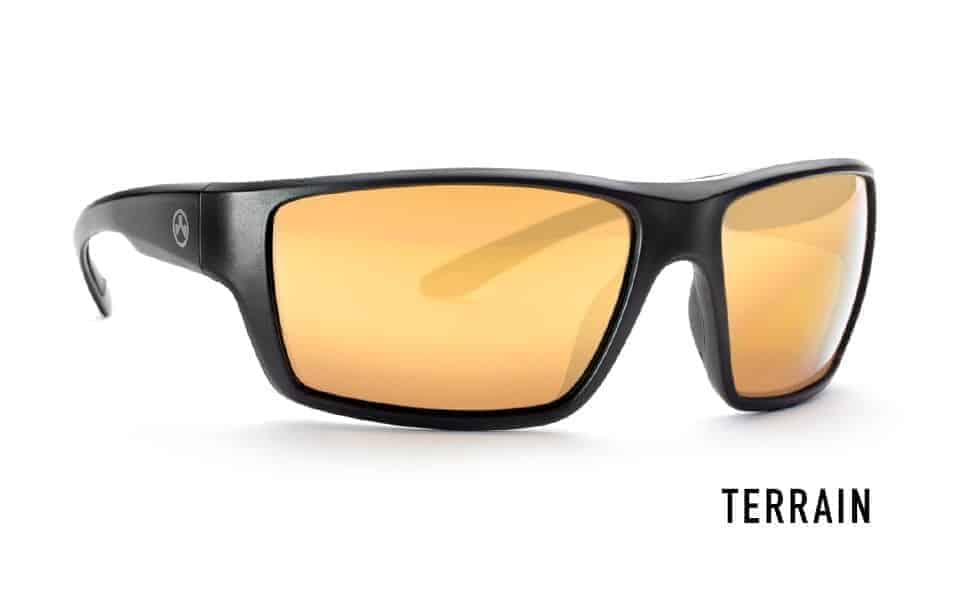
Survival Gear Review: Magpul Terrain Sunglasses

While you weren’t looking (or perhaps while your eyes were recovering from debris damage), sunglasses have quietly evolved from simple “shades” to keep the sun’s glare from your eyes into a full-on vision-enhancing system that offers protection of the ballistic and UV sorts. Lots of companies have popped up offering superior sunglasses, but recently, a small, rowdy, upstart company you’ve probably never heard of – Magpul – introduced the production of sunglasses made with their interpretation of what sunglasses should be. Not only did they hit the mark, but they slid into the crowded arena, bowled over the competition, then promptly dropped the mic. BOOM.

By Drew, contributing author to Survival Cache and SHTFblog

I recently introduced a pair of Magpul Terrain Polarized sunglasses to my face. This is my story.

Magpul Terrain Sunglasses

For years, Wiley X sunglasses have nose-perched on my face whenever any eye-shading duties have presented themselves – shooting included. However, when I noticed that the mighty Magpul design team had furrowed their collective brows and dedicated themselves to producing sunglasses, I simply had to try them. Magpul – in my experience so far – just doesn’t do anything they put their minds to in a half-assed manner. 

Navigating my way to the Magpul website to peruse their eyewear selections, the Terrain series of sunglasses struck my fancy; it seems Magpul designed this series of shaded specs to not only enhance the user’s day-to-day mundane life, but also to provide unparallelled field of view and comfort while wearing hats and hearing protection. Also drawing my attention was the fact that the Terrain was designed for larger faces, which would likely play nicely with my planet-on-a-stick head size.

The frames of the Magul Terrain sunglasses are made of TR90 NZZ, a lightweight polyamide material that has been specifically engineered to provide not only shatter resistance when bent or deflected, but also boasting superior impact strength – important for those of us who prefer our eyewear to be able to resist coming apart at the range if we’re unfortunate enough to catch a wayward bullet splatter or ricochet impact.

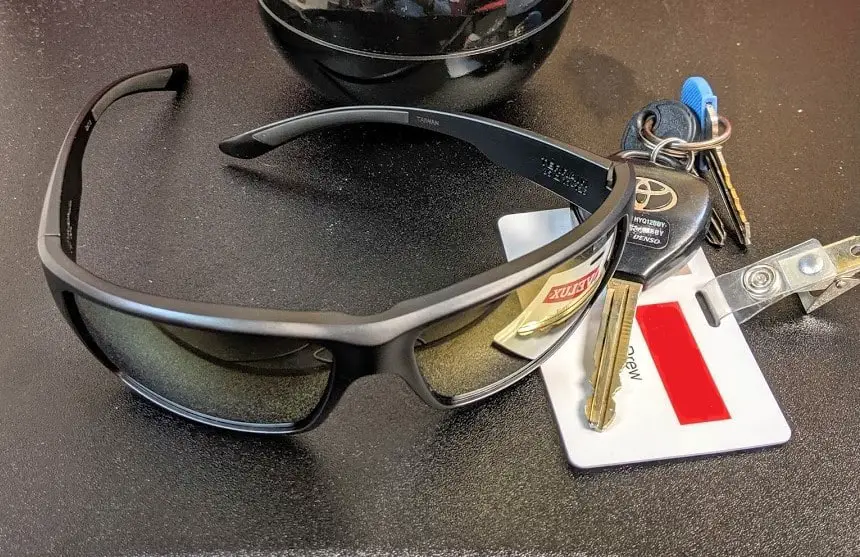
In point of fact, the frames are so lightweight and flexible that the most common first impression I got when showing the Terrains was, “these are from Magpul? They feel flimsy!” However, a few minutes of twisting and turning the sunglasses frames resulted in 100% first impression turnarounds – these sunglasses can’t be turned into pretzels or seriously damaged without ridiculous effort.

The lenses of the Magpul Terrain sunglasses are available in either polarized or non-polarized configurations. However, either option comes standard with anti-reflective (AR) treatments on the inside of the lenses to minimize distracting mirror-like reflections on the interior surface of the glasses. The lenses also boast oleophobic coatings that keep liquids – rain, chemicals, gasoline, blood, et al – from building up on the lenses, and promote runoff and/or beading up of these liquids, maintaining clear, usable vision for longer periods of time.

The entire Terrain glasses envelope meets not only the US civilian ANSI Z87+ high-impact standard test rating for safety, but also the military NATO standard MIL-PRF 32432 for ballistic protection of eyewear. These military standards mean that not only do the glasses pass tests for optical clarity, environmental stability (won’t expand/contract/quit working with temperature or moisture extremes), and UV ray protection, but the glasses also meet the protection requirements against a 0.15 caliber projectile travelling at 640-660 feet per second. As a frame of reference here – if Ralphie in A Christmas Story had been wearing Magpul Terrain sunglasses while fighting off Bad Bart’s wayward gang, he wouldn’t have been reduced to a whiny casualty when his trusty Red Ryder 200-shot carbine ricocheted.

Changing Your View Of The World

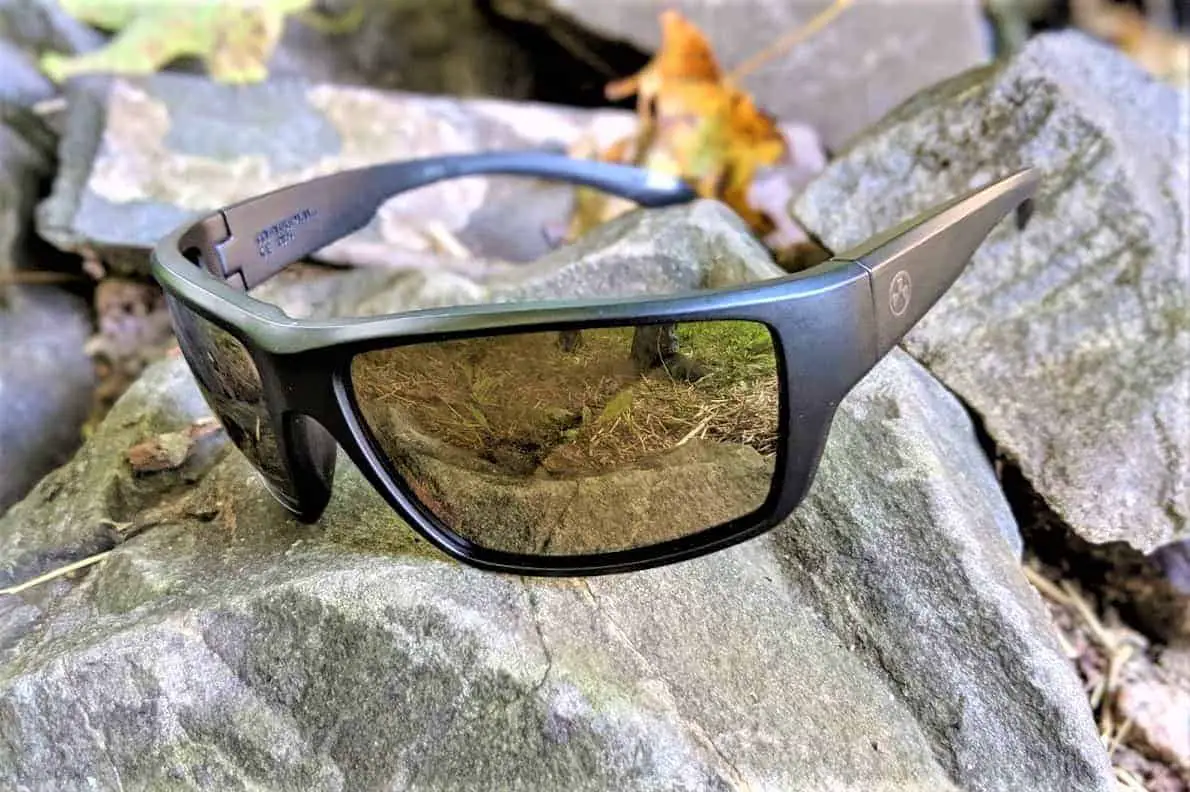
Donning the Magpul Terrains after wearing my old Wiley X P-17 glasses is akin to sipping a glass of refreshing, ice-cold fresh squeezed lemonade on a 100 degree day – when the only other thing you have to drink is room-temperature Guinness. The Terrains are stunningly lightweight, and the points of contact to your body – the nose pieces and temple arms – are overmolded rubber and integrate seamlessly with your face. The next thing you notice is the stunning clarity of the lenses – the polarized bronze gold mirror lenses of my Magpul Terrains let an incredible amount of undistorted, tinted light to my eyes while still providing enough glare reduction to be comfortable in bright sunlight. 

Image from Magpul.com

At the range, the Terrains slipped comfortably underneath my Howard Leight Impact Sport hearing protection, and allowed a full seal, letting the earmuffs perform their job admirably with a minimum of hassle. The lens frames have been somehow magically designed to let the wearer see without the encumbrance of framing in the field of view, yet not bump into the buttstock of a rifle when snuggling up into a proper cheek weld. Red dot and holographic sights performed wonderfully through the polarized lenses with zero silliness or added reticle flare  – something I can’t say for other makes of eye pro I’ve worn – even clear with clear lenses.

Also read: Survival Gear Review: Magpul M-LOK Tripod Adaptor

While I didn’t shoot at the Magpul Terrain sunglasses to prove their ballistic worthiness – I did put them through the “Blowback Test”. Explanation: my Windham Weaponry 9mm carbine is a blowback rifle, meaning it uses direct gas to blow the bolt backwards – not a DI system of a standard AR. As a blowback design, the 9mm carbine expels an inordinate amount of hot gasses around the bolt, and directly back into the shooter’s eye around the charging handle. The experienced effect is similar to having someone aim a hair dryer on “High hot” directly at your eyeball while you’re attempting to control a firearm and provide good hits. It’s disconcerting to say the least. These gases occasionally do make it around eye protection if the design is poor. I’m terribly happy to report that the Magpul Terrain passed the Blowback Test with flying colors, and I received nary a puff of hot air or unburnt powder flakes in my peepers.  The Magpul Terrain setup is an absolutely superb eye protection system for the range.

Magpul Terrain in Daily Use

Admittedly, some of the readers won’t be using these Terrains at the range; it’s not their thing. These readers will be pleased to know that while the Magpul Terrains do feature a bit of an “Operator” look, they are not over-the-top designed to round out a full-blown tactical tuxedo and look pleasantly right at home on the nine-to-fivers piloting their daily drivers to work or home or the grocery store. Ultimately, the Magpul Terrains have absolutely updated my daily life with their light weight and stellar field of view. Driving with the Terrains on is far superior to other sunglasses designs, as there is no heavy framing or temple arm to obstruct peripheral vision.

The only day-to-day weirdness I experienced with the Terrains was due to the polarized lenses – and it is a malady any sunglasses with polarized lenses will suffer. Using a cellphone with the Magpul Terrains on was a little wonky, since both smartphone screens and polarized sunglasses incorporate polarized glare-reducing coatings that block light waves travelling in certain directions and frequencies – vertical or horizontal (hence, “polarized”). While these coatings reduce glare and protect your eyes from both UVA and UVB waves, it also means that looking at a polarized surface through a polarized surface may have the resulting filtered light waves produced by an LCD screen not run in the same direction as the polarized filters on your face, resulting in diminished smartphone screen visibility. Though your mileage may vary, this can often be negated by simply looking at your cellphone horizontally instead of vertically – this changes the lightwave direction by aligning polarization filters with the directional light waves, and allows you to look at a smartphone screen through polarized lenses. You’re welcome.

The other issue I found with the Terrains came from their light weight and larger lens size – on a grouse hunting trip in northern Maine this past week, I would often perch the glasses up on top of the bill of my baseball cap when pushing through heavy brush or dark woods. More than once, I found myself with the glasses missing – pulled off my head by a wayward branch or heavy brush. A backtrack would in in order to find the glasses – and it’s hard to hunt while looking for glasses. An integral retention system similar to my Wiley X P-17s would be hugely welcome – a way to utilize or quickly remove a strap/cord system would be a Godsend in heavy brush, while fishing, or roughhousing with the kids. Whaddaya think, Magpul? You guys are kind known for your ingenuity and all….

Wrapping it Up

Sunglasses ain’t just for keeping the sun out of your eyes anymore. Magpul has upped the shades game with the introduction of the Terrain, a platform that incorporates UV protection, glare reduction, chemical/dust/hot air defense, and ballistic protection into an extremely lightweight, immensely high-quality product that absolutely enhances your interface with the outside world. Available through Magpul’s website at $109 for the non-polarized variety, and a well-worth-it additional $40 for polarized lenses, you can pick and choose your favorite flavor combination of frames and lens colors/mirrors.

It seems Magpul has once again improved our lives by taking the mundane and accepted and completely revamping with a fresh outlook based on performance and experience. But really, did you expect anything less from a product with the Magpul logo on it?


The post Survival Gear Review: Magpul Terrain Sunglasses appeared first on Survival Cache.

5 Survival Books to Read Before SHTF

Survival books are one of the best investments you can make.

We try to pack as much information into our posts as possible – and you can use the search function to find guides on specific topics!

But unless you have easy access to alternative energy and off-grid internet, you’re going to want a mini library of survival books!

To help you out, we compiled a list of the best ones for you – 5 survival books to read before.

Where possible, we added links to Amazon Kindle versions too.

Make sure you know how to make a DIY Solar-Powered Cellphone Charger keep your Kindle device up and running if the power is out!

1. Bushcraft 101 – A Field Guide To The Art Of Wilderness Survival

SHTFBushcraft 101 is jam-packed full of useful survival skills to practice. No matter how long you’ve been a prepper (but especially if you’ve only just started), it’s a valuable resource to have.

There’s also an advanced version, Advanced Bushcraft: An Expert Guide To The Art of Wildnerness Survival, and the supplementary The Bushcraft Field Guide To Trapping, Gathering, and Cooking In The Wild.

Author: Dave Canterbury
Price: From $9.98
Buy: Paperback on Amazon and Amazon Kindle

BONUS: Get all 3 books as The Bushcraft Boxed Set on Amazon or Amazon Kindle from $35.99.


Bushcraft 101: A Field Guide to the Art of Wilderness Survival

1,656 Reviews


Bushcraft 101: A Field Guide to the Art of Wilderness Survival

  • Dave Canterbury
  • Adams Media
  • Kindle Edition

2. Edible Wild Plants: A North American Field Guide to Over 200 Natural Foods

It’s always a good idea to know how to find food in the wild when SHTF before you try bugging out.

And with so many poisonous plants, Edible Wild Plants: A North American Field Guide to Over 200 Natural Foods is an absolute must-have survival book.

Authors: Thomas Elias and Peter Dykeman
Price: From $12.34
Buy: Paperback on Amazon

Sale


Edible Wild Plants: A North American Field Guide to Over 200 Natural Foods

457 Reviews


Edible Wild Plants: A North American Field Guide to Over 200 Natural Foods

  • Edible Wild Plants A North American Field Guide to Over 200 Natural Foods
  • Thomas Elias, Peter Dykeman
  • Publisher: Sterling

3. Hawke’s Green Beret Survival Manual

The full title is quite a mouthful – Hawke’s Green Beret Survival Manual: Essential Strategies For Shelter and Water, Food and Fire, Tools and Medicine, Navigation and Signaling, Survival Psychology and Getting Out Alive!

But if you’re only going to have one survival book in your bag, then you won’t go wrong by making it this one. Yes, it’s a lot more expensive than the other books on our list, but it’s worth it.

Author: Mykel Hawke
Price: From $50 (used) or $358.26 (new)
Buy: Paperback on Amazon and Amazon Kindle

4. SAS Survival Handbook

This is the third edition of the SAS Survival Handbook: The Ultimate Guide to Surviving Anywhere, which includes an entirely new chapter dedicated to urban survival.

If the price for Hawke’s Green Beret Survival Manual scares you off for the time being, then this a fantastic alternative.

Author: John ‘Lofty’ Wiseman
Price: From $16.32
Buy: Paperback on Amazon and Amazon Kindle

Sale


SAS Survival Handbook, Third Edition: The Ultimate Guide to Surviving Anywhere

1,146 Reviews


SAS Survival Handbook, Third Edition: The Ultimate Guide to Surviving Anywhere

  • Harper Collins Pub Sas Survival Handbook Revised by John Wiseman – 9780062378071
  • John ‘Lofty’ Wiseman
  • Publisher: William Morrow Paperbacks

5. Build the Perfect Bug Out Bag: Your 72-Hour Disaster Survival Kit

We post a lot of guides on Building A Bug Out Bag. Some of our favorites include Building A Better Bug Out Bag and The Ultimate Bug Out Bag List For Every Survivalist.

A great idea would be to print the latter out and keep it in your copy of Build the Perfect Bug Out Bag: Your 72-Hour Disaster Survival Kit – which you should keep near your bug out bag, of course.

Author: Creek Stewart
Price: From $10.57
Buy: Paperback on Amazon and Amazon Kindle

Sale


Build the Perfect Bug Out Bag: Your 72-Hour Disaster Survival Kit

772 Reviews


Build the Perfect Bug Out Bag: Your 72-Hour Disaster Survival Kit

  • Build the Perfect Bug Out Bag Your 72 Hour Disaster Survival Kit
  • Creek Stewart
  • Publisher: Betterway Books

The Surprisingly Simple Way To Avoid Being Robbed

Situational Awareness - The Simple Way To Avoid Being Robbed

Situational Awareness – The Simple Way To Avoid Being Robbed

Let me start this out with a bit of a test for you. Try to answer the following questions:

  • The last time you stopped for gas, how many other cars were getting gas?
  • What color socks was your boss wearing today?
  • What did the people in front of you and behind you at the grocery line look like?
  • How many of your neighbors left this morning, before you did?
  • Were there any unusual cars parked on your street when you got home today?

If you can answer any of those questions, without it being pure guess work, you’re doing good. The truth is, though, that most of us can’t. We become used to the situations around us and then just stop noticing them. Then, when something new or different comes along, we don’t even recognize it for what it is.


Instead, we’re looking at our smartphones — checking email, texting friends, or posting pictures to Facebook.

“So, what?” you might say. “Who cares about my boss’s socks or the other people stopped in the same gas station?” If that’s your reaction, trust me, you’re not alone. Most of the adults on this planet would say more or less the same thing. But then, those same people would step on a land mine, without even realizing it until it went “boom.”

The thing is, not being aware of what’s going on around you can be deadly. Just about every dangerous situation we can find ourselves in has some sort of warning. But like the intelligence before the attack on Pearl Harbor, ignoring those warning signs can have grave consequences.

What we need is situational awareness. Situational awareness is nothing more than being aware of what is around you and what the people or things around you are doing. It is being so aware of your surroundings that when something changes, you notice it. It’s knowing what to expect, so that the unexpected stands out. More than anything, it’s seeing things that could be a threat, and analyzing that threat before it can manifest.

Without situational awareness, we’re more likely to get mugged, to get carjacked, to get pickpocketed.

Hand held solar generator provides dependable backup power

I recently re-watched one of the Sherlock Holmes movies, starring Robert Downey, Jr. At one point in the story, his female companion asked him, “What do you see?” To which he responded, “Everything. That’s my curse. I see everything.” That’s part of what made Sherlock so successful. He saw things that others didn’t see. Had he been a real person, rather than just a character in a story, his situational awareness would have served him well.

Ask any soldier who has been in war, and they’ll tell you how important situational awareness is. Seeing things that can be a threat, before that threat manifests itself, can be the difference between life and death, especially in the close environment that is urban warfare.

Situational Awareness - The Simple Way To Avoid Being Robbed

Situational Awareness – The Simple Way To Avoid Being Robbed

But situational awareness goes totally against our nature. We are creatures of habit, and we normally go through life without noticing things around us. Few of us can remember details of what happened in the television shows we watched last night, let alone tell what the person in front of us ordered at our favorite coffee house. Thus, we’ll never be a Sherlock Homes and if we are ever put into a position where seeing is survival … we might not make it home.


Developing Situational Awareness

So if situational awareness is so important and is against our nature, how does one acquire it? What can we do, to make ourselves more aware of our surroundings, than we are today?

To start with, we must make a decision to become more aware — not a wishy-washy decision, but a firm one. That, in and of itself, will make a huge difference, simply because we’ll be thinking about the need to be aware. We’ll open our eyes and start looking around us, just because we know that we should.

Still, that isn’t enough. It’s just a start. Building situational awareness requires practice. We’ve got to train our mind to pay attention to what our eyes are seeing. So, we need to develop a series of exercises, which will help us to see. Things like:

  • Make a habit of knowing how many people are within 100 feet of you, where they are and what they are doing.
  • Count the number of cars of a particular color as you drive somewhere.
  • Look at what a co-worker wears to work every day and try to remember it. See how many days’ worth of attire you can recall, and if you can recall the last time they wore a particular shirt or outfit.
  • Learn what cars your neighbors drive. Then, make it a habit to look for new or different cars, every time you step out of your home. Look for patterns, to see if certain cars show up at certain times.

Once you are more aware, it’s time to start putting that awareness to use. Start looking at people to see what they are doing and try to evaluate how much of a threat they are. Use a scale from one to 10, with one being no threat at all and 10 meaning it’s time to draw a gun to protect yourself. Rate each person, even if there are many people around you. Then, keep track of those with a higher score, updating your score as you go.

Ultimately, that’s what situational awareness is all about — finding threats. Once it becomes a habit, it will help you in countless ways.

What advice would you add on becoming more situationally aware? Share your tips in the section below:


The post The Surprisingly Simple Way To Avoid Being Robbed appeared first on Off The Grid News.

Why Has There Been A 56 Percent Increase In Suicide Among Young Americans In Just 10 Years?

It is very hard to face the future when you don’t have any hope.  Today, our society offers more ways to entertain ourselves than ever before, but it offers very little hope.  Most people spend most of their lives wandering from one thing to another looking for meaning and purpose, and of course most of those journeys come up empty.  We may have a much higher standard of living than any other generation in history, but we are also have the highest rates of addiction, depression and suicide.  As a society, we are deeply, deeply unhappy, and this is especially true for our young people.  In fact, a report that was just released discovered that there was a 56 percent increase in suicide among Americans from age 10 to age 24 in just 10 years

Suicides and homicides are on the rise among children, teens and young adults in America, according to a new report that highlights what experts say is a disturbing trend among the young.

The report, published Thursday by the Centers for Disease Control and Prevention, found that from 2007 to 2017, the rate of Americans ages 10 to 24 who died by suicide rose by 56 percent, from 6.8 deaths per 100,000 persons to 10.6.

Is anyone out there going to argue when I say that it looks like what we are doing for our young people as a society is definitely not working?

We appear to be rapidly running in the wrong direction, and yet our leaders just keep pushing us even further down the same road.

I was particularly horrified to learn that the report had found that the suicide rate for Americans from age 10 to age 14 had “almost tripled” between 2007 and 2017…

When broken down by age groups, the suicide rate for those aged 10 to 14 almost tripled between 2007 and 2017. For teenagers 15 to 19, the rate surged 76 percent in that decade.

For 20- to 24-year-olds, the rate of suicides has been increasing from 2000 to 2017, at a rate of 36 percent.

How can things get that much worse in just 10 years?

Sometimes people criticize me for being “too negative” about our society.  But the truth is that I am often not being negative enough.  Kids are killing themselves at an astounding rate because our society is feeding them an endless series of lies and giving them absolutely no hope for the future.  Our society is deeply, deeply broken, and if we continue going down the same path we are going to continue to get similar results.

According to the report, it has gotten to the point where suicide is now “the second leading cause of death” for Americans from the age of 10 to the age of 24…

Suicide was the second leading cause of death among Americans ages 10 to 24 in 2017, according to the report. And homicide ranked third for those ages 15 to 24 that same year.

We have completely and utterly failed our young people, and it is because we are teaching them the wrong things.

Oh, we love to think that we have everything together, but the truth is that we are a complete mess and we are passing on our flawed views to the next generation with devastating results.

In addition to an unprecedented rise in suicide, rates of depression among our young people are escalating dramatically as well

Since 2014, millennials (or people who turned 23 to 38 in 2019) have seen a 47% increase in major-depression diagnoses. “Deaths of despair,” or dying from suicide, alcohol, and drugs, increased in the millennial population in the last 10 years, and they are more likely to report feeling lonely than other generations.

For Gen Z, the mental illness crisis continues. In 2017, 13% of teens reported having experienced at least one major depressive episode in the past year, Pew Research Center reported. In 2007, when more millennials were teens, that number was just 8%.

It shouldn’t be surprising that this is happening.  We teach our kids that they came from monkeys and that the only thing they have to look forward to at the end is to return to the dust from whence they came.  In between, we offer them all sorts of temporary pleasures that don’t give them any sort of lasting meaning and purpose in order to pacify them and to keep them from asking too many hard questions.  Because if you start asking hard questions, you quickly find out that virtually every major system in our society is broken.  But we urge our young people to work really hard so that someday they can take their places as important cogs in a machine that is rapidly steamrolling toward oblivion.

If you only read that last paragraph, you would probably come to the conclusion that I am a deeply depressed individual.

But that is not true at all, and that is only because I have fundamentally rejected the lies that society tries to feed all of us.  My wife and I are not down, we are not depressed, and we are not on any pills.  Life is meant to be lived with great hope and great purpose (#ad), and not too long ago I spent an entire year of my life talking to voters and trying to point this nation in a fundamentally different hope-filled direction.

If you want to escape the pit of despair that is swallowing countless other Americans, the solution is not hard to find.

We were all created for a purpose, and we were put on this planet for such a time as this.

Unfortunately, the entire behavioral matrix that society has constructed is designed to pull you away from your true purpose.

Our education system, the mainstream media, our entire entertainment industry and most of our national leaders are trying to take you in a direction that only leads to depression, despair and death.

It can be exceedingly difficult to break free from that matrix, but once you do you will discover a level of freedom that you never even dreamed was possible.

About the Author: I am a voice crying out for change in a society that generally seems content to stay asleep.  I am the publisher of The Economic Collapse Blog, End Of The American Dream and The Most Important News, and the articles that I publish on those sites are republished on dozens of other prominent websites all over the globe.  I have written four books that are available on Amazon.com including The Beginning Of The End, Get Prepared Now, and Living A Life That Really Matters.  (#CommissionsEarned)  By purchasing those books you help to support my work.  I always freely and happily allow others to republish my articles in written form on their own websites as long as this “About the Author” section is included.  In order to comply with government regulations, I need to tell you that the controversial opinions in this article are mine alone and do not necessarily reflect the views of the websites where my work is republished.  This article may contain opinions on political matters, but it is not intended to promote the candidacy of any particular political candidate.  You can follow me on social media on Facebook and Twitter.  The material contained in this article is for general information purposes only, and readers should consult licensed professionals before making any legal, business, financial or health decisions.  Those responding to this article by making comments are solely responsible for their viewpoints, and those viewpoints do not necessarily represent the viewpoints of Michael Snyder or the operators of this website.


If You Only Had One Tool

Written by Wild Bill on The Prepper Journal.

What if you were suddenly overwhelmed by an event? An earthquake, a micro-burst along a lonely road that did in your vehicle, you barely got out before it was washed down a swollen creek during a flash flood? An avalanche that cut off your trail back to civilization? Heads down in your work and you step out the door to finally head home for the night and you step into the middle of a riot? Or a pandemic? The world suddenly gone mad!

Assuming being prepared is a habit chances are you have your EDC (every day carry) with you, and we all have a general idea of what that  should be, but most of it was in that car now heading down the river to a used car lot in rural Arizona to be sold in the future as “newly arrived.” Or your pack stolen the minute your emerge from your office door, headphones still on, oblivious to the SHTF going on all around you? What is the one tool that would serve you the best if you were smart enough to keep it close?

In The Prepper Journal’s opinion it is a knife. The universal tool that has served humans since we first picked up a stick and realized we needed something to sharpen it order to make our point and carrying a boulder as a sharpening implement was not working out.

And knives throughout history have been made from many interesting materials from sticks and stones and animal bones and are at the foundation of the development of metallurgy throughout human history. History actually defined as the Stone Age, The Bronze Age et al. 

So, whether you are a newbie to prepping and survival or an expert,  the importance of survival knife for not only a planned adventure but a true survival situation, is clear.

While some people may consider knives as a prized possession, I for one have a special one as a wall decoration hanging between two black-powder pistols, all in their own clear display cases, I also have others for use as survival equipment to their full potential when faced with dangers of the unknown, the unexpected.

From self defense to making fire to making traps and spears to obtain food to opening found supplies to making shelter the knife is the singular tool I would never want to be without (other than when the government makes me – airports, government buildings, public schools, and the like.)

As Caityln Bell says, finding the best survival knife is not just about convenience  – it’s about safety. If you don’t have a good knife in your survival kit, you are not prepared. So, with hundreds of options in the market, it can become hard to choose the right knife that would suit your needs. That’s why she is going to break it down for you today and make  choosing the best survival knife more an intelligent process than a random selection on factors that may catch the eye but not preform when the rubber meets the road. 

These are a few factors that you must keep in mind while choosing the right knife.

Blade Type and Material

While a pocket knife is convenient to carry and use, the fixed blade knife is really the best bet for survival. Fixed blade knives perform well from carving to chopping and they don’t have a built-in fail point where the blade connects and folds into the handle. Of course folding knives are easier to pocket, but at a price – durability. Therefore, you should go for a knife with a spine ranging from 0.6 to 0.25-inch thickness, which lasts longer without failing on demanding functions. 

Talking about the blade material, you can pick from carbon steel and stainless steel to find your right match. Carbon steel blades last long but get rusted if you don’t take proper care of them. On the other hand, stainless steel blades don’t rust- but are more difficult to keep sharpen.

Blade Size

Size matters! When it comes to picking the right survival knife, it is important to choose a knife that comes in the right size. Since you’ll be using the knife for multiple functions, don’t pick one that’s too broad as you cannot use the same for cutting down snare traps. Similarly, a small blade might be too delicate for cutting wood. 

So, pick an average sized knife, of about 10 to 12 inches, that is good enough to do most of the tasks that require the use of a survival knife.

Now, carrying a 12″ knife everyday, to work and play is a challenge in itself, so temper this with your attire and your daily travels. A knife with a blade of less than 4″ is not going to be a true survival tool. 

Handle

Just because the blade is strong enough to cut a piece of wood doesn’t mean that the handle is not important. If you go wrong with the handle, you might be putting a lot at stake. The knife with a small handle can give you blisters while the one with a large one might not have an excellent grip.

That being said, go for a knife that has a firm handle and facilitates better action. Also, make sure that the guard of the knife is sturdy enough and excels at keeping your hand from running up onto the blade.

Shank

A shank or tang is the back portion of the blade component that connects the blade and the handle. If you are looking for a reduction in weight, then you can choose between the partial tang and half tang, but if you are after something that helps you tackle extreme conditions, then the only tang worth your money and time is full tang. 

Since the handle is connected to the tang through bolts, pins, glue and more, opting for a full tang allows for great balance and leverage capabilities. The bottom line is a full tang will reinforce stability, ensure a firm grip and enhanced strength when in use.

These are some of the things you must consider when you are out picking a survival knife for long trips in the back-country. Just make sure the survival knife you choose, is the right one for you.

Fixed Blade V/S Fixed Blade: The Knife For You

Choosing a survival knife is mostly a matter of personal choice. And when it comes to picking either a fixed blade or folding knife, the debate has been going for years among knife aficionados and we already gave our two-cents above but…

Every knife owner has their opinion on what works the best given the tasks they face in their everyday life. Therefore, the following section of the article looks at some general areas for both types of blades.

Folding Knives

When it comes to everyday survival, folding knives are generally considered the most popular for their ease and convenience. Generally, folders are associated with everyday carry because they are perfect for routine tasks that make people want to carry a knife in the first place. 

For instance, trimming a wire, cutting open a box, cutting a rope or paracord or self-defense. There are some more advantages of the folding knives:

  • They are more discreet and easy to conceal
  • Th blade of a well-constructed folded knife is as tough as a fixed blade

On the other hand, the biggest disadvantage of a fixed blade is that their folders are tough to clean and also have, historically at least, been known to break easier.

Fixed Blades 

Perhaps because of the way they have been introduced in the movies, fixed blade knives have a reputation for being the more serious type. That’s definitely true. But, this doesn’t mean that they cannot be used in almost any situation. 

There are a lot of advantages to the fixed blade. For the most parts, they are associated with rough outdoor work – jobs like splitting, food preparation, skinning a buck, digging etc. Other advantages include:

  • They are big and come in whatever size you need, from a small handy blade to a large-monster sized blade. One trait that is common among all sizes is the strength of the blade 
  • They are easier to clean and maintain. So, you don’t have to worry about the hinge as you have to with a folding knife
  • They don’t break easily as there are no moving parts on fixed blades 
  • Fixed blades are generally twice as long as folding blades
  • During tactical situations, a fixed blade knife can be brought into play faster than a folding knife.

On the other hand, the biggest disadvantage of fixed blade knives is that they are not as convenient to carry and are harder to conceal.

There you have it – Advantages and Disadvantages of Fixed and Folding Blades. The ultimate decision comes down to the buyer and how they plan to use the blade! 

Be Safe out there and be sure to check out The Prepper Journal Store and follow The Prepper Journal on Facebook!

The post If You Only Had One Tool appeared first on The Prepper Journal.

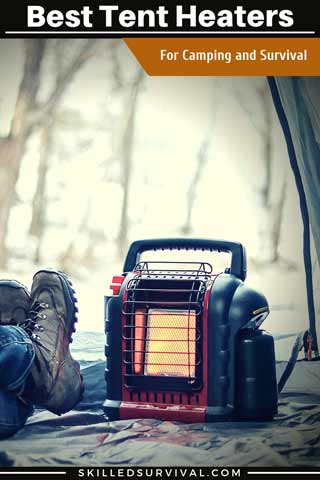
6 Best Tent Heaters To Make You A Winter Camping Hero

Best Tent HeaterIf you’ve been contemplating getting a tent heater – you’re in luck…

Never before have there been so many options.

I’ve personally invested in a tent heater and you SHOULD too.

It will make your offseason camping experience 10 times better!

So today I’m going to teach you everything I know about tent heaters, specifically:

As A Way To Introduce You To Skilled Survival, We’re Giving Away Our Ultimate Camping Essentials Checklist. Click Here To Get Your FREE Copy Of It.

WHAT EXACTLY IS A TENT HEATER, ANYWAYS?


If you’ve never considered a tent heater, you’re not alone…

Most people have discovered that using a heater in a confined space can be very dangerous. So they never research tent heater solutions.

Heaters that are specifically designed for use inside a tent.

They’re efficient, portable, and much safer to use than past portable heaters.

And depending on the model, they can be fueled by propane or butane cylinders.

Or even from a battery pack or extension cord for electric heaters…

Tent stoves are also a special type of tent heater but we will not be covering tent stoves in this article. Why? Because we wrote a separate post dedicated to tent stoves.

So if you’re interesting in getting a tent stove instead of an electric or gas tent heater, click here.
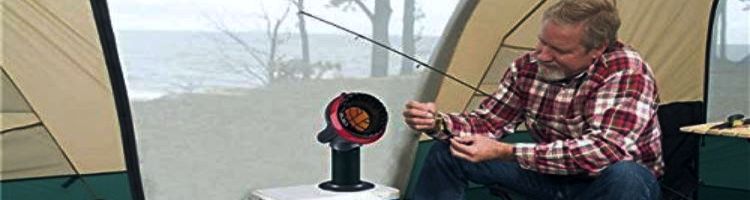
Little Buddy Portable Tent Heater6 REASONS WHY YOU SHOULD GET A TENT HEATER


1 – Extra Comfort

First off, nothing ruins a fun camping trip more than shivering all night long in a frigid tent.

In the past, the thought of winter camping in a tent didn’t sound like a good time.

But not anymore!

A good tent heater opens up a whole new world of camping comfort in cooler seasons.

2 – Expanding Your Camping Season

With a tent heater, you can extend your camping season into the late fall and early spring.

OR with the right gear, even extending your camping season to YEAR around!

It just takes a certain confidence in your equipment and your survival skills to head out into the snow for the night.

Sure, a high-quality sleeping bag (or bivy sack) and 4-season winter tent are also crucial. But they’re not always enough for the coldest conditions.

But with a tent heater, you can even extend your camping season well beyond the summer months.

3 – Camping For FREE

Many of the most expensive camping spots “close” in the late fall, winter, and early spring.

But while these facilities may no longer have all the same amenities – they are often not locked behind a gate.

So you can just pull up – choose any open site without paying for a reservation.

4 – Empty, Peaceful, Quiet Campgrounds

If you want to camp in premier campgrounds without the crowds – then cooler seasons are your best friend.

Many of these campgrounds stop taking reservations and become first-come, first-serve.

Why? Because there’s very low demand. Most people never consider camping in cooler months.

For example, in the past, I’ve been the only person in a campground near Leadville Colorado in late October – on a weekend!

So if you enjoy quiet, isolated camping without having to go backpacking – start camping in the cold.

5 – Choice Of The BEST Sites

In the busy summer months, you have to reserve a site in a popular campground at least 6 months in advance…

And you’re lucky if you get a crappy site with no views and no flat surfaces to pitch your tent!

However, if you do in the winter you can often snag the BEST sites in the BEST campgrounds ANYTIME.

It’s why I’m a huge fan of cold season camping.

6 – Avoid Buying Expensive Winter Camping Gear

Most hardcore winter campers have never considered adding a tent heater to their winter camping gear.

Traditionally, they’ve relied on more insulated versions of their summer camping staples.

For example, instead of a lightweight sleeping bag, they carry a 0-degree down bag.

Instead of a breezy backpacking tent, they buy a 4-season winter tent. One with great insulation properties and a heavy-duty waterproof rain fly.

These campers also know the power of good winter boots with warm liners, down jackets and insulated pants. And have learned to wear thick gloves and warm socks (even at night).

All these “upgrades” can be expensive and still leaves you camping in the cold.

The bottom line is: adding a tent heater is a camping game changer!

As A Way To Introduce You To Skilled Survival, We’re Giving Away Our Ultimate Camping Essentials Checklist. Click Here To Get Your FREE Copy Of It.

BENEFITS OF INVESTING IN A NEWER TENT HEATER


There are many benefits to having a tent heater, here are a few of the BEST benefits:

Push Button Comfort

A tent heater is designed to help keep you warm by adding heat.

Even the warmest down jacket doesn’t create any heat on its own. They only help retain the heat your body is losing to the cold air.

This means the only way to warm up is to perform activities that force your body to work out.

This can be hard to do if you’re stuck in a tent for days with bad weather.

By contrast, a tent heater generates heat using electrical power or gases.

This allows you to warm up beyond what your body could do alone.

Tent heaters generate on-demand heat without effort on your part.

Better Safety Features

Modern tent heaters are a much safer option than the old space heaters your grandparents owned.

Many have extensive safety features built into the design, such as:

  • Tip-over switches – in case it’s accidentally knocked over
  • Overheating protection – which shuts the heating element off before it reaches dangerous temps.
    Propane and butane fueled tent heaters also frequently include carbon monoxide/dioxide sensors.
  • And some include low oxygen sensors to prevent the build-up of exhaust gases in a small space. These sensors shut down the fuel source if dangerous air conditions are present. Which is especially important when the tent is closed up tight to keep out the cold.

Extreme Portability

Most tent heaters are very portable. They’re made to be lightweight (not backpacking light, but well under 20lbs).

They’re self-contained and often can be carefully re-positioned even during operation.
“Fuel” Efficient:

A good tent heater doesn’t do much good if it burns through all the fuel or battery charge on the first night.

An efficient heater helps conserve energy. This reduces the amount of fuel or batteries you’ll need to take with you.

While there are a lot of benefits to a tent heater, they’re not for every situation.

The extra fuel or batteries needed can often be a major deterrent for longer, unsupported trips.

And, if the conditions aren’t too frigid, you may be able to get by with some better winter camping gear alone.

SIDE NOTE: As a side-effect of the low-oxygen switches, some heaters won’t work at high altitudes.

The low oxygen levels found above 6000ft can confuse the sensors. It may cause them to shut down prematurely, even if there’s no build-up of exhaust gases.

I’ve used my Mr. Buddy Heater at 8160 feet in Rocky Moutain National Park with no issues!

But, typically anything closer to 9,000 ft (or higher) and you’ll run into issues with keeping it lite.

HOW TO CHOOSE THE BEST TENT HEATER FOR YOU


As with any piece of outdoor gear, there are tons of options available from a wide range of brands.

There are many factors to contemplate to ensure any tent heater you select will meet your needs.

Two Main Types Of Fuel Options

There are two main “fuel” types for portable tent heaters: electric and gas.

Electric

Electric tent heaters have many benefits.

First, they generate absolutely ZERO toxic emissions. Which equals clean air and less worry about suffocation dangers.

But they’re not always the best option.

In a campground with service hookups, a corded electric model works well. But for most situations, a battery-powered heater is your only real option.

Unfortunately, the selection of battery-powered heaters is very small. And their heating capacity is limited.

So they are not the best solution for most.

Propane/Butane

Tent heaters fueled by propane or butane gas canisters are far more common than electric.

These fuels are cleaner burning than other options such as white gas or kerosene. And they tend to have fewer complications when used in an enclosed space.

Also, it’s easy to find fuel in portable canisters. The energy density of these gases means you can carry and resupply fuel for extended trips.

The Size Of Your Tent Matters A LOT

Next, you should consider the size of the space you want to heat up.

A 2-person tent will heat up faster than a huge canvas wall tent meant to sleep 10 people.

So be sure to choose a heater with an output that matches the space of your tent.

We measure heat output in BTUs (British Thermal Units). This is the amount of energy needed to heat one pound of water by one degree F.

You can use this formula to calculate the heat output needed for your tent:

Measure the space’s dimension to determine cubic feet (Length x Width x Height = Cubic Feet).

Next, subtract the outside temperature from the desired inside temperature. This is your desired temperature increase.

If you measure temperatures in Fahrenheit, calculate the required BTUs with this formula:

  • Cubic Feet x Temperature Increase x .133 = Required BTUs

If you measure temperatures in Celsius, calculate the required BTUs with this formula:

  • Cubic Feet x Temperature Increase x .2394 = Required BTUs

Matching Your Heat Output Needs

A typical home furnace might have a BTU output in the 100,000 range. But a small tent heater only needs to heat a fraction of that space.

A heater rated to 5,000 BTU is usually more than enough for a tent.

If you get a heater with fine-tune BTU controls you can adjust the proper temperature level.

This provides a wider temperature range and control.

Getting A Unit That’s Durable Enough For Extreme Conditions

If you depend on a tent heater as part of your cold-weather camping setup, you need it to work every time.

That’s why durability is such a key factor to consider for such a crucial piece of gear.

Quality materials, clean construction, and attention to detail are all good signs. But be sure to read plenty of reviews before making a purchase.

Also, consider the brand reputation and support before making a final decision.

Along with these indicators of durability, it’s always best to buy from a reputable company.

This helps ensure your heater is the original designer. Not a cheap knockoff version, who may cut corners to reduce costs.

6 BEST TENT HEATERS ON THE MARKET TODAY


Here are the best tent heaters for winter camping, based on the size of the tent:

Best Heater For The Small Tents

We’re going to look at a couple of small heater options that are perfect for small tents. For small tents, a large heater would be overkill.

1 – 750W/1500W Ceramic Space Heater Portable Electric Heater

This small but mighty space heater can work for both small and medium-sized tents.

It has three settings 1500-watt high heat, 750-watt low heat, and normal cool blow fan.

It also includes safe with both overheat protection & tip-over protection.

But how well can it heat a tent? First, let’s convert the Watts into BTUs, I’ll use this simple online calculator to do that.

  • 750 W = 2559 BTUs
  • 1500 W = 5118 BTUs

Now using the equations we provided above, using 2559 BTUs and a 40F degree temperature rise. This heater will work with a 481 cubic foot tent space.

For example – that’s a tent a bit over 7ft wide by 7 ft long and 7 ft tall. Nice. But this comes at a very large power cost!

Here’s a chart showing us what we’re up against without grid power…
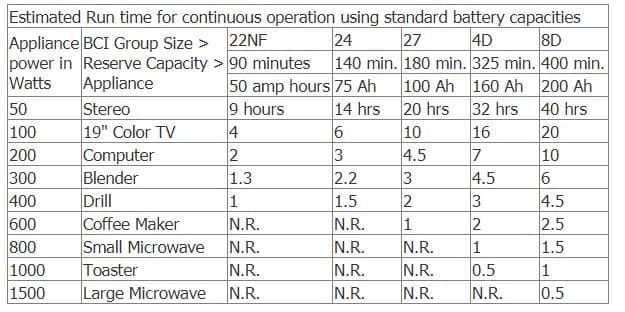
Watt vs Run Times Per Battery

8D is one of the biggest and best deep cycle batteries you can buy. And at 750W of power draw, it will only last about 2 hours!

To provide heat for 5 hours with batteries, you’d need at least 3 deep cycle batteries at over $300 each. Plus, you’d need an inverter to convert the DC battery power to usable AC power at over $100.

The cost and complexity of batteries and inverters quickly make this electric heater a “NO GO” for anything but grid power camping! Otherwise, you’ll need to look to gas-powered heaters.

Check Out Today’s Price


2 – Texsport Portable Outdoor Propane Heater

The Texsport Portable Propane Heater is the lightest one we found at about 1 pound but still produces up to 2,890 BTUs!
It’s also very a durable stainless steel burner, so it won’t easily break.

It includes an auto shut off valve shuts off fuel if the flame goes out but it doesn’t come with low oxygen shut off. That can be good or bad…depending on how you look at it:

  • Bad, because if you use this inside a tent it MUST be very well ventilated and don’t use it while sleeping!
  • Good, because it will work even at high elevations.

Finally, it has a large fold-away paddle plastic foot you add to the propane canister to provide greater stability.

Check Out Today’s Price


3 – Mr. Heater Portable Little Buddy

This is one of the smallest and lightest tent heaters specifically designed for INDOOR use on the market today.

But don’t let its small size fool you. The Mr. Heater Portable Little Buddy is a champ in extremely cold weather.

It’s capable of up to 3800 BTUs and is a great choice for a small tent. It uses common 16oz propane canisters, which last for up to 5 hours.

If you need longer heating, you can use an adapter and hose to connect to standard BBQ canisters.

Low oxygen sensors and an automatic tip-over shutoff switch make this a safe choice.

And the rugged design means that you can count on it to function when you need it most.

Check Out Today’s Price


Best Heater For Medium Tents

4 – Mr. Heater Buddy

This Mr. Heater Buddy tent heater can pump out 4,000 OR 9,000-BTUs. This is ideal for spaces up to 225 square feet.

However, due to the low oxygen shutoff switch, it may not work at altitudes over 7,000 FT.

It also includes a tip over auto shut-off switch.

Fuel Consumption/Burn Rate (Gal/Hr) at 4000 BTU = 0.044 Gal/Hr, at 9000 BTU = 0.099 Gal/Hr

It has a smart designed fold-down handle, a swivel-out regulator or it can connect to a propane tank with an adapter kit.

Estimated run time on a 16oz. propane canister (at Max BTUs) is about 3 hours.

Note: this is the exact tent heater I purchased for my late season camping trips in the rocky mountains.

Check Out Today’s Price


Best Heater For Larger Tents

5 – Mr. Heater Big Buddy

The Mr. Heater Big Buddy Heater is a much larger version of the same technology in the Little Buddy.

This Big Buddy radiates heat at different levels (4000 to 18000 BTUs per hour). These rates options mean you’ll be able to heat all but the largest cabin-sized tents.

At around 12lbs, it’s fairly lightweight for the amount of heat it produces. And the built-in handle makes moving it around camp easy.

Check Out Today’s Price

Best Heater For Massive Event Sized Tents

6- Zodi Outback Gear X-40 Tent Heater

This tent heater is hard to find, but the Zodi Outback Gear X-40 is a beast of a tent heater.

It’s built to sit outside the tent!

It draws air from the tent, across a heat exchanger, and back into the tent via a pair of insulated ducts.

This means that the exhaust gases are all outside!

Reducing (and pretty much eliminating) the chance of any dangerous gas buildup.

It can provide a huge 40,000 BTU boost to your tent. Making it possible to heat even large wall tents. Even massive canvas tents you see at events (like those found at outdoor weddings).

But it comes at a high price – both in purchasing the unit and in propane needed to operate the heater.

But if you’re faced with the challenge of keeping a large group of people warm in frigid temps, this is your best option.

Check Out Today’s Price

As A Way To Introduce You To Skilled Survival, We’re Giving Away Our Ultimate Camping Essentials Checklist. Click Here To Get Your FREE Copy Of It.

HOW TO SAFELY USE A TENT HEATER (safety tips)


Bringing a tent heater along on your next camping trip can be a huge relief.

Instead of canceling a trip – you can go enjoy camping even in the bitter cold. But it also comes with life and death safety considerations.

You MUST understand ALL the safety guidelines and follow them exactly.

Here are some tips:

Electric Heaters Are Safer

Electric heaters have their drawbacks in both their output and heat capacity. But they outperform gas-fueled heaters in one very important factor: Safety.

Electric heater DO NOT depend on combustion for heat. So, they don’t create carbon monoxide/dioxide while in use. Nor do they consume oxygen from the air inside your tent.

This means they don’t need the same ventilation that a gas-fueled heater would.

A switch malfunction or incorrect setup won’t result in suffocation and death.

But they can still create a fire if the heating element touches any combustibles.

SO Keep Clear

ALL tent heaters (electric/gas) get very hot during use, even if they do not create an open flame.

So keep all potentially flammable objects clear of the heater. Items such as the tent walls, your sleeping bags, spare clothes, EVERYTHING!

Vent Gases

All gas-powered heaters create carbon monoxide and carbon dioxide as byproducts of combustion.

These toxic gases can build up inside the tent and become very dangerous.

All heater instructions will specify exactly how much ventilation is necessary.

Always err on the side of being overly cautious and allow fresh air into the tent and exhaust gases to escape.

Don’t Fall Asleep

While it’s tempting to fall asleep with the heat on, it’s too dangerous to leave a heater running while you sleep.

It doesn’t take long for the heater to warm up the tent in the morning, so be sure to turn off the heater before you head to bed.

Some people do run their heaters when sleeping.

We DO NOT recommend doing this. The downside risk is not worth it.

But if you choose to ignore our advice, make sure to invest in a separate carbon monoxide detector.

Here’s a video on someone who does sleep with their tent heater unit running. It also “proves” that it’s possible – but again, to me, it’s not worth the risk!


FINAL THOUGHTS


A quality tent heater is a simple way to make winter camping more enjoyable.

For those of us who are resilient, it feels a little like cheating to turn on a tent heater.

But if you end up going camping more often and in colder temps ( instead of staying home), you’ll get over it.

There’s no shame in using technology when it helps to get you OUT more often and in harsher conditions!

“Just In Case” Jack

P.s. Do you know where the closest nuclear bunker is from your home?

There are a lot of natural nuclear shelters in the US that are absolutely free. And one of them is near your home.

Click on the image above to find out where you need to take shelter.

The post 6 Best Tent Heaters To Make You A Winter Camping Hero appeared first on Skilled Survival.

Is Greta Thunberg A Putin Puppet? German Politician Demands Answers

This article was originally published by Tyler Durden at ZeroHedge.

Russian President Vladimir Putin may have openly shamed 16-year-old environmental activist Greta Thunberg in early October for selectively guilting everyone except China over pollution, but one German politician has suggested the Kremlin may have actually “financed and steered” her eco-movement.

In a letter to the European Commission, Alternative for Deutschland (AfD) MEP Jörg Meuthen questioned the measures Europe has taken to “avert hybrid threats” that may “influence decision-making, to weaken societies and undermine unity.”

Meuthen then points to several campaigns, such as Thunberg’s “Fridays for Future” school protest movement, along with those by Greenpeace and NGO rescue boats in the Mediterranean. He then inquires whether the EU has investigated said campaigns and if so, he would like to know what they have concluded.

And lastly, he asks if the Commission can “rule out the possibility that these campaigns are being financed and steered by Russia.

Shirley, you must be joking…

If Thunberg is a Putin puppet, he must have clearly been drumming up sympathy for the autistic eco-avenger. After she shamed the UN earlier this month for “ruining her childhood,” Putin shamed her back – saying “Sure, Greta is kind, but emotions should not control this issue.”


Go and explain to developing countries why they should continue living in poverty and not be like Sweden,” he added, before saying that it was deplorable how some groups are using Thunberg to achieve their own goals.

In Joseph E. Postma’s book, The Layman’s Guide to the Greatest Scientific Fraud in History, You’re going to learn about the greatest fraud which has ever, and which could ever, occur in science. The audacity of the fraud is matched only by its simplicity. The amazing thing is that anyone, down to Kindergarten children, can see the fraud and appreciate it as a fraud, while almost no scientist, particularly physicists at universities, cannot and refuse to. This book will give you all of the information that you need to debunk what is now the single greatest political and scientific fraud in history. It doesn’t matter what else the other side tries to plead, it doesn’t matter what “data” they emotionally believe themselves to be referring to – absolutely nothing that they say about their ploy will be taken seriously any longer. This book debunks their narrative at step one, and everything else they say afterward is junk pseudoscience.

7 Best Road Flares For Emergencies On The Market Today

Road FlaresRoad flares are a safety device FEW people own and it’s a shame.

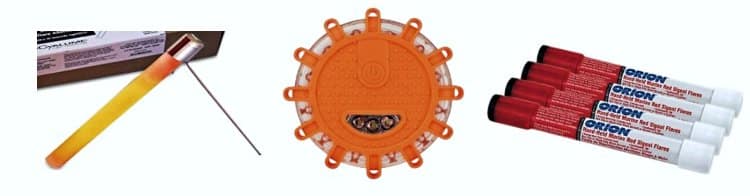
These devices save lives – no doubt about it.

And nowadays, with advancements in flare technology, you have more options than ever.

But honestly, it can feel like too many options.

It can be overwhelming to figure out which ones are the best for you.

That’s why you’re here now, and we’re going to clear the air.

So today we’ll be covering the following road flare topics:

As A Way To Introduce You To Skilled Survival, We’re Giving Away Our Ultimate Survival Gear Checklist. Click Here To Get Your FREE Copy Of It.

WHY EVERYONE SHOULD OWN A SET OF ROAD FLARES


Most people already know what a road flare is.

They’re a visual warning device for when your vehicle breaks down on the road.

It’s a device used to warn oncoming unsuspecting traffic that something is wrong up ahead.

And these devices are a MUST own.

Why? Because when someone leaves their broken down vehicle on the road at night without an insanely bright warning – they’re putting innocent lives at risk.

Listen, I’m not one to make anyone do something they don’t want to do. But I feel like all vehicles should be required by law to have a set of road flares.

Sure, if someone doesn’t want to wear their seatbelt – I’m fine with that. They’re only hurting themselves. But without clear visual warning of a broken-down vehicle, especially on highways…terrible things happen.

There’s no way to know for sure. but I feel like a “bright as hell” set of road flares could have prevented this:

Or how about this one?


The bottom line is: Owning a bright set of road flares will protect yourself AND innocent travelers when your vehicle stops on (or near) a busy roadway.

Different Types Of Road FlaresDIFFERENT KINDS OF ROAD FLARES


There are two main types of roadside flares being used today:

  1. LED electric flares
  2. Pyrotechnic “fusee” flares
  3. SnapLight Flares

LED Electric Flares

Modern LED flares are battery-operated, running on several AA or AAA cells.

Most of them are waterproof designs, shaped like a hockey puck with bright LEDs on the outer edge.

These flares can run for hours (even days) on a single set of batteries.

Pyrotechnic Flares

Pyrotechnic flares are often called “fusee” flares.

They are handheld sized cardboard cylinders filled with a bright-burning chemical mixture.

The exterior is often treated with wax or other waterproofing materials. But beware, the fusees can absorb moisture and lose their efficiency over time.

They typically burn for under an hour and produce a lot of heat. So they can also double as firestarters in an emergency.

SnapLight Flares

These are more like the traditional Pyro flares but without the dangerous fire components.

Snaplights work the same way Halloween safety lights work for kids. You know, those neon light sticks parents force their kids to wear hoping to make them more visible…

You just apply pressure to them (or “snap” them) and this creates a chemical reaction of neon bright light.

Simple, safe, and effective.

LED Safety Disc Lights At NightHOW TO USE ROAD FLARES IN AN EMERGENCY


The entire point of a road flare is to alert other drivers. So it’s important to consider how other drivers will see your flares.

If they’re hard to see or don’t provide enough warning distance, they’re not doing their job.

How Many Flares?

Most road flares sets contain 3-4 individual flares. This is plenty for the majority of road emergencies.

If you decide to go with pyrotechnic fusee flares, get multiple sets as they only burn for a limited time.

Otherwise, with LED flares, just make sure you keep some spare batteries with your set.

Where Do You Place The Flares?

The best location for the flares is determined in part by the type of road your on.

On a one-way road, all traffic should be approaching from behind your car.

In this case, you can place all your flares behind your vehicle to warn drivers before they reach you.

If you’re on the side of a two-way road, be sure to place at least one flare in front and behind your car.

This allows you to warn drivers coming from either direction.

How Far Do You Space The Flares?

Spacing changes based on the type of road your on. You want to give drivers enough warning to stop or avoid your vehicle.

Let’s go over 2 extremes to give you some rough guidance:

On a limited-access divided highway with traffic moving at 70mph –

It this case, you’ll want to put the first warning flare pretty far back behind your vehicle.

This may mean putting the first flare 200-300ft (or further) before your car. With a second flare 100ft closer. A third flare can be placed near the vehicle to give a final warning.

On a two-way, undivided road on a residential street with traffic moving at 25 mph –

Place flares roughly 100ft in either direction.

The bottom line is: You must give other drivers enough warning to slow down or stop to avoid your vehicle.

Speed and “divided vs undivided” are the two biggest factors for optimal placement.

How Can You Make Flares More Visible?

Some LED flares come with magnetic bases or hanging hooks. Why? Because height can drastically increase the mounting options for your flare.

Guard rails, traffic cones, and even roadside vegetation can provide a higher location.

This allows it to shine further down the road.

For flares used at the vehicle location, a magnet base makes the side or roof of the vehicle a great location as well.

How Does Weather Affect Flares?

Wet or snowy conditions can present challenges to both LED and pyrotechnic flares.

Snow or mud can build up on the flare, obscuring its light until it’s cleaned off.

Be sure to check your flares frequently if they show signs of being blocked.

Heavy slush or deep puddles can soak pyrotechnic flares, putting them out prematurely.

Again, keeping your flares elevated can help with these weather-related problems.

KEY FEATURES TO LOOK FOR IN A QUALITY ROAD FLARE


The best LED road flares have some common features, so be sure to look out for these:

Waterproof Design

Chances are that you’ll need road flares most when the weather is worst.

A waterproof design means an LED flare will withstand the worst that nature can throw at it. And not fail when you (and innocent travelers) need it the most.

Multiple Strobe Modes

Most LED flares have a flashing strobe mode, while some also have SOS and flashlight modes.

Either can be helpful and while similar, they are not quite the same thing.

SOS is a universal urgent call for immediate help or assistance. This should only technically be used if someone needs immediate assistance. Usually due to injury.

A regular strobe just signals a warning of a hazard up ahead.

Magnetic Base

A magnetic base allows you to mount the flare to any steel object – cars, signposts, guard rails, etc.

Hanging Hook

Sometimes it’s best to have another mounting option that doesn’t require steel surfaces.

A folding hook is a great way to hang the flare from branches or other objects.

Rugged Design

Like all emergency equipment, look for a flare with a rugged design.

They need to be able to withstand weather, drops, and falls. Or more likely being run over by vehicles and still function.

A cheap design will not last and you’ll find they fail at the worst possible times.

If you decide to store some pyrotechnic flares in your vehicle kit, there are some features to look out for:

Waterproof Storage Box

As I’ve mentioned, pyrotechnic flares are susceptible to moisture. That’s why it’s so important to keep them dry at all times.

Many people store them in Ziploc plastic bags, but they can often get torn or ripped with rough treatment.

If you’re going to carry them in a vehicle all the time, it’s best to store them in a waterproof box. Just add a desiccant pack to be sure they’re as dry as possible.

Built-In Striker

While keeping a lighter with the flares is a good plan, it’s best to have flares that can light on its own.

You don’t want to pull out a flare only to realize you don’t have a match or a lighter on you.

That’s why most flares have built-in strikers that allow you to light them like a giant match.

Non-Toxic Design

It’s harder to find a pyrotechnic flare that doesn’t contain toxic chemicals, but they do exist.

7 BEST ROAD FLARES ON THE MARKET TODAY


1 – Emergency Roadside Flare Discs

Emergency Roadside Safety DiscEmergency Roadside Safety DiscThese Emergency Roadside Flare Discs are made from the same strength-tested materials used by the Army, making them insanely durable.

Plus, unlike a regular flashlight, these Roadside Discs actually REFLECT light back, in addition to emitting powerful beams on their own.

These discs can be seen from 5,000 feet away, so any oncoming traffic will have plenty of time to react to your presence.

If you are concerned about your safety on the road, or the safety of a loved one, don’t leave it to chance these LED flare discs will give you peace of mind, in case anything should happen.

Check Out Today’s Price

Check Out Today’s Price


2 – Hokena Roadside Warning Care Safety Flare Kit

Hokena has packaged a set of five bright LED flares (including batteries) in a solid storage bag. It also includes the tools to replace the batteries. Plus, it has an emergency glass breaking and seatbelt cutting tool.

These flares are very bright, with several lighting modes that will be useful in any situation.

They’re solidly built and feature a strong magnet base.

But the devices are someone on the light side. So they may move if not solidly attached to something.

Check Out Today’s Price


3 – Cyalume Industrial Grade SnapLight Flare with Wire Stand

The Cyalume SnapLight flare chemical light stick is the flare alternative you didn’t even know you needed!

These durable, waterproof signaling devices are safer and more reliable than typical pyrotechnic flares thanks to their non-flammable, no-heat generated chemistry.

Additionally, these chemical light sticks provide ultra-intense, bright orange light for 30 minutes – no matter what condition or environment they are in.

They’re the perfect choice as emergency or safety lights and an ideal flare alternative.


Check Out Today’s Price

4 – Garage Monkey Engineering LED Road Safety Flare Roadside Warning Safety Flare Kit

One of the things that set the Garage Monkey kit apart from the others is the fourth flare.

This allows you to be more visible right away!

They also feature 9 different light modes, giving you a lot of options for signaling.

Finally, if you are not 110% thrilled, simply get in touch and they’ll send your money back.

Check Out Today’s Price

5 – Emergency Roadside Smart Flares Kit

These Emergency Roadside Smart Flares are a highly visible LED road flare.

These super-bright red LEDs array can be seen a mile view at day and night.

It has 3 different flash modes: Strobe(SOS)/Flashlight/Solid and they only require 12 AAA batteries (battery included).

It comes with a solid storage case and a 100% SATISFIED guarantee.

Check Out Today’s Price

6 – Reliancer 5PCS 18″ Collapsible Traffic Cones with Nighttime LED Lights

If you have extra space in your kit, consider these Reliancer Collapsible Road Cones with LED strobes.

They store in 10″ cube but pop up to give you 5 bright orange, 18″ tall road cones to be visible during the day.

At night, turn on the LED flares and these cones flash to give other drivers plenty of warning.

Check Out Today’s Price


7 – StonePoint Emergency Road Flare Kit

StonePoint Emergency Road Flare Kit comes with three LED Emergency Beacons.

Also included is a bag to store and protect these LED road flares.

They produce light with 360-degree visibility up to two miles away!

Each light has a 20-hour run time on steady mode, while it has a 60-hour run time in flash mode.

These lights have a powerful magnetic base and are crush resistant for up to a 6,000-pound vehicle.

Check Out Today’s Price


WRAP-UP


Times have changed and LEDs road flares are the way to go for most situations.

The only time I would include pyrotechnic flares would be in a winter emergency kit. That way, they can be utilized as a fire starter in a pinch.

Otherwise, they’re not worth the trouble. Skip the toxic smoke and fire risk with vehicle fluids or dry conditions near the road.

Check out some LED road flares and add a bit of visibility to your roadside emergency kit today!

Jason K.

P.s. Do you know where the closest nuclear bunker is from your home?

There are a lot of natural nuclear shelters in the US that are absolutely free. And one of them is near your home.

Click on the image above to find out where you need to take shelter.

The post 7 Best Road Flares For Emergencies On The Market Today appeared first on Skilled Survival.