Survival Gear is the most unused product until a natural disaster happens, then it’s the most desired products, but usually too late to help those that really need the help.

We sell around the World, and pride ourselves on offering a level of customer service that we would want to see ourselves if we were shopping online.
Our product ranges change regularly, so we hope that you come back to our sites to see some of the fantastic offers that we regularly have.

Get In Touch

Censor The President? Democrats Want Trump SILENCED

Democrat presidential candidate and well-known liar, Kamala Harris wants President Donald Trump’s account on Twitter suspended.  By suspending his account during times of accusations and impeachment rhetoric, the democrat would be actively censoring a sitting president.

Is this the “democracy” democrats are constantly blathering on about? Harris has officially asked Twitter’s CEO Jack Dorset to censor the president of the United States. According to CNBC, in a letter to Twitter’s CEO, Democratic presidential candidate Kamala Harris says Trump has violated the company’s anti-bullying policies and Twitter should consider suspending his account.

Harris also says that Trump has attempted to “target” and “harass” the whistleblower who filed a complaint on the president’s July 25 call with the president of Ukraine. But unmasking and harassing whistleblowers is fine, as long as it’s a democrat whos doing it.

Harris infamously claimed she had smoked marijuana in college while listening to Snoop Dog and Tupac years before either made music.  While the liberal media desperately wants you to forget this because Harris chose the D to put behind her name,  we think it’s necessary to know the content of the character that we are dealing with.

It’s also ironic and quite hypocritical that Harris is saying Trump is “bullying” a whistleblower with Tweets as she attempts to bully a private company into censoring a sitting president. It would be funny if the entire state of the government wasn’t little more than a bad joke at this point. Besides, doesn’t’ Trump know by now that only democrat propaganda will be allowed on social media platforms?

A White House spokesperson told CNBC in an emailed statement, “It is not surprising that Kamala Harris, someone who believes in bigger government and more regulation, would like to silence her political opponents. In fact, it’s rather authoritarian of her. President Trump’s use of technology to communicate directly with the American people and share his Administration’s unprecedented accomplishments should be praised, not criticized.”

Survival Gear Review: The Solo Stoves, Part One: Solo Stove Lite

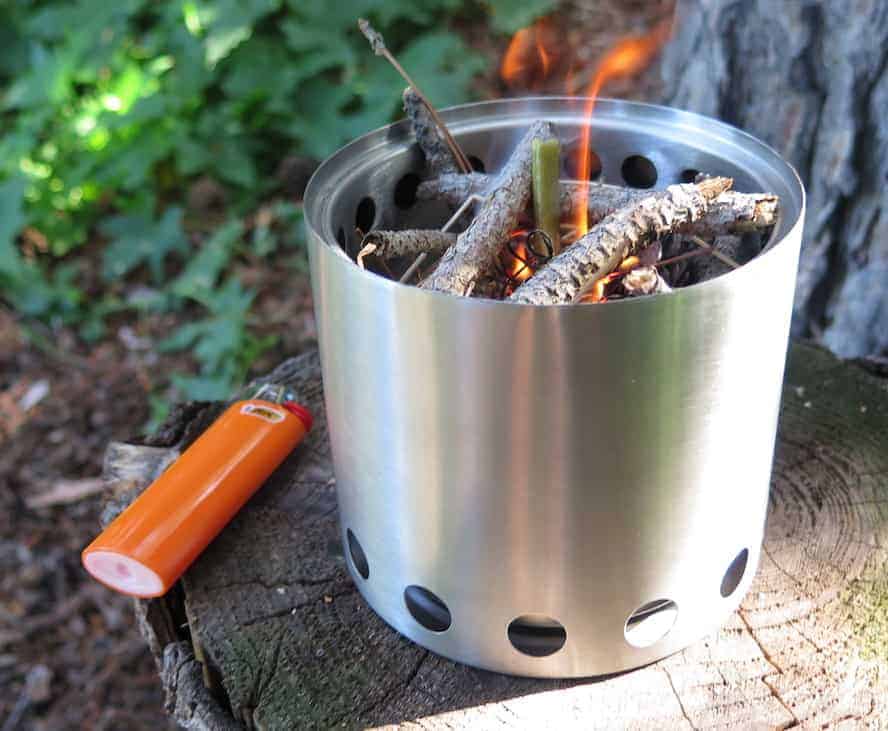
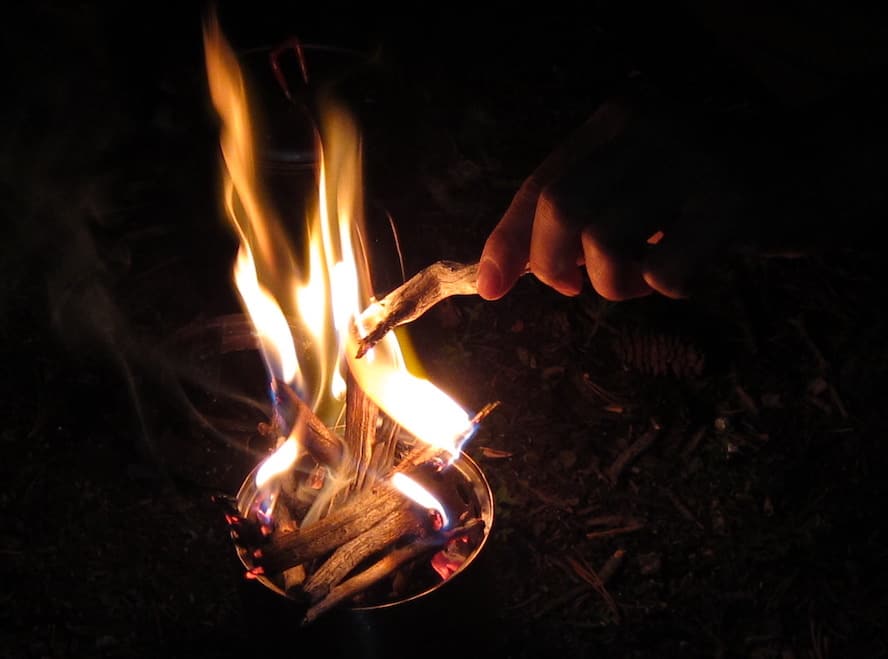
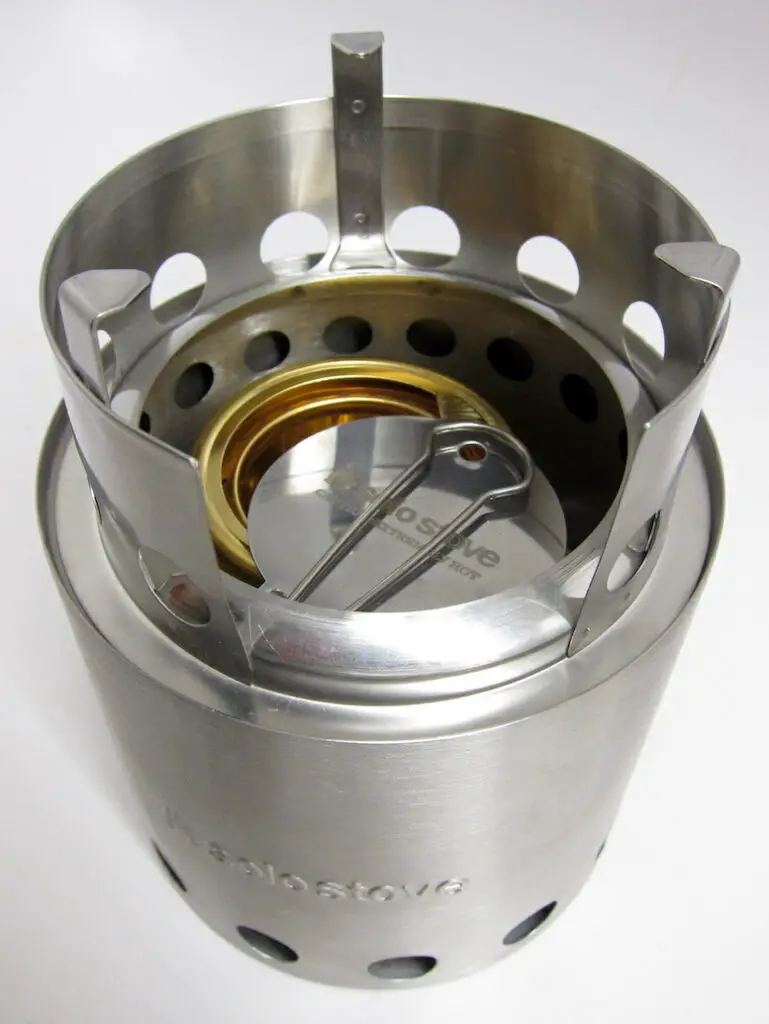
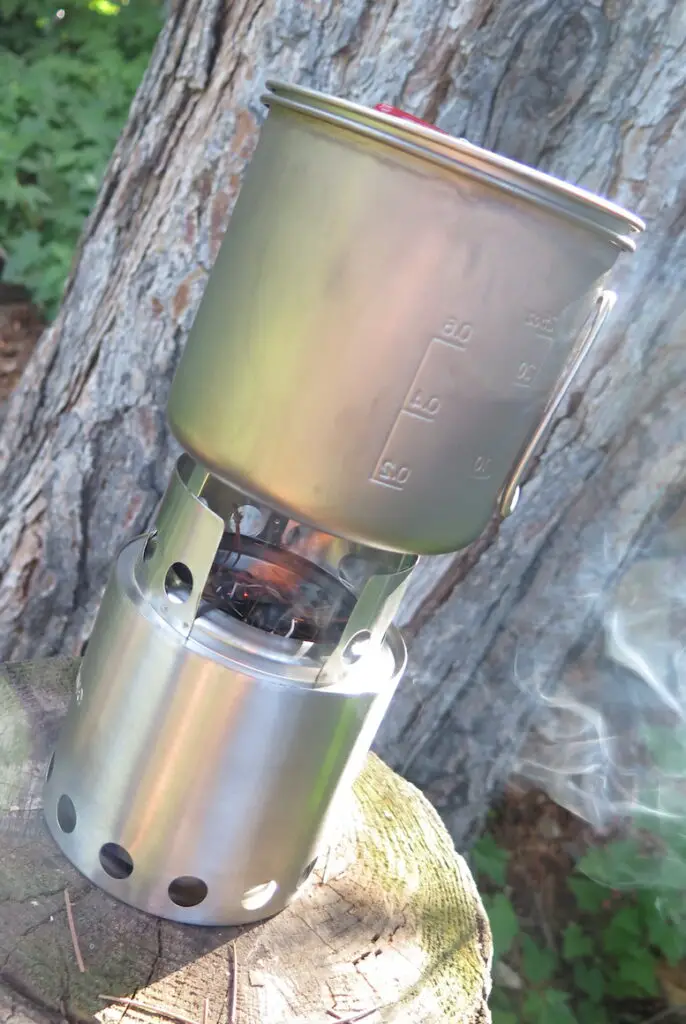
The Solo Stove design is a stainless steel can-shaped wood-burning container of numerous sizes from easy carry for backpacking, to a monster that needs two people to lift it. For this review, we will take a look at the Solo Stove Lite, the smallest of the Solo Stove offerings. Part 2 will address a larger Solo Stove stove, and a campfire-sized Solo Stove.

By Doc Montana, contributing author to Survival Cache and SHTFblog

The Solo Stove Lite is a beautifully engineered and executed stainless steel wood stove not much bigger than a can of beans. But what does raise eyebrows is the price; about $70. And even more surprising than the price is that those who use it absolutely love it! So much so that the price drifts into the ether becoming a non-issue after only a few uses.

The Solo Stove is a dynamic option for those comfortable with placing their cooking needs in the hands of wood. And I am one who does. The Solo Stove is a trifecta of physics, engineering, and materials. On the physics side, the flow of oxygen to the Solo Stove’s main fire chamber follows a dual route “from the bottom to the top,” to quote the Talking Heads. As air enters the base of the Solo Stove through external holes lining the lower parameter, it carries ambient oxygen to the lower vent, and also to upper openings in the main chamber. The oxygen level in air is far above the O2-starved fires inside the stove. So much so that it appears as if flames are flowing out of the upper parameter holes into the main flow of flame. It truly is both inspiring and mesmerizing. You’ve got to see it to believe it.

Also Read: Survival Gear Review: MSR Whisperlite Stove

Air begins its journey under the main fire due to a wire grate that delineates the base of the burn chamber from a sub-chamber that doubles as an ash trap. As the combustion gasses ascent to the upper levels of the stove, they are heated before pouring into the chamber through the holes lining the upper reaches of the inside of the inner wall. The hot air offer an abundance of oxygen causing a gassification effect that takes the tradition campfire wood heating to amazing levels.

An additional benefit from the dual airflow system is that there is extremely little smoke from the stove when burning efficiently. Like none. Of course there is plenty of smoke on both ends of the time you use the stove, but a large part in the middle burn time when cooking and campfireing are done has no noticeable smoke. There is still plenty of woodfire smell, however. One time from a bit of a distance, I thought my stove was pouring out the smoke only to realize as I neared that it was spraying steam like a train whistle out of a snug fit pot lid. And no smoke.

When burning wood, you don’t have to be diligent about the stove’s operation. You can add some wood and walk away. If it burns down, you add more. If your water boils, then good and it will just boil longer. But the Solo Stove completely removes the worry about conserving fuel. And once you get into the Solo Stove mindset, you see fuel everywhere and in abundance.

The Solo Stove Lite is a wood stove on the smaller side that punches well above its weight class. The Solo Stove is made of 320 stainless steel which just means that its made of the most common stainless steel. But stainless steel nonetheless. The welds between the two “cans” are impeccable, and a thing of beauty. A mesh grate of nichrome wires criss-crosses the inside bottom providing a limited but ample supply of air to keep the coals humming along while allowing gravity to remove the spent wood. Sometimes a minor shake of the burning stove tidies up the fire by cleaning out the carbon from the fire.

There are two pieces to the Solo Stove, a main dual container consisting of the two layers of steel, the ash basin, and plenty of holes above and below main chamber. The other piece is a ring of steel with a lip that can either dip into the main can for storage or fly above it as a pot support and doorway for adding more fuel to the combustion chamber.

Related: Survival Gear Review: Vargo Wood Stove

The riser is essential for cooking over the stove. Without it, a pot or pan would sit flush on the Solo Stove blocking the flow of hot gasses. But there is no need for the riser if just using the Solo Stove as a campfire pit. The riser can easily be added or subtracted from the system with a fire blazing. In fact, it is much easier to get the stove started without the riser.

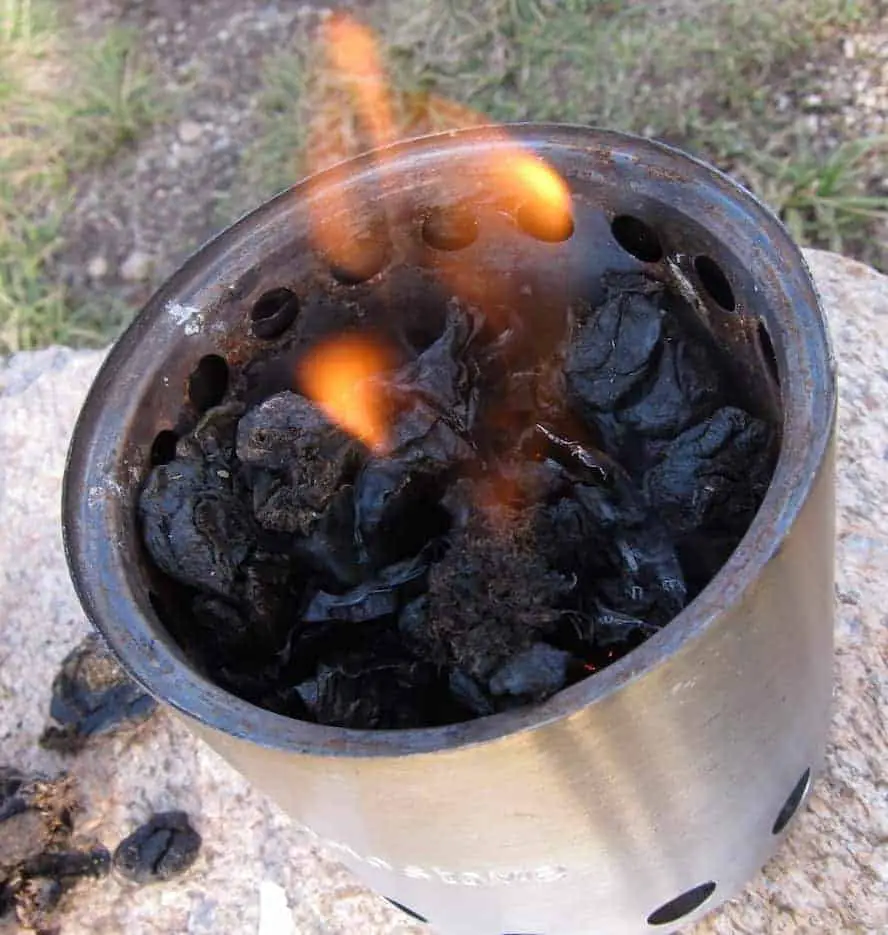
I’m not sure if it’s right or not, but I’ve extinguished my Solo Stove Lite simply by dumping water on it. The water does run out the bottom holes carrying with it plenty of smaller pieces of wood and charcoal. The stove, when dry then clanks like a baby rattle until you dig out all the pieces of detritus rolling around in between the stainless walls.

Being a wood stove, the Solo Stove Lite will get dirty. And depending on how loose you are with the wood input, your pot might just have a black bottom, or the entire pot will become jet black and sticky with creosote. I’m happy to report that the Solo Stove made it through the normal cycle in my dishwasher. I can see the potential for rust however as stainless means less stains, not rustless. But it was nothing more that what I noticed after using the Solo Stove Lite for a few rainy days on a backpacking trip.

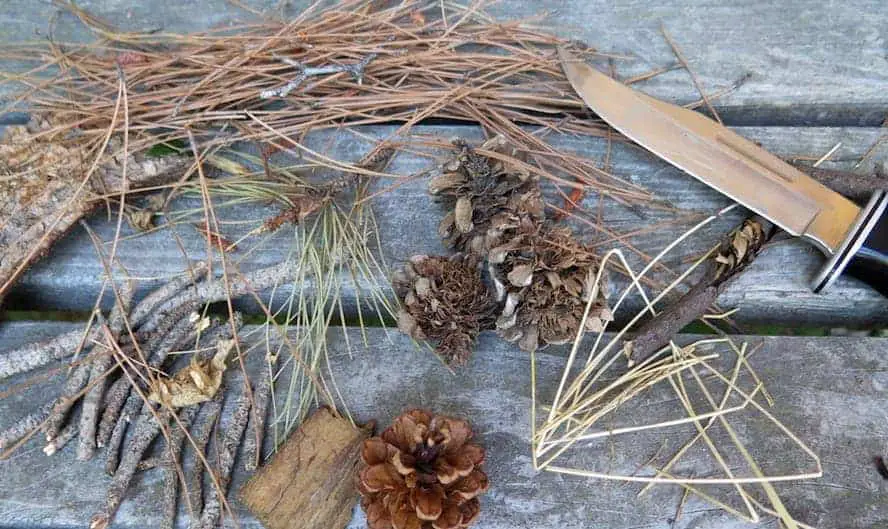
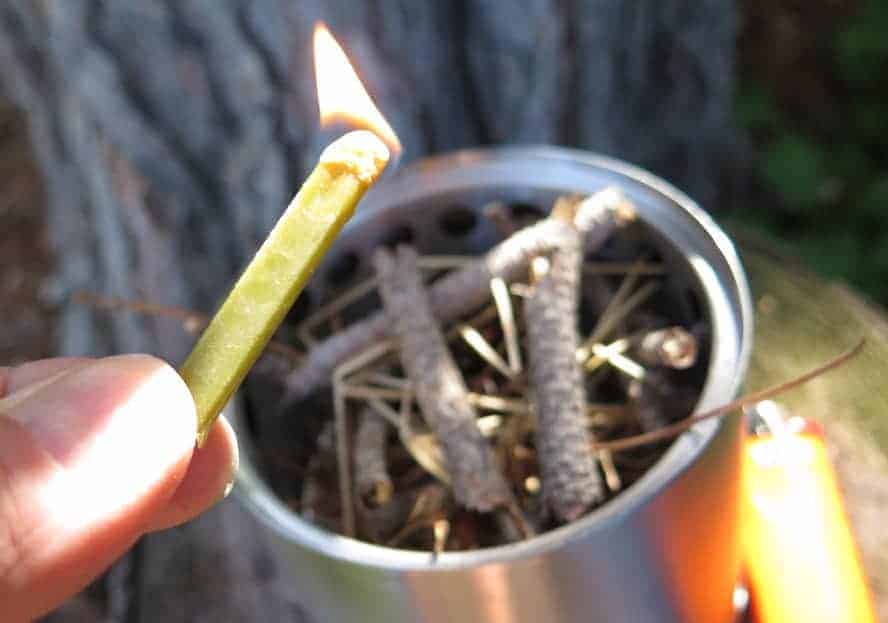
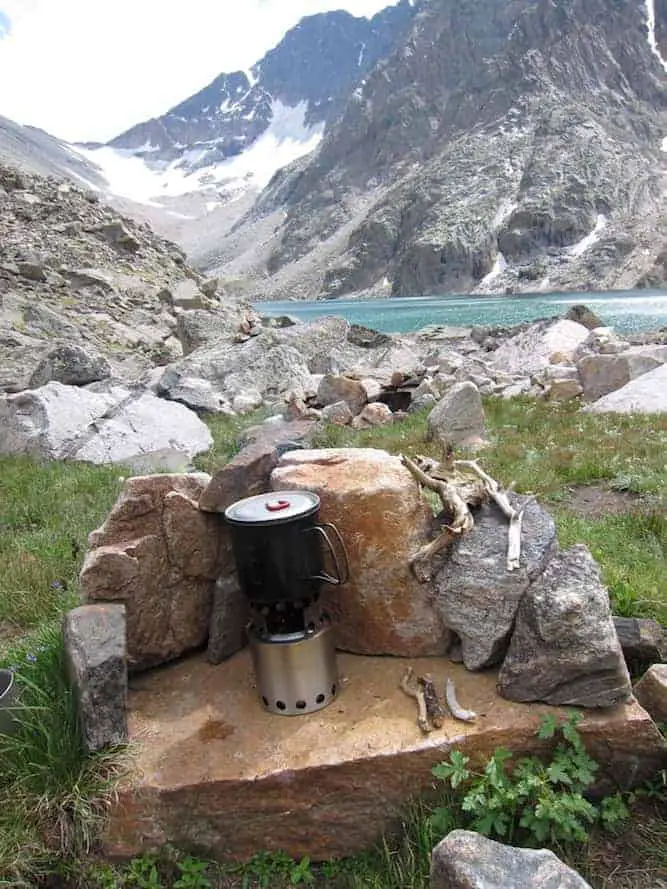
In use, I had a boiling quart of water in 10 minutes plus or minus. Usually plus. I used a commercial fire tinder to fire up the stove quickly, but you can use traditional tinder and firesticks to launch this rocket. Some of the benefits include no real concerns for fuel. The only time I ran into a fuel shortage was when I was over 11,000 feet in the Beartooth Mountains of Montana and there was literally no dry cellulose around large enough to burn. I did try to burn mountain goat dung in the Solo Stove Lite, but just couldn’t keep the flame long enough to boil water. Yak dung maybe? Just fresh out of yaks around here.

Even at 10k feet I located plenty of material primarily in two locations. The first was in natural microstream channels where the rain piled up small sticks at congested areas between rocks and narrow water pathways. The second was where small animals had made a home using locally sourced building materials. And in one case, where I knew I was headed to a high spot, I just grabbed a few inch-to-inch-and-a-half thick branches, stripped and resized them, and slid them into my compression straps on by backpack. When arriving at camp, I just processed the branches into Solo Stove-sized fuel. I got about two quarts of boiling water out of each three-foot branch.

Listen: Survival Cache Podcast: Only Choose One Piece of Gear

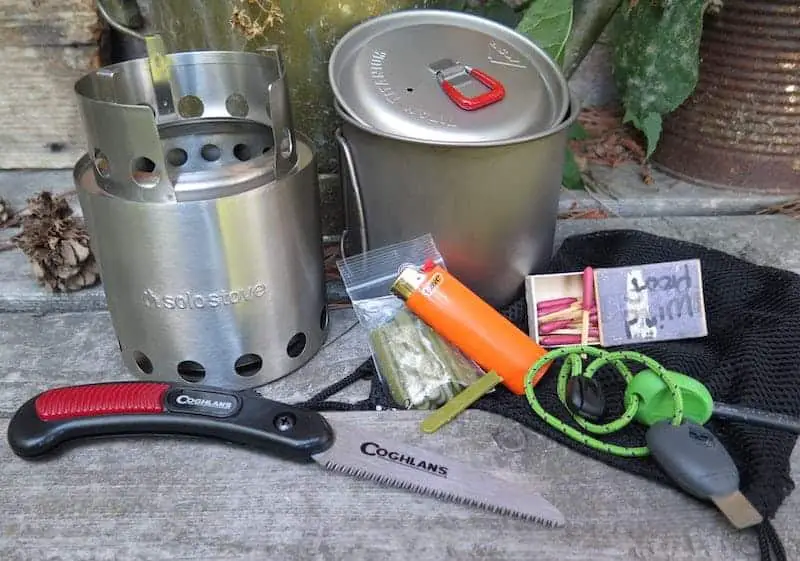
I have a 900 milliliter titanium pot and small fire making kit I carry with my Solo Stove Lite. The pot is made by Snow Peak and I use an MSR titanium lid from another cooking kit to cover the pot. My fire kit includes a Bic lighter or two, some matches, a firesteel, some commercial tinder/firestarter, and a tiny saw that I considered a joke until now. The Solo Stove Lite fits neatly inside the pot, and the whole kit fits into a mesh stuff sack with is important to reduce the sharing of black carbon with the rest of your gear.

I am so enamored with my Solo Stove Lite, that it has moved into my primary campstove position. And I have a dozen or so other stove choices. During a bug out, any liquid or compressed gas stove has a short life. However, should you want to run a liquid fuel in your Solo Stove Lite, there is an optional alcohol can with adjustable lid available for burning fluids. So if you can get over the price, the Solo Stove Lite is an exceptionally useful, efficient, and potentially life saving tool for fun and survival. I have absolutely no hesitation in recommending the Solo Stove Lite.

Please Visit Amazon Affiliate Sponsors of SurvivalCache.com

The post Survival Gear Review: The Solo Stoves, Part One: Solo Stove Lite appeared first on Survival Cache.

Reflectors and Mylar: Home, Garden and On The Go

Written by R. Ann Parris on The Prepper Journal.

There are all kinds of ways windshield reflectors and space blankets can make life easier and increase our capabilities as preppers, both everyday and during emergencies. Some of the camping and car uses are the most well known, but they don’t get applied in our homes and backyards much.

What we’re doing with them affects just how much quality we need, and thus what we might expect to spend. We also have other options such as regular ol’ aluminum foil and the option of snagging aluminum bubble insulation.

Mylar Sheets

I should say up front that while I have a couple of the dollar-store wallet-sized sheets in my daily bags and vehicle, I am not a huge fan of them. I’ve tried them out a few times. They never got top billing for my vest or pocket stuff when I was camping.

We can get better versions of simple, thin, super-compact, super-lightweight heat sheets for not much more, which is now my choice.

We can also get the types where the mylar sheet is mated to a much sturdier nylon or canvas backing, complete with grommets. They’re pricier and have added bulk, but they’re far more sturdy with more ease of use.

That’s what I tend to go with now for away-from-home emergency kits when the space isn’t of issue.

I have always lived in areas where wind is a factor, even in the woods. Most of my packing and long-distance solo driving has been done in areas with crazy-vicious thorns and-or thick brush. I have had all kinds of things punctured and ripped from rocks, sticks, and mesquite. I also almost always have dogs with me, and do not always have a file for their nails or control of their wagging tails.

Thin, flimsy space blankets just don’t fit my outdoors emergency needs.

I also find them to be a serious pain to fold up, a pain to work with due to the light weight, and insanely noisy.  

Others do like the regular ol’ dollar-store versions, express no real issues with them, and make them work in all kinds of conditions. For $1-$3, give them a try and see if they work for you.

There’s also all kinds of emergencies – and all kinds of uses in everyday life. We don’t always need a rough-ready Mylar sheet to reap the benefits.

There’s no reason to spend more in those cases, some of which apply to the uses below.

There’s no reason to spend more than we have to, ever – watch for seasonal sales and check outlets like Ollie’s and Big Lots, clip some coupons for Academy and Tractor Supply, and keep more of the budget available for other things even when we’re after the heftier emergency blankets or vehicle sun shades.

Windshield Reflectors

These are my backpacking, evac kit, and kayaking go-to choice. I typically carry 2-3, bundled so they form a belt pad and pad the back of my pack.

I started carrying just one to serve as a bedroll pad. Just like they reflect heat away from our cars, under our bodies, they reflect our heat back up. In a pinch, they can work solo as a ground cover, but I usually have a ground cloth of some kind.

I punch some holes and add loops so they’re easy to attach up over or beside my body as well, regardless of bivy or tarp shelter type. If I have sufficient insulation from the ground, that reflection is more useful to me.

That reflective value can be netted with any of the mylar and mylar-lined options. I still use the vehicle heat shields under a bedroll just because they’re less likely to bunch up or move, and they’re thicker, covering my pad needs.

I also prefer those fold-up vehicle pads for wet and snowy packing and kayaking because they can provide a comfy place to sit or kneel, and because it’s easier to rig them with some branches, around trees, or with line to reflect a fire’s heat back at my sitting and sleeping area.

There’s another big bonus when it comes to the vehicle reflectors over thinner sheets and plastic-tarp types: sparks.

I have never managed to actually have a sheet blow into a fire and melt immediately, but I have every once in a while had a gust hit a 1-sided or 2-sided/angled reflector fire just right, at just the right time, to send some embers blowing.

The vehicle sheets have never caught or had holes melted from just incidental sparks. The space blankets, however, have.

It’s just something to be aware of.

*Reflectors for fires aren’t just about keeping us warmer. Set up logs, rocks, spare lids, etc., to help food cook faster, even if you don’t set up a large section, or look into a reflector oven.

Creating a smaller space and reflective surfaces can also help make our at-home emergency candle and oil ovens and stoves more effective, decreasing cooking time. Likewise, heat shields and reflectors can help keep heat contained to a cooking area for poorly insulated campers, shacks, and trailers even with gas or electric cook-tops.

Reflect Heat At Home, Too

We can throw cheap sheets or sturdier windshield screens all over to help lower fuel use and make areas more comfortable. They work under the bottom sheet or the mattress for beds, humans or pets.

We can use them propped up behind animal beds as well. Windshield reflectors or sheets adhered to plywood or shipping pallets can be used for livestock, too, lowering the times we use heat lamps for birds and lambs.

We can also use them atop kennels or hanging from rafters to create canopy beds for our animals, holding and reflecting more warmth yet just as they do for us.

Mylar sheets (or aluminum bubble insulation) also work to reflect heat from behind our chairs and lining our workshops, near our wood stoves, on attic floors, and even on our windows.

Covering windows to reflect heat back works even better if we go with double-ply sheeting with something dark on the outside to absorb solar radiation, and the mylar on the inside.

Just like those sunscreens help keep vehicles cooler, we can use them during summer outages to reflect light away – just like switching to pale-colored curtains.

It applies to RVs and hunting shacks as well, or to tents that have windows and dark colors and car/truck camping.

If we have the sturdier versions, we can use hooks and line or poles to angle the screens out away from our windows so we can cut the light and heat, but still retain some airflow.

Outdoors Light & Heat Control

Any of our reflectors can help us with comfort and efficiency outside, too. With the reflective surface above, heat from the ground is contained and reflected back down, giving us extended use of our decks and porches, protecting gardens from cool snaps, or helping to retain warmth from any passive or active heating we use.

Especially during the spring-autumn verges and during winter when the sun’s arc is still low, we’re not losing significant amounts of light if we use tall hoop frames.

Other times, we might lay reflective ground cover or our handy alternatives to reflect light upwards, or prop any of our options against the back of a greenhouse or bed to reflect more light still from the sides.

Other times, we specifically want to lower the amount of sunlight reaching our gardens, and might even angle a screen so it’s blocking the whole afternoon sun.

Doing so – and adding a reflector facing outward instead – can lower the heat for cooler-weather crops and reduce evaporation and transpiration, reducing our need to irrigate in dry seasons.

We can also make use of our light and heat reflectors for indoor plants. It’s especially helpful starting seeds in low light conditions, whether that’s a window in early spring or “just” maximizing growth for countertop sprouts and microgreens.

It also allows us to maximize the efficiency of any grow lights we use – for birds as well as plants.

Smaller Structures

Whatever type we might choose – to include those cheap Mylar sheets or regular ol’ foil – we can use reflectors to increase the effectiveness of solar panels large and small-tiny, and solar heaters and dehydrators. They’re also handy for solar-heated water systems, whether those are warming houses or greenhouses, or feeding into showers or pre-heated cooking and hand-washing stations.

Vehicle sunscreens can make for incredibly easy solar cookers, but they, too, can also be assembled using any of our options – there’s no need to spend more for the sturdier or larger sheets.

Reflectors: Worth A Couple Bucks

Whether we’re planning for everyday emergencies or a major End-of-Days event, having some options on hand to reflect heat one way or another can be a major assist. That assistance applies to normal life as well, allowing us to do more with less work or fuel expenditure. In some cases – like decreasing the use of heat lamps and space heaters – it can also reduce risks on the home front.

Given the relatively inexpensive investment required, it’s worth trying out the options and keeping a few on hand, at home, in vehicles, with emergency kits, but also for everyday trial-and-error testing and development.

Be Safe out there and be sure to check out The Prepper Journal Store and follow The Prepper Journal on Facebook!


The post Reflectors and Mylar: Home, Garden and On The Go appeared first on The Prepper Journal.

How to find the perfect gun holster?

Written by Guest Contributor on The Prepper Journal.

Finding the right gun is a difficult task. We spend hours sifting through various types of guns, reviews, etc. Then starts the process of finding the pros and cons of the gun. We talk to various gun owners and friends about their experiences. We call or go to multiple gun shops, taking expert advice from the person behind the counter. Then comes the time to find the right ammo, another war to win. In all this hustle-bustle, a gun holster is often forgotten. 

Finding a gun holster is easy but finding the perfect gun holster can be daunting. You will have to probably try and test a lot of gun holsters before you find the ONE! Finding the perfect gun holster is not a joke. Even the best of your pistols is useless if it is put inside a safe at home. It is a matter of safety and comfort which has to be taken seriously. 

The main purpose of a gun holster is but not limited to carry the weapon. As a responsible gun owner, it is also important to look at the safety features of the holster which prevents the accidental discharge of a bullet and also prevents the firearm from elements in the atmosphere. 

Let’s first understand the bare minimum characteristics of a holster

There is no denial in the fact that a gun owner should handle his firearm responsibly and must have 100% positive control over his firearm. Thus the bare minimum requirement of a holster should be that it must be able to cover the trigger to prevent accidental firing. There will be a rare chance that a holster available in the market will not cover the trigger. Although there are certain holsters used in firing competitions which do not cover the trigger purposely. 

What are retention holsters?

Retention holsters not only fulfil the bare minimum requirements but also offer a higher level of safety and control. A basic retention holster is with a velcro strap. There are various higher standard retention holsters on the market like Blackhawk and Safariland’s hooded designs. Safariland hooded hosters are generally level 3 holsters with features like a lever or a button. Some holsters also offer a feature by which only a certain movement of the pistol can only release the weapon.

Factors to consider while selecting a holster 

  1. Quality – Greed to save a few dollars over safety is never any responsible gun owner would think of. Always read reviews of different products online and go for quality manufacturers only. Quality manufacturers offer a warranty for 2 or more years from the date of purchase. 
  1. Durability – We all love the smell and charm of leather holsters. There is nothing more attractive than a new leather holster but what about leather’s durability? Leather will eventually suffer wear and tear and will lose its shape and retention ability. Kydex is a type of PVC which is durable and far more beneficial than a leather holster. Kydex holsters may not seem attractive but when it comes to durability and safety, leather holsters don’t stand even close. 
  1. Comfort – If you ask any cop or a person who carries a weapon daily on their duty belt for the whole day, they all will not say anything positive for the comfort part. That is because carrying a weapon should be comforting, not comfortable. It is similar to a desk job where you have to sit for 8-9 hours a day. A person even becomes tired of sitting continuously. 

A comfortable holster distributes the weight of the weapon evenly while making sure that the firearm is properly concealed.  

Take time to research all the factors mentioned above and then make an informed decision when investing in a holster.

The post How to find the perfect gun holster? appeared first on The Prepper Journal.

According To The FEC, Hillary Clinton’s Presidential Campaign Is Raising Money – Is One Last Run For The White House Coming?

Could it be possible that Hillary Clinton is preparing to jump into the presidential race?  According to the FEC, Hillary Clinton’s presidential campaign is still active, and it actually raised $165,902.73 during the first six months of 2019.  During that same period of time, the campaign spent $131,112.68, and that left her with a war chest of $650,264.43.  That isn’t enough to win the Democratic nomination, but it would certainly be enough to get another run for the White House off the ground rather quickly.  “Hillary For America” is the name of her official campaign committee, and during 2015 and 2016 it raised a total of $585,669,598.83, but that still wasn’t enough to beat Donald Trump.  However, with impeachment mania reaching a fever pitch in Washington and with the Biden campaign fading, Hillary may sense an opening.  She had a full slate of media appearances scheduled for this week, and so far she has done nothing to dispel the rumors that she may be getting into the race.

The fundraising numbers that we currently have are for the first six months of this year, and so we don’t know what happened in July, August and September yet.  But those numbers will be reported later this month, and if her fundraising efforts have ramped up that will tell us a lot.

Of course just because she is raising money does not necessarily mean that she intends on running.  Political candidates often keep “zombie committees” around for years, and Hillary may have some other purpose for keeping her presidential campaign committee active.

But it is interesting to note that a “Hillary 2020” campaign shirt in five different colors is available on Amazon right now.  Is that just wishful thinking, or is that another clue?

What we do know is that Hillary Clinton has been seemingly everywhere in the mainstream media lately.  For example, her interview with Stephen Colbert propelled the Late Show to record ratings for a Monday night

Former Secretary of State Hillary Clinton and her daughter Chelsea this week helped propel CBS “Late Show” host Stephen Colbert to the program’s highest Monday night ratings, drawing more than 3.7 million viewers.

According to Nielsen Media Research, the audience for the interview equaled the combined ratings for ABC’s “Jimmy Kimmel Live” and “The Tonight Show Starring Jimmy Fallon” on NBC.

During that interview, Stephen Colbert began discussing the impeachment inquiry, and his crowd erupted in a chant of “lock him up”

Invoking the infamous anti-Clinton chant popularized by Trump rally crowds, Colbert asked Hillary on Monday if Trump’s Ukraine phone call, largely dismissed as a “nothing burger” but still used as the pretext to launch an impeachment inquiry, now warranted “Lock him up” chants.

“We learned about the Trump-Ukraine call, the private server – is it time to, dare I say, ‘Lock him up?’” Colbert asks the potential 2020 candidate, who cackles uncontrollably.

The audience dutifully takes their cue, and begins chanting, “Lock him up! Lock him up!”


But a far more interesting moment during the interview came later when Hillary Clinton emphatically declared that she was not going to endorse any of the Democratic candidates

Hillary Clinton announced last night that she will not endorse any of the Democratic candidates, fueling speculation that she may yet enter the race.

During an appearance on The Late Show with Stephen Colbert, Hillary was asked if she had endorsed anyone.

“No,” she responded, “no I’m not going to.”

So why won’t she endorse someone?

Is it because she is planning to run herself?

On Wednesday, Clinton made an appearance on The View, and when asked about the 2016 race she stated that she “probably came across as too serious”

Former presidential candidate Hillary Clinton stopped by The View on Wednesday along with her daughter Chelsea, and opened up about her biggest campaign regrets.

Clinton was asked by co-host Abby Huntsman, “When you look back on your campaign and what Democrats today might do differently, what goes through your mind?”

“I’m a serious person but I’m also a fun person,” Clinton responded. “I think I probably came across as too serious.”

After watching some of these interviews, it is clear that she has worked hard on her physical appearance.  She appears to have lost quite a bit of weight, she has exchanged her frumpy grandma outfits for business attire, and she seems to have a lot more energy these days.

In other words, she very much looks like someone that is eager to jump back into the fray.

In recent days, Clinton also had time to accept a “lifetime achievement award” at NARAL’s 50th anniversary celebration

In between criticisms of President Donald Trump, leaders of the radical pro-abortion group called Clinton “our president” and touted her pro-abortion record. NARAL held its 50th anniversary celebration Thursday in Washington, D.C.

“Women’s rights are human rights, and for 50 years NARAL has taken on the toughest fights to protect our most fundamental freedoms. Happy anniversary. Let’s keep going,” Clinton wrote on Twitter after accepting the award.

Meanwhile, Joe Biden’s once promising campaign is floundering.  According to Real Clear Politics, Elizabeth Warren has now beaten Joe Biden in four of the last seven major national polls.

But this is a huge problem for the Democratic establishment.  As I discussed a few days ago, the elite absolutely do not want Warren to win the nomination.  Originally they thought that Biden would have clear sailing to the nomination, but now he is really struggling.  And with Bernie Sanders now out of commission for the foreseeable future due to health issues, Warren’s numbers are only going to get stronger.

Other than Biden, all of the other “mainstream candidates” have completely flopped, and so the Democratic establishment is becoming desperate.

Could it be possible that they will turn to Hillary Clinton as their savior?

That is what a lot of people are now speculating.  In fact, during an interview with Fox Business the other day, Steve Bannon specifically warned that Clinton could enter the race

He told Fox Business: ‘They think they have a weak field and they’re – it’s like in chess – they’re prepared to sacrifice a rook to take down a king.

‘They will throw Biden away to get to Trump and hope Elizabeth [Warren] or I even think Hillary Clinton or [Michael] Bloomberg or some centrist comes in here.’

We shall see what happens.  It still seems unlikely that it will actually happen, but Hillary Clinton’s presidential campaign is active and it is raising money.

But if she is going to do something, she needs to make a move soon, because the voting begins early next year.

And wouldn’t that be wild is she actually won the nomination?  A rematch between Donald Trump and Hillary Clinton would be one for the ages, although our country might be completely torn apart in the process.

Get Prepared NowAbout the author: Michael Snyder is a nationally-syndicated writer, media personality and political activist. He is the author of four books including Get Prepared Now, The Beginning Of The End and Living A Life That Really Matters. His articles are originally published on The Economic Collapse Blog, End Of The American Dream and The Most Important News. From there, his articles are republished on dozens of other prominent websites. If you would like to republish his articles, please feel free to do so. The more people that see this information the better, and we need to wake more people up while there is still time.  Of course the most important thing that we can share with people is the gospel of Jesus Christ, and if you would like to learn more about how you can become a Christian I would encourage you to read this article.

Gear Review: Dynamis Alliance LoPro Belt Review

Finally, A low-profile belt I can hide stuff in! If there’s one thing I love, it’s good beer. If there’s a second thing I love, it’s hiding stuff. I saw this belt online months ago and couldn’t wait to get my hands on one.

By J. Bridger, contributing author to SHTFblog and Survival Cache

I’ve been on the search for the perfect belt for a long time. I have a 5.11 riggers belt that holds up my pants, but the buckle is so obtrusive, I hate the way it looks when I wear a T-shirt. I’ve had a couple leather belts from western stores, but they aren’t good for anything other than displaying my buckles. Plus, you can’t play Guitar Hero without scraping up the back of the controller. Talk about first world problems.
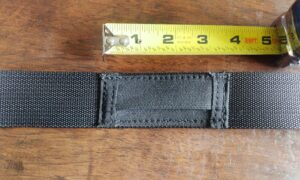
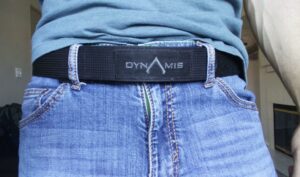
The Dynamis Alliance LoPro Belt comes in 1.5” and 1.75” widths. The material is similar to what seat belts are made of, but a little stiffer. It uses strong hook-and-loop fasteners with a wide range of adjustment. I bought the smaller 1.5″ size so I could be sure it would fit in all my belt loops and holsters. It’s pricey, $59.99, but that seems to be on par with higher quality gun belts. It comes in black, with your choice or red or grey logo. There are three sizes: small (26”-30”), medium (30”-34”), and large (34”-38”). It’s also made in the USA.

The two things that attracted me to this belt were the low-profile design, and the ability to hide things in the pockets, of which there are three. The first sits at the small of your back and is perfect for a spare key. This is my favorite pocket because it is top loading and easy to get into. The others are side loading and are very hard to get things in and out of. The key pocket is about 1-1/8” from top stitch to bottom stitch and is 3” long.
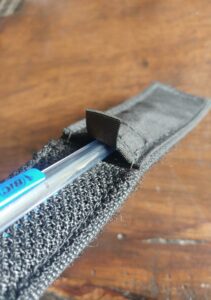
There are two other pockets at the front of the belt, where the buckle would be. They are right up against each other, end to end. They are the same size as the key pocket but configured differently. One is made of solid fabric with a Velcro closure on the side. The Dynamis Alliance LoPro Belt is so narrow, and the pocket is sewn all the way to the end so when you pull on the Velcro, nothing happens. You have to get needle nose pliers or a pencil to cram in between the Velcro to open it. I can’t even get my pinky finger in there. Good luck getting your handcuff key or friction saw out of here with your hands behind your back. I don’t keep anything in this pocket because it’s so difficult to access. The last pocket is made of a mesh material. The Velcro is not sewn on the top and bottom all the way to the end, so when you pull on it, it comes right open. This pocket is still tight, but it’s easier than the other one to get into.

Related: Survival Gear Review: Escape & Evasion Gun Belt

Here I keep a razor blade, About 30” of Kevlar twine, a polymer handcuff key, and a couple $20 bills (I’m no Rockefeller). I can think of a million other things I’d like to keep in here, but it just isn’t possible. I have the contents wrapped with the string in a way so when I open it, I can pull it all out by pulling on the loop .
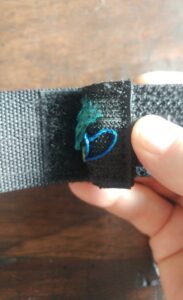
The Kevlar string I keep with a bowline tied at each end, so it’s ready to use as a friction saw to cut through rope, paracord, zip ties, or duct tape. The polymer handcuff key and razor blade speak for themselves. If you carry one, don’t forget to take it out before you go through airport security! I keep the $40 in case I find myself in a pickle that $40 can get me out of. Forty bucks is better than no bucks.

The Dynamis Alliance LowPro Belt feels sturdy and strong, and has no problem carrying my Glock 19 in its IWB holster. They don’t recommend you use it for OWB carry, and I’m not sure why. It certainly seems sturdy enough.

My complaints are few. The pockets can be difficult to get into, and harder to get things out of. If you put a handcuff key into one of the side loading pockets, you will never get it out. Unless you take the belt off, use needle nose pliers, and get lucky, its staying in there. For items like this, you have to devise some kind of pull tab system. I suspect the pockets would be slightly easier to get into with the 1.75” belt, but then I’ve had problems with belt loops and holsters at that size. Lastly, the belt material, Velcro, and pockets have made the belt bulky at the front. Loaded with a few items, the belt is still ½” to ¾” thick. For a lot of people this won’t be a problem, but for slimmer people in fitted shirts, you will have an odd looking “shelf” protruding from behind your shirt. If you have a belly, your shirts are not fitted, or you wear a flannel or other thicker material shirt, this is a non-issue. I think this could have been improved by distributing the pockets somewhere other than the front and sticking to the key pocket design instead of the side loading pocket. That’s my just two cents.
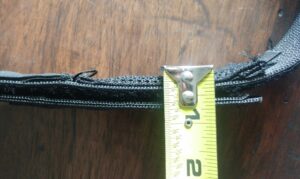
Overall, it’s a sturdy belt with the ability to give you a little extra piece of mind by carrying an extra key, some cash, and whatever other tools you fancy. I don’t mind paying a little extra for made in the USA products, and with the craftsmanship, I’d say it’s well worth it.


Pros:

High quality materials.

High quality craftsmanship.

Easy to don/doff.


Cons:

Pockets difficult to access.

The front of the belt still isn’t low profile.


Five Reliable Guns You Might Consider During Trying Times

Reliable Guns

Having reliable guns to choose from is important when it comes to protecting your family.

Let’s imagine for a moment that the world of tax-funded public safety and well-stocked grocery stores are a thing of the past. Then you, perhaps with a handful of family and friends, must fend for yourself in a tough and hostile environment. Among the considerations for survival are, of course, firearms. Which would you choose?

The most critical consideration for firearms in this scenario would be reliability. Does it go “bang” with every trigger press? Does it cycle the widest possible spectrum of ammo available in that caliber? Is it simple to maintain? What ammunition is likely to be found in the area? It’s a given that one of each major civilian classification of firearms will be needed—a handgun, a rifle, and a shotgun. Our task here is to pick an ideal group of five.


THE TOP THREE RELIABLE GUNS


Handgun

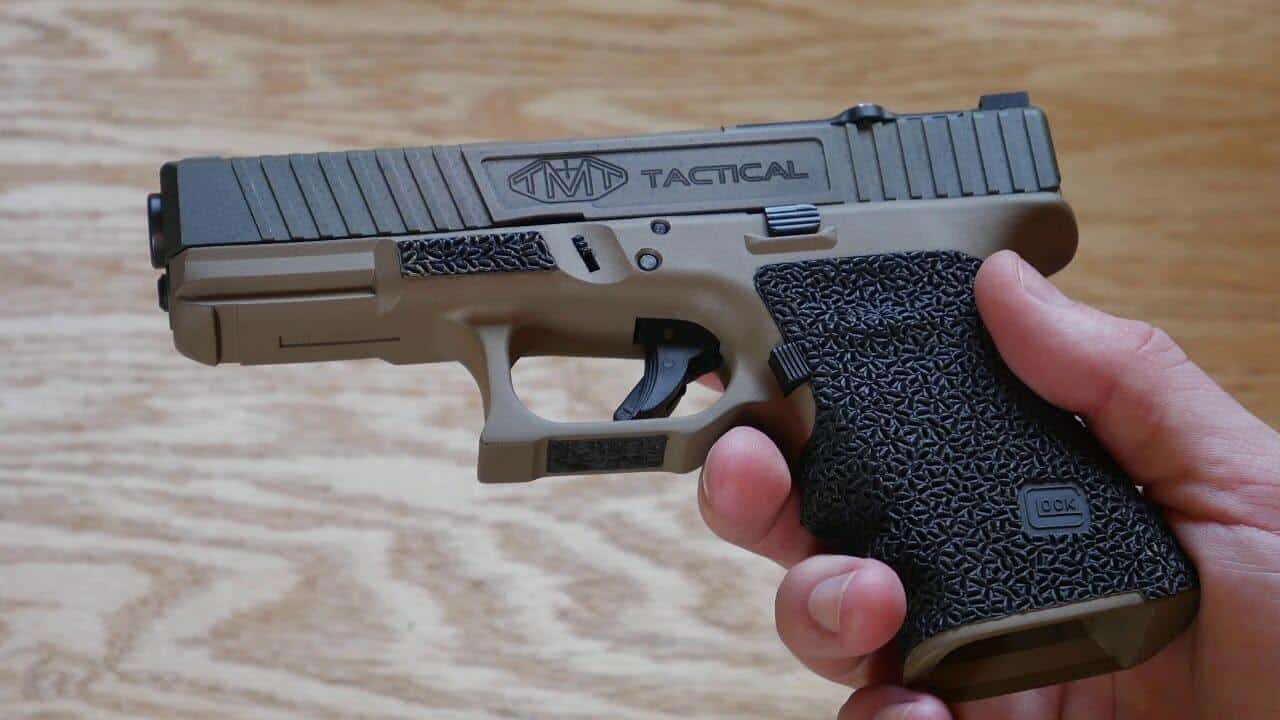
The Glock 17/19 has a long track record of reliability and the other criteria here. While Glock offers a wide variety of calibers and models, the 9mm is a commonly available cartridge worldwide, and less pricey. Like the AR-15, parts are currently ubiquitous, and many are interchangeable between models/calibers.

As a true admirer of the 1911, it’s hard to think of turning my back on that old standby. Indeed, it’s more accurate. But it falls behind, quickly, where ease-of-maintenance and magazine capacity are concerned. Newer models are, in my experience, less reliable than Colt originals

Concealability, which may or may not be a consideration in this scenario, isn’t easy with the G17 but the Glock 19 can bridge this gap effectively.


Carbine

A carbine, with its shorter barrel, offers ease of maneuverability as well as the capability of reaching out to larger game, within limited range, to provide for food. Larger capacity magazines and quick reloading capability may be necessary to defend against attackers of the two-legged variety.

My choice for a long-term carbine partner is the AR-15. The platform is proven as reliable, and most owners have accumulated a supply of spare parts. Ammunition and magazines as of this writing are readily available, but that can change on a moment’s notice, of course!

The .223/.556 cartridge is admittedly not the most ideal for down-range energy. Thanks to the other virtues named here, though, it garners top billing on the list. I have personally taken deer-sized game with the .223/.556.


Shotgun

This was the easiest choice for a reliable gun. A shotgun in general has nearly endless applications based on the variety of loads available. This is  especially true if one has reloading equipment. The Remington 870 pump action, chambered in 12-gauge, has endured as one of the most reliable guns in history. It’s inexpensive, made for utility, and rugged. Semi-auto shotguns abound on the market today, but none have the track record of reliability and simplicity as does the 870. The gauge selection is due to the wide range of loads available in 12-gauge.

The Mossberg 500 was a close runner-up, but the 870 edged it out thanks to personal experience both in the field and in law enforcement. It’s capable of earning its keep by obtaining large and small game and is an effective defense weapon.

Traditional hunting models are probably the most common 870s in civilian homes. The police model, with its shorter 18-inch barrel and larger magazine capacity, offers more practicality. Either one will serve the owner well, with greater reliability than most semi-auto shotguns. I have taken everything from birds to varmints to big game with a 12-gauge 870. Not to mention the shotgun is an effective deterrent against two legged pests.

Pocket-Sized Solar Generator Keeps Your Family Alive In Any Crisis


TWO MORE OPTIONS


Now imagine for a moment that we have the luxury of two other guns at our disposal. To me, the ideal ones are—

A Bolt-Action Rifle

As with the AR-15, the brand and model are less important as there are many choices of this reliable gun, with legendary track records. It’s comforting to know that, with the assistance of an optic, the little arsenal includes something that can be effective and at long distances for most game and any precision shooting needs. The ideal caliber could be the .270, .308 or 30-06, all of which are more or less commonly available. All can effectively take any game in North America and, of course, provide greater long-range precision capabilities.

Rate of fire and weight are potential drawbacks with this firearm. In comparison to others here, this platform requires greater knowledge and time investment on the part of the operator to accomplish the long-range feats it’s capable of.


A .22 Rimfire

There’ll be plenty of nay-sayers for this cartridge as a final choice, but the .22 has been a reliable ballistic tool of choice for hunters, assassins, farmers and housewives for over a century. It’s eliminated countless barnyard varmints and more good and bad guys than I care to count. If we as consumers discount the memory of the days when .22 was three cents per round, the cost and availability factors aren’t as dire as it once was just a mere year ago.

Notice there’s no make and model named in the subheading—that’s a reflection of how difficult it is to choose among the many candidates. In the end, utility is king. Some of my favorites are the Ruger 10-22 Takedown, Ruger 22 Bearcat and S&W Model 17 Revolvers or the KelTec PMR and CMR 30 in 22 Magnum (if you have a good supply of 22 mag ammo). Choices in this category are endless and should boil down to what you have experience and confidence in. Another consideration: 500 rounds of .22 is portable in comparison to the same amount in other calibers.

Many will likely argue that a .22 rifle is preferable to a .22 handgun. And I’d not argue back much, especially when discussing a firearm for a beginner to use effectively. In a world where the return on investment of both resources and calories may be critical, perhaps a .22 should be at the top of this list of reliable guns.

Bottom line: I want a “survival” gun that is reliable, simple to operate (including maintenance issues), in a caliber that ammunition can easily been obtained and that I have confidence and ability with. The picks listed here are one person’s opinion … but the choices are endless.

What would you put on your list? Share your thoughts in the section below:

The post Five Reliable Guns You Might Consider During Trying Times appeared first on Off The Grid News.