Survival Gear is the most unused product until a natural disaster happens, then it’s the most desired products, but usually too late to help those that really need the help.

We sell around the World, and pride ourselves on offering a level of customer service that we would want to see ourselves if we were shopping online.
Our product ranges change regularly, so we hope that you come back to our sites to see some of the fantastic offers that we regularly have.

Get In Touch

9 Signs Of The End Times That Are Unfolding Right In Front Of Our Eyes

Global events are beginning to spiral out of control, and this has created a resurgence in interest in what the Bible has to say about “the last days”.  Throughout the Scriptures, we are warned about apocalyptic events that will precede the second coming of Jesus Christ, and a lot of people are wondering if that period of time is now upon us.  All over the Internet, people are engaging in all sorts of speculation and lots of really bizarre theories are being thrown around, and this is causing a great deal of confusion.  But all of this confusion is not necessary, because the Bible is actually very clear about what is coming.

Jesus had quite a bit to say about the time just before His return, and He specifically instructed His followers to watch for certain signs.  He wanted us to understand that He knew about all of these things in advance, that He has a plan, and that He is in control.

So there is no need to fear.  In fact, Jesus told us these things so that we would not be afraid.

Three of the key chapters where Jesus discusses the events of the last days are Matthew 24, Mark 13 and Luke 21.  To set the stage for the rest of this article, let me share just three quick verses from Luke 21

9 But when ye shall hear of wars and commotions, be not terrified: for these things must first come to pass; but the end is not by and by.

10 Then said he unto them, Nation shall rise against nation, and kingdom against kingdom:

11 And great earthquakes shall be in divers places, and famines, and pestilences; and fearful sights and great signs shall there be from heaven.

Could it be possible that we have entered a time when these things are starting to be fulfilled?

To answer that question, let’s examine some of the global events that are currently unfolding…

#1 Wars And Rumors Of Wars

War is coming to the Middle East, and it might be coming a lot sooner than most people think.

Israeli Prime Minister Benjamin Netanyahu is very eager to annex portions of Judea and Samaria before the U.S. election in November, and the coalition agreement that he reached with Blue and White chairman Benny Gantz allows him to do that as early as July.

I believe that it will happen at some point in the coming months, and the Palestinians are openly warning that such a move will mean war.  In fact, Mahmoud Abbas is so upset about this pending annexation that he just publicly backed out of all previous agreements with the United States and Israel…

In an emergency meeting in Ramallah Tuesday, Palestinian Authority (PA) President Mahmoud Abbas announced that due to Israeli plans to annex parts of Judea and Samaria, all agreements with Israel and the U.S. are null and void.

This would include the Oslo Accords, which was the basis for the establishment of the Palestinian Authority.

And Jordan’s King Abdullah just told a German newspaper that annexation “would lead to a massive conflict with the Hashemite Kingdom of Jordan”

In an interview with the German newspaper Der Spiegel, the Jordanian monarch reiterated that a two-state solution was the “only way forward” as a resolution to the Israeli-Palestinian dispute.

“What would happen if the Palestinian National Authority collapsed? There would be more chaos and extremism in the region. If Israel really annexed the West Bank in July, it would lead to a massive conflict with the Hashemite Kingdom of Jordan,” said Abdullah.

This is something to keep a very close eye on, and we also need to keep in mind that a major war between Israel and Iran could erupt at literally any moment as well.

#2 Earthquakes

Our planet continues to become increasing unstable, and my regular readers know that I am particularly concerned about the west coast of the United States.  It is just a matter of time before “the Big One” hits California, and this week we did see two very alarming quakes strike just off the California coast

The first measured at a 4.7 magnitude. It hit at 11:56 p.m. Sunday about 163 miles west of Eureka.

The second earthquake was stronger, measuring a 5.5 magnitude hitting in the same area about 160 miles west of Eureka at 12:02 a.m. Monday.

The second quake was at the same depth as the first earthquake at about 6 miles down.

Overall, there have been 2,668 earthquakes in California and Nevada over the last 7 days, and that is definitely unusual.

Meanwhile, large earthquakes continue to strike other areas of the globe with frightening regularity.  For example, a magnitude 6.2 quake just rocked the Mediterranean Sea, and that made headlines all over the globe.

In the days ahead, the shaking is only going to get worse, but most people don’t understand what is happening.

#3 Volcanoes

I have written about Mt. Popocatepetl near Mexico City many times, and it has roared to life once again.

In fact, it is being reported that it was shooting hot ash 20,000 feet into the air on Wednesday.

Keep a very close eye on this volcano, because someday a catastrophic eruption of Mt. Popocatepetl will result in the worst disaster in the history of Mexico.

Of course Mt. Popocatepetl is far from alone.  According to Volcano Discovery, 24 volcanoes around the globe are erupting right now, and dozens more are showing signs of unrest.

#4 Crazy Weather Patterns

You may have noticed that global weather patterns have gone absolutely nuts.

We are seeing record setting droughts in some parts of the world, in other areas we are witnessing unprecedented flooding, and global food production has been greatly disrupted by one unforeseen event after another.

For instance, this week India and Bangladesh are preparing for Super Cyclone Amphan to make landfall.  On Monday night, that storm “officially became the strongest storm ever recorded in the Bay of Bengal”

Millions of people in India and Bangladesh are bracing for what is now being called the strongest storm ever recorded in the Bay of Bengal. Super Cyclone Amphan is anticipated to make landfall in less than 36 hours, bringing destructive winds and heavy rain to a region already struggling with the coronavirus pandemic.

According to CNN, Super Cyclone Amphan officially became the strongest storm ever recorded in the Bay of Bengal on Monday night, after intensifying with sustained wind speeds of up to 165 miles per hour. Even though Amphan has weakened slightly the storm is still the equivalent of a Category 3 Atlantic hurricane, with winds speeds up to 115 mph.

#5 Armies Of Locusts

Billions of locusts have been traveling in giant swarms the size of major cities across large portions of Africa, the Middle East and Asia.  These mammoth swarms can travel up to 90 miles a day, and when they descend on a farm they can eat all of the vegetation in as little as 30 seconds.

I have written about these enormous locust armies numerous times, and they keep making headlines all over the world.  This week, video of these locusts “blocking out the sun in Iran” was being widely shared on social media…

Terrifying footage of an apocalyptic swarm of locusts blocking out the sun in Iran has emerged after it was revealed the military could be called to fight a plague that may destroy at least $7billion (£5.7bn) worth of crops.

The chilling video shows a haze formed of millions of the bugs covering the horizon on a motorway in the south of the country.

#6 African Swine Fever

Before COVID-19 came along, African Swine Fever was the most serious pestilence affecting the planet.

There is no vaccine, there is no cure, and it is killing pigs all over the globe at a staggering rate.

In fact, approximately half the pigs in China and approximately one-fourth of all the pigs in the entire world have already been wiped out by this disease.

Needless to say, this is having a tremendous impact on the global food supply, because much of the world relies on pig meat as a primary source of protein.

#7 Famines And Food Riots

You know that things are bad when even the United Nations is using the word “biblical” to describe the famines that are beginning to emerge around the globe.

The head of the UN World Food Program, David Beasley, is publicly warning that we are heading into “the worst humanitarian crisis since World War Two”, and he is telling us that we could soon see approximately 300,000 people literally starve to death every single day…

“If we can’t reach these people with the life-saving assistance they need, our analysis shows that 300,000 people could starve to death every single day over a three-month period”, he upheld. “This does not include the increase of starvation due to COVID-19”.

We have already witnessed very large food riots in Africa, and now they are starting to happen in South America.

For example, check out what just happened in the capital of Chile

The coronavirus hit Chile at a particularly delicate time. Back in October, the Chilean military deployed tanks and troops onto the streets of Santiago – the Chilean capital – and President Sebastian Pinera declaring a state of emergency to quell a violent uprising triggered by – of all things – a hike in metro fares (can you imagine that happening in NYC?).

Now, some of the nation’s poorest are rising up against the government again in a violent protest movement over the lack of government assistance. Specifically, food shortages have left thousands of Chileans with nothing to eat, and the mandatory closures have made it impossible for them to work or buy food.

Global food supplies have gotten very tight, and they are only going to get tighter in the months ahead.

#8 Economic Collapse

Countries all over the world have locked down their economies in 2020 due to fear of COVID-19, and that has plunged the entire global economy into a deep depression.

Here in the United States, more than 36 million Americans have already lost their jobs, the Federal Reserve Bank of Chicago says that the real rate of unemployment in the United States is now 30.7 percent, and the Federal Reserve Bank of Atlanta is projecting that U.S. GDP will fall by 42.8 percent during the second quarter of this year.

Now that our economic bubble has burst, the dominoes are just going to continue to tumble, and the days ahead are looking quite bleak.

#9 The Coronavirus Plague

This is the greatest public health crisis in a hundred years, and it looks like this pandemic is going to be with us for many months to come.

Already, there have been more than 5 million confirmed cases around the world and more than 300,000 people have died.  Many had been hoping that the worst was behind us, but the head of the WHO just told us that Tuesday was the worst day for new cases “since the outbreak began”

“We still have a long way to go in this pandemic,” Tedros said at a briefing in Geneva. “In the last 24 hours, there have been 106,000 cases reported to WHO – the most in a single day since the outbreak began. Almost two-thirds of these cases were reported in just four countries.”

Jesus specifically warned us that there would be “pestilences” during the time before His return, and I believe in the future we will see even worse pandemics than this one.

In fact, many of the signs that I discussed above will get worse in the days ahead.  Just as birth pains increase in frequency and severity as the time for birth gets closer, we should expect many of the signs that Jesus warned about to increase in frequency and severity as well.

But even in the midst of all the chaos that is coming, God will be moving, and I believe that the greatest revival in all of human history is still ahead of us.

About the Author: I am a voice crying out for change in a society that generally seems content to stay asleep. My name is Michael Snyder and I am the publisher of The Economic Collapse BlogEnd Of The American Dream and The Most Important News, and the articles that I publish on those sites are republished on dozens of other prominent websites all over the globe. I have written four books that are available on Amazon.com including The Beginning Of The EndGet Prepared Now, and Living A Life That Really Matters. (#CommissionsEarned) By purchasing those books you help to support my work. I always freely and happily allow others to republish my articles on their own websites, but due to government regulations I need those that republish my articles to include this “About the Author” section with each article. In order to comply with those government regulations, I need to tell you that the controversial opinions in this article are mine alone and do not necessarily reflect the views of the websites where my work is republished. The material contained in this article is for general information purposes only, and readers should consult licensed professionals before making any legal, business, financial or health decisions. Those responding to this article by making comments are solely responsible for their viewpoints, and those viewpoints do not necessarily represent the viewpoints of Michael Snyder or the operators of the websites where my work is republished. I encourage you to follow me on social media on Facebook and Twitter, and any way that you can share these articles with others is a great help.  During these very challenging times, people will need hope more than ever before, and it is our goal to share the gospel of Jesus Christ with all many people as we possibly can.

TRACKING THE POACHERS

Written by Guest Contributor on The Prepper Journal.

Ancient art comes into use in African Bush and Jungle

Editor’s Note: Another in a series of articles on man-tracking and its utility in prepping as well as conservation, by guest author Kyt Walken

In previous articles we looked at the fundamentals of the ancient Art of identifying the tracks and following them, and we have discovered several fields in which this skill is still well alive and considered a remarkable tool to come in handy when it comes to understand, for example, the dynamic of any illegal infiltration.

Crime scene investigations, for example, have a lot to do with Tracking, from the initial collection of data until the answer “What really happeedn?” Paired with standard procedures, Tracking revealed itself to be extremely useful if employed in the very first phases of any investigation. For example: OJ Simpson’s case, back in 1995.

Rangers investigating tracks in soil

Neverthless, the skepticism about the employment of Tracking is still strong. Many people believe reading and following tracks can’t be helpful nowdays due to the consistent progresses achieved by technology. Yet there is a specific dimension in which this Art still has a constant application on field: Antipoaching Operations.

Tracking as a part of conservation

Back in 2018, when I made the decision to attend the Conservation Ranger Course held by Conservation Rangers Operations Worldwide (www.crowngo.org), I was amazed by the importance given to this Art: Tracking, infact, appears to be a solid cornerstone of any Conservation Ranger’s skill set. But in addition to detecting poaching activity, tracking also serves a second purpose: to monitor the wildlife population in terms of growth and biodiversity. 

The high demand of wildlife parts from Asia is the primary cause of the current slaughter and many Rangers risk their life everyday to fight criminal syndicates ruled by merciless businessmen. In developing Countries (where most of the biodiversity of our planet still exists) corruption is so widespread that poaching syndicates get stronger every day, making our battle even more inequal.” –Andy Martin, Conservation Rangers Operations Worldwide CEO and Chief Instructor

In my mind, the Tracking experience that I have gained these past years could be useful within this specific context (and maybe make a difference too!). In fact, the Tactical Acuity class I attended to in Virginia back in 2017, gave me a more tactical perspective, enhancing the capability of detecting whether something is “out of order”, which is basically the foundation on any anti-poaching operation.  

Tracking the ultimate animal: Man

Saying that, let me honestly stress that during the Conservation Ranger Course, I had to face with a slightly different approach to read and follow tracks. Basically, the so called “African Method” combines Tactical Tracking with the demands required by several factors:

  • the environment
  • climate conditions
  • background and also ethnicity of the poachers
  • type of prey, dimensions and habits

But above all the above, there is another element of importance: speed.

Rangers investigating tracks in soil

Moving faster than the poachers is absolutely mandatory in any APU (Antipoaching Unit). You can easily understand how it was essential for me to “attune” my Tracking for this new dimension.

Any operation which requires time and a massive exposure (like, for example, taking the standard measurements of a single track, of the stride and the straddle) is to be avoided. The type of terrain (mostly soft sand in the bush, swampy for areas like Congo DRC) literally leads you along the way.

Track Traps are fundamentally what you have to look for.

Moving in small teams with no more than four elements is intimately related to the Tactical aspect. The standard formation consists of two flankers, one Tracker, and one Team Leader. Their positions rotate according to the scenario: a single file for narrowed spaces, an extended line for wide open terrains.

Tracking poachers to gather intelligence

As poachers mostly operate at night, day and night APUs commit themselves to accurate patrolling inside the borders of the Natural Parks and Reserves in order to identify any passage or any breach within the perimeter. Rangers check for any intelligence, from ground spoors and aerial spoors, which lead them to figure out how many poachers have infiltrated, and if they moved lightweight or if they were actually carrying loads – not to mention weapons.

That is due to what the soil gives back in terms of depressions connected to the heels can tell if they were carrying heavy items or traveling light. An extinguished campfire can ‘tell’ the Rangers the type of fire made, as the ways of staring of fire can vary from tribe to tribe, revealing a lot of crucial details to determine the poachers’ identify and origin.

Rangers investigating tracks in soil

Other things can also be useful intelligence sources:

  • Trash can be an excellent source of data: some cultures do not burn garbage in the fires.
  • The temperature of the remaining coals can tell the passage of time.
  • Leftover food, such as the type of flour of rice are characteristic of different tribes or locations. 
  • No leftovers of any kind may be an indicator of a high tactical training, like the absence of any trash, feces or urine.

Skilled poachers know exactly how to move minimizing their tracks, like stepping on small rocks, brushing out their footprints, bending vegetation without damaging it: Conservation Rangers have to maintain a high level of alertness in order not only to be misleaded, but also to be prepared for any possibile fire fight.

Tracking saves wildlife

Can the use of Tracking really make the difference to fight the plague of poaching? I believe so.

Let me pass along this valuable quote, and recommend you this book (available for free from:https://mantracking.files.wordpress.com/2017/07/trackingmanual_2013.pdf)

“[…] Tracking is not the solution to all problems in law enforcement, investigation, search and rescue or patrolling, but it is an additional and extremely valuable tool in your tool box that in many instances provides by far the best and most accurate option, enabling you to allocate and optimize use of other resources available. Tracking can multiply the efficiency of staff by tenfold, or even a hundredfold in search by identifying a sector to search in. It is also cheap and strengthens your most valuable resource – namely the staff. It is also an ancient skill updated with modern tactical methods and crime scene investigation methods. […]” — Christian Nellmann, Jack Kearney and Stig Nårstad, “Sign and the Art of Tracking”

Images courtesy of Conservation Rangers Operations Worldwide via Kyt Walken


Kyt Lyn Walken is the official European representative and instructor for Hull’s Tracking School (Virginia, USA), and is a certified Conservation Ranger for C.R.O.W. (Conservation Rangers Operations Worldwide). She has been an outdoors and tracking enthisast since childhood. Kyt lives and works in Europe, and can be contacted at www.man-tracking.com

The post TRACKING THE POACHERS appeared first on The Prepper Journal.

5 Tips On How to Stay Hydrated In The Wild

As you head out into the wilderness to enjoy an invigorating hiking or camping trip, it’s of utmost importance that you stay hydrated. When exerting yourself for hours at a time, dehydration can sneak up on you and wreak havoc on your system.

Not drinking enough water can lead to dizziness, headaches, fatigue, and confusion – and ultimately, death.

Tips to Stay Hydrated When You’re in the Wilderness

Even if your pack is heavy with water when you set out, be sure to also pack purification tablets or a heavy-duty water filter.

If you’re camping, bring a large pot that you can boil water in if you need to. Emergency situations can arise at any time, including getting lost or being trapped by sudden extreme weather, so never assume that a quick hike is going to be just that.

Planning ahead and following these simple tips can help you stay hydrated in the wild.

1. Drink More Often

Drink More Often | Tips on How to Stay Hydrated in the Wild

It’s easy to walk, bike, fish, or kayak and pay no attention to drinking water for hours at a time. You may not feel thirsty or dehydrated right away, but the lack of replenishment will catch up to you.

Drink water on a schedule of at least every hour. Even on a cold day, you need more water than you think you do.

2. Avoid Excessive Sweating

Your body cools itself by sweating – between 2-6 liters of water per day. Wear clothing that is light in color and fabric, and stay in the shade whenever you can.

If you are stuck in the wild and your water supply is diminishing, avoid exercising.

3. Know Where Water is

Know Where Water is | Tips on How to Stay Hydrated in the Wild

Before you ever head out onto the trail, check your map for streams, lakes, ponds, etc. Chances are that if you are camping, it is near a lake. Keep in mind that water collected from streams, lakes, and ponds is full of potentially harmful bacteria and diseases, so always purify the water before drinking.

A good rule of thumb is to stop and refill your water at every opportunity.

4. Collect Rainwater or Melt Snow and Ice

If you are in the wild for an extended period of time, you can collect rainwater or melt snow and ice to create drinking water.

Warm cold water up so that your body does not use additional energy to absorb it.

5. Consume Fruits

Consume Fruits | Tips on How to Stay Hydrated in the Wild

Fruits are full of water! Pack fruits to eat on your trip, and if possible look for fruits to eat in the wild. Do not eat anything that you are not absolutely sure is safe to eat. Stay away from sugary fruit juice beverages that will dehydrate you.

If you are lost in the wild and are initially unable to locate water, observe the morning movements of animals and birds. Head downhill if that is an option, or follow bird flight paths to locate their water source.

By both conserving your energy and the water you do have, as well as being creative about finding new water sources, there is no reason to become dehydrated while out in the wild. Use common sense and always purify your water!

How do you stay hydrated when you’re hiking? We’d love to hear from you in the comments section!

Up Next:

10 Foods That Never Expire

Your prepper’s pantry is designed and stocked to last you years and years of food supply. It is crucial that you know the foods that never expire and stock up on them.

Foods That Never Expire | Must-Haves

As you build your survivalist pantry, you may get frustrated with jarred and canned foods that expire in a few years time. If you are prepping responsibly, you will constantly rotate your supply, which means many of these will find their way into circulation in your kitchen as they get replaced with a newer version.

So what foods will last the longest? There are actually several that will last for 30+ years (or even forever) if you store them properly. Storing foods properly means in food-grade plastic storage buckets that keep out rodents, air, and light, and kept in cool environments. This will help to drastically cut down on your inventory and rotation efforts.

While these 10 foods may not represent a balanced diet, you can store them and forget them in your pantry, to be enjoyed at any time.

1. Honey

Honey | Foods That Never Expire

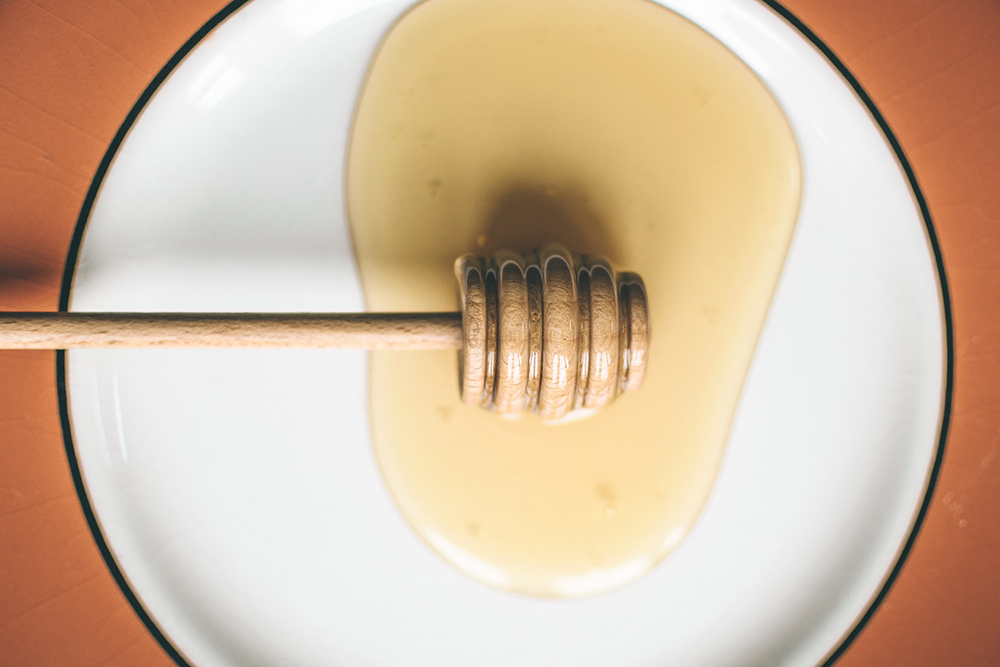
Honey is considered to be the only food that never expires. A 5500-year old jar of honey was found to be edible! When sealed to prevent moisture from spoiling the honey, there will be no change to the quality or taste. Raw honey is full of antioxidants and beneficial nutrients, so it’s more than just a sweetener.

2. Salt

Salt, as long as it is not iodized, will also last forever. It is a mineral that is native to the earth and naturally removes moisture. Salt adds seasoning to food but can also be used to preserve meats after hunting.

3. Pure Maple Syrup

Pure Maple Syrup | Foods That Never Expire

When stored unopened, maple syrup has the potential to last forever. Even if mold does form on the surface of the syrup, it can be boiled, skimmed, and re-stored without compromising the quality or flavor.

4. White Rice

White Rice | Foods That Never Expire

White rice can last for 30+ years when stored at 40° in airtight food storage bins, making it the perfect carbohydrate to stock up on.

5. Dried Beans

With a shelf life of 30 years, dried beans make for a great protein option when storing food long-term. Their texture and taste will not be the same after long periods of time but are still edible by most standards.

6. Sugar

Sugar | Foods That Never Expire

If you keep sugar in your airtight food storage containers, it can be used for many years to come – maybe even forever. Moisture, rodents, and bugs are the primary enemies of your sugar supply.

7. Soy Sauce

Perfect to enjoy over your white rice stash, sealed soy sauce will last for many years, thanks to its high salt content.

8. Hard Liquors

Check out 10 Foods That Never Expire at http://survivallife.com/foods-that-never-expire/Hard Liquors | Foods That Never Expire

If society does crumble and you are forced to live out of your pantry for years, you’ll be happy to know that your hard liquor will keep. The flavor may deviate from what you’re used to, and some liquid may evaporate out of the bottles, but it will still be safe to drink.

9. Pemmican

Pemmican | Foods That Never Expire

A Native American staple, pemmican uses ground-up meat as the main ingredient. Pemmican is a superfood with an incredible shelf life.

10. Powdered Milk

While the taste and consistency do not compare to fresh milk, the shelf life and easy transport of powdered milk make it a staple in prepper’s pantries.

Building a long-term and effective pantry can be overwhelming and expensive. Shopping smart and investing in airtight food storage bins will cut down on spending and time spent rotating. You can confidently store these 10 foods for the long haul.

Do you have foods that never expire you’ll add to your pantry? Let us know in the comments section!

Up Next:

8 Easiest Vegetables To Grow For Beginners

For any beginner gardener, growing a garden can be intimidating. But with these tips, you can plant the easiest vegetables to grow to give you the motivation to keep growing your garden!

Easiest Vegetables to Grow You Can Start With

As backyard gardening experiences a resurgence in popularity due to the coronavirus, those with little-to-no experience are looking for easy-to-grow options. Luckily, you don’t need fancy raised beds, a green thumb, or even much space to start your vegetable garden. You can be enjoying fresh homegrown produce before you know it, and with minimal care for your plants.

Keep in mind that no garden will flourish if you forget about it. In addition to dirt, pots, and water, your vegetables will grow best if they have steady exposure to sunlight. That being said, even small balconies can be effectively used to grow a bountiful harvest.

So now that you’ve pinpointed a spot for your garden, and picked up a few tools and supplies, here are the easiest vegetables to grow for beginners.

Perfect for Beginners

Check out 8 Easiest Vegetables To Grow For Beginners at http://survivallife.com/easiest-vegetables-to-grow-beginners/

  1. Lettuce – Quick to grow, easy to pick, and doesn’t need a lot of space—the trifecta in gardening for beginners! You can even grow lettuce in Tupperware, and in shady spots. To use it, just rip or cut off the leaves.
  2. Tomatoes – The most popular plant in gardening because of how easy they are to grow. Tomatoes do need a lot of suns, but are also not picky about their pots or beds. You can use hanging baskets to grow tomatoes on your balcony, without taking up floor space.
  3. Cucumbers – All you need for an abundance of cucumbers is sun, warmth, and support for climbing growth. Cucumbers grow very quickly and do well in pots.

Level 2 Vegetables: As You Gain Confidence

Check out 8 Easiest Vegetables To Grow For Beginners at http://survivallife.com/easiest-vegetables-to-grow-beginners/

  1. Carrots – Can be grown from the tops of carrots you already have, but carrots do require deeper, well-drained soil and direct sunlight. Homegrown carrots may not grow as large as the ones you’re used to buying at the store.
  2. Radishes – Though they are not as well-loved as some other vegetables, their quick and easy growth may have you Googling new recipes for them. Radishes take only 20 days to grow to full size. Talk about instant gardening gratification!
  3. Green Beans – You’ll want to purchase green bean seeds and plant them in well-drained soil in a sunny space. Once they grow, snap off and enjoy!
  4. Pumpkins – The only drawback to pumpkins is the amount of space they can take up. Pumpkin vines can take over entire yards! But the number of recipes you can enjoy with fresh pumpkin is almost unlimited.
  5. Zucchini & Squash – Zucchini and squash plants grow incredibly quickly and produce a large harvest, so you may want to limit how many of these plants you have. They will need warmth and a lot of water, which is why you often hear the term “summer squashes.”

Even late spring is not too late to start your garden, as many of these quick-growing vegetables flourish in the summertime. If you live in a warmer climate, you can even get started in the summer and enjoy a fall harvest.

You may find yourself eating healthier and saving a lot of money on fresh produce as your garden blooms!

What about you, what are your favorite veggies to plant? We’d love to hear from you in the comments section!

Up Next:

A Taste Of What Is Coming – Food Prices Just Increased By The Most That We Have Seen Since 1974

Get ready to pay much more for groceries.  I have been warning that the flood of new money that the Federal Reserve and Congress have been pumping into the system would have very serious consequences, and I have also been warning that food prices would be shooting higher.  When things start getting really crazy, demand for food and other basic essentials goes way up, and meanwhile this pandemic has significantly disrupted production of certain products.  So even though most of the economy is currently still in a deflationary phase, food prices are beginning to spike.  In fact, the U.S. Labor Department says that we just witnessed the largest one month increase since February 1974

The Labor Department reported Tuesday that prices U.S. consumers paid for groceries jumped 2.6% in April, the largest one-month pop since February 1974. The spike in supermarket prices was broad based and impacted items from broccoli and ham to oatmeal and tuna.

The price of the meats, poultry, fish and eggs category rose 4.3%, fruits and vegetables climbed 1.5%, cereals and bakery products advanced 2.9%, and dairy goods gained 1.5%.

Sadly, this is just the beginning.

Prior to this pandemic, Americans spent about 10 percent of their incomes on food.

As this new economic depression deepens, expect that number to eventually more than double.

We live at a time when global food supplies are becoming increasing stressed for a variety of reasons.  In wealthy countries this is going to force food prices aggressively higher, and in poor countries this is going to mean that a lot of people simply will not have enough to eat.

Already, we are seeing some crazy prices for certain items here in the United States.  King Arthur Flour is very popular these days, and because supplies have become so tight a single bag is now selling for more than 26 dollars on eBay…

Five-pound bags of King Arthur Flour have been so hard to score that they were selling this week on eBay for $26.49, five times the store price.

If you planned on stocking up on flour, hopefully you did it ahead of time.

Many out there are suggesting that the best thing that we can do during an economic environment such as this is to keep showering the American people with more government checks.

In fact, Democrats in Congress have just introduced a new bill that would borrow and spend an additional three trillion dollars that we don’t currently have

State and local governments would share nearly $1 trillion in federal aid to cover their coronavirus-related costs and families would get another round of direct payments under a stimulus bill House Democrats unveiled Tuesday.

The more than $3 trillion Health and Economic Recovery Omnibus Emergency Solutions Act, or HEROES Act, also would expand unemployment assistance, boost food stamps, increase emergency grants to small businesses trying to weather the COVID-19 pandemic that has slammed the economy and upended daily life in the U.S.

Without a doubt, millions upon millions of Americans are deeply hurting right now.  Just about everyone has been thrilled to receive the first round of “stimulus checks”, and certainly very few people would complain if another round was sent out.

But if sending everyone a thousand dollars is good, wouldn’t sending everyone a million dollars be even better?

Needless to say, throwing giant piles of money around recklessly is not a good idea, because it destroys the value of our currency.

Venezuela tried that, and at this point almost everyone in the country is a millionaire

What if I told you that in the socialist paradise of Venezuela, everyone’s a millionaire?

The Bolivarian Revolution has raised the minimum wage over 50 times throughout the past 20 years. As of May 2020, it’s been set at 400,000 bolivars, plus a 400,000 socialist food ticket bonus, bringing it to an astounding total of 800,000 bolivars per month.

But even though there are so many “millionaires” running around, almost everyone in Venezuela is living in deep poverty because the money has become virtually worthless.

Do we really want to become just like Venezuela?

Because that is the path that we are currently on.

Every time a new dollar is created, every existing dollar that you currently hold declines in value.

And every time a new dollar is created, the value of your paycheck goes down if your employer doesn’t give you a raise to match the increase in the money supply.

But the mainstream media continues to be enamored by the Federal Reserve’s ability to “solve our problems” by creating trillions of dollars out of thin air.  Just consider the following quote from a recent USA Today article

It works like magic. With a few strokes on a computer, the Federal Reserve can create dollars out of nothing, virtually “printing” money and injecting it into the commercial banking system, much like an electronic deposit. By the end of the year, the Fed is projected to have purchased $3.5 trillion in government securities with these newly created dollars, one of many tools it is using to help prop up the ailing economy during the COVID-19 pandemic, according to Oxford Economics.

“It works like magic”?

You can probably imagine how I responded when I first read that.

They make it sound like some sort of Disney production, but in reality what the Federal Reserve is doing is slowly but surely turning us into the Weimar Republic.

Unfortunately, the mainstream media will continue to cheer the Fed on as they steadily kill the U.S. dollar, but none of us will be cheering when a loaf of bread costs 5 dollars and a gallon of milk costs 10 dollars.

A torrent of newly created money is not going to fix our economy.  What we really need is for the American people to be allowed to go back to work, but quite a few states are indicating that some restrictions may not be lifted until August or later.

And even if all of the restrictions were lifted immediately, fear of COVID-19 is going to keep many Americans from resuming normal activities for the foreseeable future

Most Americans say they would be uncomfortable returning to their regular routines today, even as they are increasingly leaving their homes to visit others, according to a new CNN Poll conducted by SSRS.

The 58% who say they are not comfortable returning to their routines today is similar to the 60% who said last month that they would be uncomfortable doing so if guidelines on social distancing expired on April 30. On the other side, 41% say they would be comfortable resuming their regular routines now.

What all of this means is that we are going to be dealing with an economic depression for a long time to come, and every new crisis that erupts during this period of time is just going to intensify our problems.

For a long time, I warned that an economic collapse was coming, but I don’t have to do that anymore because the economic collapse is here.

Now the value of our currency is being absolutely destroyed by our authorities as they respond to this economic collapse, and that is going to have very serious implications for our future.

About the Author: I am a voice crying out for change in a society that generally seems content to stay asleep. My name is Michael Snyder and I am the publisher of The Economic Collapse BlogEnd Of The American Dream and The Most Important News, and the articles that I publish on those sites are republished on dozens of other prominent websites all over the globe. I have written four books that are available on Amazon.com including The Beginning Of The EndGet Prepared Now, and Living A Life That Really Matters. (#CommissionsEarned) By purchasing those books you help to support my work. I always freely and happily allow others to republish my articles on their own websites, but due to government regulations I need those that republish my articles to include this “About the Author” section with each article. In order to comply with those government regulations, I need to tell you that the controversial opinions in this article are mine alone and do not necessarily reflect the views of the websites where my work is republished. The material contained in this article is for general information purposes only, and readers should consult licensed professionals before making any legal, business, financial or health decisions. Those responding to this article by making comments are solely responsible for their viewpoints, and those viewpoints do not necessarily represent the viewpoints of Michael Snyder or the operators of the websites where my work is republished. I encourage you to follow me on social media on Facebook and Twitter, and any way that you can share these articles with others is a great help.  During these very challenging times, people will need hope more than ever before, and it is our goal to share the gospel of Jesus Christ with all many people as we possibly can.

The post A Taste Of What Is Coming – Food Prices Just Increased By The Most That We Have Seen Since 1974 appeared first on The Economic Collapse.

Natural Household Disinfectants When There’s No More Lysol

Are you out of Lysol? Are the grocery shelves out of it, too? Don’t panic, you can still make natural household disinfectants you can use to replace the good ol’ Lysol!

DIY Natural Household Disinfectants

If you’ve been watching the news in 2020, you’ve heard a lot of discussion about cleaning and disinfecting your home and your car.

Coronavirus is highly contagious, and keeping surfaces clear of the virus is an important step in preventing the virus from spreading. But store shelves were quickly emptied of the usual household cleaning products as panic buying became rampant.

When you can’t get your hands on the usual Lysol and Purell, you can create effective household cleaners using products you likely have in your medicine cabinet. You can successfully DIY your own hand sanitizer, disinfecting spray, and wipes — without the harmful chemicals.

To make your own disinfectants, you’ll need to have on hand:

  • Hydrogen Peroxide, at least 3% concentration
  • Isopropyl Alcohol, at least 70% concentration
  • Aloe Vera gel
  • Spray bottle and Paper towels

The Best Defense

putting soap on hands | Natural Household Disinfectants When There’s No More Lysol

Your absolute best defense against coronavirus, as well as other cold and virus germs, is to wash your hands with soap and water. Hand sanitizer is not a replacement for hand washing. It is simply the best option available when you do not have access to a sink.

DIY Hand Sanitizer

Hopefully, you keep isopropyl alcohol (also known as rubbing alcohol) in your medicine cabinet, as it has been hard to find in stores recently. You’ll want a concentration of 90%+ to make effective hand sanitizer.

  • 3 parts isopropyl alcohol
  • 1 part aloe vera gel
  • 3 drops essential oil for scent (optional)

Keep your hand sanitizer in a small bottle that is easy to keep with you. It’s recommended to shake the bottle before use.

DIY Disinfecting Spray


View this post on Instagram


A post shared by Aristo Shyn (@linkdentalcare) on Apr 29, 2020 at 11:10am PDT

All you need for this one is a spray bottle and hydrogen peroxide. Simply pour the peroxide into the bottle and spray onto surfaces. Be sure to let peroxide sit on the surface for at least 6 minutes.

DIY Disinfecting Wipes

using disinfectant wipes | Natural Household Disinfectants When There’s No More Lysol

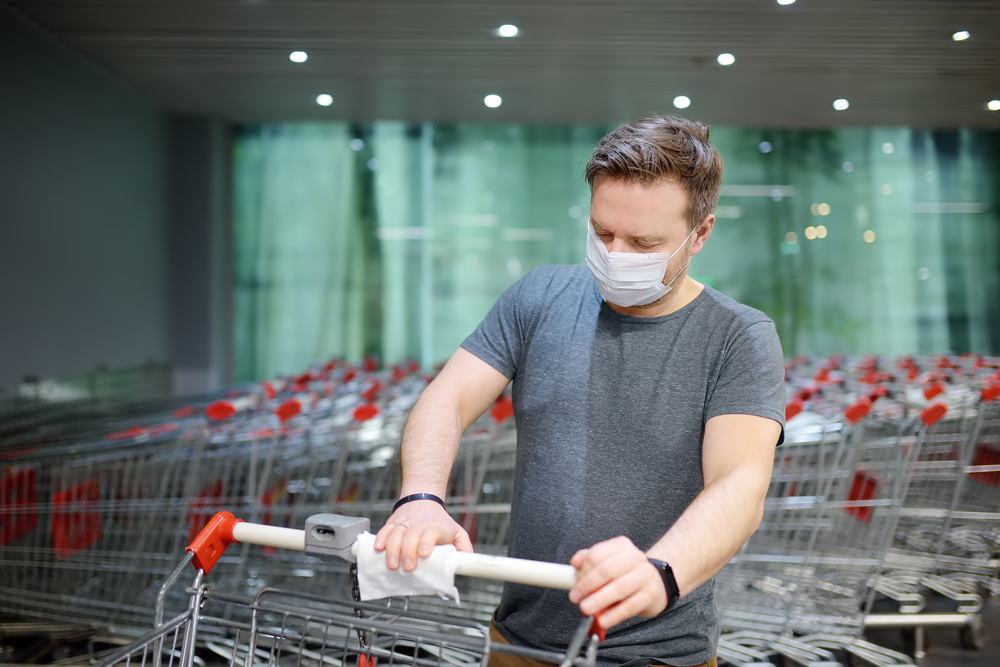
Disposable disinfecting wipes are in high demand right now, as they can be used to quickly and easily clean shopping cart handles, door handles, steering wheels, and anything else you might come into contact with while doing essential business.

When you can’t get your hands on your favorite brands, it’s not hard to make your own wipes. You’ll need:

  • Roll of paper towels cut horizontally, to create 2 rolls about the size of toilet paper rolls
  • 2/3 cup 99% isopropyl alcohol
  • 1/3 cup water

Put the paper towels and liquid solution into an airtight container, like a Tupperware or old wipe dispenser. When the paper towels are fully saturated, remove the cardboard holder from the center and pull towels for use.

If you’re trying to be more eco-conscious, you can make reusable disinfecting wipes that don’t result in so much waste. Instead of paper towels, use an old t-shirt or old towels.

Cut the cotton fabric of your choice into the size wipe you prefer, and soak them in the same alcohol solution in a re-sealable container.

Simply wash the wipes in hot water, and reuse in a new solution.

A Word of Caution

  • Keep in mind that hydrogen peroxide needs exposure to the virus germs/your surfaces for at least 6-8 minutes to be effective. It can also break down the finish on granite and marble.
  • Isopropyl alcohol can cause discoloration in some plastics, so you’ll want to spot-test before using liberally for cleaning.
  • If you are hoping to use vodka to sanitize your home, the brands in your liquor cabinet will likely not get the job done. You will need Everclear (the highest proof alcohol available) to disinfect.
  • Vinegar makes a great household cleaner, especially on mildew, dirt, and bacteria, but has not yet been proven to kill virus germs.

As always, be mindful of labeling and storing your cleaning solutions to avoid accidental misuse or ingestion. Strictly adhere to dilution guidelines.

Have you tried making your own DIY natural household disinfectant? How did it go? We’d love to hear from you in the comments section!

Up Next:

We Are Witnessing Economic Carnage Like We Have Never Seen Before, And The Economy Is Going To Continue To Bleed Jobs

Now we are up to 33.5 million jobs lost.  In just 7 weeks, the U.S. economy has been completely turned upside down, and the numbers are unlike anything that we have ever seen before.  On Thursday, the Labor Department announced that 3.17 million Americans filed initial claims for unemployment benefits last week.  That brings the grand total for this crisis up to 33.5 million, and that figure absolutely dwarfs what we witnessed during the last recession.  And as I discussed yesterday, even the mainstream media is now admitting that millions of those jobs are never coming back.

Yes, some Americans will be going back to work now that the lockdowns are being ended, but for now it is being projected that the job losses will continue to surpass any gains that are made by workers that are returning to their old jobs.

In fact, one prominent economist told CNBC that it will likely take until mid-June before the number of Americans filing new claims for unemployment benefits each week falls below a million…

At the current pace, the week claims numbers should fall below 1 million by mid-June, according to Ian Shepherdson, chief economist at Pantheon Macroeconomics. “We’re very hopeful that June will see the beginnings of a rebound as states begin to reopen,” Shepherdson said.

To put that in perspective, prior to this year the all-time record for a single week was just 695,000.

So even when we get down to a million new claims each week, that will still be a catastrophic level.

And the truth is that these numbers don’t even tell the entire story.  Because state unemployment websites have been so overwhelmed, there are vast numbers of unemployed Americans that still have not been able to successfully file claims.

One of those unemployed Americans is Florida resident Roselande Guerrier

Roselande Guerrier lies in bed each night, waiting for her cellphone to display 7:30 a.m. – when the Florida unemployment office opens – and calls, aching for answers, searching for help.

“All night, my eyes are open,” she said. “Five o’clock, my eyes are open. I call at 6 o’clock and the office is closed. I call at 7:30 and boom, ‘All lines are busy.’ Every number they give me, I try, but they’re always busy.

She has been trying day after day, and she still hasn’t been successful.

So for now she doesn’t have a single penny coming in, and she has three hungry kids to feed

Guerrier, 36, has spent 13 years changing sheets, picking up dirty towels and scrubbing bathrooms as a housekeeper at the Fontainebleau hotel, the iconic Miami Beach resort. At night, she would do the same at the Cadillac Hotel & Beach Club, an art deco resort a few blocks away.

Both those jobs vanished on March 23 when the hotels were forced to close because of the COVID-19 pandemic. With three children to care for, she hasn’t seen a nickel of unemployment benefits or federal relief money.

Could you imagine being in her situation?

When you have little ones depending on you, it can be absolutely soul crushing to have nothing to provide.

Sadly, the job losses just continue to roll on.  This week, several more big companies have publicly announced layoffs

The layoff announcements by larger companies continue on a daily basis. Yesterday, Uber announced that it would lay off 3,700 people; Haliburton announced that it would lay off 1,000 people at its corporate headquarters, after having already laid of thousands of people elsewhere; the Natural History Museum in New York City announced it would lay off 450 people; etc. etc. It’s a loud and terrible drumbeat. Thousands of smaller companies are laying off people without media attention.

If you were assuming that the U.S. economy would just bounce back to where it was before, you can forget about that right now.

In fact, Bob Michele told Bloomberg that it may be more than a decade before U.S. employment returns to the levels that we saw prior to this pandemic…

J.P. Morgan Chief Investment Officer Bob Michele predicted it will take 10-12 years after the pandemic for U.S. employment to get back to its pre-coronavirus level, insisting it won’t be as simple as turning the economy back on.

“No, it’s not that simple … it’s going to take years, or longer to get back to where we are, or where we were,” Michele said on Bloomberg when asked if reopening would be as simple as “turning on the lights.”

Ladies and gentlemen, this is what an economic depression looks like, and it is going to be with us for the foreseeable future.

Of course Congress certainly didn’t help matters when they created a big, fat juicy incentive for people to stay unemployed.  As Zero Hedge reminds us, millions of unemployed workers are now bringing home a lot more money than when they were actually working…

Worse still, the final numbers will likely be hurt even more due to the bailout itself: as a reminder, the Coronavirus Aid, Relief, and Economic Security (CARES) Act, passed on March 27, could contribute to new records being reached in coming weeks as it increases eligibility for jobless claims to self-employed and gig workers, extends the maximum number of weeks that one can receive benefits, and provides an additional $600 per week until July 31. A recent WSJ article noted that this has created incentives for some businesses to temporarily furlough their employees, knowing that they will be covered financially as the economy is shutdown. Meanwhile, those making below $50k will generally be made whole and possibly be better off on unemployment benefits.

I certainly don’t understand why Congress would do such a thing.

If only we had elected at least a few people that could have brought some common sense to that institution…

Getting back to the economy, we continue to get more evidence that we are in the midst of a complete and utter economic implosion with each passing day.

For example, we just learned that orders for Class 8 trucks in April were down a whopping 73 percent compared to a year ago…

The misery in Class 8 heavy duty truck orders continues. Still struggling with the remnants of an order backlog that started almost two years ago with record orders in August 2018, the industry was unable to find an equilibrium prior to the coronavirus pandemic. Orders were sluggish and we noted numerous trucking companies that closed up shop altogether in 2019.

Post-pandemic, things look even more helpless. In April, the industry posted its worst order number on record as the economy ground to a halt as a result of the nationwide lockdown. Only 4,000 Class 8 orders were made last month, which is down 73% year over year and 44% from March.

Virtually every corner of the economy is dramatically slowing down, and that is going to force more layoffs in the months ahead.

As I discussed yesterday, one survey just found that 52 percent of all small business owners expect to be out of business in the next six months.  Traditionally, small businesses are the primary engine of job growth in this country, but now they are going to be failing at an unprecedented rate.

One of those small businesses that is in the process of failing belongs to wedding invitation designer Emily Rose Asher

Wedding plans nationwide have been shot to hell in this age of social distancing. But Chicago-based calligrapher and wedding invitation designer Emily Rose Asher still has some work creating “save the NEW date” cards that couples are now sending to guests when they decide to reschedule their big event.

Still, Asher said, whereas she used to earn thousands of dollars during wedding season, she’s now earning hundreds. And the fact that she still has any income at all likely will disqualify her for unemployment benefits. But she did apply for a PPP loan at the end of April after trying to sort through conflicting guidance from two accountants about her eligibility.

I have such respect for people that create a business out of nothing and slowly nurture it into a success.

But now fear of COVID-19 threatens to kill millions of such businesses.

In other words, millions of hard working Americans are about to see their dreams go up in smoke right in front of their eyes.

It is a tragedy of almost unimaginable proportions, and I wish that it wasn’t happening.

But it is happening, and what is truly sad is that all of this could have been avoided if we had made much different choices.

About the Author: I am a voice crying out for change in a society that generally seems content to stay asleep. My name is Michael Snyder and I am the publisher of The Economic Collapse BlogEnd Of The American Dream and The Most Important News, and the articles that I publish on those sites are republished on dozens of other prominent websites all over the globe. I have written four books that are available on Amazon.com including The Beginning Of The EndGet Prepared Now, and Living A Life That Really Matters. (#CommissionsEarned) By purchasing those books you help to support my work. I always freely and happily allow others to republish my articles on their own websites, but due to government regulations I need those that republish my articles to include this “About the Author” section with each article. In order to comply with those government regulations, I need to tell you that the controversial opinions in this article are mine alone and do not necessarily reflect the views of the websites where my work is republished. The material contained in this article is for general information purposes only, and readers should consult licensed professionals before making any legal, business, financial or health decisions. Those responding to this article by making comments are solely responsible for their viewpoints, and those viewpoints do not necessarily represent the viewpoints of Michael Snyder or the operators of the websites where my work is republished. I encourage you to follow me on social media on Facebook and Twitter, and any way that you can share these articles with others is a great help.  During these very challenging times, people will need hope more than ever before, and it is our goal to share the gospel of Jesus Christ with all many people as we possibly can.

The post We Are Witnessing Economic Carnage Like We Have Never Seen Before, And The Economy Is Going To Continue To Bleed Jobs appeared first on The Economic Collapse.

12 Toxic Plants You Could Accidentally Eat

The great outdoors is full of so many things to enjoy. The sights and sounds can be soothing and therapeutic. The tastes, on the other hand, can actually be deadly. North America is home to a handful of poisonous and toxics plants that you could encounter when hiking or camping. Below are the plants you should watch out for.

Toxic Plants to Stay Away From

Before you take up foraging for food, you’ll want to purchase a local field guide to help you identify the plants you will come across, and it’s still a good idea to pack your own snacks.

But in a survival situation, you may find yourself sampling some of the native delicacies.

Unfortunately, the results can range from vomiting and diarrhea to hallucinations, paralysis, and even death.

Before ingesting anything in the wild, do your research and be 100% sure that the plant is safe to eat. If you do think you’ve munched on something you shouldn’t have, take a photograph of it so that a medical professional can get you the help you need.

Plants That Cause Vomiting and Nausea

Plants That Cause Vomiting and Nausea | Toxic Plants You Could Accidentally Eat
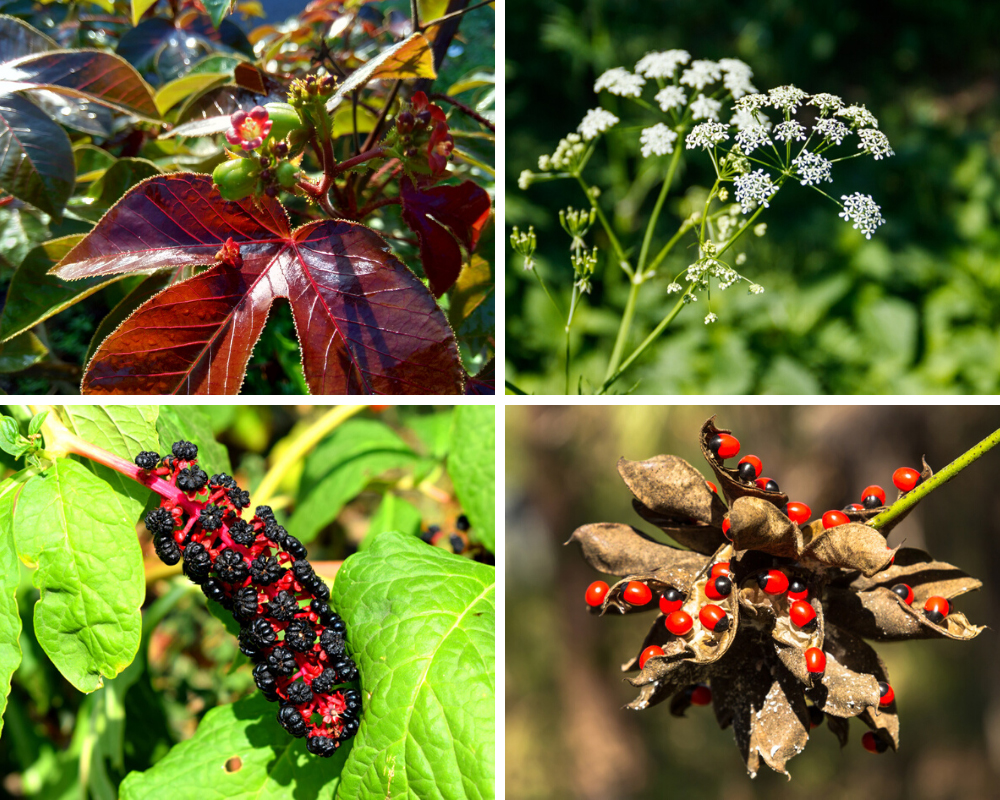
Top Left: Castor beans, Top Right: Water hemlock | Bottom Left: Pokeweed, Bottom Right: Rosary Pea

1. Beach Apples

If you find yourself hiking in Florida, stay far away from the Manchineel tree and its “beach apples.” Every part of the tree is highly poisonous.

The sap can blister your skin and cause blindness in your eyes, burning the leaves or branches can damage your lungs and eyes, and one bite from the small green fruit can kill you. Manchineel trees can be found along Florida’s coastlines and in salt-water swamps.

2. Raw Elderberries

Uncooked Elderberries can actually turn into cyanide if you eat them.

You’ll want to stick to the cooked variety, and avoid these in the wild if you come across them in a field or shady spot.

3. Castor Beans

Castor beans are native to Africa, but were introduced in the U.S. and have flourished in the East and South, along riverbeds and directly beside cultivated fields. They contain ricin, which will quickly kill you if ingested.

4. Daffodils

Any part of the Daffodil plant can poison you, and it is often the cause of death in pets that eat it. They are found throughout North America and are lovely to look at, but not to eat.

5. Water Hemlock Bears

Water hemlock bears an uncanny resemblance to Queen Anne’s lace and yarrow, which is unfortunate because both of the latter are full of medicinal qualities.

The former is not safe to eat but can be easily found across the U.S.

6. Pokeweed

Pokeweed has purple berries that you’ll want to skip over when looking for your next meal. It can be found in pastures, along roadsides, and on the border of wooded areas in the Eastern United States.

7. Rosary Pea

Rosary Pea was brought to the U.S. from India, and its red and black seeds are highly toxic. It grows in pastures, farms, and roadsides and you’ll want to stay far away from it.

Plants That Cause Hallucinations, Seizures, and Paralysis

8. Angel’s Trumpet

Angel’s Trumpet is a lovely addition to your garden and smells great, but you’ll want to avoid eating it. Luckily, it isn’t really found in the wild.

9. Deadly Nightshade

You’re also not likely to stumble upon Deadly Nightshade and its cherry-like fruit.

However, if you do, it will be in the south or east U.S. Jimson Weed falls into the same family, and can cause hallucinations. Its spikes should be a clear indication to stay away from it.

Plants That Will Stop Your Heart

Plants That Will Stop Your Heart | Toxic Plants You Could Accidentally Eat
Left: White Baneberry, Middle: Foxglove, Right: Death Camas

10. White Baneberry

Found in the northeast, White Baneberry has white berries that look like eyes. Ingesting them will cause cardiac arrest.

11. Foxglove

Foxglove is another lovely addition to your garden, but should not be consumed under any circumstances.

12. Death Camas

Death Camas often grows next to the edible Blue Camas and resembles an onion, which can be confusing to people looking for a meal. They are found in the West and should be avoided.

Exercise Caution Around Unknown Plants

It is recommended to keep your distance from plants you don’t know. Wear long pants and long sleeves to keep them from touching your skin. Always wash your hands thoroughly after handling plants, and don’t burn anything that could contain toxins. Do not consume anything unless you are absolutely sure it is safe to do so.

Do you know other toxic plants to stay away from? Share it with us in the comments section!

Up Next: