Survival Gear is the most unused product until a natural disaster happens, then it’s the most desired products, but usually too late to help those that really need the help.

We sell around the World, and pride ourselves on offering a level of customer service that we would want to see ourselves if we were shopping online.
Our product ranges change regularly, so we hope that you come back to our sites to see some of the fantastic offers that we regularly have.

Get In Touch

38 Easy Camping Meals For Breakfast, Lunch, And Dinner

When it comes to camping, there are two schools of thought around creating meals:

It’s either,

“Hey, I’m ok being resourceful, so let’s take the minimum and catch or forage everything else!”

Or…

“We’re taking all the best foods we can fit in the cooler! If we catch something, sweet, it’ll be extra! But either way, we’ll eat like kings!”

The food philosophy camp you fall into comes down to how you prefer spending your time and energy in the great outdoors.

If you desire the freedom that goes with camping fast and light, you won’t have as many food options.

However, if you’re car camping, you can take many more food luxuries.

Luxury items such as portable stoves, griddles, Dutch ovens, etc. to make meal prep easier and faster. AND you can take fresh ingredients that make for a gourmet experience.

There’s a time and a place for each. But either way, it’s worth the effort to build a camping recipe list before you go.

A list you can use to put together your camp meals – whether it’s for a week away from home or just a long weekend.

So today I’ll be sharing all 32 of my favorite camping food recipes (plus helpful in-camp cooking tips and suggestions):

*Note: Feel free to skip ahead to any section using the navigation links above.

**Note: You might want to BOOKMARK this page. That way you can reference it in the future anytime you’re getting ready to plan your meals for an upcoming camping trip!

As A Way To Introduce You To Skilled Survival, We’re Giving Away Our Ultimate Camping Essentials Checklist. Click Here To Get Your FREE Copy Of It.

7 TIME TESTED IN-CAMP BREAKFAST RECIPES


Waking up in camp is always exciting. But I can never quite get rolling first thing in the morning until I’ve had something to eat (and a coffee).

Here are a few delicious recipes for some hearty in camp breakfasts. Ones you can prepare in camp before heading out to a day full of adventure or a date with the hammock and a good book.

1 – Camping Breakfast Sandwich

When it comes to breakfast sandwiches, we’re looking at a pretty simple formula. Muffin (or biscuit, if you ask me) + egg + cheese + meat = perfection!

I like to make it even easier by using up some of the leftovers from the night before. I love using leftover BBQ pork along with crispy fried eggs to start the day!

2 – Bacon and Cheese Pull-Aparts

This one works well IF you’re willing to pull out the Dutch oven and get a fire going in the morning. These bacon and cheese pull-aparts are a great way to start the day.

I mean, come on, cheesy goodness and chunks of savory bacon, what’s not to love!

They’ll keep you feeling full and warm all morning long.

3 – Farmers Scramble Breakfast

If you tend to head straight to the “skillet with potatoes” section of the breakfast menu, this one is for you.

This camping breakfast recipe combines crispy browned potatoes and tender scrambled eggs. You can also add some fried onions and bacon.

This Farmers Scramble hits all the bases – carbs, protein, salt, and fat. It’ll leave even the biggest eaters satisfied!

4 – Campfire French Toast

Whenever I’ve tried to make French toast in camp, it’s been at the pace of a single slice on the griddle at a time. But that’s not an efficient way to get breakfast out to a big group.

So, here’s a recipe that makes an entire loaf of bread into French toast.

It’s sure to please the group, and it’s way easier how I’ve always done it in the past…

5- Egg and Sausage Breakfast Taquitos

If your only experience with taquitos is in the frozen foods aisle, you owe it to yourself to give these a try!

They’re quick to prepare with sausage links and a pile of scrambled eggs. Plus, you can customize them with whatever extra ingredients you may have on hand.

I like to add a little hash brown to mine, and cheese works too. You’ll want to make a double batch though because they’re sure to go fast!

6 – Crispy Campfire Bacon

Cooking bacon over an open flame is one part culinary skill and two parts daring!

A well-meaning friend (but not very skilled grill master) tried it on my grill in college. He nearly burned our deck down in the resulting grease fire.

So if you’re willing to try this one, use stainless steel skewers instead and thread the bacon with space between the folds. This strategy allows the bacon to cook evenly, thoroughly, AND safely.

Yes, as the fat renders out and drips, you’re bound to get some small flare-ups. But slow cooking over low heat helps to minimize these flare-ups and leave you with crispy, extra smoky bacon.

Just NEVER leave it unattended!

7 – Dutch Oven Biscuits And Gravy

Biscuits and gravy are a classic breakfast menu item, but they can also be an in-camp breakfast treat as well!

The Dutch oven is a perfect tool to cook some fluffy biscuits.

Just add some warm, rich sausage gravy and you’ll have a breakfast that’s both delicious and filling.

As A Way To Introduce You To Skilled Survival, We’re Giving Away Our Ultimate Camping Essentials Checklist. Click Here To Get Your FREE Copy Of It.

5 EASY ON-THE-GO ADVENTURE LUNCHES


Camp lunches can mean anything from a quick snack to a full meal prepared in camp.

The name of the game is flexibility, as you never know how your plans will change or when everyone will start feeling hungry.

Individual portions help prevent a big set up and put away challenges…unlike a big spread. Leave the bigger meals for breakfast and dinner.

8 – Salads To-Go

Yep, I said salad!

Salads are NOT the first thing you think of for camping.  But a quick salad can be an excellent break from the heavy meals you may have planned for the first few days.

Hearty leafy greens (like kale) last longer in an ice-cooler than more delicate ones. I tend to avoid iceberg or spring mixed greens for this reason. I recommend you plan your own camp salads accordingly.

This recipe calls for individual salads in single-serving containers. That way, you can grab one at a time from the cooler when you’re ready to eat.

9 – Hot Ham and Swiss Croissants

Whether you choose to eat them hot or cold, these make-ahead ham and Swiss croissants are a camping food favorite.

Again, individual packaging makes it easy to grab them as needed.

AND each person can choose to eat them cold or heat them on the grill or over the fire.

All I know is, a gooey melt sandwich tastes so dang good after a long day hiking!

10 – Cashew Chicken Salad Wraps

Wraps are an excellent option for lunch on the go, whether that’s at home, at work, or camping.

The variety of flavors of pre-cooked chicken and tuna make for endless possibilities.

But this cashew chicken salad version is excellent and packs well.

If you have a fire or want to break out a portable stove try toasting the tortilla.

IT makes the wrap so much better, in my opinion.

11 – Trailside Hummus

When you think of portable foods, you don’t always think of heavy items like hummus.

But, with a home food dehydrator, you can dry any flavor of homemade hummus ahead of time.

Just be sure to NOT add the olive oil before dehydrating since it won’t keep that way.

Pack some buttery crackers or tortillas, and you’ve got a substantial lunch you consume on the trail!

12 – Crackers/Salami/Cheese

No recipe needed for this one.

Crackers, sausage, and cheese have been a staple on many of my hiking lunches for years.

They’re calorie-dense, pack well, and taste great.

As A Way To Introduce You To Skilled Survival, We’re Giving Away Our Ultimate Camping Essentials Checklist. Click Here To Get Your FREE Copy Of It.

5 DELICIOUS GOURMET IN-CAMP DINNERS


Dinner back in camp is a chance to regroup and wind down after a full day.

It’s a chance to make plans for tomorrow and to share stories of what you saw today.

I find that conversations are even more enjoyable over a hearty meal. One that will keep you (and everyone else) full until morning.

And trust me, there’s nothing is worse than having to crawl out of the sleeping bag to find a snack at 3 am.

These are some tested recipes that will tide you over until breakfast.

13 – One-Pot Beef Stroganoff

In camp, it seems like every meal needs more seasoning than it does at home.

This one-pot beef stroganoff recipe brings some big flavors to enjoy.

Steak, mushrooms, onions, and garlic flavors meld together to create a filling dish sure to be an in-camp favorite.

14 – Campfire Stew

This one is a perfect end of day meal if you plan to lounge around the campsite all day.

Let this hearty stew simmer over the fire for hours and it will develop a vast range of flavors.

Slow cooking can turn even the cheapest cut of meat into a tender delicacy. Plus, the swirling smoke will impart a wonderful smoky flavor throughout the campground.

You may have to beat your camping neighbors off with a stick!

You can adapt this recipe for the vegetables and meats you have on hand. Follow the cooking instructions on how to prep it at home or do everything in camp.

15 – Dutch Oven Stuffed Sausage and Potato Boats

This is another camp food recipe that’s easy to customize.

This stuffed sausage and potato boat recipe is super versatile.

Sliced sausage forms a base for potatoes mixed with any kind of toppings you like.

Using a Dutch Oven helps to prevent “drying out,” resulting in a “twice-based potato” texture and awesome flavors.

16 – Cast Iron Skillet Pizza

If you’ve been looking for a crowd-pleaser, this cast iron skillet pizza is it!

You can make the dough yourself or buy a convenient pre-made shell from the grocery store. But cooking in a cast-iron skillet will result in a thicker, chewier crust.

17 – Dutch Oven Pork Chops and Potato Casserole

Amazing pork chops and tasty potatoes make this a tasty and easy Dutch oven recipe for camping.

Cream of mushroom soup and bread crumbs make it an easy camp meal to prep and a surefire favorite!

Just take care not to burn the bottom of this casserole focusing most of the heat on the top of the oven.

As A Way To Introduce You To Skilled Survival, We’re Giving Away Our Ultimate Camping Essentials Checklist. Click Here To Get Your FREE Copy Of It.

7 FOIL-PACKET CAMPFIRE DINNERS


Cooking a delicious meal wrapped tightly in aluminum foil is a time-honored camping tradition. So much so that I decided to give them their own category!

There’s something so satisfying about opening that foil packet, sticking your nose in close to enjoy the first whiff of a fantastic feast.

Plus, individual packets allow for easy meal customization for each individual. I’ve found it’s the best way to make even the pickiest eater a happy camper!

18 – Foil-Wrapped Baked Sweet Potatoes and Chili

Tender baked potatoes and a hearty chili go just great together.

Cooking them over a campfire can help keep you warm and satisfied even on a cold night.

This recipe calls for sweet potatoes and vegetarian chili.

But you can substitute regular potatoes or any kind of chili you prefer.

19 – Shrimp Scampi Foil Packets

Sure, it “seems” like taking shrimp is an excessive camping luxury. And it is!

But I’ve made a similar recipe on several sea kayaking trips. I just used rock crabs I caught by hand instead of shrimp.

Crayfish are also another easy option in certain locales.

So mix your shellfish of choice with a fresh sauce and cook everything in tightly sealed packets. You’ll be known as the best chef in camp for years to come.

20 – Foil Pack French Dip Sandwiches

French Dips are one of my favorite sandwiches of all time.

The tender roast beef, melted Swiss cheese, and creamy, salty au jus sauce in a giant pull-apart loaf of crusty bread – yes, please!

The French Dip is also perfect for satisfying a hungry crowd!

21 – Bacon Ranch Grilled Potatoes

You really can’t go wrong with potatoes baked in foil.

You can go with a pure blend of baked spuds and a perfect mix of cheese. Or you can add bacon, sour cream, and herbs, you know it’ll taste great and give you plenty of fuel for the next day.

Just layout pre-sliced potatoes and extras on a table. This buffet-style meal allows everyone to make their own version of the Bacon Ranch Potato Packets.

22 – Grilled Pineapple Chicken

This recipe is a quick and easy spin on teriyaki chicken.

This easy camping meal is simple to prepare at home by chopping all the ingredients and pre-mixing the sauce.

Once in camp, dish up to foil packets and cook until the chicken ready.

It should only take about 15 minutes to have dinner on plates!

23 – Southwestern Chicken Packets

Chicken, beans, and pepper jack cheese blend to create a hearty meal to fill you up after a long day in camp.

You can even tailor the spice level to fit each person – a win/win situation when camping with kids!

24 – Grilled Caramelized Onions

This simple recipe takes direct heat and sweet white onions. This combination helps create a great side dish or addition to other recipes.

If you get them caramelized and soft, you can even spread them on toasted chunks of crusty garlic bread.

As A Way To Introduce You To Skilled Survival, We’re Giving Away Our Ultimate Camping Essentials Checklist. Click Here To Get Your FREE Copy Of It.

5 BEST CAMPFIRE DESSERTS (other than S’mores)


25 – Blackberry Dutch Oven Cobbler

This cobbler is a GREAT dessert that’s a super easy camping meal that makes enough for a small group.

The carbonated soda gives it extra rise, so the cake is super fluffy with a crispy top.

It also makes a great breakfast if you have any leftovers!

26 – Grilled Banana Boats

When I was a kid, this was one of my favorites – in camp or at home!

They’re simple to prep and don’t take much in the way of ingredients.

Plus, you can store them all at room temp (unless it’s mid-summer and your chocolate is melting).

27 – Chocolate Orange Cakes

Orange cakes are an old standby in boy scouts, and they don’t disappoint.

Single-serving cakes, baked INSIDE the hollowed-out peel of an orange wrapped in foil!

Genius!

28 – Pineapple Upside Down Pound Cake

Foil packet cooking doesn’t have to end with dinner!

Chunks of fresh or canned pineapple cook down to a rich, mellow flavor. A flavor that pairs well with dense, buttery pound cake.

If you don’t have pound cake, chunks of old-fashioned donuts or even donut holes will work just as well!

29 – Cherry Hand Pies

Hand pies take some extra work to prepare, but they’re so good it makes up for it.

Using pre-made pie crusts is easy. But you can also do it with homemade if you’d rather not have the perishable dough in the cooler.

Either way, be careful with kids around the hot oil and cast iron.

As A Way To Introduce You To Skilled Survival, We’re Giving Away Our Ultimate Camping Essentials Checklist. Click Here To Get Your FREE Copy Of It.

5 KID-FRIENDLY CAMPING MEAL IDEAS


Anyone who has spent time with young kids knows that mealtime can be a struggle.

New foods are not always a hit, especially with overly-tired and hungry kids.

That’s why it’s wise to plan a few tried and true favorites. It can be a camping lifesaver. Because preventing a meltdown and saving your sanity is key to a great time camping with littles.

Plus, any food that you can have your kids “help” cook is food that you don’t have to prepare all by yourself. AND this helps keeps them entertained (at least for a little while).

30 – Campfire Cinnamon Roll-ups

Cinnamon rolls are always a breakfast hit, either at home or in camp.

If you’ve already got a fire going to heat water for coffee, give those bleary-eyed kids a fun task. Teach them how to whip up some cinnamon rolls on a stick!

Using packaged crescent roll dough makes it fast and no-mess. Plus, you can tailor the cinnamon/sugar mix to your liking.

31 – Make-at-Home Mac & Cheese

According to my sister, kids CAN exist entirely on Mac ‘n Cheese and pocket lint if push comes to shove.

The bottom line is, it’s a surefire hit for kids and simple to make.

Just pack some homemade mac and cheese into individual foil-wraps and heat them over the fire.

Since it’s already fully cooked, you only have to wait for it to heat up to your liking.

But if you let it sit just a little longer, you’ll reap the reward of crispy cheese on the top and bottom. This added texture and flavor turns a kid-friendly dish enjoyable one for adults too.

32 – Campfire Cheesy Breadsticks

Here’s another excellent entry in the “stick-based cuisine” category.

Campfire breadsticks are wrapped around a stick and cooked over an open fire.

There isn’t a kid out there who’s not fascinated by campfires. So this is a great way to teach them to use it as a tool.

So wrap store-bought dough around a handy stick and toast to your liking. These allow your kids to make their very own cheesy breadsticks.

33 – Hawaiian BBQ Pork Walking Taco

Multiple sources call them “a Midwest staple.” But in my 23 years of living in Michigan, I never came across the Walking Taco.

I learned about this camp friendly / kid-friendly dinner option after I moved out West.

This knowledge gap isn’t to say that they’re not a great idea – because they are!

First, prepare any taco/nacho toppings you like. Next, open a small bag of chips and layer everything inside on top.

This version used pulled pork and pineapple salsa for a Hawaiian flair. It’s a self-contained nacho platter in a handy bag.

No mess, no dishes, no cleanup!

The more I think about it; it *DOES* sound like something a Midwesterner would invent…

34 – Campfire Pigs In A Blanket

Both hotdogs and breadsticks can be big kid winners when cooked on sticks over the fire. But these Pigs In A Blanket take things to an entirely new level!

Be sure to use the loose foil wrap to slow down the cooking. This method gives hot dogs time to heat up without burning the breadsticks.

Afterward, dip in ketchup, mustard, or (my favorite) BBQ sauce.

As A Way To Introduce You To Skilled Survival, We’re Giving Away Our Ultimate Camping Essentials Checklist. Click Here To Get Your FREE Copy Of It.

4 LIGHTWEIGHT BACKPACKING MEALS


Backpackers are a special breed. It’s all about minimalist camping!

In pursuit of lighter packs for more comfortable hiking, they do all kinds of odd things, especially with food.

But the need for good, filling, and tasty food is at its peak after a full day of hiking.

Something about long hikes and full packs drives a conversation towards camp food.

It was likely this hunger, mixed with ingenuity, which inspired such lightweight backpacking foods. I’m talking about inventions such as powdered peanut butter and freeze-dried roasted veggies.

35 – Backpackers Thai Noodles

You can find plenty of pre-packaged freeze-dried meals on the market nowadays. But this one is great to customize for yourself.

It’s got some intense flavors with spices that tickle the taste buds. And the richness of the peanut butter makes it particularly appealing.

You can purchase most of the ingredients at a local grocery store. But the powdered peanut butter and freeze-dried vegetables might be harder to find.

That’s why I suggest ordering such backpackers focused ingredients online.

36 – Spicy Curry Noodle Bowl

Curries are another easy meal to prep at home and save on food costs.

This one relies on lots of Southeast Asian spices and coconut cream powder for a thick broth that hits the spot.

If you’re feeling ambitious, add some home dehydrated cooked chicken or pork to the mix. I find such additions can make these meals SOO much better!

37 – Loaded Mashed Potatoes

Loaded mashed potatoes have been a staple of my backpacking menus since Boy Scouts.

You can either start with pre-flavored packets of instant potatoes or add your own spices.

This recipe is perfect if you’d like to start tinkering with your own flavors – because you can add nearly anything you want!

Mashed potatoes are the multi-tool food of backpacking cuisine.

38 – Peanut Sauce Ramen

This recipe uses easy to find ingredients. But you can cut the mess and weight if you swap in powdered peanut butter.

This one is a lot like other peanut sauce noodle recipes. But the ramen spice packet adds more sodium (you’ve likely sweated out a lot after a day on the trail). And it’s cheaper as well.

It’s an excellent addition to your backpacker meal plan.

As A Way To Introduce You To Skilled Survival, We’re Giving Away Our Ultimate Camping Essentials Checklist. Click Here To Get Your FREE Copy Of It.

STRATEGIES AND TIPS FOR COOKING WHILE CAMPING


Unless you have a big RV with a full kitchen, you’re going to have to rethink how you cook at a campsite. Why? Because there are several unique challenges to cooking at a campsite.

From preventing stored food spoilage to dish clean up – without kitchen appliances, you’ll need to get creative. The good news is, I have experience with each of these camp food challenges.

Keeping Foods Cold

Most campers do not have access to a fridge. So the food items you bring must either b safe to store outside, or you’ll have to protect them somehow.

Most people use a cooler full of ice to keep things cold on a hot day, and it works well.

But you can also put canned and sealed items in cold running river water or a snowbank if needed. This strategy works well if you’re trying to avoid taking a cooler…

Keeping Foods Warm(ish)

Fewer people realize you can also use a cooler to keep things from freezing if the temps dip too low at night.

An empty cooler will insulate the contents from moderate freezing temps. AND the addition of a hot water bottle before bed can protect from extreme cold conditions.

This strategy comes in handy during the late fall, winter, or early spring camping seasons when it can dip below freezing at night.

Baking Tools / Strategies

It’s a real challenge to bake in-camp without a standard kitchen oven.

Luckily, you can use things like a Dutch oven or a backpacker oven if you just HAVE to make a batch of fresh cookies.

However, for most baked goods, it’s easier to just cook these items at home and take them on the road with you.

Stovetop Camping Solutions

In-camp gourmet meals tend to require cooking over a portable stove or open flames, so prepare for that.

Depending on the fuel source, these can be messy, sooty affairs for your pots and pans.

They also may get scorched on the outside, so this isn’t the time to take your best pots and pans from home.

Instead, I keep a small camp skillet and old pasta pot in with all my essential camping gear. That way I know exactly what I have every time I go.

Grilling Strategies

It might be tempting to take a small grill along as well if you have some trunk space.

If not, you can usually do most of your grilling directly over the campfire (if the fire ring has a flip grill). Or for some recipes work well with camping skewers, baskets, or sticks.

Washing Up / Clean Up

Unfortunately, it takes longer to wash up in camp than at home. Why? Because heating water for wash-up takes both time and energy, so often I’ll just wash in cold water instead. Yes, it takes a bit more elbow grease and scrubbing.

Try using a metal brush and strong detergent to get your cast iron skillets and ovens clean.

You want to be diligent about it, though, as any leftover food smells are sure to draw animal visitors. Some animal scavengers are cute but mischievous squirrels, but there are also dangerous predators like bears.

FINAL THOUGHTS


Cooking in camp should always a vital activity (as long as the weather cooperates). And when done right, it can bring everyone together.

Assigning tasks like prep and cleanup to help distribute the load. And this also helps ensure everyone has time to relax and enjoy their food.

Good camping food is key to keeping you fueled, focused, and ready to enjoy all the moments in the great outdoors.

Hopefully, these recipes give you a starting point to build your next epic camping food menu!

If you liked this article, you’ll also enjoy our 20 camping hacks article.

Jason K.

P.s. Do you know where the closest nuclear bunker is from your home?

There are a lot of natural nuclear shelters in the US that are absolutely free. And one of them is near your home.

Click on the image above to find out where you need to take shelter.

The post 38 Easy Camping Meals For Breakfast, Lunch, And Dinner appeared first on Skilled Survival.


Giveaway: Olight PL-PRO Valkyrie Flashlight & Flash Sale

Building off my review of the Olight PL-PRO, SHTFblog is partnering with our friends at Olight to give away one PL-PRO Valkyrie weapon light to a lucky SHTFblog follower.

Enter the giveaway here.

olight pl-pro valkyrie

The PL-PRO tactical light has a retail value of $129.95.

This is light offers a lot of power for the price. Additional features include:

  • extremely power 1500 lumens with 280 meters of throw
  • rail mount capabilities
  • rechargeable battery
  • magnetic USB charging cable
  • quick attach level for fast removal and installation
  • lockout mode and strobe features

Olight One-Day Flash Sale

In addition to the above giveaway, Olight has a one-day sale going on today only. The sale offers discounts on the following:

  • PL-2 Gunmetal Grey Limited Edition 30% OFF
  • Warrior X Pro Desert Camo/Gunmetal Grey Limited edition 30% OFF
  • Bundle: PL-2 Gunmetal Grey +i5T 40% OFF (limit 2 per person)
  • Bundle: Warrior X Pro Desert Camo/Gunmetal Grey +i56 (limit 2 per person)
  • FREE I3UV keychain light worth $14.95 (login to account and add to cart)
  • i5T EOS 25% OFF

Visit the Olight store to capitalize on all of these savings. Ends on 5/8/20!

Don’t forget to enter the giveaway!

The post Giveaway: Olight PL-PRO Valkyrie Flashlight & Flash Sale appeared first on SHTF blog – Modern Survival.

Police Are Complicit in Politicians’ Disregard for the Rule of Law

This article was originally published by Ryan McMaken at The Mises Institute. 

People of a certain age might remember the old John Birch Society slogan “Support your local police!” The idea here is that your local policeman is a liberty-loving buddy of yours who would only ever support just laws and constitutional mandates. Only those bad guys in the FBI or BATF would ever consider violating your rights.

Now, obviously that has always been a rather naïve fantasy, but the notion certainly has a long history of support among American conservatives. The idea that unionized, well-paid government employees sympathize with the common man instead of with the government that signs the cops’ checks apparently has long made sense (for some reason) to conservatives and many others.

David Icke To LEOs & Military: “Look Your Children In The Eye” & Tell Them YOU Enforced Tyranny

But thanks to the ongoing “state of emergency” and the fact that state governors, mayors, and health officials now rule by decree, we’re witnessing more and more how local law enforcement officers have no particular interest in the rule of law, the Bill of Rights, or basic human rights of any sort. Police have been at the forefront of arresting business owners for the “crime” of using their own private property, using city parks, and engaging in other peaceful activities.

As Judge Napolitano has noted, these “stay-at-home orders”—and the penalties that accompany them—aren’t even real laws since they were never passed by a legislature or brought into being by any process other than on the authority of a single person who is usually a state governor or municipal official. By no definition of “rule of law” do these measures meet basic moral requirements for their imposition on peaceful citizens.

But the police are enthusiastically enforcing these edicts nonetheless and using them as an excuse to harass the taxpayers.

Here are just a few examples from around the United States.

Keep in mind that no one is required to go near these places or interact with anyone involved. Those who wish to isolate themselves from these businesses and their clientele may freely do so. Yet these are just a handful of the many cases of police harassment involving citations, arrests, and other forms of coercion and intimidation brought against people who are just trying to live their lives. Nor should we assume that this is “as bad as it gets.” Since there is no longer any due process or public legislative process subject to checks and balances, governors and mayors can unilaterally decide at any time to ramp up social distancing requirements and business closures. If the public appears uncooperative, public officials can simply order police to be making mass arrests. We have no reason to think the police would not comply with this order.

After all, police personnel, who do not have a particularly impressive record when it comes to stopping or investigating real crime, have plenty of resources to crack down on nonviolent “perpetrators.”

The cases of New York and Odessa are instructive. Odessa law enforcement officers apparently have the extra time and resources to assemble a SWAT team in response to protests, but does this mean there is no real crime that needs investigating in Odessa? Of course not. According to the FBI’s 2018 crime survey, Odessa had 1,049 violent crimes in 2018, including 118 rapes and 819 aggravated assaults. If late 2019 and early 2020 were at all similar, then we’re talking about hundreds of violent crimes that Odessa-area police officials are ignoring in order to harass people for entering a tavern.

Indeed, if Odessa law enforcement agencies are anything like countless police agencies in other areas, only about half of the violent crimes are “resolved” at all. That is,

only 45 percent of violent crime lead to arrest and prosecution. That is, less than half of violent crimes result in what is known as a “clearance” of the crime. Property crime clearances are much worse. Only 17 percent of burglaries, arsons, and car thefts are “cleared.”

Among violent crimes, homicides experience the highest clearance rate by far, at 61 percent. Aggravated assault comes in at 53 percent, and rape at 34 percent.

But these are just cases where arrests are made and prosecutions are initiated. A smaller number of cases actually lead to convictions. A crime may be cleared even when the suspect is later exonerated.

New York is not exempt from these trends, yet the New York mayor recently dispatched one thousand cops to break up Jewish funerals and ensure that people don’t have barbecues on warm spring days.

By the way, there were more than forty-six thousand violent crimes in New York in 2018. But don’t fear, the police have extra personnel to come and break up your small backyard gathering.

There’s nothing surprising here, however. Police have long shown a lack of enthusiasm for addressing real crime, knowing that business owners, small-time drug users, and loiterers won’t fight back, and thus make for much better targets.

This is why police are often found to run and hide from truly violent criminals while the victims must fend for themselves, as in the case of the Parkland shooting or the case of the stabbing of Joseph Lozito.

Police are always careful to use the legal defense that they are not obligated to actually protect anyone from anything. The courts agree with this defense, and it is now well established legally that although you have an obligation to pay the police to “protect and serve,” the police have no obligation to actually provide protection.

But police officers and their bosses have convinced themselves that the really important policing right now involves hauling dog groomers off to jail and collecting revenue from parkgoers who are only standing five feet from the next person. But if you have a problem with real crime? You’re likely out of luck.

8 Helpful Tips for Introducing the Prepper Lifestyle to Your Family

Written by Guest Contributor on The Prepper Journal.

Editor’s note: This prepping primer was written by guest contributor Mark Hedman.

So, you bought into the idea of hoping for the best but preparing for the worst, which is great! But how do you get your family onboard the prepper lifestyle when they may be less excited about it than you? 

Whether you’re trying to convince your extended or immediate family to adopt the prepper lifestyle, it can be a difficult task. Here’s why some people are leery of prepping for the worst and some simple tips to get your family on board.

Why Some People are Reluctant to Start Prepping

First, having reluctant family members is common. Sometimes it’s as simple as laziness because prepping takes work. Others fear disaster, so, by not prepping, they adopt the “bury-your-head-in-the-sand” attitude. They don’t want to acknowledge the possibility of disaster and possibly death. 

“The Normalcy Bias”

This bias is the state of mind that people often have when they think about the reality of a potential disaster. They tend to underestimate the possibility that a disaster could occur at any time, as well as the effects of a disaster. 

“Death Would Be Better”

Many people say they would rather die than survive a disaster. They often develop the mentality that death would be better. Some of these people may eventually come around to the prepping lifestyle, but if this is their honest belief, respect their opinion. 

“There’s No Money in the Budget to Prepare for a Nuclear Armageddon”

The cost of prepping is a legitimate concern. Many people struggle to make ends meet, and they think there just isn’t enough money to prep the right way. Prepping over time is much less expensive, though, and makes prepping totally doable.

Tips for Introducing Your Family to Prepping for Disasters

Here are some helpful tips to help get your family on board with prepping for the worst.

1. Discuss It in More Immediate Terms

Your family may not understand prepping for something that may never happen like all the people building bunkers during the Cold War. (News flash! Nuclear Armageddon could still occur, and maybe those people were smart.) Talk about disasters we see regularly, such as power outages and hurricanes, instead of nuclear war. You might be able to spark their interest and then bring them around to more hardcore prepping once they warm up to the idea.

Approach slowly because, if you don’t, you risk increasing their resistance to the idea, which defeats the purpose of getting them on board. Most people don’t like making decisions when they feel rushed. 

2. Try Different Family Vacations

If your family goes to the beach every year, try camping in a national park near you. Camping will introduce your family to critical survival skills like building a shelter as well as living and cooking in the wild. 

It will also teach them the vital things to pack, such as essential first aid supplies and shelf-stable food. They’ll learn how important a durable tactical flashlight is when there’s no electricity. Remind them of necessities such as a can opener if you have canned food in your stockpile.

3. Ask Someone to Help Get Your Family Onboard

Perhaps another family member believes in the prepper lifestyle and may be able to help you pitch the idea to your family. Or maybe it’s a friend that they’ll listen to because, let’s face it, sometimes the inspiration needs to come from someone else. 

4. Use the News to Warm Them Up to Prepping

Sometimes a reputable source can help get your point across. Your family may digest this information much easier than you speaking to them directly about it. The TV news is full of terrorist attacks, natural disasters, illnesses, disease scares, and more. If you’re watching the news with your family and one of these stories pops up, it’s the perfect time to mention prepping. 

5. The Indirect Way of Talking About Your Day

An indirect conversation is a perfect way to introduce your family to the prepping lifestyle. You may sit down to dinner with your family, and you’ll ask your kids how their day was. In return, they may ask about your day. You can reply, “I cleaned out the garage to make room for emergency supplies” or something similar. 

Mentioning it indirectly won’t make your family feel like you’re pressuring them. Don’t say you’re stocking up on supplies in case of a nuclear holocaust. Dramatic flair won’t help you in this instance.

6. Books About Prepping

Books are an excellent way to explain the importance of prepping for the unexpected. They can be non-fiction, but even fiction books work well if they’re about learning to survive in the wilderness or after an apocalypse. They’re good conversation starters, especially those that illustrate what happens if you don’t prepare for the worst.  These books make good gifts. 

7. Prepper Games

There are some prepper games out there that you can play with the family. Buy a survival-related set of playing cards for family game night. There are also card games and board games about surviving an apocalypse. A game is a fun way to shine light on a serious topic. 

8. Movies, Documentaries, and TV Shows

There are plenty of movies and shows related to the prepper lifestyle. Some of these include:

  • The Purge
  • Contagion
  • The Impossible
  • Apocalypse 101 by National Geographic
  • Apocalypse Now by the Discovery Channel
  • American Blackout by National Geographic
  • Blindness
  • Babylon AD
  • Catching Fire
  • City of Ember
  • Dante’s Peak
  • Deep Impact
  • The Walking Dead
  • Electronic Armageddon National Geographic
  • I am Legend
  • Life After People by the History Channel
  • Live Free or Die Hard
  • And many more

It may take some convincing to get your family on board with the prepping lifestyle, but avoid direct confrontation or you may sabotage your efforts to make sure that your family can survive after a major disaster. Whether you choose a movie for the family to watch or give your wife a prepping book for Christmas, use these tips to educate your family on preparing for the worst. 


Mark Hedman is the CEO of LA Police Gear, located in Valencia, CA.

The post 8 Helpful Tips for Introducing the Prepper Lifestyle to Your Family appeared first on The Prepper Journal.

Power Tools for Preppers

Written by Guest Contributor on The Prepper Journal.

Prepping can involve building things useful for survival or comfort during lean times. Here are the tools preppers should consider having to make the job easier.

Editor’s note: This prepping primer was written by guest contributor Brandon Smith.

Preppers are always ahead of the curve when it comes to being ready for any eventuality. If you don’t know all the basics around food, health and general survival preparedness for something like the recent COVID-19 outbreak then take a look through this guide.

Here, I’m going to take you through the best power tools for preppers.

Whenever we talk about having power tools, we usually mean hand power tools that are easy to use and get the job done. It’s important to have some manually powered tools to hand just in case the grid goes down, but power tools will make things easier.

Power tools can make life easier

Prepping is all about being prepared. If SHTF then there isn’t going to be any time to learn to build a log cabin in the woods and if the grid goes down, it will take you too long to build it using manual tools.

That’s why it makes sense to add a few power tools to your tool kit. Use them now to build any structures or defenses to help you through the tough times ahead.

The power tools that every prepper needs:

  • Cordless Drill
  • Circular Saw
  • Angle Grinder
  • Reciprocating Saw
  • Charger

Cordless Drill

This should be your first purchase if you don’t own any power tools. It’s versatile and can be used for jobs around the house like putting up shelves or fixing new cabinets. It will also be used for fence or gate repair and will be your go-to tool when boarding up windows.

The best type to buy is a hammer drill. It will do all the general jobs like acting as a screwdriver and drill holes in wood, plastic and metal, but it also works well on concrete and other harder surfaces.

It’s going to cost a little more than a standard drill/driver, but when you need to drill into masonry or other toughened material you’ll be glad you have it. Ensure it can handle 1,000lbs of torque, has a ratcheting chuck, has a side handle (to prevent kickback), and that you buy some masonry, Cobalt and titanium-coated drill bits.

Circular Saw

A circular saw is an important tool for a prepper to have. If you’re building any type of structure then this is what you will use to cut wood or metal. The decision over a cordless or powered one will depend on its use. If you’re building things and using it to prepare structures then a corded one is more powerful.

But, having a corded power tool when the power goes out isn’t much use. I’d suggest buying a cordless one with a larger battery by a professional brand. 

person-holding-black-and-gray-hitachi-angle-grinder

Angle Grinder

This is a powerful tool that has several functions. It can be used to grind and shape different material like stone, metal and concrete as long as the right blade is attached.

If you need to remove paint or rust from surfaces then this is the tool. They come in different sizes, so choosing the right size is important. Most preppers will find one that is 4 ½ inches suitable for most jobs.

Some attachments to purchasing are discs (different types for different materials), diamond-tipped discs (for granite and asphalt), sanding pads & discs (removing and finishing), and cut-off discs (similar to a Dremel but much more powerful).

Reciprocating Saw

This piece of kit, alongside a cordless drill, should be on every prepper’s “I have to buy this tomorrow” list. It’s versatile and if you select the right blade you can cut through almost any material.

You can cut wood, prune branches and bushes, and easily cut through thick wood and metal. This is the tool you see firefighters use when they remove car roofs to free a victim in a crash.

When you buy this piece of kit, get an assortment of blades too. You will then be able to cut through different types of material. Keep in mind that the blades won’t last forever, so having a stock of some regular ones you use is advisable. 

Charger

Lots of manufacturers sell chargers that can plug into the 12-volt power port in your car or van.  This works in a similar way to charging the tools when you plug them into the wall. It ensures you can charge your equipment should the power go out and expands your ability to keep the batteries charged.

Most of them have indicator lights to show you when the battery charge is full, and many have a sensor to shut off the charger when your vehicle’s battery level gets to a certain point.

Manual Tools

There are lots of manual tools that come in handy too. If you want some of the most popular ones to add to your tool shed then this tool kit page gives some great ideas.

Conclusion    

Having some power tools as a prepper will allow you to be self-reliant and build any structure you feel is necessary. Small jobs can be completed around the home and if things head downwards you can be confident you have the right tools for any eventuality.


Brandon Smith is an Editor at TheSawGuy.com – a woodworking & DIY resource for everything from comparing the best table saws and mitre saws, to home and garden projects.

The post Power Tools for Preppers appeared first on The Prepper Journal.

Why The Meat Shortages Are Going To Be Much Worse Than Most Americans Are Anticipating

Many Americans have been absolutely shocked by the meat shortages that have started to happen around the nation, but what most of them don’t realize is that the worst is yet to come.  More workers keep getting sick, more processing plants keep getting shut down, and Time Magazine is now warning that the meat shortages “could last for months”.  And even if meat is available at your local grocery store, you may be limited to one or two of a particular item on each trip.  For those not familiar with the concept, this is what is known as “rationing”.  And even though President Trump just issued an executive order that “encourages” meat processing facilities to stay open, it actually won’t do very much at all to alter our current trajectory, and I will explain why below.

But first, let’s talk about where things currently stand.  According to USA Today, the number of cattle, hogs and sheep being slaughtered is way, way down compared to last year…

American slaughterhouses processed nearly a million fewer cattle, hogs and sheep in the past week than they did during the same time a year ago, marking a new low that experts say will likely increase “spot” shortages of meat at some grocery stores.

And as the number of meat processing facilities closing down due to the COVID-19 pandemic has surged, the decline in meat production has accelerated

Last week, meat production was down about 25 percent compared to the same time last year, according to the U.S. Department of Agriculture. On Wednesday, production was a full 42 percent lower than the same day last year.

If production continues to stay at such a low level, we are going to run into major supply chain headaches very rapidly.

After all, do you plan to eat 42 percent less meat this year?

I certainly do not.

In recent days, there was hope that President Trump’s new executive order would bring a quick end to the meat shortages.  When I first heard about this executive order, I assumed that it would force all of the meat processing facilities to reopen and would shield the owners from any lawsuits.  But it turns out that this executive order doesn’t actually do either of those things

Meanwhile, legal experts said President Donald Trump’s executive order Tuesday declaring meatpacking plants “critical” to keep open will do little on its own to stop the slide in meat production brought on by the spread of the coronavirus among meatpackers.

“It doesn’t compel meat or poultry producers to remain in production,” said Deborah Pearlstein, a law professor at Yeshiva University, and it doesn’t give employers immunity from lawsuits.

Sadly, it appears that this executive order isn’t really going to do much good at all.

Big meat processing corporations are going to be quite afraid to reopen facilities as long as the threat of lawsuits looms large.  I can promise you that there are already lawyers circling like vultures, and they are going to try to squeeze millions of dollars out of these large companies.

So when will the threat of lawsuits finally go away?

Well, it won’t just be “weeks”, and “a few months” might be overly optimistic.

In our overly litigious society, reopening facilities and exposing your employees to the virus while a pandemic is still raging is basically the equivalent of begging for a class action lawsuit.

Unless President Trump or Congress steps up and takes bold action, nothing is going to change.

And if nothing changes, Tyson Foods is warning that “millions of pounds of meat will disappear from the food chain”

Tyson Foods, one of the U.S.’s biggest meat processors, didn’t mince words in a full page New York Times spread that ran Sunday, in which they warned, “the food supply chain is breaking.”

“As pork, beef and chicken plants are being forced to close, even for short periods of time, millions of pounds of meat will disappear from the supply chain,” John Tyson, Chairman of the Board of Tyson Foods, wrote in a letter published as an advertisement. “As a result, there will be limited supply of our products available in grocery stores until we are able to reopen our facilities that are currently closed.”

And with supplies getting really tight, we are already starting to see prices go into the stratosphere.

In fact, Zero Hedge is reporting that the price of wholesale beef has already risen a whopping 62 percent since February…

Wholesale American beef prices jumped 6% to a record high of $330.82 per 100 pounds, a 62% increase from the lows in February, according to Bloomberg, citing new USDA data.

Eventually, it is likely that we will get to a point where many Americans are forced to cut back on their consumption of meat because they simply can’t afford as much of it anymore.

I hope that you did what you could to get prepared in advance, because it appears that these shortages may be quite painful.  If you can believe it, McDonald’s has already implemented a system of “controlled allocation” for their restaurants…

McDonald’s is temporarily changing how restaurants get their supply of beef and pork, as the US faces potential meat shortages due to slaughterhouse closures.

McDonald’s has put items including burger patties, bacon, and sausage on controlled allocation. That means the company’s supply chain will send restaurants meat shipments based on calculated demand across the American system, as opposed to the usual practice of management ordering the amount believed will be needed.

Did you ever imagine that we would see a day when McDonald’s would be worried about potentially running out of meat?

Well, it is actually happening, and supplies are only going to get tighter in the months ahead.

Sadly, farmers are having to euthanize millions of chickens, pigs and cattle because meat processing facilities won’t take them while they are shut down.

So the truth is that there should be plenty of meat to go around, but fear of COVID-19 has caused a total breakdown of the supply chain.

What is happening is truly a tragedy, and hopefully our politicians will step forward and take dramatic action before things get even worse.

About the Author: I am a voice crying out for change in a society that generally seems content to stay asleep. My name is Michael Snyder and I am the publisher of The Economic Collapse BlogEnd Of The American Dream and The Most Important News, and the articles that I publish on those sites are republished on dozens of other prominent websites all over the globe. I have written four books that are available on Amazon.com including The Beginning Of The EndGet Prepared Now, and Living A Life That Really Matters. (#CommissionsEarned) By purchasing those books you help to support my work. I always freely and happily allow others to republish my articles on their own websites, but due to government regulations I need those that republish my articles to include this “About the Author” section with each article. In order to comply with those government regulations, I need to tell you that the controversial opinions in this article are mine alone and do not necessarily reflect the views of the websites where my work is republished. The material contained in this article is for general information purposes only, and readers should consult licensed professionals before making any legal, business, financial or health decisions. Those responding to this article by making comments are solely responsible for their viewpoints, and those viewpoints do not necessarily represent the viewpoints of Michael Snyder or the operators of the websites where my work is republished. I encourage you to follow me on social media on Facebook and Twitter, and any way that you can share these articles with others is a great help.  During these very challenging times, people will need hope more than ever before, and it is our goal to share the gospel of Jesus Christ with all many people as we possibly can.

Modern Airguns: Calibers, Power, and Types

I was wrapping up a morning of pigeon control and headed to the truck when a straggler swooped in and perched on a cow barn roof, 40 yards away. Snap… Whap! The .22-caliber pellet struck with a decisive blow. Amidst a shower of feathers, the pigeon slid down the corrugated-steel roof and plopped within inches of a disinterested cow. Others located mere feet from the gun continued to munch on hay. The farmer was happy, his milk supply was uninterrupted, and his dairy was a couple dozen pigeons lighter.

Although downright nasty by air rifle standards, built-in noise reduction features belayed the gun’s full potential. Powered by a pre-charged supply of high-pressure air, its reservoir supplied 45 useful shots. Once back home, I simply hooked it up to a scuba tank and topped it off to 2900 PSI.

by Steve Markwith, author of Air Rifles: A Buyer’s and Shooter’s Guide

Modern Airguns – More Power

No doubt about it, airguns have evolved since the days of Ralphie’s Red Ryder. Actually, you can still buy one, and you can still shoot your eye out!

ralphie red ryder christmas story

BUT, you could also tip over a 250-pound hog with some of the latest air-powered systems. Falling in between these extremes are barrel-cocking (springer) pellet guns commonly seen in outdoor catalogs and sporting emporiums – often advertised with extremely optimistic velocities.

Until the last few years, a third level of more exotic pre-charged pneumatic airguns achieved little more than cult status. But, recently, they’ve become more mainstream due to recognition of their true capabilities. Another class of airguns is built specifically for quiet shooting in confined areas. Designed for 10-meter indoor range competition, most true match-grade air rifles shoot .177-caliber pellets below 600 fps. They’re the antithesis of a smooth bore BB gun, but neither generate sufficient power for anything larger than mice or sparrows.

That’s also true of many CO-2 powered airguns which are great for riddling cans. Some are close knockoffs of well-known military arms with full-auto capabilities, and an absolute hoot to shoot! However, for purposes of this post, pest control and small game hunting count, so we’ll need to move up the power ladder.

The upper rung of air guns is occupied by pre-charged pneumatic (PCP) rifles, designed to hunt deer or feral hogs. They’re specialized systems with a bark, and much less suitable for quiet backyard practice. Move downward a few rungs and quiet shooting becomes possible, including elimination of aggravating bird feeder-raiding squirrels. Similar technologies permit hunting in some spots off-limits to firearms. Although less of an issue in my area, I do feel much safer when sniping squirrels from trees with relatively short-range .22-caliber pellets – as opposed to .22 rimfire bullets that can travel a mile.

Modern Airgun Pellet Calibers

Common airgun pellet calibers range from the common BB to .177, .20, .22, .25, and .35. Niche guns also exist in .30, .35, .45, and .50-caliber. The BB is too light for hunting anything beyond small pests, and they’ll ricochet like crazy off hard surfaces! That leaves pellets as the preferred projectile with .177 being the most common.

Most are made from soft lead, with a solid nose that tapers to a wasp-waist followed by a hollow skirt. The resulting low mass boosts speed, but poor aerodynamic qualities limit their carrying range to several hundred yards (or less), making them the safer choice for settled areas.

airgun pellet calibers
(L-R): A common BB shown with pellets of various designs in .177, .20, .22, .25, and .35-caliber.

The small .177 pellets can fly faster than larger calibers, in some cases approaching .22 LR velocities. But .177s quickly fizzle out. Actually, regardless of the airgun, caliber hydrostatic shock is unlikely, so projectiles with greater frontal area are more effective on live targets. Hence, the popular .22-caliber alternative. To a lesser extent, .20 and .25-caliber airguns are encountered.

Some of the “pellets” are actually lead bullets which travel at handgun velocities. Odds of running into them at standard retail locations are remote. All things considered, factoring in useful power and widespread availability, a .22 is hard to beat.

Defining Airgun “Power”

For use against large squirrels or pigeons, I’ll take a .22 airgun with a muzzle velocity of 800 feet per second (fps) or more. At that speed, a typical diablo (wasp-waisted) lead .22 caliber, 15-grain pellet will generate roughly 20 foot-pounds of energy. It will also smack a pigeon with much more authority than a faster .177.

That said, the British have learned to live with less. To avoid onerous Firearms Certificate (FAC) requirements, they use airguns throttled back to 12 ft. lbs. (roughly 600 fps, using .22 pellets). Although anemic by U.S. standards, an entire airgun industry has evolved to meet UK hunting interests which center on rabbits and pest birds. The Brits are careful to take head-shots, and their highly-refined guns have the accuracy to make them. The good news is export FAC versions of these guns have arrived on U.S. shores with no such limitations. As we’ll see shortly, many are pre-charged pneumatic (PCP) types capable of much better numbers – like 900+ fps/30+ ft. lbs. in .22-caliber, with standard 15-grain pellets!

british air arms .22 pcp
This British-built Air Arms .22 PCP carbine is a full-power U.S. version, adjusted to 800 fps/20 ft. lbs. The woodchuck was anchored only through careful shooting at 30 yards. Large squirrels are a more reasonable upper limit.

To put things in perspective, an “anemic” .22 Short fired at 900 fps develops around 70 ft. lbs. through a bullet twice the weight of an average 15-grain .22 pellet – 29 grains. Hopefully, this will offer some guidance on the size of suitable quarry. Some of the stuff depicted on the various media venues using .22 or .25-caliber airguns is a bit sketchy. Head-shots might sound good on paper, but my standard involves humane upper-body hits.

Even with those, on average-size gray squirrels, my zippy 900 fps .22 air rifle is noticeably less decisive than a .22 LR subsonic HP. In a pinch, I’d use this airgun on a raccoon, but only with a head-shot inside 30 yards. Regarding woodchucks, a feisty .22 LR HP won’t always anchor one with a well-placed chest shot. I have taken a few with air rifles, but only through careful shots to their noggins. Some folks hunt western coyotes with .25s, but .30s or .35s are preferred. Deer are the domain of .45-caliber or larger airgun slugs fired from those big-bore PCP rifles. And, in all cases, shot placement matters greatly!

Useful Airguns

Sticking with backyard or smaller woodlot airguns, to achieve the 20 ft. lb. threshold you’ll need an air rifle – either a PCP, or a potent springer. A few PCP pistols can come close though, and less velocity could even be preferable in some situations.

Pistols: One possible pest contender is Benjamin’s U.S-built .22 Marauder. This PCP bolt-action repeater clocks around 700 fps and offers 20-25 shots per charge. Since airguns are not federally regulated, you can even buy one with an accessory shoulder stock! The receiver is grooved to accept optics, too. However, it’s far from a tiny pistol (although I’m still trying to resist one). Pump-up pneumatic and CO-2 pistols will be lucky to break 500 fps in .177-cal. Some springers can do a bit better but they’re big and hard to cock. For critters, the answer is a pre-charged pistol.

benjamin marauder .22 caliber
Benjamin’s pre-charged repeating Marauder spits out .22-caliber pellets at 700 fps; pretty zippy for a pistol! The shrouded barrel is also quiet. it’s a great candidate for a small dot sight.

Pump-up (multi-stroke) pneumatic rifles: As a youngster, I saved up for a .20-caliber (5mm) Sheridan, which seemed like a true magnum at the time, but probably struggled to exceed 650 fps. It also had an audible snap, a product of instantaneous decompression; but, it laid a number of starlings and gray squirrels low through careful shooting at prudent distances. Decades later it’s still holding air!

Instead of using the maximum eight strokes, I sometimes just give it 3; just enough to smack the south end of a feeder-raiding squirrel without any lasting effects. These guns are hard to scope so I stick with the open sights. You’ll get plenty of exercise between each shot, meaning long plinking sessions are unlikely. Don’t exceed the recommended pumps or you’ll risk air-locking the valves, but store it with a couple strokes of air to maintain their seating (which keeps out dust particles).

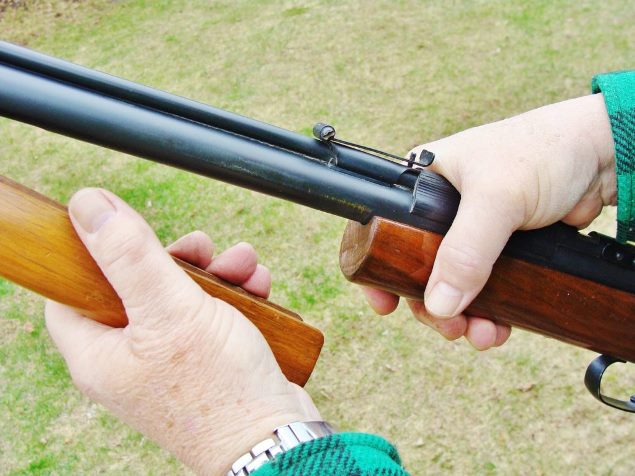
airgun pump

Springers: My experience with these guns goes back to the late 1970s, when Dr. Beeman began importing elegant European models. I’ve owned a bunch of ‘em since and still keep a good barrel-cocking gun nearby, along with a tin of pellets. It’s a perfect grab & go rifle for use against marauding pest birds that invade the backyard feeder.

pumper air rifle
An old “pumper” still going strong after five+ decades. Eight strokes is the max for this Sheridan, but 5-6 will kill cans.

Mine is a German-built Beeman R-9 in .22-caliber (a bit uncommon since most R-9s are .177s). Typical of most springers, it’s listed velocity of 740 fps is actually 680 fps using standard-weight 14.8 grain pellets. Still, it’ll clobber starlings out to 35 yards or so. I zero it at 30 yards using an airgun-rated scope. Quarter-size groups are the norm with JSB 14.8-grain Exact Express pellets, but it shoots Crosman 14.8-grain Premier HPs nearly as well and they’re stocked at the local Walmart. So are some barrel-cocking guns of varying lineage and quality; often sold as package guns with scopes.

But big-box businesses are not the realm of guns like the R-9 or good JSB pellets, most of which must be mail-ordered from airgun dealers or off Amazon. Odds are strong you’ll get what you pay for, too. More power comes with increased size, weight, and cocking effort.

Some springers can reach 800 fps (or more) in .22-caliber, but they won’t be small. They’ll also be harder to shoot due to vibration and their unique recoil, which creates a phenomena known as “hold sensitivity” (example: don’t test for accuracy off sandbags). These forces can also unravel scopes not designed for the unique impulse. Springers also shouldn’t be left cocked for long. However, some recent gas-piston designs work like gas struts which eliminate the spring altogether, meaning they can remain cocked (at least, for a while).

I just stick with my German springer because it’s simple and only weighs a bit above eight pounds, scoped. Most 800 fps guns will weigh that much without one. Although decent open sights are often standard, full potential won’t be realized without an airgun-rated scope. Those who can live with a hefty gun might consider Sig’s new ASP20 .22 gas-piston barrel-cocker, some of which come with a decent Sig scope. It has a legal built-in “sound moderator” too, although many springers are fairly quiet without one.

benjamin r-9 springer rifle
Beeman’s R-9 springer offers a nice compromise of size versus power. This .22 version clocks just below 700 fps, good enough for quiet backyard practice or pesky feeder-raiding birds. The German firm of HW makes this gun, along with a similar HW-95.

Pre-charged pneumatic rifles: To reach 800 fps or more without lugging excess weight, I simply switch to a pre-charged pneumatic. These guns are totally recoilless and dead-nuts accurate, but they do require an external air source to pressurize their onboard reservoirs. Some use separate bottles while others like mine employ a tube below the barrel.

Using a fitting supplied with the gun, I simply connect it to a HP hose assembly and decant air from a scuba tank. Some use a special HP pump, which I avoid due to concerns about accumulating moisture. A few diehards even use pricey compressors designed for these guns. Whatever the source, it needs to produce clean dry air, usually at 3,000 PSI or above! At such pressures, a bare-muzzle PCP gun will produce quite a snap. Fortunately, most are now “moderated” via a barrel shroud that greatly reduces the report. Some aren’t much louder than a heavy-duty stapler!

pcp air rifle charging
PCP charging in progress via scuba. A gauge on the hose is used to monitor pressure. The max for this gun is 2900 PSI.

For pigeon control jobs inside barns or stables, I use the above domed 14.8-grain .22 JSB Expresses, shot at 800 fps/20-ft. lbs. The gun of choice is a British-built Air Arms repeating carbine, cocked via a side-lever, and fed from a small revolving 10-shot magazine.

Zeroed at 35 yards with a 3×9 AO scope, it’s capable of tiny groups. The gun’s operating pressure is 2,900 PSI. The power is adjustable, so I throttle it back a bit to gain 40 useful shots from its carbine length air reservoir. The gun’s onboard gauge will then read just below 1500 PSI, meaning it’s time for a refill.

For outdoor pigeon missions, my ultra-quiet, 920 fps, single-shot bolt-action .22 Air Arms rifle is noticeably more effective. Its longer air cylinder also provides 45 useful shots despite the extra 100 fps. That gain wouldn’t matter much with head shots, but because light pellets drift in wind, the upper body is a safer bet.

Even at that, I’ll often wind up holding a half-bird or more to the side at 35-40 yards. Lightweight airgun projectiles quickly shed velocity, but pigeons are still doable at 60 yards (or further) with a rangefinder. Zeroed for 40 yards, it can shoot dime-sized groups with 15.9-grain JSB Exact Jumbos. Out to 50 yards, all impacts will be within an inch or so of the crosshairs. This gun has also accounted for a number of crows, some beyond 80 yards; however, that’s pushing things. Results are much better inside 50 yards. For extra oomph, you could go with the increasingly popular and harder-hitting  .25-caliber, assuming the rifle is potent enough to flatten its trajectory.

benjamin marauder air rifle
Benjamin’s U.S.-built Marauder is a popular PCP choice. It’s available as a scoped package for half the price of many imports. Of course, you’ll need a scope and charging gear.

One viable PCP choice (among many) is Benjamin’s Marauder, a U.S.-built repeater. Available in .177, .22, and .25-caliber, it sells for half the price of many high-end imports. My British guns have served me well (one for 13+ years). Like other airgunners, I store them fully charged (to 2,900 PSI). But eventually, at separate times, each needed servicing to fix a slow leak. The repairs involved shipping to a distant airgun specialist. Repairs to the popular Marauder could be less problematic. Its lower cost could also offset the requisite extras like a tank and hose-assembly, or a pump.

More power! You’ll absolutely need a PCP gun to drive the big-bore specialty slugs, many of which travel at .45 ACP speeds. Each shot will suck through lots of air, so frequent recharges are the norm, placing these guns in the realm of true airgun aficionados. Some do have interesting capabilities though – like the ability to shoot arrows!

Airgun Options and Costs

You’ll pretty much get what you pay for. If nothing else, especially with extra time on-hand, it’s fun to surf the net. There are several good airgun dealers spread out across the U.S. The following are just a sampling that I’ve dealt with:

https://www.pyramydair.com/

https://www.airgunsofarizona.com/

https://www.pomona-airguns.com/shop/

After brief visits, you’ll quickly note that covering everything would be impossible. So, what follows is just a guide, based mostly on personal experience.

Quick and Dirty Guide to Airguns

Bargain barrel-cockers: Some people will settle for a $200 “package-gun” which may come with its scope mounted – or not. With only casual use, it may even do the trick. I’d be thorough regarding product reviews, though. Even some of the well-known firearms manufacturers will rebrand guns from regions that also produce viruses. Good chance those supply lines could soon dry up. Also, I’d be leery of buying a used springer. I’ve encountered some in gun shops that were cocked, much to the detriment of their springs.

rws springer
RWS has been building springers like this barrel-cocking .22 P-34 for years. A cut above the bargain guns, it offers dependable service, starting at under $300.

Next price-point: For more money, several time-proven springer imports can be had. A few example include British Air Arms choices, Germany’s Diana (RWS) offerings, and guns from Herman Weirhrauch (HW) which also makes the Beeman R-series.

A number of these guns sell for well below $500. My middle-of-the-road R-9 springer is still available, scoped for that amount. For around $600, the aforementioned Sig ASP20 gas-piston package can be purchased. Sig is all-in on a full line of shooter-worthy products. Their latest gas-piston rifle is new, but they’ll stand behind it.

Pre-charged choices: The high-end British and European PCP imports from Daystate, Air Arms, Brocock, BSA, and FX, etc., are true works of art. Some easily exceed $1,000. However, most can be serviced through U.S. dealers, and those that value quality won’t be disappointed. The U.S. firm Airforce builds some really interesting guns at various price-points, including models in big-bore calibers.

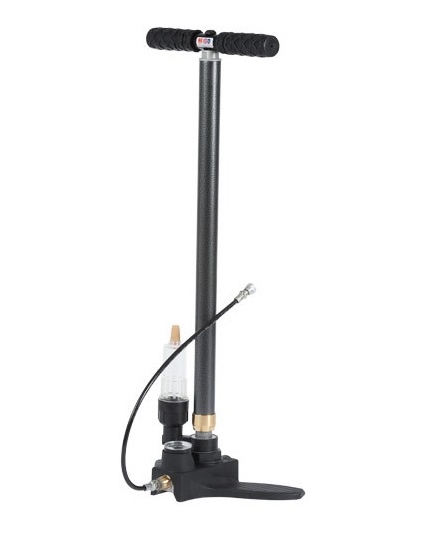
high-pressure pump
Hill’s high-pressure pump, complete with a water trap.

Benjamin’s PCP Marauder rifle is available as a scoped package for just above $600 (less the charging gear). Benjamin is part of the established Crosman marque, which has been building airguns for decades. They also sell much more affordable PCP choices, some of which come complete with hand-pumps.

Others: Speaking of hand-pumps, Benjamin’s $400 PCP pistol is a good candidate for one. Unlike rifles which will give you quite a workout, the pistol’s smaller reservoir needs less strokes. Or, you could go with their lightweight multi-stroke pump-up rifle. Several strokes per shot will do it, and the Benji has recently been upgraded with a bit more punch, for around $200. Add a tin of pellets and you’re in business for casual use.

Modern Airgun Summary

shoot your eye out

Regardless of your choice, read the manual! Just for starters, high-pressure air and some lubricants don’t play much better than BBs and eyeballs, and there are other concerns unique to each system. Thus, two designs worth a revisit are springers and pre-charged rifles. Thinking back to my first PCP purchase, I remember being baffled about the charging process, not to mention other details. Turns out springers also have their share of quirks, beyond those briefly covered here.

Stay tuned for future posts on each. Meanwhile, happy and safe shooting. Oh, and be careful, or you’ll shoot your eye out!


Read the author’s book Air Rifles: A Buyer’s and Shooter’s Guide for more information.

The post Modern Airguns: Calibers, Power, and Types appeared first on SHTF blog – Modern Survival.