Survival Gear is the most unused product until a natural disaster happens, then it’s the most desired products, but usually too late to help those that really need the help.

We sell around the World, and pride ourselves on offering a level of customer service that we would want to see ourselves if we were shopping online.
Our product ranges change regularly, so we hope that you come back to our sites to see some of the fantastic offers that we regularly have.

Get In Touch

Best DIY Bunker ANYONE Can Build On A Budget

DIY Bunker Built Into Side of A HillAre you looking to build your own cheap DIY underground bunker? With all that is going on in the world, I’m not surprised!

NOW is the best time for it, and not a moment too soon!

That’s why today I want to go over ALL your DIY Bunker options. From cheap DIY Bunkers to expensive ones – with ALL the Pros and Cons for each.

Because everyone should have a plan when an invasion or cataclysmic event happens.

We’ll be covering the following DIY Bunker topics:

Click Here Now To Get 2 FREE Clickable Checklists! (Prepper & Bug Out Checklists)

Sneak Peek Of The Prepper’s Checklist Below…
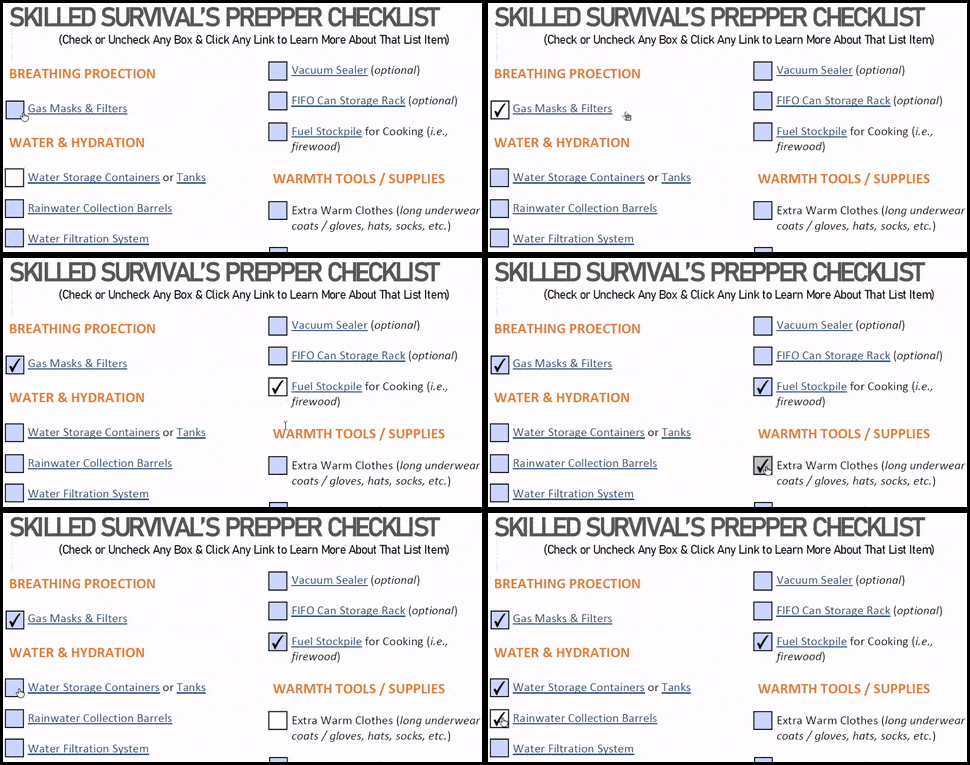


These 2 Clickable Checklists Will Help Get You Prepared FAST!

What Is A Bunker

The term “Bunker comes from the Scottish word for “bench, seat”. This is odd because that is NOT what I think when I hear the word “bunker”.

However, it was also used as the shortened form “bunk” which was used to describe a “sleeping birth”.

And the Old Swedish term “bunke” meant “boards used to protect the cargo of a ship”.

So, if you combine these original ideas of a “protected sleeping quarter” you can see how this term evolved into the modern idea of a “survival bunker”.

To be clear, a bunker IS NOT a “She-Shed” or a “Man-Cave”. It’s NOT a backyard hut where ladies’ have lunch or “the guys” watch the big game while eating finger sandwiches or chicken wings.

A bunker is a personal self-defensive fortification.

One that should be well-built to withstand entry from anyone who intends you harm.

Most are often located underground to:

1) remain hidden (i.e., you can’t attack what you don’t know is there)
2) avoid any above-ground dangers (bombing, nuclear fallout, infections, other humans, etc.)

The bottom line:

The primary goal in a homemade bunker is to protect the ones you love. And to survive an extended period of danger in a safe (often underground) location.

As A Way To Introduce You To Skilled Survival, We’re Giving Away Our #78 Item Complete Prepper Checklist. Click Here To Get Your FREE Copy Of It.

There Are 5 Main Types Of Bunkers

1. Industrial

These were designed to protect industries essential to the German government during WWII.

They were primarily used as mining sites, data storage centers, food storage areas, and occasionally used as living quarters.

2. Trench

This bunker is a smaller structure made of concrete and is partly dug into the ground as part of a trench system.

They were crude, open-aired-shelter to provide some protection for soldiers during Trench Warfare.

Staying hunkered down in the trench prevented soldiers from being sitting ducks for machine-gun fire from the enemy.

3. Munitions Storage

A munitions bunker held explosives and was typically built into the side of a hill. They were not designed for human occupancy.

4. Artillery

This was a secure place for weapons and ammunition. These types of bunkers were usually built on coastlines for large-scale wars.

5. Personal Survival Bunkers

Personal bunkers are often attached to homes or located on personal property. This helps to protect regular folks from bombing raids, nuclear fallout, or severe weather.

Today, those who want to live a resilient life, use these bunkers to protect themselves from:

  • Tornadoes / Hurricanes / Wildfires
  • Major Food & Water Scarcity
  • Foreign Occupations / Civil War
  • Widespread Civil Unrest
  • Nuclear Bombs / Fallout
  • Deadly Viruses / Diseases

Basically, a DIY underground bunker is the ultimate bug-out location ON YOUR OWN PROPERTY!

One where you can immediately shield yourself from ANY above-ground conflict.

Note: Here’s one of our previous articles on How To Build An Underground Survival Shelter from Scratch

As A Way To Introduce You To Skilled Survival, We’re Giving Away Our Ultimate Survival Gear Checklist. Click Here To Get Your FREE Copy Of It.

Why You Should Build A DIY Bunker

Let’s face it, preparing for a future catastrophe isn’t cheap.

You must spend your hard-earned money on the right equipment and supplies. This investment is made not just to survive but to thrive in a variety of catastrophes.

That’s why we acquire guns and buy ammo, right? It’s why we spend money on Ham radios and building bug-out bags, get-home bags, and TFAKs.

And the super-rich can afford a high-tech bunker. Something that makes your BEST vacation look like a dump. But the rest of us need to build our own DIY bunkers on the cheap.

All you need to focus on is making sure your DIY bunker is safe and secure. And that CAN BE AFFORDABLE!

As A Way To Introduce You To Skilled Survival, We’re Giving Away Our #78 Item Complete Prepper Checklist. Click Here To Get Your FREE Copy Of It.

9 Homemade Bunkers To Expensive (Pros / Cons)

Now let’s investigate the different types of DIY bunkers you can construct. We will start with the cheap underground bunker and work our way up.

1. Inside Your House

Your house may already have the makings of a cheap DIY underground bunker. Some DIY bunker ideas for the home are:

  • A crawl space under a home could be dug out and sealed
  • And unused partition of a basement (safe or panic room)

Basement Gun Hiding LocationIf you are building a new house, consider designing a homemade bunker within or underneath it.

Many folks leave the area under a front porch as a hidden panic room.

This option is the most affordable of all the DIY Bunker options. But with THAT comes big tradeoffs.

Pros

  • The rough structure is already built. You just need to make it livable and secure
  • It’s right under the house so you can make a quick getaway
  • It’s well hidden with a house over it

Cons

  • It may not have a finished concrete floor
  • Someone could gain access by breaking through the wood floor above
  • Doesn’t give you distance with a separate bunker away from the home

Here’s a video series from Lumnah Acres, where he builds a “root cellar” in his unfinished basement. This same general idea can also be used for a “basement survival bunker:

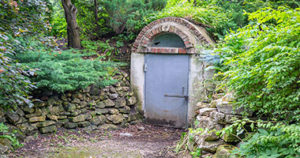
2. Backyard Root Cellar
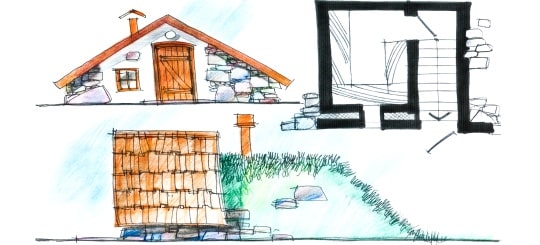
A small backyard root cellar is one of the most affordable DIY Bunker options.

And it’s not attached to your house but still very close by.

Plus, it’s underground – so it naturally stays warmer in the winter and cooler in the summer. It can also protect you from bomb blasts and nuclear fallout.

A root cellar (by design) is made to keep fresh foods shelf-stable for long periods. And they don’t take up much space (depending on your space needs/family size).

Pros

  • Small footprint
  • Underground and on your own property
  • Affordable (especially vs other DIY bunker options)

Cons

  • Limited space, so might feel very cramped after a few days
  • Not as hidden as true “underground bunkers”

Here’s a video that goes over why a small root cellar makes for a wise DIY Bunker:

3. Natural Cave or Burrow

If you own some land, perhaps you have a property with a natural void in the ground. This has the potential to be turned into a cheap bunker.

It may be an abandoned mine or an old den for wild animals but whatever the case, you can put it to good use.

When going into a cave, you need to be cautious. You don’t know what’s inside and how stable the roof and walls are. You’ll need structural support for it, but this is true of all bunkers.

You can even dig your own cave if your land is suitable.

Pros

  • The basic structure is already made
  • It usually has only one entrance to fortify
  • It’s easy to camouflage

Cons

  • You need to stabilize the walls and roof
  • Water leaking in could be an issue
  • Once a secure door is attached, you will need to tunnel out for ventilation

Here’s a video of a “makeshift” bunker built into a cave/burrow on public land:

4. Buried Culvert
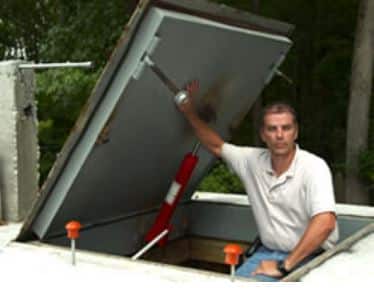
Now we’re moving to more complicated DIY Underground Bunker builds. If this is the direction you’re going to go, I recommend you invest in some solid bunker plans.

Here’s a product that provides excellent bunker plans: Family Bunker Plans.

The culvert DIY bunker option is using a large, steel culvert buried as your escape pod.

These heavy-duty pipes are engineered with a corrugation profile. This design helps to maintain structural integrity and then buried in the ground.

Culverts can stand the force of the earth on top of it, so you are able to easily bury them to your required depth.

Like with all your DIY bunker ideas, you will have to build out the living and storage areas inside. And you will also need to weld both ends and fashion a proper exit going up to the surface.

Pros

  • It’s a very strong structure that can be buried without stabilizing
  • They come in various sizes and lengths
  • They are affordable

Cons

  •  You only get a rounded long tube to work with for the build-out
  • It has two wide openings that will need to be closed in
  • Height and width could be an issue

5. Buried Shipping Container

It’s easy to find a shipping container to convert to a cheap DIY underground bunker. Used ones are rotated out of service all the time. And there are several companies that sell new and used ones for home use.

Often, folks add them to their property for secure storage of tools and equipment. But they can also have a greater purpose.

A shipping container already has the structure built and is made of steel. The doors are already steel too, making them very secure.

You will have to reinforce the sides and roof when burying it. That way, it won’t cave in and then you can build the interior how you like.

Pros

  • The structure is already built
  • Just dig a hole and drop it in
  • You can easily connect multiple containers together

Cons

  • Used containers may have toxic spills inside
  • Metal walls and roofs aren’t strong enough to be buried without reinforcing them
  • You aren’t building the outside structure so it will cost you more for the container

6. Above Ground Concrete Blocks

This is a cheap DIY underground bunker that you get to build piece by piece. The excavation won’t be as deep so if you don’t have access to a machine, you can hand dig it yourself.

This homemade bunker requires a solid, concrete footing. With a solid foundation, you can pour yourself with a bit of lumber and concrete. Then you build up bricks or cinderblocks layer by layer.

When the walls are complete, build a form inside for the roof with lots of rebars and pour the concrete on top.

You may want to add some rubber peel and stick it to the outside before you backfill. That way, you avoid any issues with water seepage. And then it is half in and half out of the ground, ready for you to camouflage.

Pros

  • A great DIY project that you can build, block by block
  • Excavation is easy because it is only halfway to the ground
  • Can be built in a week

Cons

  • Laying block is hard work, and you will need a scaffold to reach the top
  • Lots of mortar and concrete mixing by hand or barrel mixer if you have one.
  • You need to make sure the above-ground part of the structure is well hidden

7. Prefab Bunker

This is a bunker that has already been cast and is made of concrete with structural rebar in it. There are several companies that sell different sizes of bunkers.

This is still a DIY bunker because you need to dig the hole and pour a concrete base. Once the bunker is in place, you’ll need the exterior backfilled and interior buildout.

You’ll also have to put in a strong, steel door.

Pros

  • You save time by not having to build the structure
  • It’s built solid with thick, reinforced concrete
  • This gets you into a bunker quick
  • You can go any size you want if you have the room and money

Cons

  • Because you aren’t building the structure, the cost is more expensive
  • You need a strong base to place the bunker on

8. Hillside Bunker

A hill bunker takes advantage of a property that’s sloping or has a hill. This DIY underground bunker will take extra planning and know-how. Why? Because it can be dangerous to excavate.

As you start digging into your hill you will need to shore up the roof, so it doesn’t cave in. Pressure-treated wood or steel works well but make sure it is secure before going inside.

Once dug out and made sound you have a great bunker that can only be penetrated from the front. This is where you should form a concrete entrance with a steel door, so no one is getting in.

Pros

  • The outer structure is a natural hill
  • No one can get in except through the main door
  • You are using a natural background for your DIY bunker, and it easily blends in with the landscape

Cons

  • You need an excavator and an operator who knows what they are doing
  • This requires support from either timber, steel, shotcrete walls, pillars, or a combination
  • It’s usually not completely hidden from view
  • Ventilation is crucial, especially the further in you go

9. Luxury Bunker

Most of the bunkers above are bunker ideas that you can afford without too much cost. If you are looking to step it up a notch and you got money to burn, why not build in some luxury.

DIY Bunker doesn’t have to mean cheap. You can go online and find plans to construct your own multi-room bunker. And then buy your materials and get building.

Outside the structure still must be solid so it can be buried and out of sight. Inside is where your luxury starts.

You can make it look like a high-end home with full bedrooms and a state-of-the-art kitchen. You can even put it in a movie theatre and games room.

There will be extensive ventilation, heating, and electrical requirements. As well as challenges dealing with water and waste.

The ground is the limit so go as far as your money will take you.

Pros

  • You can have all the bells and whistles
  • There will be enough room to not go stir-crazy
  • You can bring friends along with your family because you will have the room
  • It will feel like a fallout vacation

Cons

  • It’s going to take a lot of money to have a luxurious DIY bunker
  • The build will take way more time than any other cheap DIY underground bunker project

10. Communal Bunkers

For a bunker on steroids, you can build an underground shelter community. A group with multiple bunkers attached and private residences with common areas.

You need to get a lot of people involved and ready to spend their money with you. It takes a shared vision, a willingness to compromise, and a community spirit.

There are companies out there already doing this but to buy in costs big dough.

As A Way To Introduce You To Skilled Survival, We’re Giving Away Our #78 Item Complete Prepper Checklist. Click Here To Get Your FREE Copy Of It.

DIY Bunker Basics

We are finishing off here with some vital information for all your DIY bunker builds. Whether you have a cheap underground bunker or a luxurious one, there are must-have items to build in and stock.

Electrical & Lighting

You need to bring in power from the grid or use off-grid solutions. Power is necessary for illuminating your DIY underground bunker at a minimum.

And if you want to power a water pump or a ventilation fan, you’ll also need power as well.

In small applications, you may be able to get by with a power station and some solar panels – like what I use when I go camping.

Ventilation

Everyone needs fresh air to survive. So, consider how you are going to access above-ground ventilation.

You’ll need an outlet vent with a small fan sucking the stale air out of the bunker. And an inlet-vent with a filter that will allow fresh air in from outside.

Make sure the filter is good enough for nuclear fallout, stockpile several, and make sure you can change them out easily.

Food & Water Storage

DIY bunker projects tend to be small so don’t forget you need lots of room for food and water.

Canned meats and freeze-dried foods are great as well as home-preserved food.

Make sure there is plenty of water to drink, wash, and bathe.

I recommend a minimum of 2 weeks of food and 2 weeks of water. If you can do more, great, but if you’re just getting started, now you have a target amount to shoot for.

  • For water, I assume 1 gallon per person per day.
  • For food, use the “Daily Calorie Requirement Estimates”.

Medical Supplies

If you are heading to your bunker, you may already be injured and need medical supplies to treat wounds.

Accidents while underground can happen too.

Have a robust IFAK kit (individual first aid kit) with lots of extra trauma supplies on hand.

My go-to medical kit vendor is MY MEDIC. They have high-quality kits for all skills levels and needs; from IFAKs (individual first aid kids) to ITAKs (trauma first aid kits) everything in between.

Gas Masks and Filters

Let’s be real, one of the major reasons you’re thinking about building a bunker is to survive a nuclear blast and fallout, right?

Well, what happens if you’re forced to go outside, for supplies, or in an emergency while it’s still dangerous to do so? That’s why everyone should own at least 1 gas mask and several filters.

My go-to gas mask vendor is MIRA SAFETY. If you don’t have any gas masks, get some on order right now.

If you wait, you won’t get one later, they sell out almost immediately at the start of a crisis (like in the spring of 2020 and the start of the Russian invasion of Ukraine).

Currency

You may not need any money while underground. But once you exit your DIY bunker for supplies or to reemerge into society, you need a way to buy things.

Cash is usually great but if things really go south, you should have gold or silver as a reliable backup.

That’s why I’m currently acquiring Silver Rounds through SD Bullion every month

Entertainment

You can go stir crazy quick so consider what you want to do while in your DIY bunker.

TV and radio are great to keep up with the catastrophe above but they require electrical power…Same for music, unless, you make your own music via an acoustic guitar, harmonica, etc.

Make sure to have games for the kids and stock lots of physical books. Board games and card games are fun too as well as puzzles.

Side note: One of my all-time favorite strategy games is called – Forbidden Island.

I can play it for hours and never get bored.

Final Thoughts

Having a DIY bunker is an essential survivalist item you hope you never need.

But those who have one will be able to weather whatever shit storm comes their way!

Prepare, Adapt & Overcome,

“Just In Case” Jack

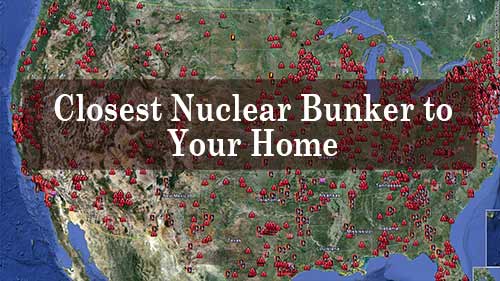
P.s. Do you know where the closest nuclear bunker is from your home?

There are a lot of natural nuclear shelters in the US that are absolutely free. And one of them is near your home.

Click on the image above to find out where you need to take shelter.

The post Best DIY Bunker ANYONE Can Build On A Budget appeared first on Skilled Survival.

In Major Reversal After Warning Of Nuclear War, Germany Approves Tanks For Ukraine

This article was originally published by Tyler Durden at ZeroHedge.

Flakpanzer Gepard tank file

In a major reversal following Chancellor Olaf Scholz only days ago voicing strong resistance, it appears Berlin has bowed to the mounting pressure among allies and approved new tank deliveries to Ukraine from Germany’s own stock, which Scholz had previously said was depleted.

The German Ministry of Defense announced Tuesday that the delivery of Gepard anti-aircraft tanks to Ukraine has been approved. As part of Scholz’s earlier rejection of sending heavy weapons systems, he had cited the potential for the West and Russia sliding into a WW3 and nuclear war scenario.

Axios reports that “The new shipment of the German-made Flakpanzer Gepard was announced by Germany’s Minister of Defense Christine Lambrecht during a meeting with more than 30 defense officials from dozens of NATO and non-NATO countries at Ramstein Air Base.”

Among the officials there at Ramstein for the meeting which was focused on how to help Ukraine defeat the Russian invasion were US Chairman of the Joint Chiefs of Staff Gen. Mark Milley and Defense Secretary Lloyd Austin – the latter fresh off his trip with Secretary of State Blinken to Kyiv where they met with President Zelensky. Representing Ukraine at the Ramstein meeting was Defense Minister Oleksiy Reznikov.

As for Scholz’s prior very clearly articulated warnings against sending items like tanks direct from Germany to the Ukrainians, here’s what he told Spiegel in an interview published only last Friday…

“We need to do everything to avoid a direct military confrontation between NATO and a heavily armed superpower such as Russia, a nuclear power,” the chancellor said at the time. “I will do everything to avoid an escalation that could lead to World War III – there can be no nuclear war.”

Defense Minister Christine Lambrecht made the announcement at Ramstein…

“That’s why it is all the more important that we consider each step very carefully and coordinate closely with one another,” Scholz had stressed.

He added: “To avoid an escalation towards NATO is a top priority for me,” and “That’s why I don’t focus on polls or let myself be irritated by shrill callsThe consequences of an error would be dramatic.” But given this fresh reversal it seems he did in fact, in his own prior words, let himself “get irritated by shrill calls”.

And certainly, the risks he previously laid out haven’t suddenly or somehow become mitigated, given Monday’s alarming comments out of Russian Foreign Minister Sergey Lavrov, who said the risk of nuclear war remains a “serious, real” danger and that “we must not underestimate it.”

The post In Major Reversal After Warning Of Nuclear War, Germany Approves Tanks For Ukraine first appeared on SHTF Plan – When It Hits The Fan, Don’t Say We Didn’t Warn You.

Drought Survival Tips: How to Survive Drought

The drought affects everyone in California, and it looks like it will be sticking around for a while. It can be tough news for homeowners and farmers trying to keep their property alive.

But don’t worry, we’re here to help! This blog post will go over 11 drought survival tips to help you get through this difficult time. So Read on to learn how to conserve water indoors and outdoors and more!

Related: How To Have Potable Water Anywhere | Emergency Preparedness

Drought Survival Tips: How to Survive DroughtGlobal warming, arid, dry soil, cracked rift, dead trees | Drought Survival Tips: How to Survive Drought

A drought is a period of low rainfall in a certain area, resulting in extended water supply shortages.

As a prepper and survivalist, knowing how to survive a drought is essential.

When insufficient rainfall and water levels drop, drought will likely strike.

Droughts can increase the possibility of other natural disasters. It is a water shortage caused by dry spells but what is more interesting is it can happen anywhere. The best solution relies on planning, preparation, and preservation.

Water is essential in our daily lives as well as our survival. So, it is best to avoid drought by conserving this renewable yet limited resource.

  • Be mindful of the weather patterns.
  • Use water wisely.

By doing this, you’re not only helping yourself survive; you are helping others as well.

How to Survive Drought

Concept of global warming and drought | How to Survive Drought

Plan for the drought.

  • Develop a strategy to use when a drought occurs.
  • Read an almanac that predicts future conditions by tracking rainfall from past seasons.
  • Check out the current and possible future conditions. You may check it on NOAA’s US Seasonal Drought Outlook website.
  • Measure the rainfall during the year. And determine a course of action for the likelihood of drought conditions.

General Drought Survival Tips

The boy sat on a parched ground due to water shortage due to global warming | General Drought Survival Tips

  • Contact your local water provider for assistance and information.
  • Never pour water down the drain when there may be another use for it. For example, use it to water your indoor plants or garden.
  • Repair dripping faucets by replacing washers. One drop per second wastes 2,700 gallons of water per year.
  • Check all plumbing for leaks and have any leaks repaired by a plumber.
  • Retrofit all household faucets by installing aerators with flow restrictors.
  • Install an instant water heater on your sink.
  • Insulate your water pipes to reduce heat loss and prevent them from breaking.
  • Turn the softener off while on vacation. Only install a water-softening system if the water would damage your pipes.
  • Choose appliances that are more energy and water-efficient.

Conserve water

a man holding water with his hand,water crisis in India and worldwide | Conserve water

How to Check for Leaks

  • To check, get out to your water meter and note the reading.
  • Then turn off all your faucets and don’t use any water for two hours.
  • If the reading on the meter has changed in two hours, you’ve got a leak.

In the Kitchen and Laundry

  • DO make sure the dishwasher is full before turning it on. Dishwashers use between 8 and 12 gallons of water per load.
  • DO make sure your clothes washer is full before turning it on. Each load of laundry usually requires 50 gallons or more of water.
  • DO use a water bowl to clean fruits and vegetables rather than running water over them. Reuse the water in the bowl to water your houseplants.
  • Store drinking water in the ref instead of running the tap every time you want a cool glass of water.
  • Avoid wasting water waiting for it to get hot. Instead, collect it in a carafe or jar for other uses, such as watering plants. Or heat it on the stove or in the microwave.
  • DON’T let the water run when washing dishes.
  • Wash the dishes by hand. Do this by filling two containers. Fill one container with soapy water and the other with rinse water, including a little chlorine bleach.

In the Bathroom

  • Time showers to five minutes.
  • Place a bucket in the shower to catch excess water for watering plants.
  • Turn the water on to get wet; turn it off to lather up; then turn the water back on to rinse. Repeat when washing your hair.
  • Don’t leave the water running when shaving or brushing your teeth.
  • Fill a cup with water for brushing your teeth.
  • Stop up the basin and fill it with water for shaving.
  • Avoid flushing the toilet unnecessarily.
  • Dispose of tissues, insects, and other similar waste in the trash rather than the toilet.
  • Place a 12 to 20-ounce plastic bottle in a toilet tank to displace water that fills for waste disposal.

Indoor Drought Survival Tips

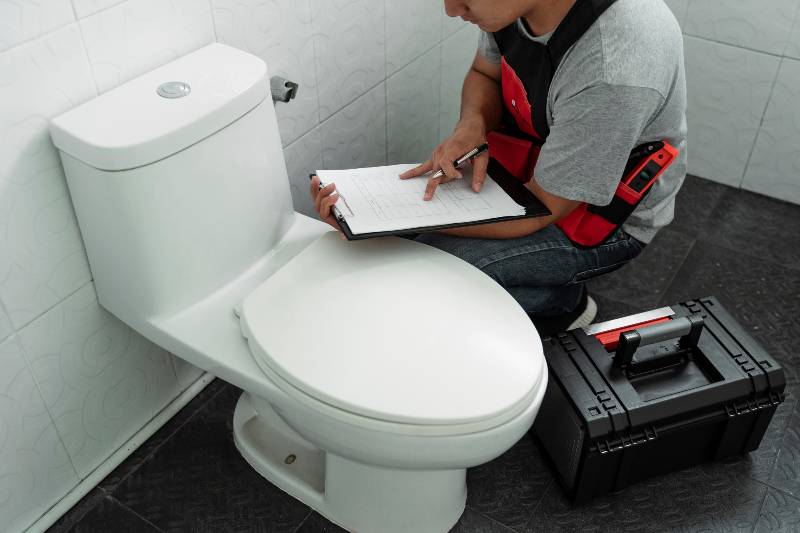
Handyman holding fixing list checking what it need to be done in this toilet | Indoors Drought Survival Tips

Replace Old Toilets

If you’re a homeowner, one of the best drought survival tips is to replace your old toilets. Replace your old toilets with low-flow models. It can save you gallons of water every day, and it’s an easy fix.

If you installed your toilets before 1994, consider replacing them. Toilets made before 1994 use 3.5 to 5.0 gallons per flush. New bathrooms now only use 1.28 gallons per flush and perform better than ever.

Long-term indoor water conservation

Opt for the new air-to-air models if installing a new heat pump or aircon. They are as efficient as the water-to-air type and do not use wastewater.

4. Store water

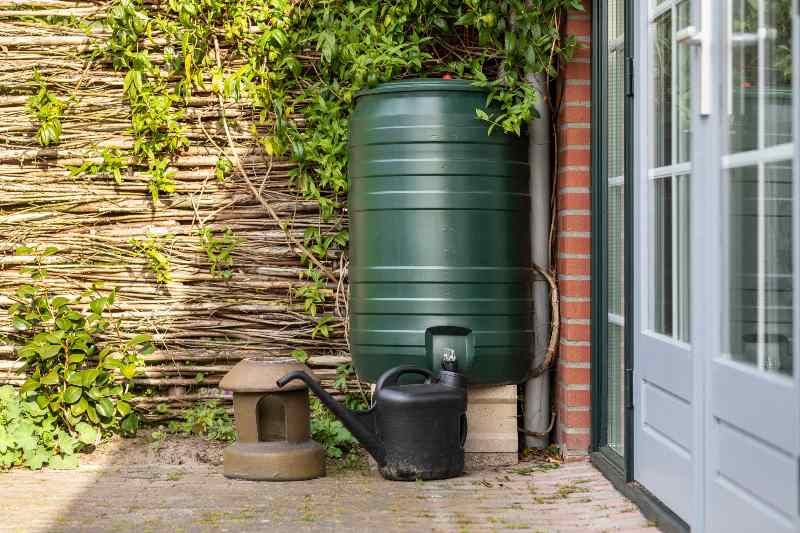
A green rain barrel to collect rainwater and reusing it | Store water

Storing water is easy. If you do it well, you may keep water indefinitely.

You can buy specialized water containers from any hardware store. Then, store them in your house.

Keep in mind, though, that if the container breaks, you could end up with a small flood in your house, consider that.

If you choose to store water outside of your house, keep it on the Northside of your home. UVs from the sun will deteriorate the container faster.

5. Store and Grow food

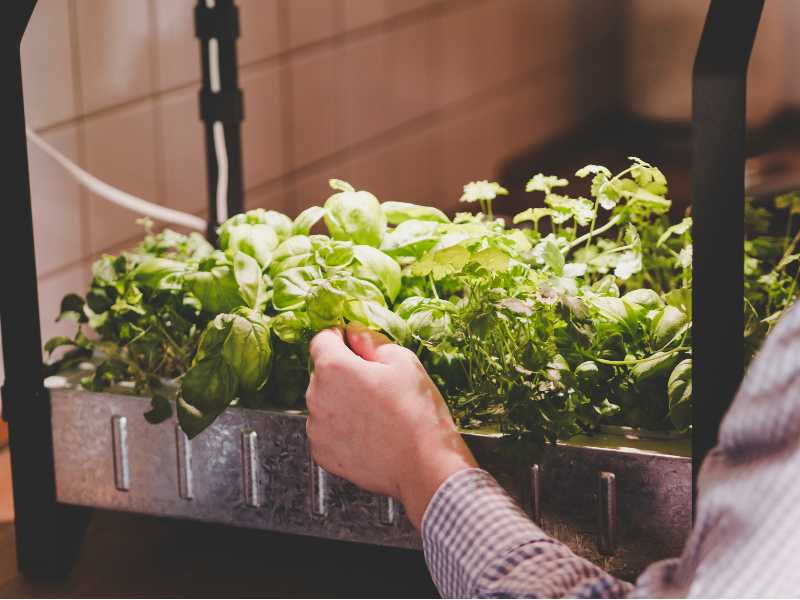
how to grow and harvest herbs and vegetables indoors using indoor grow kit | Store and Grow food

Droughts can destroy crops and impact the price of food.

Looking back at history, we’ve had about three major droughts in the US in the last 100 years, 1933-1938 (the “Dust Bowl”), 1953-1957, and 1988 (which caused crop losses of up to $15 000 000 000, yes… $15 Billion!).

These droughts strained food production, causing food prices to skyrocket.

Prepare for this by growing foods better suited to droughts. And store food (either store-bought or homegrown).

Take classes in canning and preserving. You will need these old-school skills more than ever.

Learn how to buy and stockpile food. Many books teach these and how to rotate storage to cut waste.

6. Collect water

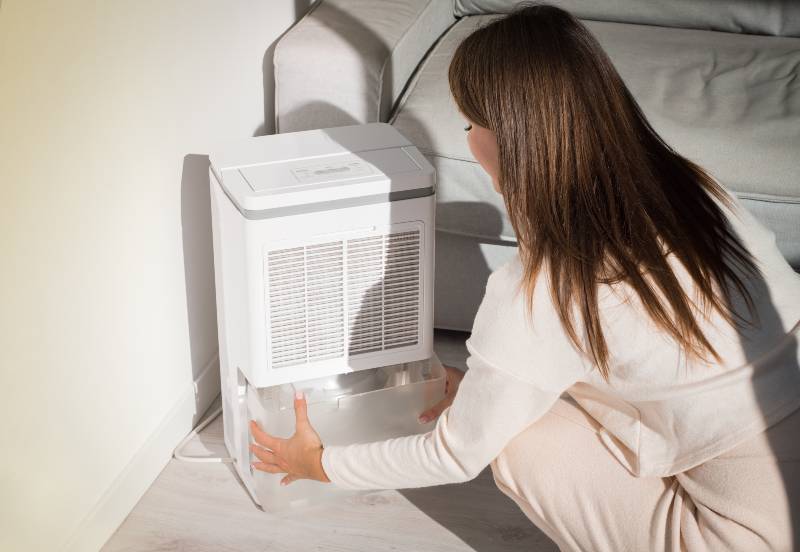
Woman changing water container in air dryer, dehumidifier, humidity indicator. Humid air at home | Collect water

Run a dehumidifier during the summer season. You may place it in your basement. It collects usable water you may use to water plants.

7. Conserve water outdoors

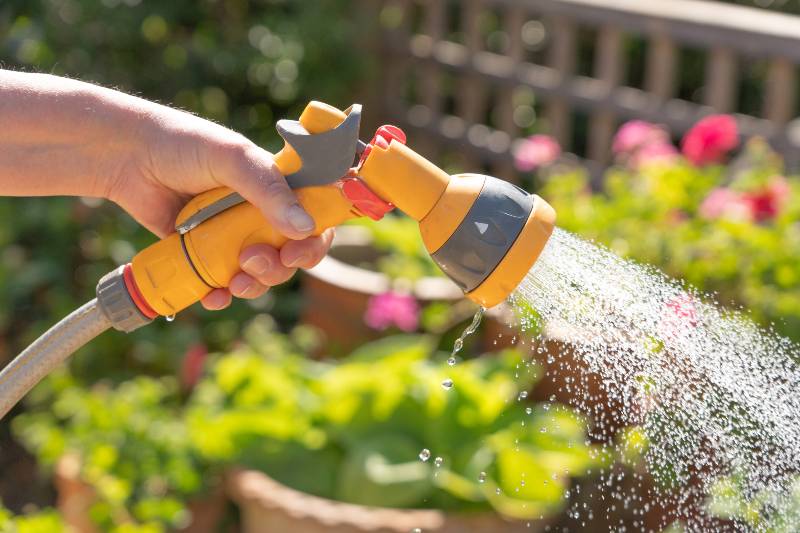
Hand holding a watering hose spray gun | Conserve water outdoors

Lawn Care

Avoid overwatering your lawn and water only when needed:
A heavy rain eliminates the need for watering for up to two weeks.

Most of the year, lawns only need one inch of water per week.

Check the soil moisture levels with a soil probe, spade, or large screwdriver.

  • You don’t need to water if the soil is still moist.
  • If your grass springs back when you step on it, it doesn’t need water.

If your lawn needs watering, here are some tips:

  • Water your lawn early in the morning or later in the evening. Temperatures are cooler.
  • Check your sprinkler system and adjust your sprinklers to water only your lawn. Avoid spilling waste.
  • Water in several short sessions to allow your lawn to absorb moisture better. Avoid a runoff.

Use a broom or blower instead of a hose to clean your driveway or sidewalk leaves and debris.

Avoid leaving sprinklers or hoses unattended.

A garden hose can pour out 600 gallons or more in only a few hours.

In extreme drought, allow lawns to die in favor of preserving trees and large shrubs.

If all you’re growing is grass, you’re wasting a horrifying amount of water on a non-edible crop.

Landscape irrigation accounts for one-third of residential water use nationwide. It totals about 9 billion gallons per day.

According to the EPA, approximately 50 percent of this water gets lost in evaporation. So that’s 4.5 billion gallons that you can use on food crops or consumed by animals and humans.

Other Outdoor Drought Survival Tips:

  • When using a hose, control the flow with an automatic shut-off nozzle.
  • Avoid purchasing recreational water toys that need a constant stream of water.
  • Consider purchasing a new water-saving swimming pool filter.
  • Use a pool cover to reduce evaporation when not using the pool.
  • Do not install or use ornamental water features unless they recycle the water.
  • Use Recycled Water in Use signs to show the public that water is recycled.
  • Finally, do not operate during a drought.

Community Drought Survival Tips

.mcclatchy-embed{position:relative;padding:40px 0 56.25%;height:0;overflow:hidden;max-width:100%}.mcclatchy-embed iframe{position:absolute;top:0;left:0;width:100%;height:100%}


Water is a necessary resource for human survival. Yet it is also a non-renewable one. So, it implies that everyone must conserve water for future generations.

It means every member of the community must be on board. They must be on board with watering restrictions to survive a drought.

  • Ask your neighbors if they need help installing low-flow faucets. Or dual flush systems in their bathrooms.
  • Offer to install and transport water from a rain barrel for the elderly.

Every little thing you can do to reduce water use and consumption is beneficial.

These drought survival tips will help you get through this tough time no matter where you live. With these tips, you can drought-proof your home or farm and get through this drought season!

Check out this video from How to Survive. How to Survive a 20-Year Drought:


Do you have any other tips on how to survive a drought? What are the most important things to do when you’re in a drought?

Do you have any tips for saving water while:

  • Showering
  • Doing dishes
  • Drinking
  • Cooking
  • Car Washing
  • Or any other things during a drought?

Please share with us in the comments section below.


You Might Also Like:

Home Doctor Book Review Is It Really Worth Buying?

Holding the Home Doctor Book With Prepping Background (c)An extensive and independent Home Doctor Book Review from the co-founder of SkilledSurvival.com and TheResilientLife.com

Hey, I’m Jack, and today I’ll be reviewing the Home Doctor Book. Specifically, here are the topics I’ll be covering:

Here’s my review of the Home Doctor Book by Claude Davis:

Click Here Now To Get 2 FREE Clickable Checklists! (Prepper & Bug Out Checklists)

Sneak Peek Of The Prepper’s Checklist Below…


These 2 Clickable Checklists Will Help Get You Prepared FAST!

Who Wrote The Home Doctor

Home Doctor Authors Credentials

Home Doctor Authors Credentials

When discussing medical knowledge, it’s important to listen to qualified professionals only. Why? Because no one should take medical advice from their barber or hairstylist!

So, if we’re to trust what’s in the Home Doctor, then we must investigate those who wrote it.

The Home Doctor was written in a collaborative effort by three authors:

  1. Dr. Maybell Nieves
  2. Dr. Rodrigo Alterio
  3. Claude Davis

Let’s go over the credentials of each of these folks.

1. Dr. Maybell Nieves

Dr. Maybell Nieves is the head surgeon of the Unit of Breast Pathology and general surgeon at Caracas University Hospital in Venezuela.

She studied at the prestigious European Institute of Oncology in Milan, Italy, under Professor Umberto Veronesi.

The European Institute of Oncology was inaugurated in May 1994. It’s a non-profit comprehensive cancer center.

The Institute focuses on prevention and diagnosis, education and training, research, and treatment of cancer.

Based on my research, these are all legitimate intuitions. And they’re still working on new medical advancements even today.

It seems to me Dr. Nieves has the proper medical credentials to write this book.

2. Dr. Rodrigo Alterio

Dr. Rodrigo Alterio is currently working in the surgery department at UT Southwestern Medical Center in Dallas, Texas. Most of his ongoing research is based on Surgical Oncology.

UT Southwestern Medical Center was established in 1939 and has many notable Laureates who went on to win Nobel prizes in their medical fields.

And in 2017, Dr. Alterio lived with (and was the primary care physician of) an indigenous community called “Kamarata.” Dr. Alterio served this primitive community located deep in the Amazon Jungle, many hundreds of miles from civilization.

During my research, I found the “Kamarata community” is very remote indeed. I can only imagine the immense challenges Dr. Rodrigo Alterio had to face serving this community.

This medical experience and expertise are exactly what you want for a book like this. Dr. Alterio has first-hand experience performing medical treatment with limited resources.

I believe Dr. Alterio has all the credentials necessary to help write an at-home medical book like the Home Doctor.

3. Claude Davis

Claude Davis is an author of several popular preparedness and survival books such as:

But he’s NOT a doomsday prepper. Instead, (like me) he wants to teach how to live a more resilient life.

His goal is to avoid placing his life (or that of his family) into the hands of others during a widespread emergency.

That’s why he’s spent his life’s work honing his knowledge and experience in wise preparedness strategies. And he continues that mission by sharing his expertise in the Home Doctor.

I believe Claude was paramount in translating the “difficult-to-understand medical jargon” into a handbook regular folks can understand.

As A Way To Introduce You To Skilled Survival, We’re Giving Away Our #78 Item Complete Prepper Checklist. Click Here To Get Your FREE Copy Of It.

Who’s The Book Home Doctor Book For?

Home Doctor Book Tag LineOfficially, the Home Doctor Book is for EVERY HOUSEHOLD. How do I know that? It says so right on the front cover!

But that’s more marketing than helpful, right?

For example, if you’re already a medical professional (or a certified EMT), this handbook is too simple for YOU.

And on the other hand, if you:

  • faint at the sight of blood
  • think the human body is disgusting
  • or you content to remain part of what I call “The Fragile Masses”

Well…then this book is NOT for YOU either.

It’s for those of us who crave to live a more resilient life.

Folks who want a PHYSICAL book on hand (full of medical know-how) in case the world goes dark…

That’s why this book is a must-own for anyone who worries about the future and takes living a resilient life seriously.

Why live a resilient life? Because humans are terrible at predicting what’s coming next.

For example, we don’t know when the next disaster will wipe out an entire community.

  • It could be a natural disaster such as a wildfire, wind storm, blizzards, tornados, etc.
  • Or perhaps the future will bring about another world war, a nuclear holocaust, or failing nation-states.

Nobody knows these things and if they claim they do…they’re lying.

BUT with that said, what we DO know for an absolute FACT:

“The future will NOT be smooth sailing. Want proof? Just look at history; it’s full of one atrocity after another.

So, instead of being fearful, you should focus on WHAT you CAN control. And that means living a more resilient life.

And one small step towards resiliency is investing in PHYSICAL books, especially ones chock-full of medical wisdom and knowledge.

If you’re nodding your head right now, you agree. And that makes an ideal candidate for investing in the Home Doctor.

YOU are exactly who the Home Doctor was written for!


Exclusive Bonus Content –
Skilled Survival’s 104 Item Bug Out Bag Checklist – the only bug out checklist worth using. Click Here To Get Your FREE Copy Of It.

What’s Inside The Home Doctor (& What’s Missing)

Inside The Home Doctor BookOK, let’s take a sneak peek into the content within. And check out some of the advice you’ll find in the Home Doctor Book.

But before we crack it open, let’s talk about its overall length, shape, and dimensions first.

This medical book comes in at 304 pages long. Now, this might not seem like much for a medical knowledge handbook. But that’s quite long considering its rather large footprint.

It comes in at over 8″ wide, nearly 11″ long, and over a 1/2″ thick.

Home Doctor Example of Large Colored Images

Home Doctor Has Large Colored Images

This extra-long/wide size is a distinguishing feature. Why? Because this allows you to clearly see all the colored images throughout.

Just think HOW important that will be mid-surgery! Obviously following any medical procedure at home won’t be ideal. But at least with the Home Doctor, you’ll be able to see what you should be doing!

Let’s imagine the book was half as large. In this case, sure, it would have double the pages (608), BUT good luck squinting at the pictures!

What’s Inside The Home Doctor

Ok, let’s take a close look at the written content.

The Home Doctor claims to be an “at home worst-case medical handbook.” So it’s designed for use in an “apocalypse”. A disaster so horrible professional medical advice and help are no longer available.

It’s NOT for avoiding a doctor’s visit during normal times!

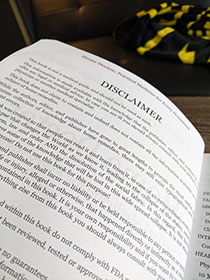
Home Doctor DisclaimerThis fact is essential to understand and the Home Doctor Book makes this clear in their Disclaimer:

“This book was created so that people can read it and learn from it, in case of an extraordinary event like an Apocalypse that changes the World as we know it, learning to the collapse of the states, society, medical system, law, and order AND the dissolution of the social fabric. In this regard, this book’s purpose is to save some of the knowledge that will be lost in this widespread collapse. It is not meant to treat or cure anyone! Do not use this book for this purpose!”

OK, now that’s clear, what are some of the topics within Home Doctor?

There are many medical topics and subtopics throughout this book. So, instead of boring you going through each one, I’ll share a few I found interesting:

  • 10 Medical Supplies You Need To Have In Your House
  • An Ingenious Way To Stockpile Prescription Medications
  • Medicines That Are Safe To Take After Their Expiration Date
  • The Only 4 Antibiotics People Who Should Stockpile
  • How To Preserve Your Mental Health In Spite Of A Rough Situation
  • Gastrointestinal System
  • Urogenital System, Raspatory system
  • Mental Health
  • Skin and Skin Appendages
  • Head and Neck Trauma
  • Musculoskeletal System
  • Cardiovascular System
  • Nervous System

So, as you can see, it covers the gambit of medical topics.

What’s Missing From The Home Doctor?

Of course, no 300-page (or 600-page) medical book can cover EVERYTHING. Heck, even after years of medical school and lifelong learning you’d still not know EVERYTHING.

Nor would you want THAT! The level of detail and confusing terminology in such a book would render it meaningless for regular folks (like you and me).

But that’s where I think Home Doctor gets it right.

It provides enough info to help with basic medical care (if professional help is not available). But not so much information to overwhelm or confuse.

As A Way To Introduce You To Skilled Survival, We’re Giving Away Our #78 Item Complete Prepper Checklist. Click Here To Get Your FREE Copy Of It.

My Final Thoughts / Recommendation / Pros & Cons

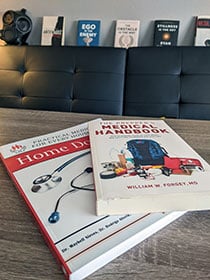
Home Doctor vs The Prepper's Medical Handbook

OK, here’s the deal, I own several medical handbooks. And I own more than 1 for two main reasons:

  1. First, I like having multiple sources of info because a second opinion is never a bad thing.
  2. Second, I have an audience that trusts my opinion. I’m the co-founder of SkilledSurvival.com and TheResilientLife.com and people depend on my advice. So, I need to review all these books to figure out which are worth owning.

For example, another medical handbook I own is called:

The Prepper’s Medical Handbook – How to provide medical care when you can’t rely on anyone but yourself” by William W. Forgey, M.D

And it’s also a quality medical handbook and one I’ve recommended in the past.

But now that the Home Doctor is available, I think it’s the better option. Why? Because it has better (and larger) images. Plus, it includes some additional preparedness info (such as stockpiling medical supplies and medications)

These strategic differences make it a more comprehensive Medical Handbook for those who want to live a more resilient life.

Now, if you already own “The Prepper’s Medical Handbook“, you can pass on buying the Home Doctor (if money is tight).

But IF you want a “second medical opinion” in a DIY medical situation, then having two books is never a bad thing. And perhaps you’d prefer to upgrade to one with better images.

If this sounds like you, then yes, you should also invest in the Home Doctor Book as well.

And if you don’t own either of these books yet, then the Home Doctor is the one you want. It’s a solid medical handbook for folks like you and me who want to live a resilient life.

In Summary (Pros & Cons)

Pros

  • Written by legitimate M.D.s and a Preparedness Expert
  • Includes very large COLORED images so you can better see what’s going on
  • It has comprehensive advice through, without being long-winded or overwhelming
  • It’s well organized and includes a large font for easy reading

Cons

  • It’s a bit more costly than comparable prepper medical handbooks
  • You’ll get “upsells” after your initial order (upsells are more products behind the original order)
  • Doesn’t fit as well in a small backpack; it’s bulky
  • It includes some stark images of the human body (so you may want to keep it away from young, curious children)

Go here now to purchase your copy of the Home Doctor today.

Prepare, Adapt, and Overcome,

“Just In Case” Jack

P.s. Do you know where the closest nuclear bunker is from your home?

There are a lot of natural nuclear shelters in the US that are absolutely free. And one of them is near your home.

Click on the image above to find out where you need to take shelter.

The post Home Doctor Book Review Is It Really Worth Buying? appeared first on Skilled Survival.

Russia’s Largest Chemical Plant Engulfed In Flames Hours After Mystery Fire At Military Research Facility

This article was originally published by Tyler Durden at ZeroHedge. 

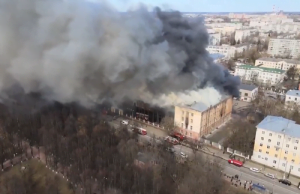
Update(1540ET): The death toll in the massive fire that broke out earlier in the day at a sensitive Russian Defense Ministry research facility in the city of Tver has risen to seven after emergency crews battled the Thursday blaze throughout the afternoon, state-run TASS reports.

The cause of the fire is still either unknown or not being disclosed by Russian state agencies at this point, but now, more questions are being raised as another mysterious large blaze has erupted, this time at Russia’s largest chemical plant, a mere hours after the fire in Tver – the latter which had engulfed a facility belonging to the secretive Central Research and Development Institute of Aerospace Defense Troops. UK media is reporting on the latest mystery fire, which marks the 2nd of the day, as follows:

Huge plumes of smoke were seen enveloping the Dmitrievsky Chemical Plant late this afternoon. The cause of the fire remains unknown. Almost 150 plant workers were reportedly evacuated.

The facility in Kineshma, east of Moscow produces more industrial solvents than any other in Russia. It is less than 1,000km from the border with Ukraine.

Naturally, observers are starting to ask in connection to Russia’s war in neighboring Ukraine: coincidence? sabotage operation? 

Anti-Putin racecar driver Igor Sushko in tweeting the above video of the Dmitrievsky Chemical Plant going up in flames commented: “We are beginning to see a pattern develop.”

And Western mainstream security analysts are also beginning to muse over whether active sabotage could be behind two large Russian facilities going up in flames in one day…

As we noted earlier in relation to the fire at the research facility in Tver, Russia has already been battling a string of forest fires – mostly in remote areas including in Siberia, thus the spread of these fires impacting government or industrial facilities is a possibility; however, there’s been no word from Moscow authorities that the Thursday blazes are linked to this.

Adding to the mystery of the possibility of some kind of intelligence sabotage operation targeting these places, the now largely destroyed defense research facility was reportedly developing Russia’s newest ballistic missile technology…

Interestingly, Ukraine’s Defense Ministry tweeted out the following…

* * *

Russian media is reporting a large fire at a Russian Defense Ministry research facility in the city of Tver under mysterious circumstances. The site is about 110 miles northwest of Moscow.

There may have possibly been an explosion, given that RT reports two people killed and at least 20 injured, and with aerial footage showing a huge blaze and thick clouds of smoke over the area.

Emergency and rescue personnel are on the scene. The upper floors of the building are said to belong to the government’s Central Research and Development Institute of Aerospace Defense Troops.

“According to preliminary data, the blaze spanned across some thousand square meters and caused a partial collapse of the roof,” Russian media reports.

“The fire had  started in one of the rooms on the second floor of the administrative building.”

There have been reports of an uptick in forest fires in various parts of Russia, but it’s as yet unknown or unclear the cause behind Thursday’s massive blaze.

developing…

The post Russia’s Largest Chemical Plant Engulfed In Flames Hours After Mystery Fire At Military Research Facility first appeared on SHTF Plan – When It Hits The Fan, Don’t Say We Didn’t Warn You.

Humanity On The Brink: Trump Warns That “Everyone Will Be Dead” If Both Sides Continue To Escalate World War 3


In all of modern history, the world has never had a worse group of leaders than it does right now, and the fate of civilization is literally in their hands.  If both sides continue to escalate matters, the proxy war in Ukraine will eventually become a shooting war between the United States and Russia.  And once a shooting war between the United States and Russia starts, it will only be a matter of time before it goes nuclear.  It is often said that there are no winners in a nuclear war, and that is certainly true.  But if a nuclear war becomes inevitable, you definitely want to be on the side that strikes first.  Because a devastating surprise first strike may not enable you to “win” a nuclear war, but it will certainly give you the best chance of surviving one.

Donald Trump can see where things are heading.  This week, he penned the most ominous statement that he has ever issued…

“It doesn’t make sense that Russia and Ukraine aren’t sitting down and working out some kind of an agreement. If they don’t do it soon, there will be nothing left but death, destruction, and carnage. This is a war that never should have happened, but it did. The solution can never be as good as it would have been before the shooting started, but there is a solution, and it should be figured out now—not later—when everyone will be DEAD!”

Like Trump, I am desperately hoping that a negotiated agreement can be reached somehow, because if a full-blown nuclear war erupts billions of people will die.

We must not allow that to happen.

Unfortunately, officials in the U.S. are not taking this threat seriously.  In fact, I have been seeing talking heads all over cable news downplaying the threat of nuclear war.  These experts assure us that Russia “would never use nuclear weapons”, but meanwhile Russia continues to feverishly prepare for a potential nuclear war with the United States.

In fact, the Russians just conducted a test of the new Sarmat intercontinental ballistic missile…

Russia has test launched a new intercontinental ballistic missile, raising fears of a further escalation of Vladimir Putin’s barbaric war in Ukraine.

The Russian leader said the Sarmat missile, also known as Satan-2, will provide ‘food for thought for those who try to threaten Russia’ and will make his enemies ‘think twice’.

It is being reported that the Sarmat has a range of 11,000 miles and can hit any target on the entire planet.

It can carry up to 15 independently targetable warheads, and the Russians are bragging that the collective power of those warheads could destroy an area the size of Texas or France.

Remember, this is just one missile that we are talking about.  Ultimately, the Russians are planning to put vast numbers of these missiles into service.

According to Vladimir Putin, nobody in the world has anything like these new missiles…

“The new complex has the highest tactical and technical characteristics and is capable of overcoming all modern means of anti-missile defence. It has no analogues in the world and won’t have for a long time to come,” Putin said.

“This truly unique weapon will strengthen the combat potential of our armed forces, reliably ensure Russia’s security from external threats and provide food for thought for those who, in the heat of frenzied aggressive rhetoric, try to threaten our country.”

Sadly, he is right.

The U.S. doesn’t have anything even close.

Minuteman III missiles that went into service in the 1970s are still the backbone of the U.S. strategic nuclear arsenal, and they are not scheduled to be replaced by something new until about 2030.

Needless to say, the test of the new Sarmat missile was intended as a message to anyone that is attempting to aid the Ukrainians

Russia notified the US of the ICBM test launch in accordance with the New Start treaty, but its rhetoric and choice to go ahead with the treaty stands in stark contrast to the US, which had canceled an ICBM test-launch in March not long after Russia began its war on Ukraine. Putin and his aides have repeatedly threatened to use nuclear weapons in what experts believe to be a ploy to warn powerful countries like the UK, Germany and the US from coming to Ukraine’s aid.

This missile test represents yet another escalation by the Russians, and that is extremely alarming.

But U.S. officials are escalating matters as well.  On Wednesday, the Biden administration announced another round of sanctions against Russia

The United States on Wednesday unveiled its latest round of sanctions going after Russia over its war on Ukraine, this time targeting a key commercial bank and “a global network of more than 40 individuals and entities led by U.S.-designated Russian oligarch Konstantin Malofeyev.”

In a news release, the US Treasury Department said it was also targeting “companies operating in Russia’s virtual currency mining industry, reportedly the third largest in the world,” noting it was the first time it has “designated a virtual currency mining company.”

And the Biden administration is also telling us that another “military aid package” will soon be sent to Ukraine…

The Biden administration is preparing to announce another substantial military aid package for Ukraine this week, five U.S officials tell NBC News. Three officials said the package is expected to be similar in size to the $800 million one the administration announced last week.

Two officials said the package is expected to include more artillery and tens of thousands more artillery rounds, which will likely be critical to the fighting in Ukraine’s eastern Donbas region.

At this point, we are providing most of the weapons and ammunition for the Ukrainian military, we are constantly providing them with battlefield intelligence, and we are even training their troops on our own soil.

Yes, that last part is actually true.  As I have discussed previously, U.S. Secretary of Defense Lloyd Austin has publicly admitted that Ukrainian troops are actually being flown to the United States to be trained how to fight the Russians

“This morning, I had the pleasure of speaking with Ukrainian troops training in the U.S. who are returning home to Ukraine today. Their bravery and skill are amazing. I made clear the U.S. will continue to provide them with the assistance they need.”

Like I said at the beginning of this article, this is a proxy war between the United States and Russia.

If the American people truly understood the implications of what our leaders are doing, there would be massive protests in the streets of every U.S. city right now.

So when will everyone finally wake up?

Hopefully it will be before we get to the “everyone is dead” part of the story.

***It is finally here! Michael’s new book entitled “7 Year Apocalypse” is now available in paperback and for the Kindle on Amazon.***

About the Author: My name is Michael and my brand new book entitled “7 Year Apocalypse” is now available on Amazon.com.  In addition to my new book I have written five other books that are available on Amazon.com including  “Lost Prophecies Of The Future Of America”“The Beginning Of The End”“Get Prepared Now”, and “Living A Life That Really Matters”. (#CommissionsEarned)  When you purchase any of these books you help to support the work that I am doing, and one way that you can really help is by sending digital copies as gifts through Amazon to family and friends.  Time is short, and I need help getting these warnings into the hands of as many people as possible.  I have published thousands of articles on The Economic Collapse BlogEnd Of The American Dream and The Most Important News, and the articles that I publish on those sites are republished on dozens of other prominent websites all over the globe.  I always freely and happily allow others to republish my articles on their own websites, but I also ask that they include this “About the Author” section with each article.  The material contained in this article is for general information purposes only, and readers should consult licensed professionals before making any legal, business, financial or health decisions.  I encourage you to follow me on social media on Facebook and Twitter, and any way that you can share these articles with others is a great help.  These are such troubled times, and people need hope.  John 3:16 tells us about the hope that God has given us through Jesus Christ: “For God so loved the world, that he gave his only begotten Son, that whosoever believeth in him should not perish, but have everlasting life.”  If you have not already done so, I strongly urge you to ask Jesus to be your Lord and Savior today.

The post Humanity On The Brink: Trump Warns That “Everyone Will Be Dead” If Both Sides Continue To Escalate World War 3 appeared first on End Of The American Dream.