This article was originally published by John W. Whitehead and Nisha Whitehead at The Rutherford Institute.
“Whoever fights monsters should see to it that in the process he does not become a monster.”— Friedrich Nietzsche
Almost every tyranny being perpetrated by the U.S. government against the citizenry—purportedly to keep us safe and the nation secure—has come about as a result of some threat manufactured in one way or another by our own government.
Think about it.
Cyberwarfare. Terrorism. Bio-chemical attacks. The nuclear arms race. Surveillance. The drug wars. Domestic extremism. The COVID-19 pandemic.
In almost every instance, the U.S. government (often spearheaded by the FBI) has in its typical Machiavellian fashion sown the seeds of terror domestically and internationally in order to expand its own totalitarian powers.
Who is the biggest black market buyer and stockpiler of cyberweapons (weaponized malware that can be used to hack into computer systems, spy on citizens, and destabilize vast computer networks)? The U.S. government.
Who is the largest weapons manufacturer and exporter in the world, such that they are literally arming the world? The U.S. government.
Which country has a history of secretly testing out dangerous weapons and technologies on its own citizens? The U.S. government.
Which country has conducted secret experiments on an unsuspecting populace—citizens and noncitizens alike—making healthy people sick by spraying them with chemicals, injecting them with infectious diseases, and exposing them to airborne toxins? The U.S. government.
What country has a pattern and practice of entrapment that involves targeting vulnerable individuals, feeding them with the propaganda, know-how, and weapons intended to turn them into terrorists, and then arresting them as part of an elaborately orchestrated counterterrorism sting? The U.S. government.
Are you getting the picture yet?
The U.S. government isn’t protecting us from terrorism.
The U.S. government is creating terror. It is, in fact, the source of the terror.
Consider that this very same government has taken every bit of technology sold to us as being in our best interests—GPS devices, surveillance, nonlethal weapons, etc.—and used it against us, to track, control, and trap us.
So why is the government doing this? Money, power, and total domination.
We’re not dealing with a government that exists to serve its people, protect their liberties and ensure their happiness. Rather, these are the diabolical machinations of a make-works program carried out on an epic scale whose only purpose is to keep the powers-that-be permanently (and profitably) employed.
Case in point: the FBI.
The government’s henchmen have become the embodiment of how power, once acquired, can be so easily corrupted and abused. Indeed, far from being tough on crime, FBI agents are also among the nation’s most notorious lawbreakers.
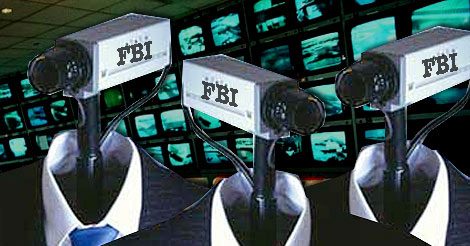
Whether the FBI is planting undercover agents in churches, synagogues, and mosques; issuing fake emergency letters to gain access to Americans’ phone records; using intimidation tactics to silence Americans who are critical of the government, or persuading impressionable individuals to plot acts of terror and then entrapping them, the overall impression of the nation’s secret police force is that of a well-dressed thug, flexing its muscles and doing the boss’ dirty work.
For example, this is the agency that used an undercover agent/informant to seek out and groom an impressionable young man, cultivating his friendship, gaining his sympathy, stoking his outrage over the injustices perpetrated by the U.S. government, then enlisting his help to blow up the Herald Square subway station. Despite the fact that Shahawar Matin Siraj ultimately refused to plant a bomb at the train station, he was arrested for conspiring to do so at the urging of his FBI informant and used to bolster the government’s track record in foiling terrorist plots. Of course, no mention was made of the part the government played in fabricating the plot, recruiting a would-be bomber, and setting him up to take the fall.
This is the government’s answer to precrime: first, foster activism by stoking feelings of outrage and injustice by way of secret agents and informants; second, recruit activists to carry out a plot (secretly concocted by the government) to challenge what they see as government corruption; and finally, arrest those activists for conspiring against the government before they can actually commit a crime.
It’s a diabolical plot with far-reaching consequences for every segment of the population, no matter what one’s political leanings.
As Rozina Ali writes for The New York Times Magazine, “The government’s approach to counterterrorism erodes constitutional protections for everyone, by blurring the lines between speech and action and by broadening the scope of who is classified as a threat.”
This is not an agency that appears to understand, let alone respect, the limits of the Constitution.
Just recently, it was revealed that the FBI has been secretly carrying out an entrapment scheme in which it used a front company, ANOM, to sell purportedly hack-proof phones to organized crime syndicates and then used those phones to spy on them as they planned illegal drug shipments, plotted robberies and put out contracts for killings using those boobytrapped phones.
All told, the FBI intercepted 27 million messages over the course of 18 months.
What this means is that the FBI was also illegally spying on individuals using those encrypted phones who may not have been involved in any criminal activity whatsoever.
Even reading a newspaper article is now enough to get you flagged for surveillance by the FBI. The agency served a subpoena on USA Today/Gannett to provide the internet addresses and mobile phone information for everyone who read a news story online on a particular day and time about the deadly shooting of FBI agents.
This is the danger of allowing the government to carry out widespread surveillance, sting, and entrapment operations using dubious tactics that sidestep the rule of law: “we the people” become suspects and potential criminals, while government agents, empowered to fight crime using all means at their disposal, become indistinguishable from the corrupt forces they seek to vanquish.
To go after terrorists, they become terrorists. To go after drug smugglers, they become drug smugglers. To go after thieves, they become thieves.
For instance, when the FBI raided a California business that was suspected of letting drug dealers anonymously stash guns, drugs, and cash in its private vaults, agents seized the contents of all the safety deposit boxes and filed forfeiture motions to keep the contents, which include millions of dollars worth of valuables owned by individuals not accused of any crime whatsoever.
It’s hard to say whether we’re dealing with a kleptocracy (a government ruled by thieves), a kakistocracy (a government-run by unprincipled career politicians, corporations, and thieves that panders to the worst vices in our nature and has little regard for the rights of American citizens), or if we’ve gone straight to an idiocracy.
This certainly isn’t a constitutional democracy, however.
Some days, it feels like the FBI is running its own crime syndicate complete with mob rule and mafia-style justice.
In addition to creating certain crimes in order to then “solve” them, the FBI also gives certain informants permission to break the law, “including everything from buying and selling illegal drugs to bribing government officials and plotting robberies,” in exchange for their cooperation on other fronts.
USA Today estimates that agents have authorized criminals to engage in as many as 15 crimes a day (5600 crimes a year). Some of these informants are getting paid astronomical sums: one particularly unsavory fellow, later arrested for attempting to run over a police officer, was actually paid $85,000 for his help laying the trap for an entrapment scheme.
In a stunning development reported by The Washington Post, a probe into misconduct by an FBI agent resulted in the release of at least a dozen convicted drug dealers from prison.
In addition to procedural misconduct, trespassing, enabling criminal activity, and damaging private property, the FBI’s laundry list of crimes against the American people includes surveillance, disinformation, blackmail, entrapment, intimidation tactics, and harassment.
For example, the Associated Press lodged a complaint with the Dept. of Justice after learning that FBI agents created a fake AP news story and emailed it, along with a clickable link, to a bomb threat suspect in order to implant tracking technology onto his computer and identify his location. Lambasting the agency, AP attorney Karen Kaiser railed, “The FBI may have intended this false story as a trap for only one person. However, the individual could easily have reposted this story to social networks, distributing to thousands of people, under our name, what was essentially a piece of government disinformation.”
Then again, to those familiar with COINTELPRO, an FBI program created to “disrupt, misdirect, discredit, and neutralize” groups and individuals the government considers politically objectionable, it should come as no surprise that the agency has mastered the art of government disinformation.
The FBI has been particularly criticized in the wake of the 9/11 terrorist attacks for targeting vulnerable individuals and not only luring them into fake terror plots but actually equipping them with the organization, money, weapons, and motivation to carry out the plots—entrapment—and then jailing them for their so-called terrorist plotting. This is what the FBI characterizes as “forward-leaning—preventative—prosecutions.”
Another fallout from 9/11, National Security Letters, one of the many illicit powers authorized by the USA Patriot Act, allows the FBI to secretly demand that banks, phone companies, and other businesses provide them with customer information and not disclose the demands. An internal audit of the agency found that the FBI practice of issuing tens of thousands of NSLs every year for sensitive information such as phone and financial records, often in non-emergency cases, is riddled with widespread violations.
The FBI’s surveillance capabilities, on a par with the National Security Agency, boast a nasty collection of spy tools ranging from Stingray devices that can track the location of cell phones to Triggerfish devices which allow agents to eavesdrop on phone calls.
In one case, the FBI actually managed to remotely reprogram a “suspect’s” wireless internet card so that it would send “real-time cell-site location data to Verizon, which forwarded the data to the FBI.”
The FBI has also repeatedly sought to expand its invasive hacking powers to allow agents to hack into any computer, anywhere in the world.
Indeed, for years now, the U.S. government has been creating what one intelligence insider referred to as a cyber-army capable of offensive attacks. As Reuters reported back in 2013:
Even as the U.S. government confronts rival powers over widespread Internet espionage, it has become the biggest buyer in a burgeoning gray market where hackers and security firms sell tools for breaking into computers. The strategy is spurring concern in the technology industry and intelligence community that Washington is in effect encouraging hacking and failing to disclose to software companies and customers the vulnerabilities exploited by the purchased hacks. That’s because U.S. intelligence and military agencies aren’t buying the tools primarily to fend off attacks. Rather, they are using the tools to infiltrate computer networks overseas, leaving behind spy programs and cyber-weapons that can disrupt data or damage systems.
As part of this cyberweapons programs, government agencies such as the NSA have been stockpiling all kinds of nasty malware, viruses, and hacking tools that can “steal financial account passwords, turn an iPhone into a listening device, or, in the case of Stuxnet, sabotage a nuclear facility.”
In fact, the NSA was responsible for the threat posed by the “WannaCry” or “Wanna Decryptor” malware worm which—as a result of hackers accessing the government’s arsenal—hijacked more than 57,000 computers and crippled health care, communications infrastructure, logistics, and government entities in more than 70 countries.
Mind you, the government was repeatedly warned about the dangers of using criminal tactics to wage its own cyberwars. It was warned about the consequences of blowback should its cyberweapons get into the wrong hands.
The government chose to ignore the warnings.
That’s exactly how the 9/11 attacks unfolded.
First, the government helped to create the menace that was al-Qaida, and then, when bin Laden had left the nation reeling in shock (despite countless warnings that fell on tone-deaf ears), it demanded—and was given—immense new powers in the form of the USA Patriot Act in order to fight the very danger it had created.
This has become the shadow government’s modus operandi regardless of which party controls the White House: the government creates a menace—knowing full well the ramifications such a danger might pose to the public—then without ever owning up to the part it played in unleashing that particular menace on an unsuspecting populace, it demands additional powers in order to protect “we the people” from the threat.
Yet the powers-that-be don’t really want us to feel safe.
They want us cowering and afraid and willing to relinquish every last one of our freedoms in exchange for their phantom promises of security.
As a result, it’s the American people who pay the price for the government’s insatiable greed and quest for power.
We’re the ones to suffer the blowback.
Blowback is a term originating from within the American Intelligence community, denoting the unintended consequences, unwanted side-effects, or suffered repercussions of a covert operation that fall back on those responsible for the aforementioned operations.
As historian Chalmers Johnson explains, “blowback is another way of saying that a nation reaps what it sows.”
Unfortunately, “we the people” are the ones who keep reaping what the government sows.
We’re the ones who suffer every time, directly and indirectly, from the blowback.
Suffice it to say that when and if a true history of the FBI is ever written, it will not only track the rise of the American police state but it will also chart the decline of freedom in America: how a nation that once abided by the rule of law and held the government accountable for its actions has steadily devolved into a police state where justice is one-sided, a corporate elite runs the show, representative government is a mockery, police are extensions of the military, surveillance is rampant, privacy is extinct, and the law is little more than a tool for the government to browbeat the people into compliance.
This is how tyranny rises and freedom falls.
We can persuade ourselves that life is still good, that America is still beautiful, and that “we the people” are still free. However, as science fiction writer Philip K. Dick warned, “Don’t believe what you see; it’s an enthralling—[and] destructive, evil snare. Under it is a totally different world, even placed differently along the linear axis.”
In other words, as I point out Battlefield America: The War on the American People, all is not as it seems.
The powers-that-be are not acting in our best interests.
“We the people” are not free.
The government is not our friend.
The post The FBI’s Mafia-Style Justice: To Fight Crime, the FBI Sponsors 15 Crimes a Day first appeared on SHTF Plan – When It Hits The Fan, Don’t Say We Didn’t Warn You.