Survival Gear is the most unused product until a natural disaster happens, then it’s the most desired products, but usually too late to help those that really need the help.

We sell around the World, and pride ourselves on offering a level of customer service that we would want to see ourselves if we were shopping online.
Our product ranges change regularly, so we hope that you come back to our sites to see some of the fantastic offers that we regularly have.

Get In Touch

Has America Become One Of The Most Evil Nations On The Entire Planet?

How will history remember us?  As Americans, we like to think that we are a light to the world and that other countries should be using us as a model for how to properly do things.  But the truth is that we have become unspeakably evil, and after reading this entire article I doubt that there will be anyone that will disagree with me.  And while it is certainly true that there are quite a few other nations that are also tremendously evil, none have fallen harder or faster then we have.  At one time America truly was “the hope of the world”, but now just about every form of wickedness that you can possibly imagine is exploding all around us, and very few of our national leaders seem to care.

The first example that I would like to discuss is something that came out in court on Thursday

The CEO of StemExpress essentially admitted in court Thursday that her biotech company supplies beating fetal hearts and intact fetal heads to medical researchers.

She also admitted at the preliminary hearing of David Daleiden and Sandra Merritt of the Center for Medical Progress that the baby’s head could be procured attached to the baby’s body or “could be torn away.”

This is Nazi-level evil, and it is happening all across the United States every single day.

Of course the mainstream media is completely avoiding this story, because they fully approve of what is happening and they don’t want to cause any sort of an uproar.  And most “conservative” media outlets are avoiding this story as well, because the truth is that they aren’t actually very “conservative” at all.

Companies such as StemExpress are making a tremendous amount of money selling baby body parts to medical researchers, and the “research” that is being conducted is incredibly sick and disgusting.

So where does StemExpress get their specimens?

Needless to say, they get them from abortion clinics, and the “procedures” that must be done in order to extract such specimens are acts of unspeakable brutality

“That is an especially gruesome admission, but it begs the question: how did they get these fully intact human children?” says Peter Breen of the Thomas More Society, which is representing Daleiden at the hearing.

“If you have a fetus with an intact head and an intact body, and intact extremities, that is something that would indicate that child was born alive, and then had their organs cut out of them, or that that child was the victim of an illegal partial-birth abortion,” he told LifeSiteNews.

I am not going to go on and on about the horrific details, and so if you want to learn more I would encourage you to read the LifeSite article about this case.

But I do want to make a point that nobody else is really making.

Today, every single one of our political leaders in Washington knows that baby parts are being harvested, sold to the highest bidder, and used in some of the sickest scientific experiments imaginable.

So who is trying to stop it?

Even after the changes that have recently happened, Planned Parenthood will still receive more than 500 million dollars from the federal government this year, and those conducting this sort of “scientific research” will receive more than 100 million dollars from the federal government this year.

We all know that the Democrats are totally on board with what is happening, and so none of them are going to do anything about this.

But the Republicans control the U.S. Senate and the White House.  Every single year, the U.S. Senate has been passing bills that contain this funding, and every single year those bills have been signed by President Trump.

That makes them personally responsible for what is happening.

That is why it is so dangerous to run for public office.  Because if you know of the evil that is happening and you don’t do anything to stop it, then you become responsible for it.

No, there aren’t any excuses.  They have willingly chosen to fund these activities year after year, and yet they seem to think that they won’t be held accountable.

But let me ask you a question.

If the government of a nation endorses and funds the exceedingly sick and evil things that I have discussed in this article, what does such a nation deserve?

It may not happen this week or this month, but in the end America will reap exactly what it has sown.

Of course it just isn’t our government that is engaged in acts of great evil.  In an article that he recently published, Paul Joseph Watson discussed the fact that some people out there are actually purposely getting pregnant just so they can have abortions…

In a Reddit post entitled ‘Question regarding abortion and breeding fetish’, one user reveals how she has “a female friend who has a really powerful fetish for breeding” and never used birth control.

“She is with a male partner currently who is just like her, into breeding and they have been practising their fetish for quite a few abortions,” the post reads.

In response to that post, another Reddit user chimed in and excitedly admitted that he and his girlfriend “have the same fetish”.  In fact, he actually admitted that his girlfriend prefers to wait until “between 20 and 24 weeks of gestation” to abort the child…

“I know this fetish. My girlfriend and me have the same fetish. My girlfriend enjoys her pregnancies and she enjoys the abortion. Her preferred date to abort is between 20 and 24 weeks of gestation. I enjoy making her pregnant. And I enjoy the time of her pregnancy. She has no menstrual period and she is sexually very active,” he writes.

“In the last ten years in our relationship we have done seven abortions and my girlfriend is pregnant again with a little girl,” he adds.

And all of this is perfectly legal in the United States, because that is the sort of society that we live in.

Paul Joseph Watson summed things up very well when he made the following statement on Twitter about this story: “We live in hell.”

If we stay on the path that we are currently on, there isn’t going to be a future for America, and at this point it doesn’t appear likely that our nation will reverse course any time soon.

Get Prepared NowAbout the author: Michael Snyder is a nationally-syndicated writer, media personality and political activist. He is the author of four books including Get Prepared Now, The Beginning Of The End and Living A Life That Really Matters. His articles are originally published on The Economic Collapse Blog, End Of The American Dream and The Most Important News. From there, his articles are republished on dozens of other prominent websites. If you would like to republish his articles, please feel free to do so. The more people that see this information the better, and we need to wake more people up while there is still time.

The Suicide Rate In The U.S. Has Hit The Highest Level In 50 Years, And There Is Concern That It Will Go Much Higher

Despite the fact that more money is being spent on suicide prevention efforts than ever before in our history, the suicide rate in the United States continues to rise dramatically.  As you will see below, one new study has discovered that our suicide rate actually increased by 41 percent between 1999 and 2016.  Even though we have the highest standard of living that any generation of Americans has ever enjoyed, we are an exceedingly unhappy nation and we are killing ourselves in unprecedented numbers.  This shouldn’t be happening, but unfortunately the forces that have taken over our culture have convinced multitudes of Americans that their lives are not worth living any longer.  In a culture where truth has been abandoned, it is easy for lies to run rampant, and it takes a great deal of deception to get someone to willingly choose to embrace suicide.  No matter what you are going through right now, there is always a way to turn things around, and we all have been given lives worth living.

Sadly, the suicide rate in this country has continued to escalate year after year.  According to the Los Angeles Times, 2017 is “the latest year for which reliable statistics are available”, and in that year the U.S. suicide rate hit a 50 year high…

Whether they are densely populated or deeply rural, few communities in the United States have escaped a shocking increase in suicides over the last two decades. From 1999 to 2016, suicide claimed the lives of 453,577 adults between the ages of 25 and 64 — enough to fill more than 1,000 jumbo jets.

Suicides reached a 50-year peak in 2017, the latest year for which reliable statistics are available.

These numbers come from a new study that was just released, and it claims that our suicide rate actually increased by 41 percent between 1999 and 2016…

The researchers evaluated national suicide data collected between 1999 and 2016, then created a county-by-county estimation of suicide rates among all adults between the ages of 25-64. In that time period, suicide rates rose an astonishing 41%; from a median of 15 suicides per 100,000 county residents in 1999 to 21.2 in the last three years of analysis.

And suicide is also a rapidly growing problem among our teens and young adults as well.

In fact, suicide is now the second leading cause of death for Americans from age 10 to age 24.

Everyone goes through very low times, and for many people it can seem like those low times will never end.  But when I was at my lowest points many years ago, I always had faith that better days were coming, even though at the time I couldn’t even imagine the absolutely amazing things that were ahead for me.  The point that I am trying to make is that we simply do not know what the future will hold.  No matter how dark things may seem to you right now, a miracle could literally be right around the corner.

This new study that just came out also discovered that suicide rates are significantly higher in rural parts of the country

It was noted that suicide rates were at their highest in less-populous counties and in areas where people have lower incomes and diminished access to resources. For example, between 2014 and 2016, there were 17.6 suicides per 100,000 people in large metropolitan counties, noticeably lower than the 22 suicides per 100,000 people recorded in rural counties.

The quality of life in rural areas is so much nicer in so many ways, but there is also a lot of isolation and poverty as well.  Humans are meant to be social creatures, and when there aren’t a lot of people around that can feed feelings of depression.  And if someone is deeply struggling with poverty, it can be difficult to see a way out in an area with few economic opportunities.  According to Brookings Institution research analyst Carol Graham, many Americans living in such areas “see no optimism for the future”

“These are the places that used to be thriving rural places, near enough to cities and manufacturing hubs,” she said. “They’re places that accord with a stereotypical picture of stable blue-collar existence — and a quite nice existence — for whites in the heartland.”

With the collapse of extractive industries such as coal mining, the departure of manufacturing jobs, and a strapped agricultural economy, “these communities just got flipped on their head,” Graham observed. “And the people in those places became unhinged. You’d have a sense of places where everything has left. And among those who stay, you see no optimism for the future.”

If this is happening now, while economic conditions are still relatively stable, what is going to happen to the suicide rate during the next major U.S. economic downturn?

There is never, ever, ever a good reason for someone to commit suicide, but unfortunately during the next recession we are likely to see the suicide rate rise substantially higher.

Another factor that is resulting in a higher rate of suicide in rural areas is a lack of health insurance

Last but certainly not least, a lack of health insurance coverage is significantly associated with rising suicide rates in rural US counties.

Specifically, the researchers observed that the more people in a county who didn’t have health insurance coverage, the higher that county’s suicide rate was.

When you are buried in medical bills that you know that you will never be able to pay, it can be exceedingly difficult to envision brighter days ahead.  Our healthcare system is deeply, deeply broken, and this is something that I wrote about on Tuesday.

It is such a tragedy when people choose to end their lives because of financial circumstances, because financial circumstances are always temporary.

No matter how bad things are in your life right now, there is always a way to turn them around.  The best days of your life could still be ahead for you, but you have got to be willing to believe that this is true.

Life is an absolutely incredible gift, and don’t let anyone ever convince you that you should end it.

It has been said that life is like a coin.  You can spend it any way that you want, but you can only spend it once.  I would encourage you to spend it loving others greatly, enjoying each day to the fullest, and doing something that truly matters.

About the author: Michael Snyder is a nationally-syndicated writer, media personality and political activist. He is the author of four books including Get Prepared Now, The Beginning Of The End and Living A Life That Really Matters. His articles are originally published on The Economic Collapse Blog, End Of The American Dream and The Most Important News. From there, his articles are republished on dozens of other prominent websites. If you would like to republish his articles, please feel free to do so. The more people that see this information the better, and we need to wake more people up while there is still time.

The post The Suicide Rate In The U.S. Has Hit The Highest Level In 50 Years, And There Is Concern That It Will Go Much Higher appeared first on The Economic Collapse.

9 ‘Survival Guns’ That Will Keep You Alive In Any Situation

9 'Survival Guns' That Will Keep You Alive In Any Situation

9 ‘Survival Guns’ That Will Keep You Alive In Any Situation | Image source: Diffen.com

There are countless stories of folks getting stranded in the wilderness unarmed and with few supplies. And in many cases, their lack of preparation cost them their lives. There also are many stories of people who get lost and end up surviving. What’s the difference between those who survive and those who don’t? The vast majority of people who survived were sportsmen who came prepared with knowledge and supplies.

One tool for survival which can make the difference between life and death is the firearm. Food, defense and signaling are all possible with good survival guns.

Here are my top picks for survival guns.


Pistols


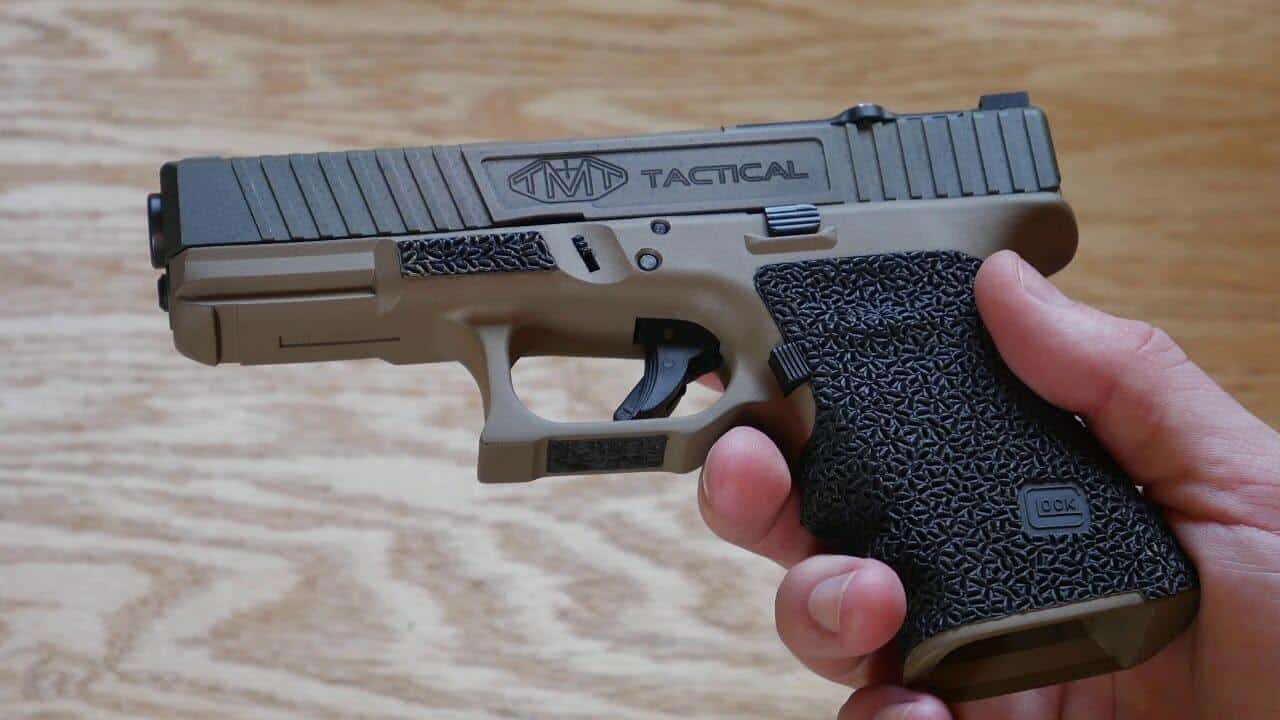
1. Glock 17/19

The Glock has arguably the finest reputation in the handgun world for reliability. I have carried a Glock 19 daily for a long time. It has never once failed me — not once. The 9mm is not a choice chambering for bear defense, but for hunting and defense against smaller critters it is plenty adequate. Magazine capacity is excellent with 15-round magazines standard for the Glock 19, and 17-round magazines for the Glock 17. Therefore, if you carry a couple extra magazines you should have plenty of ammunition to get you through. The Glock safe-action trigger may unnerve newer shooters, but it is completely safe if you practice gun safety.


2. Springfield XD Service model or XDM

Springfield has built an excellent polymer framed handgun in the XD model. The XD, like a Glock, has an excellent reputation for reliability. The XD features a grip safety similar to those found on 1911 model handguns and it has a Glock style trigger.

XDs are available in many different chamberings, including the big three for auto pistols: 9mm, .40 S&W and .45 ACP.  Magazine capacity differs slightly between the service model and the XDM, but is comparable to a Glock.


3. Smith and Wesson Model 29

Go ahead and make your day. If you are in bear country and in need of a handgun that will give you a fighting chance against a brown or grizzly bear, my go-to handgun is a Smith & Wesson 29 chambered in .44 Magnum. Recoil is stout and most new shooters will shy away from such firepower.


4. Taurus Judge

The huge advantage of the Taurus Judge is the ability to shoot both .45 Long colt and .410 shot shells, including slugs, 00 Buck and bird shot. This gives you a wide variety of munitions and you will only be limited by what you pack with you.


5. .22 Pistol

Survival Guns

Survival Guns

I also want to say that having a .22 pistol in your pack is a great tool for harvesting small game for sustenance. Semi-auto or revolver — anything that is accurate to 20 yards and allows you to hit baseball-sized targets with regular consistency is a good pick.


Shotguns


6. Remington 870 or Mossberg 500

This is kind of a no-brainer, and survival shotguns have been argued to death in article after article. Either one of these shotguns will do the trick. Both are reliable and I wouldn’t hesitate to use either. In bear country, slugs and 00 Buck is the ticket, and you can keep shot shells in your pocket for small game. A slug from a .12 gauge will handle any big game in the world under 75 yards. It has put down elephants, hippos, water buffalo, polar bear and Kodiak bear. You will be limited to range, but not on firepower.

Never Worry About A Power Outage Again With Portable Solar Energy.


Rifles

If you are out elk hunting and you get lost, you’ll be stuck with your elk rifle. A .30-06, .270 or just about any big game rifle makes a fine survival firearm as long as it is reliable, accurate and has some extra ammunition. I’m not going to list hunting rifles here, as the list would be longer than my arm. But my top picks for hunting rifles are both the Remington 700 and the Savage 11. Both are outstanding rifles. They would do well in a survival situation and are very simple in their operation and upkeep.


7. Marlin 1895G

The 1895 guide gun fires a .45-70 projectile. The .45-70 is a very old and very large hunk of lead that has been in use since the 1870s. With the right loads, it will put a grizzly in its place, put down a bison and bring home the bacon with any large game in North America. You’ll be limited to about 150 yards at most.


8. Ruger 10-22

The perfect lightweight carbine for small game is a great choice if you are not in grizzly country.  The rifle is chambered in .22 long rifle or .22 WMR. This small game rifle is utterly reliable. It uses a 10 shot magazine. And you can get it for about $230.


9. AK-47

The US semi-auto AK variants on the market are fine choices for survival. I would rather have an AK than an AR in a survival situation, as there are fewer moving parts. The 7.62x39mm round is capable of taking up to deer-sized game. It is perfect for a truck gun or in a disaster scenario. The rifle feeds from a 30-round, detachable magazine and has plenty of firepower.

What survival guns would you add to this list? Share your tips in the section below:

The post 9 ‘Survival Guns’ That Will Keep You Alive In Any Situation appeared first on Off The Grid News.

What Is The Best Self Defense Rifle?

survival rifle

The best self defense rifle should be a weapon that you can easily carry in your bug out bag and use with limited defensive capabilities.

Let’s talk about these so-called self defense rifles. When I say self defense rifle, I am not talking about your main battle rifle. Your AR-15 is a good all-around rifle, but it’s best if you use it for self-defense. A self defense rifle in this sense is one that you can easily carry in your bug out bag and use for general survival measures with limited defensive capabilities.

These rifles are almost exclusively.22 long rifles, and while this limits defensive capability, it does still have considerable capability. The .22 long rifle is an excellent survival caliber for a lot of reasons. First off, there’s the sheer amount of ammunition you can carry. You can throw a 500-round brick in your backpack without a huge difference in weight, and it hardly takes up any room. The .22  rifle is often very cheap and common, except for the occasional ammo scare that dries up the supply. Because the rounds are cheap and easy to find, a person can get a lot of practice with their .22 rifle. These rifles are not only handy in a SHTF situation, but in any outdoor hunting and hiking situation.

These rifles will not replace your main battle rifle, but they will serve to complement your primary weapon. These weapons are designed to become very compact and disappear into a pack, making them very handy and very convenient to carry.

So, we will define these self defense rifles for the sake of this article as small, concealable, shoulder-fired, small caliber rifles. These rifles will be general-purpose rifles or even more like “jack of all trades” rifles.

Henry AR-7

We will start with an original rifle—a very unique, very odd looking little rifle. The Henry AR-7 was designed for Air Force pilots all the way back in 1959. Since then, developers have slightly upgraded the weapon throughout the years and it has become a camper’s best friend.

The AR-7 is a semi-automatic rifle that fires from an eight-round box magazine and comes with two magazines. The rifle is a takedown rifle and conveniently breaks down into three components. The rifle breaks down into the barrel, receiver, and buttstock. In addition, the barrel and receiver both fit inside the hollow buttstock. The buttstock is water resistant and has the ability to float (should it find its way into water), and if it takes a fall, it is impact resistant. The rifle only weighs three and a half pounds and is less than seventeen inches long when packed into the buttstock.

Putting the weapon together is incredibly easy and quick. The receiver attaches to the stock and the barrel screws into the receiver. Construction and take down is completely toolless. Both the barrel and receiver are coated with ABS plastic and Teflon to completely and absolutely resist corrosion.  Handling the weapon is odd at first, as you lack a forward grip and are forced to either grip the thin barrel or the front of the receiver. However, the light recoiling round makes it easy to control and shoot accurately. One of the key advantages I see for this self defense rifle is the price. In fact, for less than $300, this weapon can be yours.

M6 Scout

Now, this is another odd rifle that has been around for a few decades, but unlike the AR-7, the M6 Scout never made a huge splash in the firearms industry. This is probably due to the weapon’s odd appearance and limited capabilities. The M6 Scout is made by Springfield and has been around since the 1970s. Recently, the rifle has had a bit of a resurgence with the increase in people becoming more prepared for less-than-optimistic situations.

Pocket sized solar generator provides emergency power in crisis situations

The M6 Scout has the distinct advantage of being chambered in both .22 long rifle and .410 shotgun rounds. We’ve gone over the .22 long rifle, but the .410 is its own handy cartridge. Like any shotgun shell, there is a variety of different loads that the .410 can hold. The main three are birdshot, buckshot, and slugs. The .410 is capable of taking medium and small game at close range.

The .410 birdshot round is a proven snake destroyer, and the slugs have their place in self-defense and hunting. The M6 has one less than desirable feature: it’s an over-under double-barrel weapon. The top barrel is .22 and the bottom barrel is .410. The advantage of a .410 barrel is that gauge adapters will allow you to fire rounds like 9mm and 38/357 out of your shotgun barrel.

For compactness, the rifle breaks in half at the breech. Consequently, you can store the firearm in a very short package. The rifle is very lightweight and very Spartan. There is almost no furniture on the rifle, and this keeps the weapon lightweight and compact. The stock does open and it allows you to store ammo inside.

This is a very unique firearm that’s quite an interesting weapon to shoot. The ability to fire precision rifle shots or a wide variety of shot is something any backpacker or prepper can appreciate. This weapon may not match the firepower of the AR-7, but it does beat it in versatility.

Ruger 10/22 Takedown

The Ruger 10/22 needs no introduction. This self defense rifle has been the poster gun for all .22 rifles for the last 50 years. The Ruger 10/22 is an incredibly versatile rifle with more accessories than any rifle I’ve ever seen. This is America’s .22 rifle. The newest model combines the well-known Ruger platform with the ability for you to break it down into two pieces.

This rifle is probably the least compact of the three, but it offers the most comfort and reliability. The Ruger is an incredibly reliable weapon, and the amount of accessories available is staggering. The list includes high-capacity magazines, scope mounts, sights, and the ability to switch out the integral parts with easy-to-find match-grade pieces. Take this little .22 and load it with a BX 25 magazine and a red dot sight, and you’re ready to rock and roll all day long.

The weapon is probably easier to strap down than it is to pack. Even so, it’s still plenty easy to transport. Ruger even offers a backpack with Molle straps and a very prominent Ruger logo (not very discreet) that they’ve designed perfectly for carrying the weapon. You can never go wrong with a Ruger 10/22.

Bigger Bore Options

If you are interested in a larger caliber takedown rifle, I have recently come across two that are very interesting. The first is an AR-style carbine chambered in a variety or in pistol rounds. The next rifle is a full-sized Browning hunting rifle. These weapons are larger and heavier but considerably better for defense and hunting.

The Aero Self  Defense Rifle

The Aero survival rifle is designed to resemble the look and feel of an AR, but it is chambered in a pistol caliber. The little carbine accepts Glock magazines, so you know that plenty of high-capacity options will be available. The weapon is chambered in 9mm, .40 caliber, and .45 ACP. Moreover, the ammo can be interchangeable with your sidearm.

The rifle comes apart without tools, and it breaks into less than half its normal length. It drops easily into a backpack, giving you a close-to-medium-range hunting and self-defense weapon. This self defense rifle features some rail space for optics or folding iron sights as well as a flashlight or foregrip. The stock is an M4-style six-position adjustable.

Browning Lever-Action Takedown Rifle

Browning is a very well-known firearms maker of high-quality rifles, handguns, shotguns, safes, and just about everything else in the firearms world. Their lever-action takedown rifle is no different. This rifle is an excellent choice as a hunting rifle, and it even has some excellent defensive capabilities. For those poor folks who live in a less-than-free state like California or New York, this rifle is completely legal in either—for the time being anyway.

The weapon feeds from a detachable box magazine and can chamber full-powered rifle rounds. The weapon can be chambered in fourteen different calibers from 22-250 to .375. These options give you long-range and hard-hitting bullets. The lever action guarantees reliable and quick feeding.

The weapon weighs around seven pounds and is bulky compared to any other survival rifle that we’ve mentioned. Once the Browning is broken down, it still fits in a hiking pack though, and it is relatively easy to strap to the side or top. This rifle is an awesome choice when you need a full-sized and full-powered rifle to take game, especially at longer ranges. Browning has a winner with this rifle. I only wish it was easier to find.

You may also enjoy reading an additional Off The Grid News article: 10 Practice Drills Guaranteed To Make You A Highly Skilled Concealed Carrier

Do you have any other suggestions for survival rifles suitable for self-defense? Let us know in the comments below.


The post What Is The Best Self Defense Rifle? appeared first on Off The Grid News.

Survival Gear Review: The BioLite Solar Apartment Kit

I’m not ashamed to admit it – I’ve been horrifically slow to adapt to solar power for my home survival preps. There, I said it. Maybe “slow” is an inappropriate term – “reserved” might be better – but the point of fact is that while I use and rightfully adore other solar-powered illumination flashlights and lanterns, when it comes to ramping up the scale to provide basic solar power to my home for illumination and charging capabilities, I was – pun intended – shamefully in the dark.

By Drew, contributing author to SHTFblog and Survival Cache

I will fully admit that my solar ignorance was due to my reluctance to dive into the maelstrom of information that falls under the general heading “Solar Power”. Start looking into home solar integration, and your mind will unravel and your eyes will slam open upon realizing the sheer quantity of possibilities for setting yourself up with some light powered by stored light. 

Fortunately, an innovative company called BioLite sensed a great disturbance in The Force caused by millions of voices crying out in unilluminated anguish, and has chosen to silence them with an outstanding solar start-up kit that checks all the boxes for a turn-key introductory solar setup. September has been decreed “National Preparedness Month” by FEMA, and in response, for the entire month of September 2019, BioLite is offering a series of full-blown solar survival kits to help bring easy solar power and illumination to the masses.

About BioLite and Their Bundles

BioLite has been at the forefront of the natural power and preparedness nexus for quite some time. You’ve probably heard of or seen the double-take-inducing thermoelectric CampStove that utilizes heat from burning locally-sourced fuel (read: twigs and sticks) to generate electricity and charge your electronic devices. Oh, yes, it’ll also cook your food and boil your water too. 

Expanding its footprint by dedicating the company’s ideals to helping eliminating carbon footprints, New York based BioLite has been cleverly expanding its naturally-powered tool line since 2009  to include a vast variety of well-engineered photon-collecting apparatus that ultimately will make your quality of life tenfold better after a grid-down event. 

To that end and in the spirit of being prepared, Biolite has introduced three pre-engineered “bundles” that take the guesswork out of introducing solar power to your life. Ranging from the $129 “Solo Prep Kit” for 1-2 people to the $309 “Apartment Prep Kit” for 2-4 to the full-on expansive $459 “Family Prep Kit”, these pre-made kits have been well thought out to help your individual situation improve when the chips are down and the lights are off. 

The BioLite Apartment Prep Kit Bundle

BioLite was kind enough to send me an “Apartment Prep Kit” to try out. This particular Prep Kit contains the following:

  • One SolarHome 620 “microgrid” central charge controller hub, incorporating a radio with speaker, MP3 player that runs off a MicroSD slot, two USB charging ports, a 6 Watt solar panel, three overhead LED lights and one integrated light and display
  • One AC adaptor for the SolarHome 620 so you can top off the battery when outlet power is available
  • Two BioLite headlamps dubbed, appropriately, the HeadLamp 330
  • Two small stuff sacks for the HeadLamp 330s to diffuse the focused light of the headlamps
  • Two Solar-powered SunLight lanterns
  • One LifeStraw Classic water filter, proving that hydration is possibly just as important as a charged iPhone and Led Zeppelin crooning when the power is down.

The other BioLite bundles are variations on the theme, with the “Solo” kit subsituting the SolarHome 620 Kit and its accessories for a Charge20 power bank, and promoting the on-the-go bug-out bag mentality with one each of the HeadLamp 330s, stuff sack, and SunLight. The “Family” Kit goes past the Apartment Bundle with four each of the HeadLamp 330s and SunLights, while keeping the SolarHome 620 on deck as well as upgrading the smaller LifeStraw Classic to the superb LifeStraw Family gravity water filter.

Let’s dig in to the provided Apartment Bundle, shall we?

Headlamp 330

Starting with the HeadLamp 330, we find that BioLite took the battery-bulb-band concept and streamlined it with a design that has some experience built right in. 

While I’m not a die-hard user of head lamps, I do know that my qualms with them are relatively constant: if worn on a bare forehead, my head sweats and the band gets funky while it abrades my skin. The battery packs are often placed in terrible locations and are of offensive size, meaning that a speedy turn of the head often has the battery pack continuing its revolving orbit around my noggin even after my head stops. Also, the headlamps I’ve used have too many options and not enough power, providing me with a practically useless strobe but not enough illumination to move through the nighttime woods at anything more than a brisk walk. The HeadLamp 330 addresses all these issues.

Also Read: How to Build a Solar Energy Generator for Backup Power

BioLite boasts the “3D SlimFit” construction, which, for ignoramuses such as myself, means that the headlamp is low-profile (9mm, or just over a third of an inch thick) and unobtrusive. The business end of the HeadLamp 330 itself is moulded right into the front half of the breathable, moisture-wicking fabric, so the lamp doesn’t require a bazillion adjustments to get it fitting properly, and it won’t bounce around on your melon while you perform your nighttime interpretive dances. The battery case has been located at the back of the strap in an effort to balance the whole works. The battery case is sealed except for its Micro-USB sealed charging port, and since it is unencumbered with the need to carry a heavy payload of alkaline batteries, is delightfully lightweight. As a matter of fact, the entire HeadLamp 330 only weighs two and a half ounces, or about the same as three alkaline AA batteries.

Going back to the lamp itself, the output is rated at 330 lumens at full-tilt. There are options for how that output works for you, including a spotlight, localized floodlight, and yes, that strobe function. A red output for preserving night vision hunting is available via button-clicking as well. The internal 900 mAh Lithium-Ion battery will keep the light going for you on high-power mode for about 3 hours in my testing; BioLite says that if you can use constraint and keep the output level to the lower levels – meaning the 100-lumen floodlight – you should be able to squeeze 40 hours out of a single charge. The HeadLamp 300 also has a memory, so whatever setting you were using when you turned it off will be the setting it resumes duty at when fired back up.

The LEDs themselves are housed in a simple tilting panel on the front of the HeadLamp 330. This panel can be tilted down out of the lamp band housing to provide the light where you need it the most. However, the panel and its extremely close proximity to the single power button is my only real complaint about the HeadLamp 330 – adjusting the light panel angle means that you’ll likely bump the power button – a situation made worse if you’re using gloves. Other than that, the HeadLamp 330 is brilliantly executed and a superb tool for providing hands- and hassle-free personal illumination.

Light Diffusing StuffSack

If you get a BioLite Headlamp 330 – whether on its own or part of this Apartment Kit – you need to procure a BioLite StuffSack as well. This ingenious little white fabric-and-drawstring joy is a simple solution to a larger problem: one light, multiple people. Its simplicity belies its elegance: simply turn your HeadLamp 330 on, drop it in the Light-Diffusing StuffSack, cinch the drawstrings, and hang. Instant lantern for area lighting! On a recent camping trip with my sons, the HeadLamp/StuffSack combo rendered outstanding service, spilling plenty of nicely diffused light inside our tent while we played several cutthroat games of Go-Fish and cribbage. As a bonus, the StuffSack is a great carrying case for your HeadLamp and its included USB cable. The Light-Diffusing StuffSack is a must-have, and BioLite absolutely did the consumer right by including them in the kit.

SunLight Portable Solar Light

The SunLight Portable Solar Light is a stellar example of BioLite’s legacy: high-quality, no-fuss, outstandingly effective tools for you and me. The SunLight doesn’t boast a lot of crazy options or doo-dads; it has one job that it knows how to do, and it does it well.

Measuring 3 ⅛” by 3 ⅛” x ⅞”, the easily-packed, 100-lumen SunLight is simple in execution and function. One side has a white plastic lens face, the flip side is where the full-size solar panel lives. There is a stunningly innocuous metal wire kickstand that one can use to stand the SunLight up in the best location for doing its job, or swivel the stand to the other side and prop the solar panel up to catch the best angle to catch sunlight and charge the SunLight. A brilliantly simple feature of the SunLight is the small hole drilled in one corner of the plastic housing; though some may infer that this hole is for a lanyard, it actually has another purpose as a sundial of sorts: Place the SunLight in the sunlight, and swivel its position around until you can see a small white dot on the inside of the nousing notch; this shows you that the SunLight is most efficiently positioned to catch solar energy and charge most effectively. 

The only features encumbering the smooth outside housing of the SunLight (aside from the stand) are the USB charging port and the single power button. The sealed USB port can be used to top off the SunLight’s sealed batteries when power is available. The power button obviously turns the lantern on and off, but it is also used via a morse-esque method of taps and holds to cycle between brightness levels and colors. First, though – you’ll need to get the SunLight out of its as-shipped “demo” mode lest ye be driven mad trying to get the device to work properly. To remove the cursed yet flamboyant retail demo mode, simply press and hold the power button for 10 seconds and the demo demons will be exorcised, enabling the standard functions of the SunLight.

The standard functions of the SunLight center around its sole purpose of providing illumination to you, the end user. A quick review of BioLite’s fantastic YouTube videos describing the functions of the SunLight are a Godsend, and I highly recommend watching them to show how the power levels work and the crowd-pleasing (for a few minutes anyway) “Party” mode can be enabled. 

Related: Survival Gear Review: The PSL Personal Solar Light

In my testing, with the illumination output at about the half-way point (or the best I could figure as being the halfway point), the SunLight provided all-evening nightlight duty for camping with my 5-year old. After a full 8 hours of glowing, the SunLight was still pumping out the lumens – though when I flipped it over and plunked it in the sunlight to charge, the light flashed red to describe the battery level as being low and in need of charging. 

The SunLight is an outstanding alternative to open-flame candles in your domicile or while camping, providing more than enough output to light up a small room for reading and working once the lights are out. When the sun peeps back over the horizon, simply align the solar panel with Sol and charge it back up for the next evening.

LifeStraw Classic

The LifeStraw Classic should be familiar to most readers of this page, but a quick touch on the details tells the story why the LifeStraw Classic water filter is the archetypical portable water filtration system of our day. A scant 2 ounces in weight and is 9 inches long by 1 inch in diameter. Its “straw” design means you can (if your nose is brave enough) stick the LifeStraw directly into a stagnant bog and (with effort) suck out clean, filtered water that won’t have you running for the bathroom a couple hours later. It does take some power to initially suck the water through the internal filtration system but once it’s flowing, the LifeStraw works like a charm and even my 5-year-old uses one with relative ease. While some in a survival situation may balk at using the same LifeStraw (only one is provided in the apartment bundle), its ability to filter about 1,000 gallons of water means that a 4-person crew can run one straw for over a half a year if everyone drinks a gallon a day. 

Also Read: Gear Review: Epic The Answer Filter System

  The LifeStraw Classic is easy to clean, takes up very little room, is effective, and makes an incredible amount of sense to include in this bundle. If you want each person in your crew to have their own filter, individual LifeStraw Classics can be purchased pretty much anywhere for around twenty bucks each.

SolarHome 620 and Charger

The last (but far from least) component of the BioLite Apartment Kit: The SolarHome 620. A very cool, relatively inexpensive rig that allows you to bring solar power, light, charging, and tunes into your home, camp, RV, etc., without expending a ton of dollars. As a matter of fact, BioLite has shipped tens of thousands of SolarHome 620 kits to Africa, where homes in undeveloped areas can have light and radio. The simplicity of the 620 along with the carefully picked list of features makes this setup a winner.

At the heart of this mini-grid system is the central charge controller. The teal-colored high-impact plastic box houses the brains of the operation, on which you can monitor charging rate, battery level, and sun strength on the solar panel via a screen that looks like it was lifted directly from my old legendarily durable Nokia 3360 cellphone. Also located on the control box are two USB ports for charging cords (a short, multi-ended cable is included, but it’s decidedly short on Apple-based plugs – so iPhone people need to provide their own cable here), a MicroSD card slot, two ports on the back for plugging in the lights, an input plug for the provided 6 watt solar panel, a DIN port for plugging in an expansion battery (not included), a hanging bracket, and a bafflingly-sized compartment which fits no cellphone I was able to scrounge up and try (maybe it was designed for that Nokia 3360 they took the screen from?). Also, on the face of the control box is a fixed light, the aforementioned screen, and the push-button controls for the radio, clock, and MP3 player. Regarding the controls: a bit of head-scratching, trial-and-error, and patience is required, since all you pretty much have is left and right buttons to get where you need to go when working with tunes stored on a SD card.

Also included with the SolarHome 620 are three hanging lights with cords that stretch probably 18-20 feet (I didn’t measure). Since there are only two light plug ports in the back of the control box, you’ll need to daisy-chain the lights together, much akin to stringing together Christmas tree lights. It’s all weatherproof and easy to figure out. The three lights each have a maximum output rating of 100 lumens, and each light has its own push-button controller to regulate the power output: high, low, off. One of these lights also boasts a motion detector that is enabled via a fourth click on its wired controller. The motion detector is quite sensitive, and turns on by default for 30 seconds when it senses movement in front of its sensor.

The included 6-watt solar panel is large-ish – about 11 ½” x 7 ½”, and is picture framed with sturdy aluminum framing. The wire to the panel is a bit longer than the light wires, so you hopefully have a bit of flexibility between the best location for the solar panel and the best location for the control box to be mounted. The solar panel is waterproof, but definitely needs to be positioned properly to avoid hail, falling acorns, and other gravity-driven paraphernalia falling from the sky.

Once you remove the whole getup from its box and take stock of the situation, the whole system is quite simple. Since the solar panel is the lynch pin to the whole operation, finding an appropriate location or locations for the panel should be tantamount. Generally speaking, here in the Northern hemisphere, keeping the panel facing South should give you the maximum amount of sunlight exposure throughout the day. However, if you have location flexibility, being able to adjust the position of the panel as the sun moves across the sky will give you the best results. Obviously, the brighter the sunlight, the faster/stronger the charge – and fortunately, BioLite has provided a meter in the display that tells you the strength of the incoming solar rays.

The lights are easily strung once you know where you want to place them, and BioLite has thoughtfully provided wire staples to securely run wires if your location has the luxury of permanence. A modicum of thought will need to be provided due to the fact that you have three lights and only two plugs. The lights themselves have small plastic hooks that can be slid up and down the wires as well, so you can fiddle around with the light angle presented.

I took my son on a separate camping trip in my 4Runner, and once we found suitable ground, proceeded to set up my makeshift awning. Once properly secured, I pondered the setup and started looking at a good way to promote the strengths of the lighting setup while maintaining quick takedown and portability – as one might do on a bug-out or mobile camping trip. I ended up hanging the control box on my roof-rack rod holder tube, where it hung steadily off a small bungee cord. I had charged the unit up before I left with the provided AC wall charger, and immediately turned on a local oldies station and let Buddy Holly and Neil Diamond caress my ears as Lil’ Dude and I set up camp and figured out the best lighting setup. 

We eventually found that the control unit light and the the two wired lights – one of them the motion-sensing unit – provided all the light we needed in our little area of backwoods Maine, so that’s all we ended up running. The wires ran over the top of my awning with a small strip of duct tape holding each of the wires in place, and I let the switches dangle free in unobtrusive areas. The radio kept our spirits high and the lights kept the moths and bugs distracted, leading to a lovely overnight camping experience. I had kept the motion-sensing light pointed towards the entrance to our tent for security, and it was a great help indeed when I got up in the middle of the night to take a leak – I didn’t need to grope around for a flashlight – I merely stumbled (okay, rolled) out of the tent, waved my arms a bit, and the light popped right on.

In the morning, I plugged my phone in and charged it while we made coffee and breakfast. The charging setup isn’t exactly a barn-burner: I registered a 9% battery increase over a 15 minute span, meaning probably a 30-40% battery charge per hour, depending on your phone’s battery.

Disassembly was a bit slow, since you have to account and neatly secure all the wires and accoutrements in the storage box; the jigsaw puzzle takes a few minutes to solve. Supposedly, the SolarHome 620 setup can be stored in a shoebox; I figure BioLite must have access to one of Shaq’s shoeboxes or have the most OCD dude in the world working for them, because storing the SolarHome 620 is a bit of an exercise in patience and rearranging. It’s perfectly feasible for lighting on the go, but just know going out the door that you’ll be swearing at the bird’s nest of wires you may be fighting on occasion.

Wrapping It Up

BioLite really did their homework when putting the pieces of this kit together. The BioLite Apartment Bundle is, as stated before, a pre-engineered, ready-to-go, turn-key solution to someone who wants to get their feet wet in the solar-driven world, or wants to be able to buy a ready-made kit and say to themselves, “Cool, solar is checked off and I have illumination and charging capabilities ready to go.” The sum of the Apartment Kit parts is indeed a package of thought-out products combined to provide a small dwelling (stationary or mobile) with off-the-grid light, power, and tunes. It’s an outstanding deal and a stellar performer, worthy of your attention if you’re planning on the end of the world or merely for your next camping trip in the middle of nowhere.


9 Clever Ways On How To Pick A Lock For Survival And Emergencies

How To Pick A Lock

Locks – an essential tool for protecting your most prized possessions.

Why? Because since the dawn of human history, there are people who will steal what’s not theirs if given the chance to do so.

They are called thieves and they are despicable.

And one of the only ways to combat a thief is to use tools to deter their behavior.

Tools such as locks, safes, diversion safes, alarm systems, and in extreme cases booby traps.

But while locks are better than nothing, they’re not foolproof! With the right skillset, most locks CAN be picked.

Now, picking locks does sound nefarious – a skill only a thief would want to learn, right? Not true.

Lockpicking is a skill I believe everyone should master, especially if your into survival and preparedness.

So, today, let’s cover all angles of “how to pick a lock”. From the moral implications to the actual step-by-step “how-to” instructions:

As A Way To Introduce You To Skilled Survival, We’re Giving Away Our Ultimate Survival Gear Checklist. Click Here To Get Your FREE Copy Of It.

How To Pick A Door Lock

5 REASONS WHY YOU SHOULD LEARN HOW TO PICK A LOCK


Any thief with the right skill set and motivation CAN bypass most standard locks.

And their reasons for picking a lock is simple – they covet, it’s not rocket science. But today, dear reader, I’m going to assume YOU are NOT a thief.

Well then, why should anyone who’s not interested in the art of stolen goods want to learn how to pick a lock?

Here are a few examples of how this skillset can be used for good in the world – instead of evil.

1 – Lost The Key

Standard padlocks require a key. And what’s one of the most common items to lose? Your keys…

So, what are your options if you lose your padlock key? Well – you can either invest in a large (pricy) set of bolt cutters, call an expensive locksmith, or learn how to pick a lock!

Picking a padlock can be the most cost-effective way to become reacquainted with your valuables…

2 – Escape From Captivity

Or here’s an even better reason – escape. Let’s say you were taken as a hostage and locked inside a secure room…

If you have the skills and some basic tools, you may be able to escape. And while this scenario is unlikely, I believe it’s one of the most resilient skills anyone can learn and master.

You can quickly turn yourself from helpless victim to a hero with this one skill.

Plus, mastering the art of escape is one of the most valuable urban survival skills.

3 – Feed Your Family In A Dire Emergency

Let’s say your local area has become lawless. It’s a disaster – a free-for-all zone. Maybe it’s a local emergency (like the aftermath of a devastating hurricane) or a global economic collapse that’s gotten out of hand. OR perhaps it’s the aftermath of a nuclear attack.

The exact reason doesn’t matter, but if you find yourself starving and society is no longer functioning, you need a way to get some calories.

If you can positively identify a home that’s abandoned, then it might be an acceptable moral decision to break-in to survive.

Raiding a pantry can become a moral decision in a dire circumstance…

4 – Breaking Into A Building To Avoid Severe Weather

This scenario is a lot like the previous one, but in this case, it’s a storm, tornado, or blizzard that’s creating the urgency.

When it comes to survival, I’d rather break into a warehouse, or building to avoid flying debris or hypothermia than be a helpless victim and do nothing.

5 – Start A Small Business Venture

Finally, if you become a proficient locksmith, you can turn those skills into a profitable side hustle. Being a locksmith is a nice way to earn a living if you can get enough regular referrals.

Why? Because people don’t call you unless it’s serious.

They’re willing to pay well for emergency services rendered. You have what’s called leverage and urgency – two powerful forces in business transactions.

Which is another way to say, it has good profit margins!

These are just a few examples where your ability to open a lock without a key makes you a hero, instead of a villain.

As A Way To Introduce You To Skilled Survival, We’re Giving Away Our #78 Item Complete Prepper Checklist. Click Here To Get Your FREE Copy Of It.

Dead Bolt Locks 2

3 TYPES OF LOCKS YOU CAN PICK


Lock picking is an art as old as locks themselves.

And over the centuries, locks have become even more sophisticated. But so have the methods of breaking into them.

Sure, anyone with a paperclip can defeat the simple privacy pop lock on a bathroom door. But a modern deadbolt can prove a formidable challenge for even the best locksmith in town.

With such a variety of lock types on the market, it’s worth taking a look at several of them.

But there are a ton of lock variations out there. The good news is, while, there are many different locks, some are much more common and popular than others.

So, here are the most popular locks, and the ones worth spending time learning how to pick.

1 – Pin Tumbler Locks

The pin tumbler lock is the most common lock available today. For example, you’ll find them in key-based padlocks, standard exterior doorknob locks, AND Deadbolts.

So, if you’re interested in gaining access to a range of sheds, warehouses, and most homes, this is the type of lock you’re most interested in picking.

2 – Combination Locks

Combination locks are known for their use with gym lockers. They’re often built into school lockers. You’ll also find them on old-style safes.

So, if you lose the secret combination of numbers, you’ll want to learn how to “pick” the combination.

3 – Tubular Lock

You’ll find this unique type of lock on smaller containers such as file cabinets or RV compartments.

They are unique in how they work and take a special set of tools to pick them. But basically they use the same concept as a pin and tumbler lock but orient the pins in a circular pattern.

how to pick a mast lock9 CLEVER WAYS TO BYPASS A LOCK (including 3 ways on “how to pick a lock“)


All locks have the same goal. To secure stuff, be it behind a door, within a container, or the item itself (such as a bug-out bike or survival trailer).

And each lock application and type of lock requires different “picking methods” to bypass. So, let’s go over the most common ways to bypass locks.

1 – Using a Credit Card

The first method of lock picking uses a thin plastic card. This method is best suited to simple spring latch doors. These types of doors are commonly found on supply closets and offices.

Most people think that a credit card is the best option. But actually, a thinner, more flexible plastic card is easier to use.

Gift cards, hotel key cards, and store loyalty cards are great choices and easy to find.

There are three things to check before you try using a card to open a lock:

  1. NO DEADBOLT: If the door has a deadbolt, you won’t be able to open it with a credit card.
  2. NO HINGES: You need to be on the proper side of the door for it to work. If you can see the hinges, you’re not on the right side for a credit card to work.
  3. NO OBSTRUCTIONS: You need to be able to slip the credit card in along the edge of the door. So anything that obstructs your access to the latch area will be a problem.

Once you have the right card and verified this method is possible, it’s a matter of three simple steps.

First, slip the card into the space between the door and the latch plate. It’s easiest to slip a corner in first, then straighten the card until the entire edge is inserted into the gap.

Next, bend the card towards the doorknob. This will force the card to bend slightly around the corner and toward the latch.

Finally, press the card further into the gap and slowly wiggle it back and forth.

This motion will walk the edge of the card back towards the latch and up the slanted face of the latch itself.

This forces the latch inwards and pops the door free!

2 – How to Pick A Door Lock With A Bobby Pin / Paperclip / Screwdriver

Many home interior locks are designed to provide privacy, not security.

This includes most bedroom and bathroom doors. So knowing how to open them is a must for most parents with small children.

These doors have a small hole in the center of the doorknob, which gives you access to the unlock mechanism.

While they usually come with a wire “key” those are almost always missing when you need one.

Instead, take a tiny screwdriver or a straightened paperclip and insert it into the hole.

At the back of the hole will be either a pressure switch or a small, straight-blade screwdriver slot. The pressure switch is more common and can be opened by merely pressing on the switch until it pops.

The screwdriver-style locks are less common. But they only require a slight twist to open the latch.

Picking A Tumbler Lock

With a more secure door, or one featuring a deadbolt, you must learn some real lock picking techniques.

Rather than defeating the latch, these methods all work on the lock mechanism itself.

These locks work on a rotating lock cylinder with several spring-loaded pins. These pins must be individually lifted to the right height to allow the cylinder to turn.

They take practice and some specialized tools. But can be mastered quickly with a practice lock and pick set.

Lock Picking Tool Sets

A good lockpicking toolset doesn’t need to cost you an arm and a leg.

The Ultimate Lockpicking Toolset

Ultimate Lockpicking Toolset

You can get a set at a surprisingly affordable price AND they can last you a lifetime – making them a great investment.

Heck, I even recommend you buy several sets, one for each of your vehicles, that way you’ll never be without your lockpicking gear.

You should get The Ultimate Access Lockpick Set.

See Through Practice Lock (c)

This is a reasonably priced set of high-quality picks that can open nearly any lock in the world.

You’ll also get a see-through practice padlock. So you can bypass the learning curve that most newbies get stuck on and rocket your skills to the master level fast.

3 – The Scrubbing/Raking Method

The how to pick a door lock method is called “scrubbing”. It’s a fast and dirty way to get the job done on most locks.

It’s an art – you need to develop a feel for the technique and how it works with each different lock.

Despite the reliance on feel, the steps are largely the same for scrubbing most locks.

  1. Insert the tension wrench into the bottom of the keyhole and apply a little torque. The tension wrench slightly rotates the lock cylinder. Don’t press too hard or you risk binding up the lock cylinder and making it more difficult to pick.
  2. Insert the pick rake at the top of the keyhole and slide it to the back of the lock.
  3. Lift the rake upwards into the pins and draw it forward. As the pick slides across each pin, it will lift the pins upward into position. Hopefully, the lip of the slightly turned cylinder will catch and keep them in place.
  4. Repeat steps 2-3 until all the pins are in position and the cylinder turns further.
  5. Turn the lock cylinder with gentle pressure on the tension wrench and open the door!

4 – The Pin by Pin Method

While the scrubbing technique is a good first choice, it’s not always going to work.

When the lock requires more finesse, you might need to turn to the Pin-By-Pin method.

This is a good way to improve your lock picking technique. It allows you to feel for the delicate movements inside a lock cylinder as the pins slide into place.

Pin-By-Pin picking is similar to scrubbing. But instead of blindly pressing up on all the pins, you probe each pin one at a time. You meticulously search for the pin that’s currently binding up.

  1. Insert the tension wrench into the bottom of the keyhole and apply a little torque. The tension wrench slightly rotates the lock cylinder. Don’t press too hard or you risk binding up the lock cylinder and making it more difficult to pick.
  2. Insert the single hook pick into the top of the keyhole and slide it to the back of the lock.
  3. Lift the pick upwards and test each pin individually. Do this until you find the one that’s binding the cylinder.
  4. Press the binding pin upwards until the cylinder shifts slightly. This is something that you’ll have to do mainly by feel through the torsion wrench as the shift will be tiny.
  5. Repeat steps 2-4 until all pins are in place and the cylinder turns further.
  6. Turn the lock cylinder with gentle pressure on the tension wrench and open the door!

Watch the following instructional videos to get a better overview of how this process works.

Here’s a video showing how to pick a lock with a hairpin. So yes, it’s possible. But if you’re going to become a master at picking locks, hairpins are not ideal.

5 – How To Pick A Combination Lock

Actually, you’re not technically “picking” this lock, it would be more accurate to say your “cracking the code”.

In this technique, you’re going to manipulate the lock to figure out what the combination code is.

The combination lock is made up of two basic components: the dial and the shackle.

The dial is the bulk of the lock and is the part of it that spins, the shackle is the bent metal that is locked inside the main compartment unless you rotate the dial in the proper number sequence.

Watch the following video to learn how to pick a combination lock:

6 – How To Pick A Tubular Lock

Tubular Lockpick Set

Now we come to a special lock you find used on small filing cabinets, and motor home storage boxes.

Tubular locks have a set of pins and tumbler but they’re set up in a circular pattern. So, you need a special tool to map these pins in order to pick it.

Without the right set of tools, tubular locks are nearly impossible to pick. However, if you have the proper tools, you’ll be able to map the pins and pick a tubular lock with ease.

Mastering this technique is best learned by watching an instructional video:

Other Bypass Methods

There are many ways to get around a lock. Sure, most people go straight to picking a lock, but there are other ways to overcome a lock.

Sometimes, you should “think-outside-the-box” to get around a locked door…

So before you spend lots of time and energy lock picking, make sure it’s even necessary. It may not be the best option available.

7 – Remove the Hinges

First, check the doorway for exposed hinges.

Most doors are installed with the hinges on the side of the door with the lock mechanism. But sometimes contractors don’t pay attention… Or the door has to swing outwards for safety reasons.

If the hinges are on your side of the door, it’s worth trying to remove the hinge pins.

Start by checking to see if the hinge pins are screwed in or simple straight pins.

If the pins are screwed in, you may need an Allen key or specialized screwdriver bit to remove them.

If they’re simple straight pins, you may be able to insert a flat screwdriver under the head of the pin. Try prying upwards slowly.

Stuck pins are often helped by spray lube. So try tapping gently upwards on the bottom of the pin with a pointed tool such as a Phillips screwdriver.

Once the pins start to move, be sure to remove the bottom ones first. This will help prevent the door from binding the lower hinges before you can remove the hinge pins.

After all the pins are removed, you should be able to swing the door open from the hinge side and remove it from the frame.

8 – Destroy the Lock

In the movies, it looks pretty easy to shoot the lockout of a door and open it.

While that may be possible, shooting at a metal doorknob is just asking for a wild and dangerous ricochet.

Instead, take a large hammer and smash down on the handle until it breaks free.

Once the handle is gone, you may be able to reach inside the lock mechanism. If so, just pull the latch back enough to open the door.

9 – Bend The Door Frame

If all else fails, you can always grab your vehicle jack and try bending the frame out of the way!

This is a method that law enforcement uses to open stubborn doorways.

Basic Hi-Lift Jack

To bend the door frame, a hi-lift jack or hydraulic bottle jack is usually best.

These are high-capacity jacks that allow you to put a lot of force on the door frame at very specific points.

First, place the jack sideways from the hinge side to the latch. You may need to add blocks if the jack is small to “raise” the jack. The point is you need the jack to press outwards on the door frame.

If the frame is wood or formed sheet metal (instead of solid steel or concrete), you’ll begin to see it bowing outwards under pressure.

Once you have enough of a gap, you should be able to pop the latch free and open the door.


Exclusive Bonus Content –
Skilled Survival’s 104 Item Bug Out Bag Checklist – the only bug out checklist worth using. Click Here To Get Your FREE Copy Of It.

Action Plan


Lock picking and or bypassing a lock without a key is a great survival skill to have in your back pocket.

They don’t require much in the way of tools but do require dedicated practice.

Make a game of it, pick your own door locks and your friends (if they’ll let you).

So put the time in and learn how to pick locks and open doors. You may just find yourself able to get out of a sticky situation – OR into a locked cupboard full of snacks!

So here’s your 3 step plan to becoming proficient at picking locks:

  1. The Ultimate Lockpicking ToolsetInvest in a quality locking picking toolset
  2. Watch all the videos in this article (at least once)
  3. Practice, practice, practice.

That’s it. Just make sure you only use this newfound power for good. Don’t be evil!

– Jason K.

P.s. Do you know where the closest nuclear bunker is from your home?

There are a lot of natural nuclear shelters in the US that are absolutely free. And one of them is near your home.

Click on the image above to find out where you need to take shelter.


The post 9 Clever Ways On How To Pick A Lock For Survival And Emergencies appeared first on Skilled Survival.