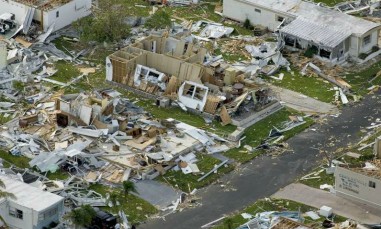
Survival Gear is the most unused product until a natural disaster happens, then it’s the most desired products, but usually too late to help those that really need the help.

We sell around the World, and pride ourselves on offering a level of customer service that we would want to see ourselves if we were shopping online.
Our product ranges change regularly, so we hope that you come back to our sites to see some of the fantastic offers that we regularly have.

Get In Touch

Goldman Sachs Has Just Issued An Ominous Warning About Stock Market Chaos In October

Are we about to see U.S. financial markets go crazy?  That is what Goldman Sachs seems to think, and it certainly wouldn’t be the first time that great financial chaos has been unleashed during the month of October.  When the stock market crashed in October 1929, it started the worst economic depression that we have ever witnessed.  In October 1987, the largest single day percentage decline in U.S. stock market history rocked the entire planet.  And the nightmarish events of October 2008 set the stage for a “Great Recession” that we still haven’t fully recovered from.  So could it be possible that something similar may happen in October 2019?  According to CNBC, Goldman Sachs is warning that the stock market could soon “go crazy again”…

For investors taking a breather from the chaos in August, buckle up as the market is about to go crazy again, Goldman Sachs warned.

Wall Street is now inches away from reclaiming its record highs, but a rockier ride could be around the corner as stock volatility has been 25% higher in October on average since 1928, according to Goldman. Big price swings have been seen in each major stock benchmark and sector in October over the past 30 years, with technology and health care being the most volatile groups, Goldman said.

Goldman derivatives strategist John Marshall is the man behind this new warning, and he believes that there are some fundamental reasons why the month of October is often so volatile…

“We believe high October volatility is more than just a coincidence,” John Marshall, equity derivatives strategist at Goldman, said in a note Friday. “We believe it is a critical period for many investors and companies that manage performance to calendar year-end.”

And even though October hasn’t arrived yet, we are already starting to see some things that we haven’t witnessed since the last financial crisis.

For example, the Federal Reserve had not intervened in the repo market since 2008, but this week the liquidity crunch was so bad that the Fed felt forced to conduct emergency overnight repurchase agreement operations on Tuesday, Wednesday, Thursday and Friday.

And then on Friday the Fed announced that it will continue to conduct emergency interventions “on a daily basis for the next three weeks”

The New York Federal Reserve Bank said Friday it will inject billions into the US financial plumbing on a daily basis for the next three weeks in an effort to prevent a spike in short-term interest rates.

The Fed will offer up to $75 billion a day in repurchase agreements — exchanging secure assets for cash for very short periods — through October 10, it said in a statement.

In addition, it will offer three 14-day “repo” operations of at least $30 billion each.

In essence, the “plumbing” of our financial system has gotten all jammed up, and calling out Roto-Rooter is simply not going to get the job done.

Of course Fed officials are trying to assure us that this is no big deal and that they have everything under control.

But if all this is no big deal, why haven’t they had to conduct such emergency interventions for the last 11 years?

And this comes at a time when the deterioration of the U.S. economy appears to be accelerating.  In fact, on Friday St. Louis Fed President James Bullard publicly admitted that the U.S. manufacturing industry appears to already be in a recession

The US manufacturing sector “already appears in recession” and overall economic growth is expected to slow “in the near horizon,” St. Louis Federal Reserve Bank president James Bullard said on Friday, explaining why he dissented at a recent Fed meeting and wanted a deeper, half-percentage-point rate cut.

That is a stunning admission, because normally Fed officials try very hard to maintain the narrative that everything is wonderful because they are doing such a great job of manipulating the economy.

The American people as a whole are becoming increasingly pessimistic about the economy as well, and Gallup just released some very alarming numbers

Americans’ confidence in the economy has become less rosy this month as Gallup’s Economic Confidence Index fell to +17 from August’s +24 reading, marking the lowest level since the government shutdown ended in January.

At the same time, the public is evenly divided over the likelihood of a recession in the next year. The current expectation of a recession is nine points higher than it was in October 2007, just two months before the Great Recession began but slightly below a February 2001 reading, one month before that eight-month-long recession.

Every economic indicator that we have is telling us that big trouble is heading our way, but most Americans are partying instead of preparing.

U.S. financial markets have never been more primed for a crash than they are at this moment, and so many of the exact same patterns that we witnessed just prior to the last recession are happening again right now.

Over the past few months, my wife and I have felt a sense of urgency unlike anything that we have ever felt before.  You may have noticed a difference in our tone and in the types of stories that we have been sharing.  Everything that we have been doing has been leading up to this.  The time of “the perfect storm” is here, and most Americans won’t understand what is happening.

The storm clouds are looming and disaster could strike at any time.  This is one of the most critical times in the history of our nation, and most Americans are completely unprepared for what is going to happen next.

About the author: Michael Snyder is a nationally-syndicated writer, media personality and political activist. He is the author of four books including Get Prepared Now, The Beginning Of The End and Living A Life That Really Matters. His articles are originally published on The Economic Collapse Blog, End Of The American Dream and The Most Important News. From there, his articles are republished on dozens of other prominent websites. If you would like to republish his articles, please feel free to do so. The more people that see this information the better, and we need to wake more people up while there is still time.

The post Goldman Sachs Has Just Issued An Ominous Warning About Stock Market Chaos In October appeared first on The Economic Collapse.

10 Summer Gardening Tips to Get the Most Out of Your Bounty

With gloriously long days, summer is full steam ahead. From starting new crops to protecting the ones you have, along with improving the quality of the vegetables you already grow, there are always ways to increase your garden’s bounty. Give these summer gardening techniques a try to make this summer one of your best.

Use red mulch on your tomatoes.

Although it might sound like a too-good-to-be-true sales pitch, using red plastic mulch underneath your tomatoes does increase the yields by roughly 20 percent. According to the U.S. Department of Agriculture’s research, when a pigment in a tomato plant called phytochrome detects far-red light waves, it signals the plant to grow faster and produce more fruit, particularly during the early part of the season. The mulch also conserves water and suppresses weeds. So, if you want to increase your harvest, set out your irrigation hose in your tomato bed or row, spread out and stake down the red mulch, then cut a slit in the mulch and plant the tomato through the plastic. Typically, the mulch is only good for one season, but it’s well worth it.

Protect corn from birds.

You can fence out deer and raccoons, but there’s no real protection from magpies and other birds that have a taste for fresh corn since they quickly become accustomed to loud noises or visual deterrents when a good meal is involved. It’s difficult to cover the entire corn patch, but if you want to keep your corn safe, place a plastic or brown lunch bag over each ear to save it until it’s ripe. Do this after your corn has been pollinated and check it frequently so you harvest it at its peak.

Transplant individual plants in flats.

After I sow seeds in 4-inch containers indoors, I transplant them into flats once their true leaves appear. I don’t bother transplanting each seedling into larger, individual containers. Make sure there are holes in the bottom of the flat and fill it with a sterilized planting medium. For larger vegetables such as tomatoes, peppers, broccoli, eggplant and cabbage, plant three to four seedlings across and six to eight plants per row in the flats. For smaller plants, you can double the quantity. The plants stay in the flats for about a month. When it’s time to transplant them into the garden, simply scoop out each plant and put it in the ground. This way, you don’t have a lot of containers to collect and wash.

Grow your own hops.

For those aficionados of craft brewing, growing your own hops is the natural next step in creating a one-of-a-kind beverage. But you don’t have to be a brewmeister to raise your own hops; you just need to know that the female flower is part of the hop plant and is called a cone. The nice part about a hop plant is that it basically grows itself. Provide a sturdy structure, since each plant will reach a height of 8 to 12 feet (and sometimes more) in short order. Give the plants consistent water and harvest the cones in the late summer to early fall when they’re mature. Cut the plant completely back to the ground in the fall or late winter before the shoots begin growing once again.

The early spring shoots are also edible and are cooked liked asparagus. Cut them when they’re less than 8 inches tall. Don’t worry about stunting the plant; it’s a vigorous grower and you’ll never notice the difference.

Protect your plants from herbicide damage.

There’s nothing more heartbreaking than seeing your tomato, pepper, eggplant or potato (members of the Solanaceae family and all very sensitive to herbicide damage) twist and wilt before your eyes. The best way to prevent this is to know the cause. For those in agricultural communities, there’s a risk from spray drift if you’re located next to a field where crops are treated with herbicides, but this is not the typical way that plants are contaminated. For most home gardeners, residual herbicides find their way to the garden through grass clippings used for mulch or in animal manure.

While avoiding lawn clippings that have been sprayed is best, if this is your only option for mulch, use clippings only when the lawn has been mowed three times after being sprayed. Animal manure can be trickier because how long the residual herbicide remains in the manure depends on the chemical used, and there are several herbicides available for pastures and hay fields. Some of these are so potent that they will affect plants even after they were put in a compost pile five years earlier. It’s important to know what animals are fed to know if their manure is safe to use. For instance, if a horse is fed weed-seed-free hay, avoid its manure. It might not introduce weeds into your garden, but it might kill everything else, too.

Encourage beneficial insects during summer gardening.

Enlist the help of beneficial insects—praying mantises, predatory wasps, ladybird beetles and some ground beetles, to name a few—to help control garden pests. To keep them in your garden, avoid using pesticides as much as possible, even the organic ones. If the “good bugs” have something to eat, they’ll do their job with flying colors. This does mean you must tolerate a certain level of pest pressure, but a few holes in your cabbage plants are worth having if you don’t have to dose them with chemicals. Plant a variety of vegetables, herbs and flowers to give the beneficial insects a habitat in which to find “bad bugs” like aphids and whiteflies; the parasitic wasps, in particular, prefer to perch on the umbrella-like blossoms of carrots and dill. Variety makes the garden more interesting and gives these tiny predators better opportunities to find prey.

Create a strawberry bed.

Plant strawberries now to enjoy delicious fruit for years. There are three primary types of strawberries—June-bearing, everbearing, and day-neutral—and choosing the right one for you depends mostly on how you use them. For those who prefer simply to snack on the strawberries and harvest smaller amounts for longer periods of time, consider everbearing or day-neutral varieties. For hardcore jam makers, opt for the June-bearers that produce a large crop at one time.

Whether you’re planting strawberries in a garden bed or a container, the key is to dig out the area for each plant so you can spread out the roots, then cover them with soil up to the crown, which is at the top of the root system. Plant strawberries at too shallow a depth and they can shrivel and die; plant too deeply and they won’t produce as well.

Mulch potatoes with straw.

The old-fashioned way of planting potatoes—digging an 8-inch trench, then hilling the potatoes with soil as they grow—works absolutely fine, but it’s a lot of work at the end of the season when it’s time to harvest. An easier route is to plant the potatoes 4 inches deep and mulch them with straw as they grow to prevent the sun from scalding the tender spuds. When it’s time to harvest, it’s much easier to pull back the straw to gather your potatoes and use a fork to gently lift any left in the ground—no deep digging required.

Grow veggies vertically to save garden space.

When space is at a premium, consider growing up. There are a surprising number of vegetables that tolerate vertical growth, and it’s an efficient and productive way to raise them. Besides beans and peas that are frequently trained up some kind of trellis, consider growing smaller pumpkin, melon and squash varieties, as well as cucumbers, in this way. Vigorous growers, they need to be trained so their vines and foliage can grasp a sturdy support. For beans and peas, simply plant their seeds at the base of whatever structure you’re using. Plants, not seeds, are usually a better option for the other varieties so you can secure them to the trellis from the beginning.

What you decide to utilize for a trellis system depends on what you’re growing, as well as your personal flare. Making a single-season unit using twine and a few pieces of lumber is a project most anyone can accomplish, or you can utilize an existing fence or build towers that will last many seasons. As long as the plant can be secured, either by draping it over a wire or part of the trellis or by loosely tying it to the structure, it will be fine.

Re-queen your hive.

For many gardeners, part of their success relies on making the colony of the hard-working honeybees as productive as possible. It may be a little draconian, but in order to maintain hive health and production, consider re-queening your hive every couple of years. Most packaged bees will have their queen marked with a colored dot to indicate her particular year, so you don’t forget how old she is and fail to replace her until she starts lagging in egg laying.

Before you usurp the matriarch, have a new queen on hand, whether from your own hives or from an apiary that raises them. Of course, the best situation is to have a bred queen to reduce the time before she begins laying in her new home, but even if she hasn’t done her mating flight, as long as it’s early enough in the season, she’ll be able to provide a sufficient number of new bees to create a healthy hive.

When it’s time to replace the old queen, find and pick her out of the cluster surrounding her, then cut her in half with your hive tool. Put the new queen in between the middle frames as you do when you install a package of new bees. She will be in a queen cage with a marshmallow or piece of candy at the entrance. This gives the colony a couple of days to chew her out of her enclosure while they accept her. Be sure to note the month and year of the re-queening so you know when to do it again.

This article is from the summer 2019 issue of The New Pioneer Magazine. Grab your copy at OutdoorGroupStore.com.

Survival Cache Podcast Episode 13: Glocks & More Glocks

When it comes to emergency preparedness and everyday carry, there is one name that stands above them all…. Glock. Doc and Drew talk Glocks for survival and EDC. The reasons for their choices and the backstory of how they settled upon Glock as the one-stop sidearm solution. Listen as the guys take a deep dive into everything Glock and why you should give Glock a second look if you don’t already own one.

Want to comment about this podcast? Sound off below in the comments.

A fun episode with lots of opinions (Glocks…enough said), click on one of the links below to listen now or download to your phone and listen later. Also, if you love the podcast, please leave us a review on iTunes, Stitcher, or Podbeam. It really helps!!!

Best Survival Podcast


The post Survival Cache Podcast Episode 13: Glocks & More Glocks appeared first on Survival Cache.

Survival Cache Podcast Episode 13: Glocks & More Glocks

When it comes to emergency preparedness and everyday carry, there is one name that stands above them all…. Glock. Doc and Drew talk Glocks for survival and EDC. The reasons for their choices and the backstory of how they settled upon Glock as the one-stop sidearm solution. Listen as the guys take a deep dive into everything Glock and why you should give Glock a second look if you don’t already own one.

Want to comment about this podcast? Sound off below in the comments.

A fun episode with lots of opinions (Glocks…enough said), click on one of the links below to listen now or download to your phone and listen later. Also, if you love the podcast, please leave us a review on iTunes, Stitcher, or Podbeam. It really helps!!!

Best Survival Podcast


The post Survival Cache Podcast Episode 13: Glocks & More Glocks appeared first on Survival Cache.

Survival Cache Podcast Episode 13: Glocks & More Glocks

When it comes to emergency preparedness and everyday carry, there is one name that stands above them all…. Glock. Doc and Drew talk Glocks for survival and EDC. The reasons for their choices and the backstory of how they settled upon Glock as the one-stop sidearm solution. Listen as the guys take a deep dive into everything Glock and why you should give Glock a second look if you don’t already own one.

Want to comment about this podcast? Sound off below in the comments.

A fun episode with lots of opinions (Glocks…enough said), click on one of the links below to listen now or download to your phone and listen later. Also, if you love the podcast, please leave us a review on iTunes, Stitcher, or Podbeam. It really helps!!!

Best Survival Podcast


The post Survival Cache Podcast Episode 13: Glocks & More Glocks appeared first on Survival Cache.

Survival Gear Review: Benchmade 200 Puukko

Whether Buck, Bolo, or Bowie…Kukri, Kris or Katana, iconic knives are alive and well. Even as the world seems to spin faster by the day, age old knife designs still have a rock solid grip in our hands. The centuries of knife use has honed blades and handles into a near-perfect blend of design features to maximize its symbiotic relationship with humans.

By Doc Montana, contributing author to Survival Cache and SHTFblog

As one moves from the poles towards the equator, the food gets spicier and the blades get bigger. At least that’s what it seems like. So the most recognizable Scandanavian blade, forged far from the equator, is the humble Puukko, a knife with a blade that barely crosses a man’s palm. But oddly, given the near featureless design of the Puukko, knife aficionados and blade historians alike find ample content to argue over and plenty of ammunition from all kinds of sources. So when Benchmade jumped into the Puukko, two things would happen. First, Benchmade would make a very fine knife, and second, it would cause esoteric arguments about the undefined nuances of the Puukko concept. The camping knife lineup at BladeHQ’s website highlights the diversity of knives in that category. From the Otzi neck knife that will make you smile, to the El Chappo cleaver that will make you cringe, the immense number of choices will make you applaud the simplicity and tradition of the Benchmade Puukko 200.

When I see a puukko in the wild, I generally assume the best about the user. And the opposite when a bowie is unsheathed to gut a deer. Puukko knives just ooze utilitarian efficiency, design minimalism and general confidence by the user. Which is exactly why it’s so hard to get excited about the Puukko. Kind of like the thrill driving on new tires. The truck owner is thrilled, but the rest of us are underwhelmed by the sheer magnitude of mundane utility.

Is that a Knife in your Genes?

That said, Puukko knives are primitively attractive. Deep down in human DNA shared through a thousand years of breeding has planted the seeds of the Puukko into our knife desires regardless of how bland and uneventful the design. Of course that means the Puukko has to try extra hard to capture our attention in the knife store. With no flashy pommel, bolster, guard or inlays, the humble Puukko is little more than a handle with a blade. Or perhaps a blade with a handle.

Benchmade jumped into the Puukko last year which is surprising either way you look at it begging the question, “Why?” And that would be “why so late to the Puukko party?” Or “why bother at all” given the saturated Puukko market? My guess is that the Benchmade’s answer is somewhere between this being the 21st century and there is room for Puukko improvement. And Benchmade makes knives and the Puukko is a knife. No matter the reason, the Benchmade 200 Puukko is here, and I for one am very glad it is.

Diverting from the ancient and traditional, the Benchmade 200 Puukko employs a thermoplastic elastomer handle rather than the usual birchwood. And a blade steel of semi-stainless 3V is a departure from traditional high carbon steels. The subtle differences in edge profile and grind are more a matter of splitting opinions rather than splitting hairs.

The grind is not the traditional scandi, but a slightly more complex high flat grind with secondary bevel. The scandi grind is a simple machine that is easy to sharpen. But while the purists will sing the praises of the scandi, most blades that started as true scandi grinds slowly deviate to a more convex bevel as variations in human motion while sharpening gradually rounds the metal. Either way, the real question is does it cut?

On the handle side of things, Benchmade used a Santoprene material that is extremely common in many other industries for many other purposes, but not that common in knife making. Frankly, reading the rich resume of Santoprene, it sure should be on more knives. The handle color that Benchmade calls Ranger Green, is a nice flat dark earth variant that I fell in love with on my Benchmade Bugout knife.

How Much Longer?

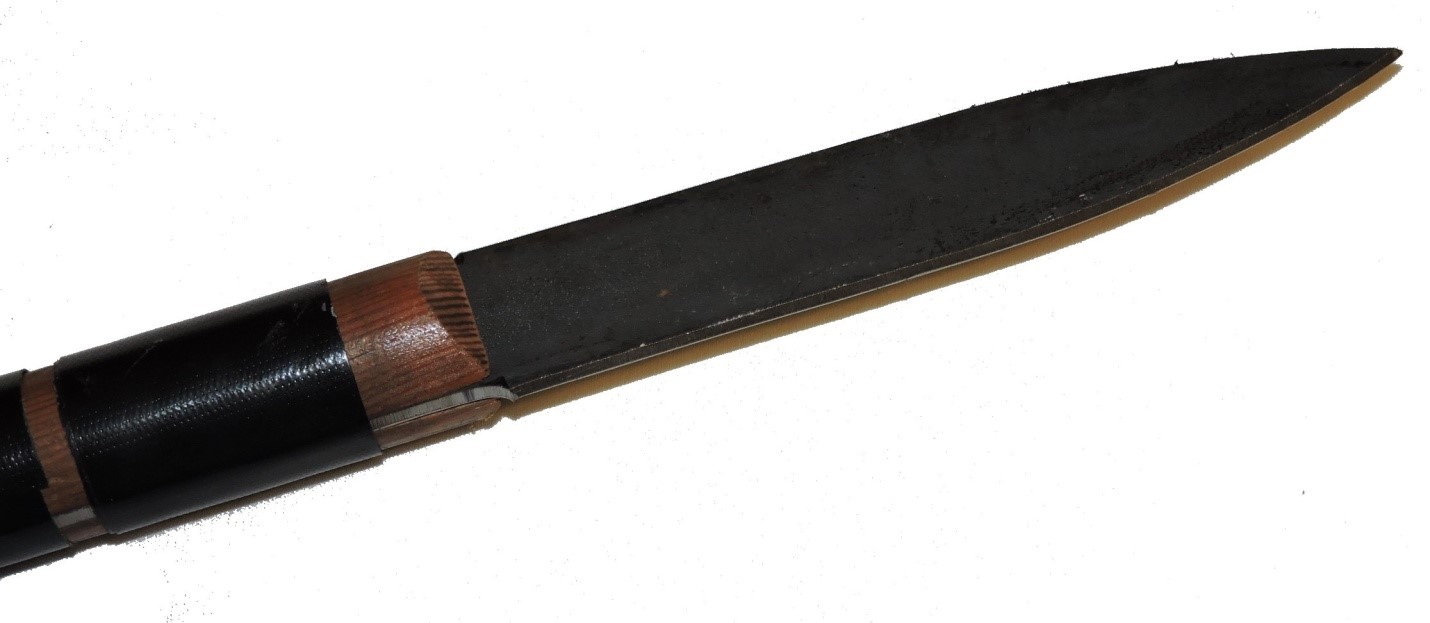
Overall, the Benchmade 200 Puukko is eight and a quarter inches long with just under half that in a drop point blade. It’s a full enclosed tang design with usable lanyard hole at the rear. The 0.14 inch thick blade is plenty of girth for anything this knife can do. Of course that’s circular logic, but in reality the size and design of this knife is an example of truly balanced engineering, with nothing missing and nothing extraneous. Anything you should do with this knife, you can do with this knife.

Related: Survival Gear Review: Benchmade Bushcrafter

The grip swells in two dimensions around the center of the palm giving a positive handhold shape on an already grippy grip. While not totally enough comfort to comfort those wanting some sort of physical guard between blade and handle, its well within specs of the Puukko. Thrusting, stabbing and fast poking are not what the Puukko is for so do so at your own risk. The Puukko is a utility knife that excels at cutting, carving, slicing, drilling, and other blade chores on the lower end of gross hand movements. Keep looking if you want a knife for fighting, prying, hacking, chopping or stabbing. In other words, the Puukko is exactly what you need for what you will be doing but not maybe the best single choice for wandering the dusty, sun-drenched post-apocalyptic hellscape of the future. But should you find yourself in need to stab with the Puukko, just roll your palm around to cover the butt of the handle that that should keep your hand from sliding onto the business side of the knife.

Steel This Knife

The choice of CPM-3V steel is interesting. On the Benchmade website, I get exactly four types of knives they produce that use the 3V steel. And oddly, there is very little in common among them, from a knife standpoint anyway. They include the Boost, the Bailout, the Outlast, and the Puukko with the Puukko as the only fixed blade in which Benchmade uses 3V steel. On the BladeHQ website, over 475 knife and tool choices are listed that use 3V steel with nearly 150 of them in stock and ready to ship.

So what is 3V? In yesterday’s world it would be a full fledged member of the supersteel family, but today it’s more of a entry-level superish steel. Oddly, human civilization is often categorized into time eras named for the material used in cutting tools. Stone, copper, bronze, iron, and… now what? Steel? Supersteel? Super-duper steel? Basically we are splitting steel hairs over a few years compared to the absolutely massive leaps in cutting material technology over many centuries. So the differences we perceive between blade steels today are miniscule compared to those other civilizations experienced. All that said, the 3V choice made by Benchmade was a very good one. While not quite tradition of an original Puukko, it is a worthy choice for a Puukko knife that will likely still be used in the 22nd century.

CPM-3V steel, as a near-stainless steel has some stainless characteristics, but not enough to ignore care and feeding. The knife strengths of CPM-3V steel include toughness and edge retention. Where 3V scores average in with ease of sharpening and corrosion resistance. Not a bad choice set when your lowest score is average and your best is perfect. Beyond its high grind, the point of the drop point (not the purpose but the actual point) makes a quick taper to its end allowing for a maximum retention of strength through thickness until the blade absolutely has to end. And that end is a very usable Puukko-quality tip that’s great for drilling, poking, tip slicing, and minor prying.

Hold Me Tight

The sheath Benchmade includes with the Puukko 200 is actually much better than I expected. Benchmade has a mixed reputation on sheaths. I’ve had every one of Benchmade’s dive knives and exactly zero have good sheaths, with a couple downright dangerous disasters. The Puukko’s sheath is a single-stitched black leather slip-on with a firesteel loop. The standard belt loop is integrated, and an additional leather strap is included to make the sheath dangle for added comfort when sitting. Since the dangler loop is secured by a single snap, I chose to use the dangler strap with the snap wedged between belt and pants to give some added protection against loss.

For reference, the Puukko’s sheath is a modified dangler. A pure dangler has dangling as it’s only carry option, while other sheaths have an included D-ring for an optional dangler strap. The difference actually may have more to do with the position of the knife in the sheath than the sheath attachment. The Benchmade Bushcrafter has a dangler option, but sits very high in the sheath causing extraction issues when dangling. A proper dangling sheath like that of the Fallkniven Jarl addresses much of the knife including the handle usually requiring a two-fingered pommel grip to slide the knife free enough to wrap a few more fingers around it. The Puukko falls much closer to a pure dangler thus committing more to it’s Puukko roots.

A plastic insert inside the sheath adds protection to the sheath from the Puukko’s blade, as well as a smooth hang-free insertion. The friction fit of the sheath snuggs up around the palm swell. Depending on your carry scenario, the sheath-grab may not be enough for your needs. In that case you can easily spend more money than the buck-and-a quarterish that the Puukko costs on a new fancy-smancy custom bushcraft sheath, or you can add some retention to the included sheath by either a O-ring addition to the belt loop, a horizontal strap to belt loop or dangler loop, or use the lanyard hole on the Puukko’s handle to string an additional rope or bungee cord. On mine, I tied in a short knotted lanyard that assists in retraction from the sheath. It works thus far, but I can see a length  or loop adjustment in the future. Not sure which way just yet.

Part of a Balanced Diet

Using the Benchmade Puukko 200 is a treat. The balance point is slightly handle-heavy where the knife will titer at about one inch back into the grip. This keeps the knife leaning into your hand which makes a solid footing for all the necessary tasks the Puukko excels at. The spine of the Puukko 200 is flat, as it should be, for additional thumb and palm pressure as needed. However, traditionalists might find the edges of the spine a fraction too rounded to efficiently scrape a firerod. The Benchmade Puukko 200 will throw sparks in its current configuration, but not with the ease of its sharp-spined brethren. A light spine grinding to sharpen the corners are fine if that floats your boat. However, the cutting edge throws sparks as well as anything, and pushing on the spine will likely happen much more often than the need to scrape a firerod. Err on the side of most-use.

Probably the most surprising aspect of the Benchmade Puukko 200 is its price. BladeHQ advertises the Puukko 200 for only $127.50 with free shipping which is about the price of a Griptilian, often described as the affordable entry into the Benchmade lineup. The Puukko is an excellent example of how we can look to the past for help with survival in the future.

All photos by author unless noted

The post Survival Gear Review: Benchmade 200 Puukko appeared first on Survival Cache.

50 Survival Tips and Tricks for the Outdoors

Survival tips
Thick fire signals can be vital for survival situations.
Pack navigational gear.
Char cloth is a great survival item.
Get water from trees for survival.
Tampons can be used in survival situations to treat wounds.
Know how to find the North Star for survival.
Use a guitar case as a survival bag.
Place rocks around your survival campfire.
Invest in a survival bracelet.
Sleep on elevated surfaces in survival situations.
Make sure to tend to blisters in survival situations for faster healing times.
Acorns can be used in survival situations to fight infections.
Use dock leaves in survival situations as antihistamines.

The following article is a guest submission from in-house writers of Authorized Boots:

When it comes to survival, the more you know, the better. While you can’t possibly prepare for every single thing that is out there, you can try your best to be as aware of many of them as you can. Sometimes these bits and pieces of knowledge can seem quite like useless trivia at times, but don’t be fooled. The knowledge is there not to be useful ALL the time, but rather to be there when you need it the most. That is why we put together a massive list of 50 Survival Tips and Tricks for the outdoors.

How to Create a Thick Fire Signal

1. Create a thick fire signal. A combination of fresh pine and spruce leaves produce a lot of smoke, which is what you want with the signal. Start out by building a small fire using dry leaves, twigs, or other tinder. Collect the fresh pine and spruce leaves and compile them into a bow. When the fire is up and smoking, put the leaves over the fire, making sure to cover it completely. This will cause the branches to burn intensely, producing even more smoke.

How to Stay Cool in the Desert

2. Staying Cool in the Desert. This may not be the best-smelling solution to preventing heatstroke when you’re out in the scorching desert, but it works. Take a piece of cloth like a bandana and soak it in urine. Wrap it around your head and it will keep your head from feeling the wrath of the sun. Heat stroke is the second leading cause of death in the desert, next to dehydration.

3. Learn to tell where North is without navigational survival gear! If you need the help of a compass but you don’t have one, you can use an analog watch to do that. Point the hour (short) hand at the sun and draw two imaginary lines between it and the 12 o’clock point. You will create an angle between the two lines. Draw an imaginary straight line bisecting the angle. The line point away from the sun is north, because the sun always goes to set in the west direction.

Disclaimer: telling time by sun doesn’t work as effectively when you are too far up north or south.

4. What if you don’t have a watch? Don’t worry. As long as you know what time it is, you can still tell where north is. Simply draw an analog representation of the time on the ground and draw the lines from there. Cellphones are particularly useful in telling the actual time regardless where you are because mobile tech nowadays uses GPS to be able to tell the time of the day regardless of location. Of course, it’s always advised that a survivalist have a watch with them at all times.

5. Always have char cloth ready. Take any small piece of cloth and place it inside a metal container. Make sure that the container has a cover. Burn the container (with the cloth inside it) for a couple of minutes. You know you’re doing it right if the cloth remains intact but is dark from all the burning. Char cloth is really great for starting fires because it catches fire with just a small spark. Tip: Try cutting or ripping a large cloth into really small pieces and neatly roll them inside a tuna can. You’ll have yourself an entire pack of char cloth!

How to Start a Fire Using Hand Sanitizer

6. Use hand sanitizer from your survival kit to start embers. Hand sanitizers may look like they’re only useful for cleaning your hands, but they’re also good for starting fires. This is because they contain alcohol, which is flammable. Simply use some of the stuff on a char cloth or some leaves or other tinder and they’ll easily catch fire from a spark. So always keep a small bottle in your pocket.

7. Shave off that fat wood! The resins from pine trees are very useful if you reduce them into tiny shavings. They easily catch fire and can therefore be used as an easy to find ingredient to starting fires because the can be found practically everywhere. But what makes them special is that the smoke that’s produced from burning the shaved fat wood makes effective mosquito repellents.

Insulation Against Cold

8. Learn basic body insulation. This is a life saver in many situations where you’re caught in really cold weather and you’ve got no means of starting a fire. Simply stuff newspaper, dry grass, and leaves under your clothes and you’ll be retaining significant amounts of body heat when you need it the most. You can do this to almost all of your clothing, from head to toe.

How to Get Water from Trees

9. Get water from trees. This works on any tree, but it works better with those with leaves that are directly exposed to the sun. Wrap a plastic bag around the leaves. When the sun forces the water inside the leaves to evaporate, the water will be trapped inside the plastic bag and settle into the plastic bag. With proper positioning, the water will be trapped in a way that you can simple poke a hole through the bag so that the water flows through. You can then keep the water in a container. Note: Make sure your plastic bags are clean.

10. Use toothpaste to relieve bug bites. This is a well-known home remedy for burns and some wounds, but few people know that their tooth paste can help treat bug bites as well. This is because they have properties that will help sooth any itchiness or pain that most bug bites cause. They will also help reduce any swelling that might result from the bites.

11. Put tampons on your survival first aid kit! Tampons are very effective in dealing with deep wounds because they were designed to absorb lots of moisture. They also gradually take the shape of the wound as they swell over time. You can bring lots of them because they’re small, lightweight, can be bought almost anywhere, and are pretty inexpensive.

12. Keep that used up lighter. If your Zippos or flintlock lighters have run out, keep them because you can still use it to make fire. There’s usually cotton inside these types of lighters. Take them out and use the flint to create a spark. The cotton is usually so dry it will catch fire easily. Alternatively, you can keep using the lighter to create sparks that could help you start a fire with other types of tinder like char cloth.

How to Make a Fire Using Aluminum Foil

13. Have aluminium foil handy. While you’ll always have this in your survival food kits to store your food, keep a separate sheet in your bag to always have a dry surface. This can come in handy as a dry surface to start fires on, especially when it just rained and the soil is too damp for you to be able to start a fire. Use this with your char cloth and other tinder you have with you and you’ll be able to start a campfire even when it’s wet outside.

Aluminium foil can also be used as a makeshift bowl. Simply place a rock on top of the foil and wrap around, using the rock as a mold. Tin foil can also be used as a reflector around a camp fire to maximize the heat. The uses of aluminium foil are endless.

14. Reduce excessive light with masking tape. Having too much light from your flashlight could be dangerous at night depending on your situation. Placing a masking tape over the light will lessen the amount of light enough to give you a low profile while giving you enough to be able to work with.

15. Always know how to find the North Star. The North Star always points to true north, which is great for when you don’t have a compass at night or when you want to check the accuracy of the compass you have. Try looking for the big dipper first, which is easy to find if you know your constellations. Then draw an imaginary straight line through the edges of the big dipper and this will lead you to the tail of the little dipper. This is the North Star.

16. Consider a guitar case as your choice of survival bag. This is a rather unusual but very useful alternative to the typical bug out pack. The shape of the bag will allow you to store an unbelievable large amount of things. Plus, it’s very inconspicuous, especially when a hiker’s or camper’s backpack is often the easiest way to spot a person who isn’t from around the area, which can have its disadvantages. It’s a good way to pack lots of stuff without sticking out in public.

Authorized Boots put together a guide for what to include in a bug out bag. Check it out

17. Keep those carbon steel parts! The carbon sheets that you can get from saws have been proven to be able to withstand 22 caliber pistol bullets. With just a bit of duct tape and some proper attachment, you can create armor around your backpack and clothes that will protect you from shrapnel, arrows, and certain types of bullets. They’re bendable, snap proof, and pretty darn useful. There is a caveat though, Carbon steel will rust and is not stainless steel.

Always check for the health condition on your tools before use.

18. Grill survival food with metal picks. You will most likely have long, thin, metal rods or picks (used for tents) among your equipment. You can use this to form a makeshift grill but laying them across two logs. Use twigs and strings to keep them intact when necessary. Set this up over a fire and you can grill fish over the picks. You can use an aluminium cup to boil water over this setup as well.

19. Rocks around the campfire are very useful. Even after the fire had died, the rocks will still hold on to enough heat to keep you warm. The heat of the rock can also be used to purify water. Simply place them inside aluminium cans filled with water. It will cause the water to boil, purifying it enough to be safe to drink.

In some scenarios, it might be necessary to boil water underground. Authorized Boots has you covered; here is its guide to how to boil water underground.

How to use Charcoal to Treat Diarrhea

20. Improve the taste of water with simple survival techniques. The water from swamps, even after they’ve been purified, can still smell really dodgy. To remedy this, add some charcoal to the water while it’s being boiled. Not only does this add to the purification process, but it also makes the water taste much more “drinkable.” It also takes away that bad smell.

21. Always wear a survival bracelet. More popularly known as paracord bracelets (because they’re made from the same material as military issued parachutes and equipment), these bands are more than just accessories. They’re actually cords that are woven together, which you can unravel and use partly whenever you need the cords to tie stuff up. Almost every single piece of the paracord bracelet is usable string – right to the small threads that are used to keep the end of the cords together. Use them to tie stuff, hang food, set up traps, and even as tinder to start fires.

22. Add aluminium sheets to your survival shelters. The aluminium blankets or sheets added to your shelter will significantly increase your shelter’s heat retention capacity. Aluminium facing outward of the shelter can also reflect sunlight, allowing you to stay cooler under the shelter. Among the survivalist community, these are referred to as “super shelters,” and rightfully so.

Using Glow Sticks for Survival

23. Carry glow sticks with you! These aren’t just for rave parties. Glow sticks make it easy for you to be spotted at night (i.e. by rescue groups). When needed, activate one of the sticks and tie them with a paracord outside your backpack, allowing it to hang freely. You will be very easy to spot even in pitch black darkness with these glow sticks.

Top 10 Uses for a Survival Poncho

24. Bring a poncho. These seemingly simple disposable raincoats actually have so many uses in the outdoors. Obviously, it’s best used as a raincoat, but here are some other things you can do:

     Use it as a makeshift shelter. It’s big enough to fit one person.

      Use it to desalinate seawater. Just boil seawater underneath a tented poncho to catch the vapour and produce the water through condensation. This will separate the salt from the water, making it drinkable.

      Use it to collect rainwater.

Never Use Dirty Water to Wash out Wounds

25. DO NOT use unclean water to wash wounds. While this sounds like common sense, a lot of people will make the mistake of using water in rivers to clean their wounds without treating them first. Bodies of water, as clear as they may seem, will have bacteria from all sorts of matter, including animal feces. If your hand has any cuts or lacerations, don’t ever dip them into the water.

How to Use Water Purification Tablets for Survival

26. Always carry with your water purifying tablets. You can’t always depend on a fire source to be able to boil water, such as when it gets rainy and the ground and everything else is too damp to ignite. Also, you can’t always start a fire when you’re injured. In these instances, it’s better to pop a tablet into a container so you get the much needed water instantly.

27. Know what to do with animal entrails and feces. When it comes to stuff that animals leave behind, make sure you don’t dispose of the ones that you can use as fishing bait, repellents, etc. Some of these include:

      Using bones to make tools/weapons

      Using urine of female dead animals to attract other animals for food

      Using pelts and skins to make small pouches, etc.

Don’t just throw these things away. Figure out if there’s some way you can re-purpose the excess parts after you capture your game.

28. Process food away from the camp. Remember that when you process food you catch (i.e. trapped animals or caught fish); you’re likely to leave stuff behind such as blood, bones, inedible parts, etc. If you process your food near you’re going to attract wild animals. They’ll be sniffing around the camp and around you, which could be dangerous. The same survival tips apply to disposing food remains.

Cutting Down Logs Without Saws, Knives or Axes

29. Save energy on chopping wood. Don’t bother using an axe. Just place the wood pieces diagonally between the ground and a tree. Give the pieces of wood a good kick (inspect the wood before doing this and assess the right balance between force and strength to avoid breaking ankle/leg). The last thing you want to do is have a broken leg, so do be careful with how you proceed with this tip. Using other tools will only waste your time. You’ll be using these as firewood, so they don’t need to be perfect when chopped. Of course, this doesn’t apply to the wood materials to be made into shelters.

30. Sleep on elevated surfaces. Sleeping on the ground will cause you to lose body heat faster, making it more likely for you to get cold. Sleeping on a poncho or a really thin blanket isn’t going to help this either. The best way to do this is to stack up leaves or logs to make a padded bed. Alternatively, you can bring a hammock with you and just set it up when you sleep.

How to Organize Your Bug Out Bag or Your Survival Pack 

31. Organize your survival pack efficiently. When arranging the stuff in your rucksack, follow these principles:

      Heavier stuff should be on top and the lighter ones at the bottom. This will help maintain your balance.

     Make sure the backpack is positioned to be on your upper back always. This will allow you to walk freely without your rucksack getting in the way of your legs.

     Don’t forget to tighten those straps to prevent stuff from falling off. The wilderness can be full of snags, thanks to branches and bushes.

32. Minimize layers. Campers often think that you have to bundle up all the time to protect yourself from the cold. But if you cover up too much even when you don’t need to, you’re likely to sweat inside, which minimizes insulation. As long as you’ve got your extremities (i.e. hands, feet, and head) covered, you can go about in cold environments as long as you’re moving. Reserve those extra layers for when you’re sleeping, because you’re not moving around at all.

33. Bring around an extra pair of socks. Aside from the fact that they can help keep you warm, socks are really good for a lot of things, such as filtering water and suspending small objects off branches. Wearing socks when you’re in the wilderness will also keep you from getting blisters, which is likely to happen when you’re walking around and exploring the wilderness all day. Plus, these are pieces of warm clothing that are very easy to dry out in case they get wet.

34. Treat those blisters! Blisters can be a literal pain, and they happen a lot when you’re out in the wilderness. If you have a blister, take a needle and a string and poke a hole between two opposite ends of the blister. This will drain the water out and allow the blister to heal faster. If you think you’re about to get a blister, use duct tape to cover the area. This will prevent the blister from forming in the first place because it minimizes friction.

35. Balance food and water. Too much of either one can be harmful, if not fatal to your body. If you’re dehydrated, do not eat anything until you’ve had water because the food will only absorb the remaining water in your body and cause you to be dehydrated even more. Drinking too much water can also mess up your metabolism and cause lots of complications long term. Always make sure you have enough of both food and water.

How to Send Out an S.O.S.

36. Learn how to do S.O.S, among other survival tactics. This signal is literally a lifesaver, so you need to know how to do it in both light and sound. The signal is represented by three dots followed by three dashes, followed by three more dots. In sound, this means having three quick taps followed by three slow taps, and then three more quick taps. The same can be applied to using light signals. Make sure you practice this before you go out there.

37. Know the universal “wave.” Stand up with your legs apart. Raise both your arms and wave them up and down. You’ll look like you’re doing jumping jacks, only without the jumps.

38. Setting up camp in the proper location is the first of all outdoor survivor techniques. The rule is to stay high and dry. Staying dry means you stay away from bodies of water, as convenient as it may seem. This is because water attracts both insects and animals; the presence of either near your camp could cause complications. Higher ground also means a better view of your surroundings while making it easy for rescuers to spot you. You can also work on picking a place that makes your camp easy to spot from the sky.

How to Use Fungus to Start Fires Easily

39. Use fungus to start fires easily. Coal fungus and horse hoof fungus have both very flammable properties. Break the fungus in half and you’ll reveal their flammable parts right in the core. They easily catch sparks. Most of these fungi are usually found in dead trees, which means you’ve got a good source of dry material there as well. What makes fungi particularly unique as tinder is that they smoulder – all you have to do is to blow into the ember to make the fire grow. Because of this, they make portable firelighters as well.

How to Make a Survival Torch

40. Make an easy torch. Torches are pretty useful to wave at a rescue team from above. It’s also a good way to light your path during the night if your flashlights die on you. To make one, take a long branch and split the tip in half. Take some tree bark and insert them between the split branches. Ignite it and you’ve got yourself a torch. Birch trees are pretty ideal for this because of their flammable material.

Make sure you invest in a handy flashlight to be safe.

Collecting Rain Water to Survive

41. Collect rainwater from all around you. After a rainfall, you can bet that moss, leaves, and all sorts of plants around you are wet. Collecting bundles of them and wringing them over a container can net you as much as a litre of water. Make sure you check out the tall grass as well. This is good for collecting fresh water because rainwater is guaranteed to be clean. This is also one of the easiest ways to collect water without having to purify it. Alternatively, you can also rub your clothes against the grass and wring out the moisture that gets stuck unto them.

42. Invest in waterproofing as much as survival tips and tricks. This means going for waterproof versions of equipment (i.e. watches and compasses) and getting equipment that will keep your other stuff protected from water. Always use containers that have waterproof seals and never mix anything damp with all your other drop stuff. This is especially important for food containers, because moisture can only hasten spoilage. Water may be essential for hydration, but for everything else, staying as dry as possible is a must for survival.

How to Make a Survival Water Filter

43. Filtering water is one of the most important survival skills. You never know what’s inside a stream or river. It has all sorts of stuff that you probably don’t want in your system. Grab a sock and fill them with charcoal. Follow it up with a layer of sand and then finally a layer of grass. The grass will catch the large particles in the water while the sand will filter out the fine granules. The charcoal will purify the water of any harmful chemicals.

How to Build a Fire Heat Reflector for Cold Weather Survival

44. Reflect heat around the campfire. Even without aluminium foil or space blanket, you can still conserve heat from a fire by creating a natural reflector. First, create four stakes that will serve as a rack next to the campfire. Stack green (as in fresh) stakes into the rack until they pile up into a small wall next to the campfire. This will reflect heat otherwise blown away by the wind, giving them all to you. This will work as long as you sit across the reflector.

How to Use a Signal Mirrors to Grab Attention

45. Always have two signal mirrors. Relying on one signal mirror isn’t a good idea because the sun always travels south. This means that a single mirror will not allow you to catch the attention of rescuers flying from the north. The second signal mirror will be essential to reflect the light you get from the south to reflect it into the northern direction. Simply hold one of the mirrors facing south and another facing north, making sure that the light bounces off both.

46. Learn about the medicinal properties of nature’s products around you. Crab apples, for instance, have healing properties in their raw form. They possess astringents that can be rubbed across cuts and lacerations, causing the wounds to tighten and heal faster. Pine resin, on the other hand, are great antiseptics. They can be used topically on wounds or gargled to clean the mouth. They’re usually found in solidified form within the tree, but you have to melt them first before using. If found fresh and still gooey, you can apply the substance immediately.

47. Fight intestinal infections with acorns! These, along with oak bark are rich in butyric acid that combats the effects of diarrhea, among other things. Additionally, you can make medicinal tea by brewing them in hot water. The tea alone will help you fight intestinal problems like dysentery and cholera. You can also use the tea to help treat mouth ulcers. This tip also applies to blackberry leaves. They have less butyric acid than acorns but they will help as well.

How to Make a Rose Hips Tea

For more information around best wild teas for survival, check out Authorized Boots’s guide: Top 10 Wild Teas for Survival

48. Fight constipation with other kinds of tea. On the other hand, the fleshy part of rose hips can be used to treat constipation. The outer shell, on the other hand, provides lots of vitamin C. You can also make tea out of dandelions. The plant is edible as well.

49. Dock leaves are instant antihistamines. For those who get bitten by bugs, simply take the sap of these leaves and mix it with saliva. Apply the mixture to help relieve some of the discomfort while effectively preventing the bite or sting from getting worse.

How to Make a Willow Bark Tea

50. Willow barks are natural aspirins. Chewing on the middle barks of a willow tree are known to have helped with sudden headaches or colds. Don’t try this if you know yourself to be allergic to aspirin.

Remember, it’s always much better to know more than less of the best survival tips when you find yourself in the wilderness.

Here are Few More General Survival Tips:

  • ​Always aim to memorize the map of the area. You should always aim to have a laminated or waterproof case of a map to ensure security of map. We highly recommend that you try to memorize major landmarks, rivers, roads, and other areas that stand out on the map
  • Redundancy in the wilderness is your friends: always have extra knives, compasses, water gathering tools, and fire starting tools. Remember, surviving is all about making sure you have secured basic necessities to cook, stay warm, and self-defend.
  • Fish tastes the best when it is smoked but when you boil it, it offers the most amount of nutrients. It saves the fat under and in the skin. If you smoke it, the excess fats evaporate.
  • When you are getting really low on calories, never forget that insects are a source of protein. Look under logs, rocks, near trees to source them.
  • If you have the luxury, catch a small fish with a hook and string and use that fish to catch an even bigger fish. Definitely want to fish during dawn and suck for the best bite in most locations.
  • Did you know that animal organs like bladder and snake skins can be improvised to store water?

DISCLAIMER: the tips provided in this list does not guarantee survival. We are providing insights based on our own knowledge and experience. We simply sharing our personal ideas and opinions with our audience. Use the outlined advice at your own risk. 

For the most recent copy of Survivor’s Edge or American Frontiersman or to subscribe, go to OutdoorGroupStore.com.


If You Think The Price Of Oil Is Skyrocketing Now, Just Wait Until The War Starts…

In the aftermath of the most dramatic attack on Saudi oil facilities that we have ever seen, the price of oil has exploded higher.  The Wall Street Journal is calling this attack “the Big One”, and President Trump appears to be indicating that some sort of military retaliation is coming.  Needless to say, a direct military strike on Iran could spark a major war in the Middle East, and that would be absolutely devastating for the entire global economy.  Just about everything that we buy has to be moved, and moving stuff takes energy.  When the price of oil gets really high, that tends to create inflation because the price of oil is a factor in virtually everything that we buy.  In addition, a really high price for oil also tends to slow down economic activity, and this is something that we witnessed just prior to the financial crisis of 2008.  And if this crisis in the Middle East stretches over an extended period of time, it could ultimately result in a phenomenon known as “stagflation” where we have rapidly rising prices and weaker economic activity simultaneously.  The last time we experienced such a thing was in the 1970s, and nobody really remembers the U.S. economy of the 1970s favorably.

The damage caused by the “drone attacks” in Saudi Arabia was immense.  According to the Daily Mail, “huge plumes of black smoke” could be seen pouring out of a key Saudi oil facility…

Infernos raged at the plant in Abqaiq, Bugayg, and the country’s second largest oilfield in Khurais yesterday morning after Tehran-backed Houthi rebels in Yemen fired a flurry of rockets.

Huge plumes of black smoke could be seen coming from the oil facility.

Houthi rebels in Yemen have publicly taken responsibility for the attacks, but they may or may not be telling the truth.

At this point, U.S. Secretary of State Mike Pompeo is completely rejecting that explanation, and he is claiming that there is “no evidence the strikes had come from Yemen”

Secretary of State Mike Pompeo blamed Iran for coordinated strikes on the heart of Saudi Arabia’s oil industry, saying they marked an unprecedented attack on the world’s energy supply.

The strikes shut down half of the kingdom’s crude production on Saturday, potentially roiling petroleum prices and demonstrating the power of Iran’s proxies.

Iran-allied Houthi rebels in neighboring Yemen claimed credit for the attack, saying they sent 10 drones to strike at important facilities in Saudi Arabia’s oil-rich Eastern Province. But Mr. Pompeo said there was no evidence the strikes had come from Yemen.

And according to Reuters, another unnamed “U.S. official” told them that the attacks came from “west-northwest of the targets”…

The U.S. official, who asked not to be named, said there were 19 points of impact in the attack on Saudi facilities and that evidence showed the launch area was west-northwest of the targets – the direction of Iran – not south from Yemen.

The official added that Saudi officials had indicated they had seen signs that cruise missiles were used in the attack, which is inconsistent with the Iran-aligned Houthi group’s claim that it conducted the attack with 10 drones.

Of course drones don’t have to travel in a straight line, and cruise missiles don’t either, and so we may never know for sure where the attacks originated.

But we do know that the Houthi rebels in Yemen are being backed by Iran, and we also know that the Shia militias in Iraq are also being backed by Iran.

So whether the attacks originated in Yemen, southern Iraq or Iran itself, it is not going to be too difficult for U.S. officials to place the blame on the Iranians, and we should expect some sort of military response.

In fact, President Trump posted the following message to Twitter just a little while ago

Saudi Arabia oil supply was attacked. There is reason to believe that we know the culprit, are locked and loaded depending on verification, but are waiting to hear from the Kingdom as to who they believe was the cause of this attack, and under what terms we would proceed!

Of course U.S. airstrikes against Iran itself could ultimately spark World War 3, and most Americans are completely clueless that we could literally be on the precipice of a major war.

According to the Saudis, the equivalent of 5.7 million barrels a day of oil production were affected by the attacks.  Saudi Arabia typically produces about 9.8 million barrels a day, and so that is a really big deal.

When the markets reopened on Sunday night, oil futures exploded higher.  In fact, according to Zero Hedge this was the biggest jump ever…

With traders in a state of near-frenzy, with a subset of fintwit scrambling (and failing) to calculate what the limit move in oil would be (hint: there is none for Brent), moments ago brent reopened for trading in the aftermath of Saturday’s attack on the “world’s most important oil processing plant“, and exploded some 20% higher, to a high of $71.95 from the Friday $60.22 close, its biggest jump since futures started trading in 1988.

As I write this article, the price of Brent crude is currently sitting at $66.89, although at least one analyst is warning that the price of oil could soon shoot up to “as high as $100 per barrel” if the Saudis are not able to quickly resume their previous level of production…

The oil market will rally by $5-10 per barrel when it opens on Monday and may spike to as high as $100 per barrel if Saudi Arabia fails to quickly resume oil supply lost after attacks over the weekend, traders and analysts said.

Saudi officials have already told us that they anticipate that a third of the lost oil output will be restored on Monday.

But because of the extensive damage that has been done, restoring the remainder of the lost output could take “weeks” or even “months”.

In the short-term, President Trump has authorized the release of oil from the Strategic Petroleum Reserve, and that should help stabilize prices somewhat.

However, if a full-blown war with Iran erupts, nothing is going to be able to calm the markets.  In such a scenario, the price of oil could easily explode to a level that is four or five times higher than it is today, and that would essentially be the equivalent of slamming a baseball bat into the knees of the global economy.

The times that we are living in are about to become a whole lot more serious, but most Americans are not even paying attention to these absolutely critical global events.

In fact, even the mainstream media seems to believe that the new allegations against Supreme Court Justice Brett Kavanaugh are more important.

That is because they don’t understand what is really happening.

Trust me, keep a close eye on the Middle East, because things are about to start breaking loose there in a major way.

About the author: Michael Snyder is a nationally-syndicated writer, media personality and political activist. He is the author of four books including Get Prepared Now, The Beginning Of The End and Living A Life That Really Matters. His articles are originally published on The Economic Collapse Blog, End Of The American Dream and The Most Important News. From there, his articles are republished on dozens of other prominent websites. If you would like to republish his articles, please feel free to do so. The more people that see this information the better, and we need to wake more people up while there is still time.

The post If You Think The Price Of Oil Is Skyrocketing Now, Just Wait Until The War Starts… appeared first on The Economic Collapse.

This Is Why So Many Americans Are Deathly Afraid Of Going To The Hospital…

What you are about to read in this article is likely to make you very angry.  Once upon a time, the primary mission of our hospitals was to help people, but today they have become vicious financial predators.  Many Americans try very hard to avoid visiting the hospital because of what it might cost, but if an emergency happens there is no choice.  They often get us when we are at our most vulnerable, and they never explain to us in advance how much their services will actually cost.  And then eventually when the bills start arriving we discover that they have charged us 30 dollars for a single aspirin or “$2,000 for a $20 feeding tube”.  It is a giant scam, but they have been getting away with it for decades, and so they just keep on doing it.  And many hospitals go after those that are not able to pay their ridiculous bills extremely aggressively.  Just consider the following example which comes to us from USA Today

Heather Waldron and John Hawley are losing their four-bedroom house in the hills above Blacksburg, Virginia. A teenage daughter, one of their five children, sold her clothes for spending money. They worried about paying the electric bill. Financial disaster, they said, contributed to their divorce, finalized in April.

Their money problems began when the University of Virginia Health System pursued the couple with a lawsuit and a lien on their home to recoup $164,000 in charges for Waldron’s emergency surgery in 2017.

I can’t imagine any surgery that should ever cost $164,000.  You can buy an entire house for that amount of money.  It is highway robbery, and those that are engaged in this sort of predatory pricing are literally crooks.

Sadly, Heather Waldron and John Hawley have a lot of company.  Over the past six years, the University of Virginia Health System has sued 36,000 patients

The family has lots of company: Over six years ending in June 2018, the health system and its doctors filed 36,000 lawsuits against patients, seeking a total of more than $106 million, seizing wages and bank accounts, putting liens on property and homes and forcing families into bankruptcy, a Kaiser Health News analysis found.

Yes, the University of Virginia Health System saves lives every single day, but the way that they are running their operation is bringing great shame to the entire state of Virginia.

Of course there are many other hospitals all across the country that are behaving in a similar manner.  This next example comes from CNN

When Donna Hernandez had the flu last year, she went to her local emergency room in New Mexico, where she received two IV bags of saline, a dose of antiviral medication and a drug to help with her nausea.

She says after about two and a half hours, she was on her way.

Hernandez recovered from the flu, but still hasn’t recovered from the shock of the bill she received afterward. It was for more than $6,000.

Are you kidding me?

Hernandez didn’t stay overnight and she didn’t have any surgery.

How in the world can that hospital possibly justify a bill for more than $6,000?

Like I said, they are a bunch of crooks.

But their racket is completely legal, and those participating are becoming exceedingly wealthy at our expense.  If you can believe it, the University of Virginia Health System has made a profit of $554 million over the past six years, and the CEO brings in an exceedingly bloated salary

UVA Medical Center, the flagship of UVA Health System, earned $554 million in profit over the six years ending in June 2018 and holds stocks, bonds and other investments worth $1 billion, according to financial statements. CEO Sutton-Wallace earns a salary of $750,000, with bonus incentives that could push her annual pay close to $1 million, according to a copy of her employment contract, obtained under public information law.

Our “healthcare system” is deeply, deeply broken, and it is destroying lives all across America.

A single trip to the hospital can ruin you financially for the rest of your life, and one recent survey found that health costs are “the main financial worry” for Americans aged 25 to 45…

According to a survey of 1,000 Americans aged 25-45, financial stress and worries are quite literally making people sick. Respondents listed health care as the main financial worry of their lives, and three in four admitted to having a “negative experience” due to financial stress. Ironically, 39% said that financial stress has had a negative impact on their health; indicating a troubling cycle of financial stress brought on by health care costs, which in turn leads to more health problems.

And that same survey discovered that a substantial percentage of respondents have actually been avoiding the “healthcare system” because of what it might cost

In fact, three in four surveyed young adults reported taking “risky” actions to save money on medical expenses. More specifically, 33% delayed seeking medical help in the hope that their condition would just go away, 27% considered avoiding medical attention due to high deductibles, and 22% scheduled a medical appointment but never showed after considering the bill.

In America today, 66.5 percent of all bankruptcies are related to medical bills, and most of those that go bankrupt actually have health insurance.

Those that follow my work regularly know that I have been writing about these things for a long time, and I am deeply frustrated that things just seem to get worse with each passing year.

At one time, the medical profession was a noble path, and those that sacrificed so much to help others were greatly admired.

But now the “healthcare system” in America has become a cesspool of greed, and for many of those that are attracted to it the main goal is to make as much money as possible.

Just because it is currently legal, that does not mean that the predatory behavior of the industry is moral.

The U.S. “healthcare system” accounts for nearly a fifth of our entire economy, and if it was a country it would have the fifth largest GDP on the entire planet.

But at this point it has become a great shame to the entire nation, and it needs to be completely torn down and rebuilt from scratch.

Get Prepared NowAbout the author: Michael Snyder is a nationally-syndicated writer, media personality and political activist. He is the author of four books including Get Prepared Now, The Beginning Of The End and Living A Life That Really Matters. His articles are originally published on The Economic Collapse Blog, End Of The American Dream and The Most Important News. From there, his articles are republished on dozens of other prominent websites. If you would like to republish his articles, please feel free to do so. The more people that see this information the better, and we need to wake more people up while there is still time.

The Middle East War Begins: Netanyahu Warns There Is “No Other Choice But To Embark On A Wide Scale Campaign In Gaza”

With elections looming on Tuesday, Israeli Prime Minister Benjamin Netanyahu is warning that Israel has “no other choice” other than to invade Gaza in order to overthrow the Hamas regime in power there.  In fact, the Jerusalem Post is reporting that on Friday Netanyahu said that war “could happen at any moment”.  The Prime Minister and other Israeli officials are sick and tired of rockets being constantly fired into Israel, and they have come to the conclusion that a peaceful resolution with Hamas is simply not possible.  Here in the United States many on the left will criticize Israel for taking military action, but how long would any U.S. president wait before taking military action against a terror group that was firing missiles at us?  The truth is that Israel has been exceedingly patient with the situation in Gaza, but now the time for patience has run out.

In recent days, Netanyahu has made it exceedingly clear what is about to happen.  Here is one example from the Jerusalem Post

Prime Minister Benjamin Netanyahu warned on Thursday that Israel may have no choice but to embark on a military operation in Gaza to overthrow Hamas.

“It looks like there will be no other choice but to embark on a wide scale campaign in Gaza,” Netanyahu said in an interview with Kan Reshet Bet Radio shortly before he boarded a flight to Moscow where he is expected to meet with Russian President Vladimir Putin.

And here is another quote where he essentially says the exact same thing

“There probably won’t be a choice but to topple the Hamas regime. Hamas doesn’t exert its sovereignty in the Strip and doesn’t prevent attacks,” he said. “We have a situation in which a terror group that launches rockets has taken over, and doesn’t rein in rogue factions even when it wants to.”

Netanyahu’s comments also came two days after a campaign rally in the southern city of Ashdod was interrupted by incoming rocket sirens after rockets were fired from the Hamas-run Gaza Strip.

I am not sure how Netanyahu could be any clearer.  Here is a third example

“I do not wage war unless it is a last resort and I don’t risk the lives of our soldiers and citizens just to get applause,” Netanyahu said in an interview with Kan Reshet Bet Radio. “We will probably have no choice but to set out on a big campaign, a war against the terror forces in Gaza.”

“I won’t start it one minute before we are ready, and we are preparing for a `different war’,” he added, shortly before flying to Russia for a meeting with President Vladimir Putin.

Israeli Prime Minister Benjamin Netanyahu always chooses his words very carefully.  He is a gifted communicator, and we have never seen him talk quite like this before.

In the past, Israel has responded to rocket attacks from Gaza by conducting targeted airstrikes, and this is something that we witnessed yet again on Wednesday

Early Wednesday, Israeli jets launched air strikes on 15 targets belonging to the Hamas terror group, which rules the Gaza Strip, in response to the rockets fired at Ashdod and Ashkelon, which were intercepted by the Iron Dome air defense system, according to the IDF.

But it has become clear that airstrikes will never be enough to permanently stop the rocket attacks, and so the Israeli government is preparing to initiate a major ground operation inside Gaza.

Of course this could potentially spark a much wider regional war.  Israel and Hezbollah have literally been on the brink of war for months, and so if a major conflict erupts it is easy to envision Hezbollah jumping in to aid their allies in the south.

Right now, Hezbollah has approximately 150,000 missiles pointed at Israel, and their troops are battle-hardened after fighting for many years in Syria.

And if Israel and Hezbollah go to war, there is a very strong possibility that Iran could get involved as well.

Basically we are just a hop, skip and jump away from a cataclysmic war in the Middle East, and this is one of the reasons why Israel has shown so much restraint.

But at some point action must be taken.  No nation is going to allow terrorist organizations to keep firing rockets at their citizens indefinitely, and the Israeli government has had enough.

As IDF Chief of Staff Lt. Gen. Aviv Kochavi recently stated, there is “a moral obligation to defend the nation’s citizens against the armies of terrorism that surround them”…

“The changes in the enemy demand that the IDF make changes and adjust its forces and methods of warfare, so urban areas cannot shield the enemy. The firepower the enemy will encounter in the next war will be unprecedented, and a country that allows terrorism to entrench itself in its territory will be seen as responsible for it, and suffer the consequences,” Kochavi warned.

“The IDF has a moral obligation to defend the nation’s citizens against the armies of terrorism that surround them. When the Israeli homefront is under threat by thousands of missiles and rockets, we won’t hesitate to strike a massive blow to eradicate those threats. We will attack and preserve our values, but a main tenet of those values is the need to protect our citizens,” he said.

Personally, I doubt that the Israeli military operation will happen before the election on Tuesday, but I could be wrong.

And let us also hope that it can be postponed until after the upcoming Jewish holidays.

But it is coming, and once Israeli tanks roll into Gaza everything will change.  Global events are about to accelerate significantly, and so many of the things that we have been watching for are about to happen.

Both sides have been preparing for this war for a very long time, and the death and destruction will be immense.

Things are eerily quiet for the moment, but the fighting will soon commence, and when it does this will become the biggest news story on the entire planet.

About the author: Michael Snyder is a nationally-syndicated writer, media personality and political activist. He is the author of four books including Get Prepared Now, The Beginning Of The End and Living A Life That Really Matters. His articles are originally published on The Economic Collapse Blog, End Of The American Dream and The Most Important News. From there, his articles are republished on dozens of other prominent websites. If you would like to republish his articles, please feel free to do so. The more people that see this information the better, and we need to wake more people up while there is still time.

The post The Middle East War Begins: Netanyahu Warns There Is “No Other Choice But To Embark On A Wide Scale Campaign In Gaza” appeared first on The Economic Collapse.