No products in the cart.
The Ultimate Truck Camping Guide For 2020

Last Updated on December 7, 2020 COVID-19 isolated yet freed us at the same time. Before COVID, most…

Last Updated on December 7, 2020 COVID-19 isolated yet freed us at the same time. Before COVID, most…
I’m not a single mom, however, it’s possible that if there was a need…
This article %6 Tips for Bugging Out as a Single Mom% appeared first on %SHTF Blog – Modern Survival%.
Mosses are one of those plants that can be found in many places throughout the world and can grow in great abundance. When hunger pains …
Read moreIs Moss Edible? 5 Types That You Can Eat! Survival 101
The post Is Moss Edible? 5 Types That You Can Eat! Survival 101 appeared first on Survival Cache.
This article was originally published by Tomas Forgac at the Mises Institute.

Central bank digital currencies (CBDC) are being sold with the narrative of protecting consumers who are increasingly moving to cashless payments. Some say that these cashless payments will rob us of the privacy advantages of cash while exposing us to bank runs, payment network blackouts, and foreign financial adversaries.
Yet while these risks are real, they would be negligible had it not been for the central banking and financial regulators’ interventions into the market. CBDCs make these interventions worse and introduce some new, much bigger ones.
While the stated intention behind CBDCs is to keep the commercial banks in the picture, these digital currencies will bring their end-users closer to the central banks. This is because blockchains and blockchain-inspired distributed ledger technologies are built on a single common ledger, which is distributed either in a permissionless or permissioned manner. The permissionless distribution exposes a lot of information about the network participants but in combination with proof-of-work verification makes it very difficult for an adversary to attack and overtake the network and, e.g., change the inflation rate.
A permissioned network with no proof-of-work or similar consensus algorithm not only doesn’t provide the immutability feature but by having a single permissioned ledger gives potential control to those who grant the network privileges. As a result, the central bank as the ultimate permission issuer would have much stronger control over the monetary system and payment network than it has right now. This gives the central banks three very dangerous capabilities.
The reason why we’ve seen such an elevated business cycle over the past century is the central banking fiat money system. Unnatural expansion of the money supply causes booms, which are unsustainable, and markets try to clear them when they are exposed as such.
Economists of the Austrian school understand that the boom is the real problem and the economic crisis is the necessary and positive cleansing mechanism. Unfortunately, the (neo-)Keynesian response to such an event is to prop the markets up by further monetary interventions.
The problem is that the current design of the banking system requires the intermediary role of commercial banks in issuing credit to businesses. Central banks get frustrated when the commercial banks exercise caution in an economy that hasn’t fully cleared the previous misallocations and hasn’t brought prices of capital goods to more sustainable levels. Needless to say, commercial banks’ cautious approach to consumer credit in a period of growing unemployment doesn’t align well with the central bank’s goals either. During the covid crisis, the governments managed to an extent to get around these hurdles by issuing benefits en masse, but those are complicated by logistics, bureaucracy, or legislation. Since the predominant Keynesian narrative is that spending drives the economy (hint: it doesn’t—capital investments do), the central banks would like to spur more consumer spending by issuing money supply directly to consumers.
With closer integration of the monetary spigot and the end consumers and businesses, the central bank can much more easily issue credit or just outright cash-outs to the private individuals and commercial entities by simply “airdropping” new tokens to the existing users. They would not even compromise their stated intention of keeping the commercial banks in the picture—they would still serve as custodians of the token keys and even have the ability to issue credit along the traditional lines.
This would lead to disastrous consequences. Economies get easily addicted to central banks’ dope. With every new crisis, the chief monetarists have had to increase intervention doses the same way as junkies have to do with their drug of choice. As with every addiction, the longer it lasts and the stronger it grows, the more difficult it is to cure. And while monetary overdoses such as we’ve seen in Zimbabwe or Venezuela might not come for a long time, if ever, junkies don’t perform well, as Japan’s three lost decades of Bank of Japan (BOJ) interventions have demonstrated.
Hoarding is evil—or so the modern monetarists’ narrative goes. In the Keynesian framework, there is no space for the function of cash as a hedge in times of uncertainty. Savings are just money that doesn’t work in spurring the miracles of spending- and money supply–driven economic growth. Negative interest rates, then, are potentially the most effective method of preventing hoarding—by incentivizing savings account holders to spend their depreciating balances. Currently, the central banks have to rely on commercial banks to pass the negative interest rates on to their customers, but commercial banks instead are trying to convince the account holders to move their deposits from negative-yielding accounts to interest-yielding products and are consuming the negative rates on most of the outstanding cash balances.
With the central bank tokens being tied more tightly to their issuance authority, it would be much easier for the monetary interventionists to impose negative interest rates on all tokens in circulation. This would certainly increase the consumers’ and businesses’ propensity to spend and would also drive asset prices up as people tried to offload their cash savings. But to think of this as something beneficial is foolish. It was massive spending, record-low savings, and unsustainable asset valuations that led to the credit bubbles and crises of the past decades. To think that more of the same recipe will lead to a different, let alone better, outcome is ludicrous.
The final major implication of cash tokenization is the potential it creates for financial surveillance. The central banks are ostensibly introducing digital tokens to protect people’s privacy in the face of those reducing their anonymous cash usage. But the idea that a branch of government that imposes KYC/AML rules on existing crypto token platforms, limits physical cash use to prevent tax avoidance, and uses financial surveillance to catch nonviolent “criminals” cares about our privacy is laughable.
They’re not even hiding the fact that tokenization of money would allow them to run what they call “data analytics.” To think that they would not make the leap from aggregate analytics to individual data processing would be naïve.
It’s not a coincidence that China is the global leader in CBDCs. The surveillance potential of centralized tokenization is extremely attractive to a government that tries to keep tabs on every aspect of the lives of their underlings.
The proponents of the central banking tokens argue that consumers need to be protected against targeted attacks on a country’s payment network. While such a risk exists—for example, if a country like Switzerland tried to provide anonymity for foreign depositors (as it used to) and as a result Visa and Mastercard were pressured to shut down their payment networks for the country—if it materializes, the economy can always temporarily revert to cash, supported by a vast network of local ATMs and bank branches.
If anything, the biggest attacks on monetary exchange in the Western world have come from the governments themselves suspending or limiting cash withdrawals in times of liquidity crises, as was the case in Cyprus or Greece (not to mention that central banks themselves caused those crises with their credit bubbles of the preceding periods).
The argument about the protection of consumer privacy doesn’t pass the laugh test considering the history of continuous erosion of financial privacy by central banks and financial regulators.
In conclusion, the reasons why central banks champion CBDCs are the strongest reasons for which people should oppose the transition toward them. But while the pretense of an investigation into fiat money tokenization gives the impression of there being a debate on the topic, the reality is that there is no debate: the digital currencies will go through and give central banks more control than they had before with all the disastrous consequences such control brings.
The post Why Central Bank Digital Currencies Are a Bad Idea first appeared on SHTF Plan – When It Hits The Fan, Don't Say We Didn't Warn You.
 If you’re on the hunt for a camping generator, you’ve come to the right place.
Nearly everyone who begins camping on a semi-regular basis quickly realizes how much better an extended stay can be with a few luxuries.
But there’s a delicate balance between size, weight, loudness, and price…
And with any piece of gear, there are ALWAYS tradeoffs!
That’s why today, I’m going to help you figure out the best camping generator for YOU.
I’ll do this by covering the following camping generator topics:
**Note: If you just want our top recommendations, feel free to SKIP AHEAD HERE.

We go camping to escape the noise and technology of our daily lives.
But while we’re away – there are a few luxuries we don’t think we can live without.
For example, most of us use our phones for photos, maps for navigation, and coffee makers for a morning brew!
At night, we depend on lights to make camp chores easier and prepare for bed, plus a bit of winddown reading.
And for some of us, critical medical devices (like CPAP machines) require power no matter where we are.
And there are always those times when the power goes out at home. That’s when these portable “camping” generators can quickly become a survival hero.
It can function as a small backup generator for your home.
Sure, it won’t power your entire house, but it will run a few appliances – which is better than nothing!
I work from home, so I know every small interruption in our power. So I have to think about how I’m going to get my job done daily.
Not to mention the stress of keeping the food in the fridge and freezer from spoiling in an emergency. The right “camping” generator can be a good option for both of these scenarios.
These generators fill the gap between battery banks and massive stationary generators.
A camping generator is portable, compact, and easy to use. Plus, most come with convenient connectors and user-friendly controls.
Many are incredibly fuel-efficient and quiet enough to use in a crowded campground. So you can use the generator without making the neighbors angry, whether at a campground or home.
This quiet feature becomes a significant benefit in a long term survival scenario. It’s a way to keep your power capabilities to yourself!

There are several factors to selecting the right generator for YOUR specific needs.
So it’s best to start working through these factors by honestly evaluating your needs. This process will help narrow down your generator options.
This analysis will ensure you get a generator that fits your needs. But without paying extra for features you’ll never use.
Watts is the way generators measure power output, just like light bulbs.
An incandescent lightbulb usually consumes between 50-100 watts of power. In contrast, newer LED bulbs consume about 90% less for the same light level.
Using watts makes it easy to compare how powerful each model is.
There a wide range of power level on the market:
From 400-watt solar power systems which could only power a few incandescent lights. To 10,000 watt gasoline-powered generators which could light up a whole field.
Understanding your power needs comes down to knowing what appliances you need to run. AND how power-hungry each device is over time.
A noisy generator is one of the most universally hated sounds in camp.
This is even more true if you plan to camp near others or need to keep the generator on into the evening.
Decibel (dB) is the measurement for Sound level.
A typical conversation comes in around 60dB, while a vacuum cleaner at roughly 70dB.
Prolonged exposure to anything higher than 80dB is considered hazardous. And high levels of sound exposure can cause permanent hearing loss.
So, obviously, a quieter generator is preferable. But there are also ways to muffle a noisier one with baffles and enclosures.
We’ll cover a few tricks and DIY options to lower any generator’s noise later in this article.
A combination of size and weight, portability is vital with a camp generator.
My truck is ALWAYS full when I leave for a camping trip with lots of camping essentials. So a big generator that takes up half of the back doesn’t make sense.
Many of the larger models are portable with wheels and handles. But they’re still difficult to pick up and put in the bed of a truck or trailer when it’s time to pack up.
If your power needs are smaller, it’s much easier to work with a smaller generator. One most people carry around – this is usually something smaller than 60lbs.
In the world of portable generators, there are two main fuel options: gasoline and propane.
Gasoline is readily available in most places. And you may already be carrying it for some of the other toys you take camping.
Most smaller camping generators use gasoline. But it’s not the most efficient fuel available.
Make sure to check the run times for a single tank. Why? Because many gas-powered generators need 5-10 gallons of fuel per 24 hours operation.
The other option, propane, can be a little harder to find. But most outdoor stores and home centers have a BBQ canister exchange or filling station.
Propane is much more efficient and clean-burning. So a dual fuel generator is a nice compromise. But this second option is unusually only available on larger units.
One thing to consider when you evaluate fuel options and efficiency:
Manufacturer’s list most generator’s fuel efficiency and run times at 25-50% power capacity.
But as the engine ramps up to full capacity, it’s fuel intake will increase dramatically.
Keep this in mind when sizing your generator, as you don’t want to be operating at full capacity all the time.
Most of the generators we’ll cover in this article are “inverter” generators. These provide clean, stable A.C. power as their primary output.
A.C. generators are more fuel-efficient. That’s why they’re able to manage the engine throttle and can provide the power needed at any given time.
You can also run a solar generator can in parallel to provide more power on the same circuit. This advantage is thanks to advanced power management circuitry.
They’re an excellent choice for situations where you need power for extended periods.
Nowadays, the newest trend for camping is portable solar “generators.” These are really just large battery banks with advanced electronics. These electronics help manage the charging and distribution of power. And they also include a regulated D.C. or A.C. power on demand from stored energy.
Their silent operation and smaller footprint make them an attractive option for many.
But they have a smaller capacity and often take long periods of direct sun to charge fully via solar panels.

The RIGHT size generator for YOU depends upon your power needs:
For example, do you plan to charge a few phones and your laptop, OR do you need to run an entire Class A motor home?
The difference in size is massive, depending on these needs.
Think about the situations in which you might want to use your generator. Then sum up all the devices you would need to run or charge simultaneously.
Here are some examples of the power needs for some common types of devices people run via generators:
These are just average ranges. You can see that larger appliances take much more power to run.
A.C. and refrigeration units need even more power on startup when the compressor kicks on. These power spikes can cause peak loads of 2-3 times the normal operating range.
As stated earlier, it’s best not to run a generator at 100% capacity all the time.
You’ll want to avoid hitting full capacity at all times. For example, during peak times (like the compressor loads) or steady loads.
A margin of safety will help prevent premature wear and tear on the engine.
So you’ll want to add a safety factor of at least 30% to your total.
With this total in mind as a guideline, you can start to weed out generators. Those that are either too small or way too large for your needs.
As a very rough guideline:
Generators under 3000 watts are suitable for smaller camps. But these will not consistently and efficiently run the larger appliances in an R.V.

Camping generators break down into a few major categories. These categories are determined mainly by the intended level of power needed.
Lightweight camping generators can supply most smaller camper setups.
You’ll often found them pair with teardrops, truck bed campers, popups, bug-out trailers, etc.
However, larger campers and motor homes need more power to maintain.
Why? Because they often have extensive lighting, advanced climate controls, entertainment, and kitchen appliances (food dehydrators, vacuum sealers, etc).
And there’s also a newer segment of the generator market is solar “generator” systems.
These combine large photovoltaic cell arrays with self-contained battery banks.
Newer solar generators have electronic current management hardware.
This advanced hardware gives users on-demand energy harvested and stored from the sun.

Honda 663520 EU2200i
Long the gold standard in generators, the Honda EU2200i is quiet and fuel-efficient. It can usually provide enough power to:
I should know since it’s an updated model of the same generator my local search and rescue group uses. It helps to power our mobile command center for long days in the field.
The EU2200i is reliable and easy to store and use, even with infrequent use.
The carbon monoxide detector is a great safety addition.
With the new version, you can remotely operate and monitor it via a smartphone app!
PROS
CONS


Briggs & Stratton P2200 Power Smart
The B&S P2200 is the smallest in the Power Smart series of inverter generators.
It weighs just 55lbs! So it’s portable and makes for a great camp generator for moderate uses.
It’s quiet and compact as well, also excellent selling points for this camp generator.
The feature set and specifications are similar to more expensive models. Yet, the Briggs & Stratton P2200 remains affordable and reliable.
Even better, the small 110cc engine is easy to tune/service if you have experience with small engines.
PROS
CONS

Westinghouse iGen 1200
The Westinghouse iGen is an excellent choice for an emergency backup or a camp generator.
It’s small and lightweight enough to fit nearly anywhere, even in the trunk of a compact car.
The 1200W peak output is strong enough to run most essentials. But it’s also quiet enough to do so even without waking up the neighbors.
It’s highly rated and receives high marks for both affordability and value.
Note, there’s been an alarming number of reported counterfeit units of this model. So be sure to buy from a reputable seller.
PROS
CONS

Westinghouse WGen6000
The Westinghouse WGen6000 is an excellent option for portable power.
The transfer switch ready outlet allows you to connect to a 30A inlet box at home. And the 120V outlets can handle R.V.s and other in-camp or on the job power needs.
The controls are easy to use, and the rubber outlet covers are welcome in case of bad weather.
With a large 6.6 gallon tank, the WGen6000 can help keep things powered up to 13 hours, depending on the load.
It has an electric starter, which isn’t available on the smaller models in the WGen lineup.
PROS
CONS

DuroMax XP4850EH Dual Fuel Generator
The DuroMax Dual Fuel generator is an excellent entry to the larger generator segment of the market.
It’s relatively inexpensive to purchase. And the dual fuel option allows you to use cleaner-burning and less expensive propane as a primary fuel.
This setup allows you to use regular gasoline as a reliable backup.
The 4050W power rating means enough juice to run your motor home or even a small house in an emergency.
It comes in at just under 70dB. So it’s not particularly quiet, but it’s manageable for this size generator at this price point!
PROS
CONS

Champion Power Equipment 76533 4750W Dual Fuel
This Champion generator is a relatively affordable high-powered generator. It’s an excellent option for both motor homes and emergency use.
It’s well-built and provides a wide range of plugs. These plug options allow you to connect everything from extension cords to R.V. pins.
The dual-fuel design gives you versatility and allows you to take advantage of inexpensive propane. That way can use BBQ canisters (suggested 20-gallon size) when they’re available.
Yet, you can still be ready to use regular unleaded gasoline if needed.
Finally, it has easy to use controls, and simple fuel crossover valves make it user friendly. Plus, it includes the addition of an electronic starter.
PROS
CON

Goal Zero Yeti 400 Portable Power Station Kit
In recent years, solar charging systems have made an enormous impact.
They’ve shown up for small direct changing panels to large battery banks. And Goal Zero may be the most recognized brand out there.
The Yeti 400 is a mid-range battery bank at 33Ah. This power capacity is large enough to keep small electronics running (up to laptops). And even run larger appliances for a few hours.
Sure, this seems like a small amount of power compared with traditional generators. And you’d be right, but it also comes with ZERO noise and can be charged via solar panels.
When quiet is at a premium, solar and battery bank systems like the Yeti 400 make an attractive option.
PROS
CONS

Jackery Explorer 500
Jackery has put its primary focus on developing excellent solar-powered generators. The Explorer 500 is compact and includes well-designed components at an affordable price.
This unit is lighter and more portable than comparable capacity systems. It has just as many (if not more) outlet options to keep you powered up.
Like most solar systems, the battery bank and solar cells are sold separately. So this adds to the overall cost but allows you to tailor the system to your needs.
For example, you can chain together several solar cells to charge much more quickly!
PROS
CONS
It’s always best to start with a generator that’s not extremely loud in the first place. But sometimes, you need to muffle the noise from even a quiet generator.
There are lots of ways to minimize the sound from your generator.
Solutions range from:
Check out these options for some inspiration.
You can also make a small noise muffling enclosure, which serves double duty as a rain shelter.
Keep in mind that any engine needs adequate fresh air intake and cooling.
So any enclosure needs ventilation, or you risk tripping the carbon monoxide sensors. Or overheating the engine and reducing the lifespan of your generator.
One of the most common questions with camping generators is, “Where do I put it while it’s running?”
It’s a question with a lot of considerations.
When finding a spot for your generator, look for a clean, dry surface with no flammable leaves or grass.
This is very important as the exhaust gasses and muffler are very hot. They could start dry vegetation on fire if they come in contact with the muffler.
You also need protection from the rain/snow.
Always keep your generator dry and protected from moisture. This helps to extend its life by keeps it from harmful corrosion.
Keep it under an awning, under the tailgate, under a rear bumper, or R.V. stairs. They are all decent storage/run location options.
You can also reduce generator camp noise by putting it on the other side of your vehicle. This setup is a simple solution unless you have close neighbors in camp on that side of your vehicle.
A small, portable generator is an excellent addition to your camping and survival gear.
It gives you the option to charge devices and run some essential appliances. However, be sure to evaluate your needs realistically!
This is because generators go up in price fast as you get to larger power ratings.
Even if you’re far from home, you don’t have to give up all the comforts of modern life.
On a particularly cold or rainy day in camp, you’ll appreciate the conveniences.
P.s. Do you know where the closest nuclear bunker is from your home?
There are a lot of natural nuclear shelters in the US that are absolutely free. And one of them is near your home.
Click here to see the Closest Natural Nuclear Bunker to Your Home?

Click on the image above to find out where you need to take shelter.
The post 8 Best Camping Generator [With Video Reviews] On The Market Today appeared first on Skilled Survival.
 Whether you are a Republican, a Democrat or someone that doesn’t identify with either major party, you should care deeply about the integrity of our elections. Because if we don’t have elections that are free and fair, our system of government simply will not work. If we come out of the 2020 elections with about half the country believing that the race for president was rigged, that is a major problem. Once faith in our elections is gone, it will be nearly impossible to restore, and that is why it is absolutely imperative that we try to figure out how this election went so haywire.
In recent days, I have seen so many people point out some of the numbers from the election that should be deeply bothering all of us. In this article, I am going to try to summarize some of the most important points.
In 2012, Barack Obama cruised to re-election even though he received 3.5 million less votes than he got in 2008.
In 2020, President Trump was supposedly soundly defeated even though he received 11 million more votes than he did in 2016.
They are telling us that Trump was defeated because of a historic turnout by Biden voters. But the number of counties that Biden actually won was a record low for a “winning candidate” by a very wide margin. It is being reported that Trump won 83 percent of all U.S. counties, and Biden only won 17 percent…
We are told that Biden won more votes nationally than any presidential candidate in history. But he won a record low of 17 percent of counties; he only won 524 counties, as opposed to the 873 counties Obama won in 2008. Yet, Biden somehow outdid Obama in total votes.
How in the world can you win the presidency by losing more than 80 percent of the counties in the entire country?
Yes, I understand that the major population centers are where the votes are. But when Obama won his two elections, at least he was victorious in more than 20 percent of all U.S. counties both times…
Former President Obama ushered in the previous low in 2012, winning re-election with just 689 counties, or 22 percent – breaking his own record set in 2008, where he won with 875 counties, or 28 percent.
Biden underperformed Obama almost everywhere except in the urban population centers that were absolutely critical to Biden’s victory.
In those urban population centers, Biden supposedly piled up obscene vote totals that are very difficult to believe.
And it just so happens that those heavily blue urban population centers all seemed to stop counting votes at about the same time on the night of the election. All of a sudden, voting came to a standstill in Milwaukee, Detroit, Pittsburgh, Pennsylvania and Atlanta.
As many have pointed out, if you stop and wait to see how all of the other areas of your state have voted, you can figure out exactly how many votes you need to put your candidate over the top.
When counting finally resumed, there were four massive vote dumps in the middle of the night which proved decisive in some of the most critical swing states…
In the end, Biden won Wisconsin by less than one percent, he won Pennsylvania by just over one percent, he won Georgia by less than one percent and he won Arizona by less than one percent.
If you reverse the results in those four states, President Trump would be the winner of the race.
The voting behavior in the key midwestern states was particularly suspicious. The following comes from Patrick Basham…
Midwestern states Michigan, Pennsylvania, and Wisconsin always swing in the same direction as Ohio and Iowa, their regional peers. Ohio likewise swings with Florida. Current tallies show that, outside of a few cities, the Rust Belt swung in Trump’s direction. Yet, Biden leads in Michigan, Pennsylvania, and Wisconsin because of an apparent avalanche of black votes in Detroit, Philadelphia, and Milwaukee. Biden’s ‘winning’ margin was derived almost entirely from such voters in these cities, as coincidentally his black vote spiked only in exactly the locations necessary to secure victory. He did not receive comparable levels of support among comparable demographic groups in comparable states, which is highly unusual for the presidential victor.
There are countless people that have been looking into how vote totals in the most critical swing states may have been manipulated, but the big tech companies have been doing their best to keep such information from spreading widely.
In fact, it is being reported that Facebook applied an “emergency change” to its news feed algorithm right after the election…
In the aftermath of the contentious presidential election, Facebook reportedly made an “emergency change” to its algorithm, which resulted in the suppression of content from “hyperpartisan” outlets.
Employees at Facebook are now asking if the “nicer news feed” can stay in place long term, according to a Tuesday report from The New York Times.
This “nicer news feed” greatly favors mainstream news outlets such as CNN, the Washington Post and the New York Times.
The big tech companies are absolutely determined to shape how we think, and the power that they now possess is colossal.
They will determine what “truth” is allowed to be told in the years ahead, and they will continue to push our culture down a dystopian path that only leads to complete oblivion.
This election was a major turning point, and those that directed events behind the scenes are on the verge of totally getting away with it.
But this isn’t just a loss for the Republican Party. This is a loss for all Americans, because our entire system of government is crumbling right in front of our eyes.
***Michael’s new book entitled “Lost Prophecies Of The Future Of America” is now available in paperback and for the Kindle on Amazon.***
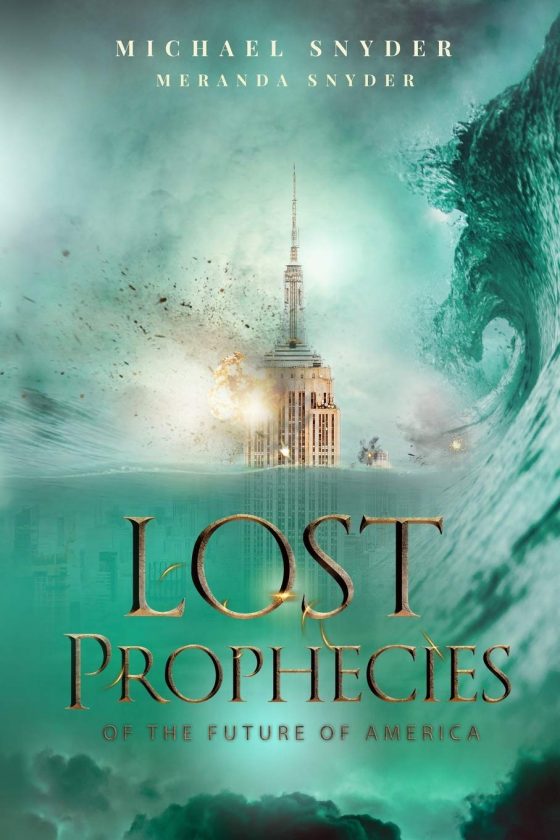
About the Author: My name is Michael Snyder and my brand new book entitled “Lost Prophecies Of The Future Of America” is now available on Amazon.com. In addition to my new book, I have written four others that are available on Amazon.com including The Beginning Of The End, Get Prepared Now, and Living A Life That Really Matters. (#CommissionsEarned) By purchasing the books you help to support the work that my wife and I are doing, and by giving it to others you help to multiply the impact that we are having on people all over the globe. I have published thousands of articles on The Economic Collapse Blog, End Of The American Dream and The Most Important News, and the articles that I publish on those sites are republished on dozens of other prominent websites all over the globe. I always freely and happily allow others to republish my articles on their own websites, but I also ask that they include this “About the Author” section with each article. The material contained in this article is for general information purposes only, and readers should consult licensed professionals before making any legal, business, financial or health decisions. I encourage you to follow me on social media on Facebook, Twitter and Parler, and any way that you can share these articles with others is a great help. During these very challenging times, people will need hope more than ever before, and it is our goal to share the gospel of Jesus Christ with as many people as we possibly can.
Last Updated on December 1, 2020 Watching “To the Lake” has made me think about the conditions that…
We’ve almost reached the end of the year and still, the coronavirus pandemic remains. No one is still safe from it. In fact, a number of countries are facing lockdown 2.0. Will America follow suit?
Lockdown 2.0 is already happening in places like the UK and Italy. These governments have made the decision that the risks of rapidly rising COVID cases are more dangerous than the consequences that come from locking down whole nations for the 2nd time.
In Italy, people are not taking to it without resistance. There have been riots in the streets as the people voice displeasure over the fact that lockdowns affect things like income, schooling, and overall quality of life.
Americans are watching from afar and wondering if the same type of lockdown is going to come back in this nation, too.
The latest round of restrictions to hit the American public comes strong and could be a blueprint of what to expect next.
Nightclubs, bars, and venues are getting a massive cut in capacity to 25%. Not sure how a business can sustain that, but this might be a new game where they cannot lock us down again but they can force societal shutdown by limiting capacity to the point where no business owner can afford to keep the doors open.
Face to face learning will end in Marion County on November 30th due to an increase in child infections above 13%.
Gyms, religious services and assisted living facilities are all facing steep new restrictions and these regulations work us a little closer to what could become lockdown 2.0

There are places like Canada where the governments are taking Draconian measures to assure that family gatherings are limited during the holidays. This is about as crazy as it gets when you start talking about keeping people from their families during the holidays.
There will be “good Samaritans” that will undoubtedly call the authorities on families that have too many people over and are having too much fun. When we turn on each other, that is when things get particularly dire. That was the case in California during the first lockdown where people were being encouraged to report others.
Here in America, the CDC is suggesting we lay low when it comes to our own holiday gatherings. Of course, they can only suggest that we do these kinds of things.
That is what makes America what it is. It feels good when a government can only suggest the next best move rather than impose it with impunity.
Hopefully, you can take what you learned from the first lockdown and take action now. Be more prepared to avoid being in a bad position again. Here are some of the biggest changes we made when preparing for the first lockdown that better prepared us for what could have been in the year 2020.

If the cases keep going up the children are going to be at home. Schools are going to have to act quickly to prevent gaps in learning and that is probably going to result in…well…gaps in learning. Don’t wait to react, you need to prepare for the fallout now.
You do not have to invest in hundreds of dollars of curriculum to become a homeschooling parent, but you should have some supplementary assignments and learning materials for your child if they are propelled out of the school and back to online learning.
If you haven’t, you really should. Get yourself a chest freezer that will allow you to store much more frozen protein. If we see meat shortages again, you should not be out there scraping the bottom of the barrel. You are a prepper, so be prepared for these things by storing extra food.

The most powerful thing you can do to prepare for lockdown 2.0 is to be more involved with the community. That includes your working with the neighborhood and city council members. They are going to be your voice and the people are going to eventually say UNCLE!
You want to be one of the voices that call for the lockdown to end. You might think your voice has no power and your concerns fall on deaf ears, but I would question how much effort you put into getting your voice out there.
Your neighbors are your emergency and disaster allies and the community and representation at large are your voice in dark times. Utilize them both.
The data isn’t in on all this locking down. You know, it looks like we stopped the infection and the deaths that could have occurred at the beginning of the virus entering the nation. However, we have no metric to measure the effects of the lockdown itself.
Can you measure the lethality of a national lockdown? There is no denying that the lockdown increased physical and emotional abuse at home. We know it crushed our economy and destroyed businesses and jobs.
How do you measure that and the outcomes?
We also know that it drastically affects overall health in the nation as people were either not able to schedule checkups, screenings, and other health preventatives. You cannot just shut the machine off without consequence. We have to be very careful about what happens next in our nation.
How are you going to prepare for lockdown 2.0 in America? Do share your plans in the comments section below!
Up Next:
Just as the men of the Hudson’s Bay Company, the Mountain Men of the American frontier, polar explorers,…

Treasury Secretary Steve Mnuchin is being bombarded in the mainstream media by all of the MMT advocates for crippling the Federal Reserve’s programs, which seems to be tightening monetary policy. Jerome Powell was complaining that the Treasury is shutting down some of the lending facilities, but our analysis actually points towards this being a welcomed approach!
For one, these programs were failing. The most ridiculous one was the Small Business Lending Facility, which was a total flop. Think of the fact that for a bank to originate one such loan, it has to incur a $50,000 legal and administrative cost!
In other words, if I run a small business and need $30,000 to $40,000 to survive the coming few months, no bank will work with me. Instead, when calling banks, we’ve learned that these loans are designed to be about $5,000,000 at a minimum. Not only that, but the banks want to see that the business is growing and has healthy financials. I ask you this: which small business that’s on the brink of going under needs a $5,000,000 loan and has good economics?
This program is yet another example of how all bailouts – all government-led and central-bank-orchestrated programs – are always going to disproportionately help asset owners. If you have a mortgage, forbearance is allowed, but if you rent, you’ll pay (at some point) or get evicted. Investors who have fat 401(K)’s are hitting all-time highs in terms of million-dollar accounts. People, left and right, are getting free money, basically, courtesy of the next generation, which will be on the hook for all of it.
America is designed to help its equity owners first.
That’s the primary reason why this newsletter is focused on building wealth, being flexible, and zig-zagging as conditions change and fluctuate.
The goal is to understand the prevailing circumstances so that one can adapt to it, not with a gloom-and-doom mentality, but also not with the notion that “stocks only go up,” as the new mantra goes.
Courtesy: Zerohedge.com
As you can see, no one is shorting the S&P 500 anymore. It’s become dangerous to short the index because there’s an institutional bias by the central bank of the United States and by the administration to make sure the markets are green.
Steve Mnuchin wasn’t wrong to tell Jerome Powell to stop with these programs since they will add $454 billion to the Treasury Department, which is going to help mediate the incredible difference of opinion between the Democrat-led Heroes Act, which is a spending relief bill north of $2.2 trillion that the Republicans will never pass, and the Skinny Bill and the Heals Act, which the Republicans want but the Democrats object to.
ShtfPlan.com believes that if any bill is to be passed in the month of December, it will be something that is a re-branding of the Problem-Solver Caucus, which is in the neighborhood of $1.4 trillion.
Remember, there are many programs that expire at the end of December, including rental relief. If no stimulus bill is put into law, on January 2nd, the sheriff’s department in many states will be busy evicting. People on the street are not a good outcome for families that have been victimized by lockdowns and shutdowns, especially women and minorities.
If the Republicans win the Senate race in Georgia on January 5, 2021, the Democrats lose even more leverage over the size of the stimulus bill, so it’s in their best interest to haul ass and pass at least $1.4 trillion now!
The post GOLD WIPEOUT: Be Patient – GENERATIONAL BOTTOM! first appeared on SHTF Plan – When It Hits The Fan, Don't Say We Didn't Warn You.


