Survival Gear is the most unused product until a natural disaster happens, then it’s the most desired products, but usually too late to help those that really need the help.

We sell around the World, and pride ourselves on offering a level of customer service that we would want to see ourselves if we were shopping online.
Our product ranges change regularly, so we hope that you come back to our sites to see some of the fantastic offers that we regularly have.

Get In Touch

Best Non Perishable Food For Epic Survival Emergencies

Non Perishable FoodBefore we discuss non perishable food, I wanted to share some shocking food related statistics with you:

So just by eliminating so much waste, we can help to reduce much of our worlds starvation.

Essentially – good food preservation practices can help to reduce this unnecessary waste. And one big component of food preservation is understanding the ins-and-outs of non perishable food.

So today, let’s go over in detail the following non perishable food topics:

As A Way To Introduce You To Skilled Survival, We’re Giving Away Our Family First Food Planning Guide. Click Here To Get Your FREE Copy Of It.

Canned Food Shelf Life Storage

WHAT IS NON-PERISHABLE FOOD


Non-perishable foods are food that:

Remain stable and safe to eat for long periods of time without refrigeration.

We all know different foods spoil at different rates.

Milk and eggs will spoil quickly left out on the counter. While a granola bar might last several weeks with no ill effects.

The point is:

There are extremes in food spoilage rates and the non-perishable items are on the far end of the spectrum. The further out, the less perishable it is.

Now, technically no food is truly non-perishable FOREVER. Eventually, all foods will become spoiled, become rancid, or lose their flavor.

Bacteria will eventually decompose all organic matter. It feeds off calories just as we do. It changes food’s taste, color smell, and can create foodborne illnesses if ingested.

Sure, with the help of technology non-perishable foods may last several decades. But don’t expect anything to last much longer than that.

WHY CHOOSE NON-PERISHABLE


Now that you know what non-perishable foods are – you may be wonder – so what? We have refrigeration, right?

Yes, we do – most of the time.

For Emergencies

But what happens when the power goes out for a few days or even a few weeks? Those frozen steaks, carton of eggs, and your head of lettuce are in serious trouble.

And once those take a turn for the worst – you’ll be glad you kept some non-perishable foods in your pantry. Non perishable foods are a staple within the broader category of survival foods.

That’s why here at SkilledSurvival we tend to focus on stockpiling food for emergencies. But there are other reasons to invest in non-perishable foods:

For Camping / Backpacking

Sometimes it’s worth buying some non-perishable food for a camping trip. Why? Because you can avoid dealing with a cooler and melting ice.

It seems like every time I take a cooler camping, we buy lunch meat and brats. And every time the ice melts and the ham slices and brats end swimming. Creating a gross raw meet cesspool.

Instead, you can avoid this entire fiasco by taking a perishable meat choice – like Beef Jerky.

For Travel

Sometimes, it’s easier to just avoid the hassles of cooking altogether.

One example of this is if your backpacking or traveling. Non-perishable foods allow you to avoid building a fire or hauling a portable stove.

This can help save weight or space.

Plus, for backpacking, you are normally exhausted by the end of the day. You just want to set up camp, eat, relax, and go to bed.

So why not make the feasting process as simple and effortless as possible. It’s a chore to cook a meal when your energy is depleted, and your tummy is rumbling.

For Donation

Most food drives, banks ask specifically for “non perishable food items”. They need foods they can stockpile, transport, and serve without worrying about refrigeration.

Can you imagine trying to feed thousands of homeless and starving people fresh salads? It would likely spoil before they could serve it…

One of the staples of food donation is canned foods – they are almost always a wise gift. But I encourage you not to just give canned food that you’ve never eaten because it’s gross. Donate taste and healthy canned foods!

So avoid donating your cans of Creamed Possum in Coon Fat Gravy Garnished with Sweet Potatoes” – Yuck! 

As A Way To Introduce You To Skilled Survival, We’re Giving Away Our Family First Food Planning Guide. Click Here To Get Your FREE Copy Of It.

BEST NON PERISHABLE FOOD ITEMS


No article about non-perishable foods would be complete without a list.

However, this list is not exhaustive. It contains a vast amount of non-perishable foods – especially the most popular ones.


grocery store

WHERE TO BUY NON-PERISHABLE FOODS


You can get many non-perishable items from your local grocery store.

Peanut butter, crackers, honey, etc. are all readily available to pull off the shelf. But one type of food that more difficult to find at the grocer is Freeze Dried Foods.

These non-perishable foods are made by specialty manufacturers. But you won’t find a wide selection of freeze dried foods in your local grocery store.

They sell them mainly at sporting goods stores or online.

So why go out of your way to invest in freeze-dried foods? Because they ARE the best food for survival and preparedness!

But freeze-drying meals yourself is both time-consuming and cost prohibitive.

So, if you want to stockpile a significant amount of freeze-dried food we’ve got you covered. We’ve put together several reviews for you to get started.

I’ve personally used all three brands for my emergency stockpile.

Each of these companies has their pros and cons but they are all reputable. So do a bit of comparison shopping and get yourself some non-perishable freeze dried food!

Dehydrated Mushroooms

HOW TO MAKE PERISHABLE FOODS INTO NON-PERISHABLE FOODS


Making a food non-perishable boils down to reducing bacteria’s ability to grow.

Bacteria is an organic entity; it’s alive. So just like you and me, it has basic survival needs (not all that different from ours).

Bacteria needs the following to survive:

  • Mild Temperature Ranges
  • Air (oxygen)
  • Moisture (water)
  • Food

Now – before we get started blocking bacteria – we can’t block the last item on the list – Food. Why? Because food is what we are trying to protect. Eliminate the food source defeats the purpose!

But if you block any of the other key ingredients, you can reduce bacteria’s evil plans to spoil your food.

Temperature Control

Most of us currently prevent food spoilage every day using refrigerators and freezers. Cold temperatures reduce bacteria’s ability to survive or thrive.

In freezing cold temps, it dies. In cooler temps, it can survive but is weaker and doesn’t thrive.

Side Note: Before electricity and refrigeration – there were root cellars and ice boxes. Not nearly as convenient but the principles were the same. Lower temperatures preserve food longer.

Suffocation 

Another way to combat food spoiling bacteria is to remove oxygen.

Bacteria needs oxygen to survive. So by using vacuum sealing, or oxygen absorbers, and/or mylar bags, you can store food separate from oxygen.

Remove The Moisture

Finally, bacteria needs water (i.e. moisture) to survive. If you remove most or all the moisture in food, bacteria will not spoil it.

However, as we’ll see shortly, there is a big difference between dehydrated foods (reduced moisture) and freeze-dried food (near zero moisture)…

So now let’s go over a few of the more conventional way people reduce bacterias ability to spoil their foods.

Canning

One time-tested way to preserve food is canning, especially your extra garden produce.

Essentially, canning is putting veggies into sealable cans with liquid. Then using a heating and cooling process to create a vacuum (i.e. no air).

Why? Because just like us, bacteria needs air to survive. So with no oxygen, bacteria cannot survive to destroy your canned foods.

Freeze Drying

Freeze drying foods is a process that removes nearly all the moisture out of food. But does so in a way that doesn’t damage the food.

Remember, moisture is a key ingredient for bacterial growth. So by removing all moisture, you’re eliminating bacterial growth on the food.

Freeze drying leaves the food in a state willing to accept and reconstitute moisture. Usually, you just need to add liquids to the food and allow it to reabsorb moisture. With some meals, you add boiling water to reconstitute and cook the food.

However, freeze drying on your own is either complex or expensive.

If you try to make your own freeze dryer – it’s going to be a complicated engineering project. Yes, it CAN be done but at the cost of a lot of time and energy.

The other way to make your own freeze dried food is to buy an expensive freeze drier. Harvest Right is the leader in this DIY freeze drying industry.

So, buying a Harvest Right freeze drier makes sense if:

  1. You have a lot of extra money to spend
  2. Or you know a large group of people who want to share the expense and the machine
  3. Or you want to start your own small freeze-drying business

If you agree with any of those options – then you SHOULD definitely check out Harvest Right start by watching the video below.


For everyone else, I recommend buying your non-perishable freeze dried foods instead. You should check out Valley Food Storage, Legacy Emergency Foods, or Mountain House.

Why? Because you can buy a whole lot of prepackaged freeze dried food for the several grand it takes to own your own freeze drier!

Dehydrating

Dehydrating food is somewhat similar to freeze drying but it’s not nearly as effective. Both reduce moisture but in vastly different ways. Instead of using vacuum chambers and dried ice, you just use heat and air movement to remove moisture.

The combination of heat and air dries out the foods.

And again, lack of moisture is one proven strategy to halt or reduce the spoiling process.

As good as this sounds – dehydrating is not nearly as effective as freeze drying. Sure you can turn a perishable apple into non-perishable apple chips. It’s definitely better than nothing and will prevent bacterial growth. But dehydrated foods won’t last decades like freeze drying.

Freeze Drying VS Dehydrating

One way to think about dehydrating vs freeze-drying is to compare it to a Refrigerator vs a Freezer.

A refrigerator slows bacterial growth but doesn’t completely eliminate it. A freezer eliminates bacterial growth. So dehydrating is a bit like refrigeration (slows the growth) while freeze drying is more like a freezer (eliminates all growth).

But freeze drying is BETTER than freezers because it doesn’t need a constant flow of electricity!

So freeze drying is preferred for extremely long shelf lives – its the ultimate survival and preparedness food.

Back to dehydrating – the good news is, dehydrating is both easy to do yourself and extremely affordable. You can probably start dehydrating fruits and vegetables today using tools you already own.

All you need is one of the following:

  1. A conventional oven (low heat – crack the door open)
  2. A food dehydrator, or
  3. A DIY backyard dehydrator (using wind and sun)


EXCELLENT “HOW-TO” PRESERVE RESOURCE


“The Lost Ways”- A Hardcover Book

I wanted to share with you one of the best food preservation resources I know of. It’s a book full of old school “lost” food preservation techniques.

It’s called “The Lost Ways”.

This book includes step by step instructions on all sorts of Lost Techniques such as:

If these “lost” frontier living techniques interests you (or someone you know) – click here to learn more.

It’s an excellent book to add to a survival library.

HEALTHY NON PERISHABLE FOODS


Some non-perishable foods are healthier than others.

For example, MRE (meals ready to eat) are not known to be super healthy.

They have a ton of calories to give a soldier in the field the energy they need. But if you’re eating MRE’s and not getting much exercise, you’ll probably end up gaining some serious weight.

Soups also tend to have a TON of sodium – so try not to eat canned soup for every meal!

However, some nuts (like Almonds) are very healthy for you. Beans are a healthy form of protein.

And while canned vegetables do not taste as fresh as garden veggies, they are still healthy. Beans from the garden or from a can contain valuable nutrients.

So, keep your non-perishable stockpile healthy by making wise choices.


As A Way To Introduce You To Skilled Survival, We’re Giving Away Our Family First Food Planning Guide. Click Here To Get Your FREE Copy Of It.

NON-PERISHABLE FOOD FOR HURRICANES


People tend to ask us about non perishable food-related to hurricanes.

Why hurricanes and not other emergencies?

I think it’s because hurricanes are a disaster you usually see coming for days ahead of time. So when a hurricane starts becoming a reality, people start researching their food options.

Other emergencies happen fast and unexpectantly – like tornados, earthquakes, wildfires, etc. You don’t the same amount of advanced-notice for these disasters…

With that said, your non-perishable food for hurricanes is no different than any other type of emergency. Calories are calories when the grocery stores are out of commission.

But maybe you should add a few extra cans of spinach (like Popeye) if you need the extra strength to weather the storm. Otherwise, any and all the foods in the non-perishable foods examples listed above will do for your hurricane prep list.

Just make sure you keep the non-perishable foods in a safe secure location. If your house is destroyed by the hurricane and your food was in your upstairs pantry – it’s gone!

So try to store the non-perishable foods (i.e. prepper food) in a basement or as secure a location as possible.

– “Just In Case” Jack

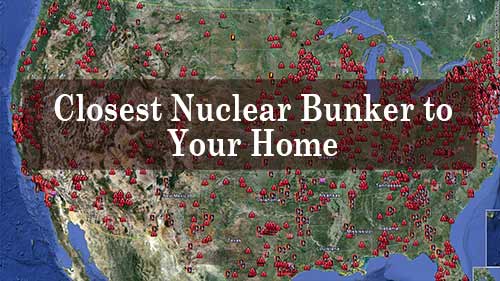
P.s. Do you know where the closest nuclear bunker is from your home?

There are a lot of natural nuclear shelters in the US that are absolutely free. And one of them is near your home.

Click on the image above to find out where you need to take shelter.

The post Best Non Perishable Food For Epic Survival Emergencies appeared first on Skilled Survival.

China Just Went Nuclear In The Trade War, And There Is No Turning Back Now

When will Americans start to wake up and realize what is happening?  At the end of last week, President Trump announced that the U.S. would be imposing a 10 percent tariff on 300 billion dollars worth of Chinese imports, and that marked a dramatic escalation in our trade war with China.  This move by Trump came as a total shock to Chinese officials, and global financial markets were thrown into a state of turmoil.  Since that announcement, we have been waiting for the other shoe to drop, because we knew that the Chinese would retaliate.  But honestly, very few of the experts expected something like this.  On Monday, China announced that it is going to completely stop buying U.S. agricultural products

China confirmed reports that it was pulling out of U.S. agriculture as a weapon in the ongoing trade war.

A spokesperson for the Chinese Ministry of Commerce said Chinese companies have stopped purchasing U.S. agricultural products in response to President Trump’s new 10% tariffs on $300 billion of Chinese goods.

This is essentially a trade war equivalent of a nuclear bomb.

If the Chinese would have slapped U.S. agricultural products with tariffs, that would have been a proportional response.  But to quit buying them entirely is an unprecedented escalation in a trade war that is really starting to spiral out of control.

And it is also clearly a political attack on President Trump.  The Chinese know that Trump is highly popular in rural areas, and this ban on U.S. agricultural products is going to severely hurt farmers in rural areas all across the United States.

U.S. voters tend to be more influenced by their bank accounts than by anything else, and so this is a smart strategic move by the Chinese if they would like to see a Democrat get elected in 2020.

In 2017, the Chinese bought 19.5 billion dollars worth of U.S. agricultural products, and that number dropped to just 9.1 billion dollars in 2018.

Now that number is going to zero, and according to Farm Bureau Federation President Zippy Duvall this latest move by China is going to be “a body blow to thousands of farmers and ranchers who are already struggling to get by.”

Please say a prayer for our farmers, because they really need it.

In addition to ending purchases of U.S. agricultural products, the Chinese also allowed the value of the yuan to decline dramatically on Monday.  This really rattled global financial markets, and shortly thereafter U.S. Treasury officials formally designated China as a “currency manipulator”.  The following comes directly from the official website of the Treasury Department

The Omnibus Trade and Competitiveness Act of 1988 requires the Secretary of the Treasury to analyze the exchange rate policies of other countries. Under Section 3004 of the Act, the Secretary must “consider whether countries manipulate the rate of exchange between their currency and the United States dollar for purposes of preventing effective balance of payments adjustments or gaining unfair competitive advantage in international trade.” Secretary Mnuchin, under the auspices of President Trump, has today determined that China is a Currency Manipulator.

As a result of this determination, Secretary Mnuchin will engage with the International Monetary Fund to eliminate the unfair competitive advantage created by China’s latest actions.

This is the first time since the 1990s that the Treasury Department has used this designation on any of our trading partners, and it is the kind of move that would not be made unless all hopes for a trade deal were completely gone.

Of course the Chinese wouldn’t have made the moves that they made either if they were still holding out hope for a negotiated solution.  According to one market analyst that was quoted by CNBC, the Chinese are “signalling that they have lost confidence that they can reach an agreement with Trump.”

So what this means is that in the short-term things are going to get bad for the global economy.

Really bad.

In the longer term, the structure of the entire global economic system could change dramatically, and this will especially be true if Donald Trump emerges triumphant in 2020.  According to economist Neil Shearing, we could literally be looking at “the end of the world as we know it”…

Among the implications for more deterioration in the global picture that Shearing cites are the “disintegration of the rules-based system” that has governed international commerce since the end of the World War II, and a potential “Balkanization” of the world economy as the U.S. and China develop their own standards, tech platforms and payment systems.

“It’s too soon to say exactly how events will pan out, but this casts the escalation in the US-China trade war over the past year in an altogether more ominous light. We may be witnessing the end of the world as we know it,” he wrote.

It is difficult to imagine a world in which there is no trade between the United States and China, and many would argue that we would be far better off today if we had never gone down that road in the first place.

But now that our two economies are so deeply integrated, trying to decouple is going to be an exceedingly painful process.

If you are familiar with my work, than you already know that I am not a fan of the Chinese government at all.  Something needed to be done about China, because they have been brazenly taking advantage of us and flouting the rules for decades.

Having said that, it is imperative that the American people understand that a messy breakup with China is going to cause an extraordinary amount of pain for us, for them and for the whole world.

It looks like this trade war could be the spark that plunges the global economy into utter chaos, and right now very few Americans seem to understand the true scope of the economic nightmare that appears to be headed our way.

Get Prepared NowAbout the author: Michael Snyder is a nationally-syndicated writer, media personality and political activist. He is the author of four books including Get Prepared Now, The Beginning Of The End and Living A Life That Really Matters. His articles are originally published on The Economic Collapse Blog, End Of The American Dream and The Most Important News. From there, his articles are republished on dozens of other prominent websites. If you would like to republish his articles, please feel free to do so. The more people that see this information the better, and we need to wake more people up while there is still time.

$1,400,000,000,000 Gone In Less Than A Week – Stock Market In Turmoil As The Trade War Dramatically Escalates

Our trade war with China has begun to spiral out of control, and as a result global financial markets have been thrown into a state of turmoil.  On Monday, the Dow Jones Industrial Average fell 767 points, and that represented the sixth-largest single day stock market decline in all of U.S. history.  To put that into perspective, the biggest single day decline during the financial crisis of 2008 was just 777 points.  So what we witnessed on Monday was definitely very serious.  And the Nasdaq just got absolutely monkey-hammered as well.  On a percentage basis, it was down even more than the Dow was, and it has now fallen for six days in a row.  We have not seen a losing streak that long for the Nasdaq since President Trump was elected, and some analysts are convinced that even more chaos is on the way.

Overall, 1.4 trillion dollars in stock market wealth has been completely wiped out in less than a week

It took just four brutal trading days for a $1.4 trillion wipeout in the S&P 500 stock value. From the Federal Reserve’s disappointing comments on the future of interest rates to President Donald Trump’s surprise tariffs to China’s weaponizing of the yuan, the record-long bull market took a big hit in a relatively short time.

European stocks have been getting clobbered as well.  In fact, they just experienced their largest two day decline in three years.

After Trump imposed another wave of tariffs on China at the end of last week, we knew that the Chinese would retaliate.  But we expected that the retaliation would be at least somewhat proportional.

Instead, they decided to bring down the hammer.

When Chris Krueger was asked about China’s retaliation, he said that “on a scale of 1-10, it’s an 11”.  The Chinese have announced that they are going to completely stop buying U.S. agricultural products, and they shocked global financial markets when they allowed the yuan to drop like a rock early on Monday.  In response, the U.S. Treasury Department formally designated China as a “currency manipulator”, and it appears that any hopes for a trade deal between the United States and China before the 2020 presidential election are completely and utterly dead.  For an extended analysis of these events, please see the article that I just posted entitled “China Just Went Nuclear In The Trade War, And There Is No Turning Back Now”.

All along, most investors seemed to believe that all of the angry talk would eventually fade and that the U.S. and China would be able to work things out.

But that didn’t happen, and now we have crossed the point of no return.  Financial markets are finally starting to realize that this trade war is going to have very, very serious implications for major U.S. corporations, and this will especially be true for our largest tech companies.

Over the past two trading days, the big five tech companies have combined to lose 228 billion dollars in market value…

Tech’s big five companies lost $66 billion in market value on Friday, and Monday’s plunge brought the two-day drop to $228 billion. Apple had the biggest percentage decline, falling 5.2%. Apple told U.S. Trade Representative Robert Lighthizer in June that the latest proposed tariffs would hit “all of Apple’s major products.” Some analysts are projecting a significant impact.

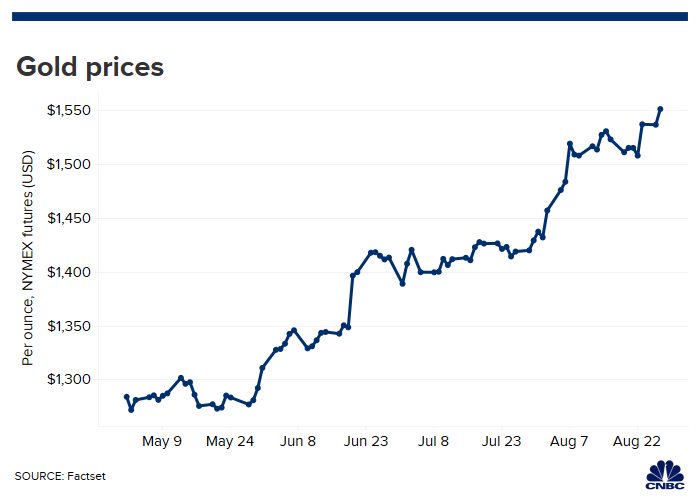
Meanwhile, by the way, the price of gold has been soaring.

As I have repeatedly argued, something definitely needed to be done about China, but trying to bully them into making a deal was never, ever going to work.

They are a very proud people, and once we started repeatedly pushing them extremely hard, it was just a matter of time before they started pushing back

“Your back is put against the wall and you’re constantly being attacked. Pride starts to kick in, and it’s not surprising China has started to assert some of its force,” said Greg Peters, head of multi sector and strategy at PGIM Fixed Income. “I’m not sure what that means in real terms. It’s not different than any other life situations. You push someone hard enough and they start pushing back. … I never thought it was a good idea to act like it’s a scorched earth policy – I win, you lose. I continue to think that was never viable for the Chinese.”

Being aggressive can be an effective negotiating tool, but if you push too hard and too fast you run the risk of completely alienating the other party.

That appears to be what has happened in this case, and now all hopes for a trade deal are completely dead.  As Bonnie Glaser has noted, the “potential for compromise has past”…

“The timing couldn’t be worse,” said Bonnie Glaser, director of the China Power Project at the Center for Strategic and International Studies in Washington. “The potential for compromise has past. Both sides are digging in and both leaders are first and foremost concerned about their domestic audiences. Politics is in the lead.”

Hopefully the markets will bounce back on Tuesday.  After being down quite a bit earlier, Dow Jones Industrial Average futures are trading slightly higher as I write this article.

However, the truth is that this crisis isn’t going away.  There isn’t going to be a trade deal with China, and that is going to mean a tremendous amount of pain for the global economy.

When a financial bubble pops, usually there is some sort of trigger that causes it to happen.  In 2008, it was the subprime mortgage meltdown.  This time around, it looks like the trigger could be our trade war with China.

As I noted a few days ago, our financial markets are more primed for a crash than they have ever been before.  And we are moving into the season when big crashes tend to happen.

Things have not looked this ominous since 2008, and a lot of investors are starting to get very nervous.

We shall see how the rest of this year plays out, but right now events certainly seem to be moving in a very alarming direction.

About the author: Michael Snyder is a nationally-syndicated writer, media personality and political activist. He is the author of four books including Get Prepared Now, The Beginning Of The End and Living A Life That Really Matters. His articles are originally published on The Economic Collapse Blog, End Of The American Dream and The Most Important News. From there, his articles are republished on dozens of other prominent websites. If you would like to republish his articles, please feel free to do so. The more people that see this information the better, and we need to wake more people up while there is still time.

The post $1,400,000,000,000 Gone In Less Than A Week – Stock Market In Turmoil As The Trade War Dramatically Escalates appeared first on The Economic Collapse.

America Is Not Going To Be A Free And Open Society Any Longer

Whenever a tragic act of violence makes national headlines, the calls to give up more of our freedoms and liberties in exchange for the promise of increased security become deafening.  But if we take another step toward becoming an authoritarian society every time something horrible happens, eventually we won’t have any of the basic liberties and freedoms that previous generations of Americans fought so hard to secure for us.  Unfortunately, voices like mine are becoming increasingly rare, and the American people seem to want a society that will shelter them from anything that could possibly go wrong.  Of course there has never been such a society in all of human history, and we won’t be able to create one either.  No governmental system can eliminate the problem of evil, and bad things sometimes happen to good people.  And without a doubt, the mass shootings that we witnessed over the weekend were absolutely horrific.  In less than 24 hours, 29 American lives were lost between these two mass shootings, and this has greatly shaken the entire nation

On Sunday, Americans woke up to news of a shooting rampage in an entertainment district in Dayton, Ohio, where a man wearing body armor shot and killed nine people, including his own sister. Hours earlier, a 21-year-old with a rifle entered a Walmart in El Paso and killed 20 people.

In a country that has become nearly numb to men with guns opening fire in schools, at concerts and in churches, the back-to-back bursts of gun violence in less than 24 hours were enough to leave the public stunned and shaken.

Sadly, these are not isolated incidents.  As our society has become less moral, we have seen an escalation of violence all over the country.

According to USA Today, so far in 2019 there have been more mass shootings than days in the year…

As gunfire ripped through America in an unprecedented 24 hours, a bleak milestone in a nation pocked by gun violence was marked: There have been 251 mass shootings in 2019, according to the Gun Violence Archive.

shooting spree early Sunday at an entertainment district in Dayton, Ohio – which left at least nine dead and more than two dozen injured – notched an even darker statistic: It occurred on the 216th day of the year, meaning there have been more mass shootings than days so far this year.

As I have been warning for years, the thin veneer of civilization that we all take for granted is steadily disappearing.

At one time, you could walk down the streets in most communities in America without worrying that someone would suddenly gun you down, but that is no longer a safe assumption.

And in some areas, things are getting really, really bad.  Just check out what happened in Chicago over the weekend

In Chicago at least three people have been killed and 37 more injured since Friday evening in shootings within city limits, including 22 people shot Sunday in less than four hours, the Chicago Sun-Times reported.

In particular, a mass shooting that took place near a children’s playground was particularly tragic

As The Epoch Times’ Jack Phillips reports, at least seven people were shot and wounded on Aug. 4 as they gathered near a children’s playground on Chicago’s West Side. The people gathered at 1:20 a.m. as they stood in the park on the 2900 West Roosevelt Road when a person opened fire from a black Chevy Camaro, said Chicago Police.

So why didn’t this mass shooting get the same kind of coverage that the other mass shootings received?

Could it be that it is because it didn’t neatly fit the agenda that the mainstream media is trying to promote?

The city of Baltimore is another major American city where violence is completely and utterly out of control.  In fact, there is only one nation on the entire planet that has a higher homicide rate than Baltimore

Only one country in the world has a higher per capita homicide rate than the city of Baltimore.

According to WorldAtlas, the murder capital of the globe is Honduras — where there are 90.4 homicides per 100,000 people.

Baltimore, with 56 homicides per 100,000 people, edges out the number two spot ahead of Venezuela, where there are 53.7 homicides per 100,000 people.

As the violence across our country continues to escalate, the calls to restrict our 2nd Amendment rights are going to become overwhelming.

But taking away our 2nd Amendment rights is not going to solve the problem.  Instead, it will just take the guns out of the hands of law-abiding citizens.

The truth is that the El Paso shooter picked a gun-free zone for a reason.  When they know that their targets will be sitting ducks, that just makes things even easier for the mass shooters.

And the bad guys will always find ways to get guns.  Just look at the city of Chicago – they have some of the harshest gun laws in the entire nation, but they also lead the country in gun deaths.

Unfortunately, logic doesn’t tend to work with those that love authoritarianism.  Whenever something happens, they want the government to do “something”, and that “something” almost always involves eroding our most basic rights.

I wish that it wasn’t true, but this is where our country is heading.  Americans have been trained to believe that the government should take care of them from the cradle to the grave and should do all that it can to shield them from everything bad that can possibly happen in life.

Sadly, every time such a totalitarian “utopia” has been attempted throughout human history, it has always ended very badly, and that will be the case here as well.

About the author: Michael Snyder is a nationally-syndicated writer, media personality and political activist. He is the author of four books including Get Prepared Now, The Beginning Of The End and Living A Life That Really Matters. His articles are originally published on The Economic Collapse Blog, End Of The American Dream and The Most Important News. From there, his articles are republished on dozens of other prominent websites. If you would like to republish his articles, please feel free to do so. The more people that see this information the better, and we need to wake more people up while there is still time.

The post America Is Not Going To Be A Free And Open Society Any Longer appeared first on The Economic Collapse.

Things You Can Cook Over a Fire

Written by Guest Contributor on The Prepper Journal.

Editor’s Note: A guest contribution from Scott Huntington to The Prepper Journal.

Before we had ovens, cooktops and microwaves, there was only one way to cook up some grub — over the fire. You have to admire fire’s staying power. How many other old-world methods remain relevant thousands of years after they were invented?

Cooking over an open flame isn’t just fun, it’s popular for a good reason. The flavor you get from a flame-cooked meal is difficult to match on even the finest bar-b-queue. Plus, sometimes it’s the only cooking method you have. From surviving and camping to just getting creative, here are 10 things to try next time you’re around the fire.

Blueberry Orange Muffins

Let them try and tell you that baking on a camping trip is a bad idea! This environmentally-conscious muffin recipe makes your pack lighter by re-using the peels of oranges that you can eat on the trail. When it’s time for dessert, mix water and muffin mix as directed and then spoon the result into the empty orange halves. Wrap the mini muffin trays in a double layer of tinfoil and set them in a warm — but not flaming — section of coals. Allow eight to ten minutes of cook time. Boom, a sweet treat that you wouldn’t expect around a campfire.

Kebabs

While they’re simpler to do over the backyard fire pit than on the trail, kebabs can be packed and made in the wilderness with little hassle. The beauty of these simple-but-tasty creations is they allow you to create a multitude of flavor combinations and can customize for meat-eaters, vegetarians or omnivores. As your skill in combining flavors improves, you can play around with mixing things that cook faster or slower, like meat and fruit, and using the thickness of each slice to help the entire skewer cook evenly.

Pizza

Everyone loves pizza, right? But you might not think to cook it over a fire. With a simple pizza stone, you can make it on your backyard grill or beside a babbling brook. Fresh pizza dough can easily pack into camp for a first-night-out feast, and of course, it transports well from your fridge to the bar-b-queue. Similarly to Kebabs, you can enjoy a number of flavor combinations and you might be surprised how much you enjoy the nuance of a crispy-yet-chewy grilled pizza crust. It’s not unlike a gourmet wood-fired pie.

Steak

We’re not surprising anyone by including steak on a list of things you can cook over a fire. A steak traditionalist might even argue this is the only way meat should ever cook. Choose a flavorful piece such as New York Strip or Rib Eye to make over the open flame and the fat on the meat will nearly cook it for you. We recommend a good coating of butter or olive oil, complemented by some salt, pepper and rosemary, but you’re welcome to get more creative with your steak seasonings. Another great thing about this fire-cooked meal is there are several sides you can make over a fire as well.

Corn on the Cobb

Sure you could boil your corn, something we’ve probably all had. But flame-grilled corn-on-the-cob is without question the better way to have it. Plus, it’s so simple. Pick up some good fresh corn, shuck it and wrap in tinfoil, and place in hot embers for 20-30 minutes.

You can also do it with a campfire grill to reduce the mess. Throw a nice chunk of butter and some salt and pepper inside the tinfoil wrapper to add the perfect finishing touch to this sweet and healthy side.

Baked Potatoes

Similar to corn, baked potatoes can be made easily around a campfire by taking advantage of the wonders of tinfoil. However, as a heartier dish, baked potatoes can serve as a main dish when stuffed with the right ingredients. Do some meal prep before hitting the trail by splitting your spuds and packing them with bacon, chives, butter and seasoning. When you arrive at camp, everything will have melted together in the foil — you can finish it off by cooking it over the fire.

Egg and Sausage Taquitos

We tend to focus on dinner when the idea of making things over a fire comes up. But what about breakfast? For the most important meal of the day, breakfast can get neglected on camping trips, but these simple breakfast taquitos will give you a morning boost whether you make them for the kids at home or cook them up after a night on the trail. Meal prep is fairly simple — you make some sausage links and eggs, season them up and then wrap in a tortilla and add seasoning. Make sure you have a good means of keeping these cold if you plan to make them at camp.

Campfire Griddle Cakes

Your camp-mates will be thrilled to wake up to the smell of hot, fresh pancakes on the trail. If you’re used to cooking on a cast-iron skillet, these are about as straightforward as making pancakes at home. You can whip up a batch of batter in 15 minutes at home and jar it or bring with you on the trail using a Tupperware container. Make sure you bring along the necessary flatware. These aren’t as easy to eat with your hands as a kebab, hot dog or s’more. Extra points if you remember syrup and fresh berries.

Stuffed Bell Peppers

Similar to the baked potatoes we mentioned earlier, these stuffed veggies can easily serve as a main course. The recipe we chose uses a combination of rice, veggies and ground beef for a well-rounded and nutritious dinner that helps get all your food groups in while you’re out on the trail. The stuffed peppers are cooked in a Dutch oven and take about 30-45 minutes, which should be enough time to prepare additional sides if needed. They look pretty gourmet when done — proof you don’t have to be at home to enjoy something special.

S’mores

What would a list of fire-cooked goodies be without s’mores? These old-timely favorites will bring a smile to anyone’s face, whether on the trail or in the backyard. Did you know, s’mores have gone upscale? Try them with fruit, peanut butter and other wild combinations.

Cooking over an open flame is a wonderful social experience and a way to make plain-old good food. It brings the family together and gives you an excuse to try some truly special recipes that you otherwise might not. So try out some ours, or let us know in the comments below what your favorite flame-cooked eats are!

Be Safe out there and be sure to check out The Prepper Journal Store and follow The Prepper Journal on Facebook!

The post Things You Can Cook Over a Fire appeared first on The Prepper Journal.

How to Make Your Own Ethanol (Gas)

Although DIY’n is a common practice in this era, it still may be surprising to some that creating your own ethanol source using just a few basic ingredients can be done very easily and by anyone. Why would anyone go through the trouble to create their own gas in the first place? For starters, it can save you a pretty penny on your fuel bill at home. Then there is always an advantage to being prepared in the occurrence of a natural disaster. Most ethanol producers use it to fuel their vehicles, lawn mowers, gas powered generators and even power tools. Although it might not be something you need to do daily, it’s not a bad skill to acquire.

First things first, keep it legal. In order to build your own fuel source you will need to have a permit from the Bureau of Alcohol, Tobacco and Firearms. This permit is called a “Fuel Plant Permit” and is necessary no matter how much gas you plan to produce or how you intend to use it. Without the permit, it is a criminal offense to produce ethanol out of your home. Don’t say we didn’t warn you.

Now that we have warned you about the legalities, safety is next. For obvious reasons you’ll need to use some common sense and precautions when producing ethanol. When using your DIY gas for your car and other home needs, it’s imperative that you know what the fuel system is made out of. Ethanol is highly corrosive to plastic and aluminum so it needs to be mixed with gasoline, about 85% ethanol to 15% gasoline. Be sure to read up on the manufacturer guidelines before using your own ethanol in any fuel system to decrease the chances of destroying it completely.

Ethanol production is a natural process. It actually comes about through the fermentation of carbohydrates. There are several recipes for it, but let’s just assume that you don’t have your own crops to work with. Now let’s get to the directions. You will need the following:

(1) 20 gallon plastic barrel with a lid
(1) 10 ounce packet of brewer yeast or distiller yeast
(1) stirring paddle
(40) pounds of sugar
(1) still

Mix it

You will need to melt the sugar in hot water (about 100 degrees fahrenheit). Fill up your barrel about halfway with water and then add sugar in 8-10 lbs at a time. This allows it to melt and stir easier. After the sugar is pretty much broken down you can fill the remainder of the barrel with more hot water. You will mix the yeast in once the temperature is somewhere between 80-90 degrees. Place the lid on loosely to allow the fermentation process to occur. Set the barrel aside in a place that is about 70 degrees consistently.

Leave it

The fermentation process will naturally happen over a week or so. The yeast is eating up the sugar and producing waste in the form of carbon dioxide and alcohol. You will see bubbles coming out of the mixture, this is good. Keep that lid on loosely to avoid too much pressure causing the barrel to explode. Once the bubbles stop forming, fermentation is complete.

Filter it

You will need to filter the ethanol that will most likely carry dead bugs, debris and dead yeast.

Distill it

The remaining mixture is that of dead yeast, water, and ethanol. To get the ethanol out of this mixture, you need to use a still. The distilled version of your solution should get you around a 3:1 ratio of original solution to finished ethanol.

Dehydrate it

At this point your ethanol may still have some water inside of it. In order to remove it, you need to use a unique fuel filter that can filter the water out. These filters are made out of specific fabrics that allow ethanol molecules to pass through while keeping the water out.

And there you are. Do it yourself ethanol for your car and other home needs. You’re welcome for the lighter fuel costs.

5 FREE Preps Anyone Can Do!

When one decides to begin the journey into “prepping,” that doesn’t necessarily mean they have a lot of money at their disposal. That’s why it’s important to do the things that cost nothing first before you start buying things to store for when the SHTF.

This list is in no particular order, nor is it a complete list of all the possible things you can or should do after you decide to start prepping that doesn’t cost any money.  But this is a great guide for those just getting their feet wet and on a strict budget.

  1. Inventory Your Items

Take an inventory of everything you have already that you can or might need if the SHTF.  Put your first aid items together and organize your food. Doing this will help you get an idea of what you already have, what medications or ointments have expired, and what you may need to replace.

2. Write Out A Wish List

After you’ve gotten an inventory of everything you already own that you will need for your prepping gear, write out the things that are missing.  Do you need to replace some expired medications? What foods are you missing to make hearty, wholesome, and filling meals quickly, cheaply, and without power? Cross-check your inventory list.

3. Make a Space for all Your Items

Organize your gear in a central location so you know where it is.  In an emergency, such as a medical one, you’ll want quick easy access to your first aid kit. Keeping all your food together also allows you to more easily see what you’ve acquired and what you still need.  Organize your food by groups, such as spices, vegetables, meats, sauces, etc.  Keep the oldest food toward the front of your supply so you will use it first.

4. Practice Skills

Take the time to practice the things that you can already do. Practice building a fire. Make it a challenge and practice during the rain. If you can sew, take the time to repair a worn-out item by hand. Watch self-defense videos on YouTube and practice with your family. A free skill you can begin to learn is getting around your house in the dark.  Practice with the whole family. Learn to move quietly and safely and know how to evacuate if need be. Practice situational awareness and make it a habit.

5. Make a Family Plan

Come up with an emergency plan as a family.  What do the children need to do if the SHTF when they are at school? Where is the rendezvous point where everyone is to meet in the aftermath of a disaster? If it’s home, who is responsible for staying put to make sure everyone arrives? Come up with a few plans and rank them. If plan A fails, then everyone moves on to plan B.  You can write these out or just have family meetings to discuss your plans and brainstorm ideas with each other.

*A failure to plan is a plan to fail.

Prepping doesn’t necessarily have to be complicated or expensive. The goal is to get you and your family in the preparedness mindset so you can take the reigns on your own. Knowing what you need for your particular situation will be invaluable as you begin your prepping journey!

If you have any suggestions for readers that are free and that they can begin at any time, share them in comments!

Pioneer Preps: Paracord Donut

Cordage is long stringy gold for us survivalists. It bundles items, lashes structures, creates the noose for the would be dinner, and so much more. As most survivalists do I went with the military spec paracord as my cordage of choice. Its strong, inexpensive, and versatile. I also wanted a good deal of it, at least a hundred feet if not more. Cordage can always be cut shorter but splicing or knotting two pieces of cordage will always create a weak point at that spot. Now I have over a hundred feet of paracord, but how do I store it?

By Grimm, a contributing author to SHTFBlog & Survival Cache

As a beginner I went with the traditional way of wrapping loop after loop from my thumb to my elbow and then wrapping the last bit in the middle to secure it. It worked but it took up room, the loops got caught on things and sometimes when unraveling it all it would knot up. Having this happen to me more than a few times and I was ready to find a new way to store my paracord. The paracord donut technique was the answer.

Related: 21 Survival Uses For Paracord

In the video you will see that a paracord donut is nothing more than a loop of daisy chain loops. Going around itself until there is no more. This technique creates a very compact donut spool of your cordage. Unlike other spools though it doesn’t have a rigid structure in the center and the cordage will not continue to peel off if you drop it. It will not knot up on itself while it sits in your bag, I have never had it catch on anything and as a bonus the weight of the donut itself can be used to throw your cordage over a branch or to another person.

The process of making this will take some time and some getting use to, but its actually quite simple once you get the technique down and very hard to forget. You can even label multiple paracord donuts with what length they are for easy identification. Also although I am calling it a paracord donut this technique can be used with other cordage types as well. Take a moment and watch the Pioneer Prep so you can see how easily it is to wrangle in your wild cordage.

Please Visit Amazon Affiliate Sponsors

The Ultimate Hurricane Prep List For Survival

Hurricane Prep List

The Ultimate Hurricane Prep List – For Before, During, And After The Storm

Over the past few days, as I’m writing this article, I’ve been keeping close tabs on the weather reports in the Gulf of Mexico.

A large tropical storm was brewing just offshore and is likely reaching landfall about now…

Maybe it will reach hurricane status, maybe not.

But I guarantee, there WILL be LOTS of hurricanes this year and every year after.

And it’s very likely some WILL reach landfall along the US coastline. It’s not a matter of IF but WHEN.

Back in 2005, a couple of my friends lost nearly everything to Hurricanes Katrina and Rita.

Before this fateful day, these friends were quietly living their lives, building their families in a hurricane zone.

Several of them were fellow coastal researchers. Meaning, their careers were dedicated to how large storms affect the very places they call home.

But in 2005, several of them lost their homes and businesses to these massive hurricanes. And they nearly wiped their beautiful little towns completely off the map.

Now, years later, only half of them have returned to the Gulf. And those who did stick around have since moved to “safer” inland locations.

But one common theme I noted was that despite their background, few took the information seriously. They “knew” the dangers and risks but that was data and numbers – not reality…

This goes to show the strength of human errors such as complacency and recency biases.

They hadn’t taken just how devastating it could be. They didn’t realize an average hurricane releases as much energy in a day as the explosion of half a million small atomic bombs.

And every single one of them regretted not creating a comprehensive hurricane prep list. They all failed to make time for hurricane preparations.

They were forced to react and became frantic as the chaotic situation unfolded.

They didn’t plan ahead – which left them with few options and limited resources when all hell broke loose.

NOW is the time to think about your hurricane prep list and plan ready for the worst!

With that said, today we’ll be covering the following hurricane-related topics in great detail:

As A Way To Introduce You To Skilled Survival, We’re Giving Away Our #78 Item Complete Prepper Checklist. Click Here To Get Your FREE Copy Of It.

Hurricane Warning Sign

HURRICANE BASICS


“Hurricane” is the English adaptation of a word used by native languages along the US Gulf Coast. It’s a word used to describe extremely dangerous tropical storms.

These types of storms develop throughout the world’s oceans. And they are known by different names (“typhoon”, “cyclone”) around the globe.

For simplicity, I’ll refer to them all as hurricanes today. And I’ll focus primarily on hurricanes in the US Gulf of Mexico and Atlantic coast.

If you live in a different part of the world, the storm seasons and classification schemes will vary. But the core idea and recommendations for emergency planning are exactly the same.


Hurricane Season

Nearly all hurricanes that hit the mainland US are born in the tropical Atlantic. Specifically in an area between the Caribbean Islands and the Western Shores of Africa.

This is where warm ocean waters deliver tremendous amounts of moisture to rising warm air masses. This moisture feeding mechanism generates enormous rotating storms and draws in energy.

As these storms progress across the Atlantic, they encounter the Gulf Stream. This helps to boost their energy further and tends to turn them north into the Gulf and Atlantic coasts.

This system of moisture generation depends on hot summer temperatures. So for the South Eastern US, the storm season begins sometime in May and peaks in September. Then it tapers off into the fall (until November) as waters cool.

Of course, hurricanes can develop any month of the year, but they are far more likely in late summer.

Hurricane Features

“Tropical depression”, “tropical storm” and “hurricane” are all terms describing the exact same thing. A rotating storm system fed by warm, moist air. The only difference in the naming is due to their size, severity, and wind speeds.

Here’s what sets a hurricane apart from tropical depressions and storms:

Hurricane Eye And Eyewall

The most distinguishing feature of a hurricane is the “eye”. The circular area of strong updraft at the center of the storm. It’s the center of the storm around which everything else rotates.

Odd as it may seem, there are almost no winds at the surface within the eye. And commonly blue sky and visibility can appear in the eye as well, giving the eye a relatively calm feel.

But, don’t be a fool.

The eye is surrounded by the very worst weather in the entire system. So this is not the type of “calm” you want to experience firsthand…

Surrounding the eye are towering walls of cloud banks and extreme winds.

You can think of the eyewall like a sports stadium; one that rises tens of thousands of feet above sea level.

This area has the most devastating winds and turbulence. It’s where measurement occurs to record wind velocity for storm classification.

Here’s a video showing some footage within the eye of a hurricane:


Hurricane Force Winds

The entire storm rating system is contingent on the maximum observed winds (near the eyewall). But hurricanes show a dramatic decrease in wind speeds as you get further from the eye.

A Category 4 storm will have a rough “bullseye” of category 3/2/1 winds surrounding the eye.

The entire area will experience “hurricane-force winds”. Though only a small part near the eye will see sustained Category 4 level winds.

Outer Bands

Hurricanes often display long trailing “fingers” of clouds and rain. These fingers spiral away from the center for hundreds (sometimes thousands) of miles.

These bands generally contain severe thunderstorms and often turn out localized tornadoes. They are home to the heavy, drenching rains that often cause flooding and damage.

During Hurricane Harvey, Houston, TX saw several FEET of rain from these outer bands. The storm stalled out over the city, giving rise to the worst flooding the city had ever seen.

Storm Surge

Sometimes it’s the extreme winds that cause the most damage but often it’s the flooding. Hurricanes not only dump copious amounts of rainfall, but they also bring a surge of water to shore.

The sustained winds from the hurricane create a water stacking effect. Ocean water becomes pushed together into a massive heap out at sea. But when this bulge of seawater reaches land it easily spills over sea walls, damns, and barriers.

This often causes extreme flooding damage to buildings and residencies along the coast. Especially in low lying areas (such as vast areas of New Orleans…)

And the storm surge often occurs BEFORE the hurricane makes landfall! So the coastal flooding can make evacuation difficult if not impossible.

I highly recommend everyone take a few minutes to watch this excellent video on storm surges:


Hurricane Categories

Authorities categorize hurricanes by the Safir Simpson scale. This scale is based on the “maximum sustained winds”.

These are CONSTANT wind speeds – gusts can be considerably higher in each category!

  • Winds below 74mph = Tropical Storm
  • 74 to 95mph Winds = Category 1 Hurricane
  • 96 to 110mph Winds = Category 2 Hurricane
  • 111 to 129mph Winds = Category 3 Hurricane
  • 130 to 156mph Winds = Category 4 Hurricane
  • Winds above 157mph = Category 5 Hurricane

Want to see a detailed visual of the damage caused by different windspeeds? Watch this video:

Hurricane Predictions

Hurricane predictions on the weather report generally depend on understanding three terms:

1 – Hurricane Watch

A “Hurricane Watch” means you should expect hurricane conditions in the next 48 hours.

At this stage, you should be:

  1. Reviewing your hurricane prep list and plan
  2. Staying up to date on the weather forecast

If authorities upgrade a hurricane from a watch to a warning – be ready to act immediately.

2 – Hurricane Warning

A “Hurricane Warning” means you can expect hurricane conditions in the next 36 hours.

During a hurricane warning you should:

  1. Complete all remaining preparations and
  2. Be ready to evacuate if ordered to do so

3 – Cone Of Uncertainty

The cone of uncertainty is a new tool in hurricane forecasting. It gives meteorologists a way to show a hurricanes most likely future path of travel.

Meteorologists run thousands of storm trials. These trials help them to understand the variability in how a storm may develop and move.

They then use statistics to give them a best-guess at where a storm will travel and hit.

But as we all know, predictions are more accurate for shorter time scales than they are for the long term. So the predicted path starts narrow at the current location.

The closer the predicted path is to its current location, the smaller the cone of uncertainty is. So the predicted path over the next few hours is pretty much a guarantee.

Then as the path gets further out in time the cone gets wider. This provides a wider range of possible paths given by the model variations.


Now let’s get into preparing for a hurricane – we’ll cover action items before, during and after…

Here’s a comprehensive overview video if you’d rather get your information that way:


Hurricane Katrina Satellite Photo

HOW TO PREP BEFORE HURRICANE SEASON


First of all, take a lesson from my friend’s misfortune and plan ahead! Don’t wait until the storm has nearly arrived to take precautions.

By then, you’ve limited your options; which is a fragile position to be in. If you want to live a resilient life – the more options you have, the better!

The main options being critical supplies and possible courses of action. Preparing early improves your survival chances with less stress, damage, and injury!

Plan Your Evacuation Route Early

As your location enters the cone of uncertainty, authorities will issue an evacuation.

Never wait for someone to tell you how to get to safety or follow a blind herd of humanity.

Instead, research the best evacuation routes from your area beforehand. Then you’ll be able to navigate to safety with less confusion, worry, and traffic when the time comes.

This means establishing an emergency meetup location with family and friends to wait out the storm. Where you can get gas and supplies, what shelters will be available and where you can go with pets.

It’s wise to practice the route as well, to see all the details in person.

Stock Up On Non-Perishable Supplies Early

Once authorities issue a hurricane watch or warning critical supplies go fast. The news always shows footage of empty store shelves and long lines at the gas station.

For items with a long shelf life, it pays to stock up early and avoid wasting time in long lines. Plus, when supplies run short – supply and demand kicks in and you end up paying premium prices…

Instead, it’s better to accumulate supplies and resources between hurricane seasons, if possible.

I’ve seen these WaterBOB Bathtub Water Storage Bladders selling at 3X to 4X it’s “normal price” before hurricanes. Normally, they sell for about $35, but I saw them priced at over $100 leading up to Hurricane Irma in 2017.

Also, be sure to keep these items organized and accessible. You’ll want to take some of them with you during an evacuation.

Here’s a simple hurricane prep list of items you should include:

*Note: click on any of the links in the list for a detailed article about these items

As A Way To Introduce You To Skilled Survival, We’re Giving Away Our #78 Item Complete Prepper Checklist. Click Here To Get Your FREE Copy Of It.

Inventory Your Property

Once the storm is over, you’ll need to have documentation for any insurance claims. And meticulous inventory is a lifesaver when dealing with evil insurance adjusters.

A paper version is better than nothing, but I recommend you walk through the house as you take video.

Nearly everyone has a smartphone nowadays – so it’s simple to do this and may only take 20 minutes. So no excuses – do it now.

Open drawers and cupboards for the camera. Call out the valuable items specifically and mention brand names and model numbers.

And don’t forget to inventory the garage as well. Most of us have a lot of valuable vehicles, tools, and equipment out there!

Store your inventory list (digital or paper) with the rest of your emergency supplies. Make sure to update it periodically to include new purchases.

Make Sure You FULLY Understand Your Insurance Policy

Many believe their homeowner’s insurance policies will cover ALL hurricane damage. But most general policies don’t cover flood damage, which can create even more damage than the wind.

If you find you need a separate flood policy, it’s better to do that way ahead of time. It’s a nightmare to try to deal with it during or after the storm.

It’s in insurance companies best interest to pay you as little as they possibly can. If that means calling the damage “flooding” and not “hurricane” they will do it. Leaving you with a damaged home and no insurance funds to repair it…

Also, check your automobile, boat, RV, etc policies. Make sure you have proper insurance coverage on EVERYTHING you leave behind in the path of the storm.

Take Care To Protect Your Home

Much of the damage during a hurricane is due to wind-driven debris and falling trees.

A call to a local arborist or landscaping company can help with ideas for how to reduce tree damage. And make sure your hanging baskets don’t become flying cannonballs.

I recommend adding heavy-duty metal storm shutters. Or cutting custom plywood covers for windows ahead of time. These actions will speed up your preparations when a storm is fast approaching.

WHAT TO DO WHEN A HURRICANE WATCH IS IN EFFECT


A hurricane watch is the first level of forecasting for a hurricane event.

This does NOT mean you will definitely see the full effects of the storm. But it means a very real possibility exists in the next few days.

This is the time to consult your hurricane prep list and plans to make any last-minute additions or adjustments.

Listen To The Weather Predictions

A quality hand-crank NOAA weather radio provides critical information from the national weather service.

Minute by minute up to date forecasts will keep you advised if conditions change.

Double Check Your Critical Supplies

Go through your non-perishable items and replace or restock if needed.

Refill any prescriptions you might need.

If you have kids or pets, some treats and a new toy or board game might go a long way towards keeping them calm during an evacuation.

Secure Your Property

Bring in any outdoor furniture and equipment, including grills (turn off the propane).

Store them safely in a garage or basement if possible. If not, lash them down securely.

Close all storm shutters and board up any remaining windows and doors with thick plywood.

Keep Things Cold

In the event that you lose power, it’s best to have your fridge and freezer as cold as you can get them.

Keep their doors closed and they’ll remain cool longer even if the power goes out.

Fill Your Gas Tank And Fill Up Gas Cans

Who knows when you’ll find an open gas station while evacuating? So fill up early and consider some extra gas cans for the drive. We recommend stocking up on fuel for any future emergencies.

If you’ve got a generator, this is a good time to give it a final test.

You might also consider investing in a solar generator. The prices on them are starting to come down and they don’t require any fossil fuels to operate (plus they are completely silent to operate).

Hurricane Evacuation Route Sign

WHAT TO DO WHEN A HURRICANE WARNING IS IN EFFECT


When authorities issue a hurricane warning for your area, you should be well ahead of the game.

At this point, hopefully, you only have to deal with the last-minute steps.

Keep Listening To Weather Predictions

Keep that NOAA weather radio handy.

Evacuation orders will be broadcast alongside the weather predictions. So make sure you pay attention to the areas affected.

Load Up Your Vehicle

Get your emergency food, supplies, and important documents in the vehicle and ready to go.

Consider bringing your laptop and digital copies of all your files.

I recommend having a bug out bag for each family member ready to go for ANY and ALL future emergencies. So for a hurricane evacuation, just grab your go bags and go!

Review Your Evacuation Routes

Know the whole route, and make sure you know some alternatives as well. Traffic jams and weather damage can cause delays or blockages on your primary evacuation route.

Stay Inside And Away From Windows

Even before the worst of the storm, damage from flying debris can be dangerous.

Resist the temptation to “storm gaze” and stay well away from all windows and doors.

Shut Off All Utilities

If you’re evacuating, take a moment to shut down the water and gas lines in case of a leak.

However, leave your electricity on to power the fridge and freezer as long as the grid stays up.

Evacuate When Ordered To Do So

If the authorities issue an evacuation order, it’s best to heed that order and head for a safer location.

Some people try to shelter in place, but that should be a last resort, NEVER your primary plan.

If you can’t leave due to financial limitations and no access to a personal vehicle – search out any large emergency shelters. Ideally, you want to hunker down in a shelter with a sturdy building and emergency personnel available.

emegency cots in shelter

Some stuborn people try to ride out a hurricane in their own home. I get it they’re likely worried about looting during the aftermath. But what are material”things” really worth compared to your life? Zilch…

If the hurricane ends up not being as bad as predicted, great, you’ll be able to return home quickly.

But it’s possible the hurricane could end up being much worse than predicted. Don’t be a fool – evacuate or seek authorized emergency shelters.

Hurricane Damage Street BlockedWHAT TO DO AFTER THE HURRICANE


After the storm has passed, it’s time to head back and assess the damage.

You may find that your home escaped unscathed – or you may find a bare slab where you house once stood as my friends did.

Either way, it’s important to keep your safety in mind as you head back.

Don’t Turn Off The Weather Predictions

Keep that NOAA weather radio at hand.

Even after the storm has passed, there may be significant rain events and flooding. It could take days or even weeks for everything to clear up.

Wait For An “All Clear” Signal

Officials only lift the evacuation orders when it’s safe to allow residents back. Again, take that advice.

Drive As Little As Necessary

Random debris will choke roads making travel difficult. Plus, emergency crews will block roads for access to quickly restore services.

Bridge damage is also possible and high water may hide washed-out roads.

Thoroughly Inspect Your Home

When it’s safe to enter, inspect your home for damage.

Use a camera to document everything for insurance purposes.

Leave The Utilities Off 

Avoid turning your gas or water until authorities provide an all-clear.

If you’ve got electricity, make sure there are no downed lines or tree limbs hanging from lines.

If you see any, report them to the utility company immediately and stay away.

As A Way To Introduce You To Skilled Survival, We’re Giving Away Our #78 Item Complete Prepper Checklist. Click Here To Get Your FREE Copy Of It.

COMMON MISCONCEPTIONS ABOUT HURRICANES


As with many disasters and emergencies, there are many misconceptions. These “myths” can have serious consequences for your hurricane prep list and plan.

Sure, some of them are harmless. But others can significantly increase your chance of injury or property damage.

Here are some of the most common hurricane prep myths:

“Tape Your Windows To Prevent Shattering”

It turns out that a majority of people surveyed get this wrong. They believe taping windows helps prevent shattering from flying debris.

This myth is so widespread you even see it in movies!

People likely see how the engineered safety glass in automobiles. How it helps hold together the windshield in car crashes using a layer of thin plastic within the glass. They think they can hold the pieces of normal window glass together in much the same way with tape.

Unfortunately, window glass breaks into large, jagged shards with sharp edges. Edges can easily shred all but the most ambitious tape coverage.

If you want to keep your windows safe, skip the tape. Instead, invest in heavy-duty metal storm shutters or be ready to board up the windows with thick plywood!

“You Only Need A Few Days Of Medications”

If you have prescription medications, don’t count on being able to get a refill after a hurricane.

Critical medications are often in short supply immediately after a storm. And many pharmacies are unable to reopen for extended time periods due to damage. Especially if the damage was to the medication supplies. Or there’s a major delay in resupply shipments.

An important part of preparing is expecting a reduction in critical supplies. AND how long you may need to live without these supplies.

So make sure you have a few weeks of medications in your emergency kit.

“Cracking Open Windows And Doors Will Equalize Pressure”

I grew up in tornado country and this same myth is prevalent there.

Many people falsely believe the low pressure in a hurricane or tornado will cause damage. They worry the windows will blow out or the roof to pop up if the pressure is not quickly equalized.

But no home is airtight.

The pressure differences can easily equalize without leaving doors or windows open. Openings that allow wind, rain, and debris to enter your home!

“It’s OK To Delay Evacuate Until The Weather Looks Bad”

As a hurricane approaches landfall, forecasters work overtime. They analyze heaps of data in an attempt to pinpoint exactly when and where the conditions will be worst.

They use this information to create evacuation orders for the most at-risk areas. Often, authorities will issue evacuation orders days ahead of actual landfall. Leaving people wondering if they “really” have to leave yet.

The problem comes when large numbers of people try to evacuate an area at once. Taking with them crowded vehicles, trailers, and all their possessions.

The crowds are inevitably slow and backups form almost immediately.

So instead of quickly leaving the path of destruction, you’re stuck like a sitting duck on the highway. A highway with the hurricane approaching!

So don’t wait. As soon as you hear of evacuation orders, load up your vehicles, button up your home, and head out ASAP.

You’ll be ahead of the game and much more likely to get out of the path of danger without any issues.

“Tropical Storms Are Not Dangerous Enough To Worry About”

Sure the wind speeds might not be as high as a hurricane but inland flooding due to torrential downpours kills more people.

So even if it’s not “technically” called a hurricane – you should take any massive storm very seriously.

WRAP UP


Hurricanes are a fact of life and it’s only a matter of time before another major one strikes. Even if it’s been decades since the last one, the future risks are not less. But it creates complacency!

Don’t be a part of the fragile masses who don’t plan ahead. Instead, create a comprehensive hurricane prep list and join the resilient few who are ready for the next massive hurricane…

There’s a lot of careful consideration that goes into a hurricane prep list. But you can break it down into manageable chunks and tackle them one at a time.

Even if you only get through a few chunks, you’ll still be further ahead than many of your neighbors. Stay safe this hurricane season and every season to come…

Jason K.

P.s. Do you know where the closest nuclear bunker is from your home?

There are a lot of natural nuclear shelters in the US that are absolutely free. And one of them is near your home.

Click on the image above to find out where you need to take shelter.

The post The Ultimate Hurricane Prep List For Survival appeared first on Skilled Survival.

They Said What? Here Are The 13 Nuttiest Quotes From Wednesday’s Democratic Presidential Debate

Are these really the best and brightest that the Democratic Party has to offer?  It was going to take a monumental effort to top Marianne Williamson’s level of craziness on Tuesday night, but on Wednesday there were several Democratic contenders that gave it their best shot.  Kirsten Gillibrand and Jay Inslee were particularly unhinged, and Joe Biden “repeatedly stumbled over numbers and phrases” during an incoherent performance that will be remembered for a long time to come.  The Democrats may have more than 20 candidates running, but none of them looks like a president at this point.  Perhaps that will change, or perhaps a stronger candidate will enter the race eventually, but right now Democratic strategists cannot be feeling too good about their chances of winning the 2020 election.  Of course Republicans are facing some very serious challenges of their own, but at least they don’t have to worry about a powerhouse candidate on the other side.

After what we witnessed on Wednesday night, there are several candidates that should simply pack up and go home, because their performances were downright embarrassing.  The following are the 13 nuttiest quotes from Wednesday’s Democratic presidential debate…

#13 Kirsten Gillibrand: “The first thing that I’m going to do when I’m president is I’m going to Clorox the Oval Office.”

#12 Jay Inslee: “Our house is on fire. We have to stop using coal in ten years and we need a president to do it or it won’t get done. Get off coal. Save this country and the planet.”

#11 Joe Biden: “Obamacare is working.”

#10 Julian Castro: “I don’t want to make America anything again. I don’t want us to go backward. We’re not going back to the past. We’re not going back where we came from. We’re going to move forward.”

#9 Andrew Yang: “We need to do the opposite of much of what we’re doing right now and the opposite of Donald Trump is an Asian man who likes math.”

#8 Kamala Harris: “What we need is someone who is going to be on that debate stage with Donald Trump and defeat him by being able to prosecute the case against four more years. And let me tell you we’ve got a long rap sheet.”

#7 Cory Booker: “We have a real crisis in our country, and the crisis is Donald Trump — but not only Donald Trump, I have a frustration that sometimes people are saying the only thing they want is to beat Donald Trump. Well, that is the floor and not the ceiling.”

#6 Bill de Blasio: “If we’re going to beat Donald Trump, this has to be a party that stands for something. The party of labor unions. This has to be the party of universal health care. This has to be the party that’s not afraid to say out loud we’re going to tax the hell out of the wealthy. And when we do that, Donald Trump right on cue will call us socialists. Here’s what I’ll say to him: ‘Donald, you’re the real socialist.’”

#5 Jay Inslee: “And number two — number two, we have to make America what it’s always been, a place of refuge. We got to boost the number of people we accept. I’m proud to have been the first governor, saying send us your Syrian refugees. I proud to have the first governor to stand up against Donald Trump’s Muslim ban. I’m proud to have sued him 21 times and beat him 21 times in a row. I’m ready for November 2020.”

#4 Andrew Yang: “Raise your hand in the crowd if you’ve seen stores closing where you live. It is not just you. Amazon is closing 30% of America’s stores and malls.”

#3 Cory Booker: “There’s a saying in my community that you’re dipping into the Kool-Aid and you don’t even know the flavor.”

#2 Kirsten Gillibrand: “I think as a white woman of privilege who is a US senator running for president of the united States, it is my responsibility to lift up those voices that aren’t being listened to. And I can talk to those white women in the suburbs and explain to them what white privilege actually is.”

#1 Jay Inslee: “We have one last chance. When you have one chance in life, you take it. Think about this. Literally the survival of humanity on this planet in civilization is in the hands of the next president. And we have to have a leader who will do what is necessary to save us. That includes making this the top priority of the next presidency.”

Sadly, it is quite likely that one of these individuals will be the next president of the United States.  That is quite a depressing thought, especially when you consider the path that this country is currently on.

Perhaps the most interesting moment of the night came when a group of protesters attempted to interrupt the debate

Protesters hit night two of the second Democratic presidential debate with a group of them removed Wednesday night after they demanded New York City Mayor Bill de Blasio fire Daniel Pantaleo, the officer who put Eric Garner, an unarmed black man, in a deadly chokehold in 2014, and a woman interrupted Joe Biden to chant about immigrants being deported.

‘Stop all deportations on Day One,’ read the large banner the woman unfurled in the hall of the Fox Theater while Biden and Julian Castro were debating immigration policy.

I think that we are going to see much more of this sort of thing in the months ahead, because anger and frustration are reaching a boiling point all over America right now.

This is likely to be the most chaotic election cycle that we have witnessed since at least 1968, and it isn’t going to be pretty.

I wanted to mention one last thing before I end this article.  Once again, we had a debate where Joe Biden got significantly more talking time than anyone else and Andrew Yang received the least.  The following comes from CNN

The second night of CNN’s 2020 Democratic debate just wrapped, and by the end of the night, former Vice President Joe Biden had the most speaking time, with 21 minutes and 1 second.

Sen. Kamala Harris spoke for 17 minutes and 43 seconds. Meanwhile, businessman Andrew Yang had the least amount of talking time, with 8 minutes and 38 seconds.

It probably won’t ever happen, but it would be nice to see at least one debate where there is a level playing field for all the candidates.

Certain candidates are clearly being pushed to the forefront, and others are clearly being marginalized, and we are just supposed to pretend that it isn’t happening.

Our political system is deeply, deeply broken, and it is getting worse with every election cycle.

Get Prepared NowAbout the author: Michael Snyder is a nationally-syndicated writer, media personality and political activist. He is the author of four books including Get Prepared Now, The Beginning Of The End and Living A Life That Really Matters. His articles are originally published on The Economic Collapse Blog, End Of The American Dream and The Most Important News. From there, his articles are republished on dozens of other prominent websites. If you would like to republish his articles, please feel free to do so. The more people that see this information the better, and we need to wake more people up while there is still time.