Survival Gear is the most unused product until a natural disaster happens, then it’s the most desired products, but usually too late to help those that really need the help.

We sell around the World, and pride ourselves on offering a level of customer service that we would want to see ourselves if we were shopping online.
Our product ranges change regularly, so we hope that you come back to our sites to see some of the fantastic offers that we regularly have.

Get In Touch

How to Make Your Own Ration Bars

Have you ever wanted to make your own survival ration bars? Like the ones they sell in stores but homemade so you know what’s in them. Well, I got together with a few friends to make some homemade survival ration bars and here’s how it turned out. Make sure to read through the comments when you’re done for some suggestions on making them better!

Apparently, there are a couple of different recipes out there for these bars, we just used one I had been given by a food storage lady. This was really an interesting experiment because there were 6 of us making these survival bread loaves, and of course, they turned out 6 different ways. We’ll discuss what happened as we go through the directions.

Homemade Ration Bars | A Step-By-Step Tutorial


What You’ll Need:

  • 2 cups of oats
  • 2 1/2 cups of powdered milk
  • 1 cup of sugar
  • 3 TB of honey
  • 1 3-oz package jello (orange or lemon)
  • 3 TB of water


Step 1: Mix the Dry Ingredients

Mix the oats, powdered milk, and sugar together in a bowl: A couple of us used regular oats, a couple used quick oats. I really don’t think it matters which you use–whatever you have on hand is fine.

Step 2: Boil Water, Jello, and Honey

In a medium pan mix water, jello, and honey. Bring to a boil. This is just the 3 TB water called for, not the cup of water you’d usually use when making jello. We found that a rolling boil was better than just beginning to boil for the mixing step. The recipe I had specifically called for lemon or orange jello, but we didn’t know why that would be, so we made some with raspberry and watermelon jello also. After we tasted them, we figured the lemon or orange were specified due to the high amount of sugar in this recipe! The loaves made with sweet jello flavors were REALLY sweet when they were done!

No products found.

clickheretocontinuereading-new

Watch this interesting video by Steve1989MREInfo and watch him eat the oldest ever recorded chocolate, and biscuits:


Ration bars are essential in survival situations. When you start to run out of food inside the house or anywhere that lacks access to food, these bars will save your life. Knowing at least one emergency ration bar recipe is a fundamental survival skill. Try this simple recipe and start adding ration bars in your emergency food storage.

Do you have any other ration bars recipe you want to share? Let us know in the comments section below!

Placard | Make Your Own Ration Bars | Emergency Ration Bar Recipe

Up Next: 10 Survival Foods That Are Great During Short-Term Disasters


Editor’s Note: This post was originally published on December 21, 2015, and has been updated for quality and relevancy.

A Giant Statue Of Molech Has Been Put Up Right At The Entrance To The Colosseum In Rome

Tourists that visit the Colosseum in Rome these days are getting quite a shock.  A gigantic statue of a pagan Canaanite deity known as “Molech” has been erected right at the entrance.  In ancient times, those that served Molech would literally sacrifice their children to him, and apparently this involved burning them to death.  And now a massive statue of this pagan idol is the centerpiece of a new “archaeological exhibition” at the world famous Roman Colosseum.  Yes, the exact same Colosseum where countless numbers of Christians were martyred for their faith is now the home for one of the most monstrous pagan deities that the world has ever seen.

I know that this sounds almost too strange to be true, but this is actually happening.  The following comes from the official press release for this “exhibition”…

A reconstruction of the terrible deity Moloch, linked to Phoenician and Carthaginian religions and featured in the 1914 film Cabiria (directed by Giovanni Pastore and written by Gabriele D’Annunzio) will be stationed at the entrance to the Colosseum to welcome visitors to the exhibition.

They are referring to this enormous statue as “Moloch”, but according to Wikipedia this ancient pagan god was also known as “Molech, Milcom, or Malcam”…

Moloch[a] is the biblical name of a Canaanite god associated with child sacrifice, through fire or war. The name of this deity is also sometimes spelled Molech, Milcom, or Malcam.

For purposes of this article, I will use the name “Molech”, because that is the name that will be most familiar to the majority of my readers.

The organizers of this “exhibition” could have chosen to put Molech in a dark corner where nobody would have really noticed him, but instead they purposely decided to feature him in a place where 100 percent of the visitors to the Colosseum would immediately see him.

One woman that recently visited the Colosseum told LifeSiteNews what she witnessed…

“We were so excited the day we decided to go to the Colosseum,” Alexandra Clark told LifeSiteNews via email. She and her sister Tiffany were looking forward to visiting the site of Christian martyrdom.

“But the moment we got there the sight that greeted us was horrifying! Standing guard over the entrance was the colossal pagan statue of Moloch. It was placed in that prime spot so that everyone that entered into the Colosseum had to pass it,” she continued.

How in the world could something like this possibly be allowed?

And what makes this even more shocking is that the Colosseum is actually controlled by the Vatican.  The following comes from Breaking Israel News

A source close to the matter told Breaking Israel News that: “There is no way that such a thing could be done without direct permission from the highest levels of the Vatican. The Colloseum of Rome is owned by the Vatican, and specifically the Diocese of Rome, also called the Holy See. If anyone wants to do anything there, they must get permissions from the office of the Diocese of Rome. This exhibition, called “Cathargo: the immortal myth” could not be held there at all unless permissions were granted at high levels.”

Somebody at the Vatican really messed up on this one.

This isn’t just some random ancient deity.  In Leviticus 18:21, the people of Israel are specifically warned against sacrificing their children to this monstrous idol…

And thou shalt not let any of thy seed pass through the fire to Molech, neither shalt thou profane the name of thy God: I am the Lord.

And in Jeremiah 32:35, we are told that this is precisely what many of the people of Israel ended up doing as they fell away from the Lord…

And they built the high places of Baal, which are in the valley of the son of Hinnom, to cause their sons and their daughters to pass through the fire unto Molech; which I commanded them not, neither came it into my mind, that they should do this abomination, to cause Judah to sin.

Why in the world would anyone think that such practices are something worth celebrating?

According to the Christian Apologetics & Research Ministry, the way that these babies would be killed was truly horrific…

The ancients would heat this idol up with fire until it was glowing, then they would take their newborn babies, place them on the arms of the idol, and watch them burn to death. I can’t help but compare today’s abortion massacre to the sacrifice of children by these ancient pagans. In both, innocent life is destroyed for the gain of the parent.

Over the past few years, there seems to have been a concerted effort to put up symbols from ancient pagan religions in the Middle East in key locations all over the globe.  This includes erecting the “arch of Baal” in both Washington D.C. and New York City.

But unlike some of those other “”exhibitions”, this one is going to last a whole lot longer than just a few days.

In fact, we are being told that this statue of Molech will remain standing at the Colosseum in Rome until March 29, 2020

The statue of Moloch, worshipped by both the Canaanites and the Phoenicians, is part of an exhibit dedicated to Ancient Rome’s once-great rival, the city of Carthage. The large-scale exhibition, titled Carthago: The immortal myth, runs until March 29, 2020.

That is almost five months from now.

Interestingly, Rome was just hit by a magnitude 4.4 earthquake.  It is extremely unusual for such a large quake to happen there, and it really shook a lot of people up.

I have no idea if there is any connection, but I felt that it was noteworthy enough to share with all of you.

Without a doubt, it truly is an abomination that a gigantic statue of Molech is now standing right at the entrance of the Colosseum where so many Christians were brutally slaughtered by the Romans.

Unfortunately, not many people are talking about this story, and even fewer are getting upset about it.

About the Author: I am a voice crying out for change in a society that generally seems content to stay asleep. My name is Michael Snyder and I am the publisher of The Economic Collapse Blog, End Of The American Dream and The Most Important News, and the articles that I publish on those sites are republished on dozens of other prominent websites all over the globe. I have written four books that are available on Amazon.com including The Beginning Of The End, Get Prepared Now, and Living A Life That Really Matters. (#CommissionsEarned) By purchasing those books you help to support my work. I always freely and happily allow others to republish my articles on their own websites, but due to government regulations I need those that republish my articles to include this “About the Author” section with each article. In order to comply with those government regulations, I need to tell you that the controversial opinions in this article are mine alone and do not necessarily reflect the views of the websites where my work is republished. This article may contain opinions on political matters, but it is not intended to promote the candidacy of any particular political candidate. The material contained in this article is for general information purposes only, and readers should consult licensed professionals before making any legal, business, financial or health decisions. Those responding to this article by making comments are solely responsible for their viewpoints, and those viewpoints do not necessarily represent the viewpoints of Michael Snyder or the operators of the websites where my work is republished. I encourage you to follow me on social media on Facebook and Twitter, and any way that you can share these articles with others is a great help.

Best Home Freeze Dryer On The Market Today – 2019

Home Freeze DryerIf you’re looking into buying in a home freezer dryer you’ve come to the right place.

Today, freeze dryers are still a fairly UNcommon household appliance. But I’m betting that’s about to change!

I envision a future where nearly every home has a freeze dryer and food waste becomes a thing of the past.

Where everyone can enjoy the incredible benefits of freeze-drying their own foods AT HOME. 

And even though it may seem like a huge effort to freeze dry at home, it’s not bad at all.

Once you fully understand how they work and look at all your options, you’ll be ready to invest in this innovative technology.

So today, I’m going to sharing everything I know about freeze dryers, specifically:

As A Way To Introduce You To Skilled Survival, We’re Giving Away Our Family First Food Planning Guide. Click Here To Get Your FREE Copy Of It.

WHAT EXACTLY IS A FREEZE DRYER?


A freeze dryer machine is simply an appliance that removes nearly all the moisture from foods.

There are several important benefits to removing moisture from food (which we’ll get into later), the primary benefit being an incredibly long shelf life.

And when it comes to food preservation, and reduced food waste, it’s all about improved shelf life.

So now that you have an idea of WHAT a freeze dryer is, let’s discuss HOW a freeze dryer works. 

HOW FREEZE DRYERS WORK


Before we discuss how freezing drying works, let’s talk about how it doesn’t work!

You see, many people get the process of freeze-drying confused with dehydration.

Why? Because freeze drying and dehydration are two standard food preservation methods. And both methods remove water from food products. That’s why a lot of people mistakenly use the two terms interchangeably.

But there are major differences between dehydrated and freeze-dried food storage. First, let’s briefly discuss dehydration.

The Process Of Dehydration

Modern-day dehydration is a pretty simple process that nearly anyone can do at home.

Food dehydrators circulate hot, dry air across food on open racks. This causes the water to evaporate and the food to shrivel.

The temps are high enough to remove water but not high enough to actually cook the food.

Despite this, you lose many of the vitamins and nutrients in the process. Plus, the taste and texture can often change dramatically.

Raisins, dates, and beef jerky are all examples of dehydrated foods.

The Process Of Freeze Drying

On the other hand, freeze drying is a more complex process. One that involves 3 main steps:

  1. Freezing
  2. Lowering pressure
  3. Removing the moisture through sublimation

The end product is completely different than “dehydrated” foods. Because of this complexity, it takes dedicated, high-tech equipment to freeze dry food.

Like dehydrating, you place food on large open racks to allow for air circulation. But, instead of placing the food in a high temp environment, you load the racks into a vacuum chamber.

Then the freeze dryer lowers the temperature inside the vacuum chamber. To an incredible low temp (around -40deg F).

Once the food is completely frozen, a vacuum pump lowers the pressure inside the chamber. And then the temperature is slowly raised back to normal.

Due to the reduced pressure, the water in the food “sublimes”.

Sublimation is the process where solid ice changes directly into water vapor without ever becoming liquid.

The food gives up its water content without sacrificing texture, flavor, or nutrition.

The bottom line:

IF you’ve seen someone rehydrate an entire lasagna on a backpacking trip (as I have), you’ll start to see the immense possibilities of owning a home freeze dryer!


THE BENEFITS OF FREEZE DRYING


So, if it’s more complex to freeze dry foods, why choose it over dehydrating?

More Moisture Removal

One of the main reasons to remove moisture from food is to prevent the spread of mold and bacteria.

All living organisms need moisture to thrive. So by lowering the water contents, it’s nearly impossible for them to survive.

Most home dehydrators can remove about 90 to 95 percent of the water contained in foods.

By comparison, freeze drying will remove up to 98 to 99 percent of moisture content.

The bottom line:

Freeze drying food removes more moisture. Thus it has a much better shelf life than dehydrated foods.

Much Longer Shelf Life

The lower water content of freeze dried foods allows for a much longer shelf life if stored properly. That’s why it’s considered one of the best non-perishable foods..

Sealed freeze dried meals will keep their texture, flavor, and nutritional value up to 25 years (or longer)!

Better Nutritional Content

Dehydrating food doesn’t change the fiber or iron content. But many of the vitamins and minerals begin to break down at higher temps.

Freeze-dried foods keep more of these valuable vitamins and minerals.

More Appealing Appearance & Composition

For most people, the biggest hurdle for dehydrated foods is taste and texture.

Freeze dried foods keep the shape and color of fresh food. You can often rehydrate the food back to a similar original consistency!

For example:

Freeze-dried strawberries become soft again if you add a little water or place them in your mouth.

Lower Weight

The greater reduction in water content provides an extra reduction in weight.

This is great when you have to pack your food on your back for miles and every ounce counts!

Less Cooking Time & Effort

Freeze-dried foods generally only need the addition of water to reconstitute them. Unlike the slow simmer you have to do with dehydrated foods.

Depending on what you’re preparing, most freeze-dried foods will be ready to eat in less than 5 minutes.

This makes meal prep faster and easier for everyone – especially if backpacking or camping.

As A Way To Introduce You To Skilled Survival, We’re Giving Away Our Family First Food Planning Guide. Click Here To Get Your FREE Copy Of It.

THE DISADVANTAGES OF FREEZE DRYING


Of course, there are some serious drawbacks to freeze drying foods.

Higher Freeze Dryer Price

Honestly, this IS the biggest factor for most people. But it’s a shame…

I get it, a food dehydrator can come in at under $50 – and they show up frequently at Goodwill.

By comparison, even a smaller model home freeze dryer can cost more like $2000!

And on top of that, a freeze dryer will use electricity to operate. Energy costs can add up if you run it full time during the summer when fresh produce is rolling in from the garden.


But here are three ideas to make the cost of a freeze dry machine much more palatable.

1. Get a group of friends to “co-own” a home freeze dryer.

You could become a part-owner with friends or neighbors! Then you could share the freeze dryer for different parts of the year.

If you could find 4 other “investors” you all could own a $2000 freeze dryer for about $500. Much more reasonable if you’re on a tighter budget.

2. Start a small freeze-drying business

Consider a home freeze dryer as a small business adventure!

  • You can loan the unit out to others for a set time frame…
  • Or you could take other people’s foods and freeze dry it for them.
  • Or sell freeze dried meals you pack yourself.

Customers could start off as friends, then neighbors. After that, you could consider farmers’ markets or even online sales.

3. They’ll pay for themselves if you compare to the cost of store-bought freezed-dried foods

Another way to justify the expense is the compare the cost to buy an equivalent amount of freeze dried food from the store.

With $2000 you can get about 295,000 calories worth of store-bought freeze dried food. For a typical family of four (1500 calories per person per day) that’s only about 1.5 months worth of emergency food.

On the other hand, with a home freeze dryer, you can freeze and store all your leftover, or bulk discount food purchases, or extra garden produce this year, next year, and on and on.

So if you use your freeze dried all the time, you end up saving money over time when you compare the cost of purchasing freeze dried foods from a store.

The bottom line:

By taking any of these approaches you could help justify the upfront cost of buying a freeze dryer. And if you use it as a small business venture your new freeze dryer investment could even turn a nice profit!

Fixed Process Volume

I’ve expanded my old reliable dehydrator 4 times. It now has many more drying racks than it did when I bought it.

This has given me a huge increase in the volume of food I can preserve.

Volume expansion is not as easy with a freeze dryer. This is because the food has to fit in a smaller vacuum chamber and each run can take days to finish.

KEY FEATURES TO LOOK FOR IN A FREEZE DRYER


If you’ve made the decision to get a freeze dryer, you still need to ask some key questions before investing:

How much food do you need to preserve?

Most freeze dryers give stats on the size of the vacuum chamber and the amount of food that can fit in one batch.

If you plan on smaller batches (i.e. you’re only “cooking” for yourself and a partner), you can get away with a smaller dryer.

If you need to provide for a crowd or you plan to do more than one food type in a batch, you’ll likely need a larger dryer.

How much space do you have for a large appliance?

Just like any other appliance, a freeze dryer takes a lot of space. Plus the vacuum chamber, the control system, and pumps add to the footprint.

Some smaller freeze dryers can fit on a countertop, but the large ones are roughly the size of a dishwasher.

How much electricity can you provide for the freeze dryer?

The large pump and other machinery involved in a freeze dryer can take some serious power.

For the larger models, you may need to have a dedicated electrical circuit.

What maintenance are you willing to do?

Most home freeze dryers are fairly low maintenance. But they do need cleaning and inspecting the door seals and other critical parts.

Also, most come with a vacuum pump that requires oil changes on occasion.

Some allow for an upgrade to an oil-free pump, but it comes at a premium.

BEST FREEZE DRYER(S) ON THE MARKET TODAY


When it comes to home freeze dryers, there’s really only one name on the market these days – Harvest Right.

Other manufacturers make solid, well-built freeze drying machines. But most of these units are for the industrial market instead of for “in-home” use.

These commercial units do occasionally come up for sale on auction sites. And a used commercial freeze dryer can be a GREAT deal if you find the right one for your uses.

For the rest of us, there are three models from Harvest Right (small, medium, large). All three units are essentially the same except for their dimensions and price.

But all three sizes have several color options to choose from, to help match any kitchen decor.

Small Harvest Right Freeze Dryer

Small Harvest Right Freeze DryerThe Small Harvest Right Freeze Dryer is an ideal unit for someone just getting into at home freeze drying.

It can freeze dry anywhere from 4-7 LBS of fresh food per batch which can translate into about 840 LBS of fresh food annually!

The size of the Small Harvest Right Freeze Dryer is 25 inches tall, 16.5 inches wide, and 18.5″ deep.

If you’re hoping to buy a freeze dryer than can fit on a kitchen countertop, this is the only unit I know of that can do it.

But even then, it is still a fairly large appliance for a countertop. Be aware of your headspace and depth to ensure it will fit – if this is your goal.

Check Out Today’s Price and Features


Medium Harvest Right Freeze Dryer

Medium Harvest Right Freeze DryerThe Medium Harvest Right Model can take up to 7 to 10lbs of fresh food per batch.

This is a decent amount of volume while not requiring the dedicated circuit that the Large unit may need.

The dimensions of the medium unit are 28.5 inches tall, 18 inches wide, and 21.25 inches deep.

It’s a good compromise on price, size, and capacity.

Check Out Today’s Price and Features


Large Harvest Right Freeze Dryer

Large Harvest Right Freeze DryerFinally, Harvest Right makes a large at home freeze dry.

This larger unit can freeze dry up to 16 LBS of fresh food per batch.

This helps to drastically cut down on the number of batches you need to run!

However, this unit needs quite a bit of floor space. Its dimensions are 30.75 inches tall, 20.25 inches wide, and 23.75 inches deep.

So if you’re looking to invest in a home freeze dryer to start a small business venture, this is the best unit for you.

Check Out Today’s Price and Features

As of now, these are the 3 main choices freeze dryer choices for at-home freeze drying…

I’m hoping the market grows in the next few years to add some much-needed competition. I’d love to see new features and innovation – as well as a price drop.

But until then, the handy and frugal DIYer can always build their own freeze dryer!

HOW TO BUILD A DIY FREEZE DRYER


Yes, it IS possible to build your own DIY Freeze Dryer, but it’s also challenging. This is not a project for those who are new to DIY.

And you’re not likely to match the same level of quality as a commercial version, but you can’t beat the price…

Here’s an excellent DIY Freeze Dryer build you can try to follow step by step (if you’re up for the challenge):

BEST FOODS TO USE IN A FREEZE DRYER


While the manufacturers state nearly any food can be freeze dried, that’s not quite accurate.

Many foods freeze dry very well, but some need a bit more pre-processing first.

Here’s a video that provides a nice overview of using a freeze dryer at home:


Now that you have an overview, here are some more freeze dry preparation details for different food types.

Fruits and Veggies

Small fruits and vegetables (blueberries, beans, etc.) can be freeze dried in one piece. But you’ll need to cut larger items into smaller slices or chunks.

I’ve heard that freeze dried watermelon is fun. With the look and taste of watermelon, but the crunch and weight of rice cakes!

And the only way you’ll eat vegetables on a backpacking trip is if they’re freeze dried.

Meats

This same principle also applies to meats. Stewed meats freeze dry well, but large thick steaks are far more challenging.

Cook all meats before drying. The rehydration process may not involve adequate heat to cook it later.

Coffee

How did you think they fill those packets of instant coffee crystals?

Meat

Not jerky, but superlight chunks of steak ready to be added to dinner in a flash!

Fish and Seafood

Freeze dried shrimp feels like they should be fake, but they rehydrate to add to soups and burritos!

Eggs

Real scrambled eggs on day 9 of a trip? That’s a treat.

Dairy

Dried milk powder is a staple in some places. This makes it possible to keep a large amount of milk on hand without it spoiling or taking up the whole fridge.

Freeze dried butter powder is an amazing find that has made my camp cooking SO much better!

FINAL THOUGHTS


Freeze drying food is a great way to add some variety and long term shelf life to your emergency supplies.

The simple cooking and lightweight make these easy foods to manage. Plus the taste, texture and nutritional improvements go a long way to enjoying foods for the long term!

No matter what the future holds…

Jason K.

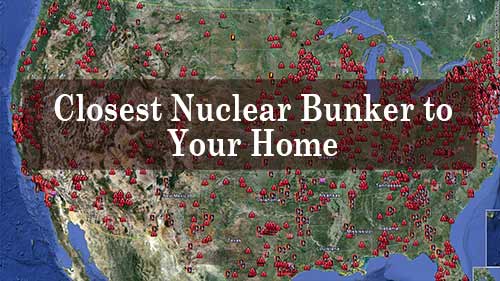
P.s. Do you know where the closest nuclear bunker is from your home?

There are a lot of natural nuclear shelters in the US that are absolutely free. And one of them is near your home.

Click on the image above to find out where you need to take shelter.

The post Best Home Freeze Dryer On The Market Today – 2019 appeared first on Skilled Survival.

Is This The Absolute Best Gun For Concealed Carry During Winter?

Is This The Absolute Best Gun For Winter Concealed Carry?

winter concealed carry

News flash: There’s been almost a century-long debate on which is the best caliber for CCW. Groundbreaking stuff, right?

Well, if I’m going to contribute to the conversation on this one, then here’s my thoughts: There is no single perfect round, in the same way that there’s no single perfect survival knife. If anything, perfection in this case is situationally dependent — meaning that perfection in a CCW round for one person may be the exact opposite to what perfection means for someone else.

Additionally, one of the variables in our ongoing search for personal CCW perfection has to do with the changing seasons. Given how we’re finding ourselves peering down the barrel of winter, I feel it’s time for us to gear up and get our CCW needs squared away. And this is why I, personally, am a fan of the 45 ACP for the application of winter concealed-carry. Here are my reasons …

It’s High Time For a Full-Size

Though the Bob Munden-types may be able to put a .38 Special round on a pie plate-sized target from 200 yards off with a “belly gun,” for the rest of us it’s just easier to achieve better accuracy with a full-sized weapon. There’s greater distance between the front and rear sights, subsequent shots are easier to make with more weight at the muzzle. Therefore, you’ve got a greater contact area on a larger frame, allowing for increased stability and handling. At the end of the day, a full-sized handgun offers better shooting and easier shooting.

However, in the warmer months, it’s MUCH harder to successfully conceal a full-sized weapon under a T-shirt or light button-down — that is, unless you’re Lou Ferrigno. But in the winter, you have the option of wearing a blazer, thicker fleece jackets, etc., and fewer worries of the awkward hip bulge that seems to draw unwanted attention.

Speaking of drawing, on the other hand, some of us need to wear gloves when temps really take a dive. Try drawing effectively with gloves while carrying a compact handgun, and you probably know what I mean. And don’t attempt that last part if the weapon’s loaded … it’s just that clumsy of a situation. On a full-size weapon, however, this is actually a feasible possibility (with proper practice and training, of course).

Rounds Behave Differently Against Layers

When it comes to selecting a round, the primary issue is often centered around its capacity to effectively stop a person’s ability to present a lethal threat, once shot placement has successfully been achieved.

It’s really a question of velocity vs grains, the proper balance of which should lead to the necessary amount of energy transfer with just enough target penetration to get the job done. Often, the 45 ACP’s primary setback is the fact that it packs too much penetration power, and tends to exit the target, creating a dire situational need to watch the target’s background. This is one reason why concealed-carriers tend to opt for the more lightweight, higher-velocity semi-auto rounds: 9mm and 40 S&W.

Story continues below video

But in the winter, even potential lethal threats will be wearing additional and thicker layers of clothing: leather coats, lined parkas, etc. This means that either the velocity of the round needs to increase (+P), or the round itself needs to get heavier. The problem with higher velocities, however, has to do with fragmentation and the theoretical lack of energy-transfer that results. This is unfortunately one of the frustrations concerning the 9mm round.

With that in mind, a heavier round will maintain its power without the need for increased velocity. For instance, if a 45 ACP hollow-point has successfully been delivered on target, then something interesting should happen: the wad of clothing fibers that accumulates in the conical gap will not only cause the round to expand like a 9mm round. This should also prevent over-penetration of the target, thereby maximizing energy-transfer.

And when the physics makes tactical sense, that’s called “stopping power.”

A Few Considerations …

But, of course, no caliber is without problems. There are a few things to keep in mind with the 45 ACP.

It’s probably not much of a surprise that crime rates statistically fall during the colder months of the year, and this has been the case over the last 30 years. In short, you’re going to have a profoundly lower chance of encountering a lethal threat outdoors. However, the probability of indoor encounters will either not change or slightly increase. And that means you’re hypothetically going to have to fire a 45 ACP weapon indoors in a defensive encounter. Unfortunately, not an ideal situation, because again, over-penetration-power remains a problem.

Also, if you do encounter a lethal threat outdoors, then magazine capacity could pose a bit of a problem. Especially in the frigid cold, fingers go numb and the body is less responsive to motor commands from the brain. Important commands that you will depend on for accuracy when the adrenaline gets pumping. So in order to overcome this potential loss in accuracy, it’s just like everything else when it comes to firearms: train, train, train … and then train some more.

What is your preference for concealed carry during winter? Share your tips in the section below:

Pump Shotguns Have One BIG Advantage Over Other Shotguns For Home Defense. Read More Here.

The post Is This The Absolute Best Gun For Concealed Carry During Winter? appeared first on Off The Grid News.

Hundreds Of Earthquakes Rattle The U.S. As The Level Of Seismic Activity In North America Continues To Rise

Why is the mainstream media being so quiet about all of the seismic activity that has been happening all across the United States?  During the last 7 days, there has been an earthquake swarm directly along the New Madrid Fault zone, Kansas and Oklahoma have been hit by a very unusual number of significant quakes, and there have been several sizable seismic events in the vicinity of the Yellowstone supervolcano.  But of course the west coast is getting hammered more than anyone else.  According to Cal Tech, there have been more than 1000 earthquakes in California and Nevada over the last week, but of course most of them have been very small.  Overall, the latest USGS numbers tell us that there have been more than 2,000 earthquakes nationally during the last 7 days, and apparently we aren’t supposed to be alarmed by that.  But could it be possible that all of this seismic activity is leading up to something really big?

Over the weekend, we witnessed some very unusual quakes in the middle of the country.  On Sunday, a magnitude 3.2 earthquake rattled Kansas…

The Kansas quake hit at 9:08 p.m. Central time near South Hutchinson, northwest of Wichita, according to the USGS. About 175 people reported feeling the tremor, some as far away as Osborne and Concordia, Kansas.

Thankfully that quake hit in an area with a very low population density, and so it didn’t affect that many people.

But then on Sunday, a series of relatively large earthquakes hammered Oklahoma

A 3.0-magnitude earthquake hit near Fairview in northern Oklahoma, at 1 a.m. Sunday, followed by a 2.6-magnitude quake at 1:37 a.m. near Quinton in eastern Oklahoma, the USGS reports. A 2.7-magnitude tremor rattled Waukomis in northern Oklahoma at 4:25 p.m. Saturday

Overall, there have been 143 earthquakes in Oklahoma in the last 30 days, and the increasing level of seismic activity in that part of the nation definitely has a lot of people on edge.

But of much greater concern is what has been happening along the west coast.  The two major quakes that hit California in July were followed by more than 100,000 aftershocks, and scientists are warning that this “may have increased stress on parts of a major dormant fault line”

A series of earthquakes which shook Southern California earlier this year may have increased stress on parts of a major dormant fault line which has not produced any significant activity since records began, according to a study.

Scientists from the University of Iowa examined the so-called Ridgecrest earthquakes, which began with a 6.4 magnitude foreshock in the Mojave Desert on July 4, followed the next day by a 7.1 magnitude quake—the largest in Southern California for two decades. In addition, more than 100,000 smaller aftershocks were recorded.

The “dormant fault line” which they are talking about is the Garlock Fault.

And the Garlock Fault runs directly into the San Andreas Fault.

One day there will be a massive quake that fundamentally alters the geography of southern California, and let us hope that day is delayed for as long as possible.

Meanwhile, we have also witnessed some unusual rumbling off the coast farther north.

In fact, five large earthquakes were detected off of the Oregon coast last month.  The following comes from a news story that was posted on October 21st

A magnitude-4.6 earthquake Monday morning became the fifth to strike off the Oregon coast since the beginning of the month.

The quake rumbled around 6:47 a.m. about 120 miles west of Bandon and at a depth of roughly 6 miles, according to the U.S. Geological Survey.

On Thursday, a magnitude-4.7 temblor struck about 95 miles from Port Orford — just hours after students in Coos and Curry counties participated in an annual earthquake drill.

The reason why these quakes are so alarming is because they happened in the vicinity of the Cascadia Subduction Zone.

As Steve Quayle recently told Greg Hunter, someday the Cascadia Subduction Zone will suddenly come to life, and it will be the greatest natural disaster that we have seen so far in all of American history…

What’s the worst case scenario if the Cascadia Subduction Zone lets loose and volcanos, earthquakes and tsunamis are unleashed? Quayle says “The amount of damage, and I am going to choose my words carefully, is going to be precedent setting. It’s going to be the combination of volcanos going off that are inland from the subduction zone where the plates meet, coupled with tsunamis. . . . When this happens, you will lose eight million to twenty million people. When it happens, you will lose all productivity in the electronic field, obviously Silicon Valley, and all food production in all of California, Oregon and Washington. When it happens, you will have a State of Emergency unlike any other. How about the refugees? There will be 3.5 million refugees to take care of. When this happens, what happens to the underground aquifers, and where does everybody go for fresh water? There will be years of drought, years of famine and years of water, water where did it all go? It is a very dire situation painted by computer models. This is not a sensational thing. It is a reality based, scientific study with the application of what happens.”

Quayle warns that the public would likely have roughly “15 minutes to get to safety,” and “the tsunami waves would be 500 to 1,500 feet tall.”

You can see the trailer for the new film that is being produced about the Cascadia Subduction Zone right here.  I am so glad that this movie is being made, because I have been trying to warn people about what is going to happen for a long time.  For example, the following comes from one of my previous articles entitled “You Have Been Warned: Experts Tell Us That A Cascadia Subduction Zone Earthquake And Tsunami Will Destroy Everything West Of Interstate 5”

One day it will happen. With little or no warning, the Cascadia Subduction Zone will produce a catastrophic earthquake and accompanying tsunami that will essentially destroy everything west of Interstate 5 in the Pacific Northwest. It will be the worst natural disaster up to that point in American history, and as you will see below, the experts are saying that we are completely and utterly unprepared for it. Of course the San Andreas Fault gets more publicity, but the truth is that the Cascadia Subduction Zone is capable of producing a quake “almost 30 times more energetic” than anything the San Andreas Fault can produce.

Scientists assure us that it is just a matter of time before such a disaster takes place.

So essentially those living right along the coast are taking a huge gamble.

Day after day, they hope that there is still at least a little bit more time before the Cascadia Subduction Zone absolutely devastates the Northwest.

Of course up until now that gamble has paid off, but one day their luck will suddenly run out.

About the Author: I am a voice crying out for change in a society that generally seems content to stay asleep.  My name is Michael Snyder and I am the publisher of The Economic Collapse Blog, End Of The American Dream and The Most Important News, and the articles that I publish on those sites are republished on dozens of other prominent websites all over the globe.  I have written four books that are available on Amazon.com including The Beginning Of The End, Get Prepared Now, and Living A Life That Really Matters.  (#CommissionsEarned)  By purchasing those books you help to support my work.  I always freely and happily allow others to republish my articles on their own websites, but due to government regulations I can only allow this to happen if this “About the Author” section is included with each article.  In order to comply with those government regulations, I need to tell you that the controversial opinions in this article are mine alone and do not necessarily reflect the views of the websites where my work is republished.  This article may contain opinions on political matters, but it is not intended to promote the candidacy of any particular political candidate.  The material contained in this article is for general information purposes only, and readers should consult licensed professionals before making any legal, business, financial or health decisions.  Those responding to this article by making comments are solely responsible for their viewpoints, and those viewpoints do not necessarily represent the viewpoints of Michael Snyder or the operators of the websites where my work is republished.  I encourage you to follow me on social media on Facebook and Twitter, and any way that you can share these articles with others is a great help.

The post Hundreds Of Earthquakes Rattle The U.S. As The Level Of Seismic Activity In North America Continues To Rise appeared first on The Economic Collapse.

Survival Gear Review: QuietKat All Terrain Electric Mountain Bike

Quiet Kat Electric Mountain Bike Bicycle

To find success when big game hunting, you have to get as far away from the roads as possible. That’s doubly hard, because while you may be able to Quiet Kat Electric Mountain Bike Bicyclecomfortably hike 10 miles in, you may not want to pack a critter 10 miles out over four or five trips. According to multiple studies cited on backcountryhunter.org, most game animals like to stay at least 300 meters away from roads. Distancing yourself from lazy road hunters and their noisy vehicles greatly increases your chances of seeing that prized critter. ATVs are great, but many national forest trails are closed to motorized vehicles like Jeeps, ATVs and Motorcycles. Also, ATVs are noisier than most trucks, and just push animals even further out.

Contributed by By Mark, Former Marine Reconnaissance Team Leader, Marine Infantry Officer, Cross Fit Coach, and Survivalist.

We saw this first hand on a recent hunt out in the Rocky Mountains of Colorado. Both trucks and ATVs were Road Hunting the Forest Service roads like they were patrolling the southern border. None of these road hunters shared the success that we noted during our hunt. So what are you to do? You want to reach the backcountry but maybe hiking three miles up to 10,500 feet is not an option for you. Or maybe you are looking to get really deep and don’t want to spend two days hiking. According to TrailTrove, the average human hikes at two to three miles each hour. This is average from TrailTrove is without a backpack (20 to 30 pounds), a hunting rifle (6-7 pounds), and hunting clothes including boots, pants and jacket (7 pounds). With this extra weight, you are most likely going to be below 1 mph with stops & breaks. Also, consider the toll on your body. You hike three miles up to 10,000 feet with 40+ lbs of extra weight. You are going to be huffing and puffing by the time you get to the top. 

An elk can average 88 to 270 lbs of harvestable meat.  You might be lucky if you don’t get an elk because that will be at a minimum one more trip back up the mountain for two people to get all of the meat out. Those are heavy loads that put a lot of stress on your body. I recently heard about some backcountry hunters using electric mountain bikes to get deep into the woods. After seeing that the BLM has recently changed their rules on electric bikes, I decided that I wanted to try it for myself. After a bunch of homework studying things like range, price, warranty, extras, reviews, & experience, we landed on QuietKat. QuietKat is based out of Eagle, Colorado and they seem to have hunting and the outdoors in their blood. I have been watching them for a few years and they seemed to keep coming out with cooler bikes every season. 

Split Decision

We got two bikes. My hunting partner, Derek, has a chronic tailbone injury and required looking for a softer ride. He was willing to spend more money on his bike so he got the Fat Tire Ridgerunner.

QuietKat Fat Tire Ridgerunner
Motor: Ultra Mid Drive 1000 watt
Display: Digital-Color
Battery: 48v/16ah Panasonic
Frame Sizes: 17” Medium & 19” Large
Brakes: 4 Piston Hydraulic Disc Brakes
Fork: RST Air Suspension 150mm, Rockshox on rear
Suspension: Fire-Link Four-Bar Linkage
Wheel/Tire: 26 x 4.8” CTS Roly Poly Fat Tires
Gearing: 9 Speed Wide-Range
Drive: Stainless Steel Chain
Weight: 65lbs
Top Unassisted Speed: 1000W: 28mph
Range: ~25 Miles Unassisted, up to 50 miles under Pedal Assist
Color: Charcoal

I got the Apex which has a hard tail and front suspension. 

QuietKat Apex
Motor: BBSHD Mid Drive 1000 Watt
Display: Digital
Battery: 48v/11.6ah Panasonic
Frame Sizes: 19” (M/L) and 17″ (S/M)
Brakes: 2 Piston Hydraulic – 203mm Rotor
Fork: GT Air Suspension 100mm
Wheel/Tire: 26″ x 4.5″ (Fat Bike)
Gearing: 9 Speed Wide-Range
Drive: Stainless Steel Chain
Weight:  75lbs
Top Unassisted Speed:  25mph
Range: ~20 Miles
Load: 300lbs
Colors: Charcoal / Camo

Impressions & Thoughts:

One: Our wheels said Juggernaut on the side of them and the name was fitting. The wheels are huge. And by huge I mean massive.  Riding a normal mountain bike on single track, I would not want this much tire. Really fat tires would be heavy and hard to push around on a normal bike but the traction from the fat tires bring is insane, and makes you feel much safer on the mountain. With this being an electric assisted bike and you can push the throttle and with a little peddling you are cruising at 12 mph almost instantly. The big tires add stability and traction both on the front tire for turning and the rear tire for climbing. These are not motorcycles and you still need to pedal, but it really helps climbing those steep inclines.

Two: The bikes are fast. Our first time riding the bikes were not ideal for learning. We were at an altitude of 8,500 feet, little bit of snow on the ground, heading up to 10,500. The QuietKats will take off if you hit the throttle hard, the torque is pretty good. Riding a bike at 20 mph up single track in the mountains can be a little scary and mind blowing at the same time. It took us about about a mile to get comfortable with the bikes, having packs on as well as the cart system that was attached to the back of my bike. To be honest, I have considerable more mountain biking experience than Derek. I was pretty comfortable after about 100 yards. Derek, who broke his tailbone, and has really not ridden a bike since was not a huge fan of the QuietKat at first. I heard a lot of cussing and yelling on the trail that made me think “Oh man, this might have been a mistake.” but after a little coaching, mainly telling Derek to sit down while going uphill so your body weight is heavy on the back tire for traction made a huge improvement for him. By the time we got to 10,500 ft, Derek was sold. I think his exact quote when we got to the top of the mountain was “These things are sick.” On our first ride, I think we averaged about 10 mph uphill with very limited stops. Also, because the QuietKat motors are electric, you do not lose any power at altitude. Most gas engines lose about 3 HP per 1,000 ft of altitude. I know from experience that my old Honda Rincon didn’t like altitude above 10,000 feet even though I had it tuned for the mountains.

Three: The bikes are quiet. I personally think we were much quieter on these bikes than if we were struggling up the side of the mountain carrying gear and heavy boots. I don’t have a way of measuring this but every time I turned back to see if Derek was still behind me, I always saw him before I heard anything. Also, our exposure time on trail was less than 20 minutes compared to 1 to 2 hours by foot. I also believe our scent signature was much less because we were up high out of the grass and only the tires touched the trail. I believe we pushed the animals less because of how quiet these bikes were.

Four: The bikes are heavy. The one downside of this bike (if there is one) is that these bikes are heavy. It took two of us to muscle these bikes into the back of the pick up truck. Could either of us have done it alone? Yes, but we didn’t want to take the chance of scratching the truck. Also, a normal trailer hitch bike carrier (Yakima or Thule) will not work with these, they are too heavy. If you get one, you might want to look into a light weight ramp system to load these into your truck or SUV if you are hunting solo.

Five: Hard to put away. These things are so much fun that you might want to cut your hunt early just to cruise around on your QuietKat. Honestly, you get can places on these things that would be hard by foot without several days of walking. They are super fun on the trail and you find yourself making excuses for wanting to find a new hunting area and getting back on the QuietKats. “Hey, I think I am going to go scout this other mountain, be back in a bit.”

Six: Tough in powder. The bikes did well on hard snow, and were stunning over normal ground, but thick powder snow caused them to fishtail a bit, and are probably not the best fit. Luckily this isn’t most of hunting season. Also, we did not deflate the tires which could be an option. To be fair, rear wheel ATVs also struggle in deep snow.

Traveling With The Kat

We traveled around the Rocky Mountains with the QuietKats and a fully assembled pull behind cart in the back of the Jeep Gladiator. The front tires of the QuietKats wereQuiet Kat Mountain Bike Review hanging over the tailgate using a QuietKat Tailgate pad. We strapped them down and due to their weight, they travel well in the back of pick up trucks. We were exposed to some pretty harsh weather up there and were worried about the computer components on the Kats. We had no issues. Every time we pushed the power button, the Kats fired right up and away we went.

Stashing the Kats

Once we reached our planned hunting area, we just marked the Kat location on our GPS and laid them down behind some trees. After a few days, we started just leaving our extra gear near the Kats as well. We were never worried about anyone stealing our gear or our Kats at 10,000 feet. You can remove the battery with a key and you can also use a cable lock to secure your bikes but we never did. If I was in the city, I would get a no joke lock for these bikes but Elk and Mule Deer don’t steal. 

Kat Down

The 2 wheel trailer system that we got with the QuietKat was awesome. It held a ton of gear and was easy to set up and attach to the bike. A bit of caution,Best Electric Mountain Bike Trailer System Reviews you do have to watch out for larger rocks on the trail with the two wheel system. We turned the trailer system over a few times with large rocks. All of our gear was strapped down so flipping the trailer back upright was no issue. They do make a single wheel cargo trailer. I wish I could have compared the two to see which is better. I feel like the single wheel version may have been better for single track. I know Doc Montana recently reviewed the Burley COHO XC Bike Trailer and made it look easy flying down single track in Montana.  

The Proof is in the Pudding

We got deeper & faster into the backcountry than our hunting competitors and on the first best electric mountain bike quietcatmorning we saw 3 elk walk into a pasture on the backside of a mountain at 10,500 feet. Without the QuietKats this would have been a painful journey and getting an elk here would have made for a long day of packing meat out with at least one extra trip up the mountain. With the QuietKat & trailer, just one trip down the mountain, elk & gear. 

Overall:

We give the QuietKat four thumbs up. Super fun. Super easy to ride. Versatile, you can use them for things besides hunting (ex: commuting, camping, bug out, military operations, etc). Charging was easy, just remove the battery and bring it inside. There is something about the power and quietness of these bikes that will blow you away. I was dreaming about an American Spec Ops unit using these to insert quietly outside of ear shot of the sound of a helicopter, I could see it in the future. Bottomline, they are fun to ride.  

Video: 

This is not our video but we felt this video from Bowsite.com hit it out of the park and captured our thoughts as well. Take a look. 

Please visit QuietKat for more information.  Use discount code SurvivalCacheFS on the QuietKat website for free shipping if you decide to order one. Or you can look at QuietKat on Amazon.

Visit Amazon Affiliate Sponsors of Survival Cache.

The post Survival Gear Review: QuietKat All Terrain Electric Mountain Bike appeared first on Survival Cache.

Smart Self-Defense: Knowing When To Shoot And When Not To

smart self defense

When it comes to smart self-defense, you need to make sure that your action is truly necessary before you pull the trigger.

Anyone who carries has to face the reality that someday they might find themselves needing to use their gun. Sadly, there are some who never fully think this through. They managed to get their concealed carry license because they felt they needed it. Nevertheless, they don’t practice and they don’t really think about what it will mean to actually use their gun in self-defense.

The reality is that any use of a firearm in self-defense is risky. While it does allow the use of deadly force when necessary to defend yourself or defend others, there’s a huge caveat. That is, the courts must agree that your actions were both necessary and reasonable. Otherwise, someone can still accuse you of murder.

Granted, being accused of murder is better than being the victim of a murder. However, if you’re going to be the one who is pulling the trigger, you want to make sure that your action is truly necessary. The less wiggle room you can give a prosecutor to show that you acted angrily or irrationally, the less chance there will be that you end up in court defending your actions.


Smart Self-Defense: What Are You Thinking?

I want to ask you something: what are you thinking with respect to carrying a gun? Are you thinking that you are safe because you have it? Do you think that you can outshoot a bad guy? Are you thinking that the key to surviving a shootout is to draw fast and shoot straight? Do you look forward to the opportunity to prove yourself where the rubber meets the road?

The reality is that there are some prosecutors who will try to prove that you were looking for the opportunity to use your gun to kill someone even if it was done in self-defense. They will use your membership in the NRA and signs in your window with themes like “Protected by Smith & Wesson” as an indication that you were merely awaiting the opportunity to legally kill someone. If they can create that idea in the minds of the jury, you could end up facing a murder conviction. Remarkably, it doesn’t matter if that perception is true or not.

What you and I should be thinking is that our guns are a tool of last resort. In other words, we should try to avoid a shootout if we can. Then, if we have no choice but to use deadly force in self-defense or in the defense of others, we will know that we did everything we could to avoid killing another person.


Smart Self-Defense: Avoiding Violence

Before drawing a gun, it makes sense to try avoiding a situation altogether. While that isn’t always possible, there are plenty of situations that can be avoided simply by not going where violence is occurring or by leaving when it looks like something is going to go down.

Now I know the temptation is there to be the hero of the moment. I feel that same temptation too. But that doesn’t mean that I should be the hero. First of all, that’s not my responsibility. I am not charged by society to protect them, but the police are. While it is possible that I could defend someone and keep them from harm, I have to ask myself, “At what price?”

There is always a price associated with taking the life of someone, even if the courts declare you not guilty. The human mind has a way of torturing itself for killing another. That’s a much harder price to pay than the justice that the courts mete out.


Smart Self-Defense: It’s Time To Go

So, how can you avoid this kind of predicament?

First off, if you are maintaining your situational awareness, then you should have a pretty good idea that something is about to happen. Once you have a feel for this, you need to make an important decision. Do you stay and see it out or do you leave before it can happen? Most of us would stay when in reality we should leave before anything can escalate.

Think about that for a moment. There is nothing that says you have a responsibility to defend society. What you do have a responsibility to do is defend yourself and your family. So do your best to do that, not necessarily by shooting, but by getting your family out of there before the shooting starts.

Granted, if you leave a store or restaurant every time you think something is likely to go down, you’re going to be leaving for nothing a majority of the time. But that’s okay since you’re accomplishing your goal and protecting your family. You can always go back after it’s clear that it is safe.


Smart Self-Defense: Don’t Go There At All

You can say the same thing when hearing news that something is happening or about to happen. If there’s a demonstration scheduled downtown, then avoid downtown. You’re not part of that demonstration anyway, so there’s really no reason for you to be there. If you want to find out what happens, watch the news.

The same can be said for many other potentially dangerous situations, such as being in a bad area of town. Unless you have a legitimate reason to be there, why go? Find somewhere else to buy what you need or another route to take so you can avoid problems. Don’t put yourself unnecessarily in danger.


Smart Self-Defense: Diffusing The Situation

Even when trying your best to avoid a violent situation, you may find yourself in one notwithstanding. A classic example is someone getting mad in a bar or night club. Take some guy catching you looking at his girlfriend for an example. If he’s the violent type or has been drinking too much, he may decide to confront you for that imagined slight. What do you do?

In most cases, it is fairly easy to diffuse such a situation by turning their negative comment back into a positive one. In the situation mentioned above, the accusation of, “Hey, are you looking at my girl?” is intended to get a rise out of you. Responding by saying, “Yes I am, she’s beautiful. You’re a very lucky man” is the exact opposite of what he is expecting. By not rising to the situation with a snarky comment but instead complimenting him, you end his desire to cause trouble.

Of course, if that doesn’t work, you can always run away. If he’s really been drinking, he may not be able to keep up. There’s nothing that you can lose by running except your pride. But you really don’t need that to survive anyway, so there should be no problem with letting it go, right?


Smart Self-Defense: When It’s Time To Draw

When all else fails, it’s time to draw; but the point I’m hoping you’re seeing here is that you don’t want to draw until you’ve exhausted other possibilities. If someone walks into the restaurant you’re eating at and opens fire, you don’t have other options. Nonetheless, if they are trying to start trouble, you do. Take advantage of those possibilities when you can.

But when it’s clear that you must use your gun, don’t hesitate to do so. At least, don’t hesitate any longer than tactically necessary. Remember, as long as you conceal your gun, you have the element of surprise on your side. Consequently, don’t draw until you are ready. If you can, take the time to move into a good tactical position where you have cover and the bad guys are flanked before drawing.


Smart Self-Defense: Give Them A Chance To Run

The old saying is, “Don’t draw your gun unless you intend to use it and don’t use it unless you are shooting to kill.” On the whole, I agree with that. But I also agree with the statistic which says that in 70% of the cases where a concealed gun is used in self-defense, merely presenting the gun is enough to cause the bad guys to flee. For this reason, give them the chance to flee before pulling the trigger.

This is exactly why you want to flank them if you can. You can catch them in a way where you have the advantage and it may give you an extra second or two before they are able to respond. This strategy might help tip their decision towards fleeing instead of fighting. It also might give you the second you need to get your sight ready if they decide to shoot it out. Altogether, you’ve got to use whatever you can to your advantage.

You may also enjoy reading an additional Off The Grid News article: 9 ‘Survival Guns’ That Will Keep You Alive In Any Situation

Or download our free 29-page report that discusses how to legally carry firearms (almost) anywhere, anytime: Stick To Your Guns

Do you have any more tips or suggestions on smart self-defense with a firearm? Let us know in the comments below.

The post Smart Self-Defense: Knowing When To Shoot And When Not To appeared first on Off The Grid News.

Gear Review: Epic Water Filters Nano Pitcher and Nalgene OG

We should all take a moment to appreciate that here in the US, most of us have access to clean drinking water. Not everyone is so fortunate. When I was growing up, we didn’t have city water. Occasionally the well would go dry, and we’d have to gather up some quarters and haul water from the water tower. Even when the well was dry, we could still get water easily. The upside of that was whenever there was a boil advisory, or zebra mussels invaded the water tower, it didn’t affect us.

By J. Bridger, contributing author to SHTFblog and Survival Cache

My hometown has great drinking water, and frequently places in the top 5 for tap water worldwide.  I bet you didn’t know there were world championships for tap water taste, did you? I am spoiled when it comes to drinking water. So, when Epic Water Filters sent me their new Nano Water Filter Pitcher ($59.95) and a 32 oz. Nalgene OG Filtration System ($34.95 with Nalgene bottle included!), I was really pumped. The tap water here in Las Vegas sucks. I don’t like buying plastic bottles, so I’m stuck drinking water that tastes like someone collected runoff from Bigfoot’s butt crack.

The Nano pitcher has a 3.5L capacity, and water trickles through its filter in 5-10 minutes. According to Epic Water Filters, it filters out all kinds of things – some I’d never even considered. Microorganisms don’t stand a chance. It removes 99.999% (Sometimes you get another 9 tacked onto the end of that, or “log 6” removal) of: Pseudomonas, Giardia, Cryptosporidium, E. coli, and Klebsiella. (See the full report of all contaminants the Nano removes here) If you haven’t heard of the 1993 Milwaukee Cryptosporidium outbreak, you should read about it. Over 400,000 people developed gastroenteritis-like symptoms due to drinking water contamination. The point is, bad water can and will happen in modern times. The Epic Water Filters Nano Pitcher also removes heavy metals, fluoride (not sure if that’s good or bad, depends who you ask I suppose), nearly 50 pesticides, herbicides, nearly 100 organic compounds, and pharmaceuticals. One interesting thing to note is the filter removes testosterone and progesterone. There are a lot of studies out there about exogenous hormones, and how they affect infants and children. Infants have very sensitive androgen receptors, and excess hormones can cause them to grow excess breast tissue (males too!). Children in the US are experiencing puberty earlier, and they think hormones in the environment could be why. Sounds like hippy shit, I know, but there’s a lot of compelling data out there (Check out “The sensitivity of the child to sex steroids: possible impact of exogenous estrogens” (by the University Department of Growth and Reproduction, Rigshospitalet, Copenhagen, Denmark). Bottom line is, this filter removes tons of things you don’t want in your water.  

Despite my hometown’s top tier tap water, its infrastructure is aging, and water line breaks are common. When the summer months come around, you can bet there will be issues. Often, there are boil advisories. Most of the time this is nothing more than a nuisance, but you never know. If there is a boil advisory, sometimes you may not know before you’ve guzzled your morning liter. If you’re sipping clean water from the Epic Water Filters Nano pitcher, you don’t have to worry. Filling this is much more convenient and efficient than boiling water and waiting for it to cool. Obviously, this won’t provide good water if it isn’t flowing, like when a 20” raw water main broke in 2014, and brought the entire county to a halt:  When this happened, restaurants closed, businesses lost money, gas stations jacked up the price of bottled water, and even the local hospital wasn’t able to provide water for their cooling system. Luckily there were no structure fires or grass fires, or the county could’ve had a huge problem. You should keep this in mind and have plans in place should you need to source water from somewhere other than your tap and purify it. This might be a swimming pool, rainwater collection system, or nearby reservoir. This was a stark reminder that the amenities we enjoy are artificial and fragile. No one was bringing bottled water to my door, but that was fine with me. We had a well. 

Also read: Survival Gear Review: Epic Water Filters The Answer Nalgene Filter

How does the water taste through the Epic Nano pitcher? A hell of a lot better than it did before it went through. It makes off putting Las Vegas water taste fresh and clean. One of my favorite features is the filter indicator. It shows you how much life is left in the filter (based on a 90-day estimate. It filters 150 gallons). One filter lasts two people 3-4 months. The last pitcher filter I had didn’t have this. You knew the filter needed to be changed when the water developed an acidic taste, almost like someone had put lemon juice in it. There is a flip top on the lid you can open with your thumb, so you don’t have to remove the entire lid. It’s a small detail, but one I appreciate. Taking into account how often boil advisories occurred back home, the lackluster drinking water here (mostly due to my refined palate, I’ll admit),  and my own paranoia, this pitcher is a home run. I’ll be purchasing a replacement filter when the time comes. You can even set it up to receive filters automatically. If that isn’t enough, it comes with a lifetime warranty and is made in the USA. Epic!

Portable Filtration, OG Style!

Epic Water Filters also makes a wide mouth Nalgene OG filtration bottle. These bottles hold 1 liter (about 32 ounces) and are nearly indestructible. The filter cartridges come in two flavors: the black-colored Urban (75-gallon life, comes standard with the Nalgene OG) and optional orange Outdoor (100-gallon life, also $27.95). Like the pitcher, the Epic Nalgene OG carries a lifetime warranty and is made in the USA.

I took the Epic Water Filters Nalgene OG with the orange Outdoor filter on a day hike in the Spring Mountains. Right away, its strengths were obvious. The flip-up mouthpiece in the OG’s lid doesn’t leak, but I’d still store it in your pack right side up. Because my hike was along a running stream, I didn’t have to carry any water. Water is the heaviest thing in my pack, so that was a huge plus. Whenever I got thirsty, I just scooped up some water, drank as much as I wanted, and dumped the rest. It was convenient and made the hike much more enjoyable. It takes some effort to get water out of the straw, but it’s not terrible. If a spring is shallow, it can be difficult to fill your bladder or bottle. You should consider this and pack a collapsible cup or something similar so you can scoop or suck water from the source to treat.

In my opinion, the best thing about the Epic Nalgene OG filter is how convenient it is. No boiling, no waiting, no chemical taste. Just scoop and go. It really shines when you are near a water source, like a stream or lake. If watering holes were a little more scarce, you would want to consider something with a higher capacity you could fill and transfer over to this bottle (though Epic Water Filters makes the Nalgene OG Grande with the larger 48 oz. bottle if you need more capacity) Don’t underestimate how much water you may need if you are working hard, or if it’s hot outside. I recently completed a 19-mile trail with about 6,000’ of elevation change. Elevation varied between 7,400’ and 10,400’. It wasn’t hot, but it was dry; I drank six liters of water between 7am and 7pm. There was only one spring and thank goodness it was flowing.

Listen! The Survival Cache Podcast – EDC

If you have a bugout location, you should study the route for water sources. If you live in a rural area and work away from home, you should study your route home. If water sources are abundant, this would be a great option for your bag or vehicle. Too many people are guilty of throwing a LifeStraw in their bug out bag and considering it an adequate treatment strategy. You need a way to carry water, and at least one back up treatment method. Pairing this bottle with a bladder and some tablets or drops would set you up well in the water department. If you EDC a backpack or messenger style bag and regularly carry a water bottle, you could use this bottle and stow the filter away for “just in case” scenarios. You could have clean water wherever you are, at a very tiny weight expense.

 The biggest drawback is lack of gravity flow. If you want to use filtered water to cook or wash, this won’t work. If you could squeeze water out of this bottle into a bladder or cooking pot, it would be perfect. Despite that, this filter and bottle combo has a place in my pack. The convenience and simplicity of the Epic Water Filters Nalgene OG filter make it a home run for any EDC, bug out bag, or hiking kit. 


The Boom Turns Into A Bust – Here are 14 Signs That The U.S. Economy Is Steadily Weakening

There should no longer be any doubt that the U.S. economy is slowing down, but most Americans still don’t realize what is happening because the major news networks are completely focused on the endless impeachment drama that is currently playing out in Washington.  And without a doubt that is important, because it threatens to literally rip our entire nation in two.  But meanwhile, economic activity has taken a very ominous turn.  Hiring is slowing, consumer confidence is plunging, defaults on auto loans are rapidly escalating, the “transportation recession” continues to get deeper and it appears that the housing bubble is popping.  Everywhere we turn, there are signs of economic trouble, and many are deeply concerned about what this will mean for us as we head into a pivotal election year in 2020.

Not since the last recession have we seen numbers this bad.  The “mini-boom” that we witnessed for several years has now turned into a “bust”, and very tough times are ahead.

The following are 14 signs that the U.S. economy is steadily weakening…

#1 U.S. business hiring has fallen to a 7 year low.

#2 Consumer confidence in the United States has now declined for 3 months in a row.

#3 Defaults on “subprime” auto loans are happening at the fastest pace that we have seen since 2008.

#4 The percentage of “subprime” auto loans that are at least 60 days delinquent is now higher than it was at any point during the last recession.

#5 Vacancies at U.S. shopping malls have hit the highest level since the last recession.

#6 Destination Maternity has announced that they will be closing 183 stores as the worst year for store closings in U.S. history just continues to get worse.

#7 The Cass Freight Index has now fallen for 10 months in a row.

#8 U.S. rail carload volumes have plunged to the lowest level in 3 years.

#9 In September, orders for class 8 heavy duty trucks were down 71 percent.

#10 Tesla’s U.S. sales were down a whopping 39 percent during the third quarter of 2019.

#11 The bad news just keeps rolling in for the real estate industry.  Last month, existing home sales in the United States declined by another 2.2 percent.

#12 New home prices have fallen to the lowest level in almost 3 years.

#13 According to one recent report, 44 percent of all Americans don’t make enough money to cover their monthly expenses.

#14 A recent survey found that more than two-thirds of all U.S. households “are preparing for a possible recession”.

All over the country, economic activity is slowing down, and this is hitting many small businesses particularly hard.

In Wisconsin, one aluminum firm “has seen bookings plunge by 40 percent” and was forced to lay off workers as a result…

Sachin Shivaram, the chief executive of Wisconsin Aluminum Foundry, started to worry this summer when orders for his brake housings and conveyor belt motors first grew scarce. Within weeks, what began as mild concern snowballed into a business drought that has seen bookings plunge by 40 percent.

In August, Shivaram, 38, reluctantly laid off two dozen workers, hoping to recall them when the outlook improved. It hasn’t.

“Things are not good. We didn’t anticipate this level of deterioration,” he said. “Orders are down across the board.”

Of course there are hundreds of other examples just like this one.

As times get tougher, many U.S. consumers are increasingly turning to debt to help make ends meet.

For those at the low end of the economic food chain, getting approved for credit cards and other conventional forms of debt can be quite difficult.  This has opened up a door for online financial predators, and they are making a killing by making loans to people that really can’t afford them.

In fact, it is being reported that online lending has become a $50 billion industry, and sometimes these “loans” carry annual interest rates of more than 100 percent

It’s called the online installment loan, a form of debt with much longer maturities but often the same sort of crippling, triple-digit interest rates. If the payday loan’s target audience is the nation’s poor, then the installment loan is geared to all those working-class Americans who have seen their wages stagnate and unpaid bills pile up in the years since the Great Recession.

In just a span of five years, online installment loans have gone from being a relatively niche offering to a red-hot industry. Non-prime borrowers now collectively owe about $50 billion on installment products, according to credit reporting firm TransUnion. In the process, they’re helping transform the way that a large swathe of the country accesses debt. And they have done so without attracting the kind of public and regulatory backlash that hounded the payday loan.

Just like the “payday loan” industry flourished during the last recession, now predatory lending is flourishing during this present era.

Unfortunately, as “the everything bubble” bursts, times are going to be very tough for all of us during the years ahead.

I think that Michael Pento of Pento Portfolio Strategies summed things up very well when he made the following statement during a recent interview…

‘When this thing implodes, we are all screwed. On a global scale, we have never before created such a magnificent bubble. These central bankers are clueless, and they have proven that beyond a doubt. All they can do is to try to keep the bubble going.’

We should give the central bankers credit for keeping the bubble going for as long as it has.  It should have never lasted this long, but thanks to unprecedented intervention they have been able to keep it alive.

But no financial bubble lasts forever, and now things have started to shift in a major way.

2020 is rapidly approaching, and the time of “the perfect storm” is now upon us.

I encourage you to do what you need to do to weather the coming economic storm, because it is not going to be pleasant.

About the Author: I am a voice crying out for change in a society that generally seems content to stay asleep.  My name is Michael Snyder and I am the publisher of The Economic Collapse Blog, End Of The American Dream and The Most Important News, and the articles that I publish on those sites are republished on dozens of other prominent websites all over the globe.  I have written four books that are available on Amazon.com including The Beginning Of The End, Get Prepared Now, and Living A Life That Really Matters.  (#CommissionsEarned)  By purchasing those books you help to support my work.  I always freely and happily allow others to republish my articles on their own websites, but due to government regulations I can only allow this to happen if this “About the Author” section is included with each article.  In order to comply with those government regulations, I need to tell you that the controversial opinions in this article are mine alone and do not necessarily reflect the views of the websites where my work is republished.  This article may contain opinions on political matters, but it is not intended to promote the candidacy of any particular political candidate.  The material contained in this article is for general information purposes only, and readers should consult licensed professionals before making any legal, business, financial or health decisions.  Those responding to this article by making comments are solely responsible for their viewpoints, and those viewpoints do not necessarily represent the viewpoints of Michael Snyder or the operators of the websites where my work is republished.  I encourage you to follow me on social media on Facebook and Twitter, and any way that you can share these articles with others is a great help.

The post The Boom Turns Into A Bust – Here are 14 Signs That The U.S. Economy Is Steadily Weakening appeared first on The Economic Collapse.

Security Window Film To Stop Burglurs In Their Tracks

A Burglur Breaking Through A WindowAre you thinking about installing window security film on your home? IF so, good for you!

Not enough people take their home security seriously. At least not until it’s too late.

But there’s important research you must do first before you buy.

To ensure you get and install the PROPER window security film for YOU.

That’s why in today’s post we’ll cover in detail all the aspects of security window films, specifically:

As A Way To Introduce You To Skilled Survival, We’re Giving Away Our #78 Item Complete Prepper Checklist. Click Here To Get Your FREE Copy Of It.

Broken Window With Security Window FilmWHAT EXACTLY IS SECURITY WINDOW FILM?


Window film is a thin but strong piece of transparent plastic. One that’s designed to adhere to the inside of your windows to create a stronger bond.

We all know if you hit a glass window with a baseball bat it will shatter. And it will leave a gaping hole in the window. Making it easy to blast out the remaining shards hanging from the windowsill.

But security window film holds all the shards together. This helps avoid a fast forced entry AND flying shards of glass.

Turning a 5 second forced entry situation into over a minute delay (or longer).

That may not seem like much of a delay, but here’s the thing, burglars always take the path of least resistance.

Every second in delay can mean the difference between getting loot or getting caught. So even a few seconds of delay is a significant deterrent!

The bottom line is: security window film makes your home much harder to enter. Thus, safer.

Watch this excellent overview video below, to catch up on Security Window Film Basics:

2 CRITICAL REASONS FOR INSTALLING SECURITY FILM IN YOUR HOME


One of the most overlooked home fortification upgrades is securing your windows.

But home fortification doesn’t just mean protection against forced entry. There’s also another crucial reason to invest in security window film.

So, let’s go over both now.

1 – Prevent Break-ins And Forced Entry

Of course, preventing forced entry is the most obvious “reason” and it’s a good one!

Windows are one of the most vulnerable entry points in any home. Why? Because professional burglars are not stupid.

They know doors have alarms systems and are often reinforced. And that’s why they target windows.

A burglar can break an unprotected window (one without security film) in mere seconds.

Quietly using tools like a window punch to shatter the glass. Or blasting the window out using a hammer or baseball bat.

And once a window’s glass is gone, it’s easy to slip into and back out of a home undetected. Especially any windows that have ground access and are in the hidden backside of homes.

Want some proof? Watch this video to get an idea of the power of installing window security film on your home.

This isn’t rocket science. Your unprotected windows are extremely vulnerable to burglars.

2 – Safety From Flying Shattered Glass Shards

Glass is fragile. Anyone with kids learning how to hit a baseball know this firsthand.

Any hard object (bat, ball, rock, etc.) can break a windowpane. And what happens when it breaks? It shatters into large chunks of razor-sharp shards.

These shards are extremely dangerous to anyone nearby. Especially during inclement weather, during a natural disaster, or even a bomb blast.

For example, high winds from a hurricane or tornado can easily break windowpanes. The shattered glass creates flying shard bullets.

These glass shards can cause serious injuries and even death…

Earthquakes can blow out windows and rain down knife-like shards on anyone below.

And a bomb blast can blow glass shards inward into unsuspecting occupants. Bomb blast shards can even cause permanent blindness.

The bottom line is this:

Adding security window film is a massive home fortification upgrade. And even more important, at a fair price without sacrificing aesthetics.

burglur's gloved hand through a broken windowBEST LOCATIONS TO INSTALL WINDOW SECURITY FILM


If you can afford the investment, then it makes sense to add security film to all your home’s windows. This is especially true for small homes with only a handful of windows.

But what if you have a larger home with lots of windows and don’t want to pay to add security film to them all.

Well, then you should focus on the MOST vulnerable windows first. Ok, but which ones are those?

Ground Access Windows

For break-in prevention, it’s any window someone can access from the ground unassisted. These are the windows that don’t need a latter to access. Thus, making them more susceptible to burglar entry.

This goes double for any windows that happen to be in hidden locations (usually behind a house). These are locations someone could enter undetected away from public view.

Those are the windows you should install security film on FIRST.

Bedroom Windows

Now let’s look at it from a safety standpoint. You should consider adding security film to all bedroom windows. Especially those that are apart of a small child’s bedroom.

You don’t want shards to fly towards anyone sleeping during a storm, earthquake, or bomb blast…

Roof Access Windows

Next would be any windows with roof access.

Some homes have dormer type windows or unique rooflines.

If a burglar can get on a roof and access the windows – you should add security window film on those as well.

All remaining windows are a lower priority. But if you want ultimate security then you may want to just do them all.

KEY FEATURES TO LOOK FOR IN A QUALITY WINDOW SECURITY FILM


There are several aspects to investigate when trying to pair the right film for your home’s windows.

First up is the film thickness.

There are different thickness options to choose from. They come in thicknesses from 100 micrometers (or 4 mils) through 525 micrometers (or 21 mils).

The film thickness effects the level of protection. The thicker the film the more window strength and protection they afford.

As a rule of thumb, manufacturers recommend 100-micrometer film for glass up to 3mm thick (or 1/8 inch). And 175-micrometers for glass over 6mm thick (or ¼ inch).

And while thickness is important there are a few other aspects to consider as well, such as:

  • Adhesive bond strength of the film
  • Quality of the application
  • Window structure and frame construction

As A Way To Introduce You To Skilled Survival, We’re Giving Away Our #78 Item Complete Prepper Checklist. Click Here To Get Your FREE Copy Of It.

BEST SECURITY WINDOW FILMS ON THE MARKET TODAY

The good news is there quite a few security films to choose from. The bad news is it can be overwhelming to decide which is best for YOU.

To cut through the noise and confusion, we’ve put together a shortlist of the best window security films.

BDF Window Film Security and Safety Clear

BDF is one of the best options for any window security DIY project.

This film will reduce property damage. How? By absorbing impacts and holding shattered glass together.

And you can buy with confidence. Why? Because all their window films have passed all necessary testing standards and requirements.

BDF film is also crystal clear. This ensures excellent transparency and gives you 99% UV rejection as well.

The film comes with very strong adhesives to slow down any intruders.

BDF sells films that come in two common thickness options: 4 Mil and 8 Mil

You can also find a ton of different BDF film sizes in each thickness to ensure you get the perfect size for all your windows.

Check Out Today’s Price


VViViD 12 Mil Clar Safety Anti-Shatter Film

Now if you’re looking for a security window film that’s a bit thicker, then look no further than VViViD.

This security window film is 12 Mils thick! This means your getting superior protection – even for commercial store displays!

This film also helps save energy on air conditioning. These block sunlight and heat (90% VLT with 99% UV protection).

Check Out Today’s Price


HOHOFILM Clear Safety and Security Window Films

Look, this is not the most secure window film available, but security might not be top of mind for everyone!

Now for some, the following might be hard to imagine. But sometimes people just want the cheapest option to meet code.

Some regions and locations require security film on certain windows. It depends on your municipality and your area’s hazard potential.

But if this happens to be YOU, then this very affordable 2 Mil window film may be exactly what you’re looking for.

Check Out Today’s Price

SOME ALTERNATIVE WINDOW SECURITY OPTIONS


The way I see it, you have several options for window security but window security film is the best option for most.

But you shouldn’t just take my word for it. You should fully understand all your options before investing your time and money.

Alternative Option 1 – Burglar Bars

From a pure break-in deterrent standpoint, you can’t beat adding burglar bars. These bad boys will not only keep a burglar out, but they will prevent them from even trying.

This is target hardening. They see the bars and immediately decide it’s more lucrative to move on to easier targets.

But very few people think burglar bars look good. And most people prefer NOT to look out through a set of bars – like they live in a jail cell.

Functionally, burglar bars are great, but aesthetically, they are the worst.

Plus, burglar bars don’t prevent dangerous shards during high winds or explosions.

Alternative Option 2 – Riot Glass

Riot glass is amazing if (big if) you’re willing to spend A LOT of money.

This makes sense for places such as storefronts, especially stores with valuables inside. This type of glass is an upgraded way to prevent quick smash and grab jobs…

But these are best for commercial applications and are “overkill” for most homes.


Alternative Option 3 – Security Screens

This option might be appealing to homeowners.

Instead of adding a transparent film to your windows, you upgrade your window screens.

These are newer and a more proprietary option and are not a DIY yet…

Plus, I tend to worry about quick egress with these screens. How easy and quick are they to remove if you need to escape a fire?

I haven’t found a great answer to this question yet. But feel free to investigate yourself if these seem like a better solution for YOU.

Alternative Option 4 – Upgraded Window Locks / Alarms Sensors

Some people add security lock upgrades and alarm sensors to all their home windows. Sometimes these are in addition to and sometimes instead of security window film.

And these can be sort of helpful but not worth it.

Upgraded locks don’t provide as much security as people think. Why? Because preventing a window from sliding open is useless if a burglar can just break out the glass.

A wise burglar will break the window out and lay a thick cloth over the shards. This allows them to safely slip into the home with ease – with NO need to slide the window open at all…

But if a burglar can’t shatter the glass in the first place, they can’t gain entry or access to even the most basic window locks!

So, after considering alternatives, I believe window security film is the best home fortification option.

Not only do they provide protection from break-ins, but they’re also transparent. When installed properly, you can’t even tell they are on your windows.

With security film – the burglar will quickly realize; “this is not an ordinary window”.

They will likely shatter it, realize it has security film on it and get the hell out of there FAST.

There’s no way they’re going to risk all the noise necessary to bash it in over several minutes with a crowbar.

Burglars also know they can often get away will a single quick crash noise.

Someone might wake up to a single crash sound but quickly drifting back to sleep after a few minutes.

But quick and quiet entry is not possible with window security film.

With a window security film, you’re essentially buying a forced entry time delay.

A delay of anywhere from 20 seconds to over a few minutes AND preventing the quiet break-ins…

HOW TO INSTALL SECURITY WINDOW FILM


Like any DIY project, if you take your time and do the job right, you can do it as good as any professional. But if you rush the job and don’t take the time to do your research, you can screw it up big time.

Here are a bunch of videos’ showing you how to properly install security window film. Watch them all and you’ll have the knowledge you need to tackle this DIY project:


One important note – IF possible, try to secure the film all the way across the window AND to the window frame as well. Otherwise, someone can just bust out the entire window from its frame.

Sure, it won’t be as quiet or as easy to enter that way. But by securing the film to the glass AND frame, you’re making it a much stronger (harder to enter) location.

Try finding a strong bonding agent or strong caulk to run a bead along the frame.

FINAL THOUGHTS


Too many people only focus on their home alarm systems and motion lights. But if you want true home fortification and security you MUST protect your windows as well.

Windows are the most vulnerable entry points people forget to protect.

Don’t be like most people, do yourself and your family a huge favor and protect them with security window film.

Otherwise, you may end up wishing you had a “do-over”. But there are no “do-overs” in home security.

You either make it a priority today or wish you “shoulda” later…

“Just In Case” Jack

P.s. Do you know where the closest nuclear bunker is from your home?

There are a lot of natural nuclear shelters in the US that are absolutely free. And one of them is near your home.

Click on the image above to find out where you need to take shelter.

The post Security Window Film To Stop Burglurs In Their Tracks appeared first on Skilled Survival.