Survival Gear is the most unused product until a natural disaster happens, then it’s the most desired products, but usually too late to help those that really need the help.

We sell around the World, and pride ourselves on offering a level of customer service that we would want to see ourselves if we were shopping online.
Our product ranges change regularly, so we hope that you come back to our sites to see some of the fantastic offers that we regularly have.

Get In Touch

Upgrading Your Vehicle EDC

Like most of you, I want to be prepared and self-sufficient. I believe my safety is my responsibility. If you rely on someone else, chances are you will be disappointed. 

By J. Bridger, contributing author to SHTFblog and Survival Cache

I like knowing I can step into my vehicle and comfortably get by for a day or two with what I have stowed away. I have toyed with the concept of a truck gun. I like the idea but can’t stomach the thought of someone stealing it and committing a crime. When I have the funds to spend on securing a firearm in my vehicle and live in a less populated area, I will reconsider it. For now, it’s a bad idea for me. Here’s a look at what I keep in my truck/BOV in case I have an emergency away from home. 

In the cab:

Leather gloves

Blaze Defense fire extinguisher 

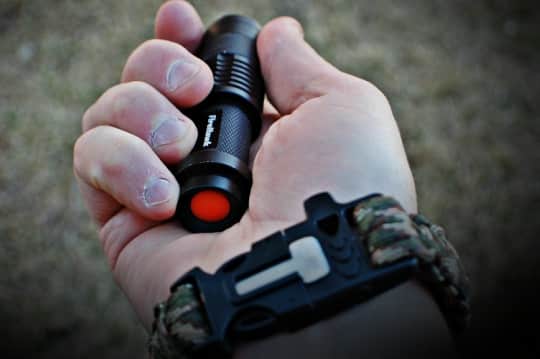
MTE M3-2I 1200 Lumen Flashlight

Trauma Kit, with spare CAT tourniquet in glove box

I never realized how often vehicles caught fire until I was on the fire department. We had a small stretch of the turnpike in our district, and we received weekly calls for vehicle fires. They were always a total loss. I’m probably biased because of this, but I don’t care. I keep a small BDS40 extinguisher from Blaze Defense Systems in the cab with me. The idea was if my truck caught fire, maybe I could knock it down just a hair so I could get my 10# extinguisher from the toolbox. If I didn’t catch it right away, I’d have no chance. It gives me that warm and fuzzy feeling I like so much.

Also Read: The Individual Trauma Kit/IFAK

The gloves and flashlight speak for themselves. They come in handy all the time. I really like the MTE flashlights. Greg McGee Engineering makes a hell of a product. They’re well made, bright, and aren’t priced sky high. If you need a no bullshit flashlight but don’t want to pay $300 for a name, check these guys out. I have two of their tough-as-nails 1,200 lumen lights. They have a low mode for changing tires, checking your oil, and close up work. They have a medium mode, and a high mode. The high mode throws a good beam, perfect for seeing what the dogs are barking at in the pasture in the middle of the night. They have a strobe and SOS setting, and you have the option of getting rechargeable batteries and a charger. 

In the toolbox:

6L MSR dram

10# Fire extinguisher (I got this for free, or I wouldn’t carry one)

Shovel 

Tow strap

Jumper cables

6×10 tarp

Cheap rope and good rope

Ratcheting straps 

Small tools: pliers, fuses, zip ties, screw drivers, bolt cutters. 

I keep an MSR 6 Liter dram in the tool box, since I call the desert home now. I’ve been glad I had it on several overnight trips where I misjudged how much water I would need. The 6L MSR dromedary bag is tough, and I like the different options you have on the cap. The tarp, cheap rope, and ratcheting straps I keep for securing loads of furniture, branches, or whatever else I happen to be moving. I keep jumper cables, tow strap, and a shovel to get me out of jams. I used to have a chain, but damn, it was heavy. The tow strap is longer, lighter, and is rated at a higher breaking strength (to my surprise). You should always have a spare tire and a decent jack. I wanted an off-road high-lift jack, but there didn’t seem to be any good lift points I could get to on my truck. A small gas can, and a quart of oil would be handy. I keep bolt cutters for obvious reasons. Next time you’re on a turnpike or interstate highway, look for an emergency path off the pavement. I bet you will find that you are fenced in. 

Listen! The Survival Cache Podcast – Flashlights

In the Get Home Bag: 

GoRuck Rucker

Therm-A-Rest Z-lite, Poncho liner, Hennessy tarp

2 pairs wool socks, Dragonwear beanie, Mechanix gloves

Compression Bandage, CAT TQ, H&H Z-fold gauze, moleskin

Morakniv, multitool

Nalgene, water tabs, Sawyer Mini water filter, steel cup, electrolyte tablets

Emergency food bar

Matches, SOL bivyy, paracord, signal mirror

Surefire, batteries

Spork, Bic lighter

Contractor bag

RSDL sponge, KI tablets, RAD dosimeter 


When I upgraded my hiking kit to lighter and better gear, a lot of it went here. The mindset for this bag is I may need to spend a night or two near my truck and take the Chevro-legs home. It’s not set up for super cold weather, but it’ll get me by in the springtime or early fall. I keep it in a GoRuck Rucker. There are better bags, certainly for the money. This bag was expensive as shit, but it’s tough and I like the size. It won’t go belly up on me when I need it. It fits perfectly behind a truck seat or under a plane seat. A light and warm sleeping pad, poncho liner, SOL bivvy, and tarp will keep me protected enough from the elements. Without a sleeping pad, the ground sucks the heat out of you. A contractor bag will keep my kit (or me!) dry in a rainstorm, should I be caught with my pants down. I have the tools I need to collect and treat water and enough calories to get me by. I’ve got the bare minimum medical equipment, and some moleskin to treat blisters. I come from a farming community with a lot of organophosphate use, so I pack an RSDL sponge. (You know the signs and symptoms of organophosphate or nerve gas poisoning, don’t you? It overwhelms your parasympathetic (Rest and Digest) nervous system. SLUDGEM: Salivation, Lacrimation (tearing), Urination, Defecation, GI distress, Emesis (Vomiting), and Miosis (pinpoint pupils)).  I keep KI tablets and a wallet dosimeter just in case Fukushima 2.0 happens. It’s cheap insurance.


I struggle to straddle the line between prepared and hopeful hoarding. I can’t stand clutter and extra crap I don’t use. This kit changes all the time. If you have any ideas or advice, let me know! What’s in your Vehicle EDC? 

PBS Frontline: “In The Age of AI” Provides a Stark Look of How Tech Companies Have Misused Public Trust and Continue to Do So

This article was originally published by B.N. Frank at Activist Post. 

You won’t see cell phones or personal computers much in movies or TV shows until the late 1990s because most people didn’t own them.  Of course, most people didn’t need them either.  If you couldn’t afford a “home phone” – payphones usually weren’t hard to find.  Anyone who needed to be “on-call” – like doctors – wore pagers.

People who grew up without new technology know firsthand that it has made the world better in some ways.  We also know that it has made it worse in others.  People who never knew the world without new technology have been conditioned to believe that all of it is necessary as well as beneficial.  Unfortunately, that’s not the case.  5G is very dangerous (see 1234, 56, 7, 8).  Artificial Intelligence (AI) is associated with many risks as well.

There will always be people who want more technology regardless of the human and environmental consequences.  Those kinds of people are not going to like Frontline’s “In the Age of AI”.

FRONTLINE investigates the promise and perils of artificial intelligence, from fears about work and privacy to rivalry between the U.S. and China. The documentary traces a new industrial revolution that will reshape and disrupt our lives, our jobs and our world, and allow the emergence of the surveillance society.


Activist Post reports regularly about 5G and AI.  For more information, visit our archives and the following websites.

How To Mount A Firearm Scope, The Right Way

How To Mount A Scope, The Right Way

Firearm Scope

There are two methods of doing things in life: the wrong way and the right way. The right way often may take longer, but the results are almost always much better than the wrong way. This is especially true when it comes to the wonderful world of firearms and shooting. There certainly is a wrong vs. right way.

For the two decades I have been a firearms instructor, I have seen both the right way and the wrong way. The wrong way is certainly not pretty.

When it comes to properly mounting an optic on a firearm, I have seen many people get it oh-so-very wrong. I’ve seen optics fly off of rifles or take a pounding from rattling around loose mounts screwing up the zero. The wrong way can cost you a deer, a competition or even your life.

The right way can fill your freezer, win trophies and protect your life and that of your family.  It only takes a little bit of time and perhaps a few extra dollars to do this the right way.

Let’s discuss the right way to mount an optic on your firearm.

Tools

You will need a stable rest for your rifle that keeps the firearm in a solid position; you can buy one or build one. Furthermore, you will need a good set of screwdrivers here, with some flatheads. I have yet to ever need a Phillip’s head to mount a scope. For the bases themselves, you will most likely need a larger head, while the rings will require a smaller head.

Having a scope level makes your job go by so much more easily. Most of these are magnetic and stick to the top of a scope’s turret. Don’t scrimp and neglect to purchase one of these, as they are not expensive and will save you time.

Mounting Your Optic

The first step is to have the rifle you want the optic mounted on to be drilled and tapped. Most modern firearms come drilled and tapped, or if you are shooting an AR-15 or anything in that class you will most likely have a Picatinny rail. After you have your ducks lined up in a row with your rifle, choose your optic. We’ll discuss optics another day, but I will say to be sure you also have the right screws, bases, rings, Allen wrenches, everything you need to mount your optic before you get to it. Double check your rings and mounts before you leave the store and make sure you have the right size.

Pay attention to your bases and mounting screws. This is especially important for a drilled and tapped rifle. You don’t want to widen out your tapped drill holes in the receiver of the firearm.  You also don’t want to strip screws. Don’t settle for substandard parts or the wrong size screws and parts.

Thoroughly clean your firearm and you mounts. Be sure you get any grit and debris off of the area you will be mounting to, and from the scope’s bases. Taking your time here will prevent rust and scratches.

How To Mount A Scope, The Right Way

Firearm Scope

Installation

My next step here is to dab a thin layer of Hoppe’s 9 or a decent protective oil onto the receiver where you will be installing your new scope. If you have a Picatinny rail system and you need to install a riser mount to offset an AR-10 or AR-15’s front sight, do so at this time, and after that install the bases but wait to tighten in case you have last-minute adjustments. For a rifle with traditional taped receiver, install the base mounts and get the screws as tight as you can without stripping them.

Next, install the bottom rings and place the optic on them. Adjust to where you want the optic to be and then place the top rings on the scope. Use a good scope level and be sure everything is kosher. When you’ve done this, tighten everything up.

Be sure everything is secure, and give it all one last tightening.

When you are satisfied with your work, take your rifle out and sight her in. If you have done a good job, you should have no problem getting nice tight groups and maintaining the scope’s zero.

Sighting In

Before sighting in your rifle, I highly recommend you purchase a quality shooting rest such as a Lead Sled, or borrow one from a buddy. A laser bore sight is a great tool, as is a quality spotting optic.

I prefer to laser bore sight a rifle first. Place your bore sight in your firearm’s chamber and set up a target at 25 yards. Unscrew the turret caps that cover the adjustment knobs on your scope. The laser sight will make a laser dot appear on the target; adjust you optic until the cross hairs are right on your laser’s dot. This eliminates much of the time to get on target and should ensure your first rounds hit near the bullseye. You will probably have to tweak your adjustments slightly downrange, but this step saves ammo.

Next, set up a target at 100 yards. Shoot three rounds and group your rifle. Make any needed adjustments to your scope and shoot a few more rounds. Normally this step takes me around 3-10 rounds of ammunition. Keep in mind that most shooting optics have an adjustment of one-fourth MOA, meaning that every time you adjust your scope one click you are moving it a quarter of an inch or a one-half centimeter at 100 yards.

After you have sighted in your rifle, replace your scope’s turret caps and be sure that they are snug. You may need to readjust your scope after every few hundred rounds.

Happy shooting!

What advice would you add in mounting a scope? Share your thoughts in the section below:

There’s A Trick To Navigating Federal And State Gun Regulations. Read More Here.

The post How To Mount A Firearm Scope, The Right Way appeared first on Off The Grid News.

The 5 Very Best Rifles For Rural Home Defense

The 5 Very Best Rifles For Rural Home Defense

Home Defense


A common saying among tactical trainers is: “The purpose of a handgun is to fight your way to your rifle.”

That makes perfect sense on a battlefield in Iraq or Afghanistan, but what happens when that “battlefield” is in your home – especially in a rural setting?

When compared by sheer ballistics, the results of most handgun rounds are very marginal when compared to that of a rifle. Yet, handguns have the advantage of being more compact and portable. And since they only require one hand, your other hand is free to hold a flashlight or call 911.

So now you might be asking, “Should I choose a handgun or a rifle for home defense?”

I say choose the rifle. I’m not talking about old-style, single-shot Remington Rolling Block Buffalo rifles or a 300 Weatherby Magnum with a 10X scope on it for elk season (but if one of those are all you have, they beat a can of pepper spray). I’m referring to modern sporting rifles designed for more tactical use.

Here’s my list of the five best:

1. The AR-15 in 5.56/223

Perhaps the most popular rifle in the U.S. is the AR-15. It was designed in 1960 by Armalite for the U.S. military and has remained in military use for six decades. For home defense purposes, I strongly recommend the shortest barrel length you can legally own. In some cases, this can be a SBR (short barreled rifle) registered with the National Firearms Branch of the Bureau of Alcohol, Tobacco and Firearms (ATF) for a $200 tax. SBRs have barrels less than 16 inches in length and can be as short as 7.5 inches. This makes the rifle more compact and maneuverable within the confines of the home.

2. The Kriss Vector

A California-based company builds a unique variety of carbines and pistols known as the KRISS Vector. This radical design eliminates felt recoil and is chambered in 9mm or 45 ACP. Those are pistol rounds but the longer barrels give these rifles significantly more velocity. Best of all, they take extended magazines designed for Glock pistols in the same caliber, so they work well for Glock shooters, too.

3. The FN PS90

The 5 Very Best Rifles For Rural Home Defense

Home Defense

This may seem like an odd choice, but this futuristic-looking firearm in its small 5.7mm cartridge was actually designed as a personal defense weapon and was used famously by the US Secret Service on president protection details. Compact with virtually no recoil, its bull pup-like design makes for a compact shooting platform. Having one of these converted to an SBR makes the weapon more desirable from a home defense standpoint.

4. The lever action carbine

Lever action rifles made by Winchester, Marlin, Rossi and several others chambered in one of the magnum handgun calibers such as 357 Magnum, 44 Magnum or 45 Colt make for a very effective and compact system for people who reside in areas where the ownership of semiautomatic rifles may be restricted or draw unwanted attention. Five to 10 rounds of a powerful revolver cartridge with the added ballistics of a longer barrel make these a primary fight-stopper. The late firearms guru, Colonel Jeff Cooper, used to refer to them as “Brooklyn Specials,” as they were one of the few firearms not castigated outright in what he viewed as the liberal courtrooms of the Northeast.

5. The Ruger 10/22

You read that right. I have been a longtime advocate of the popular Ruger carbine in a self-defense role. With the right ammunition and the correct bullet placement, these rifles can fill a vital role in any self-defense arsenal. Low recoil, fast follow-up shots and superb accuracy make for one heck of a home defense rifle.

Accessories

It may be tempting to deck out a tactical rifle with all sorts of gizmos from red-dot sights to lasers, bipods and bayonets, but I suggest you keep it simple. More moving parts leads to more potential for something to fail, particularly if it is an accessory that the shooter comes to rely on more so than basic marksmanship.

The bare minimum I recommend is a mounted weapon light and a sling. Some shooters prefer a red-dot optic and if that makes you a better shooter, then go for it — particularly if you inhabit a substantial piece of property and might have to engage threats at a greater distance.

What would you add to this list? What would you delete? Share your thoughts in the section below:

There’s A Trick To Navigating Federal And State Gun Regulations. Read More Here.

The post The 5 Very Best Rifles For Rural Home Defense appeared first on Off The Grid News.

Global Debt Is Up To $188,000,000,000,000 – This Is Officially The Biggest Debt Bubble The World Has Ever Seen

The world is now 188 trillion dollars in debt, and that number continues to grow rapidly each year.  It is a form of enslavement that is deeply insidious, because most of those living on the planet do not even understand how the system works, and even if they did most of them would have absolutely no hope of ever getting free from it.  The borrower is the servant of the lender, and the global financial system is designed to funnel as much wealth to the top 0.1% as possible.  Of course throughout human history there has always been slavery, and the primary motivation for having slaves is to extract an economic benefit from those that are enslaved.  And even though most of us don’t like to think of ourselves as “slaves” today, the truth is that the global elite are extracting more wealth from all of us than ever before.  So much of our labor is going to make them wealthy, and yet most people don’t even realize what is happening.

Let’s start with a very simple example to help illustrate this.

When you go into credit card debt and you only make small payments each month, you can easily end up paying back more than double the amount of money that you originally borrowed.

So where does all that money go?

Well, of course it goes to the financial institution that you got your credit card from, and in turn that financial institution is owned by the global elite.

In essence, you willingly became a debt slave when you chose to go into credit card debt, and the hard work that it took to earn enough money to pay back that debt with interest ended up enriching others.

On a much larger scale, the same thing is happening to entire nations.

Today, the United States government is nearly 23 trillion dollars in debt.  In essence, we have been collectively enslaved, and we have been obligated to pay back all of that money with interest.  Of course at this point it is literally impossible for us to ever pay back all that debt, and every year we add another trillion dollars or so to the balance.  The global elite are now extracting more than 500 billion dollars in interest from this debt on an annual basis, and it is expected that number will greatly escalate in the years ahead.

It is not an accident that the Federal Reserve and the federal income tax were both instituted in 1913.  The Federal Reserve system was designed to create an endless debt spiral that would get the federal government in as much debt as possible, and since that time the size of our national debt has gotten more than 7000 times larger.  And the federal income tax was needed as the mechanism through which our wealth is transferred to the government to service all of this debt.

It is truly a deeply, deeply insidious system, and the American people should refuse to back any politician that does not favor shutting it down, but at this point this isn’t even a major political issue in our nation.

And of course the United States is far from alone.  Even though we can’t get the whole world to agree on much of anything, somehow virtually the entire planet has been convinced that debt-based central banking is the way to go.

In fact, at this point 99.9 percent of the population of the world lives in a country that has a central bank.

According to Wikipedia, there are only 9 very small nations that do not have a central bank at this point…

-Andorra
-Isle of Man
-Monaco
-Nauru
-Kiribati
-Tuvalu
-Palau
-Marshall Islands
-Federated States of Micronesia

If you combine the populations of all of those 9 nations together, it comes to much less than 0.1% of the total global population.

Do you think that this is just a coincidence?

The global elite do not want humanity to be free.  They want us to be in as much debt as possible so that we can make them richer.

When you realize how badly the game has been rigged, then a lot of things start to make a whole lot more sense.

For example, for those that understand how the system works it is certainly not surprising that the total amount of debt in the world has hit a new all-time record high of 188 trillion dollars

The global debt load has surged to a new all-time record equivalent to more than double the world’s economic output, IMF chief Kristalina Georgieva warned Thursday.

While private sector borrowing accounts for the vast majority of the total, the rise puts governments and individuals at risk if the economy slows, she said.

“Global debt — both public and private — has reached an all-time high of $188 trillion. This amounts to about 230 percent of world output,” Georgieva said in a speech to open a two-day conference on debt.

That number has risen by 24 trillion dollars since 2016, and it is the biggest debt bubble that the world has ever seen by a very wide margin.

Of course at some point this debt bubble is going to burst in a global disaster of epic proportions, but meanwhile the global elite are going to continue to milk all of us for as long as they possibly can.

Here in the United States, we have been on the greatest debt binge in the history of our nation since the last financial crisis.  U.S. government debt has more than doubled, state and local government debt has ballooned to ridiculous proportions in much of the nation, corporate debt has doubled, student loan debt has more than doubled, auto loan debt just keeps hitting new record highs, and U.S. consumers are now 14 trillion dollars in debt.

Our mountain of debt has become so colossal that the only way to keep the game going is to borrow even more money, but by borrowing more money we make our enslavement even worse.

Meanwhile, those that are holding our debt just continue to live the high life as they laugh all the way to the bank.

About the Author: I am a voice crying out for change in a society that generally seems content to stay asleep. My name is Michael Snyder and I am the publisher of The Economic Collapse Blog, End Of The American Dream and The Most Important News, and the articles that I publish on those sites are republished on dozens of other prominent websites all over the globe. I have written four books that are available on Amazon.com including The Beginning Of The End, Get Prepared Now, and Living A Life That Really Matters. (#CommissionsEarned) By purchasing those books you help to support my work. I always freely and happily allow others to republish my articles on their own websites, but due to government regulations I need those that republish my articles to include this “About the Author” section with each article. In order to comply with those government regulations, I need to tell you that the controversial opinions in this article are mine alone and do not necessarily reflect the views of the websites where my work is republished. This article may contain opinions on political matters, but it is not intended to promote the candidacy of any particular political candidate. The material contained in this article is for general information purposes only, and readers should consult licensed professionals before making any legal, business, financial or health decisions. Those responding to this article by making comments are solely responsible for their viewpoints, and those viewpoints do not necessarily represent the viewpoints of Michael Snyder or the operators of the websites where my work is republished. I encourage you to follow me on social media on Facebook and Twitter, and any way that you can share these articles with others is a great help.

The post Global Debt Is Up To $188,000,000,000,000 – This Is Officially The Biggest Debt Bubble The World Has Ever Seen appeared first on The Economic Collapse.

The Right Way To Teach A Child To Shoot

The Right Way To Teach A Child To Shoot

teach a child to shoot

I love my kids. The energy they bring to our home, the warm embraces I receive every morning when they wake, and the joy of watching them learn and grow. All of these things make life beautiful.

I want them to grow up knowing the Lord, following God, valuing life, to be handy with a shovel, able to use a tractor … and a crack shot with a rifle. I desire them to be able to hunt game, dispatch a rabid coyote, and be able to drop a sexual predator with a well-aimed barrage of gunfire. In short, I want my kids to learn not only how to handle a firearm, but to respect that firearm and the responsibility that goes with it, and shoot extremely well.

Safety

As a firearm instructor, my top concern on the range is safety. This has to be our first step as a parent when it comes to how to teach a child to shoot and handle guns. Every child needs to be taught to respect a firearm. They also need to be taught that a firearm in an inanimate object, and it is only dangerous if in the hands of a dangerous or evil user. My wife and I know a woman who was raised by her parents to fear guns. To this day she is deathly afraid of the sight of a rifle, shotgun or pistol. This should never be our goal as a parent.

Teach your young children to never touch a firearm, except with Mommy or Daddy’s permission. My 5 year old is allowed to handle a firearm unloaded. I am already instilling in her little mind that her finger never touches the trigger until she is ready to shoot, and to keep the muzzle pointed in the safest direction possible. I am always right there when she handles it, and it is always unloaded unless she is firing at a target with my help. Our firearms remain locked up.

Christian Heroes For Christian Kids: This New Project Is Putting God Back Into History!

Our goal should be to see our children become confident, yet not cocky. Respectful, and not fearful. I want to raise my children in such a way that if they were to come across a firearm at a friend’s house someday left out and loaded, my child could safe that weapon — meaning he or she can determine safely if it was loaded or not, and unload and safe the firearm if needed.

I have an example here in my own life. As a teenager, I once came across a potentially dangerous situation at the home of a farmer I knew. I used to hunt and work his property part-time. During deer season one year, the farmer who never practiced the best firearm safety had gone into town with his son. They left a few rifles and shotguns in a common building on the farm fully loaded.  One of their shotguns, a Browning Auto-5, had a round in the chamber, and four more in the tube magazine. The muzzle of the shotgun was completely full of hardened mud and pebbles.

The Right Way To Teach A Child To Shoot

teach a child to shoot

I was aghast at the sight. Growing up as a hunter and around firearms, I knew my way around them extremely well. I grabbed that shotgun before some of the other part-time employees who were a wee bit reckless came to work. I unloaded the shotgun, and then proceeded to unload the other firearms, a Remington 700 and a Mosin M1991/30. The shotgun with the plugged barrel sure made me feel uneasy, so I raced over to the tool shed, retrieved a cleaning rod and gun oil and gave the barrel a thorough cleaning. By the time the other knuckleheads arrived to work, I had stored the guns in a safe place out of their sight and told my boss. He shrugged as I handed him the ammunition I retrieved, but I knew deep down I did the right thing.

That is how you want to raise your kids to behave around a firearm.

Shooting a Firearm

Never start your kids on a high-powered rifle. I have seen so many idiots — and idiots is too kind a word — hand a youngster a .12 gauge or .30-06 for their first time shooting. When the kid is naturally bruised or knocked on his rear, the adult explodes in rip-roaring laughter. I honestly want to grab the firearm and wrap the barrel around the adult’s neck when I see this.

We should desire to see our kids grow up to love shooting, hunting and the outdoor sports. The first time out should be with light cartridges and small guns. Even a BB gun is great. A .22 is terrific for youngsters. Get them comfortable shooting, and then work on accuracy.

A .22 bolt action is the best tool to teach a child how to shoot. I never let a youngster use a scoped rifle unless they really need one. Start with iron sights and build confidence. Gently teach, and encourage your child. However, be strict with firearm safety. You must never waiver with a stern hand when it comes to safety.

Also, never let your child handle a firearm that they are not capable of handling.  Many of us can remember last year when a firearms instructor in Arizona let a little girl handle a UZI submachine gun with tragic consequences. Let’s not let that happen. Start slow.

If they are going to start deer hunting, why not a light kicker like a .223, which contrary to many armchair gun expert’s opinion, has dropped plenty of deer. If you must go heavier, think a .243 or .7mm-08. A .30-30 can do fine for an older child.

As your child gains confidence, feel free to teach them how to handle larger chamberings. I strongly suggest waiting to introduce the shotgun until they are comfortable enough to handle recoil. I have found many larger 8 and 9 year olds are ready for a youth .20 gauge and turkey hunting.

Stay safe, and God bless!

What advice would you add on teaching a child to shoot? Share it in the section below:

Recommended:

How To Raise A Child Who Loves Hunting

Learn How To ‘Live Off The Land’ With Just Your Gun. Read More Here.

The post The Right Way To Teach A Child To Shoot appeared first on Off The Grid News.

How to Make Your Own Ration Bars

Have you ever wanted to make your own survival ration bars? Like the ones they sell in stores but homemade so you know what’s in them. Well, I got together with a few friends to make some homemade survival ration bars and here’s how it turned out. Make sure to read through the comments when you’re done for some suggestions on making them better!

Apparently, there are a couple of different recipes out there for these bars, we just used one I had been given by a food storage lady. This was really an interesting experiment because there were 6 of us making these survival bread loaves, and of course, they turned out 6 different ways. We’ll discuss what happened as we go through the directions.

Homemade Ration Bars | A Step-By-Step Tutorial


What You’ll Need:

  • 2 cups of oats
  • 2 1/2 cups of powdered milk
  • 1 cup of sugar
  • 3 TB of honey
  • 1 3-oz package jello (orange or lemon)
  • 3 TB of water


Step 1: Mix the Dry Ingredients

Mix the oats, powdered milk, and sugar together in a bowl: A couple of us used regular oats, a couple used quick oats. I really don’t think it matters which you use–whatever you have on hand is fine.

Step 2: Boil Water, Jello, and Honey

In a medium pan mix water, jello, and honey. Bring to a boil. This is just the 3 TB water called for, not the cup of water you’d usually use when making jello. We found that a rolling boil was better than just beginning to boil for the mixing step. The recipe I had specifically called for lemon or orange jello, but we didn’t know why that would be, so we made some with raspberry and watermelon jello also. After we tasted them, we figured the lemon or orange were specified due to the high amount of sugar in this recipe! The loaves made with sweet jello flavors were REALLY sweet when they were done!

No products found.

clickheretocontinuereading-new

Watch this interesting video by Steve1989MREInfo and watch him eat the oldest ever recorded chocolate, and biscuits:


Ration bars are essential in survival situations. When you start to run out of food inside the house or anywhere that lacks access to food, these bars will save your life. Knowing at least one emergency ration bar recipe is a fundamental survival skill. Try this simple recipe and start adding ration bars in your emergency food storage.

Do you have any other ration bars recipe you want to share? Let us know in the comments section below!

Placard | Make Your Own Ration Bars | Emergency Ration Bar Recipe

Up Next: 10 Survival Foods That Are Great During Short-Term Disasters


Editor’s Note: This post was originally published on December 21, 2015, and has been updated for quality and relevancy.

A Giant Statue Of Molech Has Been Put Up Right At The Entrance To The Colosseum In Rome

Tourists that visit the Colosseum in Rome these days are getting quite a shock.  A gigantic statue of a pagan Canaanite deity known as “Molech” has been erected right at the entrance.  In ancient times, those that served Molech would literally sacrifice their children to him, and apparently this involved burning them to death.  And now a massive statue of this pagan idol is the centerpiece of a new “archaeological exhibition” at the world famous Roman Colosseum.  Yes, the exact same Colosseum where countless numbers of Christians were martyred for their faith is now the home for one of the most monstrous pagan deities that the world has ever seen.

I know that this sounds almost too strange to be true, but this is actually happening.  The following comes from the official press release for this “exhibition”…

A reconstruction of the terrible deity Moloch, linked to Phoenician and Carthaginian religions and featured in the 1914 film Cabiria (directed by Giovanni Pastore and written by Gabriele D’Annunzio) will be stationed at the entrance to the Colosseum to welcome visitors to the exhibition.

They are referring to this enormous statue as “Moloch”, but according to Wikipedia this ancient pagan god was also known as “Molech, Milcom, or Malcam”…

Moloch[a] is the biblical name of a Canaanite god associated with child sacrifice, through fire or war. The name of this deity is also sometimes spelled Molech, Milcom, or Malcam.

For purposes of this article, I will use the name “Molech”, because that is the name that will be most familiar to the majority of my readers.

The organizers of this “exhibition” could have chosen to put Molech in a dark corner where nobody would have really noticed him, but instead they purposely decided to feature him in a place where 100 percent of the visitors to the Colosseum would immediately see him.

One woman that recently visited the Colosseum told LifeSiteNews what she witnessed…

“We were so excited the day we decided to go to the Colosseum,” Alexandra Clark told LifeSiteNews via email. She and her sister Tiffany were looking forward to visiting the site of Christian martyrdom.

“But the moment we got there the sight that greeted us was horrifying! Standing guard over the entrance was the colossal pagan statue of Moloch. It was placed in that prime spot so that everyone that entered into the Colosseum had to pass it,” she continued.

How in the world could something like this possibly be allowed?

And what makes this even more shocking is that the Colosseum is actually controlled by the Vatican.  The following comes from Breaking Israel News

A source close to the matter told Breaking Israel News that: “There is no way that such a thing could be done without direct permission from the highest levels of the Vatican. The Colloseum of Rome is owned by the Vatican, and specifically the Diocese of Rome, also called the Holy See. If anyone wants to do anything there, they must get permissions from the office of the Diocese of Rome. This exhibition, called “Cathargo: the immortal myth” could not be held there at all unless permissions were granted at high levels.”

Somebody at the Vatican really messed up on this one.

This isn’t just some random ancient deity.  In Leviticus 18:21, the people of Israel are specifically warned against sacrificing their children to this monstrous idol…

And thou shalt not let any of thy seed pass through the fire to Molech, neither shalt thou profane the name of thy God: I am the Lord.

And in Jeremiah 32:35, we are told that this is precisely what many of the people of Israel ended up doing as they fell away from the Lord…

And they built the high places of Baal, which are in the valley of the son of Hinnom, to cause their sons and their daughters to pass through the fire unto Molech; which I commanded them not, neither came it into my mind, that they should do this abomination, to cause Judah to sin.

Why in the world would anyone think that such practices are something worth celebrating?

According to the Christian Apologetics & Research Ministry, the way that these babies would be killed was truly horrific…

The ancients would heat this idol up with fire until it was glowing, then they would take their newborn babies, place them on the arms of the idol, and watch them burn to death. I can’t help but compare today’s abortion massacre to the sacrifice of children by these ancient pagans. In both, innocent life is destroyed for the gain of the parent.

Over the past few years, there seems to have been a concerted effort to put up symbols from ancient pagan religions in the Middle East in key locations all over the globe.  This includes erecting the “arch of Baal” in both Washington D.C. and New York City.

But unlike some of those other “”exhibitions”, this one is going to last a whole lot longer than just a few days.

In fact, we are being told that this statue of Molech will remain standing at the Colosseum in Rome until March 29, 2020

The statue of Moloch, worshipped by both the Canaanites and the Phoenicians, is part of an exhibit dedicated to Ancient Rome’s once-great rival, the city of Carthage. The large-scale exhibition, titled Carthago: The immortal myth, runs until March 29, 2020.

That is almost five months from now.

Interestingly, Rome was just hit by a magnitude 4.4 earthquake.  It is extremely unusual for such a large quake to happen there, and it really shook a lot of people up.

I have no idea if there is any connection, but I felt that it was noteworthy enough to share with all of you.

Without a doubt, it truly is an abomination that a gigantic statue of Molech is now standing right at the entrance of the Colosseum where so many Christians were brutally slaughtered by the Romans.

Unfortunately, not many people are talking about this story, and even fewer are getting upset about it.

About the Author: I am a voice crying out for change in a society that generally seems content to stay asleep. My name is Michael Snyder and I am the publisher of The Economic Collapse Blog, End Of The American Dream and The Most Important News, and the articles that I publish on those sites are republished on dozens of other prominent websites all over the globe. I have written four books that are available on Amazon.com including The Beginning Of The End, Get Prepared Now, and Living A Life That Really Matters. (#CommissionsEarned) By purchasing those books you help to support my work. I always freely and happily allow others to republish my articles on their own websites, but due to government regulations I need those that republish my articles to include this “About the Author” section with each article. In order to comply with those government regulations, I need to tell you that the controversial opinions in this article are mine alone and do not necessarily reflect the views of the websites where my work is republished. This article may contain opinions on political matters, but it is not intended to promote the candidacy of any particular political candidate. The material contained in this article is for general information purposes only, and readers should consult licensed professionals before making any legal, business, financial or health decisions. Those responding to this article by making comments are solely responsible for their viewpoints, and those viewpoints do not necessarily represent the viewpoints of Michael Snyder or the operators of the websites where my work is republished. I encourage you to follow me on social media on Facebook and Twitter, and any way that you can share these articles with others is a great help.

Best Home Freeze Dryer On The Market Today – 2019

Home Freeze DryerIf you’re looking into buying in a home freezer dryer you’ve come to the right place.

Today, freeze dryers are still a fairly UNcommon household appliance. But I’m betting that’s about to change!

I envision a future where nearly every home has a freeze dryer and food waste becomes a thing of the past.

Where everyone can enjoy the incredible benefits of freeze-drying their own foods AT HOME. 

And even though it may seem like a huge effort to freeze dry at home, it’s not bad at all.

Once you fully understand how they work and look at all your options, you’ll be ready to invest in this innovative technology.

So today, I’m going to sharing everything I know about freeze dryers, specifically:

As A Way To Introduce You To Skilled Survival, We’re Giving Away Our Family First Food Planning Guide. Click Here To Get Your FREE Copy Of It.

WHAT EXACTLY IS A FREEZE DRYER?


A freeze dryer machine is simply an appliance that removes nearly all the moisture from foods.

There are several important benefits to removing moisture from food (which we’ll get into later), the primary benefit being an incredibly long shelf life.

And when it comes to food preservation, and reduced food waste, it’s all about improved shelf life.

So now that you have an idea of WHAT a freeze dryer is, let’s discuss HOW a freeze dryer works. 

HOW FREEZE DRYERS WORK


Before we discuss how freezing drying works, let’s talk about how it doesn’t work!

You see, many people get the process of freeze-drying confused with dehydration.

Why? Because freeze drying and dehydration are two standard food preservation methods. And both methods remove water from food products. That’s why a lot of people mistakenly use the two terms interchangeably.

But there are major differences between dehydrated and freeze-dried food storage. First, let’s briefly discuss dehydration.

The Process Of Dehydration

Modern-day dehydration is a pretty simple process that nearly anyone can do at home.

Food dehydrators circulate hot, dry air across food on open racks. This causes the water to evaporate and the food to shrivel.

The temps are high enough to remove water but not high enough to actually cook the food.

Despite this, you lose many of the vitamins and nutrients in the process. Plus, the taste and texture can often change dramatically.

Raisins, dates, and beef jerky are all examples of dehydrated foods.

The Process Of Freeze Drying

On the other hand, freeze drying is a more complex process. One that involves 3 main steps:

  1. Freezing
  2. Lowering pressure
  3. Removing the moisture through sublimation

The end product is completely different than “dehydrated” foods. Because of this complexity, it takes dedicated, high-tech equipment to freeze dry food.

Like dehydrating, you place food on large open racks to allow for air circulation. But, instead of placing the food in a high temp environment, you load the racks into a vacuum chamber.

Then the freeze dryer lowers the temperature inside the vacuum chamber. To an incredible low temp (around -40deg F).

Once the food is completely frozen, a vacuum pump lowers the pressure inside the chamber. And then the temperature is slowly raised back to normal.

Due to the reduced pressure, the water in the food “sublimes”.

Sublimation is the process where solid ice changes directly into water vapor without ever becoming liquid.

The food gives up its water content without sacrificing texture, flavor, or nutrition.

The bottom line:

IF you’ve seen someone rehydrate an entire lasagna on a backpacking trip (as I have), you’ll start to see the immense possibilities of owning a home freeze dryer!


THE BENEFITS OF FREEZE DRYING


So, if it’s more complex to freeze dry foods, why choose it over dehydrating?

More Moisture Removal

One of the main reasons to remove moisture from food is to prevent the spread of mold and bacteria.

All living organisms need moisture to thrive. So by lowering the water contents, it’s nearly impossible for them to survive.

Most home dehydrators can remove about 90 to 95 percent of the water contained in foods.

By comparison, freeze drying will remove up to 98 to 99 percent of moisture content.

The bottom line:

Freeze drying food removes more moisture. Thus it has a much better shelf life than dehydrated foods.

Much Longer Shelf Life

The lower water content of freeze dried foods allows for a much longer shelf life if stored properly. That’s why it’s considered one of the best non-perishable foods..

Sealed freeze dried meals will keep their texture, flavor, and nutritional value up to 25 years (or longer)!

Better Nutritional Content

Dehydrating food doesn’t change the fiber or iron content. But many of the vitamins and minerals begin to break down at higher temps.

Freeze-dried foods keep more of these valuable vitamins and minerals.

More Appealing Appearance & Composition

For most people, the biggest hurdle for dehydrated foods is taste and texture.

Freeze dried foods keep the shape and color of fresh food. You can often rehydrate the food back to a similar original consistency!

For example:

Freeze-dried strawberries become soft again if you add a little water or place them in your mouth.

Lower Weight

The greater reduction in water content provides an extra reduction in weight.

This is great when you have to pack your food on your back for miles and every ounce counts!

Less Cooking Time & Effort

Freeze-dried foods generally only need the addition of water to reconstitute them. Unlike the slow simmer you have to do with dehydrated foods.

Depending on what you’re preparing, most freeze-dried foods will be ready to eat in less than 5 minutes.

This makes meal prep faster and easier for everyone – especially if backpacking or camping.

As A Way To Introduce You To Skilled Survival, We’re Giving Away Our Family First Food Planning Guide. Click Here To Get Your FREE Copy Of It.

THE DISADVANTAGES OF FREEZE DRYING


Of course, there are some serious drawbacks to freeze drying foods.

Higher Freeze Dryer Price

Honestly, this IS the biggest factor for most people. But it’s a shame…

I get it, a food dehydrator can come in at under $50 – and they show up frequently at Goodwill.

By comparison, even a smaller model home freeze dryer can cost more like $2000!

And on top of that, a freeze dryer will use electricity to operate. Energy costs can add up if you run it full time during the summer when fresh produce is rolling in from the garden.


But here are three ideas to make the cost of a freeze dry machine much more palatable.

1. Get a group of friends to “co-own” a home freeze dryer.

You could become a part-owner with friends or neighbors! Then you could share the freeze dryer for different parts of the year.

If you could find 4 other “investors” you all could own a $2000 freeze dryer for about $500. Much more reasonable if you’re on a tighter budget.

2. Start a small freeze-drying business

Consider a home freeze dryer as a small business adventure!

  • You can loan the unit out to others for a set time frame…
  • Or you could take other people’s foods and freeze dry it for them.
  • Or sell freeze dried meals you pack yourself.

Customers could start off as friends, then neighbors. After that, you could consider farmers’ markets or even online sales.

3. They’ll pay for themselves if you compare to the cost of store-bought freezed-dried foods

Another way to justify the expense is the compare the cost to buy an equivalent amount of freeze dried food from the store.

With $2000 you can get about 295,000 calories worth of store-bought freeze dried food. For a typical family of four (1500 calories per person per day) that’s only about 1.5 months worth of emergency food.

On the other hand, with a home freeze dryer, you can freeze and store all your leftover, or bulk discount food purchases, or extra garden produce this year, next year, and on and on.

So if you use your freeze dried all the time, you end up saving money over time when you compare the cost of purchasing freeze dried foods from a store.

The bottom line:

By taking any of these approaches you could help justify the upfront cost of buying a freeze dryer. And if you use it as a small business venture your new freeze dryer investment could even turn a nice profit!

Fixed Process Volume

I’ve expanded my old reliable dehydrator 4 times. It now has many more drying racks than it did when I bought it.

This has given me a huge increase in the volume of food I can preserve.

Volume expansion is not as easy with a freeze dryer. This is because the food has to fit in a smaller vacuum chamber and each run can take days to finish.

KEY FEATURES TO LOOK FOR IN A FREEZE DRYER


If you’ve made the decision to get a freeze dryer, you still need to ask some key questions before investing:

How much food do you need to preserve?

Most freeze dryers give stats on the size of the vacuum chamber and the amount of food that can fit in one batch.

If you plan on smaller batches (i.e. you’re only “cooking” for yourself and a partner), you can get away with a smaller dryer.

If you need to provide for a crowd or you plan to do more than one food type in a batch, you’ll likely need a larger dryer.

How much space do you have for a large appliance?

Just like any other appliance, a freeze dryer takes a lot of space. Plus the vacuum chamber, the control system, and pumps add to the footprint.

Some smaller freeze dryers can fit on a countertop, but the large ones are roughly the size of a dishwasher.

How much electricity can you provide for the freeze dryer?

The large pump and other machinery involved in a freeze dryer can take some serious power.

For the larger models, you may need to have a dedicated electrical circuit.

What maintenance are you willing to do?

Most home freeze dryers are fairly low maintenance. But they do need cleaning and inspecting the door seals and other critical parts.

Also, most come with a vacuum pump that requires oil changes on occasion.

Some allow for an upgrade to an oil-free pump, but it comes at a premium.

BEST FREEZE DRYER(S) ON THE MARKET TODAY


When it comes to home freeze dryers, there’s really only one name on the market these days – Harvest Right.

Other manufacturers make solid, well-built freeze drying machines. But most of these units are for the industrial market instead of for “in-home” use.

These commercial units do occasionally come up for sale on auction sites. And a used commercial freeze dryer can be a GREAT deal if you find the right one for your uses.

For the rest of us, there are three models from Harvest Right (small, medium, large). All three units are essentially the same except for their dimensions and price.

But all three sizes have several color options to choose from, to help match any kitchen decor.

Small Harvest Right Freeze Dryer

Small Harvest Right Freeze DryerThe Small Harvest Right Freeze Dryer is an ideal unit for someone just getting into at home freeze drying.

It can freeze dry anywhere from 4-7 LBS of fresh food per batch which can translate into about 840 LBS of fresh food annually!

The size of the Small Harvest Right Freeze Dryer is 25 inches tall, 16.5 inches wide, and 18.5″ deep.

If you’re hoping to buy a freeze dryer than can fit on a kitchen countertop, this is the only unit I know of that can do it.

But even then, it is still a fairly large appliance for a countertop. Be aware of your headspace and depth to ensure it will fit – if this is your goal.

Check Out Today’s Price and Features


Medium Harvest Right Freeze Dryer

Medium Harvest Right Freeze DryerThe Medium Harvest Right Model can take up to 7 to 10lbs of fresh food per batch.

This is a decent amount of volume while not requiring the dedicated circuit that the Large unit may need.

The dimensions of the medium unit are 28.5 inches tall, 18 inches wide, and 21.25 inches deep.

It’s a good compromise on price, size, and capacity.

Check Out Today’s Price and Features


Large Harvest Right Freeze Dryer

Large Harvest Right Freeze DryerFinally, Harvest Right makes a large at home freeze dry.

This larger unit can freeze dry up to 16 LBS of fresh food per batch.

This helps to drastically cut down on the number of batches you need to run!

However, this unit needs quite a bit of floor space. Its dimensions are 30.75 inches tall, 20.25 inches wide, and 23.75 inches deep.

So if you’re looking to invest in a home freeze dryer to start a small business venture, this is the best unit for you.

Check Out Today’s Price and Features

As of now, these are the 3 main choices freeze dryer choices for at-home freeze drying…

I’m hoping the market grows in the next few years to add some much-needed competition. I’d love to see new features and innovation – as well as a price drop.

But until then, the handy and frugal DIYer can always build their own freeze dryer!

HOW TO BUILD A DIY FREEZE DRYER


Yes, it IS possible to build your own DIY Freeze Dryer, but it’s also challenging. This is not a project for those who are new to DIY.

And you’re not likely to match the same level of quality as a commercial version, but you can’t beat the price…

Here’s an excellent DIY Freeze Dryer build you can try to follow step by step (if you’re up for the challenge):

BEST FOODS TO USE IN A FREEZE DRYER


While the manufacturers state nearly any food can be freeze dried, that’s not quite accurate.

Many foods freeze dry very well, but some need a bit more pre-processing first.

Here’s a video that provides a nice overview of using a freeze dryer at home:


Now that you have an overview, here are some more freeze dry preparation details for different food types.

Fruits and Veggies

Small fruits and vegetables (blueberries, beans, etc.) can be freeze dried in one piece. But you’ll need to cut larger items into smaller slices or chunks.

I’ve heard that freeze dried watermelon is fun. With the look and taste of watermelon, but the crunch and weight of rice cakes!

And the only way you’ll eat vegetables on a backpacking trip is if they’re freeze dried.

Meats

This same principle also applies to meats. Stewed meats freeze dry well, but large thick steaks are far more challenging.

Cook all meats before drying. The rehydration process may not involve adequate heat to cook it later.

Coffee

How did you think they fill those packets of instant coffee crystals?

Meat

Not jerky, but superlight chunks of steak ready to be added to dinner in a flash!

Fish and Seafood

Freeze dried shrimp feels like they should be fake, but they rehydrate to add to soups and burritos!

Eggs

Real scrambled eggs on day 9 of a trip? That’s a treat.

Dairy

Dried milk powder is a staple in some places. This makes it possible to keep a large amount of milk on hand without it spoiling or taking up the whole fridge.

Freeze dried butter powder is an amazing find that has made my camp cooking SO much better!

FINAL THOUGHTS


Freeze drying food is a great way to add some variety and long term shelf life to your emergency supplies.

The simple cooking and lightweight make these easy foods to manage. Plus the taste, texture and nutritional improvements go a long way to enjoying foods for the long term!

No matter what the future holds…

Jason K.

P.s. Do you know where the closest nuclear bunker is from your home?

There are a lot of natural nuclear shelters in the US that are absolutely free. And one of them is near your home.

Click on the image above to find out where you need to take shelter.

The post Best Home Freeze Dryer On The Market Today – 2019 appeared first on Skilled Survival.

Is This The Absolute Best Gun For Concealed Carry During Winter?

Is This The Absolute Best Gun For Winter Concealed Carry?

winter concealed carry

News flash: There’s been almost a century-long debate on which is the best caliber for CCW. Groundbreaking stuff, right?

Well, if I’m going to contribute to the conversation on this one, then here’s my thoughts: There is no single perfect round, in the same way that there’s no single perfect survival knife. If anything, perfection in this case is situationally dependent — meaning that perfection in a CCW round for one person may be the exact opposite to what perfection means for someone else.

Additionally, one of the variables in our ongoing search for personal CCW perfection has to do with the changing seasons. Given how we’re finding ourselves peering down the barrel of winter, I feel it’s time for us to gear up and get our CCW needs squared away. And this is why I, personally, am a fan of the 45 ACP for the application of winter concealed-carry. Here are my reasons …

It’s High Time For a Full-Size

Though the Bob Munden-types may be able to put a .38 Special round on a pie plate-sized target from 200 yards off with a “belly gun,” for the rest of us it’s just easier to achieve better accuracy with a full-sized weapon. There’s greater distance between the front and rear sights, subsequent shots are easier to make with more weight at the muzzle. Therefore, you’ve got a greater contact area on a larger frame, allowing for increased stability and handling. At the end of the day, a full-sized handgun offers better shooting and easier shooting.

However, in the warmer months, it’s MUCH harder to successfully conceal a full-sized weapon under a T-shirt or light button-down — that is, unless you’re Lou Ferrigno. But in the winter, you have the option of wearing a blazer, thicker fleece jackets, etc., and fewer worries of the awkward hip bulge that seems to draw unwanted attention.

Speaking of drawing, on the other hand, some of us need to wear gloves when temps really take a dive. Try drawing effectively with gloves while carrying a compact handgun, and you probably know what I mean. And don’t attempt that last part if the weapon’s loaded … it’s just that clumsy of a situation. On a full-size weapon, however, this is actually a feasible possibility (with proper practice and training, of course).

Rounds Behave Differently Against Layers

When it comes to selecting a round, the primary issue is often centered around its capacity to effectively stop a person’s ability to present a lethal threat, once shot placement has successfully been achieved.

It’s really a question of velocity vs grains, the proper balance of which should lead to the necessary amount of energy transfer with just enough target penetration to get the job done. Often, the 45 ACP’s primary setback is the fact that it packs too much penetration power, and tends to exit the target, creating a dire situational need to watch the target’s background. This is one reason why concealed-carriers tend to opt for the more lightweight, higher-velocity semi-auto rounds: 9mm and 40 S&W.

Story continues below video

But in the winter, even potential lethal threats will be wearing additional and thicker layers of clothing: leather coats, lined parkas, etc. This means that either the velocity of the round needs to increase (+P), or the round itself needs to get heavier. The problem with higher velocities, however, has to do with fragmentation and the theoretical lack of energy-transfer that results. This is unfortunately one of the frustrations concerning the 9mm round.

With that in mind, a heavier round will maintain its power without the need for increased velocity. For instance, if a 45 ACP hollow-point has successfully been delivered on target, then something interesting should happen: the wad of clothing fibers that accumulates in the conical gap will not only cause the round to expand like a 9mm round. This should also prevent over-penetration of the target, thereby maximizing energy-transfer.

And when the physics makes tactical sense, that’s called “stopping power.”

A Few Considerations …

But, of course, no caliber is without problems. There are a few things to keep in mind with the 45 ACP.

It’s probably not much of a surprise that crime rates statistically fall during the colder months of the year, and this has been the case over the last 30 years. In short, you’re going to have a profoundly lower chance of encountering a lethal threat outdoors. However, the probability of indoor encounters will either not change or slightly increase. And that means you’re hypothetically going to have to fire a 45 ACP weapon indoors in a defensive encounter. Unfortunately, not an ideal situation, because again, over-penetration-power remains a problem.

Also, if you do encounter a lethal threat outdoors, then magazine capacity could pose a bit of a problem. Especially in the frigid cold, fingers go numb and the body is less responsive to motor commands from the brain. Important commands that you will depend on for accuracy when the adrenaline gets pumping. So in order to overcome this potential loss in accuracy, it’s just like everything else when it comes to firearms: train, train, train … and then train some more.

What is your preference for concealed carry during winter? Share your tips in the section below:

Pump Shotguns Have One BIG Advantage Over Other Shotguns For Home Defense. Read More Here.

The post Is This The Absolute Best Gun For Concealed Carry During Winter? appeared first on Off The Grid News.