Survival Gear is the most unused product until a natural disaster happens, then it’s the most desired products, but usually too late to help those that really need the help.

We sell around the World, and pride ourselves on offering a level of customer service that we would want to see ourselves if we were shopping online.
Our product ranges change regularly, so we hope that you come back to our sites to see some of the fantastic offers that we regularly have.

Get In Touch

How to Find A Good Campsite: The Four W’s

Do you know how to find a good campsite? If your answer is no then you are lacking one of the most important survival skills known to man.

Whether you are into the great outdoors or not, this article will be your guide on how to reside in the wild.

RELATED: 25 Top Camping Tips I Learned From My Old Man

The Four W’s of Finding A Campsite

1. Water

Campsite with orange tent and campfire on a northern Minnesota lake-How to Find A Good Campsite

Research says that we could last for more than a month without food. The absence of liquid though is a different story. Human beings deprived of drinking water will only last for four days tops. Famous civil rights figure Mahatma Gandhi lasted 21 days without food.

Some say the secret to his resilience is his almost superhuman willpower. No one would dare argue with that but people around him knew that what kept him going in the water.

So, what’s the point about this boring history lesson? The point is water, in our book, is the number one consideration in finding a campsite. In any given outdoor scenario, the first thing you need to assess is the H20 factor. Is there any source of water in the area? If there is, is it potable, and how stable?

Aside from these considerations, you also need to think about the potential water source in two ways. Number one, if there is indeed a water source, where is it located? The location will determine where you will set up camp.

The idea is how to find a good campsite where it will be safe from water-related damages. For example, never settle for a position where water could collect during a storm. It could be a dangerous predicament.

The best practice to avoid this potentially perilous situation is to survey the terrain. Identify the ground level so you could avoid low areas where flooding may occur.  As a rule, never set camp on an area prone to erosion. To check for signs of water runoff, examine if the dirt and leaves were pushed in an unnatural direction.

Number two, make sure that there is also a good source of clean drinking water. Once you identify the source, set your campsite at least 300 yards away from it. This will make potable accessible for drinking and cleaning yet far enough from pollutants like human waste. Treat your clean water source as an ally. Be close but not that much.

2. Weather

Camping tent with lake background-How to Find A Good Campsite

If you want to master how to find a good campsite, another “W” that you need to keep in mind is the weather. Camping or not, we all understand how the weather is a crucial factor in our chances of survival. In any given situation, the possibility of storms or any bad weather formation demands critical attention.

When identifying a campsite, gather every information you could muster about a specific area’s weather history. Is it a storm-prone area? Are there any records of flash flooding? By answering these types of questions, you can understand camping better.

You can survey the area to find the safest position to build your shelter based on frequent weather formations in the area. In wet and windy areas, you can plan and erect tents that can withstand inhospitable climate conditions. The key here is to understand your chances of adapting to specific conditions that may affect your daily grind.

The ideal location regardless of climate condition is somewhere between extremes. Building shelter in between high- and low-level areas is always a safe option. Avoid areas that are prone to erosion or landslides.

RELATED: Fire Safety Precautions When Building Campfires

3. Wood

Bonfire in campsite in Banff National Park-finding a campsite

Wood is your prime source of shelter and fuel when setting up camp in the wild.  You need wood to build a fire which is, next to the water, the life of a camp.

You need fire to cook food, for warmth, and for protection against predators. Try to be closer to trees or other sources of wood if possible.


Being close to the source of wood will help save you from unnecessary labor. Aside from chopping huge logs, you will also have to carry them to the camp.

Another rule is to collect as much firewood as you can. If possible, collect three to four times the amount you will be needing. It’s better to have more than to run short during wet weather.

4. Wild Things

cheering group of hikers jumping in sleeping bags outdoors in mountains during the sunset-finding a campsite

Wild things are a cause for concern when you are in an isolated area surrounded by forests.

This brings us to our last but equally crucial “W” in finding a campsite. Those who already have ample experience on how to find a good campsite know how wild things could be a factor when building a shelter.

Wild things include among many others, pesky insects, venomous snakes, poisonous plants, and predators. Survey the area and examine potential locations that could also be a natural habitat for intruders. Simple precautions like camping at least 15 feet above lakes or streams would help ward off insects.

However, avoid pitching tents directly near water sources. Predators out for some refreshments may frequent these spots. Areas with burrows and holes are also a no-no. These locations may be home to snakes, raccoons, or even bears.

Check out this How to Pick A Campsite Vid by Survival Know-How:

With these four W’s, we hope you learn how to find a good campsite on your next trip to the great outdoors. Position awareness is a battle strategy that has been practiced since ancient times. Master your terrain and you will never fail. Happy camping!

Note: There is a poll embedded within this post, please visit the site to participate in this post’s poll.

What is so far the best campsite you have ever been to? Feel free to share your campfire stories in the comment section below!

Up Next:

Calling all preppers, craftsmen, bushmasters, outdoorsmen, and all-around skilled people, Survival Life needs YOU! Click here if you want to write for us.

Don’t forget to stay connected with us on FacebookTwitterPinterest, and Instagram!

When You’re Looking For Some Of The Best Hurricane Survival Tips

History has now shown that you do not need to live in one of the tropical parts of this country to worry about being hit by one of mother nature’s most perilous storms.

In truth, anywhere up the eastern seaboard is now in the crosshairs and many people are searching for hurricane survival tips, where they may not have thought about this before.

RELATED: The ONLY Hurricane Survival Guide You Need

When You’re Looking For Some Of The Best Hurricane Survival Tips

Nobody would’ve thought that the major cities such as Boston or New York would’ve been affected by a hurricane. However, these heavily populated areas could be witnessing a change in trends.

Experts will tell you when looking for hurricane survival tips, that your best possible chance is to be as prepared as you can.

Remember that most of the homes today will withstand tropical storm winds and anything but a direct hit from the eyewall itself. Nevertheless, you must make sure that the house is in great condition.

If you have some large trees around your home, you need to spend time to ensure that they are healthy and in good condition themselves.

People who have been able to provide some of the better hurricane survival tips based on the first-hand experience tell us that you need to trim all overhanging branches and indeed cut down any trees that are in poor health.

Anything that could potentially fly into the air during heavy winds is a missile that you should remove from around your home. This includes patio furniture, yard debris, children’s toys, and garbage cans.

If the storm’s eye is going to come close to you, you may have to board up the windows. This is the time to get lumber in place, cut to size, and store it in your garage if experts say it’s going to be a busy season.

When you are secured inside your home as the storm approaches, one of the other problems you will likely face is possible water infiltration.

Hurricane survival tips tell us that we should keep solutions that are specifically made for this purpose to help us keep wind-driven rain away. These are known as hurricane socks in the industry and you put them in vulnerable areas to absorb that approaching water.

Remember there is nothing like being prepared in life and whenever a tropical storm warning is issued you can be sure that everybody else will be running around crazily looking for supplies to get ready.

Does this tell you that the best of the hurricane survival tips is to take care of as much as you can, well in advance?

Look for detailed information about hurricane survival tips. Be sure to sign up for our free newsletter at http://www.cleanupstuff.com and get our free report. A toll-free resource is available on our site to answer any questions.

Article Source: https://EzineArticles.com/expert/Angie_Meza/19854

Up Next:

Calling all preppers, craftsmen, bushmasters, outdoorsmen, and all-around skilled people, Survival Life needs YOU! Click here if you want to write for us.

Don’t forget to stay connected with us on FacebookTwitterPinterest, and Instagram!

Article Source: http://EzineArticles.com/

I Feel Like I Am Living In Crazytown

We haven’t had an extended bout of painful inflation like this since the days of the Carter administration, and our leaders in Washington have decided that the best way forward is to rapidly create even more inflation.  They keep using words like “transitory” to describe the current inflation crisis, but then they turn right around and talk about the need to create, borrow and spend even more money.  It is utter madness, but at this point there is nobody that is going to stop them.  We are all passengers on a “highway to Weimar”, and those that have their hands on the wheel have gone completely nuts.

On Wednesday, we learned that on a year-over-year basis inflation continues to rise at the fastest pace that we have seen since the last financial crisis

Federal data released on Wednesday showed that for the 12 months through July, the consumer price index rose 5.4 percent, unchanged from June and at the highest level since the Great Recession in 2008.

But since the way that the rate of inflation is calculated has literally been changed dozens of times over the decades, the only way to get an apples for apples comparison is to calculate what the rate of inflation would be if it was still calculated the same way it was at some previous moment in our history.

John Williams of shadowstats.com has done just that.  According to Williams, if inflation was still calculated the same way it was back in 1990, we would be at about 9 percent at this moment.

And if inflation was still calculated the same way it was back in 1980, we would be way into double digits right now.

Many Americans had assumed that we would never again see the sort of crazy inflation that we witnessed during the Carter years, but now it is here.

In particular, food prices, gas prices and vehicle prices are rapidly becoming quite painful

New vehicle prices rose 6.4 percent on the year, the largest 12-month increase since the period ending January 1982. Gasoline was also up 42 percent.

The prices of many everyday items have jumped sharply in the past year. Bacon was up 11 percent and whole milk and beef roast were both 8 percent higher on the year.

Travel expenses jumped hugely from last summer’s depressed base level, with hotels up 24 percent and airfare up 19 percent.

Needless to say, this is having a substantial impact on our standard of living.

Even though wages are rising, they aren’t rising nearly as fast as the cost of living is…

It is getting harder and harder for American workers to make ends meet as rising inflation outpaces pay gains, pushing down inflation-adjusted compensation at a pace almost never seen before.

Adjusted for inflation, hourly compensation fell 2.7 percent in the second quarter, data released by the Bureau of Labor Statistics on the nonfarm business sector showed Tuesday.

Inflation is a tax on all of us, and it is going to whittle down the size of the middle class with each passing month.

And this is just the beginning.  In recent days, many corporate executives have been very vocal about the fact that more price hikes are ahead.

For example, Shake Shack has publicly announced that another round of price increases is incoming

The popular burger chain Shake Shack announced it will be implementing yet another price hike in 2021 to fight inflation.

During a conference call with analysts last week, Shake Shack’s chief financial officer Katherine Fogerty said customers will be paying three to 3.5 percent more for their food in the fourth quarter of 2021.

And the CEO of Tyson Foods is warning that costs keep rising even more quickly than his company can raise prices for consumers…

Tyson Foods Inc., the top chicken producer in the U.S., confirmed in an earnings call that food inflation continues to push prices higher.

Tyson’s CEO Donnie King said higher costs are hitting the firm faster than the company can lift prices, and retail prices are set to rise on Sept. 5.

My friends, this is going to get bad.

Really bad.

So what are our leaders doing in response?

Well, they have decided to create, borrow and spend even more money.

In fact, the Senate just passed a 1.2 trillion dollar infrastructure package and then immediately began working on a 3.5 trillion dollar spending package

The Senate on Tuesday passed a $1 trillion infrastructure package and sent it to the House for consideration. The upper chamber then started work on a second $3.5 trillion package of further government spending. President Joe Biden will have to knit his party together to pass the larger measure. Already moderates like Sen. Joe Manchin, a West Virginia Democrat, have voiced concern about the impact of the $3.5 trillion measure on the $29 trillion national debt.

I feel like I am living in Crazytown.

They know that they are causing inflation, but they just can’t help themselves.

At this point, even a top Democrat is warning that there will be “grave consequences”

U.S. Democratic Senator Joe Manchin on Wednesday said he had “serious concerns” about Senate Democrats’ planned $3.5 trillion spending plan, potentially gumming up efforts to move ahead with President Joe Biden’s top priorities.

Manchin, in a statement, said that although he voted to move ahead and debate the plan, he was worried about the “grave consequences” of such spending on the nation’s debt as well as the country’s ability to respond to other potential crises.

But even though some of our politicians may pay lip service to fiscal responsibility once in a while, in the end most of them just keep voting for these insane spending packages.

So what can we do?

I often say that we should “hope for the best and prepare for the worst”, but in this case there is no hoping for the best.

We know what they are going to do, and we know where this road leads.

So my recommendation is to prepare for the worst, and then do some more preparing, because things will eventually get really, really bad.

Congress is going to pass wild spending package after wild spending package, and the Fed is just going to continue to pump billions upon billions of fresh dollars into the financial system.

This is the greatest financial bubble in the history of the world, and it will be fascinating to watch how long it can last before it finally implodes.

***It is finally here! Michael’s new book entitled “7 Year Apocalypse” is now available in paperback and for the Kindle on Amazon.***
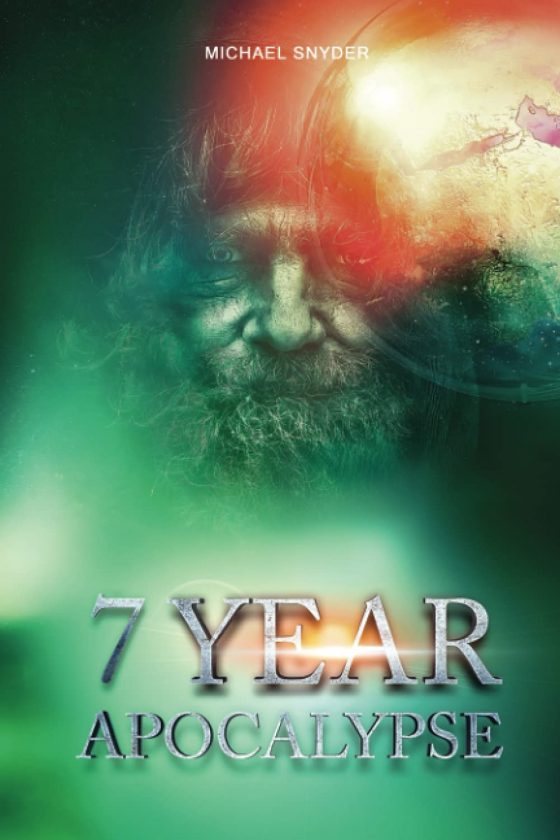
About the Author: My name is Michael Snyder and my brand new book entitled “7 Year Apocalypse” is now available on Amazon.com.  In addition to my new book I have written five others that are available on Amazon.com including  “Lost Prophecies Of The Future Of America”“The Beginning Of The End”“Get Prepared Now”, and “Living A Life That Really Matters”. (#CommissionsEarned)  By purchasing the books you help to support the work that my wife and I are doing, and by giving it to others you help to multiply the impact that we are having on people all over the globe.  I have published thousands of articles on The Economic Collapse BlogEnd Of The American Dream and The Most Important News, and the articles that I publish on those sites are republished on dozens of other prominent websites all over the globe.  I always freely and happily allow others to republish my articles on their own websites, but I also ask that they include this “About the Author” section with each article.  The material contained in this article is for general information purposes only, and readers should consult licensed professionals before making any legal, business, financial or health decisions.  I encourage you to follow me on social media on Facebook and Twitter, and any way that you can share these articles with others is a great help.  During these very challenging times, people will need hope more than ever before, and it is our goal to share the gospel of Jesus Christ with as many people as we possibly can.

The post I Feel Like I Am Living In Crazytown first appeared on The Economic Collapse.

Freak Weather Events And Drought Are Devastating Agricultural Production All Over The Globe

Did you know that Brazil just had snow for the first time in 64 years?  Millions of Brazilians were absolutely thrilled to experience real snow for the very first time in their lives, but the freakishly low temperatures have hit agricultural production really hard at a very sensitive moment.  Brazil is one of the largest exporters of corn in the entire world, and at this point corn production is expected to be way below original projections.  But for many Americans, the fate of the Arabica bean crop is of far more interest.  Higher coffee prices would affect millions upon millions of Americans on a daily basis, and that is why so many people are freaking out about the fact that coffee prices are really starting to spike

Arabica coffee prices touched a nearly seven-year high earlier this week as the unusual cold weather affected the crop in Brazil, the world’s top producer, with companies poised to pass on higher costs to consumers.

Unfortunately, prices are likely to go even higher in the days ahead.

The recent cold snap hit a very wide area, and one coffee exporter is warning that “no one really knows the depth of damage undertaken”

Preliminary estimates from the Brazilian government indicated last week’s frosts alone had affected 150,000 to 200,000 hectares (370,000-490,000 acres), about 11% of the country’s total arabica crop area.

“No one really knows the depth of damage undertaken,” said coffee exporter Comexim, which estimated a 13% loss on next year’s production at the Cerrado region in top coffee growing state Minas Gerais.

The full extent of the damage to Brazil’s corn fields is yet to be determined as well.  Currently, it is being projected that total corn production could be down about 17 percent compared to last year…

Total corn production in Brazil is now seen at 85.3 million tonnes, almost 17% below last year’s level, AgRural said citing weather issues affecting the crop, particularly the second corn crop which was first hit by drought and later by frosts in states like Mato Grosso do Sul and Paraná.

Over in Africa, endless drought is taking a very heavy toll in many areas.

At this point, we are being told that “crop failure” has led to “mass hunger” in Madagascar, and we are being warned that “tens of thousands are on the brink of starvation”

The island nation of Madagascar in the Indian Ocean continues to suffer from its worst drought in four decades.

The lack of rain in southern Madagascar has led to crop failure and mass hunger, all said to be driven by climate change. The UN’s World Food Program says that more than a million people don’t have enough food, and tens of thousands are on the brink of starvation.

Thankfully, we aren’t facing starvation here in the United States right now, but there are reports of “complete crop failures” in certain areas.  For example, just check out this example from Washington state

“We have had complete crop failures in Benton and Yakima counties,” said Michelle Hennings, executive director of the Washington Association of Wheat Growers.

Hennings said local yields likely won’t be as disastrous, and they will vary from farm to farm depending on if they have received small pockets of rain here and there.

But the overall reality is that wheat production will likely be down across the board in the Inland Northwest.

Conditions have been so dry for so long in some parts of the western half of the country that some communities are actually starting to run out of water.

This is particularly true in northern California

In Fort Bragg on the Mendocino Coast, city leaders are rushing to install an emergency desalination system. In Healdsburg, lawn watering is banned with fines of up to $1,000. In Hornbrook, a small town in Siskiyou County, faucets have gone completely dry, and the chairman of the water district is driving 15 miles each way to take showers and wash clothes.

We have never seen anything quite like this before.

At this point, authorities in California are warning that there are at least 81 water systems that are facing “critical water supply issues”

As the state struggles with its worst drought since at least 1977, no one has a complete list of which of the state’s 7,500 public water systems are facing the most severe shortages.

But in May, officials at the State Water Resources Control Board in Sacramento set out to create one. They called it: “Public water systems likely to have critical water supply issues by the end of August.” It currently includes 81 water systems that serve 132,559 people — from tiny Mammoth Pool Mobile Home Park in the Sierra foothills near Yosemite National Park, to well-known Northern California towns like Ukiah, Lakeport, Bolinas, Healdsburg, Cloverdale and Fort Bragg.

In northern Mexico, the lack of water is even more serious.

The endless drought has resulted in a severe lack of vegetation for cattle to eat, and many of them are literally dropping dead

In the parched hills of southern Sonora, Marco Antonio Gutierrez paced around a clearing, counting the dead.

There were seven rotting carcasses — jutting ribs and shriveled hides — and two sun-bleached skulls. Nine cows, felled by heat and hunger.

We have seen this sort of thing happen in the poorest parts of Africa, but it isn’t supposed to happen in North America.

As a result of this endless “megadrought”, the number of cattle being raised in Sonora has now fallen by almost half

Two years of extreme drought have turned large stretches of northern Mexico into a boneyard. Between starvation and ranchers forced to prematurely sell or slaughter their livestock, officials say the number of cattle in Sonora has dropped from 1.1 million to about 635,000.

It’s an unimaginable loss for a state that is world-famous for its high-quality cows, and where beef is not just a central part of the diet and economy but also a tradition that binds families together.

I could share countless more examples of how the crazy weather is affecting food production around the world, but I don’t want to make this article too long.

The bottom line is that food production all over the planet is going to be much lower than anticipated, and that has very serious implications for the upcoming year.

Before I end this article, there is one more news item that I would like to share

“It’s happening,” scientist Scott Hotaling told a reporter for OPB as he gestured across Paradise Glacier high up on Mount Rainier in Washington.

He was referencing hundreds of thousands of tiny, black worms emerging from a vast expanse of white snow.

I have been watching Mount Rainier for a long time, and so this definitely got my attention.

Are hundreds of thousands of black worms emerging from the ice of Mount Rainier because of the unprecedented heat this summer, or is something else going on?

I don’t have the answer to that question yet, and I will continue to monitor developments on Mount Rainier very carefully.

Our planet is changing in highly unusual ways, and despite all of our advanced technology we are still very vulnerable to extreme weather fluctuations.

Hopefully conditions will revert to normal soon, because if that doesn’t happen global food supplies are just going to get tighter and tighter in the months ahead.

***It is finally here! Michael’s new book entitled “7 Year Apocalypse” is now available in paperback and for the Kindle on Amazon.***

About the Author: My name is Michael Snyder and my brand new book entitled “7 Year Apocalypse” is now available on Amazon.com.  In addition to my new book I have written five others that are available on Amazon.com including  “Lost Prophecies Of The Future Of America”“The Beginning Of The End”“Get Prepared Now”, and “Living A Life That Really Matters”. (#CommissionsEarned)  By purchasing the books you help to support the work that my wife and I are doing, and by giving it to others you help to multiply the impact that we are having on people all over the globe.  I have published thousands of articles on The Economic Collapse BlogEnd Of The American Dream and The Most Important News, and the articles that I publish on those sites are republished on dozens of other prominent websites all over the globe.  I always freely and happily allow others to republish my articles on their own websites, but I also ask that they include this “About the Author” section with each article.  The material contained in this article is for general information purposes only, and readers should consult licensed professionals before making any legal, business, financial or health decisions.  I encourage you to follow me on social media on Facebook and Twitter, and any way that you can share these articles with others is a great help.  During these very challenging times, people will need hope more than ever before, and it is our goal to share the gospel of Jesus Christ with as many people as we possibly can.

The post Freak Weather Events And Drought Are Devastating Agricultural Production All Over The Globe first appeared on End Of The American Dream.

MSM Propaganda: Man Who DIED OF COVID Could Have Had A “Worse Condition” If He Wasn’t Fully Vaccinated

The mainstream media is so far gone now, it’s nothing more than a joke. The newest bit of propaganda designed to protect the ruling class and their big pharma allies that inject us is nothing short of ridiculous. They are now claiming that a fully vaccinated man who died of COVID-19 was spared a “worse condition” because he had been jabbed twice with the experimental gene therapy.

He was spared a worse condition than death? That’s what the mainstream media says. Of course, it was COVID that killed him too, not the jab.

The metaphysical social media chatter was triggered by national media coverage of the recent death of Texas native Patricio Elizondo, a diabetic who suffered from heart problems. After Elizondo fell ill in early August, his daughter suspected that he may be suffering from a resurgence of congestive heart failure. The 76-year-old was soon hospitalized after he began having difficulty breathing – a common symptom of heart failure, which can lead to fluid building up in the lungs causing shortness of breath.

But doctors said that a chest X-ray revealed that Elizondo had actually caught Covid. He passed away on August 3 due to lung damage caused by the virus, a cardiologist who treated Elizondo said. –RT

Obviously, with several other comorbidities and advanced age, Elizondo was in the “high risk” category for COVID-19. So he got the jabs. Both of them. He was considered “fully vaccinated.” So the when he died, the mainstream media went to work right away protecting the sauce that was swimming in his body.

Aside from being fully inoculated against Covid, Elizondo “rarely left the house, was always masked up, and even wore gloves,” Yvonne Rodriguez, the daughter of the deceased, told San Antonio news station KSAT. Although she said she couldn’t understand how her father caught the virus, Rodriguez stressed that she felt the vaccine had still been helpful. “I saw my dad, how sick as he was,” she said. “I can’t imagine how much more he would have suffered if he had not gotten the vaccine.”

More COIVD-19 Vax Deaths: Think They’ll Blame This On COVID-21?

A rendition published by The Hill claimed that despite Elizondo’s tragic passing, “doctors said the condition of the father could have been worse if he was not vaccinated at all.” The curious wording soon captured the imagination of social media pundits, who began to philosophize on issues concerning life and death.

All of those deaths and breakthrough infections and side effects just mean the “vaccine” is “working.” “There is some evidence that vaccination may make illness less severe for those who are vaccinated and still get sick,” according to the CDC. 

This is the news in 2021. Welcome to George Orwell’s 1984. We are expected to think and believe what they say. Sadly, most do without question. This is why I continue to ask everyone to use critical thinking.

“Anyone who can make you believe absurdities can make you commit atrocities.” –Voltaire

The post MSM Propaganda: Man Who DIED OF COVID Could Have Had A “Worse Condition” If He Wasn’t Fully Vaccinated first appeared on SHTF Plan – When It Hits The Fan, Don’t Say We Didn’t Warn You.

A Camper’s Montana Grizzly Encounter

On July 8, 65-year-old Chico, California, local Leah Davis Lokan died because of a grizzly bear encounter in Ovando, Montana. This incident struck fear among the residents of the area. Why and how did this happen in a populated area is anyone’s guess?

RELATED: How to Survive a Bear Encounter

Gruesome Grizzly Bear Encounter Stories

The Attack

Roaring Grizzly Bear behind bush-Grizzly Bear Attack

It was a regular camping day’s end as Leah, and her two other companions were preparing to sleep in their tents. They had just finished their meals. Little did they know that the food they discarded will play a key role in the event that will haunt them the rest of their lives.

Around 3:30 am, the campers were awakened by a strange sound coming from Leah and her company’s tent. According to reports, it appeared that the grizzly bear attack might have been triggered by the smell of food from the camp.

Grizzly bears would only attack humans to protect their cubs, food, and territory. The bear may have been starving.

This is most likely proven by surveillance videos recovered from the area. According to the recorded footage, the bear also went on a feeding frenzy in a nearby chicken coop after the attack. Several chickens were eaten alive a few hours after Leah was pulled from her tent and killed by the bear.

The Hunt

humane live trap for catching bears in a park-Grizzly Bear Attack

According to Missoula Fish, Wildlife & Parks Regional Supervisor Randy Arnold, catching the animal would be a huge challenge. He further explained that the best chance of catching the bear would be by using culvert traps. These traps will be set in the vicinity of the chicken coop where the bear went on a killing spree.

However, the biggest obstacle is Ovando’s terrain. Heavily covered with trees and thick bushes, the terrain provides a natural hiding place for grizzly bears. Gavin Roselles, Powell County sheriff for many years, further confirmed this. Ovando practically works to the bear’s advantage, both “terrain-wise” and for “brush cover.”

Know Your Enemy

Brown bear in Vysoke Tatry mountains in Slovakia-Grizzly Bear Attack

The best way to win a battle, says ancient military genius Sun Tzu is to know your enemy. Understand your opponent as much as you understand yourself.

In this case, the enemy by default is the grizzly bear. The point is to master your enemy’s movements so you will know what to do during a grizzly bear attack.

Grizzly Bear 101

Brown bear climbing on tree in forest-Grizzly Bear Attack

The grizzly bear or Ursus arctos is a subspecies of the brown bear. Its natural habitat is forest regions of the northwestern United States and western Canada. The basic difference between a grizzly compared to a brown bear is its physical appearance.

Subsisting on a diet of fish, rodents, and insects, grizzlies are undernourished compared to their coastal counterparts, whose diets are more varied and abundant. This explains why bears found in coastal areas are larger.

Less Nutrition, More Aggression

Brown bear on Alaska-Grizzly Bear Attack

Diet plays a key role in the behavior of animals. Temperamental differences between species of bear, for instance, are determined by their food or the lack of it. Grizzly bears thriving inland tend to be more aggressive.

The competition for resources highly influences their ferocity. Food is scarce inland compared to coastal areas where fish and other gastronomic options are more available.

As we mentioned earlier, there are three main reasons why grizzly bears attack humans. First is they have to protect their young. Motherly instincts make most creatures carry a do-or-die reaction towards anything or anyone.

The second reason is territory. Grizzly bears are territorial animals. They would do everything they can to guard and maintain their natural habitat.

In the unfortunate case of Leah of Montana, the third reason applies. The food search could trigger a grizzly bear attack. Research says that the chance of getting attacked by a grizzly bear is 1 out of 2.7 million.

But with continuing deforestation and the increasing expansion of residential areas, grizzly bear territories tend to overlap with humans’. In effect, the chance of encounters between both species increases.

RELATED: What NOT To Do In Bear Country USA This Winter

What to Do When You Encounter a Grizzly

Grizzly Bear walks across the road in Glacier National Park-Grizzly Bear Attack

Better safe than sorry. This is great life advice that every one of us must heed. Let us say you are camping in bear country; it is best to familiarize yourself with the area first.

Or better yet, avoid camping sites that are prone to grizzly bear attacks. But if you cannot avoid going to one, here are safety tips you can put in mind:

1. Don’t Run!

The old fight or flight thing does not apply here. If you encounter a grizzly bear, for your life’s sake, never think of running away.

The instinct of a predator is to chase prey. Do not behave like prey. Stay still.

2. No Eye Contact

Most predators think of eye contact as an act of aggression. Don’t want to piss a grizzly off? Avoid directly looking at its eyes.

3. Move Slowly

If you are sure that the bear is not interested in making you his meal, slowly and quietly walk away. Move as smoothly as you can as not to attract further attention.

4. Keep Calm

Yes, you’ve heard this a thousand times, but it never gets old. In any life-threatening situation, it is best to stay calm.

When a grizzly bear attacks, never yell or scream. Try speaking in a soft and monotone voice. Let it know that you’re human by waving your arms.

5. Curl Up and Live!

If you can’t stop the bear from making contact, you have no choice but to face the heat. Curl up on your side like a ball.

You can also lie flat on your stomach. This is a stance of non-aggression, so the chance of the bear leaving you alone is high compared to running away.

Check out this unbelievable bear attacks & interactions vid by The Unbelievable:

Hearing grizzly bear attack stories is a horrifying prospect for campers. But for those whose sense of adventure is greater than their sense of fear, this means nothing. Live dangerously as fearless philosopher Nietzsche once said. Enjoy yet always keep safe!

Note: There is a poll embedded within this post, please visit the site to participate in this post’s poll.

Do you have your own grizzly bear attack stories to tell? Feel free to share your tale in the comment section below!

Up Next:

Calling all preppers, craftsmen, bushmasters, outdoorsmen, and all-around skilled people, Survival Life needs YOU! Click here if you want to write for us.

Don’t forget to stay connected with us on FacebookTwitterPinterest, and Instagram!