Survival Gear is the most unused product until a natural disaster happens, then it’s the most desired products, but usually too late to help those that really need the help.

We sell around the World, and pride ourselves on offering a level of customer service that we would want to see ourselves if we were shopping online.
Our product ranges change regularly, so we hope that you come back to our sites to see some of the fantastic offers that we regularly have.

Get In Touch

23 Surprising Ways A Survival Bandana Can Save Your Life

Survival BandanaToday I’ve got something really exciting to share…

A Complete Guide To Using A Survival Bandana In A Pinch

Because a bandana isn’t just a square of cloth for nose-blowing, right?

A bandana can be a tool, just like anything..

IF you’re creative enough…

Survival Gear Checklist eBook Cover -with fire piston on a rock and campfire in the background

Want a free 54 item survival gear checklist?

Click here to instantly download this Complete Checklist PDF. No purchase necessary.

Note: Watch the video below OR continue past to read the article…

↓ Survival Bandana: 40 Uses

23 Survival Uses For Your Bandana

1. Signaling For Rescue

Sure, that camouflage pattern bandana looks badass and blends in perfectly from a distance.

But let’s be honest, a bandana isn’t going to make you invisible, but it can do exactly the opposite.

Let’s say you’re out hunting and break your legs while decked out in full camo…

Wouldn’t it be more helpful to reach into your pack and grab a couple of bright neon bandanas and make a flag or hang them around you?

Like with signal mirrors, search and rescue teams across the country recommend using a bright bandana to signal to search aviation crews.

Why? Because they stick out from natural colors.

More than that, if you need to signal to someone else without speaking, brightly colored bandanas can communicate over distances.

↓ 101 Uses of a Bandana – Survival, Medical, Tactical, Humor

2. Establishing Trail Markers

Sick of getting lost when you go bushwhacking in the wilderness?

Lots of hunters, hikers, and other explorers use neon plastic tape to tie to tree branches and mark their way home.

Like Hansel and Gretel, only no one will come around eating the plastic stuck in trees, so you won’t get lost.

Likewise, brightly colored survival bandanas can be torn into ribbons and tied to trees to mark progress.

This will help keep your bearings straight.

Don’t be afraid to tear that bandana into several trail marker ribbons.

It’s a large part of its usefulness, and they are easy to replace.

If your bandana is sentimental, leave it at home and instead invest in a cheap new one to add to your survival gear.

3. Dirty Dish Rag

I love to cook when camping.

I have a nice setup of camp cookware that I take with me everywhere.

But sometimes washing dirty dishes can be a serious pain when I’m out and away from sinks and sponges.

In a pinch, bandanas can be soaped up and used as dish rags to get in there and clean up.

4. Napkin | Handkerchief

I don’t know that this one needs a lot of explanation.

If you sneeze or have allergies, wipe that nose with your bandana and clean yourself up.

If you don’t have proper paper napkins or paper towels lying around, use your bandana.

Either way, make sure you rinse it out when you’re done.

5. Neck Gaiter For Cold Weather

Winter is, without a doubt, my favorite season.

Why? Because it’s ski season, snowshoe season, igloo season, and the season of big warm jackets and crisp silent nights.

But everyone’s face gets cold in that weather.

And even a very thin layer of cloth can make a BIG difference.

So if you’ve got a survival bandana handy and the cold weather is biting at your face, cover up like a bandit and use it as a neck gaiter.

You’ll be surprised at how efficiently this keeps the cold at bay.

6. Makeshift Tourniquet

No one expects to amputate a limb when you leave the house in the morning.

But you can never be entirely sure.

Should the need arise, bandanas can cinch tightly in a pinch.

They’ll do an OK job…

Not as good as an actual rapid application tourniquet.

7. Cordage

As mentioned, don’t be afraid to tear up your bandana to increase its usefulness.

Often, they’re more useful in pieces than wholly intact.

If you need to bind a broken bone to a splint, bind tent poles together, bind something to your pack, a person’s hands, an animal, whatever!

Bandanas can do the job.

The fabric makes for decently strong cordage.

I’d rather have some paracord, but a bandana works if push comes to shove.

8. Washcloth Or Tiny Towel

If I forget something when I pack my backpack, it’s a washcloth and a towel.

I will ALWAYS remember everything else, but never that.

The problem got so bad that I have just resorted to using bandanas.

They are smaller, easier to pack, and much easier to remember to bring (for me, at least).

So you can’t wrap it around your waist to cover yourself after bathing.

But who doesn’t love a little nudity in the wilderness?

You may be naked, but at least you’ll be dry.

Survival Gear Checklist eBook Cover -with fire piston on a rock and campfire in the background

Want a free 54 item survival gear checklist?

Click here to instantly download this Complete Checklist PDF. No purchase necessary.

9. Waist Pack | Pouch

You can fashion a small waist pack if you tie the knots correctly.

Like a homemade fanny pack to keep your favorite goodies close.

I’d rather have a tactical molle pouch for survival, but I assume you must improvise.

This works in the wilderness for recreation or survival.

It could even be handy at the next music festival you go to sneak goodies inside (but you didn’t get that idea from me).

10. Pot Holder

Hot stuff burns hands.

That’s science.

So protect your grabbers with a bandana next time you reach for that hot pot in the fire.

I can’t promise it will mitigate ALL the heat, but it’ll help.

11. Pouch For Collecting Wild Edibles 

Now, don’t go out picking berries, mushrooms, and roots without a basic understanding of what you are picking.

Eating whatever you encounter in the wilderness can be extremely dangerous.

But it can also be highly useful if you have the right wild edible knowledge base.

Get the book “From Dirt To Plate” on foraging if interested.

Once you know what you are doing, bandanas can be used as containers to collect such edibles.

And transport them back to your home base or bug-out location.

12. Sunblock

I often tucked one end of my bandana under my hat when traveling.

This served two purposes:

  1. To keep the sun from burning the crap out of my pasty white skin.
  2. Keep sweat contained and prevent it from evaporating from my pasty white skin.

When you’re in intense heat like that, the last thing you want to do is remove your clothes…

You don’t want to let your sweat disappear into the scorching air.

It is better to use cotton garments to keep as much moisture as close to the skin as possible.

So leave your sweaty shirt on and use that bandana to save your sweat!

13. Makeshift Sling

Slings keep injured body parts close to the body and elevated to minimize swelling.

Anyone who has ever needed to use one knows they help SO MUCH when you’ve got an injured arm/shoulder.

Doctors and first responders always carry triangle bandages in their medical kits.

This allows them to create slings on the fly.

But homemade med kits might not have any of those.

Bandanas can be substituted to hold injured limbs aloft – although they are slightly smaller than regular triangle bandages.

14. Sling (X2)

Yeah, you read that right; I put “slings” on here twice.

That’s not a typo!

Why? Because you can make two different slings out of the same single survival bandana.

The first was discussed above; the second was the kind that David used to defeat Goliath.

You know, the kind our ancestors from long ago used to hunt animals and fire projectiles at their enemies.

Look up a simple DIY on how to make a sling, and you’ll be able to see how you can use a bandana to achieve a similar effect.

This can be useful for hunting small animals if you have no other food source.

Or defending yourself when you have no other means.

15. Eyepatch

Losing an eye would suck.

My condolences to anyone out there who’s suffered such a serious inconvenience.

But stuff happens, and if you lose an eye in a survival situation, you probably can’t get to a hospital to bandage yourself up.

It could get infected easily without covering the exposed wound from the elements.

And you want to keep unwanted guests (like ants or spiders) from laying eggs in your eye socket…

16. Pre-water Filter

Do you know how coffee filters work?

Well, bandanas can achieve a similar function to water.

You can significantly reduce debris and unwanted waterborne guests by using a piece of mildly tight-knit fabric (like the cotton of a bandana).

This won’t replace your pump-action water filter or iodine tablets.

But if it is the only method you have available for filtering water, definitely use it.

While it won’t protect you from every waterborne nasty, it will protect you from some.

↓ LifeStraw Review & Field Test (Plus a Prefilter Tip)

17. Hobo Pack

This one’s a Great Depression Era classic.

Find yourself a stick, tie the corners of your bandana together on one end, and voila!

You have yourself a handy little shoulder pack.

Granted, it isn’t great for holding tons of stuff.

But it can take the weight out of your pockets, at the very least…

18. Cleaning Patches For Firearms

Every gun owner knows that keeping a survival firearm clean is imperative if you want to rely on and trust in your firearm.

But you never know when and where you might have to use your gun.

You may need some makeshift cleaning patches to polish up your weapon.

Bandanas can work as a basic substitute for a gun cleaning kit.

Just tear it up into small pieces and gently dab some gun-cleaning oil on them, then get to it!

19. Bullet Patches For Muzzleloader

If, for whatever reason, you’re stranded, and you have a muzzleloader with you, bandanas can also serve as decent bullet patches.

This will help you keep your bullets and gunpowder separate.

20. Toilet Paper

Need I say more?

21. Earmuffs

They won’t be the warmest earmuffs on the market.

But if your ears are exceptionally chilly, wrap your bandana around your head and cinch it tightly.

It’s no replacement for a wool cap or fleece muffs, but it is certainly better than nothing.

A survival bandana may be just enough to save your ears from frostbite.

22. Bind A Stone and Toss A Line Over A Limb

Let’s say you need to throw a line over a tree branch or steel beam.

Tying a cord or line to a stone can be a difficult endeavor.

But if you wrap the stone up in your bandana and tie the line to that, you have a much more efficient tool and a lower chance of failure.

23. Dust Mask

I always think of that scene from “Fear and Loathing in Las Vegas”…

When Thompson’s out in the desert following dirt bikes around in a buggy, dust so thick in the air that visibility is negligible.

↓ Fear And Loathing In Las Vegas – Desert Race Scene

Breathing in heavy amounts of dust or soot, or smoke can be unimaginably stressful on human lungs.

Especially if you have to inhale that crap for an extended period.

Of course, a gas mask or respirator is almost always the best option in such a circumstance.

But those are rarely available.

Tying a bandana around your face can help filter out a significant amount of air pollution.

And will save your lungs.

Even that thin layer of cotton can go a long way when breathing in dusty air.

Survival Gear Checklist eBook Cover -with fire piston on a rock and campfire in the background

Want a free 54 item survival gear checklist?

Click here to instantly download this Complete Checklist PDF. No purchase necessary.

Final Thoughts

These aren’t all of the potential uses for a survival bandana

But they are a few of my favorite creative uses.

You can surely think of a few more, and in an emergency, under pressure, who knows what kind of crazy ends you’ll use your bandanas to achieve.

If I hadn’t taken a bandana while traveling, I could have gotten an infection, severe skin damage, or worse – baby flies popping out of my skin.

But because I was prepared, and I understood the versatility of the survival bandana, I was able to save myself from those horrors.

Why Trust Skilled Survival…

Go here now to review a full breakdown of:

  • Who We Are
  • Our Credentials
  • Our Mission
  • & Product Recommendations…

Here are a few highlights of our teams credentials & certifications:

  • Certified Member of a Mountain Search & Rescue Organization
  • Plant Emergency & Safety Leader for a Major Food Manufacturer
  • Member of the 10TH Mountain Division Hut Association
  • Certifications: Avalanche 1, WFR, CPR
  • Official Gear Tester for Numerous Outdoor Gear Companies
  • Countless Multiday Backpacking trips into Remote Wilderness
  • Bachelor’s Degree In Mechanical Engineering 
  • Bachelor’s Degree In Civil Engineering
  • Bachelor’s Degree In Biomedical Engineering

“It takes 20 years to build a reputation and five minutes to ruin it.” – Warren Buffett

We’re fully aware that trust is NOT something you GET but is EARNED.

And we’ll continue to earn YOUR trust through our forthright and honest approach with each new Blog Post, Guide & Product we create…

Will Brendza

Will Brendza

  • Bachelor of Arts, University of Colorado at Boulder
  • Member of The 10th Mountain Division Hut Association
  • Certifications: Avalanche 1, WFR (expired), CPR (expired)
  • 8+ Years Researching, Writing, About Survival and Preparedness
  • Awards from Society of Professional Journalists
  • Winner of Camp Cold’s “Happy Camper” award in 2020
  • P.s. Do You Live In A ‘Danger Zone’ County?

    Find out now using my Danger Zone County List & Special Report it’s absolutely FREE.

    In minutes you’ll know EXACTLY where you stand and if you should be worried or not..

    Header Image Source

    The post 23 Surprising Ways A Survival Bandana Can Save Your Life appeared first on Skilled Survival.

    Another Reason Why Individual Freedom Is So Much Better than Central Planning

    This article was originally published by Austin Padgett at The Mises Institute. 

    Much of the developed world is slipping into a hyperregulated malaise. Growth rates are down across most major economies, and the developing countries are catching up to our errors almost as fast as they are growing.

    Increasingly, even in the US, you would have to be outside the norm to afford a house by age forty. The median age of a first-time homebuyer in 2023 is the same as a repeat buyer in 1981. We’re not allowed to build and grow, but we’re told everything is ok as long as the stock market hasn’t crashed. When we point out that the system isn’t working, we are told we should be happy because degrowth is good for the environment.

    It is time people stopped feeling obligated to justify their existence to a managerial class of unelected bureaucrats. Their incompetence and capture to powerful interests has been demonstrated enough times. There is utility in fighting propaganda by painstakingly digging through studies to highlight flaws in the constant stream of bad data and assumptions being used to rationalize our slavery. However, the only reason they can presume to have authority over our lives in the first place is that our society has broadly lost belief in our own agency.

    The United States was founded based on the ideas of individual sovereignty and natural rights. Whether these values have receded in the West as a result of the death of God, some failure of the Enlightenment, or the incentives of the system, they are diminished and need reviving.

    The presumption that leads Environmental Protection Agency consultant Professor Naomi Oreskes to generously tell us we “can still eat some meat” on a World Economic Forum panel also generates our impulse to negotiate for freedom rather than assert it. We try to prove we aren’t a cancer on the planet so they will let us go free as if begging a captor for our worthless lives. There is a shared presumption of control, a master-and-slave mentality. Unless we cut to the core of that mentality, we will exhaust ourselves having to endlessly justify every ounce of our existence.

    A common criticism of our appeal to agency is that people are not rational; therefore, they must be protected from advertising, making their own healthcare decisions, or any number of freedoms the appointed experts deem us to be unworthy of or too stupid to be trusted with. It is a mistake to respond to this by arguing that people are rational or that a belief in freedom relies on that assumption.

    Libertarians explain agency through the observable fact that people act purposefully, not rationally. Violating someone’s intent when they are not interfering with anyone else’s is a violent rejection of our individual sovereignty. While an individual’s ability to reason can lead to rational action, it does not presuppose it. Nor can we presume to declare ourselves as arbiters of rationality.

    Much of traditional economic theory assumes that people are self-interested rational maximizers. Some advocates of free markets lean into this presumption as a justification for our ideas. When people are then inevitably seen to make suboptimal or seemingly random decisions it is labeled as a failure that needs to be corrected for their own good.

    It still holds true that freedom increases rational action, but it is not from an individual perspective; it is from a collective evolutionary perspective. The deepest evolutionary incentive is for the propagation of the species, not the individual. This is why a free market that allows purposeful action benefits the collective, while social planning benefits a parasitic class of individuals.

    The only way to maximize rationality within a collective is to allow for seemingly irrational, idiosyncratic individual behavior.

    During World War II, there was a bombing mission so dangerous only volunteer pilots were assigned to fly. When flying these bombers, there was roughly a 90 percent chance you would be killed by shrapnel and a 10 percent chance of losing your engine and crashing. Unfortunately, the planes could not handle the additional weight of both a parachute and a flak jacket, so they could only wear one.

    At first, the military was adamant that all the pilots should wear the flak jackets considering there was a significantly higher risk from shrapnel, but the pilots revolted, insisting on having a choice. Because it was a volunteer mission, the officers acquiesced, and the pilots matched the distribution of risk with 90 percent picking the flak jacket and 10 percent choosing the parachute.

    This choice demonstrated a deep, evolutionary instinct to match the probability of the scenario, maximizing the upside while minimizing the chances of catastrophic failure (an instinct our public health officials failed to demonstrate when they locked us down and insisted on population-wide mandates for experimental RNA treatments in response to a government-engineered cold).

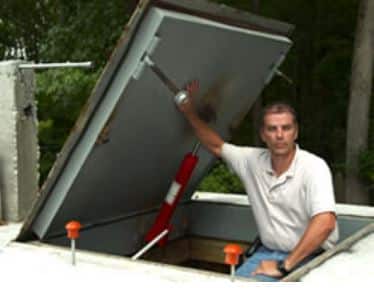
    It may seem irrational for someone to dig a bunker or store a year’s worth of canned food, but the percentage of people who do will generally reflect the likelihood of requiring such preparation. This is perfectly rational from a collective evolutionary perspective. This process of matching the distribution of likely outcomes is routinely demonstrated in nature:

    Probability matching has been observed in thousands of geographically diverse human subjects over several decades, as well as in other animal species, including ants [32–35], bees [36–38], fish [39, 40], pigeons [41, 42], and primates [43]. In virtually any setting where an animal is able to make a choice between A versus B in a randomized experiment, we observe probability matching.

    The way all creatures make decisions is through adaptive probability matching. For example, let’s say you have a fish tank. If you feed your fish on the right side of the tank 75 percent of the time and on the left side of the tank 25 percent of the time, the fish will match that distribution, with 25 percent of them swimming to the left side of the tank and 75 percent to the right at feeding time. If you change the feeding pattern, they adapt their behavior. This distribution results in the least amount of food being wasted by hitting the bottom of the tank.

    If you ask a social planner what the rational thing for a fish to do at feeding time, she might say it’s to swim to the right side of the tank since that would maximize its potential food intake. This is similar to how propaganda in public schools prioritizes four-year university attendance above other options, and how federal loan policies were put in place to push everyone to go to college based on the fact that on average, university graduates have a higher salary.

    Metaphorically, public policy encouraged everyone to go to the right side of the tank. Of course, all this artificial tipping of the scales did was devalue college degrees and create devastating shortages elsewhere in the economy.

    You will never be able to forcefully plan behavior in a way that maximizes rational collective action. An infringement of agency prevents the development of an individual’s character and capabilities, leading to an unconscious and weakened collective. The more freedom people must seek out through information and making their own choices, the better we can adapt to the fundamental uncertainty of life. This uncertainty requires a differentiated, antifragile approach, something a central planner would not even have the theoretical ability to do, due to their lack of distributed knowledge.

    Chaos Reigns In The Streets Of America As An Epic Crime Wave Terrorizes The Nation

    If you were hoping that the United States would become a lawless society, you have now gotten your wish.  Some of the numbers that I am about to share with you are just mind blowing.  For example, I had no idea that police in New York City were injured by criminals thousands of times last year.  All over the nation, law enforcement is losing control and violent criminals are getting the upper hand.  We have never seen anything quite like this before, and I am entirely convinced that this crime wave is only going to get worse as economic conditions deteriorate.  Even in our capital city, crime is completely and utterly out of control.  If you can believe it, the number of carjackings in Washington D.C. was up 97.9 percent last year…

    Residents of the District of Columbia paid the sixth-highest amount on car insurance when compared to the 50 states in 2023 with an average annual full-coverage rate of $2,756 last year – which amounts to nearly $230 a month, according to a report by Insurify. The report found that Washington, D.C., residents’ car insurance premiums were 37% higher than the national average, which was $2,019 for a full-coverage policy, as national auto insurance rates increased by 24% last year.

    Police data show carjackings in the nation’s capital spiked by 97.9% in 2023 with 958 reported carjackings last year compared to 484 in 2022, with motor vehicle theft up 82% from 3,756 in 2022 to 6,829 in 2023. Vehicle theft in the greater Washington-Maryland-Virginia area also rose by 68% last year, according to the National Insurance Crime Bureau.

    Vehicle theft is even worse in some areas along the west coast.

    In Oakland, approximately one out of every 30 residents had a vehicle stolen from them in 2023

    Robberies grew 38% last year in Oakland, according to police data. Burglaries increased 23%. Motor vehicle theft jumped 44%. Roughly one of every 30 Oakland residents had a car stolen last year, according to a San Francisco Chronicle analysis.

    On Tuesday, California Gov. Gavin Newsom announced he was taking action, deploying 120 California Highway Patrol officers to Oakland and the surrounding area to conduct a law enforcement surge operation. The aim: to crack down on crime, including vehicle theft, retail theft and violent crime.

    Gavin Newsom wants to run for president at some point, and so he doesn’t want to look soft on crime.

    Unfortunately for him, it is way too late for that.

    Other west coast cities are also experiencing unprecedented crime waves.

    In Seattle, one restaurant has actually been broken into five times in the last six months

    The sound of crashing glass has become too familiar at Sandia, a Mexican restaurant in Seattle’s Laurelhurst neighborhood on NE 45th Street.

    “As of today, now we have been broken into five times,” said Nathan Yeager, the owner.

    In the surveillance video provided to KING 5, you can see criminals break the front door with a crowbar, climb over the counter, steal money from the till, and then sneak around while looking in every door for something to take.

    There is no way that I would open a small business in Seattle.

    Or Portland.

    Or Oakland.

    Or San Francisco.

    Or Los Angeles.

    Of course I could say the exact same thing about many cities on the east coast as well.

    In New York City, police officers “are getting beaten at a record-setting pace”

    City cops are getting beaten at a record-setting pace — a disturbing and dangerous trend fueled by radical protests, an influx of criminal migrants, bail reform, anti-cop rhetoric and soft-on-crime prosecutors, experts told The Post.

    The number of cops hurt by suspects surged 20% in 2022, when 4,724 uniformed officers suffered injuries in attacks, compared to 3,933 in 2021.

    But the law enforcement nightmare grew worse last year, when 4,077 cops were hurt by suspects in just the first nine months of 2023 — on pace for a record-breaking 5,436 injuries, the latest NYPD stats show.

    At this stage in our societal collapse, the criminals are not even afraid to attack the cops.

    It is so difficult to be a police officer these days.  They literally put their lives on the line for us every single day.

    Of course the Biden administration has made the national crime wave significantly worse by allowing millions upon millions of migrants to come pouring over the southern border.

    In fact, we just learned that police in the Big Apple have arrested a “very, very violent” migrant that shot a tourist in the leg “after opening fire in Times Square”

    A teenager gunman burst into tears as he was hauled away in handcuffs for allegedly shooting a tourist in the leg after opening fire in Times Square.

    Jesus Alejandro Rivas-Figueroa, 15, a migrant from Venezuela, was arrested by US Marshals in Yonkers after a nearly day-long manhunt.

    NYPD Deputy Chief of Detectives Jason Savino called him a ‘very, very violent’ suspect who recklessly fired a ‘very large’ .45 caliber handgun in a crowded area of New York City.

    Needless to say, our wide open borders have also made it easy for cartels to transport drugs all over the country.

    Earlier today, I came across an article that explained that drugs that are produced in Mexico have been flooding the state of Montana

    Illegal drugs have long flowed from Mexico to the more remote parts of the U.S. But with the rise of fentanyl, cartel associates have pushed more aggressively into Montana, where pills can be sold for 20 times the price they get in urban centers closer to the border, state and federal law enforcement officials said.

    Cartels have been particularly focusing on Indian reservations throughout Montana, and one state lawmaker says that it seems like “fentanyl is raining on our reservation”

    On some reservations, cartel associates have formed relationships with Indigenous women as a way of establishing themselves within communities to sell drugs, law enforcement officials and tribal leaders said. More frequently, traffickers lure Native Americans into becoming dealers by giving away an initial supply of drugs and turning them into addicts indebted to the cartels.

    “Right now it’s as if fentanyl is raining on our reservation,” said Marvin Weatherwax, Jr., who serves on the Blackfeet Tribal Business Council and represents the 15th district in the Montana House of Representatives.

    There is nowhere that you can go in the U.S. to completely escape all of this.

    From coast to coast, our society is literally coming apart at the seams.

    In Alabama, thieves recently stole an entire 200-foot tall radio tower

    A landscaper in Jasper, Alabama, was doing a property cleanup when the crew discovered that a 200-foot radio tower was missing.

    Brett Elmore, general manager of WJLX, said that every piece of equipment at the radio tower’s site had been stolen and the wires cut out.

    “This is going to get out eventually, so I might as well make it public before it does,” Elmore wrote on Facebook. “I have heard of thieves in this area stealing anything, but this one takes the cake. This morning, my bush hog crew went down to a tower site we have … when [they] arrived, he called and notified me that not only was my building vandalized, but my TWO HUNDRED FOOT TOWER WAS GONE!” the radio manager wrote.

    If things are this bad now, what will our society look like once millions upon millions of people in this country become extremely desperate?

    You might want to think about that, because we really are right on the brink of an extremely apocalyptic chapter in human history.

    But most people don’t want to think about such things.

    Most people just want to stick their heads in the sand and pretend that everything is okay.

    It can be so easy to ignore what is really going on in the world and tune in to the alternate reality that television creates for us.

    Did you know that a 30 second commercial during this year’s Super Bowl cost 7 million dollars?

    After sitting in front of the television for a few hours, you may be tempted to buy into the fictional reality that they are trying to sell you.

    But the truth is that life in America is not good right now, and the crime in our streets is only going to intensify during the months and years ahead.

    Michael’s new book entitled “Chaos” is available in paperback and for the Kindle on Amazon.com, and you can check out his new Substack newsletter right here.

    About the Author: Michael Snyder’s extremely controversial new book entitled “Chaos” is available in paperback and for the Kindle on Amazon.com.  He has also written seven other books that are available on Amazon.com including “End Times”“7 Year Apocalypse”“Lost Prophecies Of The Future Of America”“The Beginning Of The End”, and “Living A Life That Really Matters”. (#CommissionsEarned)  When you purchase any of Michael’s books you help to support the work that he is doing.  You can also get his articles by email as soon as he publishes them by subscribing to his Substack newsletter.  Michael has published thousands of articles on The Economic Collapse BlogEnd Of The American Dream and The Most Important News, and he always freely and happily allows others to republish those articles on their own websites.  You can connect with Michael on YouTubeFacebook and Twitter, and sharing his articles on your own social media accounts is definitely a great help.  These are such troubled times, and people need hope.  John 3:16 tells us about the hope that God has given us through Jesus Christ: “For God so loved the world, that he gave his only begotten Son, that whosoever believeth in him should not perish, but have everlasting life.”  If you have not already done so, we strongly urge you to invite Jesus Christ to be your Lord and Savior today.

    The post Chaos Reigns In The Streets Of America As An Epic Crime Wave Terrorizes The Nation appeared first on The Economic Collapse.

    2024 Is the New 1984: Big Brother and the Rise of the Security Industrial Complex

    This article was originally published by John W. Whitehead and Nisha Whitehead at The Rutherford Institute. 

    “Big Brother is Watching You.”―George Orwell, 1984

    2024 is the new 1984.

    Forty years past the time that George Orwell envisioned the stomping boot of Big Brother, the police state is about to pass off the baton to the surveillance state.

    Fueled by a melding of government and corporate power—the rise of the security industrial complex—this watershed moment sounds a death knell for our privacy rights.

    An unofficial fourth branch of government, the Surveillance State came into being without any electoral mandate or constitutional referendum, and yet it possesses superpowers, above and beyond those of any other government agency save the military.

    It operates beyond the reach of the president, Congress and the courts, and it marches in lockstep with the corporate elite who really call the shots in Washington, DC.

    This is the new face of tyranny in America: all-knowing, all-seeing and all-powerful.

    Tread cautiously.

    Empowered by advances in surveillance technology and emboldened by rapidly expanding public-private partnerships between law enforcement, the Intelligence Community, and the private sector, the Surveillance State is making the fictional world of 1984, Orwell’s dystopian nightmare, our looming reality.

    1984 portrays a global society of total control in which people are not allowed to have thoughts that in any way disagree with the corporate state. There is no personal freedom, and advanced technology has become the driving force behind a surveillance-driven society. Snitches and cameras are everywhere. People are subject to the Thought Police, who deal with anyone guilty of thought crimes. The government, or “Party,” is headed by Big Brother who appears on posters everywhere with the words: “Big Brother is watching you.”

    Indeed, in our present age of ubiquitous surveillance, there are no private lives.

    Everything is increasingly public.

    What we are witnessing, in the so-called name of security and efficiency, is the creation of a new class system comprised of the watched (average Americans such as you and me) and the watchers (government bureaucrats, technicians and private corporations).

    We now find ourselves in the unenviable position of being monitored, managed and controlled by our technology, which answers not to us but to our government and corporate rulers.

    This is the fact-is-stranger-than-fiction lesson that is being pounded into us on a daily basis.

    In this way, 1984, which depicted the ominous rise of ubiquitous technology, fascism and totalitarianism, has become an operation manual for the omnipresent, modern-day surveillance state.

    There are roughly one billion surveillance cameras worldwide and that number continues to grow, thanks to their wholehearted adoption by governments (especially law enforcement and military agencies), businesses, and individual consumers.

    Surveillance cameras mounted on utility poles, traffic lights, businesses, and homes. Ring doorbells. GPS devices. Dash cameras. Drones. Store security cameras. Geofencing and geotracking. FitBits. Alexa. Internet-connected devices.

    Stingray devices, facial recognition technology, body cameras, automated license plate readers, gunshot detection, predictive policing software, AI-enhanced video analytics, real-time crime centers, fusion centers: all of these technologies and surveillance programs rely on public-private partnerships that together create a sticky spiderweb from which there is no escape.

    With every new surveillance device we welcome into our lives, the government gains yet another toehold into our private worlds.

    As the cost of these technologies becomes more affordable for the average consumer, an effort underwritten by the tech industry and encouraged by law enforcement agencies and local governing boards, which in turn benefit from access to surveillance they don’t need to include in their budgets, big cities, small towns, urban, suburban and rural communities alike are adding themselves to the surveillance state’s interconnected grid.

    What this adds up to for government agencies (that is, FBI, NSA, DHS agents, etc., as well as local police) is a surveillance map that allows them to track someone’s movements over time and space, hopscotching from doorbell camera feeds and business security cameras to public cameras on utility poles, license plate readers, traffic cameras, drones, etc.

    It has all but eliminated the notion of privacy enshrined in the  Fourth Amendment and radically re-drawn the line of demarcation between our public and private selves.

    The police state has become particularly adept at sidestepping the Fourth Amendment, empowered by advances in surveillance technology and emboldened by rapidly expanding public-private partnerships between law enforcement, the Intelligence Community, and the private sector.

    Over the past 50-plus years, surveillance has brought about a series of revolutions in how governments govern and populations are policed to the detriment of us all. Cybersecurity expert Adam Scott Wandt has identified three such revolutions.

    The first surveillance revolution came about as a result of government video cameras being installed in public areas. There were a reported 51 million surveillance cameras blanketing the United States in 2022. It’s estimated that Americans are caught on camera an average of 238 times every week (160 times per week while driving; 40 times per week at work; 24 times per week while out running errands and shopping; and 14 times per week through various other channels and activities). That doesn’t even touch on the coverage by surveillance drones, which remain a relatively covert part of police spying operations.

    The second revolution occurred when law enforcement agencies started forging public-private partnerships with commercial establishments like banks and drug stores and parking lots in order to gain access to their live surveillance feeds. The use of automatic license plate readers (manufactured and distributed by the likes of Flock Safety), once deployed exclusively by police and now spreading to home owners associations and gated communities, extends the reach of the surveillance state that much further afield. It’s a win-win for police budgets and local legislatures when they can persuade businesses and residential communities to shoulder the costs of the equipment and share the footage, and they can conscript the citizenry to spy on each other through crowdsourced surveillance.

    The third revolution was ushered in with the growing popularity of doorbell cameras such as Ring, Amazon’s video surveillance doorbell, and Google’s Nest Cam.

    Amazon has been particularly aggressive in its pursuit of a relationship with police, enlisting them in its marketing efforts, and going so far as to hosting parties for police, providing free Ring doorbells and deep discounts, sharing “active camera” maps of Ring owners, allowing access to the Law Enforcement Neighborhood Portal, which enables police to directly contact owners for access to their footage, and coaching police on how to obtain footage without a warrant.

    Ring currently partners with upwards of 2,161 law enforcement agencies and 455 fire departments, and that number grows exponentially every year. As Vice reports, “Ring has also heavily pursued city discount programs and private alliances with neighborhood watch groups. When cities provide free or discounted Ring cameras, they sometimes create camera registries, and police sometimes order people to aim Ring cameras at their neighbors, or only give cameras to people surveilled by neighborhood watches.”

    In November 2022, San Francisco police gained access to the live footage of privately owned internet cameras as opposed to merely being able to access recorded footage. No longer do police even have to request permission of homeowners for such access: increasingly, corporations have given police access to footage as part of their so-called criminal investigations with or without court orders.

    The fourth revolutionary shift may well be the use of facial recognition software and artificial intelligence-powered programs that can track people by their biometrics, clothing, behavior and car, thereby synthesizing the many strands of surveillance video footage into one cohesive narrative, which privacy advocates refer to as 360 degree surveillance.

    While the guarantee of safety afforded by these surveillance nerve centers remains dubious, at best, there is no disguising their contribution in effecting a sea change towards outright authoritarianism.

    For instance, as an in-depth investigative report by the Associated Press concludes, the very same mass surveillance technologies that were supposedly so necessary to fight the spread of COVID-19 are now being used to stifle dissent, persecute activists, harass marginalized communities, and link people’s health information to other surveillance and law enforcement tools.

    As the AP reports, federal officials have also been looking into how to add “‘identifiable patient data,’ such as mental health, substance use and behavioral health information from group homes, shelters, jails, detox facilities and schools,” to its surveillance toolkit.

    These cameras—and the public-private eyes peering at us through them—are re-engineering a society structured around the aesthetic of fear and, in the process, empowering “people to not just watch their neighborhood, but to organize as watchers,” creating not just digital neighborhood watches but digital gated communities.

    Finally, there is a repressive, suppressive effect to surveillance that not only acts as a potentially small deterrent on crime but serves to monitor and chill lawful First Amendment activity.

    As Matthew Feeney warns in the New York Times, “In the past, Communists, civil rights leaders, feminists, Quakers, folk singers, war protesters and others have been on the receiving end of law enforcement surveillance. No one knows who the next target will be.

    No one knows, but it’s a pretty good bet that the surveillance state will be keeping a close watch on anyone seen as a threat to the government’s chokehold on power.

    After all, as I make clear in my book Battlefield America: The War on the American People and in its fictional counterpart The Erik Blair Diaries, the Surveillance State never sleeps.

    Have You Seen Tucker’s Interview With Vladimir Putin? The Reason Why The Elite Are Freaking Out Is Because They Don’t Want Peace

    This week, the biggest news story in the entire world is Tucker Carlson’s interview with Vladimir Putin.  Honestly, it was kind of a bizarre interview, and  you can watch it for yourself below.  But I give Tucker Carlson a ton of credit for going to Russia and sitting down with Putin.  I think that the real reason he did this is because he wanted to see for himself if there is any hope of avoiding a cataclysmic conflict between our two nations.  Every day we get even closer to the unthinkable, and so it would make sense for both sides to pursue a peaceful way out of this mess.  But at this point the western elite are not interested in peace, and they don’t want any talk of peace in the media.  So they are going to great lengths to discredit Tucker Carlson’s interview with Putin, because they don’t want their carefully crafted narratives to be disrupted.

    Even though this interview was very strange, I hope that everyone will watch it.

    It is so important to understand what Vladimir Putin and the Russians are thinking.

    If you have not watched Tucker Carlson’s interview with Vladimir Putin yet, you can view it right here

    This was Putin’s last best chance to make his case to millions upon millions of people living in the western world, and honestly I believe that he fumbled the ball.

    During the first half hour of the interview, Putin launched into an extended lesson about Russian history, and I think that was a huge mistake.

    Instead, Putin should have laid out the key issues that ultimately resulted in the invasion of Ukraine.

    Prior to the invasion, the Russians were primarily concerned about three main things.  They didn’t want Ukraine to join NATO, they didn’t want western missiles in Ukraine, and they didn’t want Ukraine to invade the Donetsk People’s Republic and the Luhansk People’s Republic.  At the time of the Russian invasion, the Ukrainians had massed 70,000 troops on the borders of the DPR and the LPR, and they were shelling the living daylights out of the major population centers.  So the Russians sent troops into the DPR and the LPR, but the Ukrainians continued to shell the major population centers.  Shortly thereafter, the invasion of Ukraine began.

    But even after the invasion happened, there was still a chance for peace.  During the interview, there was a very interesting exchange between Carlson and Putin about a peace agreement that was sabotaged by western leaders…

    Tucker: So I just want to make sure I’m not misunderstanding what you’re saying. I don’t think that I am. I think you’re saying you want a negotiated settlement to what’s happening in Ukraine.

    Vladimir Putin: Right. And we made it. We prepared the huge document in Istanbul that was initialed by the head of the Ukrainian delegation. He had fixed his signature to some of the provisions, not to all of it. He put his signature and then he himself said, we were ready to sign it, and the war would have been over long ago. 18 months ago. However, Prime Minister Johnson came, talk to us out of it and we missed that chance. Well, you missed it. You made a mistake. Let them get back to that. That is all. Why do we have to bother ourselves and correct somebody else’s mistakes? I know one can say it is our mistake. It was us who intensified the situation and decided to put an end to the war that started in 2014, in Donbas. As I have already said by means of weapons. Lt me get back to furthering history. I already told you this. We were just discussing it. Let us go back to 1991, when we were promised that NATO would not expand to 2008, when the doors to NATO opened to the Declaration of State Sovereignty of Ukraine, declaring Ukraine a neutral state. Let us go back to the fact that NATO and U.S. military bases started to appear on the territory, Ukraine creating threats to us. Let us go back to coup d’etat in Ukraine in 2014. It is pointless, though, isn’t it? We may go back and forth endlessly, but they stopped negotiations. Is it a mistake? Yes. Correct it. We are ready. What else is needed?

    The Russians and the Ukrainians had agreed to end the war.

    It could have all been over right there.

    But western leaders did not want peace.

    So hundreds of thousands of people have died since that time.

    What a great tragedy.

    But let’s not compound our mistakes by allowing this war to keep going.

    Let’s find a way out before we reach a point of no return.

    Because if we ultimately get to a point where one side decides to start using nuclear weapons, billions of people could die.

    This is why Tucker Carlson’s interview with Vladimir Putin is so incredibly important.

    It is one of the few things that could potentially change the trajectory of events.

    Unfortunately, the elite in the western world are completely uninterested in using this moment as an opportunity to begin peace talks.

    Instead, they are relentlessly trashing Tucker Carlson and Vladimir Putin.

    For example, even before the interview aired Hillary Clinton was referring to Tucker as a “useful idiot”

    Hillary Clinton, speaking on MSNBC Wednesday, joked that she ‘would not be surprised if he emerges with a contract with a Russian outlet, because he is a useful idiot’ in response to the news.

    And just before the interview was released, John Kirby was telling everyone not to believe “anything” that they heard…

    Today, before the interview dropped, White House Communications Coordinator John Kirby told Americans not to believe ‘anything’ in the interview.

    ‘Anybody that watches that interview you need to make sure to remember that you are listening to Vladimir Putin,’ he said.

    ‘You shouldn’t take at face value anything he has to say.’

    On the other side of the Atlantic, some politicians actually want to punish Tucker Carlson.

    In fact, one lawmaker actually wants to impose a travel ban on him…

    Carlson’s work in Russia could see the former Fox News host in hot water with the EU, Guy Verhofstadt, a former Belgian prime minister and current member of the European Parliament, told Newsweek.

    The lawmaker—who has called for the EU to explore imposing a “travel ban” on Carlson—described Carlson as “a mouthpiece” of former President Donald Trump and Putin, adding: “As Putin is a war criminal and the EU sanctions all who assist him in that effort, it seems logical that the External Action Service examine his case as well.”

    Why such hysteria?

    What in the world is so wrong with a journalist sitting down and interviewing a world leader?

    If our leaders had any sense, they would want to sit down and talk with Putin while they still can.

    Because the path that we are on right now ends in nuclear war.

    Tucker Carlson wants to avoid a nuclear cataclysm, and so he is trying to get people to start asking the right questions.

    And I am so thankful for that.

    Unfortunately, nothing is likely to change any time soon because western leaders don’t want anything to change.

    They want this war in Ukraine, and so for now there will be no peace talks.

    Michael’s new book entitled “Chaos” is available in paperback and for the Kindle on Amazon.com, and you can check out his new Substack newsletter right here.

    About the Author: Michael Snyder’s extremely controversial new book entitled “Chaos” is available in paperback and for the Kindle on Amazon.com.  He has also written seven other books that are available on Amazon.com including “End Times”“7 Year Apocalypse”“Lost Prophecies Of The Future Of America”“The Beginning Of The End”, and “Living A Life That Really Matters”. (#CommissionsEarned)  When you purchase any of Michael’s books you help to support the work that he is doing.  You can also get his articles by email as soon as he publishes them by subscribing to his Substack newsletter.  Michael has published thousands of articles on The Economic Collapse BlogEnd Of The American Dream and The Most Important News, and he always freely and happily allows others to republish those articles on their own websites.  You can connect with Michael on YouTubeFacebook and Twitter, and sharing his articles on your own social media accounts is definitely a great help.  These are such troubled times, and people need hope.  John 3:16 tells us about the hope that God has given us through Jesus Christ: “For God so loved the world, that he gave his only begotten Son, that whosoever believeth in him should not perish, but have everlasting life.”  If you have not already done so, we strongly urge you to invite Jesus Christ to be your Lord and Savior today.

    The post Have You Seen Tucker’s Interview With Vladimir Putin? The Reason Why The Elite Are Freaking Out Is Because They Don’t Want Peace appeared first on End Of The American Dream.

    How To Throw A Knife For Deadly Bullseye Accuracy

    How To Throw KnivesToday I’ve got something really cool to share…

    A Complete Guide To Throwing A Knife With Bullseye Accuracy

    Because a skilled knife thrower is an incredible thing to behold.

    But like most things in life…the experts “make it look easy.”

    Throwing a knife with accuracy takes practice (and some guidance).

    But that’s why YOUR hear, so lets get to it…

    TOPICS IN THIS GUIDE…    ↓(click to jump)

    Survival Gear Checklist eBook Cover -with fire piston on a rock and campfire in the background

    Want a free 54 item survival gear checklist?

    Click here to instantly download this Complete Checklist PDF. No purchase necessary.

    Why You Should Learn This Skill?

    First, why would you want to throw a knife in the first place?

    Perhaps you want to know the skill as a “last resort” self-defense tactic.

    Maybe you’d like to hunt small game silently and discreetly.

    Or perhaps you dream of joining a circus to dazzle crowds with your bladed accuracy.

    Or maybe you think throwing knives is badass.

    Which it is indeed!

    ↓ The Best Knife Throwing Trick Shots

    Learning the skill takes guidance regardless of why you want to throw a knife.

    But before we dive in,  I want to warn you – there’s some serious controversy surrounding the usefulness of this skill for self-defense and survival.

    ↓ Is Knife Throwing Useful?

    Many believe if you enter a fight with a knife, you should NEVER throw away your weapon.

    Not only are you effectively disarming yourself, but unless you make the perfect throw, you’ll make your assailant angrier (and now you have no weapon).

    You also probably just armed your assailant with the weapon you threw at them…

    It’s easy to see the logic there, and I agree.

    But, like I said:

    I’ve seen some amazing knife throwers in my day.

    And it’s frightening to behold how accurately and powerfully some can sling a blade.

    So it’s a matter of skill and experience.

    Check out this video to see how effective and deadly it can be:

    ↓ Throwing Knives & Tomahawks vs. GEL/RIBS

    Sure, you may be a beginner today.

    But after a few years of practice, when some chump tries to mug you in a dark alley, you’ll have the confidence and ability to cast a knife and end his criminal days.

    Don’t try until you can nail the target every time.

    Buying A Set Of Throwing Knives

    Now here is where things get tricky.

    Because the internet is full of throwing knives for sale, I’m here to tell you that not all are created equal.

    In fact, a lot out there are utter garbage.

    This is an important section because the knife makes a difference. It needs to be weighted correctly and made of the right type of steel.

    For a beginner, this step is easy to mess up – because you don’t know what you are looking for.

    But do not worry; that is why this article is here.

    1.


    SOG Fling Throwing Knives: 3 Pack

    This is a standard set of balanced throwing blades.

    Their handles are wrapped in nylon cord for grip and weight, just like the old-school throwing knives bound with leather or sinew.

    The cord offers a special survival bonus, as it can be removed in a survival emergency and repurposed.

    Each SOG Fling knife is 9.5” and has a ballistic nylon sheath for storage.


    Check Today’s Price

    We earn a small commission if you make a purchase, at no additional cost to you.

    ↓ SOG Fling Throwing Knives Full Review

    2.


    BOKER Magnum Bailey Ziel II Throwing Knives

    These knives are longer throwing knives, at 13.25”. The stainless steel blades look a bit like scalpels.

    And at 14 ounces, they are heavy enough to surgically strike down anything they sink their hefty weight into.

    The Magnum blades come with a very nice leather sheath for storage.


    Check Today’s Price

    We earn a small commission if you make a purchase, at no additional cost to you.

    ↓ Bailey Zeil Throwing Knives

    3.


    Cold Steel Perfect Balance Thrower

    Cold Steel is known for making excellent professional-grade throwing knives. And this intermediate Cold Steel Pro Balance Sport thrower is no exception to that.

    The blade is expertly balanced and crafted with hard spring tempering. 13.25” long and 11.5 ounces, these professional throwing knives are an incredible bang for your buck.

    You get nearly the same quality weapon that the pros use for a margin of the price.


    Buy Now

    We earn a small commission if you make a purchase, at no additional cost to you.

    ↓ The Perfect Balance Thrower from Cold Steel

    4.


    Perfect Point Throwing Knives: Set of 3

    Another high-quality budget throwing knife is The Perfect Point RC-179 Series. It’s a well-balanced knife and allows accurate throws every time.

    It’s made from black stainless steel construction and has a laser cut-out at the end of the handle that allows a lanyard to be tied to it.

    It includes a black nylon sheath for safe transport, and each knife measures 8 inches in overall length.


    Check Today’s Price

    We earn a small commission if you make a purchase, at no additional cost to you.

    ↓ Review of Perfect Point Throwing Knives – Set of 3

    6.


    KA-BAR USA Fighting Knife

    First off, let me be clear – the KA-BAR is NOT designed specifically to be thrown.

    However, if you’re into survival (like we are), you may prefer to learn how to throw your survival knife (since we don’t carry throwing knives in our bug-out bags).


    Check Today’s Price

    We earn a small commission if you make a purchase, at no additional cost to you.

    ↓ KA-BAR Knives Don’t Throw?

    Bug Out Bag Checklist eBook Cover - a man walking away wearing a military style backpack

    Want a free 104 item bug out bag checklist?

    Click here to instantly download this Complete Checklist PDF. No purchase necessary.

    If you watched the video above, you noticed the Ka-Bar CAN be thrown with success with practice.

    And when it hits its target, it’s a devastating blow.

    Throwing A Knife Introduction

    Sure, you could go into your kitchen, grab a bread knife and start hurling it around the house.

    But you’re not going to have much success.

    Instead, to practice correctly, get yourself a set of throwing knives and a safe space outside.

    That way, you won’t throw toward anyone or anything valuable (i.e., the neighbor’s kids or cars).

    In general, there are three types of throwing knives:

    1. Handle Heavy Knives
    2. Blade Heavy Knives
    3. Balanced Knives

    How To Hold The Knife

    You always want to hold the knife opposite the heavy end so the weighted side gets thrown first.

    For example:

    If you have a heavy handle knife, you will hold the blade – if you have a heavy blade knife, you will hold the handle.

    Balanced blades can be thrown from either end and are the preferred knives amongst professionals.

    Place your index, middle, and ring fingers on one side of the end you are holding and your thumb on the other.

    Hold the knife gently but firmly.

    ↓ Time Warp: Knife-Throwing Physics

    The Different Throwing Motions

    There are many schools of thought on how to throw a knife.

    There are many techniques, and none are right or wrong – they’re just different. And some work better than others.

    For this article, I will explain a few of the most common ways:

    ↓ How To Throw A Knife | Axe | Tomahawk ↓

    The Professional Technique

    No matter how you throw the blade, the first step is always the same: find your “throwing line.”

    This is the distance from you to your target – usually about five paces.

    This is where most professionals throw from, and as a beginner, you’ll want to start here too.

    Simply take a step forward from where you stand on the throwing line.

    Keeping the knife horizontal to the target, swing, gently release, and always follow through (just like a good golf swing or baseball pitch).

    While this method is perfect for practicing accuracy and getting a good feel for throwing a knife, it does not generate much Oomph.

    Survival Gear Checklist eBook Cover -with fire piston on a rock and campfire in the background

    Want a free 54 item survival gear checklist?

    Click here to instantly download this Complete Checklist PDF. No purchase necessary.

    The Power Throw

    You need extra steps to get more power out of your throw.

    Once you have found your line, take another step backward and one more step at a 45-degree angle.

    Stand with your weak shoulder to the target (left shoulder for the right-handed, right shoulder for the left-handed).

    Place your back foot one step ahead of your front foot (almost like you’re mid-stride, with the target to your side).

    Wind up, take a big step towards your line with your back foot (the one on your dominant side), and throw that knife friggin hard.

    Once again: keep the knife horizontal to the target throughout the throw, gently let it go, and follow through.

    With all your might, the extra step lets you pitch that knife like a baseball.

    Successfully throwing a knife like this generates enough force to peg an animal you’re hunting or punch a hole in an enemy.

    Timing the release is the hardest part of throwing.

    Knowing when and how to let go of the blade so it spins correctly, flies the right way, and sinks where you want it to is a matter of trial and error.

    Practicing is the only way to perfect this skill.

    ↓Throwing a Knife

    The “No Spin” Throw

    There is a third way to throw a knife.

    It is not typical, but it can be effective.

    The no-spin throw sounds exactly as it looks: the thrower launches its knife so that it doesn’t rotate to the target.

    Start in the same place you would for the Power Throw (described above) and in almost the same stance.

    But hold the knife with your pointer finger supporting the back edge of the knife.

    Step outwards with your dominant leg and throw the knifepoint first towards the target, release gently, and follow through.

    Watch the video for more details:

    ↓ No Spin Throwing Tutorial

    BONUS! Shuriken and the Art of Shuriken Jutsu

    Ninja stars, as they are commonly known, are another throwing knife.

    I kept them separate from the other knives.

    Why? Because they’re different from regular Western throwing knives (heavy-handled, heavy-bladed, or balanced).

    ↓ Ninja Stars For Self-Defense?!?! ↓

    Shuriken were not typically instruments of assassination, as many people believe.

    Most shuriken (most throwing knives, for that matter) cannot be thrown with enough force to stick directly into a person.

    Especially if that person is very far away.

    Instead, martial artists would use them to cut, slice, or nick their target’s skin.

    They were used as distractions, and nuisances during fights, and used to target exposed areas of the body (like the eyes, and hands).

    Ninjas were a crafty bunch – they would embed their shuriken into the ground so that enemies would step on them like caltrops.

    They would wrap them in a lit fuse and throw them at structures to start fires.

    They would wrap them in poisonous cloth, which they lit on fire before throwing, to cover a vast area in toxic smoke.

    Heck, they were even used as handheld weapons, for close combat.

    Shurikens didn’t have to be perfectly shaped “stars” either – many were made from nails or coins.

    Shuriken came in many different shapes and sizes.

    Some were circular with sharpened outer edges.

    Others were more like pointed-throwing darts (known as Bo Shuriken).

    They were perhaps the most effectively used throwing knives of all time.

    Throwing a shuriken is very similar to throwing a regular knife.

    You only need to make certain that you hold it so that the blade has no chance of cutting your skin when you release it.

    The Japanese martial artists who developed the art of throwing shuriken (Shurikenjutsu) created more ways to throw these deadly weapons than you can imagine:

    • overhead
    • underarm
    • sideways
    • rear ways…

    Sometimes in battle, they would whip out a shuriken so quickly and with such stealth, that warriors who got cut by them would think they were being attacked by an invisible swordsman.

    ↓ Learning to Throw Shuriken with no Experience ↓

    The Final Word

    Yes, a thrown knife can function as an additional self-defense weapon – if you know how to do it.

    But it takes lots of practice.

    If this is something that interests you, it’s a great hobby.

    Much like darts or target shooting, throwing knives is a fun and relaxing way to practice a skill with some practical self-defense applications.

    If you’re more into survival than knife-throwing competitions, you should learn how to throw your survival knife.

    That way, you won’t weigh down your bug out bag with an unnecessary set of throwing knives.

    Why Trust Skilled Survival…

    Go here now to review a full breakdown of:

    • Who We Are
    • Our Credentials
    • Our Mission
    • & Product Recommendations…

    Here are a few highlights of our teams credentials & certifications:

    • Certified Member of a Mountain Search & Rescue Organization
    • Plant Emergency & Safety Leader for a Major Food Manufacturer
    • Member of the 10TH Mountain Division Hut Association
    • Certifications: Avalanche 1, WFR, CPR
    • Official Gear Tester for Numerous Outdoor Gear Companies
    • Countless Multiday Backpacking trips into Remote Wilderness
    • Bachelor’s Degree In Mechanical Engineering 
    • Bachelor’s Degree In Civil Engineering
    • Bachelor’s Degree In Biomedical Engineering

    “It takes 20 years to build a reputation and five minutes to ruin it.” – Warren Buffett

    We’re fully aware that trust is NOT something you GET but is EARNED.

    And we’ll continue to earn YOUR trust through our forthright and honest approach with each new Blog Post, Guide & Product we create…

    Will Brendza

    Will Brendza

  • Bachelor of Arts, University of Colorado at Boulder
  • Member of The 10th Mountain Division Hut Association
  • Certifications: Avalanche 1, WFR (expired), CPR (expired)
  • 8+ Years Researching, Writing, About Survival and Preparedness
  • Awards from Society of Professional Journalists
  • Winner of Camp Cold’s “Happy Camper” award in 2020
  • P.s. Do You Live In A ‘Danger Zone’ County?

    Find out now using my Danger Zone County List & Special Report it’s absolutely FREE.
    In minutes you’ll know EXACTLY where you stand and if you should be worried or not..

    The post How To Throw A Knife For Deadly Bullseye Accuracy appeared first on Skilled Survival.

    How To Make A Longbow: Ultimate Tricks Of The Trade

    How To Make A LongbowToday I’ve got something exciting to share…

    A Complete Guide On How To Make A Longbow From Scratch

    Because the longbow was the most innovative invention of its day.

    And whomever first created the bow had no idea they were carving out the future of humanity.

    A weapon equally silent, stealthy, simple, and utterly deadly.

    And you CAN build your own, IF you follow this guide…

    TOPICS IN THIS GUIDE…    ↓(click to jump)

    Survival Gear Checklist eBook Cover -with fire piston on a rock and campfire in the background

    Want a free 54 item survival gear checklist?

    Click here to instantly download this Complete Checklist PDF. No purchase necessary.

    What You Need To Make A Longbow

    Making a bow is no simple endeavor (unless you want to make a green bow from a sapling).

    ↓ How to Make Your First Long Bow from a Sapling

    For more advanced longbows, you’ll want to use some specialty tools.

    Hunter-gatherers and Ute tribesmen did not have fancy drawknives, shellac, or fletching jigs, yet they built wonderfully functional longbows.

    But the fewer tools you choose to use, the harder and more painstaking this project becomes.

    Some of these resources are necessary – those marked with *s. Make sure you have what you need before getting started.

    Time

    Do not kid yourself.

    This project isn’t the kind of project you will be able to knock out some lazy afternoon after a long day at the office.

    It’s a time-consuming, highly involved undertaking.

    Make sure you have the time to invest. Otherwise, your bow will be half-assed and likely useless.

    Wood and materials

    • Tree Trunk/Pole * – This can be ordered at a lumber or hardware store, collected in the woods, or bought online. There are some places where one can acquire this essential piece. Choosing the right type of wood to use can be difficult, but we’ll get to that later.
    • A 2X4 – The wooden block should measure about 40” long (no shorter than 30” ).
    • 2 to 4 – 40 Watt Light Bulbs
    • Several Pieces of Plywood
    • Parachute Chord – Eventually, you’ll string your bow with this, but not for archery purposes.
    • Bowstring * – B-50 bowstring material (or your preference).
    • Shellac *
    • Gorilla Glue (or another type of wood glue).
    • Finish – Choose the color yourself.
    • Satin and clear polyurethane.

    Tools

    One can build a bow with nothing more than a hatchet, but it is significantly easier to use specific tools:

    • Hatchet *
    • Drawknife * – This is probably the most important tool you will use while building your bow, so don’t skimp on this. You can buy a decent one for $45, and the middle-shelf draw knives will be even cheaper.
    • Rasps * (hoof/farriers, Nichelson #49 & 5#50)
    • Cabinet Scraper * – You may not HAVE to use this, but it could be useful.
    • Pocketknife – hopefully, you already own one of these tools. If you don’t: get out there and buy one! Pocket knives are unbelievably versatile tools.
    • Sandpaper * – 80-, 150-, and 220-grit.
    • File * – Chainsaw files will work best because of their small, detailed function.
    • Vice – Most woodworking projects require that you use a vice at some point or another. These are available at several retailers; you should have no problem finding one of these.
    • Sledgehammer *
    • Wedges *

    Prepper Checklist eBook Cover - with gas mask on a SHTF scenery background

    Want a free 78 item prepper checklist?

    Click here to instantly download this Complete Checklist PDF. No purchase necessary.

    survival longbow

    Getting Started: Making Your Longbow

    The more effort you put into the design and construction of your bow, the better the outcome.

    Patience and meticulousness will help to improve the results of your labor exponentially.

    Toys are easy to build, but useful survival tools are often difficult.

    Wood longbows are traditionally fashioned from the core of trees.

    It takes a lot of attention to detail and patience to shave away one growth layer at a time, but it is how you create a flexible and functional bow shaft.

    There are several steps involved in making a longbow, so prepare yourself:

    Picking the Right Type of Wood

    Opinions differ on what is the best wood to make a bow.

    A degree of personal preference is involved in selecting the wood.

    It depends upon your skills as a carpenter, tool experience, size, strength, skill as an archer, and body type.

    Here is a list of different types of wood that are up for the job:

    • Yew – Very popular for centuries throughout Europe, this lightweight wood is good for simple, short-lived bows with a light draw weight. It’s the only non-hardwood suitable for creating bows and is one of the best! Yew is good for beginners because it usually has fewer knots.
    • Elm – Creates short, stout bows with thick limbs. Like Yew, the bows Elm yields are short-lived and have a lighter draw weight than other woods.
    • White Ash – Yields shorter, stouter bows that are less climate-sensitive and last a little longer. It has a moderate draw weight but is prone to compression cracks on the belly of the bow.
    • Hickory
    • Oak (White Oak/Red Oak)
    • Maple
    • Elm (American Elm/ Red Elm)
    ↓ Best wood for making bows? My TOP 5

    Picking the Right Tree

    This step is just as important as selecting the right wood.

    The results will be disastrous if you choose a short, stumpy, knotted section of some timberline defect.

    Here are some criteria to follow when selecting the right tree:

    • 6-8 feet of straight trunk section.
    • The tree’s bark runs vertically without “spiraling.”
    • As few knots, limbs, bumps, or swales as possible (ideally none).

    When you cut the tree and remove your desired section, it is best to coat the wood with shellac or wax to prevent any cracking and avoid rot when brought inside.

    ↓ Bow Woods. How I Identify Tress for my Longbows

    Splitting off Staves

    Apparently, you cannot just stain and string an 8-inch diameter log and call it a longbow.

    The wood must be divided into staves first, and an 8” diameter will roughly produce six bow staves (so don’t worry if you mess up on the first one… or two).

    If you have a circular saw and something similar, you can kerf the log to ensure it splits along exactly the right lines.

    With the wedges and hammer, split the log lengthwise until you have some staves that are larger than the intended, finished length – roughly 2-3” in diameter.

    Once again, shellac them when these staves are split to prevent cracking.

    ↓ Osage: Harvesting & Splitting

    Shaving The Staves

    The first part of shaving your staves is to note the growth rings: summer growth rings are fatter and more distinct, and winter growth rings are small denser laminations.

    You will want to select a summer growth ring for the belly of the bow.

    Secure your stave in the vice and begin to draw off layers.

    Shave away wood until you have reached the winter growth ring just above the summer ring you have selected for the belly.

    Pare away this final growth ring with the cabinet scraper, following the growth ring from one end of the stave to the other.

    The more precise you are with this step, the better off you will be down the line, so take care to shave, draw, and pare as carefully as possible.

    Once finished, shellac the stave to prepare it and protect it from cracking during the next step.

    ↓ How to make a longbow – Part 1: Backing an Osage Stave

    Drying And Shaping The Stave

    Pare the stave with a hatchet and drawknife so that it is only slightly larger than the intended product. Shellac the back.

    You can build your drying box out of a few pieces of plywood and a couple of 40-watt light bulbs.

    A drying box is a relatively easy device to build, and it is pretty cheap for what a difference it makes.

    Drying on a shelf in the garage will do, but you probably will not be able to get the wood as close to the desired moisture content.

    Now comes the tough part:

    Testing Your Patience

    The stave should dry for 3-4 weeks at the minimum, and some bow makers even suggest you let the wood dry for an entire year.

    Regardless of how long you let the bow sit when you pull it out, it should be around 15% moisture content (8% is ideal).

    Moisture measuring devices can be purchased at almost any hardware store.

    When the time has finally come to move on with the project, extract your stave from wherever it was drying and very carefully draw the outline of your finished bow onto the stave with a marker.

    On Native American bows, the center 8” is narrower than both the limbs for the handle, and the belly tapers off at the end of the limbs.

    Mark the shape you want to cut out.

    Reduce the stave to your drawn outline using the drawknife and refine the form with a pocketknife to get the final details.

    Lightly sand the edges and tips and smooth out the front and back surfaces.

    Finally, create two deep 45-degree notches for the string on either end of the bow using a chainsaw file.

    ↓ How to make a Longbow – Part 2: Layout & Roughing out

    The Art Of Tillering

    That’s right. It is an ART.

    And it is perhaps one of the most important steps in this project.

    When you look at an unstrung longbow, it is not straight like your staves.

    It is curved slightly.

    Tillering is the method by which you achieve that curve.

    Remove wood from the belly with a file and cabinet scraper until the libs are thin enough to bend.

    Floor Tillering

    Holding one tip in hand and resting the other on the floor securely against your foot.

    At first, bend the bow gently to test the flexibility.

    Begin to shave off small amounts of wood between each bending session, creating more and more arc.

    But be VERY CAREFUL not to crack the stave – otherwise, start starting over.

    As you do this, keep a wary eye open for any flat spots or points of resistance and shave them away.

    The amount of wood you shave off should get increasingly smaller as you get closer to a finished product.

    Inspect regularly along the process for any cracks or imperfections – if anything but small cracks on the back develops, you will have to start from scratch.

    Once the bow is bent enough to string, bust out that hemp or parachute cord and tie it off.

    There should be about seven inches between the bow’s belly and the string on a properly strung bow.

    Tiller Tree

    This is why you need a 2×4.

    Stand the block up on one end and use a file or saw to create angled notches every inch or half an inch along the long side.

    Here is a video of building a tillering tree:

    ↓ Building a Tillering Tree

    Fasten the tiller tree upright against a wall and place the belly of your strung bow on the top.

    Carefully start to draw the string and rest it in the tiller tree’s notches to increase the draw of your bow gradually.

    Leave the string on each level for a few minutes to adjust the wood.

    A typical draw length is about 28 inches, so you should be good to go when your bowstring hits the 28-inch mark on the tiller tree.

    Once again, shave away any flat or compromised points of weakness as you do this.

    The end goal of tillering is to create a perfectly even bend in both limbs.

    Once this has been achieved, take the bow and draw it in front of the mirror.

    Do this repeatedly until you identify which of the two limbs is stiffer.

    The stiffer one should become the bottom of your longbow.

    Use your file to create a small indentation on the handle for the arrow (right or left, depending on which hand you shoot with).

    ↓ How to make a Longbow – Part 3: Tillering

    Finishing Your New Longbow

    Sand the entire bow with 80-, 150-, and 220-grit sandpaper and shellac again for good measure.

    At this point, you can decide if you want to finish your bow or not.

    It is a personal choice, but remember, the darker the color of your weapon, the harder it will be to spot in the brush or woods.

    Seal with three coats of clear gloss polyurethane and one final coat of satin polyurethane.

    Wrap your handle in nylon cord, hemp cord, or leather chord using the “whipping” technique.

    Apply a light coat of clear glue (like Tightbond III) and let it dry.

    Finally, you can string your bow with an actual bowstring, and you are ready to get out there.

    You have a completed, one-of-a-kind handmade hunting longbow – enjoy!

    Prepper Checklist eBook Cover - with gas mask on a SHTF scenery background

    Want a free 78 item prepper checklist?

    Click here to instantly download this Complete Checklist PDF. No purchase necessary.

    The Final Word

    There is nothing quite as satisfying as hunting live game with a longbow you made with your own bare hands.

    It is a very human experience. But more importantly, once mastered, it’s a survival skill that can never be taken away from you.

    Even if you are not into hunting, using a handmade custom bow to practice archery is ideal for survival.

    It is the original long-range weapon and a tool that helped our species proliferate from a few small bands of wandering tribes into the great and comprehensive society we live in today.

    It may also be a weapon that keeps your family safe if society collapses back into ancient times.

    Why Trust Skilled Survival…

    Go here now to review a full breakdown of:

    • Who We Are
    • Our Credentials
    • Our Mission
    • & Product Recommendations…

    Here are a few highlights of our teams credentials & certifications:

    • Certified Member of a Mountain Search & Rescue Organization
    • Plant Emergency & Safety Leader for a Major Food Manufacturer
    • Member of the 10TH Mountain Division Hut Association
    • Certifications: Avalanche 1, WFR, CPR
    • Official Gear Tester for Numerous Outdoor Gear Companies
    • Countless Multiday Backpacking trips into Remote Wilderness
    • Bachelor’s Degree In Mechanical Engineering 
    • Bachelor’s Degree In Civil Engineering
    • Bachelor’s Degree In Biomedical Engineering

    “It takes 20 years to build a reputation and five minutes to ruin it.” – Warren Buffett

    We’re fully aware that trust is NOT something you GET but is EARNED.

    And we’ll continue to earn YOUR trust through our forthright and honest approach with each new Blog Post, Guide & Product we create…

    Will Brendza

    Will Brendza

  • Bachelor of Arts, University of Colorado at Boulder
  • Member of The 10th Mountain Division Hut Association
  • Certifications: Avalanche 1, WFR (expired), CPR (expired)
  • 8+ Years Researching, Writing, About Survival and Preparedness
  • Awards from Society of Professional Journalists
  • Winner of Camp Cold’s “Happy Camper” award in 2020
  • P.s. Do You Live In A ‘Danger Zone’ County?

    Find out now using my Danger Zone County List & Special Report it’s absolutely FREE.
    In minutes you’ll know EXACTLY where you stand and if you should be worried or not..

    The post How To Make A Longbow: Ultimate Tricks Of The Trade appeared first on Skilled Survival.

    How To Make A Rainwater Collection System From Scratch

    Rainwater Harvesting with Rainwater Collection SystemToday I’ve got something really important to share…

    A Complete Guide On How To Build A Rainwater Collection System

    When a resource as valuable as water is both free (via rain) and collectible, you take advantage of it.

    TOPICS IN THIS GUIDE…    ↓(click to jump)

    Last Resort Water eBook Cover - a faucet dripping

    Want a free last resort water checklist?

    Click here to instantly download this Complete Checklist. No purchase necessary.

    Best Rainwater Collection Options

    Water collection is as old a skill as we’ve ever known – older than fire, even.

    Of course, as time has gone on, our methods have become less rudimentary and more refined.

    We’ve been doing this for hundreds of thousands of years; so, naturally, we’ve gotten pretty good at it.

    There are several schools of thought and techniques to approach rainwater collection.

    Some are Eastern, some are Western, some are good, some are bad, and others are ugly.

    But they all tend to revolve around the same core set of principles:

    1. The bigger the surface area, the more water you can collect.
    2. Water that’s collected is transported efficiently.
    3. Water that’s transported gets filtered.

    A jerry-rigged system that accomplishes these three principles, is all you need.

    But we can also do better than that.

    So I’ve compiled a list of rainwater collection methods.

    There are two routes you can take to accomplish efficient rainwater harvesting: build your own or buy one.

    Building a Rain Water Collection System

    Improvising a Rainwater Harvesting System

    With the three principles listed above, you need a large surface area, transportation, and filtration.

    I have seen people use tarps to create a funnel for the water, and a bucket at the bottom to catch it in.

    A setup like this works best if you’re not allowed to tap into your roof for water collection.

    For instance, if you live in a condominium or an apartment building.

    ↓ Rain Collection – Quick Deploying Rain Catchment

    In the wild, broad leaves can also work if you find yourself surrounded by them.

    It is also possible to open up and hang a rain jacket or rain cover so that it collects and transports the water.

    Hell, even using saran wrap, unrolled and spread out can work in a pinch.

    Building a Stationary, Permanent Rainwater Harvesting System

    If you want to create your rainwater collection system at your house, you need supplies.

    Luckily, your roof, is one of the best collection tools available.

    They’re a big surface area and funnel rainwater down toward a central location.

    A roof with gutters takes care of the first principle.

    There are many ways to do roof-based rainwater collection; the methods below describe a few.

    Prepper Checklist eBook Cover - with gas mask on a SHTF scenery background

    Want a free 78 item prepper checklist?

    Click here to instantly download this Complete Checklist PDF. No purchase necessary.

    The Basic “No Extras” Rainwater Collection System

    As with most permanent rain collection set-ups, this one also uses your existing roof and gutters.

    And this basic setup only requires 1 additional item:

    A New Rainwater Barrel (like this one)

    Or even a collapsible rain barrel (like these).

    Note of Caution: Never reuse an old barrel.

    Especially if you don’t know what was stored in it in the past.

    This is life-giving water you may need to consume someday. So the last thing you want to use is a barrel that once held oil or chemicals.

    You also should buy a barrel that includes a standard spigot at the bottom, and a lid with an opening at the top (with a mesh screen). And an overflow port as well.

    Having these features preinstalled in your barrel will save you a ton of headaches.

    Note: You’ll need a garden hose to connect to your spigot if you don’t already own one.

    How To Build This Simple Rainwater Collection System

    Step 1.

    Measure the height of your rain barrel so you know where to make a cut in your downspout.

    Ultimately you want to use your existing downspout elbow near the ground and move it up to be just high enough for the barrel to fit under it.

    Step 2.

    Using a hacksaw cut the gutter.

    Step 3.

    Relocate your gutter elbow located near the ground up to the freshly cut location.

    Step 4.

    Once the elbow has been relocated,  place the barrel under the gutter system on a flat surface.

    You need to barrel to be close enough to the gutter for the water from the elbow to flow into it.

    That’s it.

    You don’t need to make it more complex or difficult than it needs to be.

    Anyone can do this simple rainwater collection setup.

    ↓ The BEST DIY Rain Barrel Install Complete Guide

    It’s also preferable to install the barrel on a surface made of concrete or paving stones or gravel.

    This helps ensure stability since a full 55-gallon rain barrel can weigh nearly 500 lbs. (barrel and water weight combined).

    If it’s installed on a slope of any kind it can tip over and hurt someone.

    And if it’s on the bare ground it can sink and make a muddy mess over time.

    That’s it.

    You now have a bonafide method for collecting rainwater right from your roof.

    Note of caution: 

    If you live in a climate that receives freezing temperatures in the winter.

    It’s best to empty your barrel for the season to prevent the water from freezing, expanding, and destroying your barrel.

    Prepper Checklist eBook Cover - with gas mask on a SHTF scenery background

    Want a free 78 item prepper checklist?

    Click here to instantly download this Complete Checklist PDF. No purchase necessary.

    Building A Complex Collection System

    You can expand upon this basic rainwater collection system and make it larger and more complex.

    If you want to increase the amount of survival water storage you have 2 options:

    1. One Large Tank

    The first option is to get a larger barrel, tank, or cistern.

    Note, the bigger your tank, the more likely you’ll have to reconfigure your gutters and add a diverter kit to the larger barrels.

    I’ve seen people use old hot tubs or large plastic tanks to collect water.

    In some cases, you may prefer to build a separate roofing system just to collect the rainwater into such a large tank.

    The principles are the same, it’s just a larger system.

    ↓ Rainwater Harvesting Off Grid

    ↓ How I Capture 5,750+ Gallons of Rainwater For My Garden

    2. Several Smaller Barrels Tied Together

    Or if you’re not into going large with a massive tank right away, you have the option to grow your system over time.

    You can daisy chain smaller 55-gallon-sized barrels together.

    This setup, when installed correctly will add extra water capacity by distributing the water storage into more tanks.

    What I like best about this approach is you can start today with a reasonable upfront investment and grow your system barrel by barrel over time.

    It’s a win-win.

    You can then add as many separate barrels linked together with hoses as you wish.

    Here’s an excellent explanation of how a daisy-chained rainwater collection system should work.

    ↓ Make Rainwater Tanks From Pickle Barrels

    Did you notice that better collection systems are up on a platform?

    That’s to provide a nice level surface, to keep the barrels clean and dry, and to provide a bit more water pressure at the base of the tank using gravity.

    So consider buying or building an elevated platform.

    You can do this with a few cinder blocks or build a platform out of wood.

    ↓ Rain Barrel System 2120 Gallons SHTF Water Storage

    Adding A Pump

    Another upgrade worth adding is a submersible solar water pump.

    A pump gives you water pressure without depending on gravity.

    So you can use your water at further locations or even pipe the collected rainwater to a new location (even to inside your home).

    ↓ The Rain Barrel Pumping Station – Building and “Debugging”

    Water Pillow Rainwater Collection Option

    The last option we’ll look at today is a rainwater pillow.

    This pillow is the equivalent water storage of about 10 55-gallon barrels.

    So instead of daisy-chaining 13 barrels together, you can use one water pillow (assuming you have a good place to locate it).

    Keep in mind you’ll still want to filter and purify any rainwater from your roof.

     Roofs are Dirty

    They collect bird and squirrel droppings, road dust settles on them during long periods without rain, and leaf debris can build as well.

    So always filter and purify the water if you intend to use any of it for cooking or consumption.

    Sawyer Mini Water Filter

    I highly recommend you get a couple sawyer mini water filters.

    Wait? Mini? A mini water filter?

    Yes, it’s mini in size but not in volume.

    It can filter 100,000 gallons of water!

    Sawyer Mini Inline Water Filter 1

    Sawyer Mini Added Inline To A Pack

    This little water filter is ideal for both travel AND building a large capacity volume gravity filter at home.

    Perfect for your water storage plan.

    What makes the Sawyer Mini so powerful is its inline design capabilities.

    You can use a simple rubber hose to add a Sawyer Mini between your water storage containers and create a large completely passive gravity filter with a single Sawyer Mini.

    Saving you hundreds of dollars vs traditional gravity water filters!

    Here’s my review video of the Sawyer Mini.

    ↓ Sawyer Mini Water Filter Review

    Rain Barrel Mosquito Management

    Mosquitos breed like crazy in open stagnate water.

    That’s why you should pick up a few packs of Mosquito dunks to prevent creating a mosquito infestation haven.

    Your neighbors will appreciate it.

    ↓ Tips For Keeping Rain Barrels Mosquito Free

    “Done For You” Rain Harvesting System

    Having an entire rainwater collection system installed for you is a budgetary decision.

    How much time and money do you want to spend on your rainwater collector?

    If you want to save a few bucks and invest a little more heavily in time, you should build your own.

    However, if you have the cash to burn and no time to spare, buying one is a better option for you.

    Plus, it ensures you collect and filter water in an efficient manner.

    Normally, there’s less chance of error with a “done for you” installation.

    But you still have the responsibility of maintaining it.

    ↓ Collecting Rainwater – Cleaning and Maintenance

    Many vendors specialize in rainwater harvesting systems and most provide a variety of setups.

    So you’ll have to weigh your options and decide what’s best for you.

    Start by asking a few fundamental questions:

    • How much water do you use?
    • What are the rainfall averages in your area?
    • How much money do you have to spend?
    • What are you going to use the water for?

    You’ll need to contact a local rainwater harvesting vendor in your area.

    Then see what options they have for you.

    Prepper Checklist eBook Cover - with gas mask on a SHTF scenery background

    Want a free 78 item prepper checklist?

    Click here to instantly download this Complete Checklist PDF. No purchase necessary.

    The Legality Of Harvesting Rainwater

    Myths abound surrounding the legality of rainwater collection in the US.

    I’ve heard it said it’s illegal almost everywhere.

    This statement is ill-informed and ludicrous to me because well…it is.

    Collecting rainwater is legal in most states.

    However, each state has its own nuances and specific rules around the collection of rainwater.

    So, of course, you should check the legality in your state.

    But in general, it’s a legal thing to do.

    In my opinion, collecting rainwater should be a human right – and it should stay that way.

    However, there’s no telling the kinds of restrictive policies governments may put in place in the future.

    Perhaps someday, our government will start enforcing stricter policies on collecting rainwater.

    And that would be a shame and unacceptable.

    No one owns the rain.

    It comes from above and every generation across time has had free and unadulterated access to it.

    If the powers that be ever threaten this precious resource, we the people should do something about it.

    Until then, feel free to collect rainwater on your property as you wish.

    But keep a watchful eye on your state’s policies and laws, and those of your municipality.

    BONUS: But What If There’s No Rain?

    It’s a good question.

    Rain collection does not work without the key ingredient; rain. So we can simply call this section “water collection.”

    Obviously, digging is one way to find water.

    It depends on the location, season, and recent weather.

    But if you dig deep enough, you’ll get to water eventually just about anywhere.

    In some areas, the water table is very shallow (a few feet deep) while in other areas you’ll have to dig hundreds of feet deep.

    So the viability of this option is location-dependent.

    Morning dew is also an option.

    You can collect natural humidity called dew off vegetation in the mornings.

    In some locations, dew blankets the grass in the mornings.

    That’s what you’re going to try and collect.

    ↓ Survival Water Purification Collecting Dew

    The Final Word

    Oil, gas, and even survival gold all pale in comparison to the real survival value of fresh drinking water in a collapsed society.

    It’s the stuff of all living things.

    It’s so essential, in fact, that astronomers search for water on other planets more than other chemicals for signs of life.

    We wouldn’t exist without our best friend, H2O.

    Without water, human beings would shrivel up like raisins.

    We’d die like a plant in a severe drought.

    So learning how to collect a sustainable source of drinking water is a vital survival skill.

    Honestly, no one cares that you can fell a tree in under 5 minutes?

    At least not when there’s no water around.

    “Big deal” if you can catch, skin, and cook a rabbit in under an hour?

    Food cannot save you from dying of thirst.

    In fact, the human body can typically survive three weeks (or more) without food!

    Mahatma Gandhi survived a full 21 days of total starvation.

    But three days without hydration and you’ll kick the bucket.

    Good-bye.

    But we tend to take water for granted.

    Turn on your taps and out pours water.

    We’ve forgotten (or likely never experienced) true water deprivation.

    Benjamin Franklin summed it up best with his quote,

    “When the well is dry, we know the worth of water”

    Luckily, there’s an effective method for collecting a source of drinking water.

    And it comes from the sky.

    Even though our society depends on tap water, we can still collect rainwater.

    So it may become one of the most tradable items on Earth.

    I wouldn’t be surprised if the economy were someday restructured around water.

    Should that be the case, it makes sense to invest in a rainwater collection system today.

    One that produces and regenerates drinking water on a sustainable basis.

    Rainwater collection is like life insurance. Because water is necessary and without it, you die.

    A rainwater collection system ensures you have a built-in water supply.

    It can mean the difference between life and death.

    The bottom line is you’re not totally ready, and you’re not fully prepared without having a rainwater harvesting system in place.

    It will be worth it in the end, trust me.

    Why Trust Skilled Survival…

    Go here now to review a full breakdown of:

    • Who We Are
    • Our Credentials
    • Our Mission
    • & Product Recommendations…

    Here are a few highlights of our teams credentials & certifications:

    • Certified Member of a Mountain Search & Rescue Organization
    • Plant Emergency & Safety Leader for a Major Food Manufacturer
    • Member of the 10TH Mountain Division Hut Association
    • Certifications: Avalanche 1, WFR, CPR
    • Official Gear Tester for Numerous Outdoor Gear Companies
    • Countless Multiday Backpacking trips into Remote Wilderness
    • Bachelor’s Degree In Mechanical Engineering 
    • Bachelor’s Degree In Civil Engineering
    • Bachelor’s Degree In Biomedical Engineering

    “It takes 20 years to build a reputation and five minutes to ruin it.” – Warren Buffett

    We’re fully aware that trust is NOT something you GET but is EARNED.

    And we’ll continue to earn YOUR trust through our forthright and honest approach with each new Blog Post, Guide & Product we create…

    Will Brendza

    Will Brendza

  • Bachelor of Arts, University of Colorado at Boulder
  • Member of The 10th Mountain Division Hut Association
  • Certifications: Avalanche 1, WFR (expired), CPR (expired)
  • 8+ Years Researching, Writing, About Survival and Preparedness
  • Awards from Society of Professional Journalists
  • Winner of Camp Cold’s “Happy Camper” award in 2020
  • P.s. Do You Live In A ‘Danger Zone’ County?

    Find out now using my Danger Zone County List & Special Report it’s absolutely FREE.
    In minutes you’ll know EXACTLY where you stand and if you should be worried or not..

    The post How To Make A Rainwater Collection System From Scratch appeared first on Skilled Survival.

    Are We On The Verge Of An Apocalyptic War With Iran?

    U.S. lawmakers are calling for military strikes inside Iran in the aftermath of a horrific terror attack that left three U.S. service members dead and dozens wounded.  So if the U.S. does hit targets inside Iranian territory, how will the Iranians respond?  It is theoretically possible that they could back down, but I doubt it.  All of the airstrikes that we have conducted so far against Iranian-backed terror groups in Iraq and Syria have not caused them to back down.  And the airstrikes that we have hit the Houthis in Yemen with have not caused them to back down either.  The truth is that the U.S. is already at war in the Middle East, and it appears that it could soon take an apocalyptic turn.

    U.S. forces in the Middle East have been attacked time after time over the past couple of months, but Sunday’s attack was the first one that actually killed members of the U.S. military

    Three U.S. service members were killed and dozens may be wounded after an unmanned aerial drone attack on U.S. forces stationed in northeastern Jordan near the Syrian border, President Joe Biden and U.S. officials said on Sunday.

    Biden blamed Iran-backed groups for the attack, the first deadly strike against U.S. forces since the Israel-Hamas war erupted in October and sent shock waves throughout the Middle East.

    It was just a matter of time before something like this happened.

    Overall, U.S. troops in Iraq and Syria have been attacked more than 150 times since October 17th…

    Iranian-backed militias have mounted more that 150 attacks since Oct. 17 on bases occupied by U.S. troops in Iraq and Syria, according to the Pentagon. The majority of the attacks have been with rockets and one-way attack drones, most of which have been intercepted.

    When someone attacks your forces more than 150 times, you are at war with them.

    Anyone that thinks otherwise is just being delusional.

    In response to Sunday’s attack, Joe Biden told the world that “we will hold all those responsible to account at a time and in a manner of our choosing”

    “While we are still gathering the facts of this attack, we know it was carried out by radical Iran-backed militant groups operating in Syria and Iraq,” Biden said in a statement.

    “Have no doubt – we will hold all those responsible to account at a time and in a manner of our choosing,” he said.

    Needless to say, this was not strong enough for many Republican hawks in Congress.  Here are just a few of their quotes that have been compiled by Axios

    -Mitch McConnell: Senate Minority Mitch McConnell (R-Ky.) called for “serious, crippling costs” to Iran, “not only on front-line terrorist proxies, but on their Iranian sponsors who wear American blood as a badge of honor.”

    -Lindsey Graham: Sen. Lindsey Graham (R-S.C.), said in a statement the attacks the U.S. has carried out on Iranian proxies outside Iran “will not deter Iranian aggression,” calling to “strike targets of significance inside Iran.”

    -Tom Cotton: “The only answer to these attacks must be devastating military retaliation against Iran’s terrorist forces, both in Iran and across the Middle East,” said Sen. Tom Cotton (R-Ark.). “Anything less will confirm Joe Biden as a coward unworthy of being commander-in-chief.”

    -John Cornyn: Sen. John Cornyn, in a post on the social media site X, said: “Target Tehran,” later specifying that he wants the U.S. to strike Iran’s Islamic Revolutionary Guard Corps. and its Quds Force branch.

    Okay, so let’s imagine that Biden does what they want.

    Would the Iranians respond by launching missiles at U.S. targets in the region?

    And how would we respond if the Iranians made such a move?

    When it comes to geopolitics, one must always be thinking several moves ahead.

    Meanwhile, one of Israel’s most prominent politicians is warning that Iran has become a “legitimate target” for Israeli missiles…

    Iran is now a “legitimate target” for Israeli missile strikes, one of the country’s most senior ministers has told the Telegraph, raising the prospect of an all-out war with Tehran.

    In a wide-ranging interview, Nir Barkat, Israel’s economy minister, also said Palestinians from the West Bank would never be allowed to work in the country again and would be replaced by more than a quarter of a million imported foreign workers.

    He also complained that the war in Gaza had not been fought aggressively enough.

    Those that are urging military strikes against targets inside Iran are assuming that the Iranians only possess conventional weapons.

    But what if this isn’t true?

    In fact, for a long time there have been many that have tried to warn us that this isn’t true.

    The Iranians are not showing us all their cards, and they have been preparing for this showdown for decades.

    Interestingly, the Iranians just launched three new satellites into space…

    Iran says it has successfully launched three indigenous satellites into orbit using the Simorgh carrier rocket, marking the first time the country has simultaneously sent three satellites into space.

    The satellites launched early on Sunday include Mahda, weighing 32 kg, and two nano-satellites, Keyhan 2 and Hatef 1, of less than 10 kg, sent to a minimum orbit of 450 kilometers (279 miles) and a maximum of 1,100 km (683.5 mi), state media reported, citing the public relations wing of the Defense Ministry.

    The Simorgh satellite carrier that carried the three satellites to space has been developed by Iran’s Defense Ministry, the ministry statement noted.

    It is believed that these satellites have been sent into orbit for the purpose of guiding ballistic missiles.

    We are so close to the unthinkable.  Once missiles start flying all over the region, the Middle East will never be the same again.

    Meanwhile, the Chinese continue to probe Taiwan’s defenses

    Taiwan’s defense ministry announced on Saturday that over 30 Chinese warplanes were headed toward its country, in addition to navy ships.

    Thirty-three aircraft were sent by the Chinese People’s Liberation Army from 6 a.m. Friday to 6 a.m. Saturday, officials said. The aircraft included SU-30 fighters.

    An apocalyptic conflict in the Middle East would give China the perfect opportunity to try to “reunite” with Taiwan by force.

    So let’s keep a close eye on the Chinese.

    And let us not forget about the Russians.  Over the weekend, they took even more territory from the Ukrainians.

    This is a time of “wars and rumors of wars”, and those that are familiar with my work will not be surprised to hear that I believe that things will greatly escalate later this year.

    We should hope for peace, but we should also prepare for war.

    Because war is definitely coming, and it will shake billions out of their current state of complacency.

    Michael’s new book entitled “Chaos” is available in paperback and for the Kindle on Amazon.com, and you can check out his new Substack newsletter right here.

    About the Author: Michael Snyder’s extremely controversial new book entitled “Chaos” is available in paperback and for the Kindle on Amazon.com.  He has also written seven other books that are available on Amazon.com including “End Times”“7 Year Apocalypse”“Lost Prophecies Of The Future Of America”“The Beginning Of The End”, and “Living A Life That Really Matters”. (#CommissionsEarned)  When you purchase any of Michael’s books you help to support the work that he is doing.  You can also get his articles by email as soon as he publishes them by subscribing to his Substack newsletter.  Michael has published thousands of articles on The Economic Collapse BlogEnd Of The American Dream and The Most Important News, and he always freely and happily allows others to republish those articles on their own websites.  You can connect with Michael on YouTubeFacebook and Twitter, and sharing his articles on your own social media accounts is definitely a great help.  These are such troubled times, and people need hope.  John 3:16 tells us about the hope that God has given us through Jesus Christ: “For God so loved the world, that he gave his only begotten Son, that whosoever believeth in him should not perish, but have everlasting life.”  If you have not already done so, we strongly urge you to invite Jesus Christ to be your Lord and Savior today.

    The post Are We On The Verge Of An Apocalyptic War With Iran? appeared first on The Economic Collapse.